VGM Entry 61: The RPG generation


VGM Entry 61: The RPG generation
(Thanks to Tish at FFShrine for the banner)

The Super Nintendo RPG/Adventure legacy didn’t come over night. But ActRaiser (Enix, 1990), Final Fantasy IV (Square, 1991), and The Legend of Zelda: A Link to the Past (Nintendo, 1991) did not necessarily set the stage, either. RPGs had been huge in Japan for quite some time. The Super Nintendo provided both the capacity to carry them and the consistency to focus costs on a single product (imagine the amount of time and resources which must have went into porting PC RPGs to a half-dozen different systems). This didn’t inspire computer gaming companies to switch gears–Nihon Falcom continued to pump out their titles for the PC-9801 all the way up to 1996, slowly switching to Windows with only one Super Famicom title, Ys V: Ushinawareta Suna no Miyako Kefin (1995), to show for themselves in between. But other publishers saw RPGs as a more viable option now, and Capcom, Taito, and Nintendo hopped on the bandwagon while Square and Enix picked up the pace. (Konami held off producing RPGs until the Playstation era.)

The fact that these types of games did not start to appear in abundance on the SNES until 1992 might have been a simple consequence of developers spending most of 1991 making them. 1992 to 1995 were the glory days of SNES fantasy gaming, and perhaps the crowning era in the history of video game music.

Capcom’s first big RPG was Breath of Fire (1993), credited to a long list of composers including Yasuaki Fujita (Mega Man 3), Mari Yamaguchi (Mega Man 5), Minae Fujii (Mega Man 4), Yoko Shimomura (Gargoyle’s Quest, Street Fighter II), and Tatsuya Nishimura. Thankfully track by track authorship is actually available, and we can see that Yasuaki ‘Bun Bun’ Fujita did the grand bulk of the composing, with Mari Yamaguchi contributing five songs and the other three chipping in a song each.

Here’s a track list for the compilation:

(0:00) The Dragon Warrior
(1:24) Fate
(2:54) Starting the Journey ~Breath of Fire~
(4:11) Deep Forest
(5:18) Battling
(6:02) Sand Palace
(7:07) Dejection
(8:05) Fishing

As a series, Breath of Fire was not really all that well noted for its contributions to video game music. I don’t want to blow off the rest of the games here and now before revisiting them, but I distinctly remember playing through most of them with the radio on (I never actually played Breath of Fire V). The original Breath of Fire was definitely more of an exception than than the rule. The soundtrack is peppered with memorable, moody numbers. It’s most famous song, at least in so far as it was carried on in future installments, is Mari Yamaguchi’s overworld theme, “Starting the Journey”. But it is Yasuaki Fujita’s bleaker contributions that really make the game stand out from the crowd. “Deep Forest” and “Dejection” could both easily pass for ending credits themes to some complex plotline defying the good versus evil stereotype–the sort of RPG we all crave but rarely find outside of the Suikoden series. They’re both delightfully dark and finite, screaming “it’s over, but did you really win?”

Of course neither of them are actually credits music, and Breath of Fire was never known for its plot. The series had an incredible knack for being simultaneously completely forgettable and quite fun to play–perhaps a consequence of actually challenging combat (at least, in comparison to the vast majority of turn-based RPGs.) When it came to music, the original was the only one that actually made a lasting impression on me when I played it.

Lufia & the Fortress of Doom, composed by Yasunori Shiono, was another series starter in 1993. There were actually only two Lufia titles in the 90s, and I suspect the later handheld releases came as an afterthought. Taito were prolific producers with a history in the gaming industry dating all the way back to 1973, but they had always shied away from the RPG market. With the cooperation of newly-established developers Neverland Co., Lufia would be their first attempt.

As for the history of Neverland, something on Wikipedia is clearly wrong. It claims Lufia‘s developer was founded on May 7th, 1993, and it claims the game was released on June 25th, 1993. But while Neverland certainly must have had an earlier origin, Lufia does appear to be their first of very few titles. In that regard, the Lufia series was kind of unique. I won’t pretend to know what goes on behind the scenes in the gaming industry (my dream of directing RPGs has always been a total fantasy), but I have to imagine when a producer develops their own game there’s a fairly more intimate degree of interaction between the two sides. Square and Nintendo as of 1993 nearly always developed their own games. The wildcards in the world of non-PC RPGs almost always went through Enix (the most famous developers being Quintet and Chunsoft). Neverland-Taito then seems like a pretty unique pairing–an independent developer working with a producer that had never marketed an RPG.

Lufia & the Fortress of Doom was in every manner a rough draft–a sort of prototype for Lufia II: Rise of the Sinistrals, which was infinitely better and one of the best RPGs in the history of the SNES. Unlike Final Fantasy, Dragon Quest (from what I gather), Breath of Fire, Seiken Densetsu, Quintet’s unofficial ‘Soul Blazer Trilogy’, and Zelda really, the Lufia series was both plot-centric and cumulative, taking place in the same world with a continuous history and related/reoccurring characters. As if in collusion with the rest of the development team’s maturation, Yasunori Shiono’s compositions improved substantially in the second title, but we will get to that later.

Good adventure/RPG music was not limited to the Super Nintendo. The Game Boy was a musical instrument par excellence, with by far the most aesthetically pleasing tones of any system on the market lacking diverse instrument sampling. (I hope that’s a suitable delineation for a technical subject of which I still know absolutely nothing.) The Legend of Zelda: Link’s Awakening is far and wide my favorite score in the Zelda series. It might have nothing on Ryuji Sasai’s work on Final Fantasy Legend III, but Link’s Awakening brings the Game Boy to life in a really beautiful way. Indeed, its only real fault is a failure to employ his three-dimensional stereo effects. The game’s crowning jewel, Tal Tal Heights, appears early in this compilation (0:30), but the whole score merits attention.

Koji Kondo surprisingly had nothing to do with it. Link’s Awakening was a joint effort between Kazumi Totaka, Minako Hamano, and Kozue Ishikawa, all of whom I’ve yet to mention. Kazumi Totaka actually had a pretty long history with Nintendo, providing music for the sort of games you might expect to hear Soyo Oka on (Mario Paint, Wave Race 64, most notably Animal Crossing, which I do hope I remember to feature if I ever get that far). Minako Hamano was responsible for roughly half of the Super Metroid soundtrack, though her name rapidly fades from the pages of history, and Kozue Ishikawa is a virtual unknown. But this motley crew managed to piece together one of the quintessential scores of the Game Boy, and in doing so earn themselves a place in video game music history.
James Bond Film Review: Licence to Kill (dir. by John Glen)


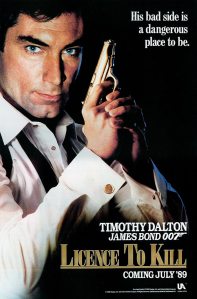
Licence to Kill, which was initially released in 1989, was the 16th “official” James Bond film.  It was also the second and the last one to feature Timothy Dalton in the role of James Bond.  This is the one where Felix Leiter gets eaten by a shark, Bond resigns from MI6, and ends up going to Central America in search of revenge.  Sad to say, it’s also one of my least favorite of the Bond films.

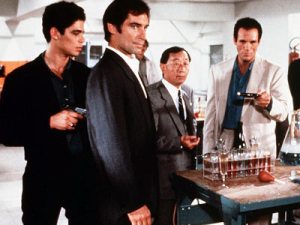
Licence to Kill starts out with Bond in Florida, attending the wedding of his best friend, Felix Leiter (played by David Hedison, who previously played the role in Live and Let Die).  However, before going to ceremony, Felix and Bond take a few minutes to arrest notorious drug lord Franz Sanchez (Robert Davi).  With the help of a crooked DEA agent (played by a wonderfully smarmy actor named Everett McGill), Sanchez escapes from custody.  Accompanied by his psychotic henchman Dario (Benecio Del Toro), Sanchez gets his revenge by killing the new Mrs. Leiter and feeding Felix to a shark.  When Bond discover the barely alive Felix, he also discovers a note that (in a scene borrowed from the novel Live and Let Die) reads, “He disagreed with something that ate him.”

Investigating on his own, Bond discovers that Sanchez’s partner in Florida is the wonderfully named Milton Krest (played by a brilliantly sleazy Anthony Zerbe).  Soon, James Bond is on a mission of vengeance that involves tracking down and killing every member of Sanchez’s organization.  However, M (Robert Brown) doesn’t like the idea of his best secret agent killing the entire population of Florida.  Bond responds by resigning from the service and heading to Central America on his own.

In typical Bond film fashion, James Bond manages to infiltrate Sanchez’s organization and Sanchez soon takes a liking to the man who has vowed to kill him.  Along the way, Bond romances both Sanchez’s abused mistress Lupe (Talisa Soto) and an ex-CIA agent named Pam Bouvier (Carey Lowell) and the viewers learn that Sanchez’s criminal enterprise not only involves drugs but also a crooked TV preacher (played by Las Vegas mainstay Wayne Newton) as well.

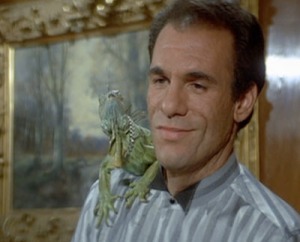
Let’s start with the positive.  Robert Davi, playing the role of Franz Sanchez, makes for a memorable villain.  Along with the silky charm and hints of madness that we’ve come to expect from Bond villains, Davi brings an almost perverse edge to the character.  Every line of dialogue that he delivers is practically dripping with decadence.  Whether he’s doting on his pet iguana, his main henchman Dario, or poor Lupe, Sanchez makes for a dangerously charismatic and compelling villain, one that feels like he would have been at home in one of Ian Fleming’s original novels.  Wisely, Davi plays his role almost as if he was playing James Bond and, as a result, the scenes that he shares with Dalton all have a crackling energy to them that is missing from the film as a whole.

In fact, almost all of the villains are compelling in this film, from Franz Sanchez all the way down to the lowliest henchman.  As played by a very young Benicio Del Toro, Dario is all smoldering intensity and arrogant swagger.  Smuggler Milton Krest is played by veteran character actor Anthony Zerbe and he gets one of the bloodiest death scenes in the history of the series.  However, I have to admit that my favorite bad guy was Sanchez’s business manager, Truman-Lodge (played by Anthony Starke).  Truman-Lodge is just so enthusiastic about the business opportunities that came along with allying oneself with evil that it’s rather infectious.

With such a memorable collection of bad guys, it’s a shame that the film didn’t provide them with any goals worthy of their evil talents.  In previous (and future) Bond films, far less interesting villains have still come up with plans to allow them to take over the world.  Even Moonraker‘s Hugo Drax was able to overcome his lack of personality and come up with a diabolical intergalactic scheme.  Meanwhile, Franz Sanchez — one of the most complex and impressive Bond villains of all time — is simply content to sell drugs and feed people to sharks.  It feels almost disrespectful to Davi’s performance that Sanchez’s goals are, ultimately, so boring.

And, in the end, I think that’s the main problem that I have with Licence to Kill.  The film feels so predictable.  There’s nothing about it that makes it comes across as a story that could only have been about James Bond.  Instead, it feels like the type of standard action/revenge film that always seems to come out every summer.  The film’s hero might be an Englishman named James Bond but he could just as easily be an American named Jake Sully.

According to Sinclair McKay’s invaluable history of the Bond franchise, The Man With The Golden Touch, Licence to Kill was specifically written to compliment Timothy Dalton’s more “realistic” interpretation of the Bond character.  As Dalton played Bond as grim and serious, Licence to Kill is a grim and serious film.  Innocents and villains alike die in bloody agony and, the few times that Dalton does smile, the expression looks so unnatural that you worry that his face is about to split in half.  Unfortunately, along with being grim and serious, Dalton’s Bond is also remote and uncharismatic and, with the exception of Robert Davi, he doesn’t have any chemistry with anyone else in the cast.  (Carey Lowell brings a lot of energy to the role of Pam but Dalton’s Bond never seems to be that into her.)  Dalton simply doesn’t make for a very compelling hero and, as a result, Licence to Kill ends up feeling like an empty collection of occasionally impressive stunts.

Licence to Kill holds a few dubious distinctions.  It was the least financially succesful of all the Bond films and it was also the last Bond film to be produced by Albert Broccoli and directed by John Glen.  It was also the last to feature Robert Brown in the role of M and, of course, it was also the last to feature Timothy Dalton in the role of James Bond.  (That’s not all that shocking when you consider just how miserable and bored Dalton seems to be in this film.)  Over the next six years, the Bond franchise would be mired in a lawsuit between Eon productions and producer Kevin McClory and when James Bond finally did return, he would do so in the form of Pierce Brosnan.

We’ll be taking a look at Goldeneye tomorrow.

James Bond Review: The Living Daylights (dir. by John Glen)


Addendum: It was brought to my attention that Maryam and Olivia d’Abo are actually cousins, rather than sisters.  This was corrected.  

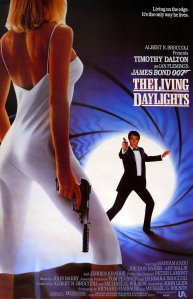
The Shattered Lens continues it’s coverage of all things Bond with 1987’s The Living Daylights. Timothy Dalton was once approached to play 007 after Connery left the franchise the first time, but being only 22 at the time, he considered himself a bit too young for the role. It was only after Roger Moore’s final role in A View to a Kill that he reconsidered and brought on as Britain’s superspy. What I liked about Dalton as Bond was that he was very cold and direct. There was nothing stylish about him, nor did he really try to be (aside for the usual Bond quip). For me, there was sense of darkness to the character. Dalton’s Bond felt like someone just a second away from doing damage to someone, but not exactly caring about how smoothly it was done. This may be partially why I’ve liked Craig so far in his films.

Below is the trailer for The Living Daylights. It makes chuckle how the word “Dangerous” gets thrown on screen every now and then.

The Living Daylights deals with a Russian plot to kill spies. General Gogol in the Roger Moore films was replaced with General Pushkin (John Rhys-Davies, Sallah from the Indy Films and Gimli from Lord of the Rings), and MI6 believes they are behind the recent deaths of agents during a training mission. Bond is asked to help eliminate a sniper for a defecting Soviet named Koskov (Jeroen Krabbe), but upon realizing that the sniper is a woman, he deliberately misses, shooting the frame of the gun and catching the sniper off guard. Bond manages to get Koskov out of Russia via a tube system, but Koskov is later kidnapped again.

We come to find that Koskov’s defection was a fake and that he’s working with an arms dealer (played by Joe Don Baker, who would later return to the Bond Franchise in Goldeneye as a different character), smuggling Opium and arms. Bond locates the sniper, who turns out to be Koskov’s girlfriend Kara (Maryam d’Abo) and poses a friend to Koskov to get closer to him. Granted, this ends up with Kara falling in love with James and we all know where that goes. d’Abo wasn’t bad as a Bond girl, but arguably her cousin, Olivia was more popular at the time.

Q Branch supplies Bond with a few fun gadgets. Back in the 80s, one fad were these keychain finders that would beep when you whistled or made a sound. 007 receives one of these with both an explosive and a smoke gas pellet inside. It’s pretty much the same setup that Connery had in From Russia With Love, placed in a more “modern day” casing (well, as modern as 25 years ago). Bond is also given an Aston Martin V8 Volante, and after all the Lotus editions in the Moore films – perhaps with the exception of the one that doubled as a sub, that one was awesome – it’s really wonderful to see the franchise return to it’s automotive roots. The car is outfitted with missiles, lasers in the hubcabs, on board skis and the all important self destruct system. As with all of Bond’s toys, he doesn’t manage to return this to Q.

From an action point of view, there isn’t a great deal in The Living Daylights. That’s a fantastic snow chase early on, and a fight on an airplane so popular that it was mimicked in the videogame Uncharted 3: Drake’s Deception. Neither of these try to be too over the top and work to great effect, but there are also a number of slow pacing moments that frankly had me wanting to fast forward through the film. I thought the sequence with the desert was drawn out just a little too much, lending to my notion that whenever a James Bond film uses the desert as a filming location, the movie just isn’t as strong in my eyes. Others, of course, may disagree. What the film does do well is establish Dalton as the new Bond. It doesn’t make fun of who he is compared to who came before in the way Her Majesty’s Secret Service did and just gives you an action sequence that says “Take it or leave it, this is who we’re running with”. I like to think it worked well. One could say it becomes the template for all of the “new 007” films

The Living Daylights notes a few changes in the Bond style. It would be the last film ever scored by long time Bond musician John Barry. The Dalton film after this, License to Kill was actually done by the late Michael Kamen (Robin Hood, Die Hard), and everything after that was either done by Eric Serra (The Professional, Goldeneye) or David Arnold (Stargate and Independence Day). A new, younger Moneypenny is introduced after Lois Maxwell’s departure, but I kind of hoped there would have been more time to see the chemistry grow there.

Overall, for a film that had to introduce a new James Bond to audiences, The Living Daylights does so with the 007 style we all know and love. It’s does downshift during the film to concentrate on the love story, but I felt Timothy Dalton’s dark and cold approach to the signature character adds a lot to the story overall.

The theme song to the film is a stand out by the band A-ha (who was popular with their song, Take On Me), and it’s orchestrated version is used heavily in the film. Tomorrow, we’ll visit License to Kill, where Bond goes rogue.

James Bond Film Review: A View to a Kill (dir by John Glen)


In the days leading up to the American premiere of Skyfall, the Shattered Lens has been revisiting the previous films in the James Bond franchise.  Today we take a look at 1985’s A View To A Kill.

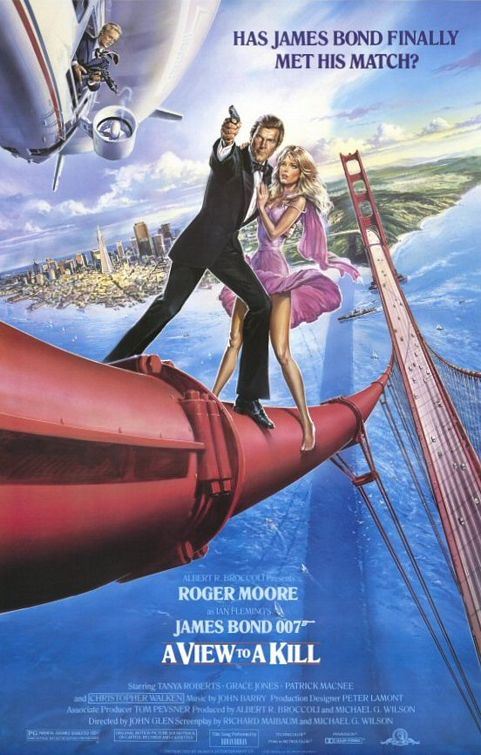
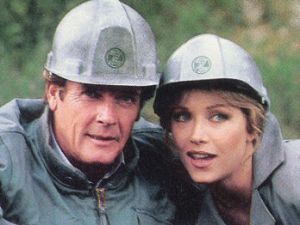
Along with bring the 14th “official” Bond film, it was also the last to star Roger Moore in the role of 007.  On a personal note, it was also released the same year that I was born.  I have to say that I hope I’ve aged better than this film has.

Much like The Spy Who Loved Me, A View To A Kill opens with a ski chase between Bond and a bunch of Russians.  And while the chase itself isn’t all that exciting, it does lead to one of the better opening credits sequences of the Bond franchise.


Say what you will about A View To A Kill, it features the perfect theme song.  I first heard Duran Duran’s title song long before I saw the actual film.  After I graduated high school, I spent the summer in Italy and I can still remember hearing this song blaring from a loud speaker in Venice.  With it combination of exuberant music and incoherent lyrics, the song is the perfect soundtrack for both an American girl abroad and a mid-80s spy flick.

A View To A Kill finds James Bond investigating the mysterious industrialist Max Zorin (Christopher Walken).  Though Zorin is one of the world’s richest men, MI6 is suspicious of him.  Microchips manufactured by Zorin Industries are turning up in Russian submarines.  Perhaps even worse, it’s become apparent that, much like Auric Goldfinger, Zorin is a cheater.  He owns a champion racehorse but it’s rumored that the horse is somehow being given steroids.  MI6 sends Bond and racehorse trainer Sir Godfrey Tibbets (played, quite wonderfully, by Patrick Macnee) to investigate.

These scenes, in which an undercover Bond sneaks around Zorin’s estate in France, are my favorites of the film.  Moore and Macnee make for a likable team and it’s fun to watch the two veteran actors play off each other.  As well, since these scenes are more about detection than action, it’s easier to ignore the fact that Moore was 58 years old when he made A View To A Kill.

Unfortunately, the rest of the film doesn’t work as well and that’s unfortunate because A View To A Kill starts to get seriously weird as things progress.  It turns out that Zorin isn’t just a shady businessman.  No, he’s actually the product of Nazi genetic experimentation and, as a result, he’s both a genius and a complete sociopath.  What this means is that, opposed to previous Bond antagonists, Zorin spends a lot more time giggling and smiling as if even he can’t believe how evil he is.

Bond ends up following Zorin and his aide, May Day (Grace Jones), to San Francisco.  It’s there that Bond discovers that Zorin is planning on setting off a massive underground explosion, in hopes of causing an Earthquake that will totally destroy California.  This will allow Zorin to corner the world microchip market and make a lot of money but, for the most part, Zorin just seems to want to do it so that he’ll have something to talk about the next time he gets together with his fellow megalomaniacs.

Once everyone arrives in San Francisco, James Bond ends up teaming up with geologist Stacy Sutton (played by Tanya Roberts, better known as Donna’s mother on That 70s Show).  As for Zorin, he divides his time between holding business meetings on his blimp and laughing like a maniac while gunning down random people.

Seriously, it’s an odd film.

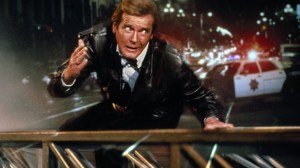
Whenever film critics are looking over the Bond films, A View to  A Kill seems to be the Bond film that’s destined to get the least amount of respect and admittedly, this is an uneven entry in the Bond franchise.  In Sinclair McKay’s excellent look at the oo7 films, The Man With The Golden Touch, Roger Moore is quoted as having been uncomfortable with just how violent A View To A Kill eventually turned out to be and, watching the film, he definitely had a point.  It’s odd to see Moore’s light-hearted approach coupled with scenes in which Zorin gleefully kills a thousand people in a thousand seconds.  It also didn’t help that, in this film, Roger Moore looked every bit of his 58 years.  Never have I been as aware of stuntmen then when I watched A View To A Kill.  Finally, Moore and Tanya Roberts have next to no chemistry together.

With all that in mind, A View To A Kill is something of a guilty pleasure and that’s largely because of the bad guys.

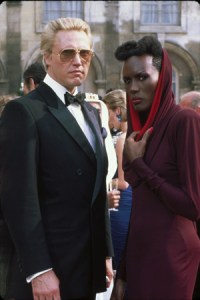
If anyone was born to play a Bond villain, it’s Christopher Walken and Max Zorin is an enjoyably over-the-top villain.  Whereas previous Bond villains were motivated primarily by greed, Zorin is the first Bond sociopath and Walken seems to be having a blast playing bad.  As opposed to the grim bad guys of the past, Zorin laughs and grins through the whole movie and Walken is a lot of fun to watch.  Regardless of whatever other flaws that the film may have, Max Zorin is rightly regarded as one of the best of the cinematic Bond villains.

As played by Grace Jones, May Day is one of the franchise’s most memorable and flamboyant villainous lackeys.   Much like Richard Kiel in The Spy Who Loved Me, Jones is such a physical presence that she dominates every scene that she’s in.  In their scenes together, Walken and Jones have the type of chemistry that’s so noticeably lacking between Moore and Roberts.

As I previously stated, A View To A Kill was Roger Moore’s final appearance as James Bond.  Before we started our look at the Bond films, I spent some time researching the history of both the franchise and the men who have played 007.  One thing that quickly became apparent was that nearly everyone agreed that Roger Moore is a nice, likable guy but that he didn’t bring much more than likability to the role of James Bond.  Having now rewatched the Bond films, I can say that Roger Moore’s performance as James Bond was and is seriously underrated.  Yes, Moore may have brought a light touch to the role but his interpretation of Bond was perfect for the films that he was starring in.  Much as it’s difficult to imagine Roger Moore in From Russia With Love, it’s just as difficult to visualize Sean Connery in The Spy Who Loved Me.  Moore’s greatest talent may have been likability but that likability kept the Bond franchise alive and Moore’s interpretation of the role deserves better than to be continually dismissed.  

With Roger Moore leaving the franchise, the role of James Bond would next be played by an actor named Timothy Dalton.  If Moore was the likable, fun Bond, Dalton was, in many ways, the complete opposite.  We’ll be taking a look at The Living Daylights tomorrow.

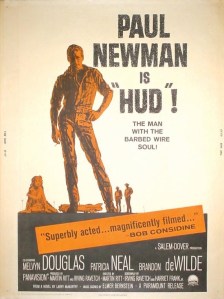
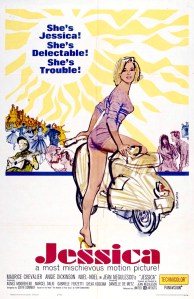
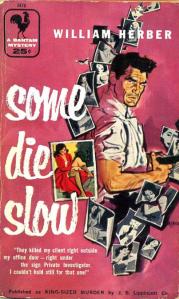
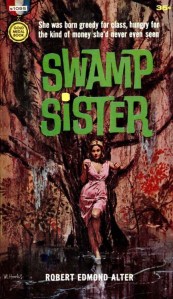
Artist Profile: Mitchell Hooks (1923– )


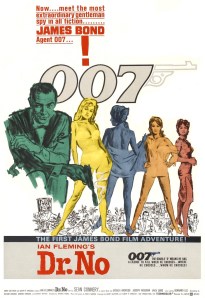
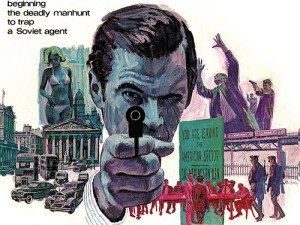
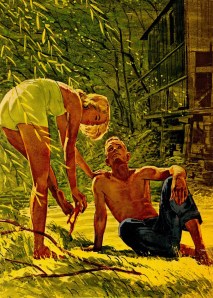
Mitchell Hooks was born in 1923 and studied graphic design at the CAS Technical High School in Detroit.  After graduation, he briefly worked for GM and served in the U.S. Army.  After he was discharged from the military, Hooks moved to New York City and worked as a freelance artist.  Along with painting countless paperback covers, Hooks also designed several film posters.  He is best known for designing the poster for the first James Bond film, Dr. No.  Hooks also illustrated How To Respect and Display Our Flag for the Marine Corps.

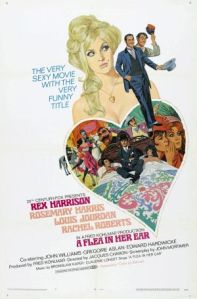
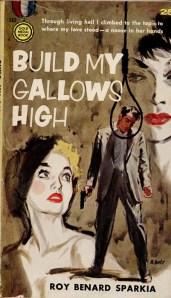
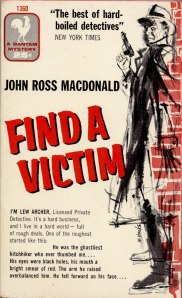
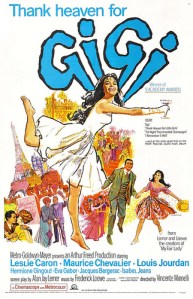
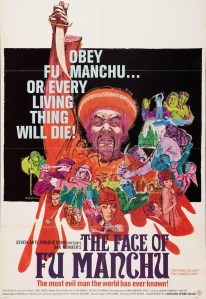
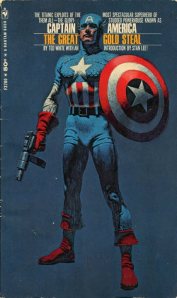
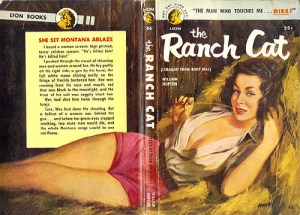
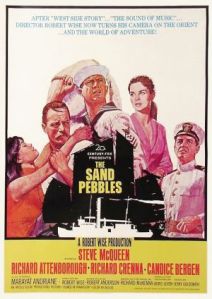
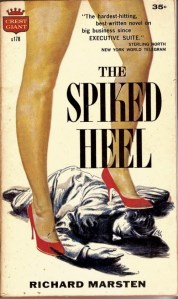
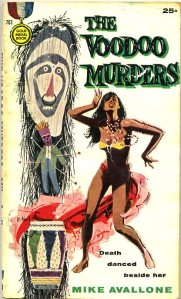
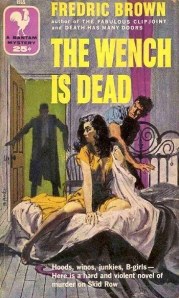
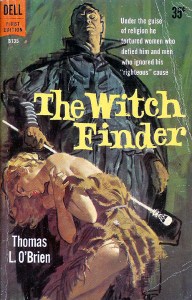
Below is a selection of Hooks’s work.