Review: Lifeforce (dir. by Tobe Hooper)


“I mean, in a sense we’re all vampires. We drain energy from other life forms. The difference is one of degree. That girl was no girl. She’s totally alien to this planet and our life form… and totally dangerous.” — Dr. Hans Fallada

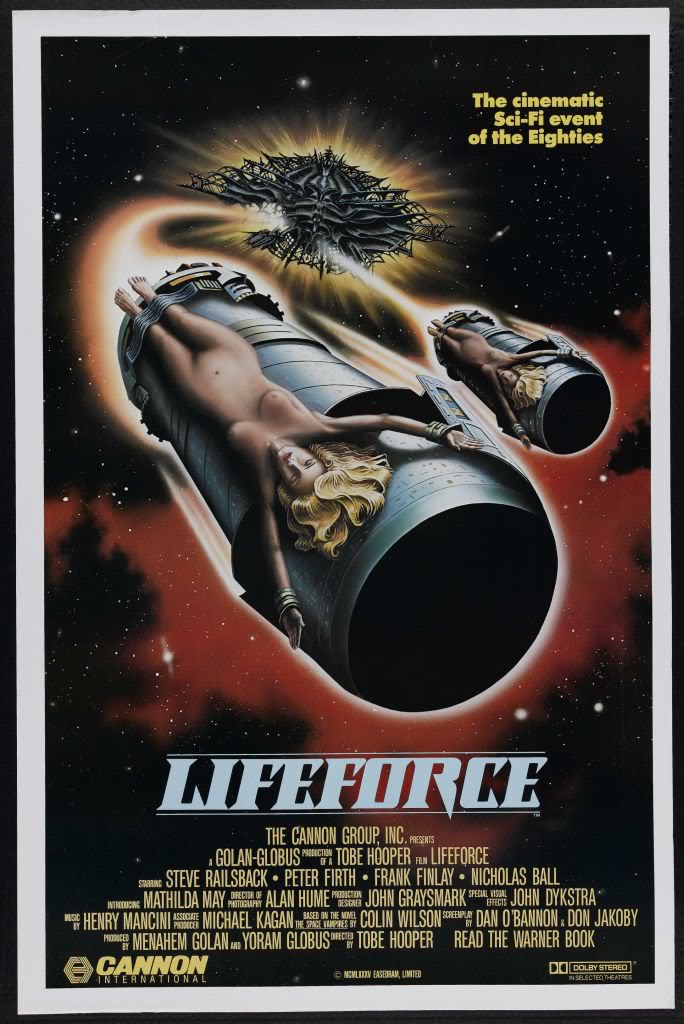
1985’s Lifeforce, directed by Tobe Hooper, was critically panned and barely registered at the box office. Yet in the decades since its release, something curious has happened: the film has gathered a loyal cult following among fans of science fiction and horror. Hooper’s film fuses so many genre conventions that it resists classification—too strange for pure sci-fi, too grandiose for standard horror. The result is a striking and eccentric reinvention of the vampire myth, a lavish but uncanny blockbuster that feels imported from an alternate cinematic timeline.

The film begins squarely in the realm of science fiction. Conceived during the public fascination with Halley’s Comet ahead of its 1986 return, Lifeforce rode the wave of comet-themed media flooding the decade. Most were cheap cash-ins. Hooper’s film stood out for its ambition and its visual scale.

Coming off Poltergeist, Hooper received an unusually large budget—a far cry from the lean, feral energy of The Texas Chainsaw Massacre. The story follows the crew of the shuttle Churchill as they discover a massive alien spacecraft hidden in the comet’s tail. Inside, frozen in suspended animation, are three humanoid figures. The ship’s dignified name feels ironic, even doomed; considering what’s to come, Demeter might have been more fitting. Like the sailors of Stoker’s novel, these astronauts inadvertently ferry an ancient predatory force home—yet this time, the threat arrives from the stars.

The horror unfolds once the crew retrieves its mysterious “specimens.” Members die in gruesome succession until only one survivor, Colonel Tom Carlsen (Steve Railsback), escapes in a pod back to Earth. Railsback’s performance is an intriguing mix of unhinged emotion and grim conviction. His intensity suits a film that constantly walks the line between pulp spectacle and cosmic tragedy.

When the story shifts to London, Lifeforce transforms into a supernatural thriller with procedural undertones. Peter Firth’s Colonel Colin Caine becomes the viewer’s compass: calm, authoritative, and determined to impose order on mounting chaos. As London succumbs to panic and outbreak, his steady professionalism anchors the outlandish events. His partnership with Railsback’s haunted, psychic Carlsen gives the middle act its volatile energy.

Among the supporting cast, Frank Finlay leaves one of the strongest impressions as Dr. Hans Fallada, a scientist fascinated by death and metaphysical energy. He serves as both philosopher and investigator, treating the vampiric invasion as a riddle of life itself. His restrained curiosity lends weight to scenes that might otherwise descend into absurdity. While the city collapses, Fallada studies the phenomenon with eerie calm, treating catastrophe as an experiment in cosmic entropy.

Patrick Stewart also makes a memorable, if brief, appearance as Dr. Armstrong, the head of a psychiatric hospital linked to the Space Girl’s psychic presence. His role builds to the film’s most grotesque and bizarre sequence: an exchange of minds, sudden possession, and an unnervingly intimate kiss with Railsback. The moment condenses everything Lifeforce represents—erotic, macabre, and unconcerned with boundaries. Stewart brings a gravitas that makes the absurd strangely compelling, a counterweight to Railsback’s volatility and Mathilda May’s silent allure.

May, as the unnamed Space Girl, says little but dominates the film through presence alone. She embodies an alien ideal of beauty and destruction, gliding through scenes with a composure that’s both sensual and predatory. Her nudity, much debated at the time, plays less as exploitation and more as elemental symbolism—the human body as an expression of both creation and death, desire and annihilation.

Supporting figures from the British military and government round out the ensemble, emphasizing the film’s descent into bureaucratic chaos. Michael Gothard’s Kane, a Ministry of Defence officer struggling to reconcile logic with the inexplicable, captures the helplessness of institutional order collapsing under cosmic threat. His pragmatic exchanges with Firth highlight competing instincts between reason and survival.

As the infection spreads, Lifeforce expands into a vision of urban apocalypse that fuses British science fiction and American spectacle. London becomes a nightmare tableau—crowds of shriveled corpses feed on energy while arcs of blue plasma swirl through the sky. The city’s fall evokes both George A. Romero’s zombie apocalypse and the metaphysical unease of Nigel Kneale’s Quatermass stories. Amid the insanity, Finlay and Firth remain the emotional touchstones, keeping the audience oriented as narrative logic begins to dissolve.

For all its ambition, however, Lifeforce suffers from erratic pacing and tonal whiplash. The first act unfolds with deliberate, moody wonder, then abruptly veers into frenzied exposition and psychic melodrama once the story reaches Earth. The balance between unsettling mystery and outright spectacle often collapses under its own weight. Scenes that should evoke cosmic terror sometimes tip into unintended camp, particularly in the dialogue-heavy middle stretch. Hooper’s direction, though visually imaginative, occasionally struggles to maintain coherence amid the script’s shifting identities—part creature feature, part disaster epic, part metaphysical drama. The editing, especially in the theatrical cut, undercuts tension with rushed transitions that leave emotional beats hanging. Railsback’s manic performance, while strangely compelling, can also verge on excess, blurring the line between conviction and chaos.

Tonally, the film wavers between awe and amusement. For some viewers, its earnest delivery will read as self-parody; for others, its collision of erotic horror and science fiction grandeur gives it a singular vitality. Lifeforce’s flaws are inseparable from its daring. It dares to fail boldly, and in that failure finds a kind of messy transcendence—larger than reason, too strange to fade.

In the end, Lifeforce lingers as one of the strangest hybrids of its era: part gothic fable, part erotic horror, part apocalyptic science fiction. It was too eccentric to find mainstream success, yet its sincerity and scope give it lasting resonance. The ensemble performances and tonal daring hold the film together, transforming potential chaos into something mythic—a story about possession, contagion, and humanity’s fatal pull toward the unknown.

Beneath its spectacle, the film engages in a deeper dialogue between gothic and cosmic horror traditions. Its characters represent a spectrum of responses to the incomprehensible: Fallada’s intellectual curiosity, Firth’s stoic resolve, Railsback’s frenzy, and May’s serene seduction. Together they form a portrait of human fragility in confrontation with the infinite. Where gothic horror finds fear in the collapse of reason, cosmic horror finds it in the vast indifference of the universe.

By fusing these lineages, Lifeforce becomes a mythic apocalypse that feels both intimate and vast—an encounter between flesh and void, terror and temptation. Its fusion of genres, ideas, and performances ensures its peculiar power endures, a reminder that some of the strangest failures of 1980s cinema are also its most visionary.

Highschool of the Dead: Episode 8 – First Impressions


Madhouse’s anime series adaptation of the very popular manga, Highschool of the Dead (In Japan known as Gakuen Mokushiroku) is now 2/3’s into it’s first 13-episode season run. The reaction to the series has been pretty positive, but there’s definitely been some mixed to negative reactions to how the series’ animators from Madhouse has wholly embraced the ecchi nature of the manga. Some have even called it fanservice overload. I’m guessing they said the same about the manga when they first read it and thought the anime would tone things down.

My reaction to such criticism is “live with it”. There’s a reason why the manga has been so popular despite some long-delays from the manga’s writer and artist. For good or worse the manga and the series will succeed and fail because of it’s very ecchi nature. To expect the anime to actually tone down that particular aspect of the original manga source would be self-censorship and takes away half the fun of the manga. To continue complaining about the series because of its fanservice even this deep into the anime and still continue to watch it just speaks nitpicking and “grumpy old man syndrome”.

Now this eight episode does cut back on the fanservice after the some very heavy doses of it from the last couple episodes. There’s still enough of it that its not all about the zombies, but blatant fanservice sequences was very absent from this last episode. There are some very hilarious and awesome use of “bullet time” effects during the latter half of the  episode when the group gets trapped by an oncoming horde of zombies. We also get to see more great kick-ass action from the senior-class member of the group, Saeko Busujima, as she bokken smashes her way through the wall of zombies to try and distract them away from the main group. Takashi helps her out and it’s with his shooting and Saeko-chan’s acrobatic fighting that the bullet-time effects get put to good use.

This particular episode actually combines at least chapter 8 and 9 of the manga and it looks like the anime writers may be looking to start condensing the latter chapters of the manga into one episode. This maybe Madhouse’s way of hedging their bets in case ratings for the series doesn’t get a second season greenlit. I’m hoping that doesn’t happen and we get a second season to see the anime through right through the end. The manga is still going and with the anime series’ release it looks to gain more readers.

So, even with the naysayers dumping on the series because of the fanservice (even though they still continue to watch) I do believe the series has done well in adapting the manga. Some of the characterizations may seem a bit off as the series’ writers try to balance action, fanservice and quiet character moments, but with most shonen anime series sometimes characterizations take a backseat to what its audience want: the visual stuff whether they’re action and/or fanservice.

Review: The Walking Dead Volume 3 (by Robert Kirkman)


[Some Spoilers Within]

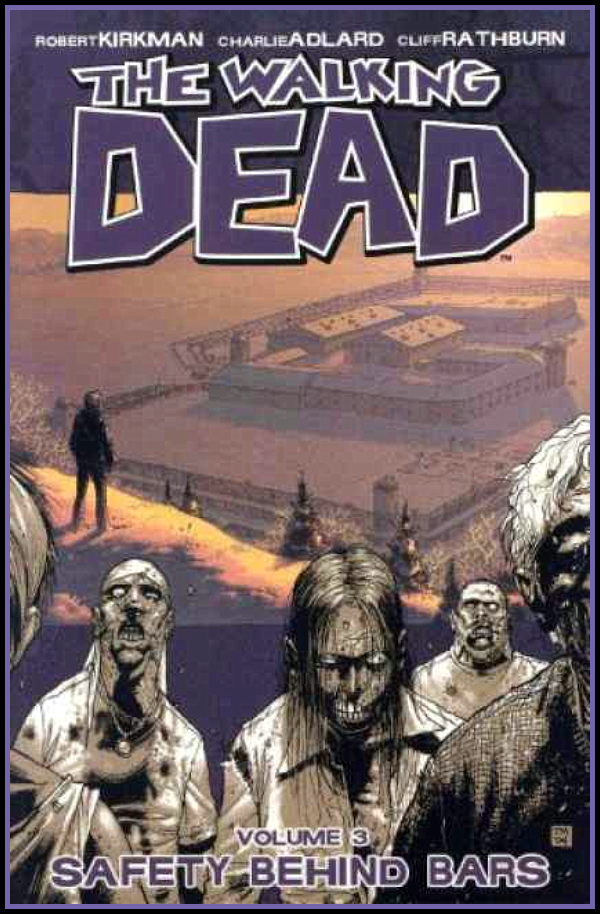
Safety Behind Bars is the third collected volume of Robert Kirkman’s excellent The Walking Dead comic book series from Image Comics. This volume collects issues 13 through 18 and it continues that journey and travails of surviving in a world overrun by the undead. As the tagline of the books proclaim, in a world ruled by the dead we are forced to finally start living. This is so true in Safety Behind Bars as Kirkman and returning artist Charlie Adlard tell the story of Rick Grimes and his band of survivors as they come across what they think will be their salvation from the threat of the hungry dead: an abandoned prison complex.

The last we saw Rick, Tyrese, Lori and their ragtag band of survivors they had just been forced off the the presumably safety of the Herschel farm after the tragic events which transpired within its fences. But Safety Behind Bars starts off with the group discovering an abandoned prison complex that may just solve their shelter, safety and food problems. Once again, Kirkman’s writing is tight and to the point. The characters of Rick and the rest of the survivors continue to evolve as the days and months pass by in the journey to survive. What they find in the abandoned prison is both safety and danger, but not in the way of most people thought it would come in. Sure there are still zombies both inside and outside of the prison’s security fences, but as the enormity of the crisis finally crashes on everyone — that there won’t be a rescue — the survivors reach the threshold of their breaking points to the detriment of everyone involved. It’s especially tragic for Tyrese as a tragedy pushes him to act on his base instincts in an act of vengeance that is both understandable and horrifying.

More people are introduced to the group in the form of surviving group of inmates left behind by fleeing prison guards. This new group acts to change the group dynamics and even add more conflict to what Rick and his group thought was going to be safety from the dead. Instead, human nature — as Kirkman sees it — causes more problems and danger than the dead represent. The events of The Walking Dead has really changed everyone involved and we lose more people to both living and the dead.

The volume ends in an even bigger cliffhanger than the previous two collected volumes. Like the best drama series on TV, The Walking Dead hooks you in with great writing, well-drawn characters and a great hook that pulls the reader in and doesn’t let go. Whether the upcoming AMC and Darabont-produced tv adaptation of this series follows this particular story-arc is still up in the air. To deviate from the prison would definitely involve a new story-arc that surpasses what Kirkman has written in these 6-issues and that would be quite a tall order.

The Walking Dead – Official Series Trailer (AMC)


Well, it’s now official. AMC has finally released the very same trailer that people not fortunate enough to have attended San Diego Comic-Con last month. This trailer is under 5 minutes long and it’s the same one those who attended the Comic-Con panel for the show saw. Only shaky and grainy bootleg copies of the trailer has been seen outside of that panel. While some bootleg versions were quite good in quality they’re still not a substitute for the official release of the same trailer by AMC for everyone to watch.

This official trailer release was also AMC’s way of finally announcing the premiere date of the 90-minute pilot episode (directed by showrunner and producer Frank Darabont). The pilot will premiere worldwide on Halloween Night, October 31, 2010. While some thought the pilot will premiere early on AMC’s “Fearfest” campaign for October I think it’s appropriate that the series premieres on Halloween Night. I can definitely see many fans of the comic book series planning their Halloween parties to include group watch of the pilot episode the very same night.

Still two months away and this trailer definitely doesn’t make the wait any easier.

Source: The Walking Dead (AMC)

Highschool of the Dead: Episode 7 – First Impressions


We’ve now reached the midway point of MadHouse’s anime adaptation of the popular horror and ecchi manga series, Highschool of the Dead. Has the series lived up to the original manga source it’s based on?

Having seen every episode since I will have to give that question with a resounding yes as my answer.

Episode 7 starts off continuing with the very ecchi nature of the series as we see the women in the group in some way of undress and provocatively posed while doing so. Again, I will repeat that anyone still watching this series up to this point and still complaining about the heavy fan-service are just nitpicking. If these complainers don’t like the heavy fan-service then they should’ve dropped off the series around episode 2 and, most likely, after the previous episode. By this time of the series I think anyone still watching it either enjoys the heavy fan-service or has adapted and accepted it in some way. I’m definitely of the former.

This episode is notable for it’s introduction of the very last two characters which will join our interpid group of survivors. One is the little puppy Zeke and the other a little girl named Alice. The scene with Alice and her father looking desperately for a place of refuge from the mass of undead waling the streets is one of the most heartbreaking moments in this series. Say what one will about the series’ heavy reliance on it’s ecchi half, but when it wants to start plucking on the audience’s  heartstrings it does it well. While Alice’s survival once the zombies start converging on her is not a mystery (I don’t think killing a second child in the series will happen two episodes in a row) it does show our group in hero-mode.

Takashi and Hirano are stand-outs in this episode. The former for showing some humanity and putting his life in danger to try and save Alice. The latter for contuining to be my favorite character in the series as he swings from his awkward “nosebleed” self whenever he sees the ladies in skimpy attire to the ice-cold sharpshooter when it’s time to kill zombies. I have a feeling that Hirano will be a character from this series who will be cosplayed heavily in the coming slate of 2011 anime conventions.

The rest of the episode goes by-the-numbers as the group loads up the Hummer parked in the garage with all the supplies, weapons and ammo it could carry and they head on out into the zombie-filled world looking to get across the bridges to find their families. Missing from this episode (the last couple in fact) is the villain of the series, so far. We haven’t seen the sleazy Shido-san and his bus full of followers. Does this mean that the infamous “bus orgy” scene from the manga has been skipped over or will it appear in the next couple episodes. For fans of the manga the answer better be yes or that may be the first disappointment they will have with this series.

Yes, if that’s the only disappointment fans will have with this series then it just shows how good it is that the storyline itself hasn’t been the focus of any complaint. Now, onto the second half of the season.

Review: The Walking Dead Volume 2 (by Robert Kirkman)


[Some Spoilers Within]

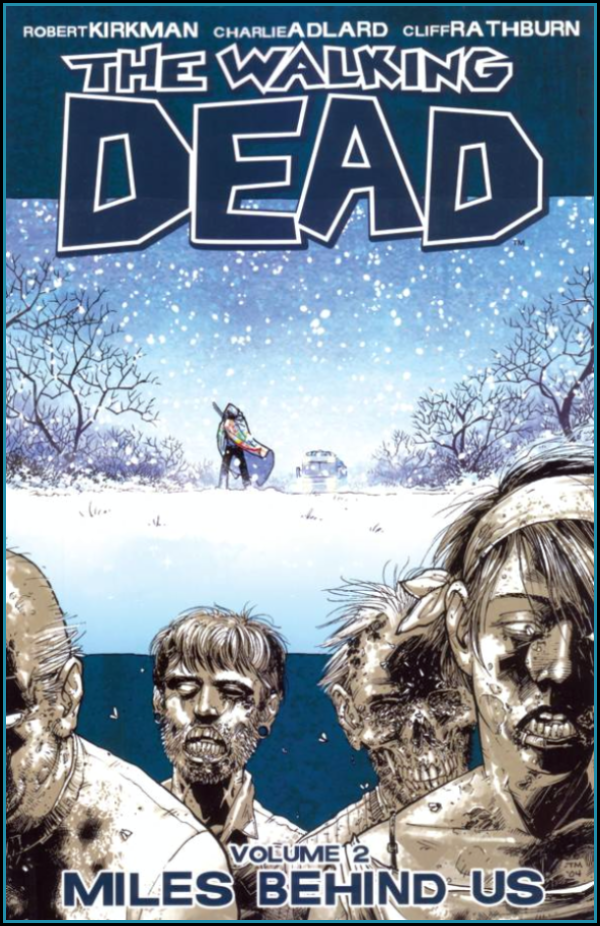
Robert Kirkman’s The Walking Dead Vol.2 – Miles Behind Us puts together issues 7 through 12 into one collection. The first six issues introduce the reader to the main character of Rick Grimes and his discovery of a world turned upside-down and inside-out as the legions of undead walk and prowl the streets, fields and by-ways. The rest of that first volume reunites Rick with his wife and son and a ragtag bunch of other survivors just looking for a safe place to stay. I loved how Kirkman used the backdrop on a world of the undead to tell a story of survival and how extreme situations can have surprising and lasting effects on those left behind.

In Miles Behind Us, Robert Kirkman’s story has a new artist in Charlie Adlard. Adlard’s style has a different look to that of previous artist Tony Moore. Where Moore’s pages and panels had a smoother and more cinematic feel to them, Adlard’s rougher, sketchy style actually fits the mood and feel of the story Kirkman is writing. I love Moore’s work and the gory detail he put in the first issues, but Adlard’s just seems to resonate a bit more with the subject matter of survival and doing what it takes to survive. There’s certain scenes in Miles Behind Us where its hard to tell the difference between the survivors and the zombies. I like this technique in how it shows that the zombies and the survivors may have alot more in common after all in relation to the title of the story.

Kirkman introduces in this volume quite a bit of new characters to the group Rick is leading as they leave the campground at the outskirts of Atlanta. They’ve lost three of their numbers in the previous volume. Two of them to the predations of the undead who stumbled into their campground and another to the stress and jealousy that weighed on the mind of one of their own.

Miles Behind Us brings in two groups of survivors. One is a father, his daughter and the girl’s boyfriend. Tyrese is an interesting character right from the get-go and hints of problems with the daughter and boyfriend are gradually doled out to help bring in new conflicts to the group dynamic. The other group is a farmer and his children and some neighbors from down the road. The introduction of Herschel and his family helps in showing how not everyone reacted the same way to the undead crisis. To say that Herschel’s reaction and temporary solution to how to handle the undead crisis was a bad idea all-around was an understatement. Hershel’s actions helps lead to the biggest sequence event in this volume and how far-reaching its ramifications are. While new characters are introduced some of the people in Rick’s group fall by the wayside as their search for a safe place to stay in becomes more and more dangerous and people are lost and/or nearly lost along the way.

I agree with the assertion that The Walking Dead is really not all about the zombies and the gore (it helps that it has them in abundance), but that its about the effects of extreme events and situations on the personality, psyche and behavior of those left behind trying to survive. From the Dale (the oldest) all the way down to Carl (one of the youngest), the survivors are affected right down to their bones with all that has happened to them. Sometimes the result makes each individual stronger and at times it just leads to conflicts and brings out the baser nature of man as an individual.

Miles Behind Us continued to impress me in how well Kirkman has taken the zombie apocalypse theme and ran with it. It’s a testament to his storytelling and imagination that I consider The Walking Dead series as equal to anything Romero has done. I think from fans of zombie and apocalyptic stories that’s high praise indeed.

The Walking Dead – 5 New Pics from AMC


The parade of new promo materials from AMC in regards to their upcoming zombie apocalypse tv series, The Walking Dead, continues with the release of 5 new production photos from the pilot episode (directed by series producer and showrunner, Frank Darabont).

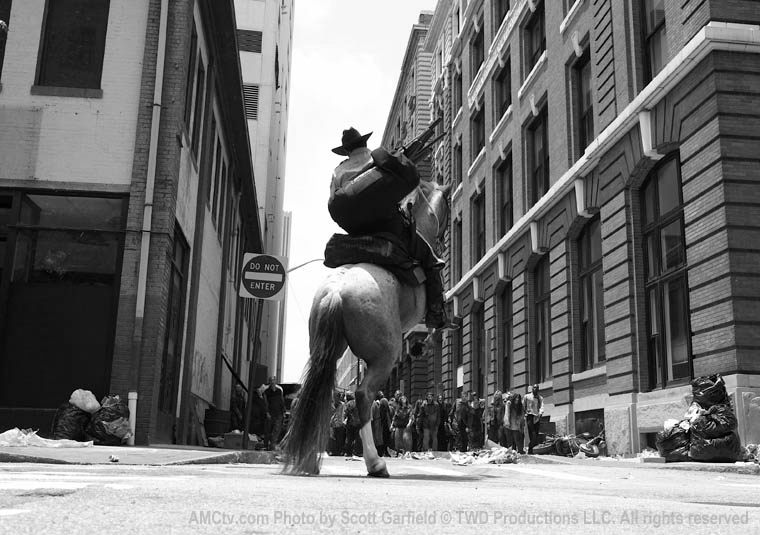
From what I could gather from these five new production photos these shots were taken probably close to the end of the pilot as Rick makes his way into Atlanta in search of Lori and Carl, his wife and son. There’s no denying that I’m very hyped for this show to air. The comic book has been an obsession of mine for over 5 years now and going onto its 6th year.

If we’re to believe what Darabont, Kirkman and Hurd have mentioned before, during and after San Diego Comic-Con then AMC have been very hands-off about how to handle the violence and gore in The Walking Dead as a tv adaptation. While these photos doesn’t show much gore outside of the numerous zombie make-up effects there’s the 4th pic that shows what could be the series’ very first gore money-shot. The angle is all wrong in the shot, but if they sot it from a higher angle as well then here’s to hoping they show some of it. It definitely will show some sort of gutmunching.

One thing which was mentioned during the Q&A at the panel for The Walking Dead at Comic-Con was a possibility of the first season being shown as B&W just like Darabon’t B&W version of his own apocalptic-horror, The Mist. The series won’t be shown in B&W when it premieres, but Darabont is hoping that when the first season dvd comes out that a B&W version may just be included. Here’s to hoping that he does do what he’s hoping for.

Below are the same 5 pics from above but treated as if taken from a B&W airing.

Source: AMC – The Walking Dead Gallery

Highschool of the Dead: Episode 6 – First Impressions


Madhouse’s anime adaptation of the the horror and ecchi manga, Highschool of the Dead, has almost reached it’s halfway point with episode 6 and this time we get an unusual balance of both those traits. The episode almost does a schizo break in and out of it’s running time. For a 3-4 minutes we get scenes of pure ecchi (softcore fanservice) that definitely panders to the puerile minds of its target audience (teenage boys and young men) which is not a bad thing, mind you. But then it’s followed up with 3-4 minutes sequences of chaotic horror.

What’s interesting was that the scenes with the student (and one ditzy nurse) survivors were all ecchi, especially the opening scene with the females in the group deciding to bathe together. Yeah, much female bathing together shenanigans ensue. This scene was lifted directly from the manga source and expands on it to the benefit of its target audience and longtime readers.

The scenes where we see the zombie apocalypse unfolding and how the horror has put both civilians and authorities on the path of breaking doesn’t involve out intrepid survivors at all. It’s almost as if this episode was the group’s reprieve before the next storm hits them which should be arriving very soon (I’d say the start of the next episode). There’s a particular scene on one of the bridges where a police barricade has been set-up that really points out the horror of the series. It involves a young mother and her young daughter (one who has been bitten). To say that this scene is not just horrific and tragic would be an understatement. I’ve always said that in stories of an apocalyptic nature one of the first thing to go was sentimentality and this sequence in episode 6 hammers on this point.

Overall, the episode was very good as usual. For fans of the manga it should be a delight to watch. For those whose experience with Highschool of the Dead has been this anime adaptation this episode may seem a tad odd in that it tries to balance both the sex and horror aspect of the series. It might be difficult for these newcomers to buy into the episode that one minute has an almost softcore, all-girl porn scene going then followed-up with apocalyptic horror then back again to softcore. Again, I will say that the series will continue to weave these two traits together and if one is still sticking with the series waiting to see if things change then they will be sorely disappointed.

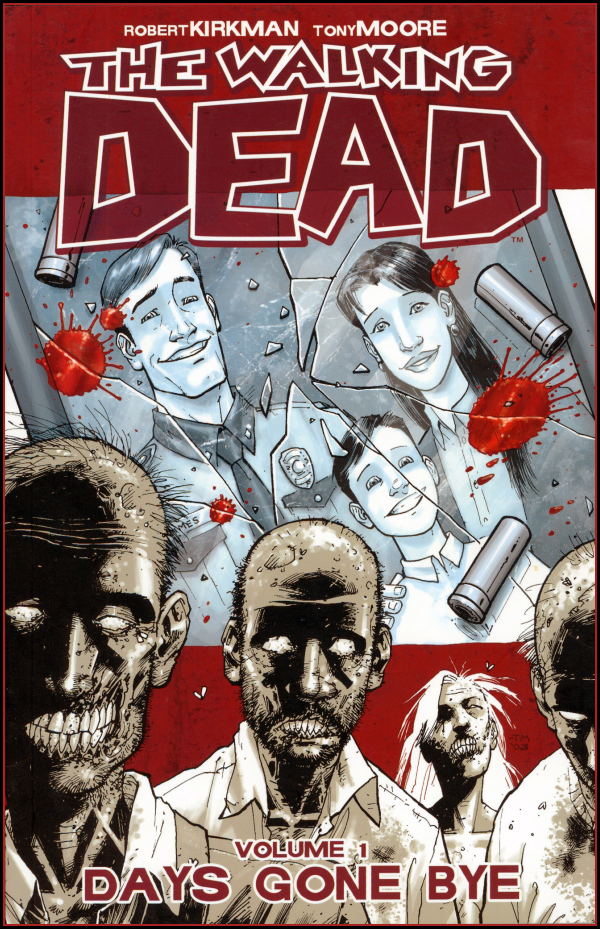
Review: The Walking Dead Volume 1 (by Robert Kirkman)


One of the geek properties that had been building a major hype and buzz at this year’s San Diego Comic-Con was Image Comics and Robert Kirkman’s long-running and critically-acclaimed zombie series, The Walking Dead.  It’s time at the Con didn’t just push the title to a new batch of fans, but also made a major showing at it’s very own panel with the cast and crew of AMC’s tv series adaptation of the comic book. It would be an understatement to say that by the  time The Con was over the series (both comic book and the upcoming tv series) walked away a clear winner and put the property into hype/buzz overdrive.

With the series set to premiere on AMC this coming October 2010 I thought it was high-time that I went back to my reviews of the collected trade paperbacks of the series. Each trade paperback collection were 6-issues long and usually started a current story-arc or finished an on-going one. This comic book series is one of the few in the market currently running which could was able to keep releasing its trades in 6-issue collected formats and not lose any impact that particular arc had when read as single-issues. It was by finding the first trade that I was initially introduced to Kirkman’s zombie opus.

It was 2005 and I was what one might call a lapsed comic book fan. I had burned myself out on the neverending flood of superhero titles even as independent ones quickly got cancelled, died out or just outright didn’t end but left its readers hanging. But it took a passing glance of The Walking Dead‘s first trade volume to get my interest in comic books rekindled. Kirkman’s foray into creating the zombie film that never ends made comic books fun for me again. The fact that Kirkman didn’t jump onto the fast-zombie bandwagon that became the rage of the mid-2000’s was a major plus in my eyes.

Using the same slow, shambling zombies that George A. Romero first made popular with Night of the Living Dead and its subsequent sequels, Kirkman continued the zombie story where Romero usually ended his films. All those times people have wondered what happened to those who survived in zombie films need not imagine anymore. Kirkman has created a believable world where the dead have risen to feast on the living, but has concentrated more on the human dynamic of survival in the face of approaching extinction.

I won’t say that the story-arc collected in this first volume has little or no zombies seen, but they’ve taken on more as an apocalyptic prop. One can almost substitute some other type of doom in place of zombies and still get a similar effect (as was done in Brian K Vaughn’s equally great series, Y: The Last Man). What Kirkman has done was show how humanity’s last survivors were now constantly, desperately trying to adapt to a familiar world through unfamiliar circumstances. Characters from the start make the sort of mistakes regular people would make when they don’t know exactly everything that was happening around them. Instead of chiding these people as one reads their story, we sympathize and hope for their continued survival.

The artwork by Tony Moore is another reason why people should check out this first volume. While it is only in this volume (the first 6-issues of the series which is now deep into the 70’s) Tony Moore’s art puts the horrific in the story Kirkman has written. His zombies and their look were quite detailed and for fans of the series his departure after issue 6 and staying to just make the covers to each single-issue has rubbed them the wrong way. While I subscribe to the opposite viewpoint that Moore’s work was a nice bonus to bring in the readers in the end his artwork was gravy to what was already a fulfilling story that would’ve been as effective if the artwork was mediocre at best. It’s a good thing that follow-up and series regular artist Charlie Adlard more than holds his own in drawing the rest of the series.

This first volume was a great beginning which should automatically pull in the hardcore zombie fans (pretty much any of those types should’ve been reading the books for years now) while giving newbie fans to the zombie genre a reason not to dismiss it as just another gorefest lacking in drama and great storytelling. Already Kirkman has done more to realizing the universe Romero created than a lot of the hack filmmakers who have taken Romero’s idea and cannibalized it for their own profit. I consider The Walking Dead as a must-read for anyone looking to find something different from all the costumed superhero titles. It is also a great starting point for those awaiting the start of the tv series, but have never read the original comic book source.

And Then There Were Six More…


I recently came to the realization that my destiny is to list and share 666 of my favorite grindhouse and exploitation film trailers.  Previously, I’ve shared 12.  Here’s 6 more.

Part One and Part Two of my trailer survey can be found here.

1) Liquid Sky — Have you seen Liquid Sky and if the answer is no, why not?  Liquid Sky is one of the great underground films of the early 80s, an epic about drugs, aliens, bisexuality, and performance art.  Quite simply put, you must see this movie.

2) BlaculaWhen I first saw this trailer, my first thought was, “Oh, that is sooooo wrong.”  But, the movie actually isn’t that bad.  William Marshall is wonderfully dignified and haunted as the tragic title character.

3) Bio-Zombie I haven’t actually seen this movie but I love this energetic trailer (and the Hello Kitty reference, as well).

4) Martin — This trailer for George Romero’s vampire movie features the film’s star, John Amplas, speaking to the audience in character.  Martin is one of the unacknowledged great vampire movies.  Supposedly, there’s a remake in the works which, needless to say, is not necessary in the least.  The original is more than good enough.

5) Near DarkSpeaking of vampire movies, here’s Near Dark.  Before Kathryn Bigelow won an Oscar for The Hurt Locker, she made her debut with Near Dark.  Of the two, Near Dark is the better film.

6) RabidThis is an early David Cronenberg film and probably one of his first stabs at being a “commercial” filmmaker (I would have to ask R-Lee for sure on this as he’s the resident Cronenberg expert).  The late Marilyn Chambers plays a young woman who gets infected with rabies and proceeds to spread the disease throughout Montreal.  As you might expect with a Cronenberg film, the Canadian government quickly turns fascist and a lot of Canadians die as a result.  The movie’s not totally succesful but the trailer is.  As a sidenote: in 2004, Marilyn Chambers Taylor was the vice-presidential candidate of the Personal Choice Party.  I cast my first vote ever for her.