Horror On The Lens: Night of the Living Dead (dir by George Romero)


Happy Halloween!

Watching this movie is a Halloween tradition here at the Shattered Lens and I am honored to keep that tradition alive (heh) in 2025!

Be sure to check out Arleigh’s review!

For the record, you can count me amongst those who thinks that Ben got everyone killed.  We root for Ben because he’s the more likable character but, in the end, Harry was right and Ben ended up becoming a cold-blooded murderer.  These are the type of things that make Night of the Living Dead the scariest zombie film ever made.  The living are just as terrifying as the dead.

I should also note that, for all the criticism the character gets, Barbara has one of the most totally realistic reactions that I’ve ever seen in a horror movie.  She’s in shock and denial.  I would probably have the same reaction.

And now, here is the greatest zombie film ever made!


Horror Scenes That I Love: Life and Death in Dawn of the Dead


Today’s horror scene that I love is from George Romero’s 1978 zombie masterpiece, Dawn of the Dead.

The first time I saw this film, I was so upset when Roger died.  Not only was Roger my favorite character but I also knew that if Roger — who was so funny and so charismatic and so competent — couldn’t survive then that meant that no one was going to survive.

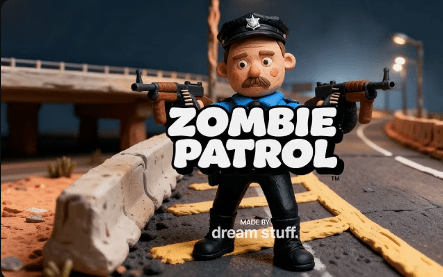
Zombie Patrol, Short Film Review by Case Wright


Can AI be used to make an entertaining horror short?
We have a parking garage security guard searching the property because he hears a noise. He finds his coworker slain. A zombie starts rewiring the fuse box and turns off the lights in the garage. The zombie is smart
He encounters the zombie and starts shooting and shooting, killing more and more zombies to heavy metal and that is the whole film.
I enjoyed it. So, AI can make a fun horror short and actors will become a thing of the past.
If you have 2.6 minutes to spare, check it out.

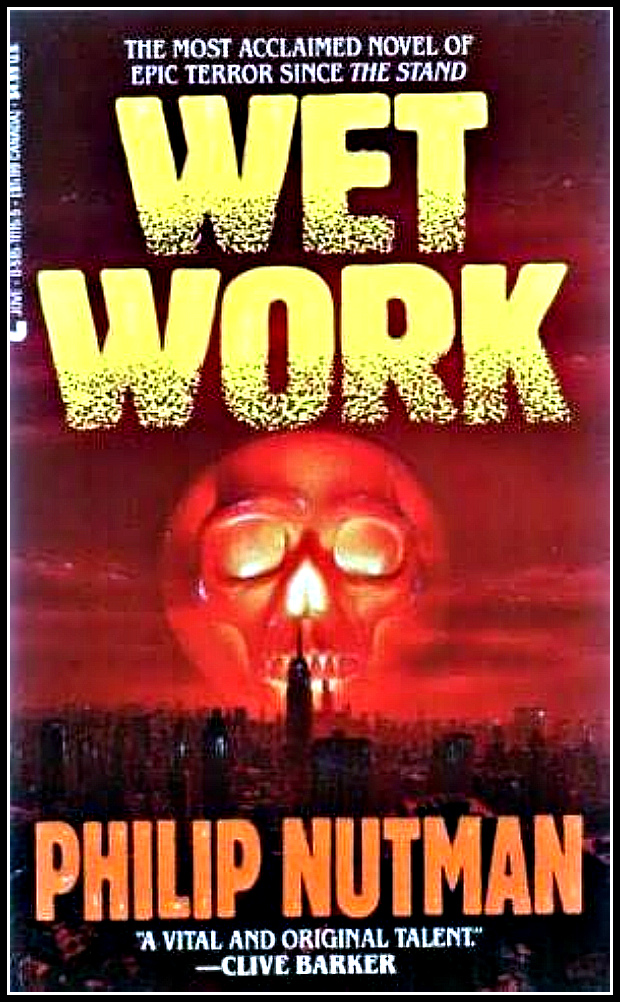
Horror Book Review: Wet Work (by Philip Nutman)


“Wet work” – intelligence community slang for covert operations involving assassination or killing, named for the ‘wet’ bloodshed such missions entail.

Philip Nutman isn’t a name most readers recognize outside of hardcore horror and zombie fiction circles, but within those communities, he’s remembered as an accomplished writer and journalist who carved out a unique space in the genre. For most of his career, Nutman worked as a freelance media journalist and film critic, contributing to magazines like Fangoria and Cinefantastique, where he covered the darker corners of cinema. As a fiction writer, he didn’t produce much in the way of novels, but the one he did publish—Wet Work (1993)—earned him lasting respect among fans who prefer their horror mixed with high-stakes action and cynical political undertones.

Wet Work began as a short story published in George A. Romero and John Skipp’s 1989 anthology Book of the Dead, a milestone collection that helped define zombie fiction as something literary rather than purely pulp. Even within that assembly of strong voices, Nutman’s story stood out for combining government espionage with apocalyptic horror. Expanding it into a full novel only amplified those elements, turning what had been a grim short tale into something closer to an action-horror epic with splatterpunk guts and a spy thriller’s pacing.

The novel opens with CIA operative Dominic Corvino, a member of an elite black-ops unit called Spiral, barely surviving a mission gone wrong in Panama City. From the start, Nutman gives the story a sense of distrust and paranoia—Corvino believes his team was deliberately sabotaged, their deaths engineered by someone inside the CIA. It’s an opening that reads more like a Cold War spy novel than a zombie tale, and that mix of tones is part of what makes Wet Work work so well. Nutman uses what he likely learned as a journalist—his knack for detail, the sense of how bureaucracies function (or fail to)—to give the early chapters an almost procedural authenticity. There’s a lived-in realism to the military and intelligence backdrop that keeps even the most outrageous elements of the story grounded.

Then comes the moment that shifts Wet Work from gritty reality into nightmarish surrealism. As the CIA plotline unfolds, a cosmic event takes place: the comet Saracen passes dangerously close to Earth and leaves behind some kind of invisible residue. It’s never fully explained whether it’s chemical, biological, or something beyond understanding, but its aftereffects begin to change life on the planet. Nutman uses the comet not just as a plot trigger but as a symbol of inevitability—a reminder that humankind’s end won’t always come from weapons or war, but sometimes from something as impersonal as celestial dust. It’s a bit of cosmic horror filtered through the lens of political and societal collapse, an end-of-days scenario that feels both mythic and strangely plausible.

Meanwhile, in Washington D.C., police officer Nick Packard becomes the reader’s main point of connection to the chaos on the ground. Packard starts the day leading a routine shift through the usual headaches of the city, but things unravel fast once Saracen’s effects take hold. Strange attacks start flooding police dispatch, cases of violence erupting in ways no one can explain, and what seem like random acts of brutality turn out to be part of something much larger. The city descends into panic as the dead begin returning to life. Nutman describes this breakdown with a sense of escalating dread that feels almost journalistic—each detail adds up, each scene observed as though through the eyes of someone trying to make sense of something senseless.

The zombies themselves are mostly what readers might expect from stories inspired by George A. Romero: slow-moving, decomposing, and relentless. But Nutman complicates things by hinting that not all of the reanimated are mindless. Some seem to retain fragments of human cunning or memory, enough to make them unpredictable and far more dangerous. This small twist gives the book a chilling edge, making it clear that intelligence doesn’t necessarily counteract monstrosity—it might even make it worse.

Corvino’s section of the novel runs parallel to Packard’s and serves as the darker, more psychological side of the story. He becomes consumed by his mission to find out who betrayed his team in Panama and make them pay. Physically, he’s battered and near his limits, operating in a world that no longer follows the rules of logic or hierarchy. Mentally, he’s trapped between loyalty, fury, and isolation—an operative trained for controlled violence now facing chaos that no training can manage. Nutman writes Corvino as a man unraveling in sync with the world around him. His search for answers feels less like a mission and more like an obsession, a desperate grasp at clarity in a world that’s literally stopped making sense.

Packard’s story, by contrast, brings everything down to a more personal survival narrative. As the crisis worsens, his only goal becomes reaching his wife, stranded in their suburban home outside the city. His journey across a collapsing Washington D.C. is one of the novel’s strongest threads, combining small moments of human connection with scenes of escalating horror. Through him, the reader gets a street-level view of societal breakdown—communications dying, infrastructure collapsing, and people reacting in unpredictable, often violent ways. What makes Packard’s arc compelling is its simplicity; amid government conspiracies and cosmic cataclysms, his is just a story about trying to save someone he loves.

Eventually, Corvino’s and Packard’s paths intersect, and both men come face to face with what’s left of the government. By this stage, authority itself has become just another form of predation. The people who once held power have adapted frighteningly well to the new world, shedding morality and decency like dead skin. Nutman doesn’t paint them as comic-book villains but as survivors whose ethics erode one decision at a time. In typical splatterpunk fashion, the line between humanity and monstrosity blurs completely.

Nutman’s writing in Wet Work is graphic, fast-moving, and unflinching. His descriptions of violence and gore are vivid without slipping into parody, and even when the pacing turns frenetic, it matches the story’s collapse into total madness. Where he stumbles is in a few awkward moments of dialogue and some stilted attempts at sexuality—scenes that read more forced than provocative. But those missteps never fully pull the story off course. If anything, they serve as reminders that Nutman, for all his journalistic precision, was still finding his rhythm in long-format storytelling.

The novel embodies everything bold about early 1990s horror fiction: big ideas, unrestrained violence, and a willingness to splice genres that didn’t normally coexist. Wet Work could just as easily sit beside Dawn of the Dead as it could a paranoid spy novel from the 1980s. Nutman understood that the systems people depend on—government, military, media—are fragile constructs that crumble the second survival becomes personal. That realism, drawn from his background in journalism, grounds the chaos he unleashes. Even at its most supernatural, Wet Work feels uncomfortably plausible because its human failures ring true.

After Wet Work, Nutman shifted back toward shorter forms, writing comics, novellas, and media journalism rather than more novels. In hindsight, that makes his one major book feel all the more significant. It’s the place where all his skills—his eye for detail, his fascination with moral gray areas, and his love of horror excess—come together.

For zombie fiction fans, Wet Work remains a hidden gem worth revisiting. It’s not just a gore-fest or survival tale but a demonstration of how horror doesn’t need to stay confined within its own walls. Nutman showed that the genre can bleed into others—melding espionage, political thriller, and cosmic dread into something distinct and alive. In a field that sometimes plays it safe, Wet Work reminds readers that horror thrives on experimentation, that it’s strongest when it’s hybridized and unpredictable. With Nutman’s death in 2013, any chance of seeing another full-length novel from him is gone, but what remains is proof that horror, when unafraid to evolve, can be far more than blood and fear—it can be reinvention itself.

Horror on the Lens: Night of the Living Dead (dir by George Romero)


Happy Halloween everyone!

Well, as another horrorthon draws to a close, it’s time for another Shattered Lens tradition!  Every Halloween, we share one of the greatest and most iconic horror films ever made.  For your Halloween enjoyment, here is George Romero’s Night of the Living Dead!

(Be sure to read Arleigh’s equally famous review!)

Bonus Horror On TV: Degrassi of the Dead


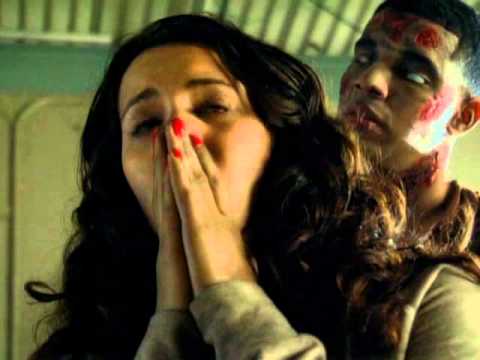
Hey, remember that time in 2007 when all the students at Toronto’s Degrassi Community School were turned into zombies?  This 10 minute film takes a non-canonical look at what would happen to everyone’s favorite Canadian high school if there was a zombie apocalypse!

(By the way, I know what you’re thinking but this was actually made in 2007, long before the premiere of The Walking Dead.)

Enjoy watching Drake turn into a zombie!

Horror Film Review: Festival of the Living Dead (dir by Jen and Sylvia Soska)


Opening with a montage of scenes from Night of the Living Dead mixed in with actual footage of civil unrest from the 60s, Festival of the Living Dead imagines a world where a zombie outbreak actually did occur in 1968.

Humanity survived.  All of the zombies were apparently put down by human hunters and the plague of the living dead was ended.  In order to commemorate the night of the living dead, a Festival of the Living Dead is held every year at the sight of the zombie outbreak.  Over the past 55 years, the Festival has become a high-priced event that can only be attended by people who are willing to spend a lot of money for the honor to stay in tents, listen to live music, and set fire to a giant wicker woman.  Essentially, the Festival of the Living Dead is Burning Man but instead of basing the festival of new age nonsense, the Festival is based on a zombie outbreak.

Unfortunately, those who attend the Festival have lost sight of what the party is supposed to be about.  Now, instead of celebrating the survival of humanity and paying honor to those who lost their lives (sometimes more than once in one night!), the people attending the Festival are just influencers who are hoping to go viral.  Early on in the film, Iris (Carmen Bicondova) point out how weird and tacky it is to have a festival celebrating an event where so many people died.

This year, the folks at the Festival of the Living Dead are going to be reminded about what the entire festival is supposed to be about!  When one vlogger films himself snorting what he claims to be a crushed meteorite, everyone assumes that he’s just another person looking for online fame.  But soon, he’s foaming at the mouth, throwing up, and then savagely attacking the festival staff.  Of course, those who have seen the original Night of the Living Dead will remember the much-ridiculed scene in which a news reporter is heard to speculate that the dead are coming back to life due to space dust that was brought back to Earth by NASA.  It turns out that reporter knew what he was talking about.  It’s not just a case of Hell no longer having room for the dead.  It’s the meteorites!

Ash (Ashley Moore) and her friends try to survive the Festival of the Living Dead, which turns out to not be an easy task.  Not only are zombies famous for being relentless in their pursuit of the living but the living are famous for reacting to living dead outbreaks in the dumbest ways possible.  Ash has one cool friend, that would be Iris.  Unfortunately, the rest of her friends are nowhere near as smart.  Fortunately, Ash has zombie hunting in her blood.  Though the film doesn’t specifically state it, it’s suggested that her grandfather was Ben, the hero of Night of the Living Dead.

Festival of the Living Dead is a loving homage to Night of the Living Dead and its sequels.  It’s undeniably derivative but it’s also made with so much love for the genre that it doesn’t matter that you’ll be able to guess who is going to live and who is going to die from the minute they first appear onscreen.  Ashley Moore, Carmen Bicondova, and Christian Rose (as the film’s bravest character) all give strong performances and the film’s central joke — which is that everyone at the Festival is either too stoned or too stupid to initially notice the zombie outbreak — is one that works because it’s rooted in fact.  Do you seriously think anyone at Burning Man would notice the living dead?

Horror on the Lens: Night of the Living Dead (dir by George Romero)


Happy Halloween everyone!

Well, as another horrorthon draws to a close, it’s time for another Shattered Lens tradition!  Every Halloween, we share one of the greatest and most iconic horror films ever made.  For your Halloween enjoyment, here is George Romero’s Night of the Living Dead!

(Be sure to read Arleigh’s equally famous review!)

Horror on the Lens: Night of the Living Dead (dir by George Romero)


Happy Halloween everyone!

Well, as another horrorthon draws to a close, it’s time for another Shattered Lens tradition!  Every Halloween, we share one of the greatest and most iconic horror films ever made.  For your Halloween enjoyment, here is George Romero’s Night of the Living Dead!

(Be sure to read Arleigh’s equally famous review!)

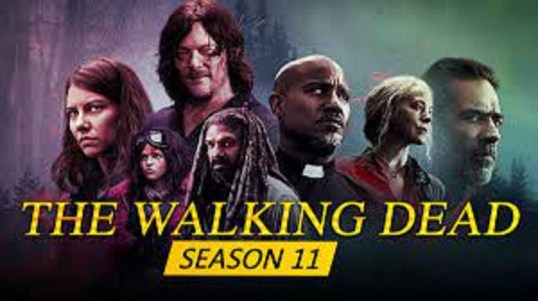
TV Review: The Walking Dead 11.9 “No Other Way” (dir by Jon Amiel)


Well, so much for The Reapers.

The Walking Dead‘s 11th season returned last Sunday.  As you can probably guess from the fact that it’s taken me until Friday to get around to watching and reviewing it, it didn’t exactly arrive with the type of fanfare that previously greeted every premiere of The Walking Dead.  Not to belabor a point that I’ve been making since this season began but it’s been a while since The Walking Dead was really a big deal.  It definitely had a good run, especially during the early seasons.  However, I don’t think anyone will deny that the later seasons have been frustratingly uneven.  Season 11 is the show’s last, though the future does hold the promise of Walking Dead movies and perhaps a Walking Dead anthology series.  The Walking Dead may be coming to an end but it’s definitely not dead yet.

When Season 11 started, it appeared that the majority of the episodes were going to center around the Alexandrians battling The Reapers.  I wasn’t particularly looking forward to that, as the Reapers weren’t really that interesting.  Beyond all of the babbling about religion, there wasn’t that much to separate them from The Whisperers or the Saviors.  So, as you can imagine, I was happy that this episode featured what appeared to be the nearly complete and total destruction of the Reapers.  Maggie and her group ruthlessly and systemically destroyed every Reaper that they came across, with the exception of Leah.  Gabriel killed a sniper, which leads me to wonder why Gabriel still wears his collar when its obvious that it means nothing to him.  Negan watched as Maggie killed every Reaper that she saw and he wisely decided that it was probably time for him to head off on his own before Maggie got around to killing him.  Indeed, the interesting thing about Maggie is that we really only cheer for her because we know her and we’ve been conditioned to be on her side.  She’s just as ruthless as the show’s bad guys and she uses the exact same justifications that were previously used by everyone from The Governor to Negan to Pope.  Even the fact that she’s mourning Glenn doesn’t really make her all that different from those she’s attacked.  In the world of The Walking Dead, everyone has lost someone.

(And really, it was pretty much Rick’s fault that Glenn died.)

Meanwhile, Alexandria was hit by a violent storm and a walker invasion but, as usual, everyone there managed to survive.  Afterwards. Maggie, Darryl, and the gang finally returned home.  However, also approaching Alexandria were Eugene and the Commonwealth.

The show then jumped forward 6 months.  Maggie was still in charge of Alexandria but it was impossible not to notice that Alexandria no longer looked as clean and peaceful as it once did.  Surrounding the town were the soldiers of Commonwealth.  And leading the soldiers was …. DARYL DIXON!

Now, that is an effective cliffhanger!

So, what’s going on here?  Is this yet another case of Daryl going undercover (booo!) or has Daryl truly changed sides?  I’m hoping that he actually did change sides, just because the whole undercover Daryl thing has been done to death and I think that Maggie and Darryl have a more interesting dynamic as rivals than as allies.  Given the history of the characters, it’s easy to imagine a scenario where Daryl might chafe at Maggie’s leadership style.  Or perhaps Darryl truly believes that the Commonwealth is offering up a better society than what’s going on at Alexandria.  I mean, honestly, Alexandria does require a bit of commitment on the part of its citizens.  I probably would chose not to live in Alexandria.

So, which is it?  Is Daryl a friend or a foe?  We’ll find out over the upcoming weeks!