October True Crime: Ricky 6 (dir by Peter Filardi)


Filmed in 2000 but never given an official release (though it can now be found on YouTube), Ricky 6 takes place in the town of Harmony, New York in the mid-80s.  Harmony is an upper class community, a place where the houses are big, the yards are pristine, and every father expects his son to try out for the high school football team.  It’s a place that celebrates winners and exiles losers to the nearby woods.  It’s the sort of town that seems like it exists primarily to give teenagers something to rebel against.

Tommy Pottelance (Chad Christ) and Ricky Cowen (Vincent Kartheiser) are two of those rebels.  They both have long hair.  They both listen to music that is designed to terrify their conservative parents.  They both smoke a lot of weed and spend a lot of time obsessing on how alienated they feel from everyone else around them.  Tommy and Ricky are best friends, bonded by their mutual feelings of isolation.  They often talk about running off to California together and they’re not above committing a few minor crimes in order to do it.

Bullied by his father and laughed at by the local drug dealers, Ricky spends his time hiding out at the library and reading books on demons and magic.  He meets Pat Pagan (Kevin Gage), a self-styled Satanist who appears to live in the woods and who, despite being middle-aged, spends all of his time hanging out with teenagers.  Ricky starts to describe himself as being a Satanist, begging his friends to announce that they love Satan as a part of a ritual that he wants to perform.  Most of his friends humor him, not knowing that Ricky hears voice and has frequent hallucinations.  (The fact that his dealer keeps selling him dusted joints definitely doesn’t help as far as that’s concerned.)  Ricky starts out the film as somewhat passive and very much in Tommy’s shadow but, as his interest in Satanism grows, so does Ricky’s confidence and, soon, Ricky is the one giving orders.  Ricky goes from looking up to Tommy to being the one who issues the commands.  When Ricky becomes convinced that one of his friends stole some drugs from him, he decides to get a very violent and bloody revenge….

Ricky 6 is based on a true story, one that was examined in a documentary that Jeff reviewed earlier this year, The Acid King.  Because the film has never been given an official theatrical release and has mostly been distributed through bootleg tapes and DVDs, Ricky 6 has developed a reputation for being a bit more extreme than it actually is.  Yes, the murder scene is brutal and yes, the permanently stoned and occult-obsessed Ricky does have some memorably surreal hallucinations.  For the most part, though, Ricky 6 is more a study of Ricky and Tommy’s friendship than a straight horror and/or true crime film.  Ricky and Tommy are both angry at a world that doesn’t seem to understand them, with the main difference being that Tommy rejects the world while Ricky tries to bring some sense of order and meaning to his chaotic existence by worshipping Satan.  When Tommy angrily tells Ricky that there is no God and no Satan, Ricky rather innocently asks, “How could you want to live in a world without magic?”  Of course, for Ricky, part of the magic means dragging his friends into helping him commit a murder.

Ricky 6 is a well-acted film, especially by Vincent Kartheiser, Kevin Gage, and, in the role of Tommy’s girlfriend, Emmanuelle Chriqui.  Kartheiser plays Ricky as being someone who is so lost in his own head that he’s lost the ability to understand the enormity of his actions.  And yet, it’s hard not to have some sympathy for Ricky because one look at his homelife and his overbearing father reveals that he probably never had much of a chance.  There are a few scenes where Kartheiser flashes an appealingly vulnerable smile and, for a minute or two, it’s easy to forget that he is also a ruthless killer.

With a two-hour running time, Ricky 6 is a bit too long for its own good and the use of Tommy as the story’s narrator means that the film often tells us about things that it should be showing us.  It’s an imperfect film but, due to the strength of the cast and the way the film captures the atmosphere of suburban ennui, it’s not a bad one.
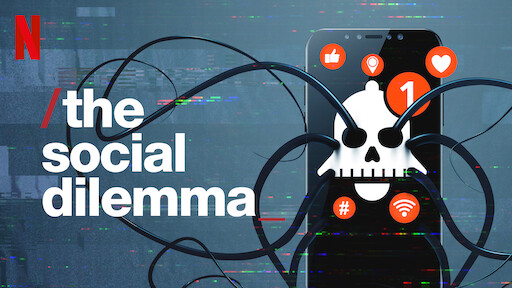
The Films of 2020: The Social Dilemma (dir by Jeff Orlowski)


You have to feel a little bit bad for The Social Dilemma, a well-intentioned documentary that makes several good points but which runs into one huge problem.  The documentary takes a look at social media and, more specifically, how society’s addiction to social media has led to a world where people are more divided, more angry, more anxious, and more volatile.  Featuring interviews with the people worked for the companies and who created the social media sites that currently dominate our culture, The Social Dilemma shows how the algorithms that were initially designed to keep people clicking have now led to a world where everyone is living in their own separate reality.  The film makes the case that this is not a good thing and that the heads of Twitter and Facebook are potentially more powerful than any world leader.  Considering that the film was released months before the social media-directed riot at the capitol and Big Tech’s subsequent decision to ban President Trump (while, of course, continuing to allow both Chinese propaganda and the Ayatollah’s calls for the destruction of Israel), it’s hard not to feel that The Social Dilemma‘s case has been proven.  It’s a prophetic film.

The problem, however, is that most people already know that social media is addictive and that it’s potentially harmful and that Google has way too much data on file about its users.  Everyone already knows this.  It’s just that most people don’t care.  That’s the nature of addiction.  Even though you know it’s probably going to kill you, you also know that there’s a good chance that you’re next fix might be the best feeling you’ve ever experienced.

I know that it’s not a coincidence that YouTube is always trying to get me to watch videos about kittens.  I also know that it’s not a coincidence that, for several months last year, every internet ad that I saw was for lingerie.  And yes, I guess it’s a little bit creepy that both YouTube and Facebook managed to figure out my political leanings, despite the fact that I hardly ever post anything political online.  I would be outraged if I wasn’t so busy clicking on stuff.  What’s that YouTube?  There’s a video of two kittens at a meeting of libertarian Catholics and it ends with a La Perla ad?  I’ll be right over. Just let me finish writing this review….

The Social Dilemma is full of interviews with people who once worked for companies and services like Google, Facebook, Twitter, and Instagram.  Most of them wear the shell-shocked expressions of people who are still grappling with feelings of “My God, what have I done?”  They discuss not only how the algorithms behind social media work but also how those algorithms eventually turned out to be more powerful and more destructive than any of their creators imagined.  One former Facebook engineer discusses how “likes’ were originally viewed as being a way to encourage people to be positive but, instead, they quickly turned Facebook into a competition.  One particularly sobering segment discusses how the social media boom also brought with it a surge of teenage girls going to the emergency room as a result harming themselves as their self-worth became linked to getting likes, retweets, hearts, shares, and all the rest.  It’s a sobering film, though its impact is lessened by the decision to include some dramatizations involving a fictional family.  The message of the film come through well enough via interviews without the film including scenes of Vincent Kartheiser literally playing a character named Artificial Intelligence.  (That said, it’s always good to see Vincent Kartheiser in a film.  He’s an actor who deserves to work more.)

To the film’s benefit, it acknowledges that giving up social media is not a realistic solution for most people.  At this point, asking people to totally give up social media is the equivalent of asking someone to voluntarily cut themselves off from the world.  (As one interviewee points out, social media manages to be both a utopia and a dystopia at the same time.)  The documentary makes the argument that the Big Tech monopoly needs to be better regulated and perhaps broken up.  (The film’s right but, considering how many former Silicon Valley executives and Big Tech lobbyists are going to be involved with the Biden administration, none of that’s not going to happen any time soon.)  The film ends with a series of suggestions about how to use social media without allowing it to control or destroy your life.  Most of them are common sense stuff — seek out opposing view points, don’t click on clickbait, don’t blindly retweet or share, do not give devices to children, turn off notifications, etc., etc. — and I’m happy to say that I do most of them.

That said, social media is addictive.  I’ve tried to take breaks from twitter but it’s rare that I can ever go more than a day without checking.  Seeing those mentions, seeing those likes, seeing those retweets; even after all these years, it’s still a rush.  When I first started watching The Social Dilemma, I hopped on twitter just to let people know that I was watching the movie.  When the movie ended, I checked to see if anyone had commented on the fact that I was watching it.  That’s the world that we all live in right now.

And, as one interviewee says during The Social Dilemma, it could very well be the end of the world.  What’s sad, though, is that most people are too busy looking at their phones and devices to even enjoy the ride.


Film Review: My Friend Dahmer (dir by Marc Meyers)


The 2017 film, My Friend Dahmer, opens in a suburban high school in the 1970s.  It’s a school like any other, with the usual collection of jocks, nerds, geeks, and outcasts.  Jeff (Ross Lynch) is the token weird kid.  Every school has one.  He’s obviously intelligent but there’s something off about him.  He shuffles around the school with his eyes down.  When he speaks, he rarely shows any emotion, leaving you to wonder if he’s just shy or if he’s lost in a world of his own.  There are rumors, of course, about all the strange things that Jeff has done.  Some people say that they’ve seen him collecting dead animals.  Jeff has told people that he has a shack where he uses acid to dissolve carcasses.  Jeff frequently comes to school drunk, reeking of alcohol.  And then there’s his parents!  His father (Dallas Roberts) tries to be strict but usually just comes across as befuddled.  Meanwhile, his mother (Anne Heche) alternates between doting on her oldest son and making paranoid accusations.

His father demands that Jeffrey make some friends.  That’s why Jeff ends up in such unlikely places as both the school band and the school’s tennis team.  Still feeling out-of-place, Jeff starts to act out in school.  Walking through the hallway, he’ll suddenly start shouting and twitching.  Jeff becomes known as the kid who will do anything.  One his classmates, an artist named John “Derf” Backderf (Alex Wolff), even starts to draw pictures based on Jeffrey’s antics.  Derf and his friends describe themselves as being Jeffrey’s fan club.  For the rest of the school year, they encourage Jeff to act stranger and stranger.  It would be incorrect to say that Derf and Jeff are really friends.  In fact, towards the end of the school year, Derf starts to realize that he’s basically been exploiting Jeff for his own amusement.  And yet, Derf and his friends provide perhaps the closest thing to “normal” human interaction that Jeff will ever experience.

As you’ve probably already guessed from the film’s title, Jeff is Jeffrey Dahmer, the infamous Milwaukee-based serial killer and cannibal who is estimated to have killed 17 young men before he was arrested in 1991.  (In 1994, Dahmer was murdered in prison by an inmate who claimed to have been motivated by Dahmer’s lack of remorse.)  Dahmer committed his first murder when he was 18, a fact alluded to towards the end of the film when we see Dahmer picking up a hitchhiker.  (Disturbingly, the only time in the film in which Dahmer smiles and sounds like a “normal” person is when he’s trying to convince that hitchhiker to get in his car.)  With the exception of that one scene, My Friend Dahmer deals with the year before Dahmer started his killing spree, when Dahmer was just the token weird kid.

The fact that we know what Jeffrey Dahmer is ultimately going to becomes add an ominous subtext to every scene in the film.  Throughout, there are signs that something is wrong with Dahmer and yet neither his classmates nor his teachers ever seem to take those signs seriously.  When Dahmer brutally cuts open a fish because he wants to see what’s inside of it, his friends are disgusted but they assume that’s just Dahmer being weird again.  When he shows up drunk for class and his grades start to go downhill, his teachers just ignore him.  No matter what he says (and he does say some truly disturbing things), everyone just shrugs it off.  Their attitude is that Jeff’s the weird kid so, of course, he’s going to say weird things.

To its credit, My Friend Dahmer resists the temptation to sensationalize or make excuses for the monster that Jeffrey Dahmer became.  Ross Lynch plays Dahmer as a hulking, inarticulate time bomb.  It’s not so much that Dahmer can’t control his dark thoughts as he really has no desire to do so.  The film contrasts Dahmer’s darkness with the light-hearted and, quite frankly, dorky guys who briefly became his clique.  (Again, despite the film’s title, it would probably be a bit of a stretch to say that Dahmer had any real friends.)  One practical joke, in which Derf sneaks Dahmer into every club’s yearbook picture, is so likable in its dorkiness that you almost forget that Derf’s scheme centers around a guy who will grow up to murder 17 people.  In the end, both Dahmer’s crimes and his fate feels as inevitable as the fact that Derf will ultimately write and draw graphic novel about their relationship.

By any stretch of the imagination, it’s not a happy or pleasant film.  I watched the film last night and I doubt I’ll ever watch it again.  And yet, it’s an effective film, one that left me wondering what happened to some of the “weird kids” that I went to school with.  Do we ever really know what’s going on inside someone’s head?  Ross Lynch turns Dahmer into a disturbingly familiar monster while Alex Wolff is sympathetic in the role of Derf.  Anne Heche goes a bit overboard as Dahmer’s unstable mother but Dallas Roberts has a few good scenes as the father who can only watch helplessly as his son grows more and more disturbed.  The film is a disturbing trip into the heart of darkness, one that will haunt you after it ends.


Sundance Film Review: Alpha Dog (dir by Nick Cassavetes)


The Sundance Film Festival is currently taking place in Utah so, for this week, I’m reviewing films that either premiered, won awards at, or otherwise made a splash at Sundance!  Today, I take a look at 2006’s Alpha Dog, which premiered, out of competition, at Sundance.

Sometimes, I suspect that I may be the only person who actually likes this movie.

Alpha Dog is a film about a group of stupid people who end up doing a terrible thing.  Johnny Truelove (Emile Hirsch) is a 20 year-old living in Los Angeles.  His father, Sonny (Bruce Willis) and his godfather, Cosmo (Harry Dean Stanton), are both mob-connected and keep Johnny supplied with the drugs that Johnny then sells to his friends.  It’s a pretty good deal for Johnny.  He’s got a nice house and a group of friends who are willing to literally do anything for him.  Johnny, after all, is the one who has the money.

When Johnny’s former best friend, Jake Mazursky (Ben Foster), fails to pay a drug debt, things quickly escalate.  When Johnny refuses to accept even a partial payment, Jake responds by breaking into Johnny’s house and vandalizing the place.  (Just what exactly Jake does, I’m not going to go into because it’s nasty.  Seriously, burn that house down…)  Johnny decides that the best way to force Jake to pay up is to kidnap Jake’s younger brother, Zack (Anton Yelchin, who is heartbreakingly good in this film).

It quickly turns out that Zack doesn’t mind being kidnapped.  Everyone tells Zack not to worry about anything and that he’ll be set free as soon as Jake pays his debt.  Zack decides to just enjoy his weekend.  Since Johnny is better at ordering people to commit crimes than committing them himself, he tells his friend, Frankie (Justin Timberlake), to keep an eye on Zack.

And so it goes from there.  While Johnny leaves town, Frankie introduces Zack to all of his friends.  Everyone laughs about how Zack is “stolen boy.”  Zack’s going to parties and having a good time.  However, Johnny returns and reveals that he’s been doing some thinking, as well as talking to his lawyer.  Regardless of whether Zack’s enjoying himself, both Johnny and Frankie could go to prison for kidnapping him.  Frankie argues that Zack won’t tell anyone about what happened.  Maybe they could just pay him off.  Johnny thinks it might be easier to just have him killed.  Frankie’s not a murderer but what about Elvis Schmidt (Shawn Hatosy)?  Elvis is a loser who desperately wants to be a part of Johnny’s crew and he owes Johnny almost as much money as Jake does.  How far would Elvis be willing to go?

(While this plays out, the film keeps a running tally of everyone who witnesses Zack not only being kidnapped but also held hostage.  In the end, there were at least 32 witnesses but none of them said a word.)

Alpha Dog is based on the true story of Jesse James Hollywood and the murder of 15 year-old Nicholas Markowitz.  Hollywood spent five years as a fugitive from justice, hiding out in Brazil and reportedly being protected by his wealthy family.  He was arrested shortly before the Sundance premiere of Alpha Dog.  Since it was filmed before Hollywood’s arrest and subsequent conviction, Alpha Dog changed his name to Johnny Truelove.  Johnny Truelove is a good name but it’s nowhere near as memorable as Jesse James Hollywood.

Alpha Dog sticks close to the facts of the case, providing a disturbing portrait of a group of aimless wannabe gangsters who, insulated by money and privilege, ended up getting in over their heads and committing a terrible crime.  Emile Hirsch gives one of his best performances as the sociopathic Johnny Truelove while Ben Foster is both frightening and, at times, sympathetic as Jake.  Justin Timberlake is compelling as he wrestles with his conscience while Shawn Hatosy is properly loathsome as the type of idiot that everyone knows but wish they didn’t.  The dearly missed Anton Yelchin is heartbreaking and poignant as Zack.  And finally, there’s Harry Dean Stanton.  Stanton doesn’t say a lot in this movie.  Often times, he’s just hovering in the background.  The moment when he reveals his true self is one of the best in the movie.

As I said, I sometimes feel as if I’m the only person who likes this movie.  It got mixed reviews when it was released and, in the years since, it rarely seems to ever get mentioned in a positive context.  Personally, I think it’s a well-done portrait of privilege, stupidity, and the lengths to which people will go to avoid taking a stand.  In the end, no one escapes punishment but it’s the rich guy who, at the very least, gets to spend at least a few years enjoying his freedom in Brazil.

Previous Sundance Film Reviews:

  1. Blood Simple
  2. I Don’t Feel At Home In This World Anymore
  3. Circle of Power
  4. Old Enough
  5. Blue Caprice
  6. The Big Sick

Cleaning Out The DVR: Crime + Punishment in Suburbia (dir by Rob Schmidt)


(Lisa is once again trying to clean out her DVR!  She’s got about 182 films on her DVR and she needs to get them all watched by the end of this year!  Will she make it?  Not if she’s too busy writing cutesy introductions for her reviews to actually watch the movies!  She recorded Crime + Punishment in Suburbia off of Flix on February 25th!)

Oh, dammit.

I have seen some really pretentious movies before but Crime + Punishment in Suburbia is really something else.  As you might be able to guess from the title, the film is supposedly based on the Dosteyevsky novel but it takes place not only in modern times but in suburbia as well.  Oh, and it actually has next to nothing in common with Doteyevsky novel, beyond a murder and occasional religious symbolism.  And by occasional, I mean that there’s a scene where Vincent Kartheiser wears a Jesus t-shirt.

Kartheiser plays Vincent, a teenager who I think we’re supposed to think is dark and disturbed but instead he just comes across like a weird little poser.  I mean, honestly, it takes more than just wearing black clothes to be weird.  I had a closet full of black clothes when I was eighteen and it still never brought me any closer to enlightenment.  Anyway, Vincent is a classmate of Roseanne (Monica Keena) and Roseanne is dating a handsome but dumb jock named Jimmy (James DeBello).  Roseanne’s mother is named Maggie (Ellen Barkin) and Maggie has recently married an abusive drunk named Fred (Michael Ironside).

Fred is a total jerk so Maggie goes out with her best friend, Bella (Conchata Ferrell), to a bar.  It’s at the bar that she meets Chris (Jeffrey Wright), a handsome and charming bartender.  Soon, Chris and Maggie are having an affair and when Fred finds out, he rapes his stepdaughter.  Roseanne convinces Jimmy to help her murder Fred but, after the deed is done, Roseanne finds herself struggling with her conscience.

Now, of course, in Crime & Punishment, the whole point is that the murder itself was largely random and motiveless.  The rest of the book deals with the protagonist’s attempt to come to terms with not only his crime but also with the meaninglessness of it all.  In Crime + Punishment in Suburbia, Roseanne has a good reason for killing Fred.  Fred is such a monster that there’s no real confusion as to why Roseanne did what she did.  One could argue, quite convincingly, that if she didn’t kill Fred, he would have ended up killing her.  That makes the film’s later attempt at moral ambiguity feel rather hollow and empty.

The other problem with Crime + Punishment in Suburbia is that we don’t see the story through Roseanne’s eyes.  Instead, the entire movie is narrated by Vincent.  Now, Vincent Kartheiser is not a bad actor.  Anyone who has seen Mad Men knows that.  And, in this film, he occasionally gets to flash a cute smile that makes the character a little bit bearable.  But the character he plays, Vincent, is so weird and off-putting that you have no desire to spend 100 minutes listening to him portentously talk about his existence.  Considering that Monica Keena actually gives a pretty good performance as Roseanne, the decision to tell her story through Vincent’s eyes feels all the more mistaken.

The only thing more overwrought than Vincent’s narration is Rob Schmidt’s direction.  This is one of those films that uses every narrative trick in the book to tell its story.  Look at the wild camera angles!  Look at the sudden slow motion!  Look at the freeze frame!  This is one of those movies that you watch and you just want to shout, “Calm down!” at the director.

Crime + Punishment in Suburbia is one to avoid.