COMBAT (TV Series) – starring Rick Jason and Vic Morrow – S3, E30: “Heritage” (Guest star – Charles Bronson)!


Just after surviving a difficult mission, Lt. Hanley (Rick Jason) and Kirby (Jack Hogan) are given orders to guide an artistic demolitions expert named Cpl. Velasquez (Charles Bronson) to a German observation post that sits on top of a rocky mountain. Their objective is to blow up the enemy post so a group of ten thousand Allied soldiers can cross the valley below on the very next day. Complicating the journey to the targeted destination is Velasquez’s slow pace and fascination with the local geology. This lack of focus causes plenty of problems with Hanley who just wants to get to the location and blow it to smithereens. Once they finally make it to the observation post, Velasquez spots a vault dug into the side of mountain and determines it’s the perfect spot to set his charges. However, when he goes into the vault, he sees that it is full of priceless sculptures and works of art, and he can’t bring himself to blow them up. But if they don’t complete their mission, 10,000 Allied soldiers will soon be sitting ducks. Will Velasquez come to his senses in time to save the men?!!

Today, I watched my old VHS tape of this season 3 episode of COMBAT, called “Heritage,” which premiered in April of 1965. When I was in junior high, I was at Wal-Mart and they had a big bin of VHS tapes, and in those bins, they had tapes that would contain one episode of the series. I don’t remember now who the guest stars were on the other tapes, but I certainly got excited when I saw an episode with Charles Bronson for sale. Since this was in the late 80’s, my tape is over 35 years old, and it’s still holding up well. “Heritage” is the only episode of COMBAT that I’ve ever seen. The series stars Rick Jason as Lt. Hanley and Vic Morrow as Sgt. Saunders. Morrow just makes a very short appearance here at the very beginning, with the episode focusing on the characters played by Jason and Bronson. The other primary character in this episode, who goes by the name of Kirby, is played by Jack Hogan who appeared in 111 episodes of the series. He’s more in the background of the episode as Bronson and Jason take center stage. 

Charles Bronson plays a much different type of character than he would go on to play in most of movies from the 70’s and 80’s. His Cpl. Velasquez can be described as more of a lover and not a fighter. Rather than focus on getting to his target, he’d rather take his time and soak in the interesting and varied rock formations along the way. Rather than easily taking out the enemy and saving his fellow soldiers, he can’t bring himself to destroy priceless works of art, pieces he calls our “God-given…immortal heritage!” It takes a little getting used to, but Bronson turns in a strong performance as a man who has something much more beautiful on his mind than just following orders and killing. This character and performance contrasts greatly with Rick Jason’s character who just wants to complete his mission and get back to base. It’s a shame that war puts people into these kinds of positions where you have to destroy some amazing things in order to save others, but that’s just how it is. I thank God that there have been so many brave men and women who have done what it takes to give us the freedom that we enjoy every day. Even though it was gonna hurt, Cpl. Velasquez, as played by Charles Bronson, is the kind of man who does what it takes. 

Overall, “Heritage” is a good episode that’s elevated by Bronson’s excellent performance. It’s a prime example of just what a great character actor Bronson was before hitting the big time as an international superstar a few short years later. I may have to check out a few more episodes of the COMBAT series after this! 
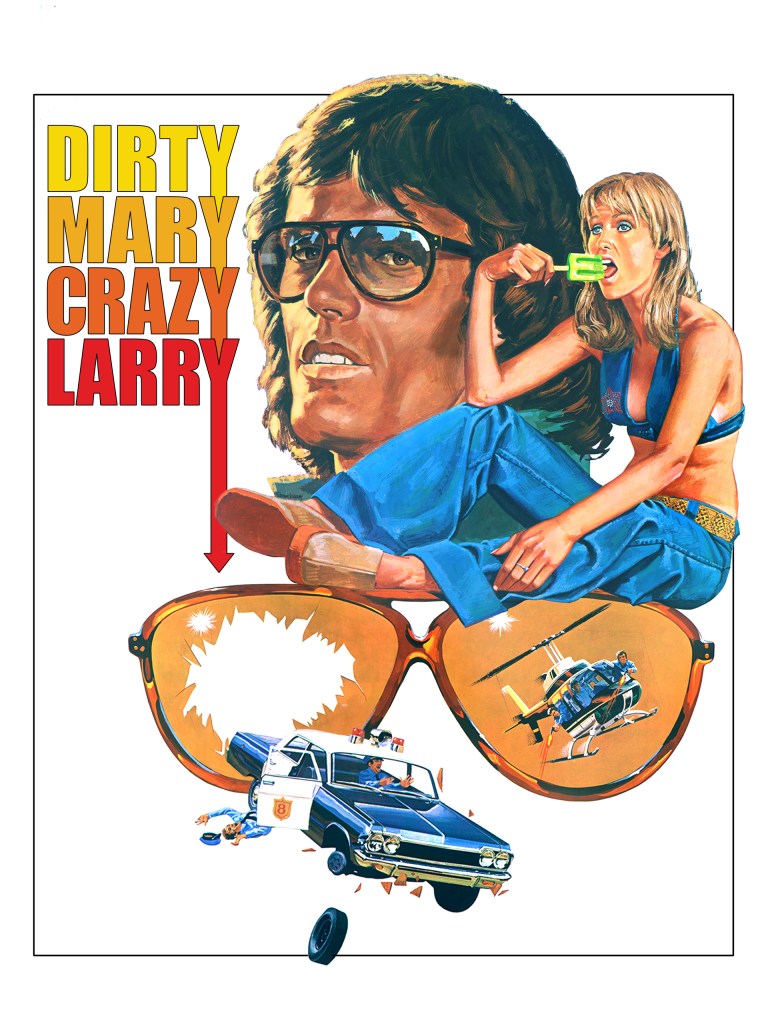
#MondayMuggers – Why DIRTY MARY CRAZY LARRY?


Every Monday night at 9:00 Central Time, my wife Sierra and I host a “Live Movie Tweet” event on X using the hashtag #MondayMuggers. We rotate movie picks each week, and our tastes are quite different. Tonight, Monday December 16th, we’re watching DIRTY MARY CRAZY LARRY starring Peter Fonda, Susan George, Adam Roarke, and Vic Morrow.

So why did I pick DIRTY MARY CRAZY LARRY, you might ask?

  1. I love car chase stunt movies from the 1970’s! We featured WHITE LIGHTNING with Burt Reynolds on here a couple of years ago. This should be another good 70’s car chase movie for the group. I’ve never actually watched the film before today so I’m really looking forward to it.   
  2. I like the cast, especially Susan George. What’s strange is that Susan is in my least favorite Charles Bronson movie of all time, LOLA, but I don’t hold that against her at all. She’s just so beautiful, and with a filmography that includes STRAW DOGS, SONNY AND JED, MANDINGO, and ENTER THE NINJA, what’s not to love?!!
  3. I think it’s cool that Peter Fonda did most of his own driving in the film, often driving over 100 miles per hour. I respect actors who are capable of doing their own stunt work…Jackie Chan, Tom Cruise, and now Peter Fonda!
  4. Quentin Tarantino loves DIRTY MARY CRAZY LARRY! He selected the film for the first “Quentin Tarantino Film Fest” in Austin back in 1996. He also featured a clip from this movie in JACKIE BROWN. It makes it even cooler that the scene in JACKIE BROWN featured Bridget Fonda, Peter’s daughter! If Tarantino loves it, that’s enough for me!

So join us tonight to for #MondayMuggers and watch DIRTY MARY CRAZY LARRY! It’s on Amazon Prime.

Retro Television Review: Fantasy Island 5.16 “The Challenge/A Genie Named Joe”


Welcome to Retro Television Reviews, a feature where we review some of our favorite and least favorite shows of the past!  On Tuesdays, I will be reviewing the original Fantasy Island, which ran on ABC from 1977 to 1984.  Unfortunately, the show has been removed from most streaming sites.  Fortunately, I’ve got nearly every episode on my DVR.

This week, Fantasy Island reminds us why we love this show in the first place.

Episode 5.16 “The Challenge/A Genie Named Joe”

(Dir by Cliff Bole, originally aired on February 13th, 1982)

Now, this is a great episode!

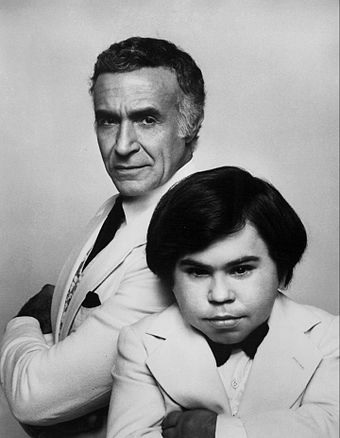
Julie doesn’t appear in this episode, beyond the usual stock footage that appears at the start of every season 5 episode.  In fact, Julie isn’t even mentioned in this episode.  Instead, it’s Roarke and Tattoo all the way.  Roarke and Tattoo greet the visitors together.  Tattoo is the one who helps Roarke put the fantasies together.  Roarke and Tattoo say goodbye to everyone at the end.  In a way, this episode felt like a throwback to the first two seasons of Fantasy Island.

The fantasies feel like throwbacks to the first two seasons as well, with both of them featuring interesting guest stars and just enough twists to keep things interesting.  We’ve got one comedic fantasy and one dramatic fantasy but the comedic fantasy is not too silly and the dramatic fantasy is not too serious.  The episode manages to strike a pretty good balance between the two so, for once, neither fantasy feels rushed or short-changed.

The comedic fantasy features Kim Darby as Rebecca Walters, who wants to find a husband who is courteous and handsome.  Tattoo takes her out to the magical Fantasy Island lagoon, where she meets a genie named …. well, he has a really long genie name but fortunately, he’s happy to be called Joe (Larry Linville).  Joe can grant Rebecca three wishes.  As always happens with genies, Rebecca wastes her first two wishes.  For instance, when she says that it’s a little bit too warm for her, Joe grants her wish and temporarily turns Fantasy Island into a winter wonderland, complete with snow and Christmas music playing.  (Seriously, the sight of snow on Fantasy Island was surprisingly charming, as was Tattoo’s shocked reaction.)  In the end, of course, Rebecca comes to discover that she loves Joe.  Joe transforms from a genie-into-a-man and they leave the Island together.  It was a charming and cute fantasy.  Both Darby and Linville seemed to be having fun with their roles and they had a surprising amount of chemistry together.  This was a fun fantasy.

As for the dramatic fantasy, it allowed us to learn a little about the history of the Island.  Apparently, centuries ago, the Island belonged to a Spanish sea captain.  Ruthless tycoon Douglas Picard (Vic Morrow) came across the deed to the island after he moved into a villa that once belonged to the captain.  Picard claims that the Island is legally his.  Roarke points out that the deed is several centuries old and that it would take years for the legal system to sort out who owned what.  Picard challenges Roarke to three challenges to decide who will own the island, challenges that will test the mind, body, and spirit of the two men.  The person to win two of the matches also wins the Island.  Roarke agrees.

Here’s the thing that I find interesting about all of this.  First off, it’s implied that the Spanish sea captain was a part of the Spanish Armada.  Why would the Spanish Armada have been in the South Pacific?  Even more importantly, though, was the island still capable of granting fantasies when it was owned the Captain?  Are the fantasies created by the Island or by Mr. Roarke?  The case for the Island being magical can be found in this very episode, in which Tattoo takes Rebecca to a lagoon inhabited by a genie.  Throughout the series, there have been many such locations on the Island.  But Roarke himself is clearly more than just the charming owner of a resort.  Ricardo Montalban once said that he felt Roarke was a fallen angel who was doing penance on the Island.  That’s an interesting idea and would certainly explain why Roddy McDowall’s Devil always seemed to want to steal Roarke’s soul.  Of course, the Blumhouse film and the recently-canceled reboot both suggested that Fantasy Island has had many different caretakers but I’m not sure that I consider either one of those to be canonical.  I kind of like the idea Roarke having lived on the Island for centuries, like Richard on Lost.

Anyway, the three competitions are actually pretty interesting.  The first one is a chess match that is won by Roarke.  The second one features Roarke and Picard arm-wrestling over a killer spider.  Roarke is in on the verge of winning that one but allows Picard to have the victory rather than kill him.  The third competition is to do something selfless that improves someone else’s life.  (I’m not sure how the winner would be selected but we’ll just go with it.)  Picard gives money to a charity that he knows little about.  Roarke, however, wins because he made Picard’s sister, Eunice (Jane Powell), happy by choosing not to kill Picard.  Picard is so happy to finally see Eunice happy that he decides he doesn’t need to take ownership of Fantasy Island.  Everyone leaves the Island a better person than they were when they arrived.  Yay!

As I said before, this episode felt like a throwback to the earlier seasons of Fantasy Island.  This was a great trip to the Island!

Retro Television Review: The Glass House (dir by Tom Gries)


Welcome to Retro Television Reviews, a feature where we review some of our favorite and least favorite shows of the past!  On Sundays, I will be reviewing the made-for-television movies that used to be a primetime mainstay.  Today’s film is 1972’s The Glass House!  It  can be viewed on YouTube.

The Glass House starts with three men arriving at a location that will define the next few months of their lives.

Brian Courtland (Clu Gulager) is a veteran of the Vietnam War.  He spent part of his service working as a guard in the brig.  Now that he’s back in the United States and in need of a regular paycheck, he has gotten a job working as a prison guard.  Courtland is not naive about where he’s going to be working or who he is going to be working with.  But he is an idealist, one who tries to treat everyone fairly and who hopes that he will be able to do some sort of good in his new position.

Alan (Kristoffer Tabori) is a young man who has been arrested for selling marijuana.  He is quiet and just hoping to serve his time and then get on with his life.  His fellow prisoners have different plans for him.

Finally, Jonathan Paige (Alan Alda) is a liberal professor who, in a moment of rage, accidentally killed a man in a fight.  Convicted of manslaughter, Paige enters the prison in a daze and cannot stop flashing back to the one moment that changed his life forever.  Paige is assigned to work in the pharmacy, where he meets a prisoner-turned-activist named Lennox (Billy Dee Williams).  Paige struggles to retain his humanity despite the harsh conditions.

All three of the men find themselves having to deal with the attentions of Hugo Slocum (Vic Morrow), the predatory “king” of the prison.  Slocum expects Paige to help him run drugs though the the pharmacy.  Slocum preys on Alan and sends his gang to punish him when Alan refuses Slocum’s advances.  And Slocum expects that Courtland will just be another corrupt guard who agrees to look the other way when it comes to Slocum’s activities.  Courtland, however, turns out to have more integrity than anyone was expecting.

The Glass House opens with a title card, informing the viewer that the film was shot at an actual prison and that the majority of the people in the film were actual prisoners.  Not surprisingly, The Glass House does feel authentic in a way that a lot of other films about incarceration does not.  The prison is claustrophobic and dirty, with every crack in the wall reminding the prisoners and the viewer that no one cares about what happens there.  The extras have the blank look of men who understand that showing any emotion will be taken a sign of a weakness.  Made in 1972, at a time when America was still struggling to integrate, The Glass House takes place in an almost totally segregated world.  The black prisoners stick together.  The white prisoners stick together.  Everyone understands that’s the way that it will always be and, as we see by the end of the film, that’s the way the guards and the warden (Dean Jagger) prefer it because that means almost any incident can be written off as a being “a race riot.”

The real actors amongst the population do a good job of blending into the surroundings.  Alda, Williams, and Tabori all give good performance while Vic Morrow is truly menacing in the role of the vicious Slocum.  Slocum may not be particularly bright but, because he has no conscience, he is uniquely suited to thrive in a world with no morality.  The film’s best performance comes from Clu Gulager, who does a great job of portraying Courtland’s growing disgust with how the system works.

Though it’s over 50 years old, The Glass House is a still a powerful look at life on the fringes.  Society, for the most part, doesn’t really care much about what happens to the incarcerated.  This film makes a strong case that we probably should.  One is left with little doubt that, even if relatively harmless prisoners like Paige and Campbell survive being locked up with men like Slocum, they’ll still be incapable of returning to the “real world” afterwards.  The viewer, like Brian Courtland, is left to wonder how much corruption can be tolerated before enough is enough.

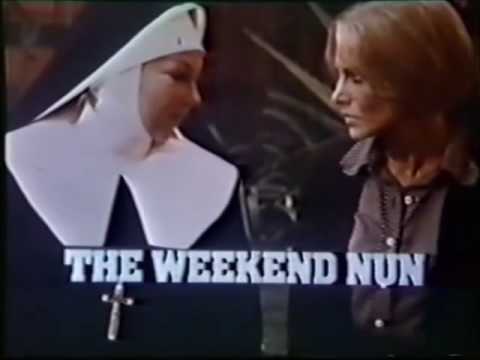
Retro Television Reviews: The Weekend Nun (dir by Jeannot Szwarc)


Welcome to Retro Television Reviews, a feature where we review some of our favorite and least favorite shows of the past!  On Sundays, I will be reviewing the made-for-television movies that used to be a primetime mainstay.  Today’s film is 1972’s The Weekend Nun!  It  can be viewed on YouTube!

By day, Marjorie Walker (Joanna Pettet) is a probation officer who, some might say, cares just a little too much.

By night and on the weekends, she’s Sister Mary Damian, a nun who has taken the three vows of poverty, chastity, and obedience.

Mother Bonaventure (Ann Sothern) isn’t sure that she’s happy about Sister Damian working as a probation officer.  And the tough and cynical Detective Chuck Jardine (Vic Morrow) certainly isn’t happy when he discovers that the reason why Marjorie has never invited him into her home for a drink is because she lives at a convent.  But Marjorie is determined to make a difference, especially in the life of a troubled teen runaway named Audree (Kay Lenz).

Now, this may sound like the premise of a socially relevant sitcom and, indeed, The Weekend Nun is one of those titles that might lead some to expect wacky hijinks and an intrusive laugh track.  However, The Weekend Nun is not only loosely based on a true story but the film also takes itself very seriously.  From the minute that Sister Damian agrees to take part in a program that would allow her to work a real job during the day while returning to the convent at night, she’s exposed to the harsh realities of the world.  She goes from being sheltered to dealing with distraught parents, drug addicts, teen prostitutes, and violent criminals.  Because Captain Richardson (James Gregory) doesn’t want anyone to feel uncomfortable, he hides the fact that she’s a nun.  Of course, this leads to be people like Chuck Jardine wondering why Marjorie is so shocked when she witnesses the thing that he has to deal with a day-to-day basis.

And, indeed, the film’s biggest flaw is that Marjorie is often portrayed as being ridiculously naïve.  The film acts as if spending time in a convent is somehow the equivalent of spending a decade hiding out in a bomb shelter or something.  (Speaking as a Catholic school survivor, nuns are usually some of the least naïve people around.)  Marjorie is portrayed as being such a wide-eyed innocent that it’s hard not to wonder why she was hired to work as a probation officer in the first place.  Of course, Marjorie quickly gets an education on just how dangerous and unforgiving life on the streets can be and she soon has to make a choice between being a nun or being a probation officer.  Will she give her life to God or will she potentially give it to Vic Morrow?

Joanna Pettet overplays Marjorie’s innocence but that’s more the fault of the script than anything else.  James Gregory, Vic Morrow, and Ann Sothern are all believable as the authority figures in Marjorie’s life and Kay Lenz has a few good scenes as the teenage runaway who Marjorie tries to save.  Beverly Garland has a small but brief role as Lenz’s horrifically unconcerned mother.  It’s a well-acted film, regardless of any other flaws.

The Weekend Nun is not perfect but it’s still preferable to The Flying Nun.  It’s a sincerely heartfelt film, one that’s earnest in a way that can seem a bit quaint but which is still likable when watched today.  For better or worse, there’s not a hint of snark to be found.

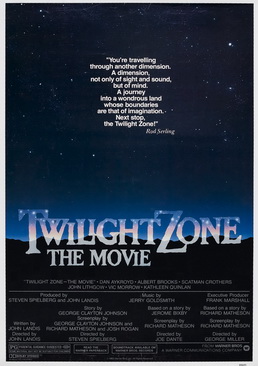
Horror Film Review: Twilight Zone: The Movie (dir by John Landis, Steven Spielberg, Joe Dante, and George Miller)


1983’s Twilight Zone: The Movie is meant to be a tribute to the classic original anthology series.  It features four “episodes” and two wrap-around segments, with Burgess Meredith providing opening and closing narration.  Each segment is directed by a different director, which probably seemed like a good idea at the time.

Unfortunately, Twilight Zone: The Movie is a bit of a mess.  One of the episodes is brilliant.  Another one is good up until the final few minutes.  Another one is forgettable.  And then finally, one of them is next too impossible to objectively watch because of a real-life tragedy.

With a film that varies as wildly in tone and quality as Twilight Zone: The Movie, the only way to really review it is to take a segment at a time:

Something Scary (dir by John Landis)

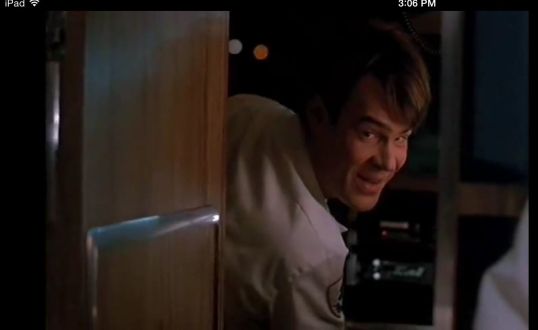
Albert Brooks and Dan Aykroyd drive through the desert and discuss the old Twilight Zone TV series.  Brooks claims that the show was scary.  Aykoyd asks if Brooks wants to see something really scary.  This is short but fun.  It’s tone doesn’t really go along with the rest of the movie but …. oh well.  It made me jump.

Time Out (dir by John Landis)

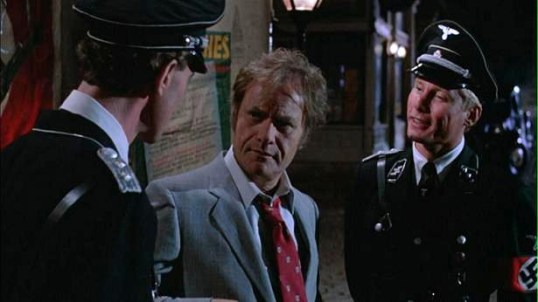
Vic Morrow plays a racist named Bill Connor who, upon leaving his local bar, finds himself transported to Nazi-occupied France, the deep South, and eventually Vietnam.

How you react to this story will probably depend on how much you know about its backstory.  If you don’t know anything about the filming of this sequence, you’ll probably just think it’s a bit heavy-handed and, at times, unintentionally offensive.  Twilight Zone often explored themes of prejudice but Time Out just seems to be using racism as a gimmick.

If you do know the story of what happened while this segment was being filmed, it’s difficult to watch.  Actor Vic Morrow was killed during filming.  His death was the result of a preventable accident that occurred during a scene that was to involve Morrow saving two Vietnamese children from a helicopter attack.  The helicopter crashed, killing not only Morrow but the children as well.  It was later determined that not only were safety protocols ignored but that Landis had hired the children illegally and was paying them under the table so that he could get around the regulations governing how many hours child actors could work.  It’s a tragic story and one that will not leave you as a fan of John Landis’s, regardless of how much you like An American Werewolf in London and Animal House.

Nothing about the segment feels as if it was worth anyone dying for and, to be honest, I’m kind of amazed that it was even included in the finished film.

Kick The Can (dir by Steven Spielberg)

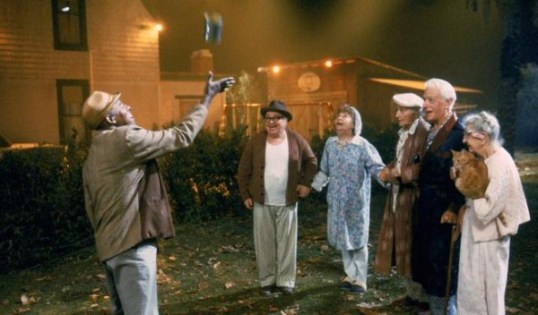
An old man named Mr. Bloom (Scatman Crothers) shows up at Sunnyvale Retirement Home and encourages the residents to play a game of kick the can.  Everyone except for Mr. Conroy (Bill Quinn) eventually agrees to take part and, just as in the episode of the Twilight Zone that this segment is based on, everyone becomes young.

However, while the television show ended with the newly young residents all running off and leaving behind the one person who refused to play the game, the movie ends with everyone, with the exception of one man who apparently became a teenager istead of a kid, deciding that they would rather be old and just think young.  That really doesn’t make any damn sense but okay.

This segment is unabashedly sentimental and clearly calculated to brings tears to the eyes to the viewers.  The problem is that it’s so calculated that you end up resenting both Mr. Bloom and all the old people.  One gets the feeling that this segment is more about how we wish old people than how they actually are.  It’s very earnest and very Spielbergian but it doesn’t feel much like an episode of The Twilight Zone.

It’s A Good Life (dir by Joe Dante)

A teacher (Kathleen Quinlan) meets a young boy (Jeremy Licht) who has tremendous and frightening powers.

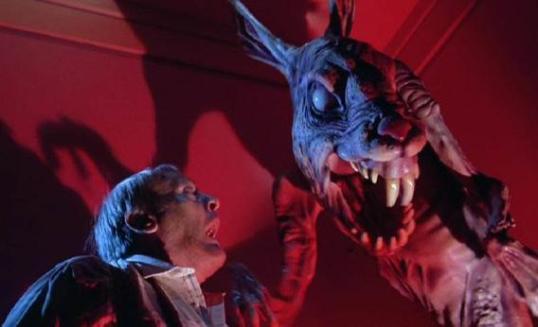
This is a remake of the classic Twilight Zone episode, It’s A Good Life, with the difference being that young Anthony is not holding an entire town hostage but instead just his family.  This segment was directed by Joe Dante, who turns the segment into a cartoon, both figuratively and, at one point, literally.  That’s not necessarily a complaint.  It’s certainly improvement over Spielberg’s sentimental approach to the material.  Dante also finds roles for genre vets like Kevin McCarthy, William Schallert, and Dick Miller and he provides some memorably over-the-top visuals.

The main problem with this segment is the ending, in which Anthony suddenly reveals that he’s not really that bad and just wants to be treated normally, which doesn’t make much sense.  I mean, if you want to be treated normally, maybe don’t zap your sister in a cartoon.  The teacher agrees to teach Anthony how to be a normal boy and again, what the Hell?  The original It’s A Good Life worked because, like any child, Anthony had no conception of how adults felt about him.  In the movie version, he’s suddenly wracked with guilt and it’s far less effective.  It feels like a cop out.

Still, up until that ending, It’s A Good Life worked well as a satire of the perfect American family.

Nightmare at 20,000 Feet (dir by George Miller)

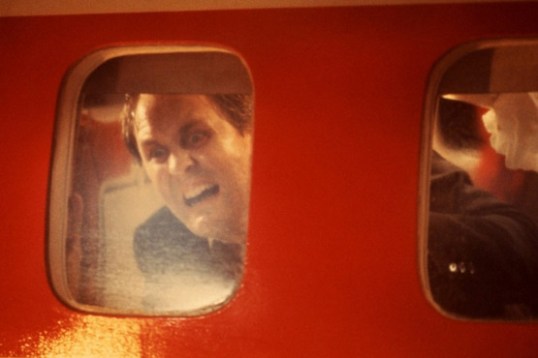
In this remake of Nightmare at 20,000 Feet, John Lithgow steps into the role that was originally played by William Shatner.  He plays a man who, while attempting to conquer his fear of flying, sees a gremlin on the wing of his airplane.  Unfortunately, he can’t get anyone else on the plane to believe him.

Nightmare at 20,000 Feet is the best of the four main segments.  It’s also the one that sticks closest to its source material.  Director George Miller (yes, of Mad Max fame) doesn’t try to improve on the material because he seems to understand that it works perfectly the way it is.  John Lithgow is also perfectly cast in the lead role, perfectly capturing his increasing desperation.  The one change that Miller does make is that, as opposed in the TV show, the gremlin actually seems to be taunting John Lithgow at time and it works wonderfully.  Not only is Lithgow trying to save the plane, he’s also trying to defeat a bully.

Something Scarier (dir by John Landis)

Dan Aykroyd’s back as an ambulance driver, still asking his passenger if he wants to see something really scary.  It’s an okay ending but it does kind of lessen the impact of Nightmare at 20,000 Feet.


The Take (1974, directed by Robert Hartford-Davis)


Lt. Terrence Sneed (Billy Dee Williams), a tough and suave cop from San Francisco, is sent to New Mexico to help Police Chief Berrigan (Eddie Albert) take down the local crime syndicate.  No sooner has Sneed arrived in town than he’s helping to prevent a prison break and killing gangsters.  Berrigan is impressed and explains to Sneed that the local crime boss is Victor Manso (Vic Morrow).  Even though everyone knows that Manso is crooked, the police haven’t ever been able to put together a case that will stand up in court.  Maybe Sneed is the man who can do it.

What Berrigan doesn’t know is that Sneed is a crooked cop, himself.  As soon as Sneed leaves his meeting with Berrigan, he goes over to Manso’s office and collects his money.  Manso assigns Sneed to work with another crooked cop, Captain Dollek (Albert Salmi).  However, it turns out that Sneed has plans of his own.  While still on Manso’s payroll, Sneed starts to put together a case that might finally take Manso down.

The Take is full of good actors in small roles.  If you have ever wanted to see Billy Dee Williams share a scene with Frankie Avalon, The Take is the film for you.  Avalon plays Danny James, a small-time hood who is arrested and interrogated by Sneed.  At first, Danny is cocky and arrogant but, as soon as Sneed removes his jacket and his watch and makes a fist, Danny starts crying and begging Sneed not to beat him.  Danny is soon turned into an informant and then disappears from the movie.  The beautiful model Kathirine Baumann plays Danny’s girlfriend.  While only wearing a towel, she gives Capt. Dollek the finger and looks amazing doing it.  Sorrell Brooke, who later found fame as Boss Hogg on The Dukes of Hazzard, also has a few good scenes as Sneed’s deceptively respectable money launderer.

The Take can be a confusing film to watch because it’s never firmly established just how corrupt Sneed actually is.  Sometimes, Sneed just seems like he’s trying to make a little extra money and then, other times, he comes across as being a full-blown gangster.  Despite being on Manso’s payroll, Sneed seems to be determined to take him down and the film never makes clear why.  Billy Dee Williams is his usual supremely cool self but he seems almost too cool to play a morally ambivalent cop.  More impressive are Vic Morrow and Eddie Albert, who both shamelessly chew the scenery as two leaders on opposite sides of the law.

The Take is often mistakenly referred to as being a blaxploitation film but it’s really just a cop film with a lead actor who happens to be black.  Unlike the best blaxploitation films, there’s no political subtext to be found in the movie.  Sneed could just as easily be a corrupt white detective and, with the exception of one throwaway line, race is never mentioned.  While this is a minor cop film, it features a few good action scenes and, again, it’s your only chance to see two very different pop cultural icons, Billy Dee Williams and Frankie Avalon, acting opposite of each other.  That’s not a bad pay-off for 91 minutes of your life.

Automotive Stardom: The California Kid (1974, directed by Richard T. Heffron)


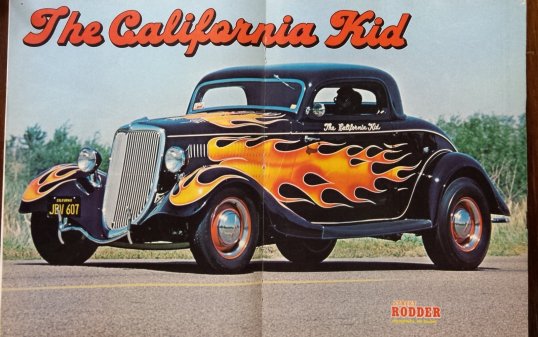
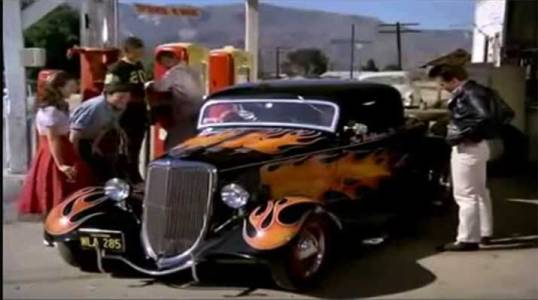
In 1973, a customized 1934 Ford three-window coup appeared on the cover of the November issue of Custom Rod.  The car had been created by legendary customizer Pete Chapouris and it was called The California Kid.  The cover caught the attention of television producer Howie Horowitz, who thought that maybe the car could become a star.

A year later, the car starred in it’s own made-for-TV movie.  Naturally, that movie was called The California Kid.

The California Kid takes place in 1958 in the small town of Clarksberg.  Clarksberg is known for being a town that does not tolerate speeders.  Sheriff Roy Childress (Vic Morrow) lost his wife and daughter to a speeder and, ever since, he’s become a fanatic about making sure that people respect the speed limits.  He’ll give a ticket to anyone who he sees going too fast.  He’ll even impound your car.  And if you don’t learn your lesson or if you try to outrun him, he’ll get behind your car, give it a push, and send both you and your vehicle plunging over the side of a mountain.

That’s what happens to Don McCord (Joe Estevez), a Marine who was just trying to get back to back to his base on time.  After Don and his car go over the side of a cliff, the official ruling is that it was an accident.  However, Don’s brother, Michael (Martin Sheen, real-life brother of Joe Estevez), doesn’t buy that.  Determined to prove that his brother was murdered, Micheal rolls into town, behind the wheel of the California Kid.

The California Kid is a typical 70s car chase movie.  There’s not much going on other than the sheriff chasing the Michael and the California Kid.  Martin Sheen coasts through the movie, doing the James Dean impersonation that he perfected in the previous year’s Badlands and Vic Morrow plays his thousandth sadistic authority figure.  The supporting cast is full of familiar names who don’t get to do much.  Michelle Phillips plays the waitress who falls in love with Martin Sheen.  (It’s always a waitress.)  Stuart Margolin is Morrow’s deputy and keep an eye out for Nick Nolte, playing a mechanic.  Interestingly, The California Kid was written by Richard Compton who, a year later, would direct Notle in his first starring role in the 1975 car chase film, Return to Macon County.  Of course, the real star of the movie is the car and the California Kid earns its star billing.  The movie might not be anything special but there’s no way you can watch it and not want to drive that car.

This is a made-for-TV movie so you won’t hear any profanity and the characters are all as simple can be.  However, there are enough shots of cars going over cliffs to keep chase enthusiasts entertained.

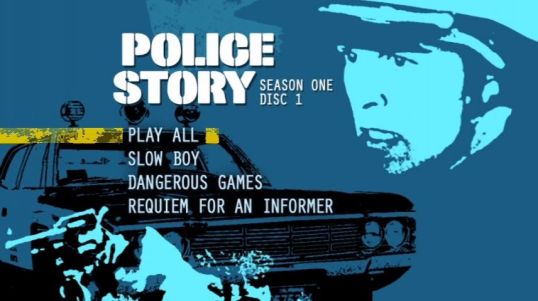
The First Police Story: Slow Boy (1973, directed by William A. Graham)


Long before The Wire, Homicide, Chicago PD, NYPD Blue, or even Hill Street Blues, there was Police Story.

Co-created by cop-turned-writer Joseph Wambaugh, Police Story aired on NBC from 1973 to 1978.  It was an anthology series, with each episode following a different member of the LAPD as they deal with crime and social issues in Los Angeles.  For its time, it was ground-breaking in its realistic approach to the life and work of the police.  Interestingly, the show wasn’t always blindly pro-cop.  Often the cops featured were deeply flawed and the war on crime was frequently portrayed to be unwinnable.  Over the course of its run, Police Story was a regular Emmy nominee and won the award for Best Drama Series in 1976.

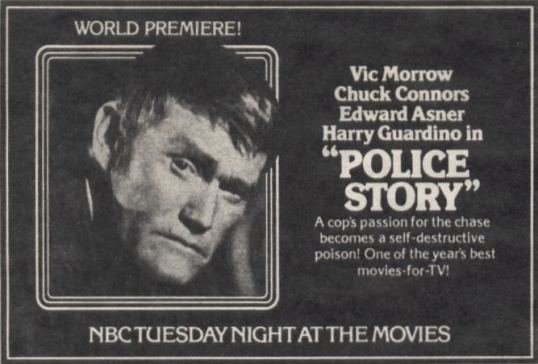
Police Story started, in 1973, with a two-hour TV movie.  At the time it aired, the pilot was called Stakeout but it has since aired in syndication under the title Slow Boy.  Vic Morrow stars as Sgt. Joe LaFrieda, a plainclothes detective who can’t keep his marriage together but who can take criminals off the street.  LaFrieda is the second-in-command of a special squad of detectives who specialize in watching and taking down high-profile criminals.  Their methods frequently come close to entrapment but they usually work.  Their current target is Slow Boy (Chuck Conners), the son of a mafia chieftain, who enjoys robbing stores.  When LaFrieda’s first attempt to put Slow Boy in jail is thwarted by a liberal judge and departmental bureaucracy, he and the squad come up with a second, less-than-legal plan to take Slow Boy down.

Considering the involvement of Joseph Wambaugh, it’s no surprise that plot is secondary to exploring the day-to-day lives of the blue-collar cops trying to take Slow Boy down.  The heart of the movie is in the scenes of the cops shooting the breeze and trying to keep each other amused during length shakeouts.  Their humor is often grim and the fascinating dialogue is cynical, dark, and, even by today’s standards, surprisingly raw.  One of the detectives (played by Harry Guardino, who specialized in loud-mouth city cops) is an unapologetic racist.  Though he gets a comeuppance of sorts, the way the film and the rest of his squad handle his racism will undoubtedly make modern audiences uncomfortable, even if it is authentic to the era in which Slow Boy was made.

The underrated Vic Morrow gives one of his best performances as the tough but sympathetic LaFrieda, who is bad at everything but his job.  He is ably supported by a host of familiar character actors.  Ed Asner plays LaFrieda’s reactionary lieutenant while Sandy Baron is great in the role of an informant.  Diane Baker was also perfectly cast as LaFrieda’s potential girlfriend.  (She first meets the detective while Slow Boy is holding a gun to her head.)  Finally, Chuck Conner is as intimidating as always as the sadistic Slow Boy.

Slow Boy is a tough and uncompromising police procedural and it provided a great start for Police Story.  Reruns of Police Story currently air on H&I on Sunday morning.

The TSL’s Horror Grindhouse: Humanoids from the Deep (dir by Barbara Peeters)


http://www.youtube.com/watch?v=J0rtiHjUP0w

Some people really hate clowns.

Myself, I really hate ventriloquist’s dummies.

Seriously, those little wooden things totally freak me out.  You know how some of you feel about the painted smile on the clowns ‘face?  Well, that’s how I feel whenever I see the big eyes of a ventriloquist dummy or that mouth with the fake teeth.  And don’t even get me started on those tiny little legs that some of them have!  AGCK!

I mention this because there is a ventriloquist’s dummy in the 1980 film, Humanoids From The Deep.  There’s really no reason for it to be in the film but suddenly, out of nowhere, there it is.  It belongs to a teenager named Billy who, when we first see him, is relaxing in a tent on the beach, trying to get his girlfriend to undress for him and the dummy. Of course, they’re promptly interrupted by a seaweed-covered monster, who rips open the tent, kills Billy, and chases after his girlfriend.  The whole time, the dummy watches with a somewhat quizzical expression on his face.  It’s a strange scene.

Now, I’ve done some research and I’ve discovered that Billy was played by David Strassman, who was (and still is) a professional ventriloquist and his dummy was named …. I do not kid …. Chuck Wood.  So, the whole tent scene was kind of a celebrity cameo.  Roger Corman, who produced the film, said, “You know what?  This movie has blood, nudity, killer fish-men, and rampant misogyny but it’s still missing something!  How about that ventriloquist that I saw on the Tonight Show last night!?”

Anyway, Humanoids From The Deep is basically about what happens when you try to mutate salmon.  You end up with a bunch of pervy fish monsters swarming the beach and trying to make like human/fish babies.  You end up with a lot of dead teens and unplanned pregnancies.  You also end up with the local redneck fisherman (led by Vic Morrow) blaming the local Native Americans, accusing them of killing all of the dogs in town.  Jim Hill (Doug McClure) and his wife, Carol (Cindy Weintraub), try to keep the peace but their efforts are continually tripped up by the fact that almost everyone in town is an idiot.

For instance, despite the fact that there’s been a countless number of murders and rapes and that they’ve all been committed a group of monsters that nobody knows how to fight, the town still decides to hold their annual festival on the pier.  Of course, as soon as the obnoxious DJ starts broadcasting, the humanoids from the deep show up and basically, the entire festival goes to Hell.  And here’s the thing.  The film itself is ugly and mean-spirited and misogynistic but the attack on the festival is totally and completely brilliant.  I mean, it’s one of the greatest monster sieges of all time, largely because the monsters are apparently unstoppable and that humans are so obnoxious that you don’t mind seeing them all die.  I mean, if nothing else, the monster deserve some credit for taking out that DJ.

It all leads to a “surprise” ending, which isn’t particularly surprising but which is so batshit insane that it somehow seems appropriate.

Humanoids From The Deep is an incredibly icky movie, one that has some effective scare scenes but which is way too misogynistic to really be much fun.  (Roger Corman hired Barbara Peeters to direct the film but reportedly brought in a male director to film the movie’s more explicit scenes.)  Oh well.  At least the ventriloquist died.