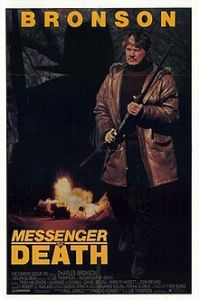
Brad’s “Charles Bronson Movie of the Week” – MESSENGER OF DEATH (1988)


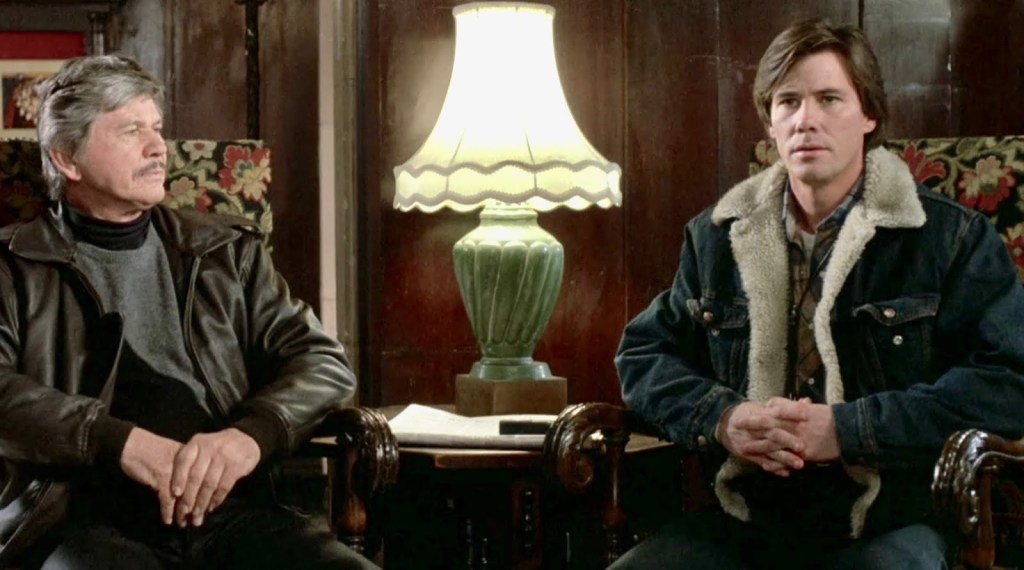
Charles Bronson and Gene Davis, together again 5 years after TEN TO MIDNIGHT (1983)

A couple of years ago, I decided I would rank my favorite Charles Bronson films. The rules were fairly simple… 1) only starring roles, so movies like THE MAGNIFICENT SEVEN and THE GREAT ESCAPE were excluded, 2) no TV movies were included, and 3) my rankings were based on how much I like watching the movies, and not on some BS critical consensus. It was an interesting undertaking, and while I’ve played around with the rankings a little bit, for the most part I’ve kept them the same from that initial ranking. Because I’m obsessed with Charles Bronson, it’s fun for me to write about him and share things about his movies. As such, about once a week or so, I’ll probably share a movie from my list, give my ranking, and talk a little bit about the films. These will not necessarily be reviews, but mostly just some basic thoughts on the films.

My first Bronson movie of the week is MESSENGER OF DEATH (1988), which I rank as 33rd out of 41 Bronson starring roles. What’s interesting is that even though that’s a pretty low ranking, I still enjoy the film for trying to do something different with Bronson at that point in his career in the late ’80s, mainly by casting him as a reporter and not as a cop. He destroys the opposition with superior investigative reporting skills, without having to resort to oversized handguns. Now that his filmography is complete, and has been for over 25 years, I’ve grown to appreciate the times Bronson tried something a little different (with the exception of LOLA). MESSENGER OF DEATH also benefits from a solid cast of veteran actors and actresses, including Trish Van Devere, Laurence Luckinbill, Daniel Benzali, Charles Dierkop, Jeff Corey, John Ireland, and Gene Davis. It’s fun watching these seasoned performers, many of whom have worked with Bronson in the past, do their thing. And last, but not least, with filming locations at the Colorado National Monument and the mountain town of Glenwood Springs, CO, it’s definitely a beautiful film to look at! The older I get the more I appreciate movies that get out of the cities and show us beautiful sights around the country and world. Jeff shared some of his own thoughts on MESSENGER OF DEATH back in 2017!

As of the date of this post, MESSENGER OF DEATH is streaming on Amazon Prime and Tubi if you want to watch it yourself. It’s a film that I’ve enjoyed more with repeat viewings. I’ve also included the trailer below for your viewing pleasure. Feel free to let me know your thoughts on MESSENGER OF DEATH, starring the legendary Charles Bronson!
Late Night Retro Television Review: Highway to Heaven 1.21 “The Brightest Star”


Welcome to Late Night Retro Television Reviews, a feature where we review some of our favorite and least favorite shows of the past!  On Thursdays, I will be reviewing Highway to Heaven, which aired on NBC from 1984 to 1989.  The entire show is currently streaming on Freevee and several other services!

Jonathan and Mark are once again in Hollywood, bringing yet another family together.

Episode 1.21 “The Brightest Star”

(Dir by Victor French, originally aired on March 6th, 1985)

Despite the fact that Mark was hoping to finally have a vacation from work, the Boss has other ideas.  Jonathan and Mark end up picking up a hitchhiking little girl who claims that she’s escaped from an abusive orphanage.  It doesn’t take long for Jonathan and Mark to figure out that she’s lying.  She’s actually Laurie Parks (Carrie Wells), one of the most in-demand child actresses working in Hollywood.

Hired to do some carpentry at the Parks home, Jonathan and Mark soon start offering advice to the family and indeed, this family needs a lot of help.  The family is totally dependent on Laurie’s salary and Laurie deals with the pressure of being the main provider by acting like a monstrous brat.  Her alcoholic father (Gerald S. O’Loughlin) wants to return to his previous life of driving a cab.  Her mother (Trish Van Devere) spends all of her time watching out for Carrie’s career.  The daughter (Laura Jacoby) of the family’s loyal maid (Mary Armstrong) is the selfless angel that Laurie is not and, with Jonathan’s help, she begins her own acting career.  Unfortunately, her success comes at Laurie’s expense.

As I watched this episode, I was struck by how familiar it felt.  Eventually, I realized that it was reminding me of an earlier episode from season 1, in which a father was the one who neglected his family until his son was cast opposite of him in a movie that was he was shooting.  Both of these episodes present Hollywood as being a shallow place, where family is often put second and people are corrupted by the pressures of stardom.  Both episodes were critical of Hollywood but ultimately ended with the classic Hollywood story of a new star being discovered from out of nowhere.  One gets the feeling that Michael Landon, as the show’s guiding force, was dealing with his own issues of trying balance his career with his family.  Highway to Heaven both loves and criticizes the entertainment industry with equal abandon.

As for the episode itself, it wasn’t particularly memorable and it struggled to balance moments of sentimental drama with moments of comedy.  One could understand the father’s unhappiness with his situation without necessarily thinking that the solution would be for him to move out of the house and start driving a cab again.  In the end, Laurie was such a monster that it was difficult to care about what happened to her one way or the other.

Next week, Jonathan and Mark go up against another heartless corporation!

Horror Scenes That I Love: Trish Van Devere Explores The House In The Changeling


Since it’s Thanksgiving in Canada, it seems appropriate that today’s horror scene that I love should come from one of the best Canadian horror films of all time and….

What?

No, it’s not the disco scene from Prom Night!  Anyway, I’ve already shared that scene like a thousand times….

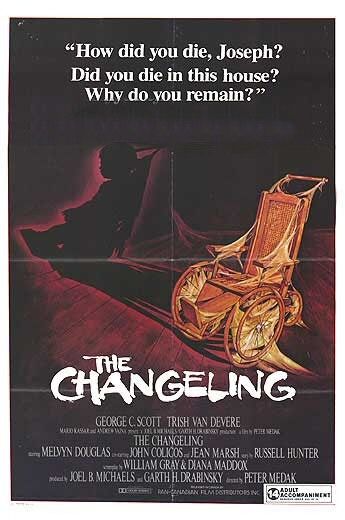
No, this scene is from the 1980 film, The Changeling.  Directed by Peter Medak, the film is about a house that’s haunted by the spirit of a boy who was murdered there decades ago.  When George C. Scott moves into the house, he discovers the truth about not just the murder but the political conspiracy that led to it.  It’s a really good movie.  You should watch it.

Anyway, in this atmospheric scene, Trish Van Devere explores the house.  It’s always a bit strange to watch a horror scene devoid of context but let me just say that The Changeling is such an atmopsheric and intense ghost film that you’ll never want to wander around a potentially haunted house again once you’ve seen it!

A Movie A Day #22: Messenger of Death (1988, directed by J. Lee Thompson)


messenger_of_deathIn rural Colorado, the three wives and all the children of Orville Beecham (Charlie Dierkop) have been murdered.  Veteran journalist Garret Smith (Charles Bronson) discovers that Orville is the son of an excommunicated Mormon fundamentalist named Willis Beecham (Jeff Corey).  Willis, who lives on a heavily armed compound, practices polygamy and wants nothing to do with the outside world.  However, Willis’s brother, Zenas (John Ireland), long ago split with Willis and set up a compound of his own.  At first, Garret suspects that Orville’s family was killed by Zenas.  As Zenas and Willis go to war, Garret discovers that there’s actually a bigger conspiracy at work, one dealing with corporate greed and water rights.  (Forget it, Bronson, it’s Chinatown.)
Messenger of Death was the 2nd to last film that veteran tough guy Charles Bronson made for Cannon Films.  Especially when compared to the other films that he made for Cannon (10 To Midnight, Kinjite, Murphy’s Law, three Death Wish sequels), Messenger of Death features Bronson in a surprisingly cerebral role.  While there is violence, very little of it is actually the result of anything that Bronson does.  For once, Charles Bronson isn’t running around with a gun and blowing away bad guys. If Death Wish‘s Paul Kersey ever did start blowing away muggers in Colorado, Garret would probably be the first to condemn him in a carefully written editorial.  The only time he fights is in self-defense and even then, it’s hand-to-hand combat.  Instead, he spends most of the film doing research and asking questions.  As a result, Messenger of Death is never as much fun as the other films that Bronson made for Cannon but it’s still interesting to see him playing a regular guy.

Horror on the Lens: The Hearse (dir by George Bowers)


The_Hearse

Today’s horror on the Lens in 1980’s The Hearse!

You can read my review here and you can watch it below!

Enjoy!


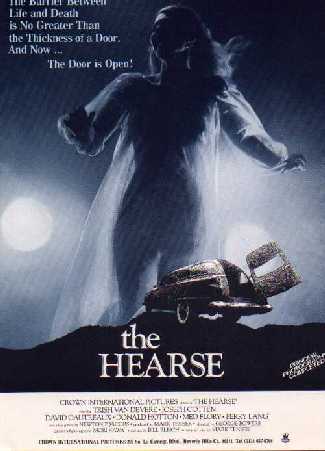
The Daily Grindhouse: The Hearse (directed by George Bowers)


The_Hearse

I feel no shame in admitting that I love horror movies. I don’t think that’s any secret to anyone who has ever read my reviews on this site. When I’m feeling so restless that I can’t sit still or focus, all you have to do is give me a horror film (especially if it’s one that I’ve never never seen before) and I’ll be quiet for at least 90 minutes.

That’s why I’m always on the look out for horror movies that I haven’t seen before. If it’s a horror movie, I’ll watch it regardless of obscurity, age, or critical disdain. At its best, this habit has led to me discovering neglected cinematic gems like Sole Survivor.

And it’s worst, it’s led me to me sitting through films like 1980′s The Hearse.

The Hearse is one of those public domain film that turns up in every other Mill Creek Box Set and it tells a very familiar story. A recently divorced woman named Jane (played by Tish Van Devere, who was married to George C. Scott at the time) leaves the big city to seek peace and solace in a creepy small town that’s full of rednecks who stare at her with a combination of lust and total disdain. Jane moves into a house that once belonged to her aunt and, pretty soon, she’s hearing strange sounds and having nightmares. On some nights, she sees a hearse (which, earlier, had attempted to run her off of the road) pull up in front of her house.

Jane attempts to tell the local sheirff about the strange happenings at her house but he responds by suggesting that maybe she should move. The local townspeople respond to her concerns by telling her that her aunt made a pact with Satan. The local priest comes by and tells Jane that the necklace her aunt gave her is a symbol of Satan.

None of this really makes much of an impression on Jane, mostly because she’s busy dating this creepy guy named Tom. Tom rarely ever shows any emotion and, on those rare occasions that he does smile, his face looks like a leering skull.

Again, Jane doesn’t seem to notice any of this…

Obviously, horror requires a certain suspension of disbelief but, seriously, it’s hard not to watch The Hearse and feel as if the scariest thing about the movie is the idea that anyone could be as stupid as Jane.

That said, The Hearse isn’t a total waste of time. The nightmare sequence is genuinely effective and the film itself features a few creepy visuals but, then again, there’s no way the sight of a hearse pulling up in front of a house in the middle of the night couldn’t be creepy. Trish Van Devere does okay as Jane, though she was far better in both The Changeling and One Is A Lonely Number.   (The film also features a few too many less-than-credible scenes where the town’s teenage boys talk about how “hot and sexy” they find the aristocratic and rather uptight Jane to be.)  If, like me, you’re into film history, you’ll enjoy this film as a relic of the past, an example of what horror movies were like in a less ironic age.

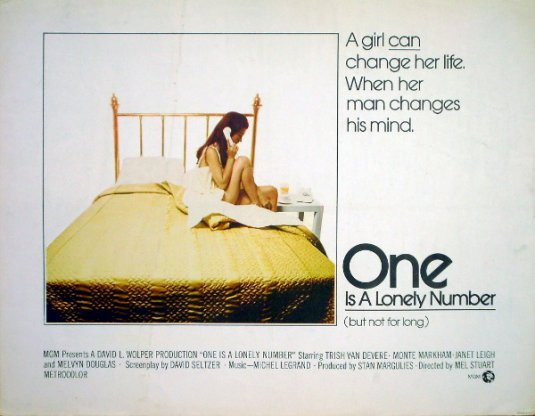
Embracing the Melodrama Part II #40: One Is A Lonely Number (dir by Mel Stuart)


one_is_a_lonely_number_ver2

You’ve probably never heard of the 1972 film One Is A Lonely Number.  I certainly hadn’t until, a few weeks ago, I happened to come across it on TCM.  Like a lot of films that have apparently been forgotten by history, One Is A Lonely Number is one that deserves to be remembered.

One Is A Lonely Number opens with the end of a marriage.  James Brower (Paul Jenkins), an arrogant college professor, coldly packs his collection of vinyl records into a box and tells his wife, Amy (Trish Van Devere), that he’s filing for divorce and that he’s leaving her.  She asks him why.  He coolly mentions something about her throwing out a prized copy of Paradise Lost and then leaves the apartment.

Shocked, Amy goes to the college and asks her husband’s students if they’ve seen him.  They tell her that James canceled his final exam and has since disappeared.  At first, Amy insists that James is going to come back and denies that they’re getting a divorce.  When she finally does accept that her marriage is over, Amy is forced to be independent for the first time.

What she quickly discovers is that the world is full of people who are looking to take advantage of both her vulnerability and her naiveté.  When she goes to an employment agency, she explains that she has a degree in Art History and that she minored in Philosophy.  Frighteningly (especially in the eyes of this particular holder of a degree in Art History), all this gets Amy is a job as a lifeguard at the local pool.  When she finally find herself attracted to another man, she doesn’t discover that he’s married until the morning after.  And when she finally discovers why her husband actually left her, she discovers that he was even more of a stranger to her than she realized.

Fortunately, there are a few good spots in Amy’s life.  Her best friends Madge (Jane Elliott) and Gert (Janet Leigh) provide support.  (“Men are shit,” Gert explains at one point.)  And she strikes up a poignant friendship with a widowed grocer (Melvyn Douglas).

There are so many scenes in One Is A Lonely Number that ring true, even when viewed today.  Amy finally realizes that her marriage is over while trying on clothes and ends up sobbing by herself.  Amy, Gert, and Madge get drunk and talk about their exes, laughing away their shared pain.  Amy discovers that the man from the employment agency (played, as a disturbingly plausible creep, by Jonathan Goldsmith who is best known for being the Most Interesting Man In The World for Dos Equis) expects her to “repay” him for his help in getting her a demeaning job as a lifeguard.  Amy panics when she can’t find what’s happened to that kindly grocer.

One Is A Lonely Number moves at its own deliberate pace but it’s still one that you should watch and stick with until the end.  It’s an intelligent and well-acted movie and the film’s poignant final scene will fill you with hope.  Watch it the next time that it shows up on TCM.

Shattered Politics #45: The Changeling (dir by Peter Medak)


Changeling_ver1If you love horror movies, you have to track down and see The Changeling.

First released in 1980, The Changeling stars George C. Scott as John Russell, a composer.  At the start of the film, he watches helplessly as both his wife and his daughter are killed in a horrific auto accident.  The grieving John leaves his New York home and relocates to Seattle, Washington.  With the help of a sympathetic realtor, Claire Norman (Trish Van Devere), John finds and rents a previously abandoned Victorian mansion.

At first, it seems that John is alone with his grief.  But, as you can probably guess, it quickly becomes apparent that John isn’t alone in his house.  Windows shatter.  Doors slam.  And, most dramatically, every night a mysterious banging sound echoes through the house.  Slowly, John comes to suspect that his house might be haunted…

And, of course, it is!  It’s no spoiler to tell you that because the film is admirably straight forward about being a ghost story.  And what a clever ghost story it is.  I don’t want to give too much away so I’ll just say that the story behind the ghost involves a powerful family, an age-old scandal, and a powerful U.S. Senator (played, with a mixture of poignant sadness and menace, by Melvyn Douglas).

The Changeling is a very well-done and effective ghost story.  For the most part, director Peter Medak emphasizes atmosphere over easy shocks, the end result being a film that maintains a steady feeling of dread and sticks with you long after the final credit rolls up the screen.  George C. Scott is well-cast as John Russell, capturing both the character’s grief and his curiosity.  (There’s actually a very interesting subtext to the film, in that investigating death actually gives John a reason to live.)  At the time the film was made, he was married to Trish Van Devere and the two of them have a very likable chemistry.  And, as previously stated, Melvyn Douglas makes for a great quasi-villain.

(It’s interesting to compare Douglas’s intimidating work here with the far more sympathetic performances that he gave, around the same time, in Being There and The Seduction of Joe Tynan.)

My favorite scene in The Changeling comes when John and Claire hold a séance in order to try to discover what the ghost wants.  The séance team is made up one woman who asks questions, one woman who channels the spirit and writes down his answers, and one man who reads the answers after they’re written.  It’s a wonderfully effective scene, dominated by the eerie sounds of questions being asked, answers being scribbled, and then being shakily read aloud.  It’s probably one of the best cinematic séances that I’ve ever seen.

The Changeling is a wonderful mix of political intrigue and paranormal horror. It was also the first film ever to win a Genie award for Best Canadian Film, which just goes to prove the 90% of all good things come from Canada.