Scenes That I Love: The Third Man


ThirdManUSPoster

Some movies are merely good.  Some movies are undeniably great.  And then, a handful movies are so amazingly brilliant that, every time you watch, you’re reminded why you fell in love with cinema in the first place.

The Third Man is one of those brilliant films.

Directed by Carol Reed and scripted by novelist Graham Greene, The Third Man takes place in the years immediately following the end of World War II.  Pulp novelist Holly Martins (Joseph Cotten) comes to Vienna to search for his old friend Harry Lime (Orson Welles).  Upon arriving, Holly is shocked to learn that Harry makes his living selling diluted penicillin on the black market.

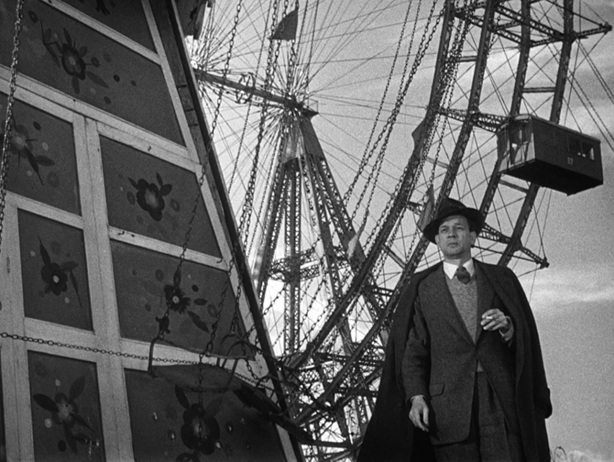
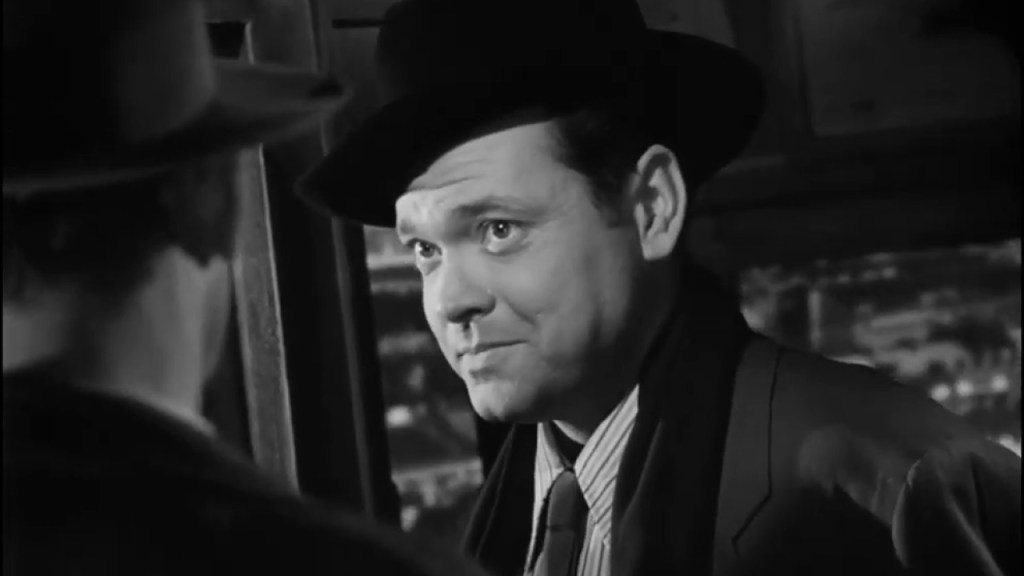
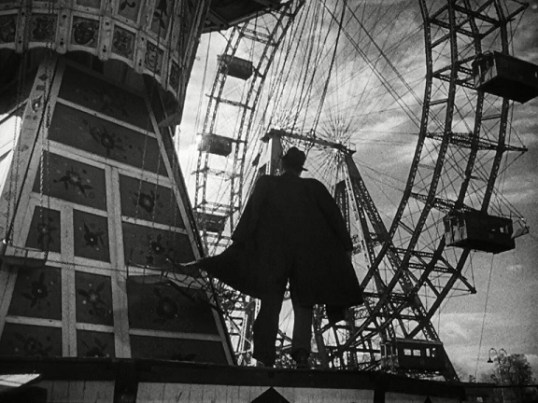
In the classic scene below, Harry and Holly have a clandestine meeting in a Ferris wheel and Harry justifies both his actions and the lives that have been lost as a result of them.

While Orson Welles’ performance is (rightfully) celebrated, I’ve always felt that Joseph Cotten’s work was even more important to the film’s success.  While Welles made Harry Lime into a charismatic and compelling villain, it was  Cotten who provided the film with a heart.

4 Shots From 4 Films: Special Carol Reed Edition


4 Shots From 4 Films is just what it says it is, 4 shots from 4 of our favorite films. As opposed to the reviews and recaps that we usually post, 4 Shots From 4 Films lets the visuals do the talking.

Today, we celebrate the birth of the great British director, Carol Reed!  It’s time for….

4 Shots From 4 Carol Reed Films

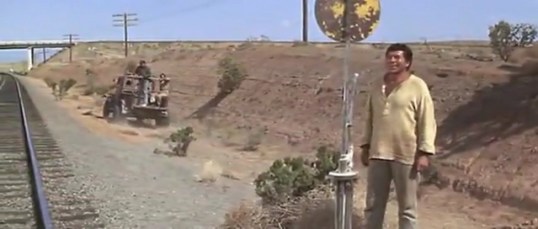
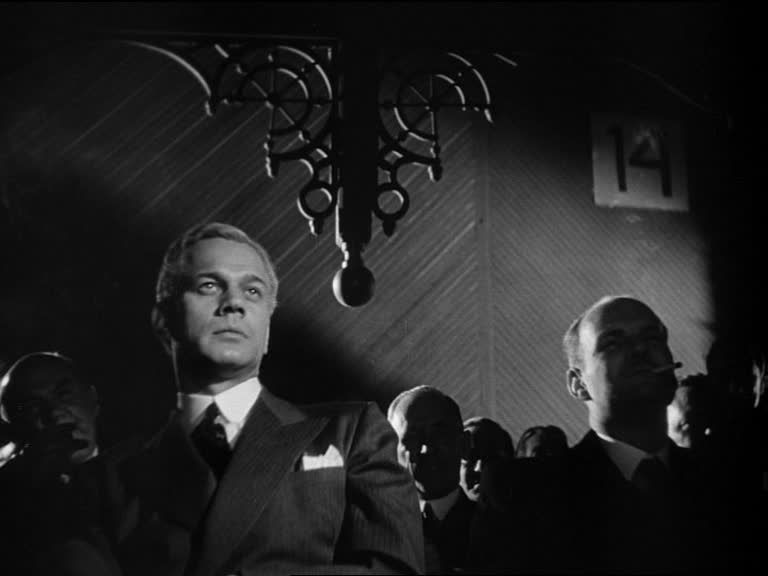
Odd Man Out (1947, dir by Carol Reed, DP: Robert Krasker)

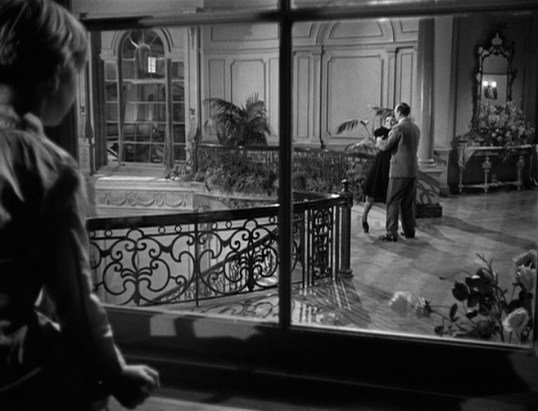
The Fallen Idol (1948, dir by Carol Reed, DP: Georges Perinal)

The Third Man (1949, dir by Carol Reed, DP: Robert Krasker)

Flap (1970, dir by Carol Reed, DP: Fred J. Koenekamp)

Scenes That I Love: Joseph Cotten In The Third Man


Imagine being Holly Martins.  You’re in Vienna, investigating the death of your best friend, getting chased by an angry mob and threatened by British intelligence, and suddenly you’re reminded that you, an author of dime-store novels, agreed to give a lecture on post-war literature.

That’s what happens in this scene that I love (featuring Joseph Cotten as Holly Martins) from The Third Man.

4 Shots From 4 Films: Special Joseph Cotten Edition


The Third Man (1949, directed by Carol Reed)

4 Shots From 4 Films is just what it says it is, 4 shots from 4 of our favorite films. As opposed to the reviews and recaps that we usually post, 4 Shots From 4 Films lets the visuals do the talking!

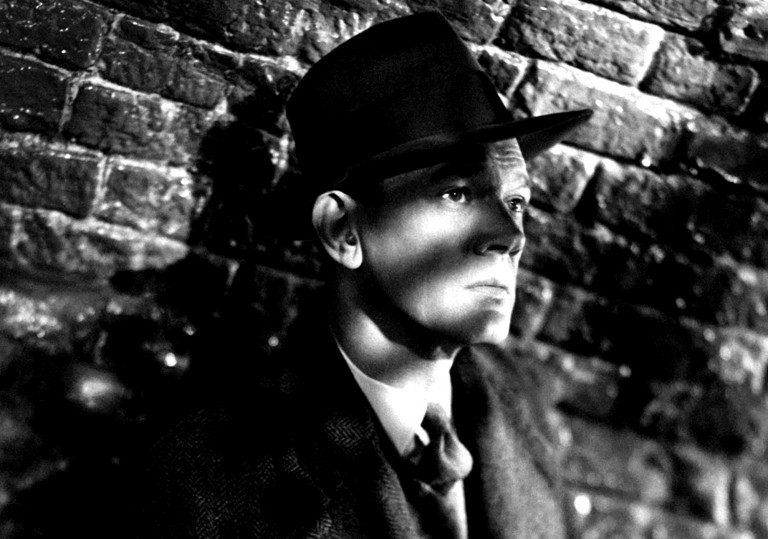
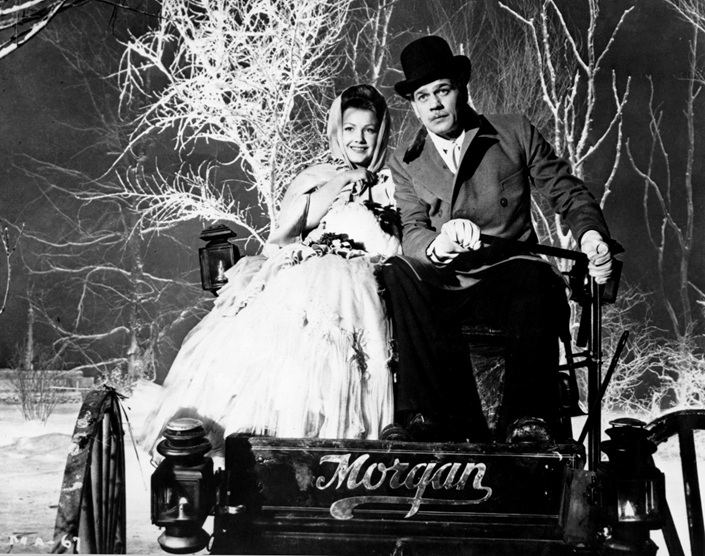
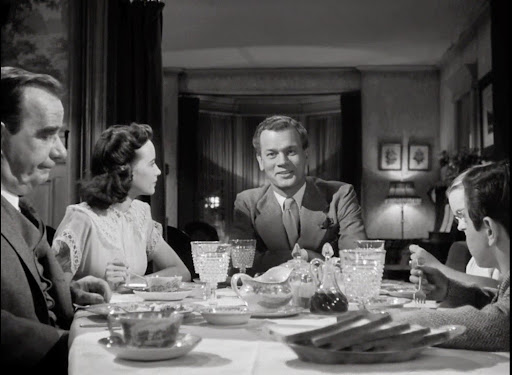
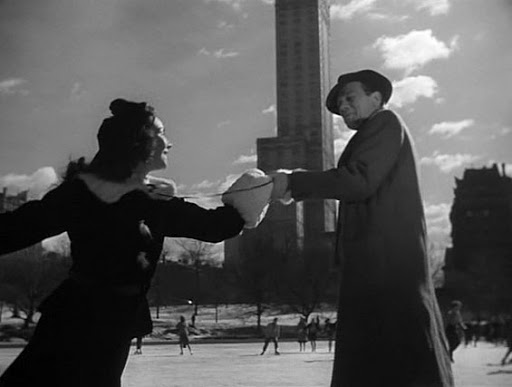
As you can probably guess from my pen name and my profile pic, Joseph Cotten is one of my favorite actors.  Cotten may be best known for his association with Orson Welles but he worked with several great directors over the years.  Along with playing Jedediah Leland in Welles’s Citizen Kane, he starred in Hitchcock’s Shadow of a Doubt and Carol Reed’s The Third Man.  Even while his film career was flourishing, Cotten continued to appear on the Broadway stage and, during the early days of television, he frequently appeared on anthology series, the majority of which were broadcast live.

In honor of Cotten’s birthday, here are four shots from four of his best films.

4 Shots From 4 Films

The Magnificent Ambersons (1942, directed by Orson Welles)

Shadow of a Doubt (1943, directed by Alfred Hitchcock)

Portrait of Jennie (1948, directed by William Dieterle)

The Third Man (1949, directed by Carol Reed)

Scenes I Love: The Third Man


Orson Welles has been a giant of the film industry since he first stepped foot in it with his masterpiece Citizen Kane. He has been lauded as one of the greatest filmmakers and his innovation in the techniques of filmmaking continues to influence past, present and future filmmakers.

Yet, he wasn’t just a great director but a great writer and producer. He was also a great actor both on-screen, and previously, on stage where he honed his craft. He has had some memorable moments in all the films he’s acted in (even his final film which was the cult classic animated film feature Transformers: The Movie, where he was the voice of a planet-devouring transforming robot planetoid).

It is his brief but great monologue past the halfway mark of the classic noir film The Third Man that is my choice for Scenes I Love and another entry in the “Great Film and TV Monologues” series.

Welles plays the amoral Harry Lime who meets up with his childhood friend Holly Martins. As they ride the famous Wiener Riesenrad in Vienna, Welles waxes poetic about the insignificance of people, in general. How, from the the heights of the Riesenrad, people looked like little dots and would one dot or a group of them be missed if they suddenly stopped moving.

Yet, it is when Lime and Martins exit the ride that Welles’ as Harry Lime performs what is considered one of the greatest monologues ever put on film and, most likely, one of the briefest. It is a philosophical observation on the cynics take on the violent nature of man and how it affects society.

The monologue itself wasn’t written by the film’s writer, Graham Greene, but was inserted in the script by Orson Welles himself. The Third Man was one of the greatest films ever produced even without Welles’ contribution as a writer, but we should be all glad that he decided to add this brief monologue which helps explains the character of Harry Lime and the meaning of the “third man”.

Great Film and TV Monologues

Song of the Day: Theme From The Third Man by Alex Karas


Today’s song of the day is the haunting zither theme of The Third Man.  Whenever I hear this music, I immediately think of Orson Welles, emerging from the shadows with that charming smile on his face.  I also think about poor Holly Martins (Joseph Cotten), being chased through Vienna by that little kid who wouldn’t stop yelling at him.  And, of course, there’s that famous final shot….

Live Tweet Alert: Join #FridayNightFlix For The Third Man!


As some of our regular readers undoubtedly know, I am involved in a few weekly live tweets on Twitter and Mastodon.  I host #FridayNightFlix every Friday, I co-host #ScarySocial on Saturday, and I am one of the five hosts of #MondayActionMovie!  Every week, we get together.  We watch a movie.  We tweet our way through it.

Tonight, at 10 pm et, #FridayNightFlix has a film that all good people love, 1949s The Third Man!

If you want to join us this Friday, just hop onto twitter, start the movie at 10 pm et, and use the #FridayNightFlix hashtag!  It’s a friendly group and welcoming of newcomers so don’t be shy.

The Third Man is available on Prime and Tubi!  See you there!

4 Shots From 4 Films: Special Carol Reed Edition


4 Shots From 4 Films is just what it says it is, 4 shots from 4 of our favorite films. As opposed to the reviews and recaps that we usually post, 4 Shots From 4 Films lets the visuals do the talking.

Today, we celebrate the birth of the great British director, Carol Reed!  It’s time for….

4 Shots From 4 Carol Reed Films

Odd Man Out (1947, dir by Carol Reed, DP: Robert Krasker)

The Fallen Idol (1948, dir by Carol Reed, DP: Georges Perinal)

The Third Man (1949, dir by Carol Reed, DP: Robert Krasker)

Flap (1970, dir by Carol Reed, DP: Fred J. Koenekamp)

12 Oscar Snubs From the 1950s


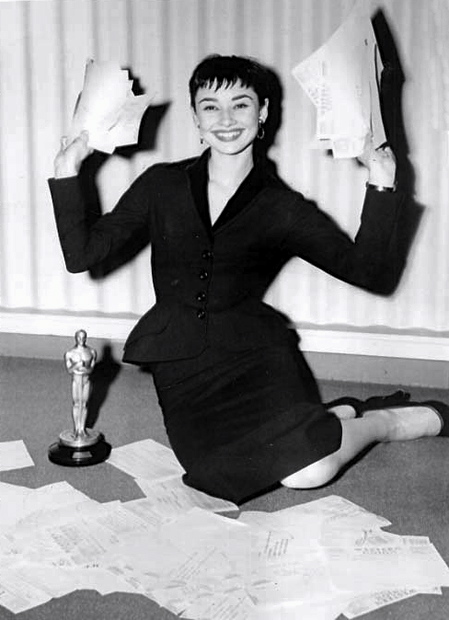
Audrey Hepburn and her Oscar.  At least the Academy didn’t snub her!

Continuing our look at the Oscar snubs of the past, it’s now time to enter the 50s!

World War II was over. Eisenhower was President. Everyone was worried about communist spies. And the Hollywood studios still reigned supreme, even while actors like Marlon Brando and James Dean challenged the establishment.  There were a lot great film released in the 50s.  There were also some glaring snubs on the part of the Academy.  Here’s twelve of them.
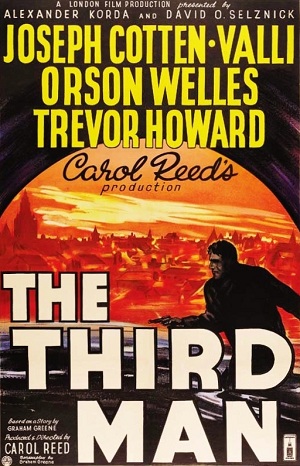
1950: The Third Man Is Not Nominated For Best Picture

….and Orson Welles was not nominated for Best Supporting Actor!  The Third Man received three Oscar nominations, for Director, Cinematography, and Editing.  The fact that Welles, Joseph Cotten, Alida Valli, and the film’s score were not nominated (and that King Solomon’s Mines was nominated for Best Picture instead of The Third Man) remains one of the more surprising snubs in Oscar history.

1952: Singin’ In The Rain Is Not Nominated For Best Picture

What the Heck, Academy!?  This was the year that The Greatest Show On Earth won the Best Picture Oscar.  Personally, I don’t think The Greatest Show On Earth is as bad as its reputation but still, Singin’ In The Rain is a hundred times better.

1953: Alan Ladd Is Not Nominated For Best Actor For Shane

How could Shane score a nomination for Best Picture without Shane himself receiving a nomination?

1954: Rear Window Is Not Nominated For Best Picture

Rear Window was not totally ignored by the Academy.  Alfred Hitchcock received a nomination for directing.  It also received nominations for Best Adapted Screenplay, Cinematography, and Sound.  However, Rear Window was not nominated for Best Picture and James Stewart, Grace Kelly, Raymond Burr, and Thelma Ritter all went unnominated as well.  Today, Rear Window is definitely better-remembered than the majority of 1954’s Best Picture nominees.  Certainly, it deserved a nomination more than Seven Brides For Seven Brothers and Three Coins in The Fountain.

1955: Ralph Meeker Is Not Nominated For Best Actor For Kiss Me Deadly

I guess I shouldn’t be surprised.  If the Academy wasn’t going to nominate Rear Window for Best Picture, there was no way that they would have nominated Ralph Meeker for playing a sociopathic private detective who, even if inadvetedly, helps to bring about the end of the world.

1955: Rebel Without A Cause Is Not Nominated For Best Picture or Best Actor

The 1955 Best Picture lineup was a remarkably weak one.  The eventual winner was Marty, a likeable film that never quite escapes its TV roots.  Picnic has that great dance scene but is otherwise flawed.  Mister Roberts was overlong.  Love Is A Many-Splendored Thing and The Rose Tattoo are really only remembered by those of us who have occasionally come across them on TCM.  Perhaps the best-remembered film of 1955, Rebel Without A Cause, received quite a few nominations but it was not nominated for Best Picture.  And while the Rebel himself, James Dean, was nominated for Best Actor, it was for his performance in East of Eden.  1955 was a strange year.

1955: Robert Mitchum Is Not Nominated For Best Actor For The Night of the Hunter

Robert Mitchum only received one Oscar nomination over the course of his entire career, for 1945’s The Story of G.I. Joe.  He deserved several more.  His performance as the villainous preacher in The Night of Hunter made Reverend Harry Powell into one of the most iconic film characters of all time.
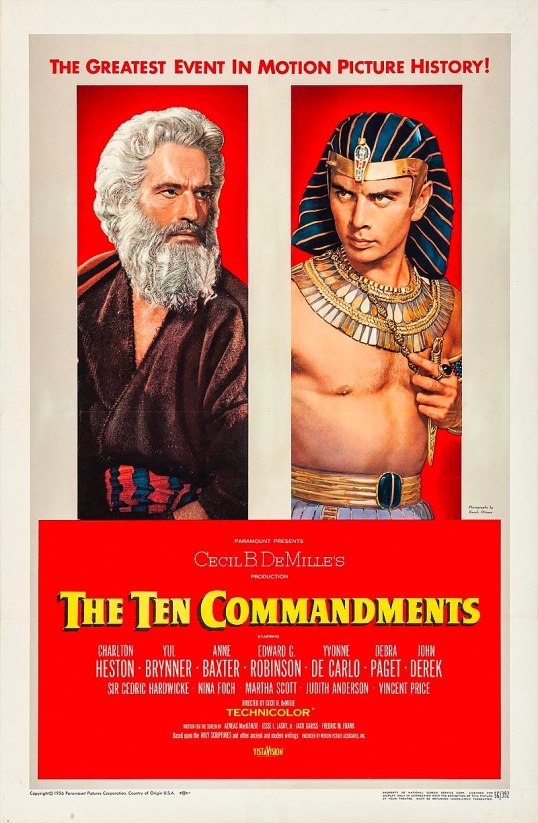
1956: Cecil B. DeMille Is Not Nominated For Best Director For The Ten Commandments

Cecil B. DeMille was only nominated once for Best Director, for 1952’s The Greatest Show On Earth.  DeMille, however, deserved to be nominated for The Ten Commandments.  As campy as DeMille’s films can seem today, he was an expert storyteller and that’s certainly evident when one watches The Ten Commandments, a film that holds the viewer’s attention for nearly four hours.  DeMille deserved a nomination for the Angel of Death scene alone.  The screams in the night are haunting.

1957: Henry Fonda Is Not Nominated For Best Actor For 12 Angry Men

With 12 Angry Men, Fonda did something that very few actors can.  He made human decency compelling.  One gets the feeling that, much like Tom Hanks in Captain Phillips, Fonda made it look so easy that the Academy took him for granted.

1958: Touch Of Evil Is Totally Ignored

Anyone who had researched the history of the Academy knows that there was no way that the 1950s membership would have ever honored Orson Welles’s pulp masterpiece, Touch of Evil.  That said, it still would have been nice if they had.  Touch of Evil has certainly go on to have a greater legacy than Gigi, the film that won Best Picture that year.

1958: Vertigo Is Almost Totally Ignored

Vertigo did receive nominations for Art Direction and Sound but Alfred Hitchcock, James Stewart, and the film itself were snubbed.

1959: Some Like It Hot Is Not Nominated For Best Picture or Best Actress

Some Like It Hot received 6 Oscar nominations, including nominations for Best Director, Best Actor, and Best Adapted Screenplay.  It did not receive a nomination for Best Picture and, sadly, Marilyn Monroe did not receive a nomination for Best Actress.  Much as with Henry Fonda in 12 Angry Men, one gets the feeling that the Academy took Monroe for granted.  It’s sad to realize that, while two actresses have been nominated for playing Marilyn Monroe, Monroe herself would never be nominated.

Agree?  Disagree?  Do you have an Oscar snub that you think is even worse than the 12 listed here?  Let us know in the comments!

Up next: Things get wild with the 6os!
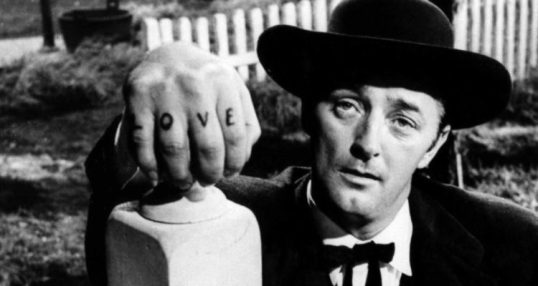
Night of the Hunter (United Artists 1955; D: Charles Laughton)
4 Shots From 4 Films: In Tribute To Joseph Cotten


The Third Man (1949, directed by Carol Reed)

4 Shots From 4 Films is just what it says it is, 4 shots from 4 of our favorite films. As opposed to the reviews and recaps that we usually post, 4 Shots From 4 Films lets the visuals do the talking!

As you can probably guess from my pen name and my profile pic, Joseph Cotten is one of my favorite actors.  Born 115 years ago on this day, Cotten may be best known for his association with Orson Welles but he worked with several great directors over the years.  Along with playing Jedediah Leland in Welles’s Citizen Kane, he starred in Hitchcock’s Shadow of a Doubt and Carol Reed’s The Third Man.  Even while his film career was flourishing, Cotten continued to appear on the Broadway stage and, during the early days of television, he frequently appeared on anthology series, the majority of which were broadcast live.  Cotten even had a memorable cameo in Michael Cimino’s infamous film, Heaven’s Gate.

In honor of Cotten’s birthday, here are four shots from four of his best films.

4 Shots From 4 Films

Citizen Kane (1941, directed by Orson Welles)

Journey Into Fear (1943, directed by Norman Foster and Orson Welles)

Shadow of a Doubt (1943, directed by Alfred Hitchcock)

Portrait of Jennie (1948, directed by William Dieterle)