4 Shots From 4 Films is just what it says it is, 4 shots from 4 of our favorite films. As opposed to the reviews and recaps that we usually post, 4 Shots From 4 Films lets the visuals do the talking!
Today, it is time to celebrate the birth of one of the most intriguing (if uneven) filmmakers of the 20th Century, Michael Cimino! It’s time for….
4 Shots From 4 Michael Cimino Films
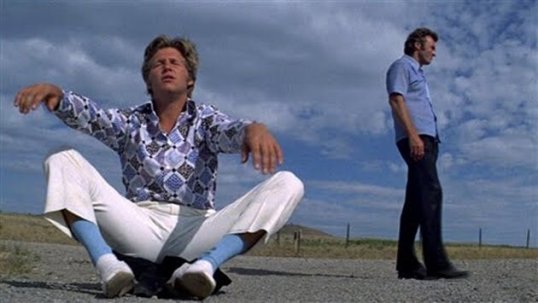
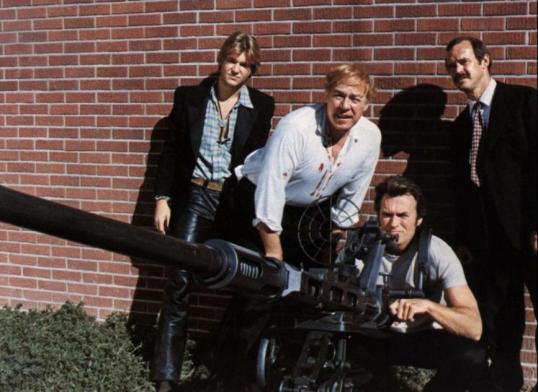
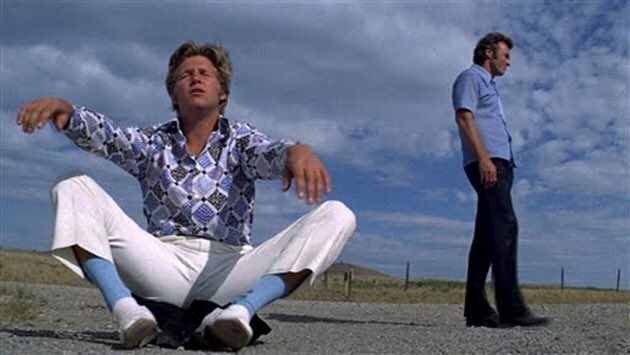
Thunderbolt and Lightfoot (1974, directed by Michael Cimino, DP: Frank Stanley)
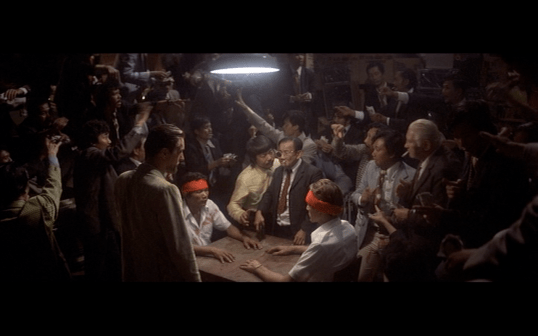
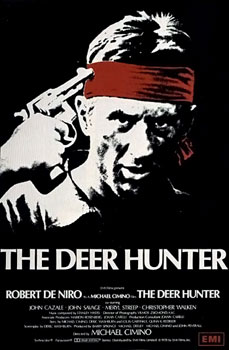
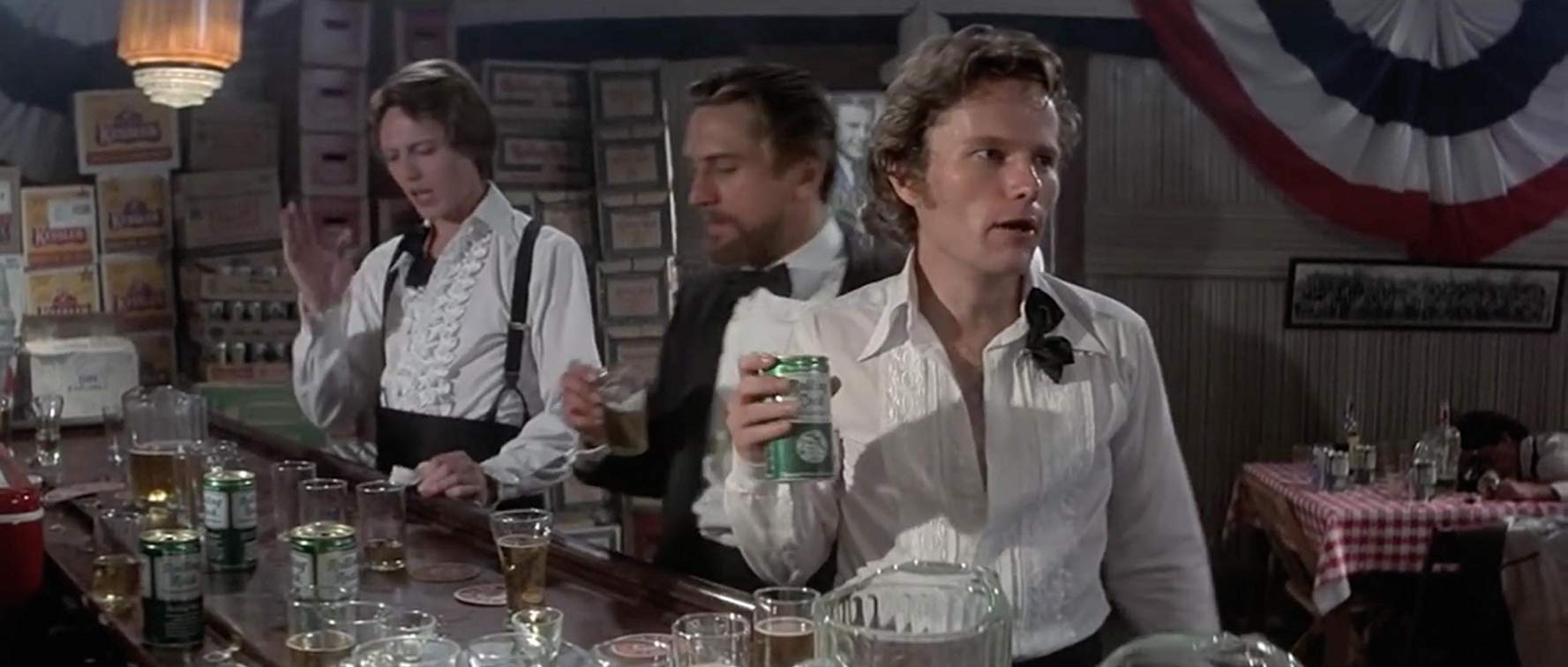
The Deer Hunter (1978, dir by Michael Cimino. DP: Vilmos Zsigmond)
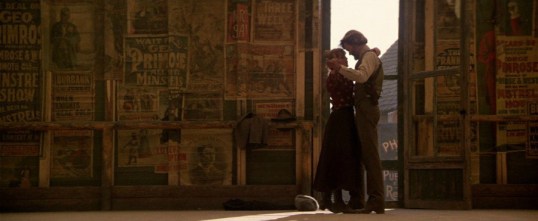
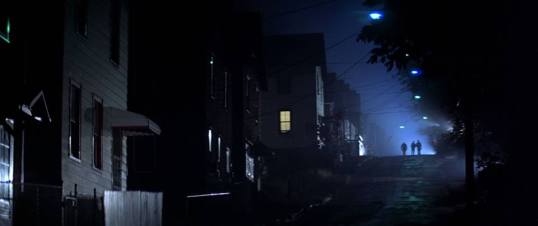
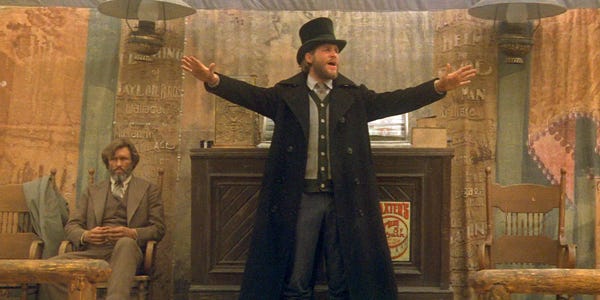
Heaven’s Gate (1980, dir by Michael Cimino, DP: Vilmos Zsigmond)
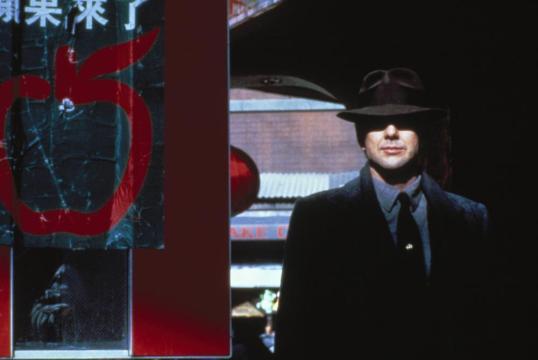
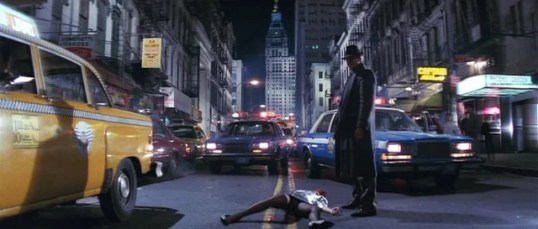
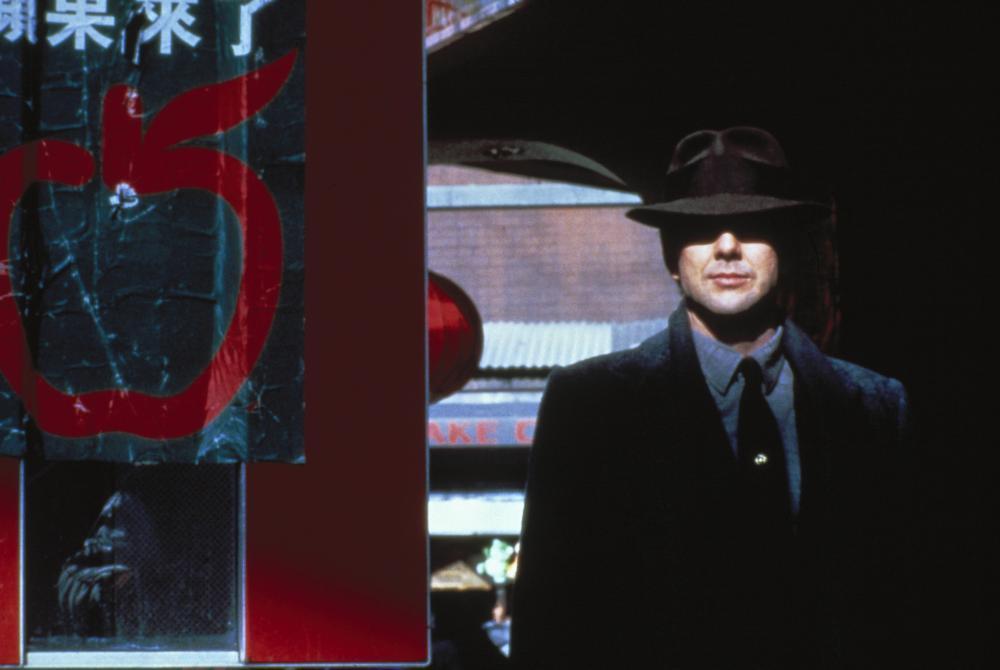
The Year of the Dragon (1985, dir by Michael Cimino, DP: Alex Thomson)
4 Shots From 4 Films is just what it says it is, 4 shots from 4 of our favorite films. As opposed to the reviews and recaps that we usually post, 4 Shots From 4 Films lets the visuals do the talking!
Today, it is time to celebrate the birth of one of the most intriguing (if uneven) filmmakers of the 20th Century, Michael Cimino! It’s time for….
4 Shots From 4 Michael Cimino Films
Thunderbolt and Lightfoot (1974, dir by Michael Cimino, DP: Frank Stanley)
The Deer Hunter (1978, dir by Michael Cimino, DP: Vilmos Zsigmond)
Heaven’s Gate (1980, dir by Michael Cimino, DP: Vilmos Zsigmond)
The Year of the Dragon (1985, dir by Michael Cimino, DP: Alex Thomson)
The Deer Hunter, which won the 1978 Oscar for Best Picture Of The Year, opens in a Pennsylvania steel mill.
Mike (Robert De Niro), Steve (John Savage), Nick (Chistopher Walken), Stan (John Cazale), and Axel (Chuck Aspegren, a real-life steel worker who was cast in this film after De Niro met him while doing research for his role) leave work and head straight to the local bar, where they are greeted by the bartender, John (George Dzundza). It’s obvious that these men have been friends for their entire lives. They’re like family. Everyone gives Stan a hard time but deep down, they love him. Axel is the prankster who keeps everyone in a good mood. Nick is the sensitive one who settles disputes. Steve is perhaps the most innocent, henpecked by his mother (Shirley Stoler) and engaged to marry the pregnant Angela (Rutanya Alda), even though Steve knows that he’s not actually the father. And Mike is their leader, a charismatic if sometimes overbearing father figure who lives his life by his own code of honor. The men are held together by their traditions. They hunt nearly every weekend. Mike says that it’s important to only use one shot to kill a deer. Nick, at one point, confesses that he doesn’t really understand why that’s important to Mike.
Steve and Angela get married at a raucous ceremony that is attended by the entire population of their small town. The community is proud that Nick, Steve, and Mike will all soon be shipping out to Vietnam. Nick asks his girlfriend, Linda (Meryl Streep), to marry him when he “gets back.” At the reception, Mike gets into a fight with a recently returned soldier who refuses to speak about his experiences overseas. Mike ends up running naked down a street while Nick chases him.
The Deer Hunter is a three-hour film, with the entirety of the first hour taken up with introducing us to the men and the tight-knit community that produced them. At times, that first hour can seem almost plotless. As much time is spent with those who aren’t going to Vietnam as with those who are. But, as the film progresses, we start to understand why the film’s director, Michael Cimino, spent so much time immersing the viewer in that community of steel workers. To understand who Nick, Mike, and Steve are going to become, it’s important to know where they came from. Only by spending time with that community can we understand what it’s like to lose the security of knowing where you belong.
If the first hour of the film plays out in an almost cinema verité manner, the next two hours feel like an increasingly surreal nightmare. (Indeed, there was a part of me that suspected that everything that happened after the wedding was just Michael’s drunken dream as he lay passed out in the middle of the street.) The film abruptly cuts from the beautiful mountains of Pennsylvania to the violent horror of Vietnam. A Viet Cong soldier blows up a group of hiding women and children. Michael appears out of nowhere to set the man on fire with a flame thrower. An army helicopter lands and, in a coincidence that strains credibility, Nick and Steve just happen to get out. Somehow, the three friends randomly meet each other again in Vietnam. Unfortunately, they are soon captured by the VC.
They are held prisoner in submerged bamboo cages. Occasionally, they are released and forced to play Russian Roulette. Mike once again becomes the leader, telling Steve and Nick to stay strong. Eventually, the three men do manage to escape but Steve loses his leg in the process and a traumatized Nick disappears in Saigon. Only Mike returns home.
The community seems to have changed in Mike’s absence. The once boisterous town is now quiet and cold. The banner reading “Welcome Home, Mike” almost seems to be mocking the fact that Mike no longer feels at home in his old world. Stan, Axel, and John try to pretend like nothing has changed. Mike falls in love with Linda while continuing to feel guilty for having abandoned Nick in Saigon. Steve, meanwhile, struggles to come to terms with being in a wheelchair and Nick is still playing Russian Roulette in seedy nightclubs. Crowds love to watch the blank-faced Nick risk his life.
Eventually, Mike realizes that Nick is still alive. Somehow, Mike ends up back in Saigon, just as the government is falling. Oddly, we don’t learn how Mike was able to return to Saigon. He’s just suddenly there. It’s the type of dream logic that dominates The Deer Hunter but somehow, it works. Mike searches for Nick but will he be able to save his friend?
The Deer Hunter was one of the first major films to take place in Vietnam. Among the pictures that The Deer Hunter defeated for Bet Picture was Coming Home, which was also about Vietnam but which took a far more conventional approach to its story than The Deer Hunter. Indeed, while Coming Home is rather predictable in its anti-war posture, The DeerHunter largely ignores the politics of Vietnam. Mike, Nick, and Steve are all traumatized by what they see in Vietnam. Mike is destroyed emotionally, Steve is destroyed physically, and Nick is destroyed mentally. At the same time, the VC are portrayed as being so cruel and sadistic that it’s hard not to feel that the film is suggesting that, even if we did ultimately lose the war, the Americans were on the correct side and trying to do the right thing. (Many critics of The Deer Hunter have pointed out that there are no records of American POWs being forced to play Russian Roulette. That’s true. There are however records of American POWs being forced to undergo savage torture that was just as potentially life-threatening. Regardless of what one thinks of America’s involvement in Vietnam, there’s no need to idealize the VC.) Released just a few years after the Fall of Saigon, The Deer Hunter was a controversial film and winner. (Of course, in retrospect, the film is actually quite brilliant in the way it appeals to both anti-war and pro-war viewers without actually taking a firm position itself.)
In the end, though, The Deer Hunter isn’t really about the reality of the war or the politics behind it. Instead, it’s a film about discovering that the world is far more complicated that you originally believed it to be. De Niro is a bit too old to be playing such a naive character but still, he does a good job of portraying Mike’s newfound sense of alienation from his former home. In Vietnam, everything he believed in was challenged and he returns home unsure of where he stands. While John, Axel, and Stan can continue to hunt as if nothing happened, Mike finds that he can no longer buy into his own philosophical BS about the importance of only using one shot. Everything that he once believed no longer seems important.
It’s a good film and a worthy winner, even if it does sometimes feel more like a happy accident than an actual cohesive work of art. The plot is often implausible but then again, the film takes place in a world gone mad so even the plot holes feel appropriate to the story being told. Christopher Walken won an Oscar for his haunting performance as Nick and John Savage should have been nominated alongside of him. This was Meryl Streep’s first major role and she gives a surprisingly naturalistic performance. During filming, Streep was living with John Cazale and she largely did the film to be near him. Cazale was dying of lung cancer and he is noticeably frail in this film. (I cringed whenever Mike hit Stan because Cazale was obviously not well in those scenes.) Cazale, one of the great character actors of the 70s, died shortly after filming wrapped. Cazale only appeared in five films and all of them were nominated for Best Picture. Three of them — The first two Godfathers and The Deer Hunter — won.
The Deer Hunter is a long, exhausting, overwhelming, and ultimately very moving film. Whatever flaws it may have, it earns its emotional finale. Though one can argue that some of the best films of 1978 were not even nominated (Days of Heaven comes to mind, as do more populist-minded films like Superman and Animal House), The Deer Hunter deserved its Oscar.
4 Shots From 4 Films is just what it says it is, 4 shots from 4 of our favorite films. As opposed to the reviews and recaps that we usually post, 4 Shots From 4 Films lets the visuals do the talking!
Today, I’m using this feature to take a look at the history of the Academy Award for Best Picture. Decade by decade, I’m going to highlight my picks for best of the winning films. To start with, here are 6 shots from 6 Films that won Best Picture during the 1970s! Here are….
6 Shots From 6 Best Picture Winners: The 1970s
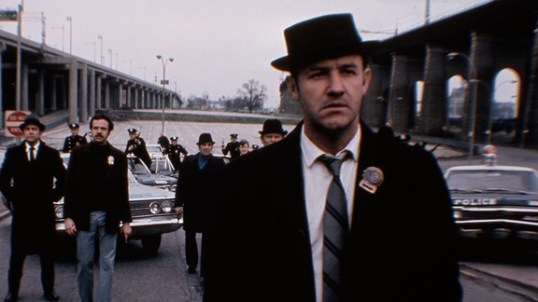
The French Connection (1971, dir by William Friedkin, DP: Owen Roizman)
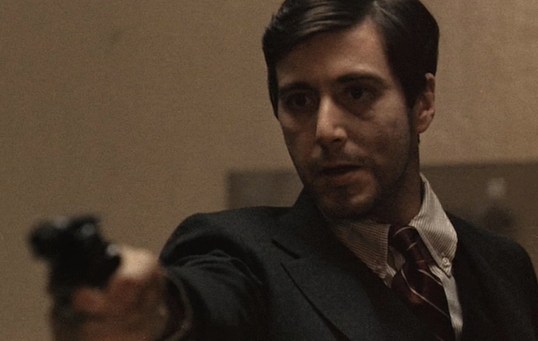
The Godfather (1972, dir by Francis Ford Coppola, DP: Gordon Willis)
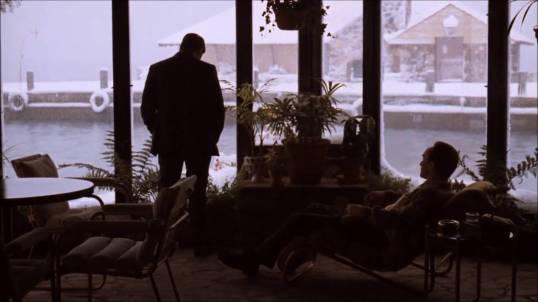
The Godfather Part II (dir by Francis Ford Coppola, DP: Gordon Willis)
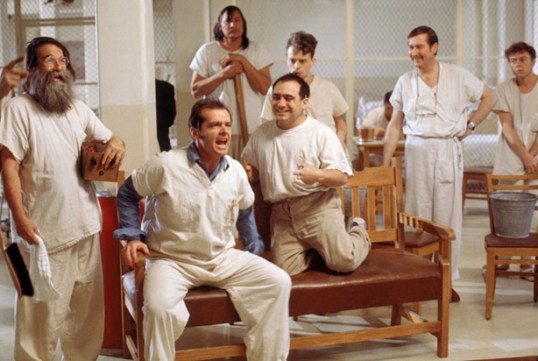
One Flew Over The Cuckoo’s Nest (1975, dir by Milos Forman, DP: Haskell Wexler and Bill Butler)
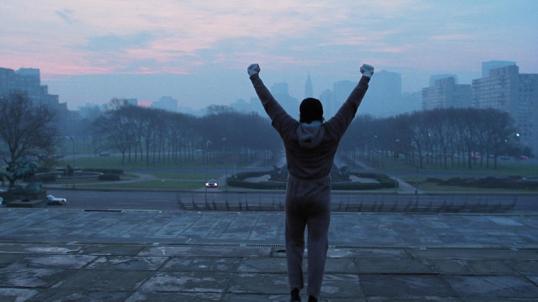
Rocky (1976, dir by John G. Avildsen, DP: James Crabe)
The Deer Hunter (1978, dir by Michael Cimino, DP: Vilmos Zsigmond)
4 Shots From 4 Films is just what it says it is, 4 shots from 4 of our favorite films. As opposed to the reviews and recaps that we usually post, 4 Shots From 4 Films lets the visuals do the talking!
Today, we pay tribute to the legendary cinematographer, Vilmos Zsigmond. Born 90 years ago today in Hungary, Zsigmond got his start in the 60s with low-budget films like The Sadist but he went on to become one of the most in-demand cinematographers around. In fact, of all the people who started their career working on a film that starred Arch Hall, Jr., it’s hard to think of any who went on to have the type of success that Zsigmond did.
Zsigmond won one Oscar, for his work on Close Encounters of Third Kind. He was nominated for three more. He also received a BAFTA award for his work on The Deer Hunter and was nominated for an Emmy for his work on Stalin. He’s considered to be one of the most influential cinematographers of all time.
In honor of the memory of Vilmos Zsigmond, here are….
4 Shots From 4 Films
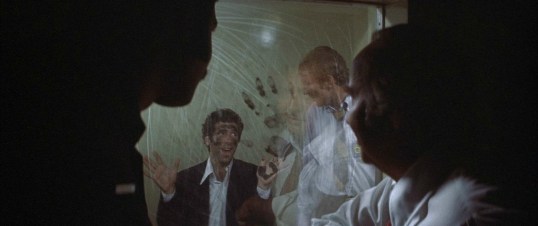
The Long Goodbye (1973, dir by Robert Altman, DP: Vilmos Zsigmond)
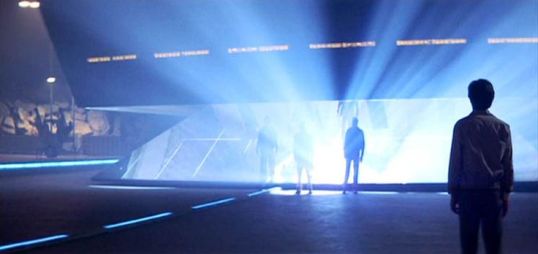
Close Encounters of the Third Kind (1977, dir by Steven Spielberg, DP: Vilmos Zsigmond)
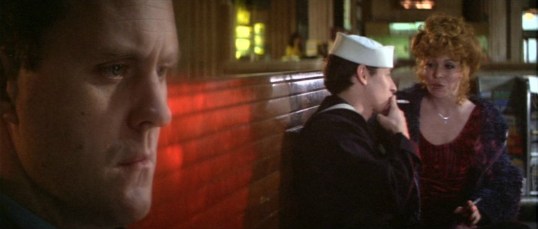
The Deer Hunter (1978, dir by Michael Cimino, DP: Vilmos Zsigmond)
Blow Out (1981, dir by Brian DePalma, DP: Vilmos Zsigmond)
4 Shots From 4 Films is just what it says it is, 4 shots from 4 of our favorite films. As opposed to the reviews and recaps that we usually post, 4 Shots From 4 Films lets the visuals do the talking!
In life, Michael Cimino was often controversial.
Cimino hit box office gold with his first film as a director, Thunderbolt and Lightfoot. With his second film, The Deer Hunter, he won the Academy Award for Best Director. With his third film, Heaven’s Gate, he nearly bankrupted United Artists.
Heaven’s Gate was Cimino’s passion project, an epic western that was based on the historical Johnson County War. Considering that Cimino had just won an Oscar, expectation were high when production began in 1979. Soon, however, ominous reports started to come back from the set. It was said that Cimino was a perfectionist and a megalomaniac who was demanding so many takes and retakes that the filming was quickly falling behind schedule. The modestly budgeted production soon went overbudget and overschedule. After nearly a year of shooting, Cimino finally allowed the studio executives to view his first cut. It was over five hours long.
Though the film was eventually edited down to a more manageable length, the damage had been done. By the time Heaven’s Gate was finally released, the title was already being used a byword for fiasco. The film lost a ton of money and, at the time, it was savaged by critics. Cimino would only direct four more films after Heaven’s Gate and none of them were a success at the box office or with critics.
However, once the initial hype died down, some critics started to take another look at Cimino’s films. Heaven’s Gate has been reevaluated and is now considered by many to be a minor classic. Cimino’s Year of the Dragon has also developed a strong cult following. Though Cimino himself died in 2016, he is a director who is currently in the process of being rediscovered.
Today would have been Michael Cimino’s birthday. Because he told so many conflicting stories about his past, there is some controversy about the year of Cimino’s birth. Most people agree that it was probably 1939. Today, on his birthday, let’s take a moment to honor this unfairly dismissed talent.
4 Shots From 4 Films
Thunderbolt and Lightfoot (1974, directed by Michael Cimino)
The Deer Hunter (1978, directed by Michael Cimino)
Heaven’s Gate (1980, directed by Michael Cimino)
The Year of the Dragon (1985, directed by Michael Cimino)
Despite only appearing in 5 films and dying 8 years before I was born, John Cazale is one of my favorite actors. You might not recognize his name but, if you love the films of the 70s, you know who John Cazale is because he appeared in some of the most iconic films of the decade. Though he’s probably best known for playing poor Fredo in first two Godfather films, Cazale also appeared in The Conversation, Dog Day Afternoon, and The Deer Hunter. All five of his films were Oscar-nominated for best picture and three of them won. All five are, in their own individual ways, classics of modern cinema and, though he was never more than a supporting player, Cazale gave performances of such unexpected emotional depth that he elevated each of these films just by his very presence. Tragically, Cazale died at the age of 42 of lung cancer. At the time, he had just finished filming The Deer Hunter and he was engaged to marry an up-and-coming actress named Meryl Streep.
I Knew It Was You is a documentary that both attempts to tell the story of Cazale’s life as well as pay tribute to him an actor. While it fails somewhat to do the former, it succeeds flawlessly as a tribute. The film is filled with footage of Cazale’s legendary performances and watching these clips, you’re struck by not only Cazale’s talent but his courage as well. As more than one person comments during the documentary, it takes a lot of guts to so completely inhabit a role like The Godfather’s Fredo Corleone. While other actors might be tempted to overplay a character like Fredo (essentially winking at the audience as if to say, “I’m not a weakling like this guy,”) Cazale was willing to completely inhabit his characters, brining to life both the good and the bad of their personalities. Watching the clips, you realize that Cazale, as an actor, really was becoming stronger and stronger with each performance. On a sadder note, this documentary make it painfully obvious just how sick Cazale was in The Deer Hunter. The contrast between the nervous, lumbering Cazale of Dog Day Hunter and his gaunt, unbearably sad appearance in The Deer Hunter is simply heart breaking.
The documentary is full of interviews with actors and directors who either worked with or were inspired by John Cazale and you’re immediately struck by the affection that they all still obviously feel for him even 30 years after his death. Among those interviewed are Steve Buscemi, Al Pacino, Meryl Streep, Robert De Niro, Francis Ford Coppola, Sidney Lumet, Sam Rockwell, and Richard Dreyfuss. (I thought I knew every bit of Godfather trivia but I learned something new from this film when I found out that Richard Dreyfuss came close to being Fredo before Coppola saw Cazale in a play.) Perhaps most interesting are the interviews where actors like Pacino, De Niro, and Gene Hackman talk about how acting opposite John Cazale caused them to give better performances than they might have otherwise. If nothing else, it’s a good reminder that a classic film is, more often than not, a collaborative effort.
Where this documentary drops the ball is in detailing who Cazale was as a person. Though everyone’s affection for him is obvious, we learn little about what drove the man who was so sad and tragic as Fredo Corleone. Cazale’s upbringing is covered in about 2 minutes of flashy graphics and his untimely death (and his struggle to complete his Deer Hunter role) is also covered a bit too quickly. There’s a fascinating and inspiring story there but this documentary only hints at it. For reasons I still can’t figure out, this thing only lasts 40 minutes. Even just an extra 15 minutes would have been helpful.
Hollywood director Brett Ratner is also interviewed and I imagine this probably has something to do with the fact that Ratner co-produced this documentary. So, I guess Ratner is a Cazale fan and good for him but it’s still kinda jarring to see him there with directors like Lumet and actors like Pacino and De Niro. Ratner, to be honest, is the only one of the people interviewed who actually comes across as having nothing of value to say. Which isn’t all that surprising when you consider that Ratner is pretty much the golden child of bland, mainstream filmmaking right now.
Still, even if it never reaches the heights of Werner’s Herzog’s My Best Fiend, I still have to recommend I Knew It Was You as a touching tribute to a truly great actor. As a bonus, the DVD contains two short films featuring a very young and intense John Cazale. Watching him, you can’t help but mourn that he wasn’t in more movies but you’re so thankful for the legendary performances that he was able to give us.
 Through the Shattered Lens