10 Films For The Weekend (7/25/25)


Leaving Soon

With the end of July approaching, I decided to take a look at what would soon be leaving Tubi.  I should mention that just because these films are leaving Tubi, that doesn’t mean they’re not going to start streaming somewhere else.  In fact, I imagine the reason that they’re leaving is because they’re going to start streaming somewhere else.  Here’s a few worthwhile films that are currently listed as “leaving soon” on Tubi.

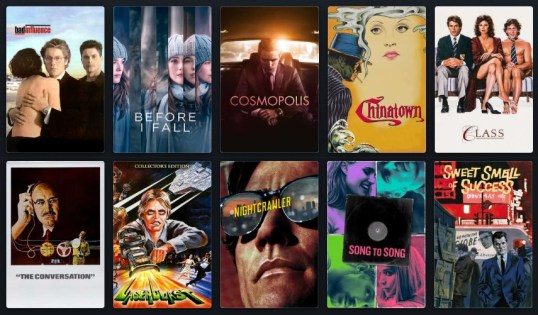
Sweet Smell of Success (1957) stars Burt Lancaster as a viscous columnist and Tony Curtis as his henchmen.  When Lancaster discovers that his sister is dating a jazz musician, Lancaster decides to destroy the man’s life.  One can view this film as a satire on the tabloids, a metaphor for McCarthyism, or a commentary on cancel culture.  All those interpretations are legitimate.  Then again, it can also be viewed as just being a tremendously enjoyable and endlessly quotable pulp masterpiece, a noir where the damage isn’t done by bullets but instead by words.  Here’s the link on Tubi.

Terence Malick’s Song to Song (2017) is an intriguing Texas-set film.  It’s a Malick film and, in many ways, it’s Malick at his most self-indulgent.  There are times when the film, with its languorous shots and its multiple narrators, almost becomes a self-parody.  But there are also images that are so strikingly beautiful that they stick with you.  A talented cast — Michael Fassbender, Ryan Gosling, Natalie Portman, Val Kilmer, and others — wanders through the film and offers up tantalizing hints of what’s going on underneath the surface of their ennui-drenched lives.  It’s left to the viewer to decide what it all means.  It’s a Malick film and, because of that, worth taking a chance on.  Here’s the link on Tubi.

Based on a novel by Don DeLillo and directed by David Cronenberg, Cosmopolis (2012) is a surreal film that follows a businessman (Robert Pattinson) as he is driven around New York.  This is one of those films that people seem to either love or hate.  I loved it and I thought this was the first film that showed Pattinson was capable of doing more than just Twilight.  In a key supporting role, Paul Giamatti gives a notably disturbing performance.  Here’s the link on Tubi.

What would you do if you had the chance to live the last day of your life over and over again?  That’s the question asked by one of my favorite films of the past ten years, Before I Fall (2017).  This is a film that brough back memories of me and my friends in high school and left me wondering if I needed to apologize to anyone.  Here’s the link on Tubi.

I’m still annoyed (if not necessarily surprised) that Nightcrawler (2014) was thoroughly ignored by the Academy.  Jake Gyllenhaal definitely deserved, at the very least, a nomination for his performance as a sociopath who finds a successful career in crime journalism.  Bill Paxton and Rene Russo give excellent supporting performances.  This may be a mainstream film but its heart belongs to the grindhouse.  Here’s the link on Tubi.

Finally, what can I say about Chinatown (1974) that hasn’t already been said by a hundred other critics?  It’s one of the best noirs ever made and it’s debatable whether or not Jack Nicholson has ever been better than he was here.  Along with an intriguing mystery, the film features one of the most loathsome villains of all time, John Huston’s Noah Cross.  Faye Dunaway is excellent as the femme fatale with a devastating secret.  Here’s the link on Tubi.

Odds and Ends

After watching Chinatown, why not check out Francis Ford Coppola’s The Conversation (1974)?  I have to admit that I envy those who were alive in 1974 and who got to see the second Godfather, Chinatown, and The Conversation when they were all first released.  What’s it like to live during a cinematic golden age?  The Conversation is a brilliant thriller, featuring Gene Hackman at his best.  This is a true masterpiece of paranoia and it can be viewed on Prime.

If you’re in the mood for something completely different, the dramedy Class (1983) features Andrew McCarthy as a nerdy student who has an affair with the mother (Jacqueline Bisset) of his roommate (Rob Lowe).  It’s a very 80s film and definitely a guilty pleasure.  It can be viewed on Prime.

Speaking of Rob Lowe, he plays a bad guy in the enjoyably melodramatic Bad Influence (1990).  James Spader plays the good guy for once, an adorably nerdy guy who discovers that his new best friend doesn’t exactly have his best interests at heart.  Directed by Curtis Hanson, Bad Influence is sordid fun.  It can be viewed on Prime.

Finally, I should mention that I bought a copy of Gianni Russo’s autobiography this week.  Russo is the entertainer who played Carlo Rizzi in The Godfather and who appeared in a handful of other films, usually playing a gangster.  I’m disappointed to say that Russo did not write about the experience of co-starring in the gloriously absurd, totally 70s sci-fi flick, Laserblast (1978).  Fortunately, you can watch the film for yourself.  Russo’s role is actually pretty small but the Claymation aliens are just adorable!  This is also probably the only film ever made to feature Eddie Deezen as a bully.  Laserblast is on Prime.

You can check out last week’s films but clicking here!


4 Shots From 4 Films: Special 1974 Edition


4 Or More Shots From 4 Or More Films is just what it says it is, 4 shots from 4 of our favorite films. As opposed to the reviews and recaps that we usually post, 4 Shots From 4 Films lets the visuals do the talking!

Today, we pay tribute to a great year in cinema.  It’s time for….

4 Shots From 4 1974 Films

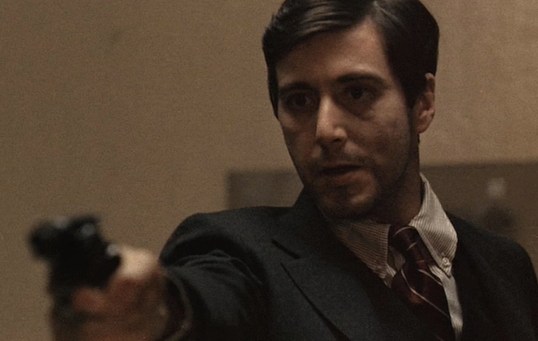
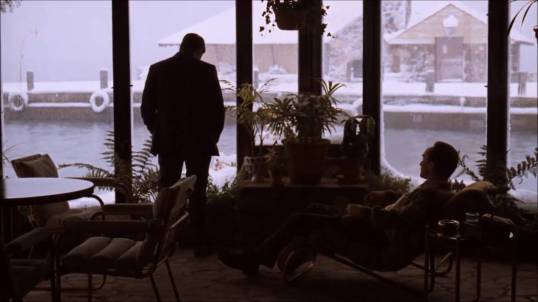
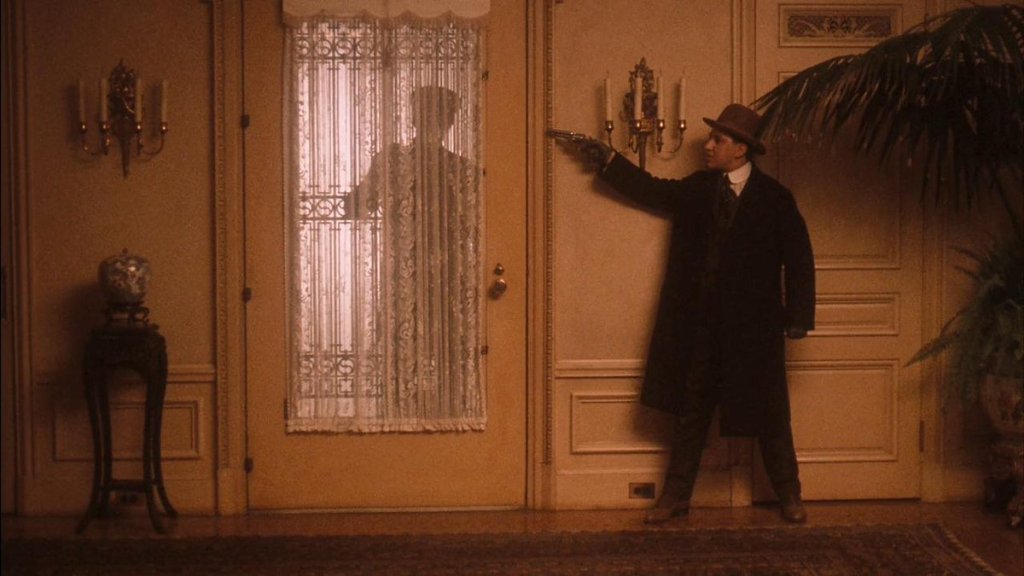
The Godfather Part II (1974, dir by Francis Ford Coppola, DP: Gordon Willis)

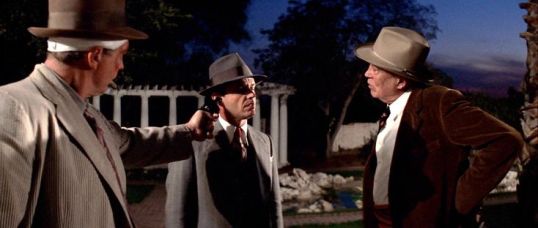
Chinatown (1974, dir by Roman Polanski, DP: John A. Alonzo)

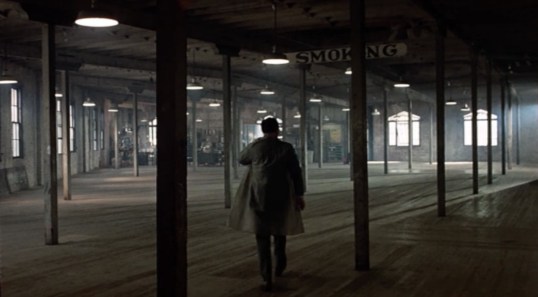
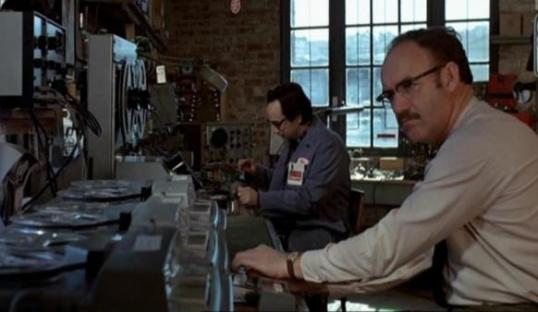
The Conversation (1974, dir by Francis Ford Coppola, DP: Bill Butler and Haskell Wexler)

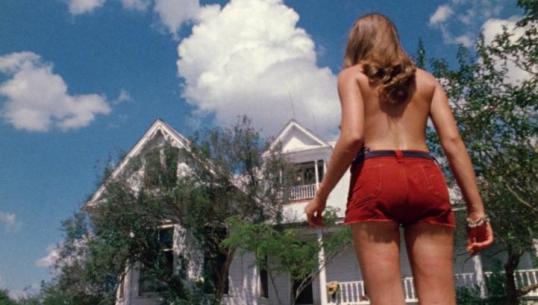
The Texas Chainsaw Massacre (1974, dir by Tobe Hooper, DP: Daniel Pearl)

4 Shots From 4 Films: Special Francis Ford Coppola Edition


4 (or more) Shots From 4 (or more) Films is just what it says it is, 4 (or more) shots from 4 (or more) of our favorite films. As opposed to the reviews and recaps that we usually post, 4 (or more) Shots From 4 (or more) Films lets the visuals do the talking.

Today is Francis Ford Coppola’s birthday! Coppola is a bit of a controversial figure among some film scholars. While everyone agrees that, with the first two Godfathers, he directed two of the greatest films of all time (and some people would include Apocalypse Now on that list as well) and that he was one of the most important directors of the 70s, his post-Apocalypse Now career is often held up as a cautionary tale. Some say that Coppola’s career suffered because of his own excessive behavior and spending. Others argue that he was treated unfairly by a film industry that resented his refusal to compromise his vision and ambitions. Personally, my natural instinct is to always side with the artist over the executives and that’s certainly the case with Coppola. Coppola has only completed five films since the start of this current century and three of them were not widely released. Say what you will about the films themselves, that still doesn’t seem right. For the record, I like Megalopolis.

Regardless of how one views his latter career, Coppola is responsible for some of the best and most important films ever made. And today, on his birthday, it’s time for….

4 Shots From 4 Francis Ford Coppola Films

The Godfather (1972, dir by Francis Ford Coppola, DP: Gordon Willis)
The Conversation (1974, dir by Francis Ford Coppola, DP: Bill Butler)
The Godfather Part II (dir by Francis Ford Coppola, DP: Gordon Willis)
Apocalypse Now (1979, dir by Francis Ford Coppola, DP: Vittorio Storaro)

Scenes That I Love: The Nightmare From The Conversation


Today, we wish a happy 95th birthday to the great actor-turned-writer Gene Hackman!

Today’s scene that I love comes from one of Hackman’s best films, 1974’s The Conversation.  In this scene, Hackman’s surveillance expert has a nightmare inspired by his fear that his latest job may cause two people to be murdered.  Hackman won two Oscars over the course of his career and was nominated several times.  The fact that he was not nominated for The Conversation was a huge oversight on the part of the Academy.

Scenes That I Love: Harry’s Nightmare from The Conversation


1974 was a very good year for Francis Ford Coppola.  Not only did he direct the Oscar-winning Godfather Part II but he also directed another film that was nominated for Best Picture, an intense study of paranoia called The Conversation

Today’s scene that I love comes from The Conversation.  Surveillance expert Harry Caul (Gene Hackman, giving one of his best performances) fears that his work may lead to murder.  In this scene, he has a nightmare in which he tries, in vain, to talk to one of the people who he has been surveilling.  This scene perfectly captures the horrific logic and helpless feeling of a nightmare.  Harry, who is not the most open or emotional of men, can only be his true self in his dreams.

4 Shots From 4 Films: Special Francis Ford Coppola Edition


4 (or more) Shots From 4 (or more) Films is just what it says it is, 4 (or more) shots from 4 (or more) of our favorite films. As opposed to the reviews and recaps that we usually post, 4 (or more) Shots From 4 (or more) Films lets the visuals do the talking.

Today is Francis Ford Coppola’s birthday! Coppola is a bit of a controversial figure among some film scholars. While everyone agrees that, with the first two Godfathers, he directed two of the greatest films of all time (and some people would include Apocalypse Now on that list as well) and that he was one of the most important directors of the 70s, his post-Apocalypse Now career is often held up as a cautionary tale. Some say that Coppola’s career suffered because of his own excessive behavior and spending. Others argue that he was treated unfairly by a film industry that resented his refusal to compromise his vision and ambitions. Personally, my natural instinct is to always side with the artist over the executives and that’s certainly the case with Coppola. Coppola has only completed four films since the start of this current century and three of them were not widely released. Say what you will about the films themselves, that still doesn’t seem right. This year will bring us a new Coppola film, Megapolis. I know that we’re all hoping the best.

Regardless of how one views his latter career, Coppola is responsible for some of the best and most important films ever made. And today, on his birthday, it’s time for….

4 Shots From 4 Francis Ford Coppola Films

The Godfather (1972, dir by Francis Ford Coppola, DP: Gordon Willis)
The Conversation (1974, dir by Francis Ford Coppola, DP: Bill Butler)
The Godfather, Part II (1974, dir by Francis Ford Coppola, DP: Gordon Willis)
Apocalypse Now (1979, dir by Francis Ford Coppola, DP: Vittorio Storaro)

4 Shots From 4 Films: Special Francis Ford Coppola Edition


4 (or more) Shots From 4 (or more) Films is just what it says it is, 4 (or more) shots from 4 (or more) of our favorite films. As opposed to the reviews and recaps that we usually post, 4 (or more) Shots From 4 (or more) Films lets the visuals do the talking.

Today is Francis Ford Coppola’s birthday! Coppola is a bit of a controversial figure among some film scholars. While everyone agrees that, with the first two Godfathers, he directed two of the greatest films of all time (and some people would include Apocalypse Now on that list as well) and that he was one of the most important directors of the 70s, his post-Apocalypse Now career is often held up as a cautionary tale. Some say that Coppola’s career suffered because of his own excessive behavior and spending. Others argue that he was treated unfairly by a film industry that resented his refusal to compromise his vision and ambitions. Personally, my natural instinct is to always side with the artist over the executives and that’s certainly the case with Coppola. Coppola has only completed three films since the start of this current century and none of them were widely released. Say what you will about the films themselves, that still doesn’t seem right.

Regardless of how one views his latter career, Coppola is responsible for some of the best and most important films ever made. And today, on his birthday, it’s time for….

4 Shots From 4 Francis Ford Coppola Films

The Godfather (1972, dir by Francis Ford Coppola, DP: Gordon Willis)
The Conversation (1974, dir by Francis Ford Coppola, DP: Bill Butler)
The Godfather, Part II (1974, dir by Francis Ford Coppola, DP: Gordon Willis)
Apocalypse Now (1979, dir by Francis Ford Coppola, DP: Vittorio Storaro)

A Quickie With Lisa Marie: The Conversation (dir. by Francis Ford Coppola)


As a result of my continuing effort to see every single film ever nominated for best picture, I’ve been lucky enough to both discover and rediscover a handful of excellent films that, for whatever reason, have ended up forgotten and neglected in the years since they scored their nominations.  One of the more recent of these films was Francis Ford Coppola’s masterpiece of a paranoia, the 1974 Best Picture nominee The Conversation.*

The Conversation tells the story of Harry Caul (played by Gene Hackman), a surveillance expert who, along with his colleague Stan (played by the great John Cazale), is hired by a businessman (Robert Duvall) to bug a conversation between Duvall’s much younger wife (played by Cindy Williams) and a man who might be her lover (played by Fredric Forrest).  Harry, we quickly discover, is a man who values his privacy and who manages to find a balance between his unsavory job and his devout religious faith by maintaining an impenetrable shield of detachment from the rest of humanity.  He is a man who hides from the world inside of his apartment, only allowing himself to show the slightest hint of emotion when playing his saxophone.  In one of the film’s best scenes, Harry finds himself awkwardly socializing with a far more sleazy acquaintance (played by Alan Garfield, one of the great character actors of the 70s) and it becomes apparent that Harry may be the best in the business but he’s still the ultimate outsider.

However, Harry is forced to confront the contradictions of his own lifestyle when he listens to the conversation between Forrest and Williams and believes that he might have found evidence that both Forrest and Williams are in fear for their lives.  With Duvall’s operatives demanding the surveillance tapes, Harry Caul soon finds himself becoming more and more paranoid and unstable as he finds it more and more difficult to justify his detachment.  Harry finds himself obsessively listening to the conversation over and over again, going over every possible nuance and emphasis to try to figure out what’s actually being said.  Of course, by the end of the film, it’s obvious to both Harry and the audience that nothing is as simple as it sounds. 

Compared to the Godfather films and Apocalypse Now, the Conversation is a surprisingly low-key and rather muted film.  A lot of this is because, as opposed to the Corleones and Martin Sheen’s Captain Willard, Gene Hackman’s Harry Caul is a complete and total introvert, a man who makes his living by observing a world that he refuses to be a part of.  Though the film works quite well as a thriller, it works best when viewed as a sympathetic character study of a paranoid and anti-social human being.  Hackman full inhabits the role, bringing Harry — with all of his frustrating contradictions and conflicted actions — to oddly vibrant life.  The film ultimately serves as a sad-eyed look at how a good person can justify doing bad things and how the inevitable consequences of those bad things can only be delayed for so long.

On a final note, an impossibly young Harrison Ford shows up here as Duvall’s sinister assistant.  He plays the role with just the right amount of prissy arrogance and he has a great scene where he asks Harry is he wants to try a homemade cookie.  “They’re good,” Ford assures him.

So is The Conversation.

—–

* Of course, another Coppola film — The Godfather, Part II — beat the Conversation for best picture.  However, The Conversation did win the Palme D’Or at Cannes that year.  It was a good year to be Francis Ford Coppola.

A Quickie With Lisa Marie: I Knew It Was You: Rediscovering John Cazale (dir. by Richard Shepard)


Despite only appearing in 5 films and dying 8 years before I was born, John Cazale is one of my favorite actors.  You might not recognize his name but, if you love the films of the 70s, you know who John Cazale is because he appeared in some of the most iconic films of the decade.  Though he’s probably best known for playing poor Fredo in first two Godfather films, Cazale also appeared in The Conversation, Dog Day Afternoon, and The Deer Hunter.  All five of his films were Oscar-nominated for best picture and three of them won.  All five are, in their own individual ways, classics of modern cinema and, though he was never more than a supporting player, Cazale gave performances of such unexpected emotional depth that he elevated each of these films just by his very presence.  Tragically, Cazale died at the age of 42 of lung cancer.  At the time, he had just finished filming The Deer Hunter and he was engaged to marry an up-and-coming actress named Meryl Streep.

I Knew It Was You is a documentary that both attempts to tell the story of Cazale’s life as well as pay tribute to him an actor.  While it fails somewhat to do the former, it succeeds flawlessly as a tribute.  The film is filled with footage of Cazale’s legendary performances and watching these clips, you’re struck by not only Cazale’s talent but his courage as well.  As more than one person comments during the documentary, it takes a lot of guts to so completely inhabit a role like The Godfather’s Fredo Corleone.  While other actors might be tempted to overplay a character like Fredo (essentially winking at the audience as if to say, “I’m not a weakling like this guy,”) Cazale was willing to completely inhabit his characters, brining to life both the good and the bad of their personalities.  Watching the clips, you realize that Cazale, as an actor, really was becoming stronger and stronger with each performance.  On a sadder note, this documentary make it  painfully obvious just how sick Cazale was in The Deer Hunter.  The contrast between the nervous, lumbering Cazale of Dog Day Hunter and his gaunt, unbearably sad appearance in The Deer Hunter is simply heart breaking.

The documentary is full of interviews with actors and directors who either worked with or were inspired by John Cazale and you’re immediately struck by the affection that they all still obviously feel for him even 30 years after his death.  Among those interviewed are Steve Buscemi, Al Pacino, Meryl Streep, Robert De Niro, Francis Ford Coppola, Sidney Lumet, Sam Rockwell, and Richard Dreyfuss.  (I thought I knew every bit of Godfather trivia but I learned something new from this film when I found out that Richard Dreyfuss came close to being Fredo before Coppola saw Cazale in a play.)   Perhaps most interesting are the interviews where actors like Pacino, De Niro, and Gene Hackman talk about how acting opposite John Cazale caused them to give better performances than they might have otherwise.  If nothing else, it’s a good reminder that a classic film is, more often than not, a collaborative effort.

Where this documentary drops the ball is in detailing who Cazale was as a person.  Though everyone’s affection for him is obvious, we learn little about what drove the man who was so sad and tragic as Fredo Corleone.  Cazale’s upbringing is covered in about 2 minutes of flashy graphics and his untimely death (and his struggle to complete his Deer Hunter role) is also covered a bit too quickly.  There’s a fascinating and inspiring story there but this documentary only hints at it.  For reasons I still can’t figure out, this thing only lasts 40 minutes.  Even just an extra 15 minutes would have been helpful.

Hollywood director Brett Ratner is also interviewed and I imagine this probably has something to do with the fact that Ratner co-produced this documentary.  So, I guess Ratner is a Cazale fan and good for him but it’s still kinda jarring to see him there with directors like Lumet and actors like Pacino and De Niro.  Ratner, to be honest, is the only one of the people interviewed who actually comes across as having nothing of value to say.  Which isn’t all that surprising when you consider that Ratner is pretty much the golden child of bland, mainstream filmmaking right now.

Still, even if it never reaches the heights of Werner’s Herzog’s My Best Fiend, I still have to recommend I Knew It Was You as a touching tribute to a truly great actor.  As a bonus, the DVD contains two short films featuring a very young and intense John Cazale.  Watching him, you can’t help but mourn that he wasn’t in more movies but you’re so thankful for the legendary performances that he was able to give us.