4 Shots From 4 Films is just what it says it is, 4 shots from 4 of our favorite films. As opposed to the reviews and recaps that we usually post, 4 Shots From 4 Films lets the visuals do the talking!
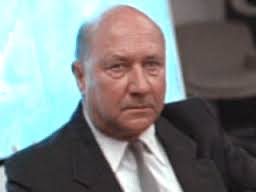
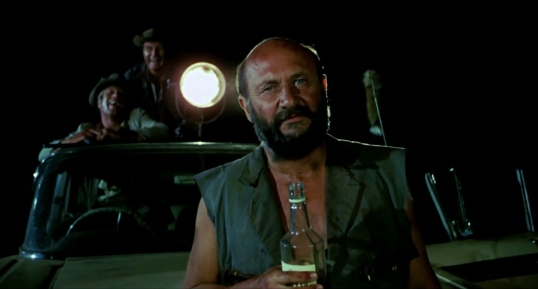
Today, we celebrate the life and career Donald Pleasence! One of the greatest of all the horror icons, Pleasence was born 101 years ago today and that means that it’s time for….
Pete Gent was a college basketball star at Michigan State University who, in 1964, received a tryout with the Dallas Cowboys. Intrigued by the $500 that the team was offering to any player who attended training camp that summer, Gent accepted. Despite the fact that Gent had never before played football, the Cowboys were impressed with his athleticism and they signed him to the team.
For five seasons, Gent played wide receiver. During that time, he caught a lot of balls, became close friends (or so he claimed) with quarterback Don Meredith, and got under the skin of Coach Tom Landry with his nonconformist attitude. After several injuries kept him off the field during the 1968 season, Gent was traded to the Giants who waived him before the next regular season began.
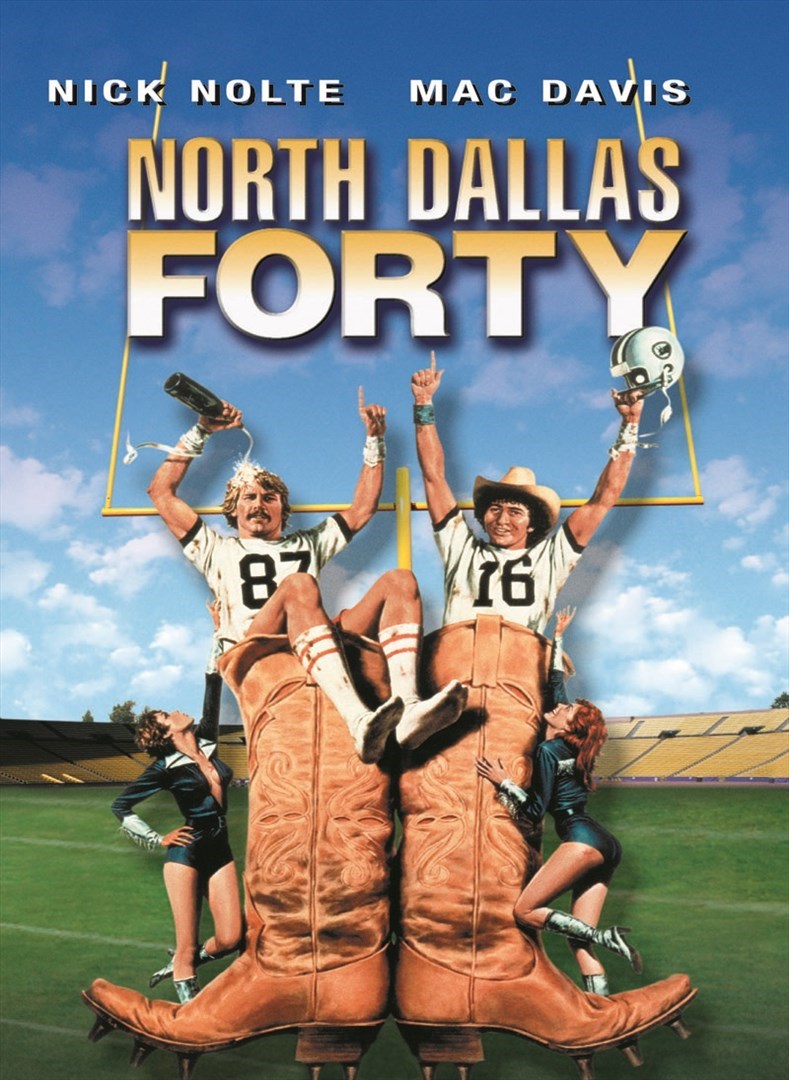
Out of work and with no other team wanting to sign him, Gent wrote a thinly veiled autobiographical novel about his time with the Cowboys. North Dallas Forty was published in 1973 and it immediately shot up the best seller charts. When the book was published, football players were still regularly portrayed as being wholesome, all-American athletes and the Dallas Cowboys were still known as America’s Team. North Dallas Forty shocked readers with its details about groupies, drugs, racism, and gruesome injuries. The NFL, of course, claimed that Gent was just a disgruntled former player who was looking to get back at the league. When asked about the book (which portrayed him as being a marijuana-loving good old boy), Don Meredith was reported to have said, “If I’d known Gent was as good as he says he was, I would have thrown to him more.”
Meredith had a point, of course. In the book, Pete Gent portrays himself as not only being the smartest man in football but also as having the best hands in the league. Men want to be him. Women want to be with him. And the North Dallas Bulls (which is the book’s version of the Dallas Cowboys) don’t know what they’re losing when they release him for violating the league’s drug policy. Today, when you read it and you’re no longer shocked by all of the drugs and the sex, North Dallas Forty comes across as mostly being a case of very sour grapes.
Luckily, the film version is better.
Nick Notle plays Phil Elliott, a broken-down receiver who wakes up most mornings with a bloody nose and who can barely walk without first popping a hundred pills. Phil is a nonconformist and a rebel. He loves to play the game but he hates how it’s become a business. Mac Davis plays Seth Maxwell, the team’s quarterback and Phil’s best friend. Seth is just as cynical as Phil but he’s better at playing politics. G.D. Spradlin is B.A. Strother, the cold head coach who is a thinly disguised version of the legendary Tom Landry. In the novel, B.A. Strother was portrayed as being a hypocritical dictator. The film’s version is more sympathetic with Strother being portrayed as stern but not cruel. Strother even tells Phil that he “can catch anything.”
Both the film and the book take place over the course of one week leading to a big game against Chicago. In the book, Phil says that he and Seth don’t care about whether or not they win. In the movie, they much do care but, at the same time, they know that they’re being held back by a system that cares more about whether or not they follow the rules than if they win the game. While Phil’s teammates (including Bo Svenson as Joe Bob Priddy and John Mantuszak as O.W. Shaddock) behave like animals, Phil falls in love with Charlotte Caulder (Dayle Haddon), who doesn’t care about football.
Pete Gent was originally hired to write the film’s screenplay but left after several disagreements with producer Frank Yablans. (The screenplay was completed by Yablans, directed Ted Kotcheff, and an uncredited Nancy Dowd.) The movie loosely follows the novel while dropping some of its weaker plot points. As a result, the film version has everything that made the novel memorable but without any of Gent’s lingering bitterness over how his career ended. The novel used football as a metaphor for everything that was going wrong in America in the 60s and 70s but the movie is more of a dark comedy about one man rebelling against the system.
There’s only a few minutes of game footage but North Dallas Forty is still one of the best football movies ever made, mostly because Nick Nolte is absolutely believable as an aging wide receiver. He’s convincing as someone who can still make all the plays even though he’s usually in so much pain that it’s a struggle for him to get out of bed every morning. He’s also convincing as someone who loves the game but who won’t give up his freedom just to play it. This is a definite improvement on the novel, in which Phil seemed to hate football so much that it was hard not to wonder why he was even wasting his time with it. Country-and-western signer Mac Davis is also convincing as Seth Maxwell and fans of great character actors will be happy to see both Charles Durning and Dabney Coleman in small roles.
Whether you’re a football fan or not, North Dallas Forty is a great film. Coming at the tail end of the 70s, it’s a character study as much as its a sports film. It’s also one of the few cinematic adaptations to improve on its source material. As a book, North Dallas Forty may no longer be shocking but the movie will be scoring touchdowns forever.
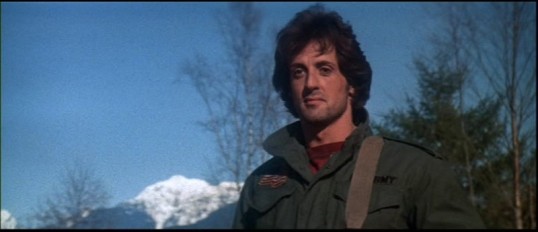
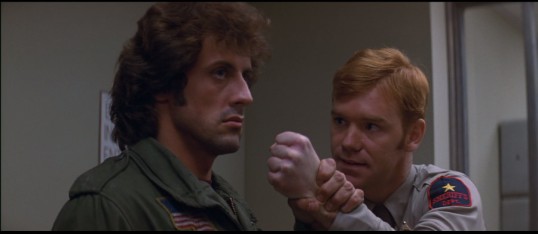
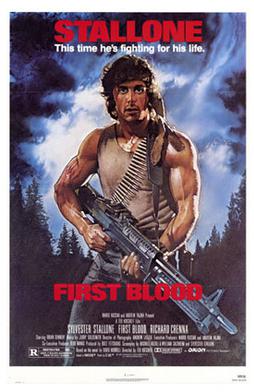
From everything that I had heard and seen over the past few years, I was under the impression that this 1982 film was the ultimate in mindless action. I figured that the film was basically just two hours of Sylvester Stallone hiding in the woods, firing a machine gun, riding a motorcycle, and eventually blowing up a small, bigoted town. It wasn’t a film that I was in any particular hurry to experience but I knew it was one that I would have to watch eventually, if just because of how many filmmakers have cited the film as an influence. On Sunday night, First Blood aired on the Sundance Channel and, for the first time, I watched it all the way through. What I discovered is that there’s a lot more to First Blood than I had been led to believe.
Now, don’t get me wrong. It’s definitely an action film. Stallone spends a lot of time hiding in the woods, firing a machine gun, riding a motorcycle, and blowing up a town. Somewhat improbably, only one character actually dies over the course of the film, though quite a few end up getting maimed and wounded. There’s even a close-up of Stallone stitching up a nasty gash on his arm, which totally made me cringe. But, even with all the gunfire and explosions, First Blood has more on its mind than just carnage. It’s a brooding film, one that angrily takes America to task for its treatment of its veterans and outsiders. In its way, it’s an action film with a heart.
Sylvester Stallone plays John Rambo, a troubled drifter who is still haunted by not only his experiences in Vietnam but also by the feeling that his own country doesn’t want him around. When Rambo, with his unkempt hair and wearing a jacket with an American flag patch prominently displayed, shows up in the town of Hope, Washington, it’s not to cause trouble. He just wants to see an old friend, a man with whom he served. Unfortunately, his friend has died. The man’s bitter mother says that he got cancer from “that orange stuff they were spraying around.” Even though the war is over, it’s still killing the only people who can possibly understand how Rambo feels about both his service and his uncertain place in American society.
As Rambo walks through the town, he’s spotted by Sheriff Will Teasle (Brian Dennehy). Rambo just wants to get a cup of coffee and relax. Teasle, however, views Rambo as being a stranger and, therefore, a possible threat to his town. Teasle wants Rambo to leave. Rambo wants to know why, after everything that he’s sacrificed for his country, he’s being told that he needs to get a haircut. From this simple conflict — a misunderstanding really, as Teasle doesn’t know that Rambo is mourning the death of his friend and instead interprets Rambo’s sullen silence as being a threat — an undeclared and unwinnable war soon breaks out.
Technically, Teasle is the film’s villain. He’s the one who arrests Rambo for vagrancy. It’s his abusive deputies who cause Rambo to have the flashbacks that lead to him breaking out of jail. It’s Teasle’s arrogance that leads to him ignore the warnings of Rambo’s former commanding office, Sam Trautman (Richard Crenna). And yet, Teasle himself is never portrayed as being an evil man. Instead, Dennehy plays Teasle as being well-meaning but stubborn. It’s been written that the most compelling villains are the ones who don’t realize that they’re the villain and that’s certainly true in Teasle’s case. Teasle’s job is to protect the town and its citizens and that’s what he’s determined to do. If his actions become extreme, it has less to do with any deliberate cruelty on his part and everything to do with the fact that, towards the end of the film, he finally figures out that he’s in way over his head.
Once Rambo has disappeared into the woods and maimed (but not killed) all of Teasle’s deputies, he only has one request and that’s to be left alone. He simply wants to stay in the woods, hunting for food and free from a society that has nothing to offer him during peacetime. What’s interesting is that, at the start of the film, everyone wants Rambo to just disappear. He’s a reminder of not just the turmoil of the Vietnam era but also the fact that Vietnam was the first war that America lost. Rambo’s presence is viewed as being like an ugly scar that you wish would just fade away. However, once Rambo does actually vanish, people won’t stop looking for him. As opposed to the later films in the franchise, the Rambo of First Blood doesn’t want to fight anyone. Rambo just wants to be left alone in solitude and considering the way that he’s treated by the town of Hope, it’s hard to blame him.
And so, you end up sympathizing with this John Rambo. Even thought he’s blowing up a town during the Christmas season and there’s a few scenes where he’s kind of scary, it’s impossible not to feel that he has a right to his anger. You find yourself wishing that the Sheriff had just left him alone or that maybe Rambo had just taken Teasle’s earlier advice and left town. Because, as you watch the film, you know that 1) there was no good reason why any of this had to happen and 2) things probably aren’t going to end well for either John Rambo or Will Teasle.
First Blood was based on a novel that was first published in 1972. The film spent nearly a decade in development, as various directors, screenwriters, and actors circled around the project. At one point, First Blood was envisioned as an anti-war film that would have been directed by Sidney Lumet and which would have featured a bearded Al Pacino lurking through the wilderness and killing not only Teasle but also several deputies and national guardsmen. When Stallone agreed to star in the film, he also rewrote the script, transforming Rambo into a sympathetic outsider who goes out of his way not to kill anyone. The end result was an underdog story that audiences could embrace.
Seen today, it’s interesting to see how many familiar faces pop up in First Blood. For instance, a young and really goofy-looking David Caruso pops up and totally overacts in the role of the only sympathetic deputy. A less sympathetic deputy is played by Chris Mulkey, who would go on to play other unsympathetic characters in a huge number of movies and TV shows. Interestingly enough, the most sadistic of the deputies was played by Jack Starrett, who directed a several classic B-moves in the 70s. (One of Starrett’s films was The Losers, in which a bunch of bikers were sent to Vietnam to rescue an American diplomat.)
As opposed to many of the films that it subsequently inspired, First Blood holds up surprisingly well. It may be violent but it’s violence with a heart.
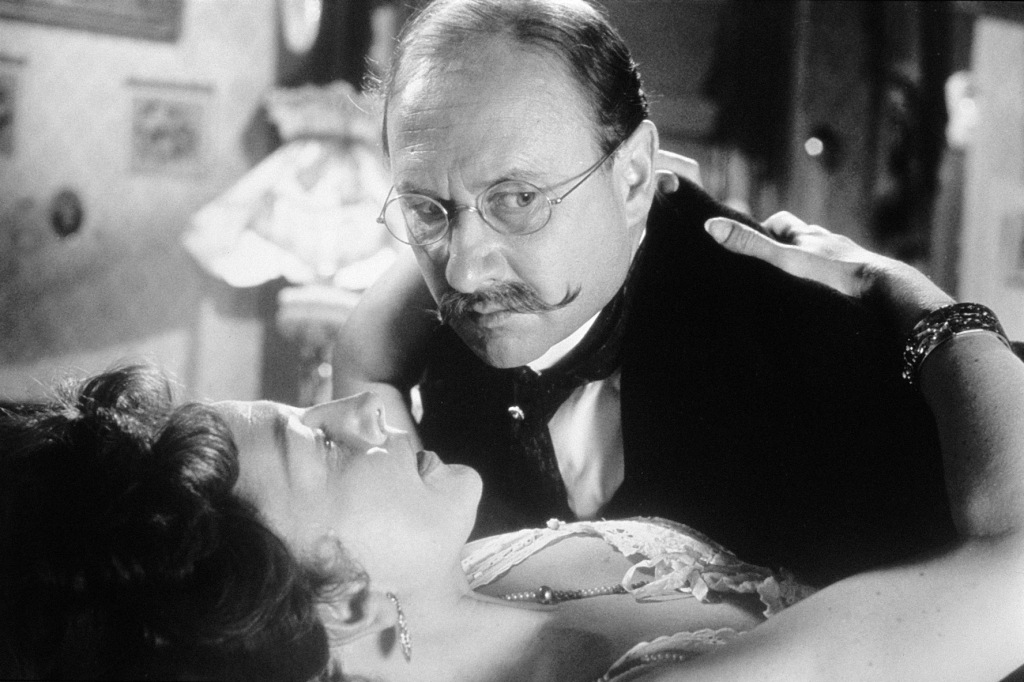
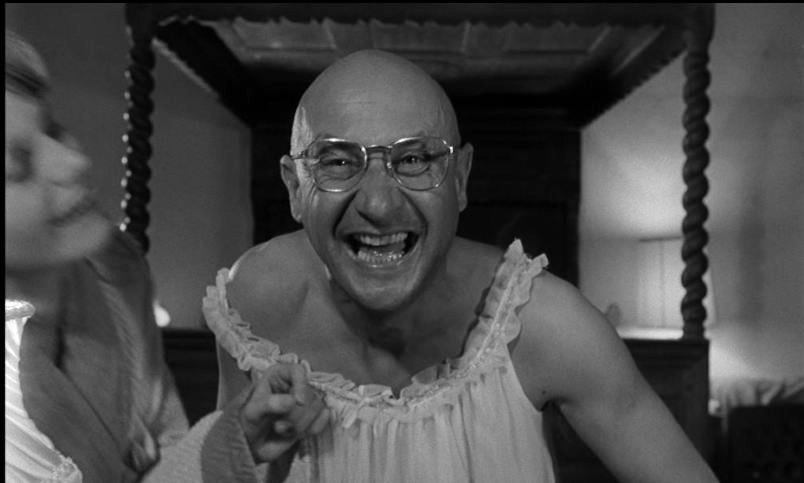
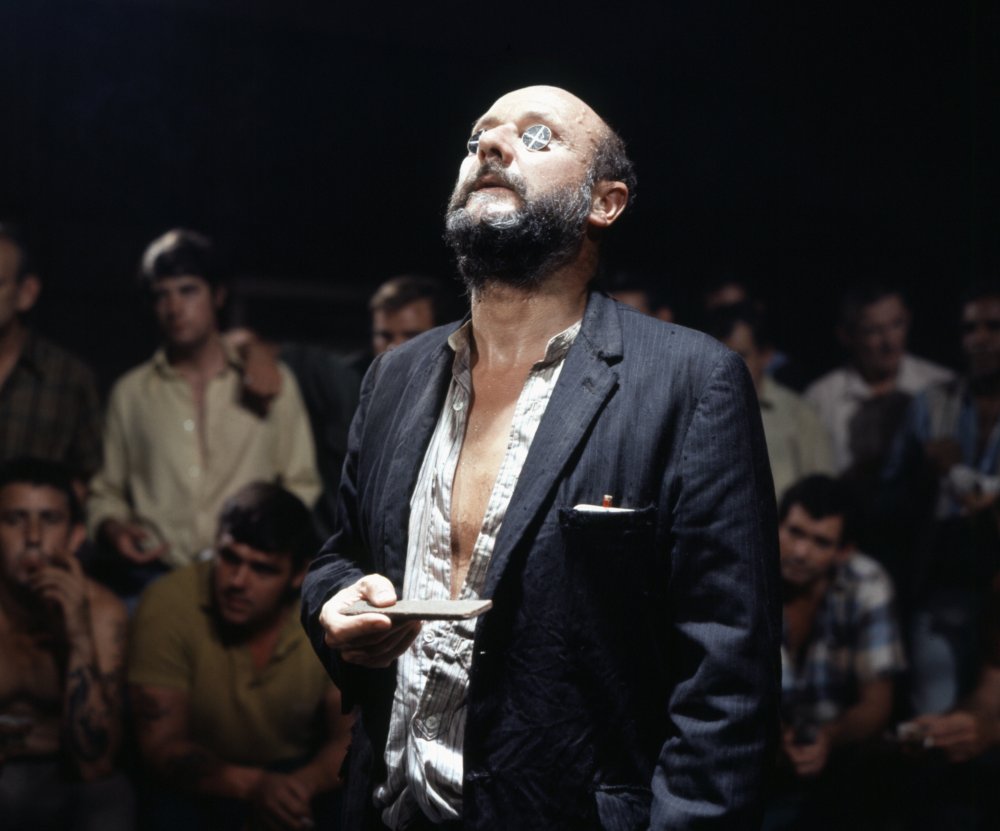
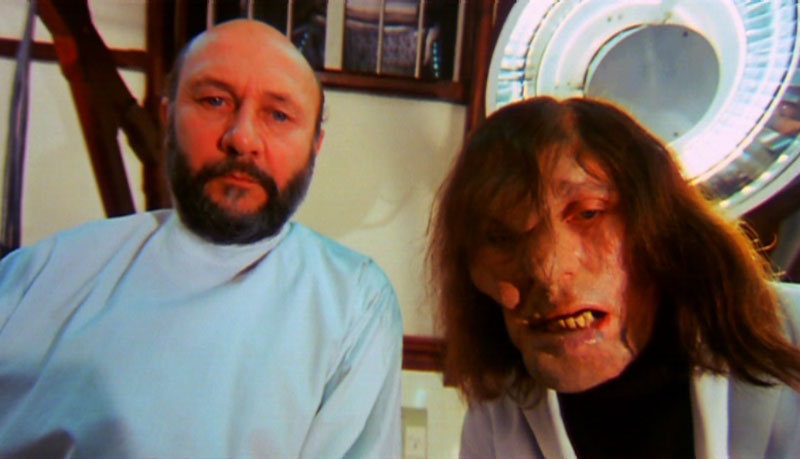
Yesterday would have been Donald Pleasence’s 96th birthday. Pleasence is best remembered for playing Blofeld in You Only Live Twice and the obsessive Dr. Sam Loomis in the Halloween films but, over the course of his long career, he appeared in over a hundred other films. These 4 shots come from 4 of them.
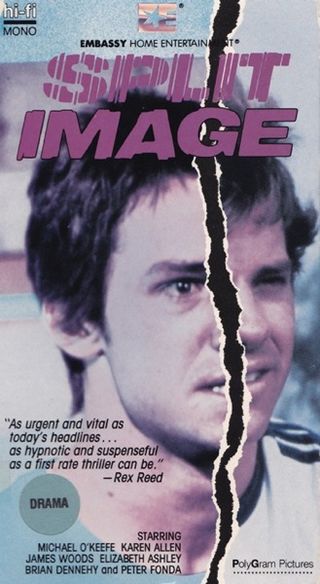
Unlike Desperate Lives, the 1982 melodrama Split Image is available to be viewed on YouTube. In fact, you can watch it below and I suggest that you do so. It’s a pretty good film and, apparently, it’s never been released on DVD or Blu-ray and it’ll probably never be available on Netflix either. So, if you’ve ever wanted to see Peter Fonda play a cult leader, your best bet is to watch the video below.
But before you watch the video, here’s a little information on Split Image, one of the best films that you’ve never heard of.
Essentially, the film follows the same plot as the Canadian film Ticket To Heaven.A college athlete (played by Michael O’Keefe) starts dating a girl (Karen Allen) who is a member of a sinister religious cult. Soon, O’Keefe is a brainwashed member of the cult and only answering to the name of Joshua. (The head of the cult is played, in an appropriately spaced-out manner, by Peter Fonda.) His parents (Brian Dennehy and Elizabeth Ashley) hire a cult deprogrammer (James Woods) to kidnap their son and break Fonda’s hold on him. However, it turns out that Woods’ methods are almost as psychologically destructive as Fonda’s manipulation.
Even if it’s not quite as memorably creepy as Ticket To Heaven, Split Image is still a well-made film, featuring excellent performances from Dennehy, Woods, O’Keefe, and Fonda. However, for me, the most interesting thing about Split Image is that it was largely filmed and set down here in Dallas. Just watch the scene where Woods and his men attempt to kidnap Michael O’Keefe. It was shot on the campus of Richland Community College, which is one of the places where I regularly go to run.
(Interestingly enough, 33 years after the release of Split Image, Richland still looks exactly the same!)






 Through the Shattered Lens