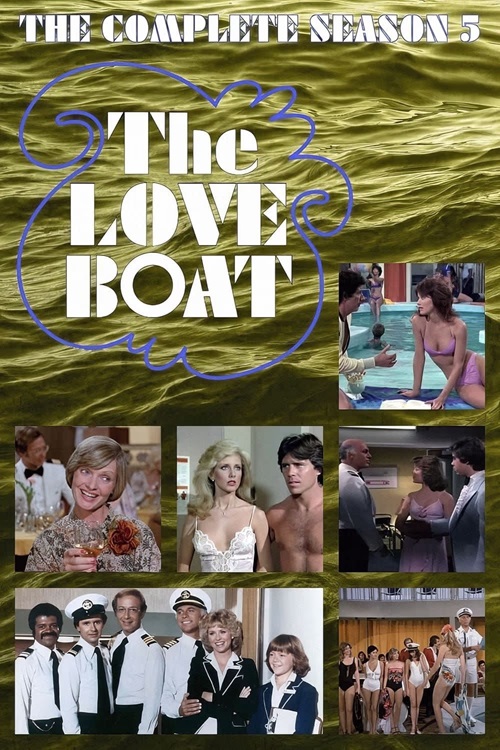
Retro Television Review: The Love Boat 5.22 and 5.23 “Pride of the Pacific/The Viking’s Son/Separate Vacations/The Experiment/Getting to Know You”


Welcome to Retro Television Reviews, a feature where we review some of our favorite and least favorite shows of the past!  On Wednesdays, I will be reviewing the original Love Boat, which aired on ABC from 1977 to 1986!  The series can be streamed on Paramount Plus!
This week, a special two-hour Love Boat sets sail for Alaska and adventure!

Episode 5.22 and 5.23 “Pride of the Pacific/The Viking’s Son/Separate Vacations/The Experiment/Getting to Know You”

(Dir by Roger Duchowny, Originally aired on March 6th, 1982)

The Pacific Princess is sailing to Alaska!

The Sea Princess, commanded by the strict and haughty Gunner Nordquist (Ted Knight), is also sailing to Alaska.  Steve Bloom (Sonny Bono) of the Cruise Ship Association has arranged for a series competitions between the crews of the two ships.  At each stop, the rival crews will compete in races, tree-sawing, tug-of-war, and wrestling.  The crew that wins the most competitions will receive a trophy.  All of the passengers are really excited about it, though I’m not sure why.  I would not want to spend my vacation watching a bunch of strangers take part in a competition that has nothing to do with me.

Gunner is determined to win.  Stubing is determined to have fun.  Or, at least, he is until his crew is absolutely humiliated during the second competition.  When he learns that Gunner has brought in a bunch of ringers, Stubing becomes determined to win at all costs.  Only the tears of Vicki can reveal to Stubing that he’s becoming a monster.  Stubing realizes that he’s been pushing too hard and he apologizes to his crew.  At the final stop, Stubing suggests a dog sled race between him and Gunner.  Gunner agrees.  Steve Bloom says it’s okay.  The crowd is excited for some reason.  In the end, Gunner wins the dog sled race and the competition but only because Stubing kindly refuses to take advantage of an accident that occurs during the race.  Gunner announces that the trophy properly belongs to Stubing and his crew.  Gunner also says that it’s okay if his son (Woody Brown) wants to become a cruise director instead of a navigator.  I’m glad that all worked out….

Actually, this whole storyline made no sense to me.  Beyond the fact that the passengers were oddly excited about the whole thing, I really didn’t see the point of making the members of the crew compete in stuff like tug-of-war and wrestling.  Wouldn’t it have made more sense to compete to see who could be the first to reach the next port?  I appreciated that at least some of this episode was shot on location.  The Alaskan scenery was lovely but the whole competition storyline was just weird.

There were other storylines, of course.  A couple played Charles Nelson Reilly and Charlotte Rae spent the entire cruise in their cabin, getting to know each other because they fell in love at first sight and they wanted to make sure they can handle marriage.  (I can think of one big reason why Charlotte Rae marrying Charles Nelson Reilly might not work out but, this being The Love Boat, it never comes up.)  Two Harvard researchers (John James and Mary Crosby) tried to come up with a pill that would make shy Dave (Douglas Barr) irresistible to women.  Both of those stories were pretty boring.  John James was handsome so the show had that going for it.

Slightly more interesting was the story of Harry Meacham (Tom Bosley) and his wife, Dorothy (Michele Lee).  As they’re in the process of divorcing, Harry sails on The Sea Princess while Dorothy board the Pacific Princess.  Of course, Doc makes his move as soon he realizes the Dorothy will soon be single.  While Dorothy has a chaste fling Doc, Harry has a chaste fling with massage therapist Britta (Priscilla Barnes).  Eventually, Harry and Dorothy realize they still love each other.  Awwww!  Yay!  This story was sweet.

Otherwise, this was not the most memorable cruise to Alaska that the Love Boat has ever taken.  Next week, let’s hope for no musicals and no athletic competitions.  Come on, Love Boat, we all know why we’re here!

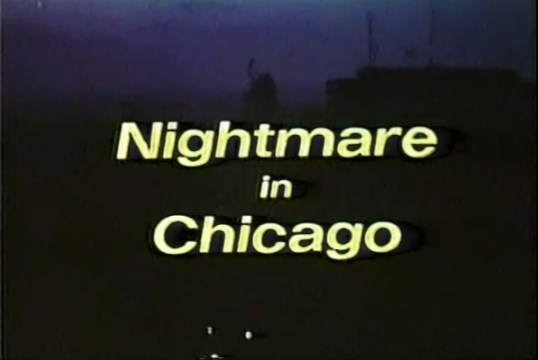
Made-for-TV Movie Review: Nightmare in Chicago (dir by Robert Altman)


Taking place over the course of one very long day and night in December, this 1964 made-for-television movie opens with the discovery of a murdered woman in Indiana.  She is the latest victim of a killer that the press has nicknamed “Georgie Porgie.”

Georgie Porgie, who has killed five blondes in the Midwest, is actually a nondescript man named Myron Ellis (Philip Abbott).  Myron is middle-aged, short, and fairly normal-looking.  That, along with the fact that he’s always moving, is one reason why he has yet to be captured.  The only thing that really stands out about Myron is that, due to a medical condition, he is extremely sensitive to light and always wears dark glasses, even at night.  When Myron isn’t murdering someone or stealing a car, he’s haunted by the voice of his dead sister.

Because he is a nomadic killer, the authorities in Chicago are worried that Myron is coming to their town next and it turns out that they’re correct.  Myron is already in Chicago and he’s looking for his next victim.  In a rather disturbing scene, he strangles a woman that he meets at a strip club, managing to do so without any of the many people around them even noticing.  Myron wanders up and down the streets of Chicago, looking for his next victim.  With his polite manners and his bland appearance, no one suspects that the polite man on the street corner is actually a murderer.

Police Commissioner Lombardo (Ted Knight) and Detectives McVea (Robert Ridgley) and Brockman (Charles McGraw) decide that the best way to catch the killer would be to set up a dragnet on the highway, stopping cars and shining flashlights at the drivers to see who has the weakest eyes.  The only problem is that there is also a nuclear missile convoy scheduled to move through the city at the same time.  With the highways congested and the killer not above wrecking his own car to throw the police off his trail, Lombardo tries to both capture the killer and make sure nothing happens to the convoy.

Nightmare In Chicago is a short and efficient thriller.  It’s well-acted and rather serious in its approach.  Especially when compared to more recent films with similar plots, Nightmare In Chicago deserves some credit for not trying to turn its serial killer into some sort of diabolical mad genius.  Myron, like all serial killers in real life, is a maladjusted and rather stupid person who has only gotten away with his crimes due to pure luck.  He’s not a Hannibal Lecter-style supergenius.  Instead, he’s just a creep who has many, many issues.  The film also does a good job of capturing the manic energy and eventual exhaustion of pulling an all-nighter.  It’s an effective little film with a memorably sordid story.

For modern audiences, probably the most interesting thing about Nightmare in Chicago is that it was directed by Robert Altman and was, in fact, his second non-documentary film after The Delinquents.  At the time he made this film, Altman was largely working in television.  Nightmare In Chicago was one of the first made-for-TV movies and it was a ratings and critical success.  Seen today, it’s easy to spot Altman’s trademark attention to detail in the film.  While it’s far more straight-forward than the majority of his feature films, Nightmare in Chicago still displays the talent that eventually led to Robert Altman become one of Americas most important filmmakers.

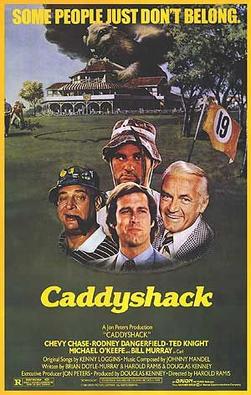
Caddyshack (1980, directed by Harold Ramis)


Whenever I think about Caddyshack, which is one of the funniest moves ever made, I think first of the Gopher, burrowing across the course and dancing to the music.

I then think about Bill Murray, playing the demented groundskeeper and growing his own special grass that you can both play golf on and smoke afterwards.

I remember Rodney Dangerfield dancing on the green while Ted Knight throws a fit.  This was the first film that I ever saw Rodney Dangerfield in.  “It looks good on you, though,” was one of those simple lines that Rodney could turn into a classic.

I remember Ted Knight, appearing in one of his few film roles, and saying, “Well, we’re waiting!” and drawing out every single word.

I remember the scene in the pool.  You know which one I’m talking about.

I remember Chevy Chase, back when he was still funny.

Then I remember how Rodney Dangerfield’s classic last line, “We’re all going to get laid,” was changed to “We’re all going to take a shower!” for television.  Why the censors thought that sounded less dirty than the original, I’ll never know.

I remember the Bishop getting struck by lightning while playing the best game of his life.

And, of course, I remember Cindy Morgan as Lacy Underall.

I remember so many classic moments and funny lines that I’m always surprised when I rewatch the movie and discover that it’s not really about the Gopher, Bill Murray, Rodney Dangerfield, Chevy Chase, or even Lacy Underall.  Instead, the main character in the movie is Danny Noonan (Michael O’Keefe), a teenage caddy at Bushwood Country Club who wants to win a scholarship so he can go to college and avoid having to work in the lumber yard with his father (Albert Salmi).  Danny has a friendly rivalry with caddy Tony D’Annuzio (Scott Colomby) and is dating Maggie (Sarah Holcomb).  Danny has to decide whether to ally himself with the snobs (led by Ted Knight) or the slobs (led by Rodney Dangerfield).

Caddyshack was originally envisioned as being Danny’s story but, once filming started, Harold Ramis (making his directorial debut) realized that the comedic characters were actually more interesting.  The movie went from being a straight-forward coming-of-age story to an almost plotless collection of gags and jokes, with both Bill Murray and Rodney Dangerfield improvising the majority of their dialogue and the Gopher emerging as the film’s true star.  That was bad news for the younger actors playing the caddies, who all found their roles greatly reduced in the film’s final cut but that was good news for audiences.  Caddyshack may not have much of a narrative structure but it does have some of the funniest people who ever lived at the peak of their powers.

Despite a legendarily troubled production, Caddyshack was a huge success with audiences and eventually, the critics came around as well.  Harold Ramis always said that he had a hard time watching it because all he could see were the mistakes that he made.  All audiences could see, though, was a hilariously funny movie that continues to bring people joy to this day.

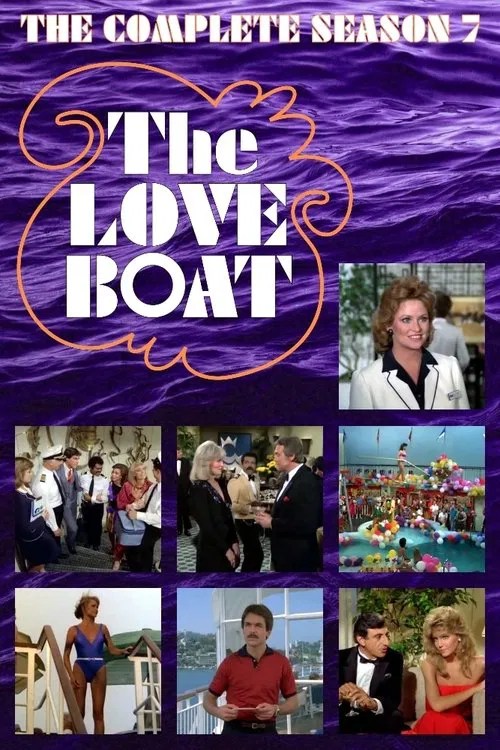
Retro Television Review: The Love Boat 4.2 and 4.3 “The Family Plan/The Promoter/May The Best Man Win/Forever Engaged/The Jurors”


Welcome to Retro Television Reviews, a feature where we review some of our favorite and least favorite shows of the past!  On Wednesdays, I will be reviewing the original Love Boat, which aired on ABC from 1977 to 1986!  The series can be streamed on Paramount Plus!

This week, The Love Boat heads to the Virgin Islands in a special two-hour episode!

(For syndication purposes, this episode is technically listed as being two episodes.)

Episode 4.2 and 4.3 “The Family Plan/The Promoter/May The Best Man Win/Forever Engaged/The Jurors”

(Dir by Roger Duchowny, originally aired on November 1st, 1980)

One of the cool things about The Love Boat is that, at least once per season, the cast and crew would actually film on location on an actual cruise.  You can always spot these episodes by the fact that they’re usually two-hours long, there’s more passengers than usual, and the guest stars tend to spend more time on the upper deck than in their cabins.  It may not sound like much but there’s just something undeniably fun about seeing the actual ocean while the ship’s crew and the show’s guest stars go through the motions.  It’s a reminder that we live on a beautiful planet and we should all make the effort to go out and see some of it.

The fourth season’s location shoot followed the boat as it sailed from the Virgin Islands to Los Angeles, with stops in Curacao, Venezuela, and Panama.  Along with all of the usual romance and laughs, this episode is a bit of a travelogue as Gopher, Julie, and the Captain all take their turn telling the passengers about the history of where they are sailing.  Isaac even gets into the act, pointing out the Virgin Islands to Doc Bricker.  (Being the walking HR nightmare that he is, Bricker can’t hear that name without making a comment about it.)  For a history and travel nerd like me, that was enough to make this episode fun.

As for the storylines, it was typical Love Boat silliness.  Promoter Larry Evans (Darren McGavin) is promoting a contest in which 50 engages couples will be married by Captain Stubing in a mass wedding aboard the ship.  (It’s kind of like what happens in cults, now that I think about it.)  One lucky couple will win money, a house, and a car.  Larry boards the ship with his wife, Sheila (Debbie Reynolds) and it quickly becomes apparent that their marriage is struggling, despite the happy facade that Larry attempts to put up.  When Larry’s plan for a network television special falls through, he’s offered a bribe by one of the engaged couples.  When Sheila learns that Larry is considering taking the bribe, she announces that she wants a divorce and then starts spending a lot of time with Captain Stubing.  Again, Vicki gets her hopes up that she’ll soon have a stepmother.

Meanwhile, Carl Lawrence (Peter Graves) boards the ship to try to keep his son, Ted (Brian Kerwin), from rushing into a marriage with Carrie (Erin Moran).  Meanwhile, Carrie’s mother, Mary Ann (Kathie Browne), boards to keep Carrie from rushing into a marriage with Ted.  Carl and Mary Ann are eager to work together to keep this wedding from happening.  But then Carl and Mary Ann fall in love and start planning a rushed wedding of their own.  “Are we hypocrites?” Carl wonders.  Yes, you are.  But you’re also Peter Graves so you can pretty much do whatever you want.

Tom McMann (Ted Knight) and Mary Hubble (Rue McClanahan) have been engaged for ten years.  Mary fears that Tom won’t go actually go through with the wedding and Tom suddenly finds himself unable to say the words, “I do.”  Can Isaac help them out?

Marv Prine (Don Most), who previously sailed on last season’s Alaskan cruise, boards as the best man for the wedding of his friend Brian (Lloyd Alan) and Emily (Charlene Tilton).  However, Brian decides he’d rather run off with an old girlfriend and he leaves it to Marv to break the news to Emily.  Marv can’t bring himself to do it so he keeps making excuses and promising Emily that Brian will meet them at the next port.  Marv falls in love with Emily but suddenly, Brian shows up.  When he finds out that Marv didn’t tell Emily the truth about him standing her up, Brian decides to go ahead with the wedding.  Emily becomes convinced that Marv was trying to steal her away from Brian but then she finds a receipt from a cheap hotel and she realizes the truth.  “You’re not a man,” Julie tells Brian.  WAY TO GO, JULIE!

Finally, the Captain assigns Doc Bricker the task of judging the couples contest.  Doc thinks that it sounds tedious so he passes the job onto Gopher.  However, when Doc sees that the other two judges are Valerie (Dawn Wells) and Rena (Ann Jillian), he conspires to take Gopher’s place.  While docked at Curacao, Doc sends Gopher assure to pick up some medical supplies.  Gopher, of course, walks up to a cop and asks for help finding “the drugs.”  When the cop doesn’t understand, Gopher says, “I want to buy drugs.”  Long story short, Gopher ends up in jail and the ship sails off without him.

Wow, that’s a lot to deal with!  But don’t worry it all works out.

Gopher meets a Spanish diplomat’s daughter and is not only freed from jail but he also gets a girlfriend and a limo for his trouble.  When the ship docks in Los Angeles, Valerie and Rena abandon Doc so that they can take a ride in Gopher’s new limo.

Larry does not take the bribe and saves his marriage.

Everyone else gets married.

Yay!  A happy ending!  Except, of course, for Vicki, who thought she was going to get a stepmother.  But don’t worry, Vicki. There’s still 6 more seasons to go.

This was a fun episode.  It made me want to take a cruise.  Interestingly enough, this is also a prophetic episode.  A cruise for engaged couples in which one couple wins a big prize?  Today, there’s not a network around that would pass on that.

See?  The Love Boat knew exactly where America sailing.

Film Review: Countdown (dir by Robert Altman)


Earlier tonight, on TCM, I watched the 1968 science fiction film, Countdown.

Who will be the first man to walk on the moon?  Will it be Chiz (Robert Duvall), who is a colonel in the Air Force and who has been training for years and who really should get the chance just because he has a really cool name like Chiz?  Or will it be Chiz’s best friend, Lee (James Caan)?  Lee may not have Chiz’s experience but he’s a scientist and selecting him would allow NASA to portray the mission of being one of peace as opposed to one of war.  Add to that, Lee has a full head of hair and he looks like a young James Caan, who was an undeniably handsome man back in his younger days!  I mean, seriously — who would you rather have as the face of the space program: Tom Hagen or Sonny Corleone?

Of course, it might not really matter who NASA picks because the Russians are determined to get to the moon as well.  And you know what that means!  If the Russians land on the moon first, they’ll turn it into a Socialist utopia and that’ll mean ugly architecture, bread lines, and a three-month wait for toilet paper.  The stakes have never been higher!

Countdown was made and released at the height of the space race, at a time when Americans really did feel that they were competing with the Russians to be the first to reach the moon.  (Of course later, it would be learned that the Russian space program actually managed to kill far more cosmonauts than it successfully sent into orbit.)  It came out a year before Apollo 11 landed on the moon and Neil Armstrong became the first Earthling since Stanley Kubrick to ever step on the lunar surface.  As such, it’s interesting to see how Countdown imagines the experience of exploring the moon.  I won’t spoil who reaches the moon first but I will say that he moves remarkably quickly and with great ease for someone in a gravity-free environment.

Countdown is a good example of what I like to call a “time capsule” film.  Seen today, it’s kinda slow and a bit predictable.  For all the time that is spent on getting the astronauts ready to go into space, very little time is actually spent in orbit.  This is a very Earth-bound film.  And yet, if you’re a history nerd like me, it’s hard not to be a little bit fascinated by a movie like this.  In everything, from its fashions to its dialogue to its cultural outlook, this is very much a document of its time.  It may be a while until we have the technology necessary to travel through time.  Until then, watching a film like this might be as close as I’ll ever get to experiencing what the straight, non-Hippie crowd was doing in 1968.

If you’re a student of film history, Countdown is significant for being one of the first films to be directed by Robert Altman.  To be honest, if not for his name in the opening credits, you would probably never guess that Countdown was directed by one of America’s most influential and iconic directors.  Altman specialized in making film that were almost defiantly iconaclastic and there’s very little of that to be found in Countdown.  Admittedly, there are a few scenes that make use of overlapping dialogue and there’s a party scene that’s definitely Altmanesque.  However, the only reason I really noticed that party scene is because I was specifically looking for evidence of Altman’s style.  For the most part, the most identifiably Altmanesque element of Countdown is the casting of Michael Murphy in a small role.

The film is dominated by Robert Duvall and James Caan and, especially if you’re a fan of The Godfather, it’s undeniably fun to see these two acting opposite each other in something other than an epic gangster film.  (Duvall and Caan also acted together in The Rain People and The Killer Elite and were reportedly great friends off-camera as well.)  Duvall is especially good in Countdown, playing Chiz as a man torn between an innate sense of loyalty and his own competitive nature.  The scenes between Duvall and Caan have a charge to them that occasionally bring some much-needed life to this film.

In the end, Countdown is a fairly forgettable film but it’s worth seeing as a piece of history.