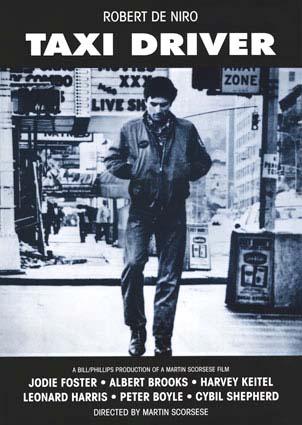
What Could Have Been: George Hamilton as Travis Bickle?


I was recently reading the IMDb trivia page for Martin Scorsese’s 1976 film, Taxi Driver. 

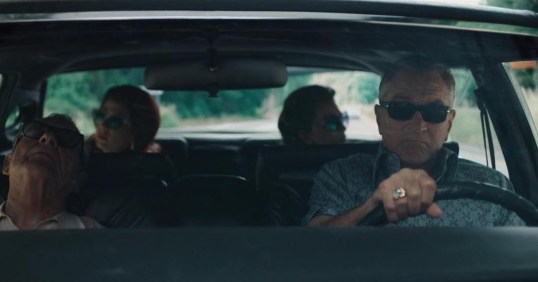
Taxi Driver is often held up as the being the ultimate New York horror story as well as being the quintessential Martin Scorsese/Robert De Niro collaboration.  In fact, the film is so identified with Scorsese, De Niro, and screenwriter Paul Schrader that it is easy to forget that it actually took a while for Scorsese and De Niro to become involved with the project.  Quite a few different directors showed interest in Schrader’s script before Scorsese signed on.  And, even though the role will always be associated with him, De Niro was not the only actor considered for the role of Travis Bickle.

That’s what brought me to the IMDb trivia page.  I wanted to see who else was considered for the role of Travis.  Here’s the list that I found: Jeff Bridges, Jack Nicholson, Dustin Hoffman, Warren Beatty, Burt Reynolds, Ryan O’Neal, Peter Fonda, Al Pacino, Jon Voight, Robert Blake, David Carradine, Richard Dreyfuss, Christopher Walken, Alain Delon, James Caan, Roy Scheider, Paul Newman, Marlon Brando, Martin Sheen, Elliott Gould, Alan Alda, and George Hamilton.  That’s quite a list!  And. for the most part, I don’t buy it for a second.

Don’t get me wrong.  It is known that Al Pacino was sent the script before Scorsese came on board.  And Scorsese himself has said that he offered the role to Dustin Hoffman.  (Hoffman says he turned down the role because Scorsese’s intensity freaked him out.)  Jeff Bridges was also a possibility and, if you read Schrader’s script and force yourself to forget about De Niro’s performance, you can actually imagine Bridges in the role.  I could also imagine a youngish Martin Sheen in the role.  He had just played Charlie Starkweather in Badlands so one can imagine him being considered for Travis.  Peter Fonda and Robert Blake seem possible as well.  Even David Carradine.

But some of the other names on that list …. Alain Delon?  Paul Newman?  Alan Alda?  GEORGE HAMILTON?

This George Hamilton?

Listen, I like George Hamilton.  He’s a good comedic actor.  And I know that there were a lot of directors who took a look at Paul Schrader’s script and I also know that some of Travis’s most iconic moments — like the whole “You talkin’ to me?” scene — were improvised by De Niro and were not in the original script.  Taxi Driver could have gone in a lot of different directions.  But I’m just going to say right now that there is no way that George Hamilton was ever considered for the role of Travis Bickle.  It’s totally possible that Hamilton was considered for another role in the film.  I could imagine him as the presidential candidate, Charles Palantine.  I could also imagine him in the role of Tom, Palantine’s campaign manager.  Perhaps he was offered one of those roles and someone, reading that George Hamilton had turned down Taxi Driver, got it into their head that he was considered for Travis.

Or maybe …. someone just made the whole thing up.  I enjoy the IMDb trivia pages but I’ve come across a lot of information that simply is not true.  Despite what the page for the original Halloween says, I refuse to believe that John Belushi was considered for the role of Dr. Loomis.  For that matter, I also refuse to believe that Bill Murray was a runner-up for the role of Han Solo in Star Wars.  Sorry, IMDb trivia people.  I just don’t buy it.
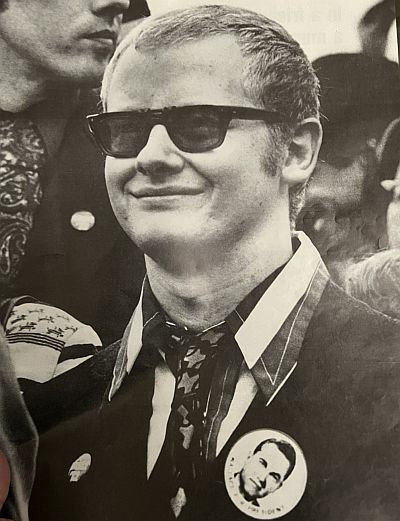
Arthur Bremer

Here’s what we do know.  Paul Schrader was originally inspired to create the character of Travis Bickle by Arthur Bremer, a non-descript 21 year-old Midwesterner who, in 1972, shot and nearly killed presidential candidate, George Wallace.  After the shooting, police turned up a diary in which Bremer wrote about his desire to be someone.  According to Bremer, he shot Wallace not as a political act but because he wanted to be famous.  Schrader later said that, while writing the script, the story became less about Bremer and more about Schrader’s own social isolation.

The script was optioned by the production team of Tony Bill and Julia and Michael Phillips.  They had just recently produced the Oscar-winning The Sting.  Originally, Tony Bill wanted to make his directorial debut with the film.  That was when the script was sent to Al Pacino.  Pacino turned down the role, reportedly because he didn’t want to work with a first-time director.  (Tony Bill, a former actor, later directed several films, most of which appeared to be taking place in a totally separate universe from Schrader’s vision of urban Hell.)

The script was eventually read by Brian De Palma, who voiced an interest in directing the film.  DePalma’s choice for the role of Travis Bickle?  Jeff Bridges.

Today, it might be hard to imagine the affable, laid-back Jeff Bridges as Travis Bickle but, if you read the script, it’s easy to see why De Palma considered him for the role.  Travis was written as being someone from the middle of the country, someone who was out-of-place in New York City.  Travis was meant to be lost in New York.  (Though Travis does say that he’s from the midwest in Scorsese’s film, Robert De Niro himself remains the prototypical New Yorker.)  At least initially, Bridges would have been a bit less obviously unstable than De Niro.  As good as Taxi Driver is, it always seems a bit strange that Betsy would agree to go out with De Niro’s Travis but it’s a bit easier to believe that she would take a chance on Jeff Bridges, with his charming smile and likable manner.  Bridges’s descent into madness would have been all the more devastating because he was such an outwardly affable presence.  I’m not saying it would have worked but I can still see what De Palma would have been going for in his version of Taxi Driver.

That said, De Palma did not make Taxi Driver.  He instead decided to do Carrie.  A young Steven Spielberg briefly showed interest in Taxi Driver (the mind boggles) before decided to do Jaws instead.  Eventually, after being introduced to Schrader by De Palma, Martin Scorsese agreed to direct the film.  After getting turned down by Dustin Hoffman, Scorsese offered the role to De Niro.
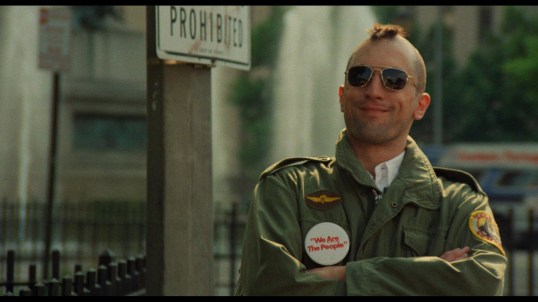
As for the rest of the cast, Rock Hudson would have been an interesting choice for the role of Sen. Palantine but he turned down the script because he was busy with a television show.  There was also some talk of casting former New York Mayor John Lindsay in the role but, in the end, the role was given to a writer named Leonard Harris.

The role of Tom was originally offered to Harvey Keitel.  Because Keitel wanted to play the pimp, Albert Brooks ended up as Tom.  Because there wasn’t much to Tom in the script, it was felt that, as a comedian, Brooks could bring some sort of life to the character.  Indeed, Brooks reportedly improvised the majority of his lines.

Despite the fact that producer Julia Phillips wanted to cast Farrah Fawcett in the role, Martin Scorsese selected Cybil Shepherd for the role of Betsy.  If you believe the IMDb, Meryl Streep was offered the role but turned it down.  (If I sound skeptical, it’s because Streep hadn’t even made her film debut at the time that Taxi Driver went into production.)  Glenn Close, Jane Seymour, and Susan Sarandon auditioned for the role.  Mia Farrow reportedly wanted the role but was turned down by Scorsese.

As everyone knows, Jodie Foster played the 13 year-old prostitute, Iris, in Taxi Driver.  A man named John Hinckley, Jr. was so obsessed with Foster’s performance that he went the same route as Travis Bickle and attempted to assassinate the president in an effort to impress her.  Foster, however, was only picked after Scorsese saw several up-and-coming actresses.  Reportedly, due to the success of The Exorcist, Linda Blair was seriously considered for the role.  Tatum O’Neal was also considered, after winning her Oscar for Paper Moon.  Scorsese came close to casting Melanie Griffith but then Tippi Hedren read the script and nixed the idea.  Among the others who supposedly read for Iris: Mariel Hemingway, Jennifer Jason Leigh, Heather Locklear, Kristy McNichol, Carrie Fisher, Ellen Barkin, Kim Basinger, Geena Davis, Michelle Pfeiffer, Brooke Shields, Debra Winger, Rosanna Arquette, Bo Derek, and Kim Cattrall.

Finally, actor George Memmoli was injured on the set of another film, which led to Scorsese playing the passenger who talks to Travis about murdering his wife.
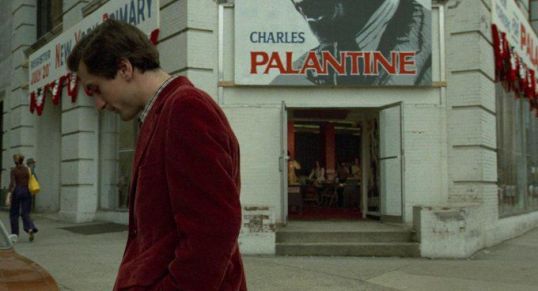
In the end, the right director and the right cast were selected and Taxi Driver became a classic of urban paranoia.  Still, it’s always fun to play What If.  On Earth-2, someone is watching Jeff Bridges, Rock Hudson, Jane Seymour, and Melanie Griffith in Brian De Palma’s Taxi Driver.  And, on Earth-3, George Hamilton is polishing his Oscars and thinking about how playing Travis Bickle changed his life.
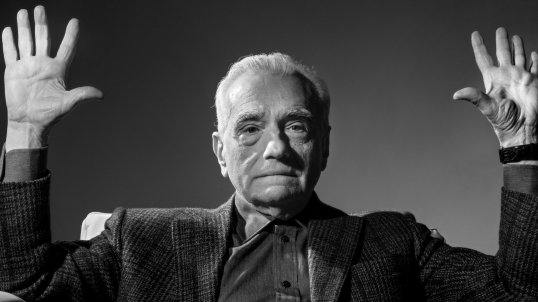
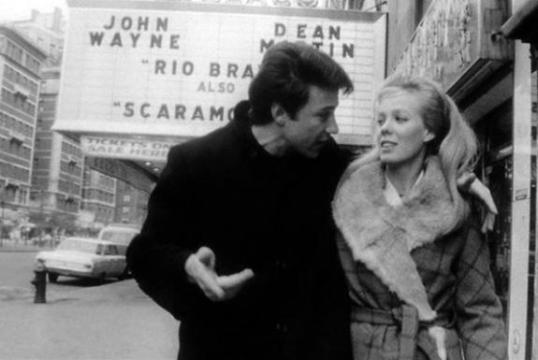
Music Video of the Day: Taxi Driver by Lucy Blue (2021, dir by ????)


At first, I thought this might be a tribute to the Scorsese film but apparently, it’s not. Instead, it’s juts a song about someone who either is a taxi drive or who is fantasizing about being a taxi driver. Myself, I like the look of this video. It’s very atmospheric and dream-like.

Enjoy!

26 Shots From 26 Films: Special Martin Scorsese Edition


4 Shots From 4 Films is just what it says it is, 4 shots from 4 of our favorite films. As opposed to the reviews and recaps that we usually post, 4 Shots From 4 Films lets the visuals do the talking.

Today, the TSL wishes a happy birthday to one of the greatest director working today, the one and only Martin Scorsese!  And that means that it’s time for….

26 Shots From 26 Martin Scorsese Films

(That’s right.  We usually do 4.  Scorsese gets 26.  He deserves a hundred.)

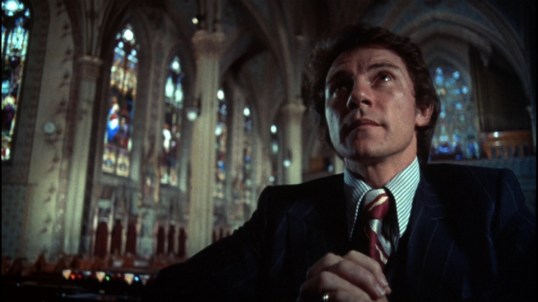
Who’s That Knocking On My Door (1967, dir by Martin Scorsese)

Boxcar Bertha (1972, dir by Martin Scorsese)

Mean Streets (1973, dir by Martin Scorsese)

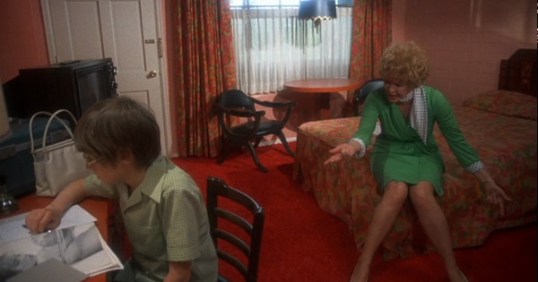
Alice Doesn’t Live Here Anymore (1974, dir by Martin Scorsese)

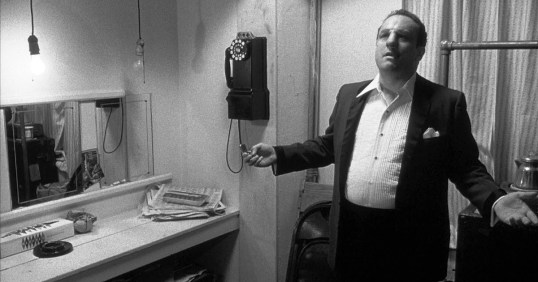
Taxi Driver (1976, dir by Martin Scorsese)

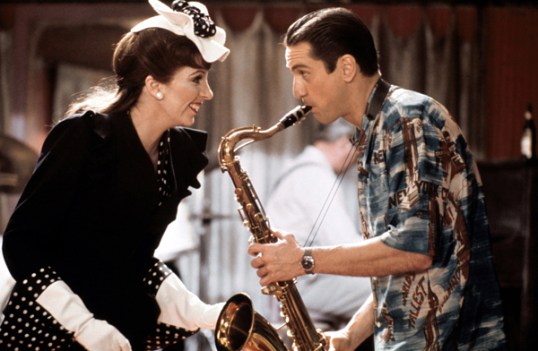
New York New York (1977, dir by Martin Scorsese)

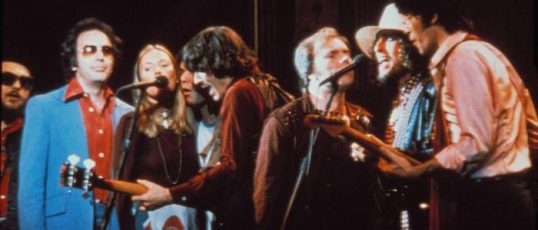
The Last Waltz (1978, dir by Martin Scorsese)

Raging Bull (1980, dir by Martin Scorsese)

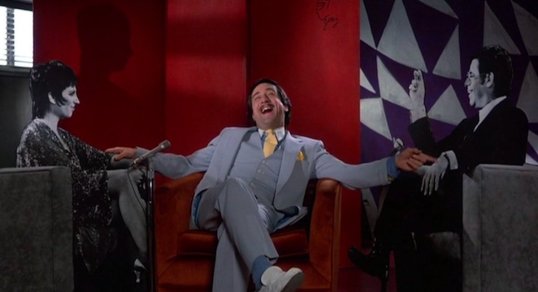
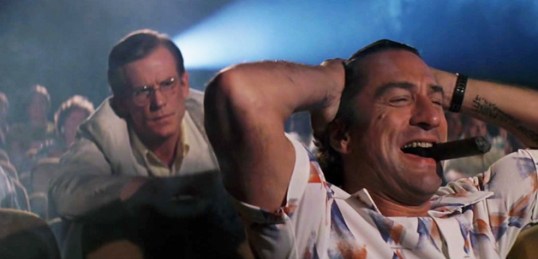
King of Comedy (1982, dir by Martin Scorsese)

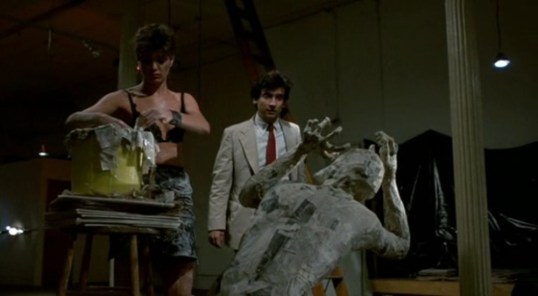
After Hours (1985, dir by Martin Scorsese)

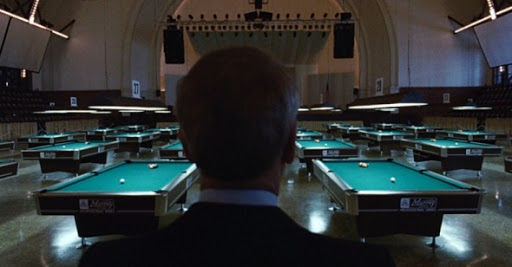
The Color of Money (1986, dir by Martin Scorsese)

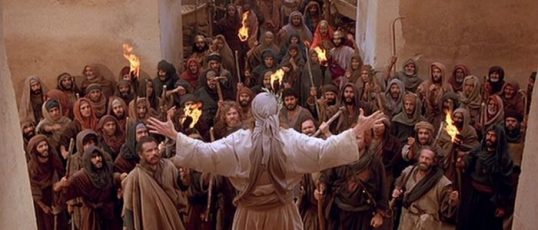
The Last Temptation of Christ (1988, dir by Martin Scorsese)

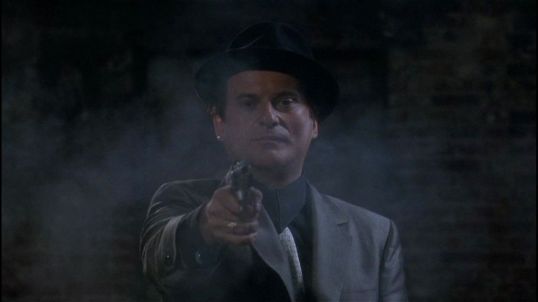
Goodfellas (1990, dir by Martin Scorsese)

Cape Fear (1991, dir by Martin Scorsese)

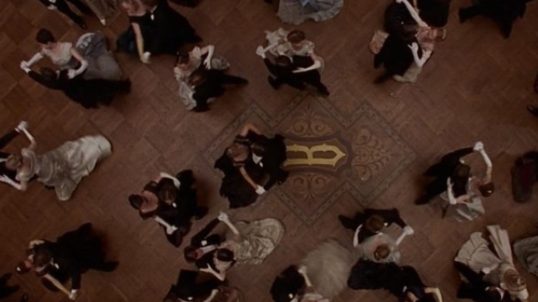
The Age of Innocence (1993, dir by Martin Scorsese)

Casino (1995, dir by Martin Scorsese)

Kundun (1997, dir by Martin Scorsese)

Bringing out the Dead (1999, dir by Martin Scorsese)

Gangs of New York (2002, dir by Martin Scorsese)

The Aviator (2004, dir by Martin Scorsese)

The Departed (2006, dir by Martin Scorsese)

Shutter Island (2010, directed by Martin Scorsese)

Hugo (2011, dir by Martin Scorsese)

The Wolf of Wall Street (2013, dir by Martin Scorsese)

Silence (2016, dir by Martin Scorsese)

The Irishman (2019, dir by Martin Scorsese)

Film Review: American Boy: A Profile of Steven Prince (dir by Martin Scorsese)


In Martin Scorsese’s 1976 film, Taxi Driver, there’s a scene where homicidal Travis Bickle (Robert De Niro) has a meeting with an extremely helpful gun dealer.  The dealer’s name is Easy Andy and if you want to buy it, Andy’s got it.  Andy’s the type who not only has every gun imaginable in his attaché case but he’ll also toss in a specially made holster for free.  “Ain’t that a little honey?” Andy asks as Travis aims a gun out a window and imagines what it would be like to shoot a random passerby.

It’s only a 4-minute scene but it’s one of the most memorable moments in a film that’s full of them.  Easy Andy was played by a man named Steven Prince and, for those 4 minutes, Prince easily stole the picture from De Niro.  As soon as Easy Andy shows up on screen and starts taking, you can’t look away from him.  He’s a bit like the chemist that Patrick McDermott played in The French Connection.  He’s sleazy but he’s got an undeniable charm.

Just based on his performance in Taxi Driver, you would think that Steven Prince was one of those 70s character actors who split their time between Scorsese, Altman, and the occasional big studio film.  However, Steven Prince was actually not an actor.  Instead, he was a member of Martin Scorsese’s entourage, a friend who was something of a personal assistant to the director in the 70s.

In 1978, two years after Prince stole 4 minutes of Taxi Driver away from Robert De Niro, Martin Scorsese directed a documentary about his friend, American Boy: A Profile of Steven Prince.  Essentially a 55-minute conversation between Prince, Scorsese, and actor George Memmoli, American Boy was Scorsese’s homage to Shirley Clarke’s 1967 documentary, Portrait of Jason.  Both documentaries feature a night spent with a New York-based raconteur and both feature plenty of stories about drugs, death, and celebrity.  The main difference is that you watch Portrait of Jason frightened that Jason is on the verge of having a mental breakdown whereas you spend most of American Boy expecting Steven Prince to drop dead at any second.

From the minute that Steven Prince arrives at George Memmoli’s house, he looks like he’s on the verge of collapsing.  He’s painfully thin and his face is skeletal.  His eyes are sunk deep into his head and surrounded by dark circles and his teeth are noticeably brown and rotten.   Prince was only 29 or 30 when American Boy was filmed but one look at his face and you know that he’s lived a lifetime in those three decades.  When he speaks, his voice is a nasal croak.

When Prince first shows up, he and Memmoli get into a wrestling match that seems to go on forever.  Watching the heavy-set Memmoli collapse onto the cadaverous Prince, you find yourself worrying about what’s going to be left of Prince once they’re finished.  (At first, the wrestling seems terrible self-indulgent but actually, it’s classic Scorsese.  His feature films have often dealt with men who, because of their hang-ups, still act like children.  Why should a documentary be any different?)  When the wrestling finally ends and Prince starts to talk about his life, his charisma is evident but you’re still weary.  Prince is the type of story teller who knows how to bring you into his world but, whenever you start to get too close to what’s actually going on inside of him, he pushes you away with a sudden punchline or a sarcastic quip.  It’s appropriate that Prince starts things off by telling a story about getting stoned because he has an addict’s charisma.  He has the charm of a man who has to be charming because, otherwise, he’d probably be dead.

And yet Prince is such a skilled story teller that, despite your better instincts, you do start to let your guard down.  He talks about growing up and how much he loves his family and Scorsese shows us home movies so we can compare the happy child that Steven Prince was to the recovering addict who is now talking to us.  He tells a story about tricking a man into drinking vodka, little realizing that the man was an alcoholic who was trying to stay away from booze.  He tells us about a female friend who OD’d and how he had to use a medical book, a magic marker, and a shot of adrenaline to bring her back to life.  (That story was later recreated in Tarantino’s Pulp Fiction.)  He talks about the time he spent working for Neil Young and he talks about his own struggle with heroin.
He also talk about the time that he killed a man.  Prince was working at a gas station when he caught a man stealing tires.  Prince ended up shooting the man in self-defense and, for a few brief moments, we see one of the reasons why Scorsese and Memmoli find Prince to be so intriguing.  What they’ve only done in the movies, Steven Prince has done in real life.
Much as with Portrait of Jason, you find yourself wondering how much of American Boy was spontaneous and how much of it was planned out beforehand.   Were Prince and Memmoli really wrestling or were they just following stage directions?  Is Prince really telling us the story of his life because he wants to or because Scorsese keeps asking him questions?  Throughout the film, Scorsese continually reminds us that everyone in the film — including himself — is essentially performing for the cameras.  (Early on, we see and hear Scorsese asking if the camera’s rolling.  At another point, he says that he’ll just edit an awkward moment out of the film.)  And so, we’re left to wonder: are we seeing a true profile of Steven Prince or are we seeing what Scorsese wants us to see of Steven Prince?  Is Steven Prince a real person or is he just another one of Scorsese’s troubled outsiders?

It’s not always an easy film to watch.  Charismatic or not, a little bit of Steven Prince can go a long way.  And yet, it’s still a film that, once you start watching it, you really can’t look away from it.  It’s a bit like Prince himself; imperfect but always intriguing.  And, as unwell as Prince often appears to be in American Boy, he’s still with us.  (In 2009, he even did a follow-up to American Boy, American Prince.)  Steven Prince survives.

Shattered Politics #39: Taxi Driver (dir by Martin Scorsese)


Taxi_Driver_poster

We’ve never had a President named Charles.  We’ve had several Presidents named John and a quite a few named James.  We’ve even had three named George.  But we’ve never had a Charles.  We’ve come close.  Charles Evans Hughes nearly beat evil old Woodrow Wilson in 1916.  Charles Cotesworth Pinckney was nominated two times in a row by the Federalists but lost to Thomas Jefferson and James Madison respectively.  We’ve had three Vice Presidents names Charles — Fairbanks, Dawes, and Curtis — but never a President.

And, if we ever do elect a President named Charles, he’s probably go by either Charlie or Chuck.  The United States has always liked to think of itself as being a country that has no official royal family and, as a name, Charles probably sounds far to aristocratic for most voters.

That’s why I’m sure that, once U.S. Sen. Charles Palatine won the Democratic presidential nomination back in 1976, he probably insisted that people start calling him Chuck.  Of course, Sen. Palatine probably had no idea how lucky he was to win that nomination.  If not for a few secret service agents, Sen. Palatine could very well have fallen victim to a psychotic taxi driver named Travis Bickle.

Sen. Palatine’s presidential campaign is a major subplot of Martin Scorsese’s 1976 masterpiece of paranoia, Taxi Driver.  As played by an actor named Leonard Harris, Sen. Palatine appears to be the epitome of a politician.  He may smile at the right moment but his eyes are always shifty.  Even his campaign slogan (“We Are The people!”) is vapid in an all too plausible way.  (How different is “We Are the People” from “We Are The People We’ve Been Waiting For?”)  For the most part, Palatine remains a remote figure, giving speeches and appearing in television commercials.  The only time that we get to know Palatine as a person is when he gets in a taxi being driven by Travis Bickle (Robert De Niro).

Travis recognizes him immediately and tells him that he tells everyone who gets in the cab that “they gotta vote for you.”  Palatine smirks a little as he asks Travis what he thinks the most important issue of the election is.  Travis goes on a bit about how someone needs to destroy all of the scum and filthy lowlifes who seem to populate Travis’s section of New York.  As Travis rambles, Palatine’s smile disappears and it becomes obvious that he’s realized that he is essentially being driven by a psycho.  Oh shit, Palatine is probably thinking, this guy is telling people that they gotta vote for me?  However, Palatine quickly regains his composure and assures Travis that the wisest people that he’s ever met have been taxi drivers.

Of course, what Palatine doesn’t realize is that Travis only knows about the campaign because he happens to be obsessed with a Palatine campaign worker named Betsy (Cybill Shepherd).  And Betsy even goes out with Travis a few times.  But then Travis, who spends the majority of the film showing how little skill he has when it comes to understanding and relating to other people, takes Betsy to an adult film.

With Betsy refusing to take his calls, Travis’s attention shifts to Iris (Jodie Foster), a teenage prostitute.  Obviously seeing himself as being a knight in shining armor, Travis tells Iris that she has to go back home to her parents.  As Travis talks, it becomes apparent that he’s simply repeating talking points that he’s heard on TV.  (If Taxi Driver was made today, Travis would be one of those people constantly sharing “inspirational” Facebook posts.)  Iris laughs at Travis and goes back to her pimp, Sport (Harvey Keitel).

And, of course, Travis goes even crazier than before.

38 years after it was first released, Taxi Driver remains a disturbing and powerful film.  However, what makes it effective is that, in many ways, it’s perhaps the darkest comedy ever made.  Throughout the entire film, Travis essentially tells everyone that he meets that he’s disturbed and potentially dangerous and, throughout the entire film, everyone seems to be determined to ignore all of the signs.

Critics always talks about the scene where Travis points a gun at his mirror and asks, “You talkin’ to me?”  And that’s a great scene.  It deserves to be famous, just as De Niro deserves all of the praise that he’s gotten for his iconic performance in Taxi Driver.

However, for me, there are two other scenes that are just as brilliant.  The first is where Travis attempts to get some advice from an older cabbie named Wizard (Peter Boyle).  Travis says he’s been having a lot bad thoughts.  Wizard shrugs and says that everyone has those.  What makes this scene particularly memorable are the lengths that Wizard goes to in order to avoid acknowledging that Travis is obviously disturbed.

And then, there’s the scene where Travis buys a gun from Easy Andy (Steven Prince).  Andy is such a salesman and is so nonchalant about all of his weaponry that, for a few brief minutes, Steven Prince actually manages to steal the spotlight from Robert De Niro.

Whenever one thinks about Taxi Driver, one automatically pictures Robert De Niro.  That’s why it’s all the more interesting that De Niro was not the first choice for Travis.  When Taxi Driver was in pre-production and a pre-Jaws Steven Spielberg (of all people) was thinking about directing it, Jeff Bridges as briefly attached to the role.  And while it’s always tempting to think about what a Spielberg/Bridges version of Taxi Driver would look like, I think we’re all right to be happy that the actual film was directed by Scorsese and starred De Niro.  They truly made Taxi Driver into one of the most memorable films ever made.

taxi-driver-mohawk

Film Review: Hobo With a Shotgun (dir. by Jason Eisener)


It’s been brought to my attention that I’ve been going off on Canada a lot lately, which is odd since some of my favorite Twitter  friends happen to live up in Canada.  Unfortunately, so does my one twitter enemy.  I’m not going to give out his name (though I call him Monsieur Petit Pénis) or go in to all the gory details but oh my God,  I hate him so much it’s not even funny.  Seriously.  Hate him.  Forever and ever.

But anyway, just in case I have been tarring an entire nation based on one freaking lewser, I want to take some time to acknowledge the greatest thing to come out of Canada since Ryan Gosling, Hobo With A Shotgun.

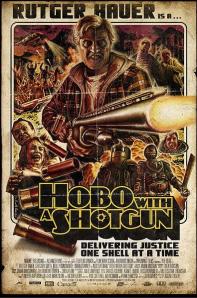
Rutger Hauer plays the title character and hero of this nicely demented little film.  When we first meet Hobo, he doesn’t have a shotgun.  He’s just a vagabond, a proverbial man with no name who finds himself in the most run-down slum of a town ever.  Hope Town appears to be located in one of the lesser known rings of Hell and  basically seems to consist almost exclusively of burned-out storefronts, trash-strewn alleys, and seedy amusement parks.  Seriously, the New York City of Taxi Driver hasn’t got a thing on Hope Town.

As soon as the Hobo arrives, the first thing he witnesses is the town’s local crime boss, the Drake (Brian Downey), decapitating a man in broad daylight while the citizens of the town apathetically watch.  The Drake looks a lot like Peter Popoff (a preacher who comes on TV around 2 in the morning around these parts; he sells magic holy water) and he has two equally sadistic sons, Slick (Gregory Smith, who looks like Tom Cruise on extasy) and the idiotic Ivan (Nick Bateman).  It soon becomes obvious that the Drake and his sons control the town because nobody has ever previously considered grabbing a shotgun and gunning them down.  Nobody until the Hobo that is.

Originally, of course, the Hobo had different plans.  He was attempting to raise the money necessary to buy a used lawn mower sitting in the local pawn shop, the idea being that he could use that mower to start a lawn care business.  (The joke here, of course, is that nobody in Hope City appears to have a lawn.  Seriously, they should have called it Cement City.)  However, right when the Hobo is preparing to buy the lawn mower, the pawn shop is held up by two thugs.  Luckily, along with the lawn mower, there’s also a shotgun — which happens to cost the exact same amount as the lawn mower — in the sales window.  The Hobo purchases the shotgun and soon, with the help of a sympathetic prostitute named Abby (Molly Dunsworth) he sets out to clean up Hope City, one criminal at a time.

Now, it might sound like I’m making fun of the film’s plot but nothing could be further from the truth.  This film is perfectly aware of how ludicrous all of this is and director Eisener quite wisely never apologizes for the story he tells or the way he tells it.  From the start, Hobo With A Shotgun shows that it is a film without shame and therefore, one that you can watch without shame.

It’s also follows Robert Rodriguez’s Machete as the second film to be based on a fake trailer made for the Rodriguez/Quentin Tarantino collaborative film Grindhouse.  Here’s the original “fake” trailer that led to a very real movie:

Though it’s gotten nowhere as much hype, I actually think Hobo With A Shotgun is superior to Machete.  Grindhouse films may have been excessive but they were still films being made by filmmakers and, as Quentin Tarantino has always seemed to understand, the truly great grindhouse films (the ones that we eagerly wait to see released on DVD) never used the art of excess as just an excuse to do whatever they wanted.  The best grindhouse films created their own unique worlds with their own unique rules but once those rules had been set, they weren’t broken.  (That, of course, wasn’t true of all grindhouse films.  Just the good ones.)  That is where Hobo With A Shotgun truly triumphs.  You believe in this odd, over-the-top world that the film creates.  Everything from the graffiti-covered walls to the garish cinematography to even the overacting of most of the supporting cast; it all comes together to create its own unique world.  And once you surrender to that the film’s odd “reality,” the film becomes, in its own warped way, quite compelling.

With the exception of Rutger Hauer in the title role, the cast of Hobo With A Shotgun is largely made up of unknowns and that’s quite a contrast to Machete.  However, and I may be in the minority here, I actually felt that all the famous faces in Machete actually had a detrimental effect on the overall film.  Too many of them seemed to be slumming or treating Machete as a lark and true grindhouse is never a lark.  If there’s one thing you can say for sure about Rutger Hauer’s performance here, it’s that he’s definitely not slumming.  Hauer seems to understand that a film like this needs an anchor, something steady that the audience can grab on to whenever the film itself threatens to spin out of control.  Wisely, Hauer chooses to underplay his character and, as a result, he dominates the entire film.  It’s really a performance that all aspiring actors should watch.  Hauer might be playing a hobo with a shotgun but that doesn’t keep him from being the most compelling and believable hobo with a shotgun possible.  Out of the rest of the cast, Molly Dunsworth does a good job and manages to be believable whether she’s mourning her lost innocence or stabbing a bad guy to death with a fragment of bone.

Hobo With A Shotgun is currently in limited release here in the United States.  What does that mean?  Well, that means that if you’re living on the West or East coast you’re in luck.  However, if you’re like me and you actually live in a city that’s not going to be targeted by terrorists in the near future, things are a bit more problematic.  Luckily, for us, Hobo With Shotgun is available OnDemand which is how I ended up seeing it. 

In conclusion, allow me to say, “Canada, you rock!”

Scenes I Love: Taxi Driver


Everyone always talks about the “You talkin’ to me” scene or the final shoot out at the end but, for me personally, the scene that I always look forward to whenever I see Taxi Driver is the scene where demented cabbie Travis Bickle (Robert De Niro) buys an arsenal from the friendly and sleazy Andy (Steven Prince).  I’ve always felt that Taxi Driver was meant to be more a comedy than anything else and this scene manages to be funny and disturbing at the same time.

Apparently, Prince was a former heroin addict-turned-personal assistant to director Martin Scorsese.  His appearance here is proof of how the right actor in the right part in the right scene can totally dominate even with only 3 minutes of screen time.

My Top Ten Books About The Movies


I love movies and I love books so I guess it would stand to reason that I love books about movies the most of all.  (I also love movies about books but there are far fewer of those, unfortunately.)  Below are my personal favorites.  I’m not necessarily saying that these are the ten greatest film books ever written.  I’m just saying that they’re the ones that I’m always happy to know are waiting for me at home.

10) Soon To Be A Major Motion Picture by Theodore Gershuny — This is one of the great finds of mine my life.  I found this in a used bookstore and I bought it mostly because it only cost a dollar. Only later did I discover that I had found one of the greatest nonfiction books about the shooting of a movie ever written!  Gershuny was present during the filming of a movie called Rosebud in the early 70s.   I’ve never seen Rosebud but, as Gershuny admits, it was a critical disaster that managed to lose a ton of money.  The book provides a fascinating wealth of backstage gossip as well as memorable portraits of director Otto Preminger and actors Robert Mitchum (who was originally cast in the lead role), Peter O’Toole (who took over after Mitchum walked off the set), and Isabelle Huppert.   If nothing else, this book should be read for the scene where O’Toole beats up critic Kenneth Tynan.

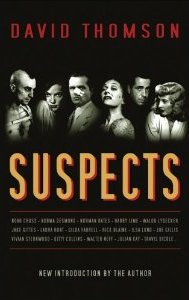
9) Suspects by David Thomson — A study of American cinema noir   disguised as a novel, Suspects imagines what would happen if George Bailey from It’s a Wonderful Life fell in love with Laura from the movie of the same name.  Well, apparently it would lead to Sunset Boulevard’s Norma Desmond having an affair with Chinatown’s Noah Cross and to one of George’s sons, sensitive little Travis, getting a job in New York City as a Taxi Driver.  And that’s just a small sampling of what happens in this glorious mindfuck of a novel.

8 ) Profondo Argento by Alan Jones — Long-time fan Alan Jones examines each of Dario Argento’s films (even Argento’s obscure historical comedy The Five Days of Milan) and proceeds to celebrate and (in many cases) defend Argento’s career.  Jones also interviews and profiles several of Argento’s most frequent collaborators — Daria Nicolodi, Asia and Fiore Argento, Simon Boswell, Claudio Simonetti, Keith Emerson, George Romero, Lamberto Bava, Michele Soavi, and many others.  Jones’ sympathetic yet humorous profile of Luigi Cozzi is priceless.

7)  Spaghetti Nightmares by Luca Palmerini — Spaghetti Nightmares is a collection of interviews conducted with such Italian filmmakers as Dario Argento, Ruggero Deodato, Umberto Lenzi, Lucio Fulci, and others.  Among the non-Italians interviewed are Tom Savini (who, as always, comes across as appealingly  unhinged) and David Warbeck.  (Sadly, both Warbeck and Fulci would die shortly after being interviewed.)  What makes this interesting is that, for once, Argento, Fulci, et al. are actually being interviewed by a fellow countryman as opposed to an American accompanied by a translator.  As such, the subsequent interviews turn out to be some of the most revealing on record.

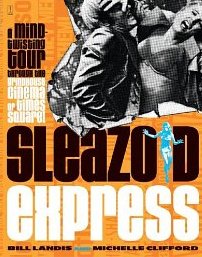
6) Sleazoid Express by Bill Landis and Michelle Clifford — Landis and Clifford’s book is both a history and a defense of the old grindhouse theaters of New York City.  Along with describing, in loving and memorable detail, some of New York’s most infamous grindhouses, they also write about some of the more popular movies to play at each theater.  Along the way, they also offer up revealing profiles of such legendary figures as David Hess and Mike and Roberta Findley.  Reading this book truly made me mourn the fact that if I ever did find myself in New York City, I won’t be able to hit the old grindhouse circuit.

5) Beyond Terror: The Films of Lucio Fulci by Stephen Thrower — Fulci has always been a terribly underrated director and, indeed, it’s easy to understand because, in many ways, he made movies with the specific aim of alienating and outraging his audience.  It requires a brave soul to take Fulci on his own terms and fortunately, Stephen Thrower appears to be one.  Along with the expected chapters on Fulci’s Beyond Trilogy and on Zombi 2, Thrower also devotes a lot of space to Fulci’s lesser known works.  Did you know, for instance, that before he became the godfather of gore, Fulci specialized in making comedies?  Or that he also directed two very popular adaptations of White Fang?  Thrower also examines Fulci’s often forgotten westerns as well as his postapocalyptic sci-fi films.  And, best of all, Thrower offers up a defense of the infamous New York Ripper that, when I read it, actually forced me to consider that oft-maligned film in a new light.  That said, Thrower does admit to being as confused by Manhattan Baby as everyone else.

4) Immoral Tales by Cathal Tohill and Pete Toombs — Tohill and Toombs offer an overview of European “shock” cinema and some of the genre’s better known masters.  The book contains perhaps the best critical examination of the work of Jean Rollin ever written.  The authors also examine the work of Jesus Franco and several others.  This is a great book that reminds us that the Italians aren’t the only ones who can make a great exploitation film.

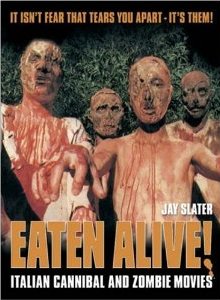
3) Eaten Alive by Jay Slater — This book offers an overview of the Italian film industry’s legendary cannibal and zombie boom.  Along with reviewing every Italian movie to feature even the slightest hint of cannibalism or the living dead (this is one of the few books on Italian cinema that discusses both Pasolini and Lucio Fulci as equals), Eaten Alive also features some very revealing interviews with such iconic figures as Catriona MacColl, Ian McCullough, and especially Giovanni Lombardo Radice.  Radice, in fact, also contributes a memorable “guest” review of one of the movies featured in the book.  (“What a piece of shit!” the review begins.)  Memorable reviews are also contributed by Troma film founder Lloyd Kaufman who brilliantly (and correctly) argues that Cannibal Holocaust is one of the greatest films ever made and Ramsey Campbell who hilariously destroys Umberto Lenzi’s infamous Nightmare City.

2) The Book of the Dead by Jamie Russell — If, like all good people, you love zombies then you simply must do whatever it takes to own a copy of this book.  Starting with such early masterpieces as White Zombie and I Walked With A Zombie, Russell proceeds to cover every subsequent zombie film up through George Romero’s Land of the Dead.  Russell offers up some of the best commentaries ever written on Romero’s Dead films, Fuci’s Beyond Trilogy, Rollin’s Living Dead Girl, and Spain’s Blind Dead films.   The pièce de résistance, however, is an appendix where Russell describes and reviews literally ever zombie film ever made.

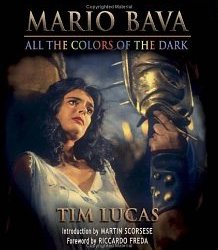
1)  All The Colors Of the Dark by Tim Lucas  — This is it.  This is the Holy Grail of All Film Books.  If you’ve ever asked yourself if any book is worth paying close to 300 dollars, now you have your answer.  This one is.  Tim Lucas offers up the most complete biography of director Mario Bava ever written.  In fact, this may be the most complete biography of any director ever written!  Lucas examines not only Bava’s life but also every single movie that Bava was ever in any way connected to, whether as a director or as a cameraman or as the guy in charge of the special effects.  This is 1,128 pages all devoted to nothing but the movies.  This is the type of book that makes me thankful to be alive and I owe a huge debt of gratitude to Tim Lucas for writing it.