I sure do miss sharing some of my favorite songs and music with y’all.
As part of my return to the site I’d like to share one of my current favorite songs (well, it’s an all-time favorite but have been listening to it a lot of late). It’s a song I first heard as a wee lad of no more than probably 7 or 8. Time becomes quite hazy in my advancing years.
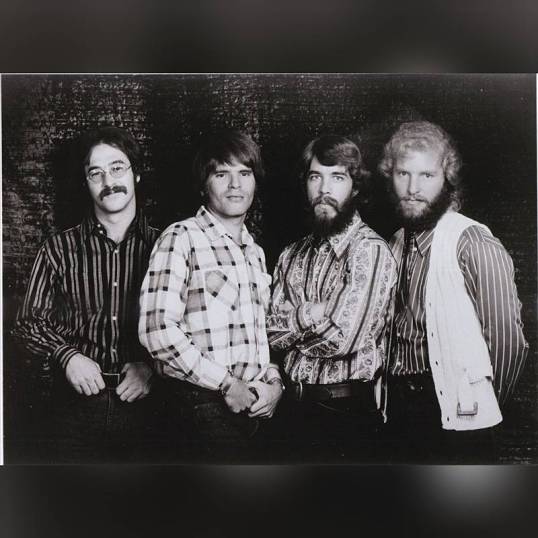
My dad was a huge Creedence Clearwater Revival fan and he would constantly play their albums, especially his favorite tracks, during road trips and just driving around the area. One day it would be CCR the next another band he liked.
“Penthouse Pauper” came back to my radar after it was featured prominently in last year’s Marvels Netflix series The Punisher. The moment the song began to play in the background it brought back good memories and it has since returned to my constant playing and listening of this classic blues-rock song.
Penthouse Pauper
“Now, if I was a bricklayer, I wouldn’t build just anything; And if I was a ball player, I wouldn’t play no second string. And if I were some jew’lry, baby; Lord, I’d have to be a diamond ring.
If I were a secret, Lord, I never would be told. If I were a jug of wine, Lord, my flavor would be old. I could be most anything, But it got to be twenty-four karat solid gold, oh.
If I were a gambler, you know I’d never lose, And if I were a guitar player, Lord, I’d have to play the blues.
If I was a hacksaw, my blade would be razor sharp. If I were a politician, I could prove that monkeys talk. You can find the tallest building, Lord, I’d have me the house on top.
Oh, let’s go! All right, keep goin’!
I’m the penthouse pauper; I got nothin’ to my name. I’m the penthouse pauper; baby, I got nothing to my name. I can be most anything, ‘Cause when you got nothin’ it’s all the same.
Oh, let’s move to this song! Lord, look at my penthouse.”
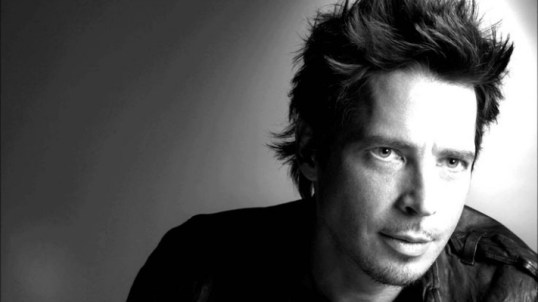
Chris Cornell passed away on May 17, 2017 and the world is that much more empty with his passing.
He was 52 and joins the others Gods of Rock in the afterlife.
R.I.P. Chris Cornell.
I Am the Highway
Pearls and swine bereft of me Long and weary my road has been I was lost in the cities Alone in the hills No sorrow or pity for leaving I feel
I am not your rolling wheels I am the highway I am not your carpet ride I am the sky
Friends and liars don’t wait for me ‘Cause I’ll get on all by myself I put millions of miles Under my heels And still too close to you I feel
I am not your rolling wheels I am the highway I am not your carpet ride I am the sky I am not your blowing wind I am the lightning I am not your autumn moon I am the night, night
I am not your rolling wheels I am the highway I am not your carpet ride I am the sky I am not your blowing wind I am the lightning I am not your autumn moon I am the night, night Yeah, yeah, yeah, yeah
So, the latest “Song of the Day” comes courtesy of Led Zeppelin and also in no small part from the release of the first trailer for the third Thor in the MCU (that’s Marvel Cinematic Universe for those who have been living in a cave the last 10 years).
“Immigrant Song” has been used in past trailers though not as often as people think. Led Zeppelin has been very selective of who uses (and pays) for the license to use their songs.
Whether the song makes it into Thor: Ragnarok still to be determined, but it definitely fits the trailer as it sings of Vikings and their call to ship off to find new lands, adventure and battle.
So, yes, Lisa Marie, that song in the Thor: Ragnarok teaser trailer was definitely Led Zeppelin.
Immigrant Song
We come from the land of the ice and snow
From the midnight sun where the hot springs blow
Hammer of the gods will drive our ships to new lands
To fight the horde and sing and cry
Valhalla, I am coming
On we sweep with the threshing oar
Our only goal will be the western shore
We come from the land of the ice and snow
From the midnight sun where the hot springs blow
How soft your fields so green can whisper tales of gore
Of how we calmed the tides of war
We are your overlords
On we sweep with the threshing oar
Our only goal will be the western shore
So now you’d better stop and rebuild all your ruins
For peace and trust can win the day despite of all your losing
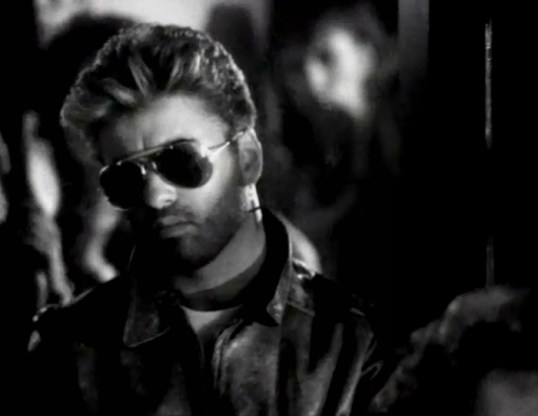
The year of 2016 has taken many of the music scene’s greatest. Prince, David Bowie and Glenn Frey just to name a few taken too soon. Now, George Michael joins his musical brethren as news of his passing on Christmas Day was announced and confirmed.
There’s not much to say other than any kid growing up during the late 80’s knew and listened to George Michael in some capacity or another. While he became famous as part of the British boy band WHAM! it was when he branched out on his own as a solo act that he hit megastar status. His solo debut album, Faith, would reach multi-platinum levels and each single released from the album and each video that ran in circulation on MTV would become instant hits.
My favorite song of his and this goes to his many excellent post-modern videos, would be the third single released from his debut album, “Father Figure.”.
Father Figure
That’s all I wanted
Something special, something sacred
In your eyes
For just one moment
To be bold and naked
At your side
Sometimes I think that you’ll never
Understand me (understand me)
Maybe this time is forever
Say it can be, woah
That’s all you wanted
Something special, someone sacred
In your life
Just for one moment
To be warm and naked
At my side
Sometimes I think that you’ll never
Understand me (understand me)
But something tells me together
We’d be happy, woah baby
I will be your father figure (oh baby)
Put your tiny hand in mine (I’d love to)
I will be your preacher teacher (be your daddy)
Anything you have in mind (it would make me)
I will be your father figure (very happy)
I have had enough of crime (please let me)
I will be the one who loves you
Till the end of time
That’s all I wanted
But sometimes love can be mistaken
For a crime
That’s all I wanted
Just to see my baby’s
Blue-eyed shine
This time I think that my lover
Understands me (understands me)
If we have faith in each other
Then we can be strong, baby
I will be your father figure
Put your tiny hand in mine (my baby)
I will be your preacher teacher
Anything you have in mind
I will be your father figure
I have had enough of crime
I will be the one who loves you
Till the end of time
If you are the desert, I’ll be the sea
If you ever hunger, hunger for me
Whatever you ask for, that’s what I’ll be
So when you remember the ones who have lied
Who said that they cared
But then laughed as you cried
Beautiful darling
Don’t think of me
Because all I ever wanted
It’s in your eyes
Baby, baby
And love can’t lie, no
(Greet me with the eyes of a child)
My love is always telling me so (Heaven is a kiss and a smile)
Just hold on, hold on
And won’t let you go, my baby
I will be your father figure
Put your tiny hand in mine
I will be your preacher teacher
Anything you have in mind
I will be your father figure
And I have had enough of crime
So I am gonna love you
Till the end of time
(I will be your father) I will be your (I will be your preacher) Father (I will be your father) I’ll be your daddy, whoa
I will be the one who loves you
Till the end of time
There’s been many a voice out in the virtual world that has been disappointed with the first half of The Walking Dead in it’s seventh season. It had a season premiere that was nihilistic and emotionally-draining. The follow-up episodes have been a mixed bag with some calling the 4th episode one of the worst of the season.
Tonight saw the mid-season finale as the chess pieces that had been moving since that season premiere starts to take form. Yet, for all the doom and gloom of lower ratings and subpar episodes the show continues to be the most-watched show on cable. Part of that could be due to many viewers so fully invested in the show that they have hope the series will right itself and have a better second-half. The other part seems to come from the very people who have been proclaiming that the show has worn out it’s welcome yet continue to watch as a sort of schadenfreude. They want to see the show crash and burn and wait for the moment when it loses everyone.
Well, tonight probably won’t be it since it finally tied together the first-half of the season and got Rick to stop moping around and get thangs done. It also saw the reuniting of the show’s bromance as Daryl and Rick finally reunited in the end.
Which brings us to the latest “Song of the Day” courtesy of R&B stalwarts Peaches & Herb and their biggest hit, “Reunited.”
Reunited
I was a fool to ever leave your side Me minus you is such a lonely ride The breakup we had Has made me lonesome and sad I realize I love you ’cause I want you bad, hey, hey
I spent the evening with the radio Regret the moment that I let you go Our quarrel was such A way of learning so much I know now that I love you ’cause I need your touch, hey, hey
Reunited and it feels so good Reunited ’cause we understood There’s one perfect fit And, sugar, this one is it We both are so excited ‘Cause we’re reunited, hey, hey
I sat here staring at the same old wall Came back to life just when I got your call I wished I could climb Right through the telephone line And give you what you want so you will still be mine, hey, hey
I can’t go cheating, honey, I can’t play I found it very hard to stay away As we reminisce On precious moments like this I’m glad we’re back together, ’cause I missed your kiss, hey, hey
Reunited and it feels so good Reunited ’cause we understood There’s one perfect fit And, sugar, this one is it We both are so excited ‘Cause we’re reunited, hey, hey
Yeah, yeah, yeah Baby
Oh, lover, lover, this is solid love And you’re exactly what I’m dreaming of All through the day And all through the night I’ll give you all the love I have with all my might, hey, hey
Reunited and it feels so good Reunited ’cause we understood There’s one perfect fit And, sugar, this one is it We both are so excited ‘Cause we’re reunited, hey, hey
Ooh, listen baby I won’t ever make you cry I won’t let one day go by Without holding you Without kissing you Without loving you Reunited
You’re my everything Only you know how to free All the love there is in me I wanna let you know I won’t let you go I wanna let you know I won’t let you go Reunited
Ooh, feels so good
Reunited and it feels so good Reunited ’cause we understood There’s one perfect fit And, sugar, this one is it We both are so excited ‘Cause we’re reunited, hey, hey
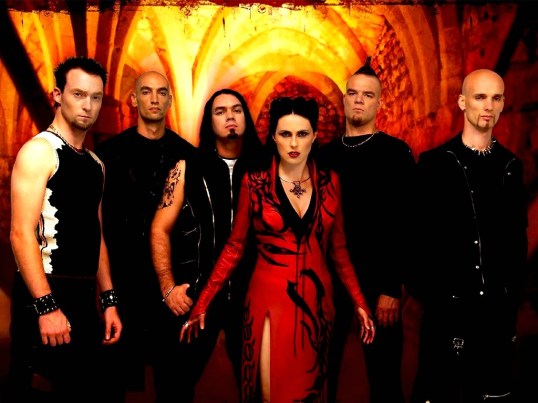
Symphonic metal stalwarts Within Temptation was first introduced to me not by resident metal expert necromoonyeti, but through an anime music video first witnessed at Anime Expo 2010. The video was “Alchanum” and while the anime used, Fullmetal Alchemist, was entertaining enough it was the song used that hooked me in. That song and the latest “Song of the Day” is “See Who I Am” from Within Temptation’s full-length album The Silent Force.
From that moment forward I’ve been an ardent follower of Within Temptation. There’s just something about the melding of metal and that of an orchestral symphony that just makes perfect sense. I’m more than satisfied with the raw, brutal, speed and guttural melodies of what many outsiders consider heavy metal (how wrong they can be), but symphonic metal just does it for me.
And for those who think heavy metal (and all it’s many subgenres) are all about angry dues with long, unwashed hair or tatted up to no end should be surprised to see that Within Temptation’s singer is a classically-trained mezzo-soprano by the name of Sharon den Adel.
See Who I Am
Is it true what they say? Are we too blind to find a way? Fear of the unknown Clouds our hearts today.
Come into my world, See through my eyes. Try to understand, Don’t want to lose what we have.
We’ve been dreaming But who can deny? It’s the best way of living Between the truth and the lies.
See who I am, Break through the surface. Reach for my hand, Let’s show them that we can Free our minds and find a way. The world is in our hands, This is not the end.
Fear is withering the soul At the point of no return. We must be the change we wish to see.
I’ll come into your world, See through your eyes. I’ll try to understand, Before we lose what we have. See who I am, Break through the surface. Reach for my hand, And show them that we can Free our minds and find a way. The world is in our hands This is not the end.
We just can’t stop believing Because we have to try. We can rise above their truth and their lies.
See who I am, Break through the surface. Reach for my hand, Let’s show them that we can Free our minds and find a way. The world is in our hands. See who I am, Break through the surface. Reach for my hand, And show them that we can Free our minds and find a way. The world is in our hands.
This is not the end.
I hear their silence Preaching my blame. Will our strength remain If their power reigns?
See who I am, Break through the surface. Reach for my hand, And show them that we can Free our minds and find a way. The world is in our hands. See who I am, Break through the surface. Reach for my hand, And show them that we can Free our minds and find a way. The world is in our hands.
Though I won’t spoil the movie, I will say that, when this Regina Spektor cover of George Harrison’s classic song started to play, there was not a dry eye to be found in the Alamo Drafthouse.
If you haven’t already, be sure to see Kubo this weekend! Let’s make it the number one film in the country!
One cannot reminisce about the 80’s music scene without including the biggest (and most dangerous) band of that decade. Well, the band and it’s handlers sure thought of them that way. The band I speak of is Guns N’ Roses. this was the band that dared to put the word hard back into hard rock after the glam metal scene began to turn it into a joke.
Nothing against glam metal. Mötley Crüe was and is a favorite rock band of the 80’s for me. Yet, even they succumbed to the hairspray overload that glam metal would turn into. These bands became more about their look (especially in their music videos) than actually playing good music.
Guns N’ Roses still had the teased hair, but their music when they released their Appetite for Destruction album was a breath of fresh air in the hard rock scene and would grab glam metal fans from the vapors of hairnet spray into the dark, dingy bluesy lounges and then the overwhelming open air arenas.
I’ve already featured two of the bands most famous tracks from their first album, “Welcome to the Jungle” and “Sweet Child o’ Mine”, so it’s time to give their third biggest hit from this album time to shine.
“Paradise City” is a place we all should aspire to visit.
Paradise City
Take me down to the paradise city Where the grass is green and the girls are pretty Take me home (Oh, won’t you please take me home?)
Take me down to the paradise city Where the grass is green and the girls are pretty Take me home (Oh, won’t you please take me home?)
Just an urchin livin’ under the street I’m a hard case that’s tough to beat I’m your charity case so buy me somethin’ to eat I’ll pay you at another time Take it to the end of the line
Rags to riches or so they say You gotta keep pushin’ for the fortune and fame You know it’s, it’s all a gamble when it’s just a game You treat it like a capital crime Everybody’s doin’ their time
Take me down to the paradise city Where the grass is green and the girls are pretty Oh, won’t you please take me home, yeah, yeah?
Take me down to the paradise city Where the grass is green and the girls are pretty Take me home
Strapped in the chair of the city’s gas chamber Why I’m here, I can’t quite remember The surgeon general says it’s hazardous to breathe I’d have another cigarette but I can’t see Tell me who ya gonna believe
Take me down to the paradise city Where the grass is green and the girls are pretty Take me home, yeah, yeah Take me down to the paradise city Where the grass is green and the girls are pretty Oh, won’t you please take me home, yeah?
So far away So far away So far away So far away
Captain America’s been torn apart Now he’s a court jester with a broken heart He said “Turn me around and take me back to the start” I must be losin’ my mind, are you blind? I’ve seen it all a million times
Take me down to the paradise city Where the grass is green and the girls are pretty Take me home, yeah, yeah
Take me down to the paradise city Where the grass is green and the girls are pretty Oh, won’t you please take me home?
Take me down to the paradise city Where the grass is green and the girls are pretty Take me home, yeah, yeah
Take me down to the paradise city Where the grass is green and the girls are pretty Oh, won’t you please take me home, home
Oh, I want to go, I want to know Oh, won’t you please take me home? I want to see how good it can be Oh, won’t you please take me home?
Take me down to the paradise city Where the grass is green and the girls are pretty Take me home
Take me down to the paradise city Where the grass is green and the girls are pretty Oh, won’t you please take me home?
Take me down, take me down Oh, won’t you please take me home? I want to see how good it can be Oh, won’t you please take me home?
I want to see how good it can be Oh, oh take me home
Take me down to the paradise city Where the grass is green and the girls are pretty Oh, won’t you please take me home?
I want to know, I want to know Oh, won’t you please take me home? Yeah, baby
After a week hiatus we’re back to reminiscing about and traveling the 80’s nostalgia track with another “Song of the Day” from my youth during the 1980’s.
This time it’s a power ballad from the British-American hard rock band, Foreigner. Yes, that band whose songs have become a staple of Pop 40’s and soft rock radio stations for a couple decades now were originally a hard rock band. While their popularity was never in doubt with the hard rock crowd of the late 70’s and as the decade rolled into the 80’s, it would take a power ballad to find them worldwide appeal from an audience that one wouldn’t associate with hard rock aficionados.
That song would be “Waiting For A Girl Like You” and this power ballad would be one of the band’s biggest hits and a constant requests on soft rock stations. While hard rock bands were never averse to composing power ballads for albums, they usually weren’t the major hits like their harder edged songs. With Foreigner, once the popularity of this song reached global proportions it would dramatically change the band’s future work.
They would become a band more known for their power ballads than their hard rock roots. Some fans of the early version of Foreigner probably didn’t like the change much, but the millions of new fans who did discover the band due to the never-ending radio airplay of their power ballads probably didn’t know what they were missing.
Now a new generation of music lovers will be discovering this band and this song due to the critically-acclaimed and surprise hit series Stranger Things on Netflix.
Waiting For A Girl Like You
So long I’ve been looking too hard, I’ve been waiting too long Sometimes I don’t know what I will find I only know it’s a matter of time When you love someone When you love someone
It feels so right, so warm and true I need to know if you feel it too
Maybe I’m wrong Won’t you tell me if I’m coming on too strong? This heart of mine has been hurt before This time I wanna be sure
I’ve been waiting for a girl like you To come into my life I’ve been waiting for a girl like you (waiting for a love) And a love that will survive I’ve been waiting (I’ve been waiting) for someone new To make me feel alive Yeah, waiting for a girl like you (waiting for a girl) To come into my life
You’re so good When we make love, it’s understood It’s more than a touch or a word we say Only in dreams could it be this way When you love someone Yeah, really love someone
Now, I know it’s right From the moment I wake up till deep in the night There’s nowhere on earth that I’d rather be Than holding you tenderly
I’ve been waiting for a girl like you To come into my life I’ve been waiting for a girl like you (waiting for a love) For a love that will survive
I’ve been waiting (I’ve been waiting) for someone new To make me feel alive Yeah, waiting (waiting) for a girl like you (waiting for a girl) To come into my life
(Ah)
(Ah) I’ve been waiting (Ah) Waiting for you (Ah) Ooh, I’ve been waiting (Waiting) I’ve been waiting, yeah
(I’ve been waiting for a girl like you)
(I’ve been waiting) Won’t you come into my life? My life So long (Waiting for a girl like you)