Metaphor: ReFantazio Review


“Knowledge without action is but a hollow echo.” — Heismay

Metaphor: ReFantazio delivers a fresh fantasy spin on Atlus’s signature JRPG formula, blending turn-based combat with real-time field encounters that keep battles dynamic and strategic, all in service of a narrative that probes deep into societal divides. The game’s Archetype system lets you mix and match job classes across your party, offering deep customization through skill inheritance and squad synthesis for creative builds that shine in tough boss fights, mirroring the story’s emphasis on unity through diversity. While the overarching tale of tribal tensions and royal intrigue captivates from the start, it occasionally leans into familiar Atlus tropes like social bonding and time-sensitive quests that can feel repetitive over its lengthy runtime, though these mechanics cleverly reinforce the plot’s ticking-clock urgency.

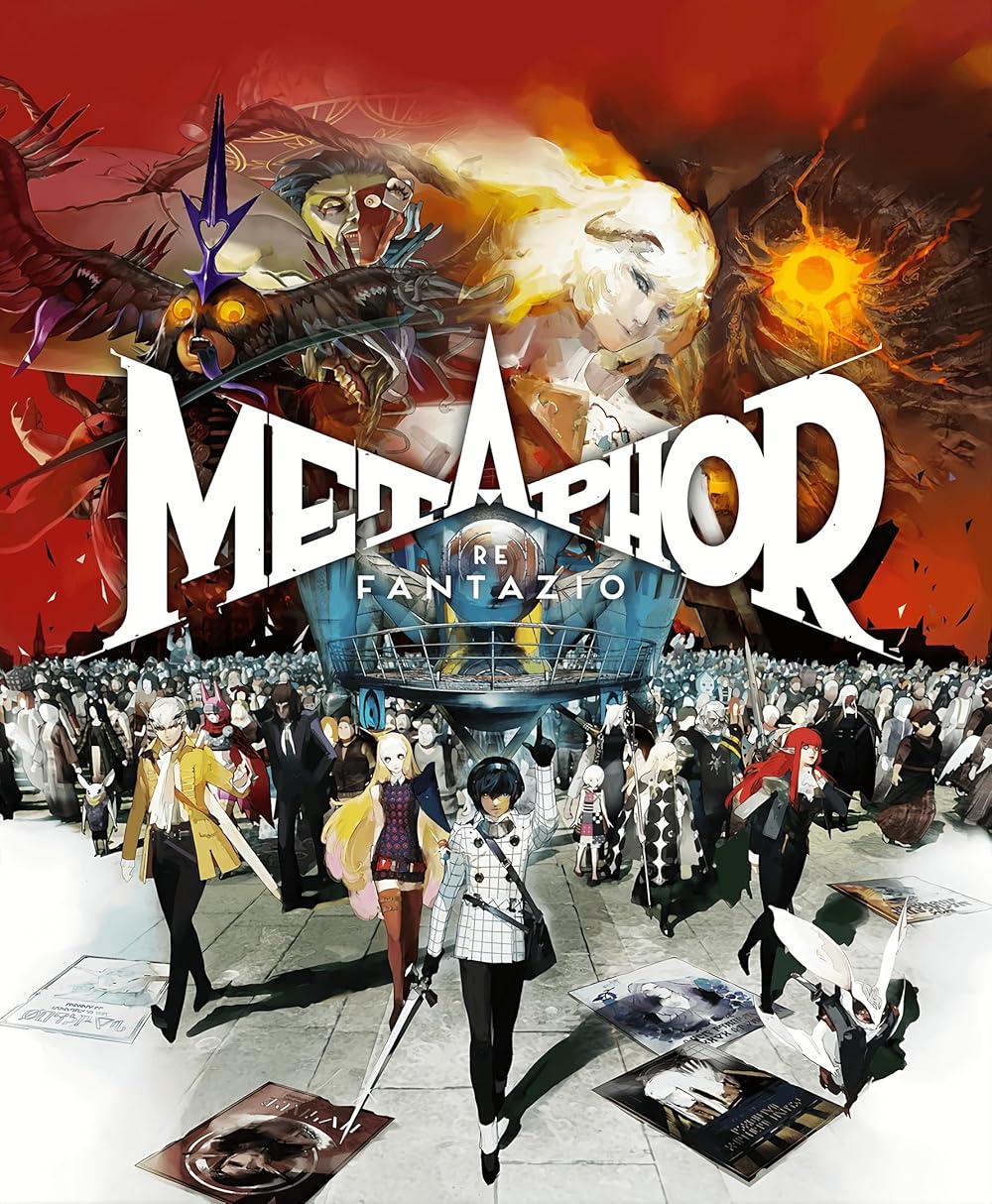
Traversal feels epic on your flying sword mount, zipping through vibrant medieval-inspired hubs packed with side requests, from monster hunts to delivery gigs that boost your follower ranks and unlock new abilities, often tying back to the narrative’s exploration of prejudice and alliance-building. Visually, the stylized UI, animated portraits, and lush world design pop with that classic Atlus flair, making every menu and cutscene a treat, with the game making especially striking use of character artist Shigenori Soejima’s artwork to give both the interface and the cast a distinctive, cohesive look. Soejima, known for his work on the Persona series, brings his signature style here—sharp lines, expressive faces, and vibrant color palettes that make every character portrait feel alive and every UI element intuitive yet stylish, visually underscoring the diverse tribes and their clashing ideologies. The character designs stand out particularly in combat, where Archetype shifts trigger flashy animations that highlight Soejima’s attention to detail, from flowing capes on knights to ethereal glows on mages, ensuring the visuals never feel generic despite the fantasy setting that grounds heavy themes.

The soundtrack nails epic orchestral swells during climaxes, paired with solid voice work that brings the diverse cast to life, even if not every dialogue line gets full voicing, amplifying the emotional weight of key story revelations. Composed by the talented team including Shoji Meguro’s influences, the music shifts seamlessly from tense dungeon crawls with pulsing synths to triumphant fanfares during story beats, enhancing the world’s medieval-fantasy vibe without overpowering the action, and perfectly suiting monologues on fear and ignorance. Voice acting, mostly in Japanese with English subtitles as an option, adds authenticity, though the selective dubbing in key scenes keeps things efficient without sacrificing impact during pivotal tribe confrontations.

Diving deeper into the narrative, Metaphor: ReFantazio crafts a world called Euchronia, where the protagonist—a member of the persecuted Elda Tribe—embarks on a quest to save the cursed prince and compete in a grand tournament to claim the throne, all amid rising prejudice fueled by mysterious monsters born from collective human anxieties like doubt and rage. The central theme of ignorance as the root of fear resonates thoughtfully throughout, explored through bonds with followers from various tribes—each with backstories rooted in discrimination, from the scholarly yet shunned eugief tribe to the ethereal Nidia—tying personal growth to larger societal critiques on tribalism and unity. These relationships aren’t just filler; they directly influence your combat prowess by unlocking new Archetypes and synthesis options, making social links feel mechanically integrated rather than tacked-on, while reinforcing the plot’s message that strength emerges from understanding others. Yet, the script sometimes prioritizes exposition over subtlety, with dialogue that explains themes a tad too on-the-nose, especially in early acts before the plot’s twists—like betrayals in the royal election—ramp up the stakes and deliver more nuanced emotional layers. The narrative culminates in a tournament arc where your speeches sway public opinion, blending political intrigue with fantasy in a way that feels timely, critiquing how fear-mongers exploit divisions without ever feeling preachy.

The game’s themes extend far beyond surface-level fantasy politics, weaving in profound ideas about human cognition and societal ills, best encapsulated by the line “O worthy heart, who tempers anxiety into strength”—a recurring invocation when awakening Archetypes that perfectly distills how the story transforms personal and collective fears into heroic potential. Ignorance isn’t just a buzzword; it’s literalized through the mechanics of human cognition, where unchecked emotions manifest as those Bosch-inspired monsters—grotesque hybrids symbolizing sloth, lust, or despair—challenging players to confront not external evils, but the shadows within collective psyches. This ties into broader explorations of tribalism, where each playable tribe represents marginalized groups: the immortal Elda as eternal wanderers mistrusted for their longevity, the brutish Nidia dismissed as savages, paralleling real-world racism and xenophobia. The royal election mechanic forces you to campaign like a politician, balancing Follower ranks (public support) with bond-building, highlighting how leaders must combat misinformation and rally diverse factions—echoing modern populism without direct allegory, as echoed in More’s constant reminder: “Time marches on, and the age of a new king draws nearer.” Ideas of inherited trauma surface too, as the protagonist grapples with his tribe’s cursed history, questioning if prejudice is a cycle broken only by empathy and action, reinforced by optional lore dumps from informants that unpack Euchronia’s lore of ancient calamities born from unchecked fears.

Later arcs delve into justice versus vengeance, as revelations about the prince and antagonists reveal layers of manipulated ignorance, asking whether punishing the fearful perpetuates division or if education through example prevails. Themes of escapism critique fantasy itself: characters cling to idealized “Royal” saviors, mirroring how societies project hopes onto myths, only for the story to dismantle that by humanizing leaders as flawed products of their biases. Multiple endings—ranging from unified reigns to fractured chaos—hinge on your thematic investments, like prioritizing certain bonds over others, ensuring the ideas stick through mechanical consequence. It’s a mature evolution from Persona‘s teen angst, grounding abstract concepts in tangible choices that provoke reflection on complicity in systemic hate, with Strohl’s encouragement “I really do believe you have the power to change fate itself” underscoring the faith in individual agency amid societal rot.

Combat evolves the Press Turn system from Shin Megami Tensei, where exploiting enemy weaknesses grants extra turns, but now with Archetype swaps mid-battle for on-the-fly adaptation—summoning a tank to soak hits or a healer to recover without ending your chain—echoing the story’s adaptive heroism. Squad battles add a layer of real-time command over AI allies during field scraps, bridging the gap between exploration and turn-based depth seamlessly, much like how narrative bonds bridge tribal gaps. Dungeons vary from linear boss rushes to sprawling labyrinths with environmental puzzles, like using wind magic to clear miasma or mounting those monsters for platforming sections, keeping pacing fresh across 80-100 hours and often themed around the anxieties they represent—many of which evoke the nightmarish, hybrid figures from Hieronymus Bosch’s Garden of Earthly Delights, with their grotesque amalgamations of human limbs, animal parts, and surreal machinery perfectly capturing the game’s theme of manifested inner turmoil. Post-game content expands this further with New Game+ carrying over levels and a challenging high-level superboss gauntlet that tests your most optimized builds, inviting replays to uncover alternate endings tied to bond choices.​​

On the flip side, character arcs stay mostly heroic without much grit or internal conflict, which softens the emotional punch compared to edgier Atlus entries like Persona 5‘s rebellious heists, potentially muting the themes’ bite for some players, and the “days till” deadlines force constant planning that might frustrate casual explorers. Time management becomes a core loop: follow the critical path for story progress, but stray for bonds and requests at the risk of missing deadlines, creating tension that’s smart but stressful for completionists, directly mirroring the narrative’s pressure to confront ignorance swiftly. Some side activities, like the casino minigame or follower requests, offer great rewards but grindy repetition, and while the map system improves navigation with waypoints, backtracking in identical dungeon rooms can sap momentum during marathon sessions delving into lore-heavy side stories.

Accessibility options abound, from adjustable battle speed to auto-battle for farming, making it welcoming for series newcomers wary of steep JRPG curves while they absorb the dense thematic content. Compared to Persona 3 ReloadMetaphor sheds the school-life sim for pure high fantasy, trading calendar dating for royal election drama centered on prejudice, yet retains that addictive “just one more day” hook through its polished systems and unfolding revelations.

Exploration shines in hubs like Grand Trad, a bustling port city alive with merchants, street performers, and cryptic informant conversations that reveal lore tidbits on Euchronia’s fractured history. The monster system lets you befriend (or hunt) foes for your compendium, inheriting skills like in SMT, but with a bond mechanic that speeds recruitment via gifts or dialogue choices—perfect for building that ultimate party and paralleling human alliances, especially when those Bosch-like beasts start feeling less monstrous through repeated encounters. Synthesis combines Archetypes for hybrid classes, like a ninja-healer churning out status cures while stealth-attacking, rewarding experimentation without locking you into dead ends, much like the story’s flexible path to overcoming bias.

Thematically, Metaphor: ReFantazio tackles prejudice head-on through its tribal dynamics and election mechanics, where swaying public opinion via speeches and deeds mirrors real-world politics in a fantastical lens, with each tribe embodying facets of societal “others”—the immortal Elda as eternal outsiders, the brutish as feared brutes—challenging players to dismantle stereotypes. It’s bolder than Persona’s high school metaphors, grounding fantasy in social commentary without preaching, as the protagonist’s journey from outcast to candidate forces reflection on inherited fears passed down generations. Multiple endings based on follower bonds and tournament outcomes add replay value, rewarding deep investment in the themes, while bosses escalate brilliantly, from multi-phase behemoths requiring Archetype juggling to “Clemar” trials testing pure strategy, often with unique gimmicks like reversing Press Turns that symbolize narrative reversals.

For Atlus fans, this feels like the studio firing on all cylinders post-Persona 5 Royal, refining mechanics while daring a new IP unburdened by franchise baggage, with a narrative that stands as one of their most cohesive thematic statements. Newcomers get a guided onboarding with tutorials that don’t overstay, easing into complexity naturally alongside the story’s gradual world-building. Drawbacks like sparse enemy variety in late-game fields and occasional UI clutter during synthesis menus hold it back from perfection, but they’re minor amid the highs of its thoughtful storytelling.

Ultimately, Metaphor: ReFantazio stands tall as an accessible gateway for JRPG newcomers and a loving evolution for fans, balancing highs in gameplay depth with minor stumbles in narrative subtlety, all elevated by its poignant exploration of ignorance and unity. Clocking over 110 hours on a full clear, it earns its GOTY buzz through sheer ambition and polish, proving Atlus can reinvent without losing its soul. If you’re craving a meaty RPG with style, strategy, and a story that lingers on real-world echoes, this one’s a no-brainer—just pace yourself through those deadlines.

Sonic gets a makeover in the 2nd Sonic the Hedgehog Trailer


Earlier in the year, when Paramount released the trailer for the Sonic The Hedgehog movie, audiences were up in arms over Sonic’s look. It was so bad that the production team shelved the film for a bit and reworked the CGI. Six months later, we have a vastly improved Hedgehog, and everything appears to be looking better for the film. The character has more expressive eyes, the classic sneakers and what seems like a new voiceover.

Now we just have to hope that all of that extra work by the effects team is rewarded by moviegoers when the film comes out. Here’s hoping, anyway.

Sonic the Hedgehog, starring Jim Carrey, James Marsden and Ben Schwartz as the voice of Sonic, premieres in time for Valentine’s Day of 2020.

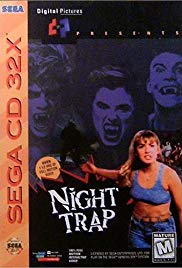
Game Review: Night Trap (1992, Sega)


Moral panics about video games are nothing new.

Long before people were worrying about the violence in Grand Theft Auto or the nudity in Heavy Rain, they were holding Congressional hearings about a game called Night Trap. 

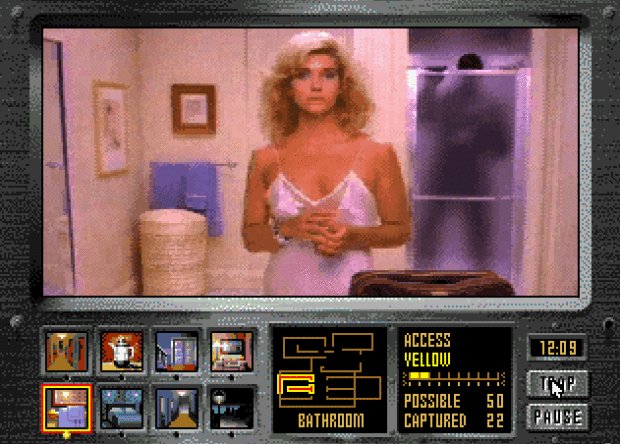
Night Trap was an interactive movie video game, one that was presented through full motion video at a time when that was still a big deal.  The player was a member of S.C.A.T., the Special Control Attack Team.  For 25 minutes, your job was to watch as blood-sucking creatures known as Augers attempted to launch a sneak attack on five girls at a slumber party.  Whenever an Auger approached a trap, the player had to click a button to capture the Auger.

It sounds pretty simple and it was.

It also sounds pretty stupid and again, it was.

Night Trap initially received some attention because it featured former Diff’rent Strokes star Dana Plato as one of the girls.  Plato played Kelly, who was actually an undercover member of S.C.A.T. and who searched for clues while you were busy trapping Augers.  Plato gave such an annoying performance that many gamers probably purposefully let a few Augers escape just so they could get the “bad” ending, with Kelly plunging into Hell.


However, even more than Dana Plato running around in a sports bra, it was a scene of one of the girls being stalked while wearing a nightgown that truly worried the moral guardians of 1993.  At the Congressional hearings, Senators Joseph Lieberman and Herb Kohl spent hours reviewing this scene and demanding to know whether it had any socially redeeming qualities.  The hearings also focused on Mortal Kombat and the senators seemed to be far more offended by an actress in a nightgown than they were about Kano ripping his opponent’s still-beating heart out of his chest.

Night Trap seems tame today but, of course, it was also tame back in 1993.  One reason why the “nightgown scene” got so much attention at the hearings is because it was the only scene in the entire game that could be considered the least bit racy.  There’s no sex or nudity in Night Trap.  For the most part, there’s also not any violence.  Whatever actual blood sucking that happens in Night Trap happens off-camera.  Probably the most intense scenes in the game involved Dana Plato scolding you if you let too many of the girls get captured.  Since the only thing the player could do during the game was activate a trap by pushing a button at a certain moment, this game required not so much skill as just being able to keep track of time.  Now, If you enjoyed just pushing a button over and over again, Night Trap might have some appeal but otherwise, this is a dull and poorly acted game.  Not even as formidable a thespian as Dana Plato could liven things up.

Ironically, those Congressional hearings made Night Trap.  If people still remember the game today, it’s because of those hearings.  If you want to know how a boring game like Night Trap could get a special 25th anniversary edition, it was because of those hearings.  There’s nothing like a moral panic to boot sales.


Warhammer Gets The Total War Treatment


TotalWarWarhammer

Creative Assembly has made a name for itself creating just type of game and for fans of their titles that’s all well and good. Not every studio has to make every type of games. Some just figured out a way to do one type and just get better and better with each new title. This studio is one such company and even with Sega acquiring them they haven’t missed a beat.

Now, the studio ventures beyond the historical realm that the Total War series has always been based on. With Total War: Warhammer the studio now enters the realm of the epic fantasy. Nothing shouts louder in the epic fantasy genre than the world created by the minds over at Games Workshop with their Warhammer Fantasy gaming series.

While there’s still no release date as to when Total War: Warhammer will come out this title has already made my “buy-list” whenever they do announce the date.

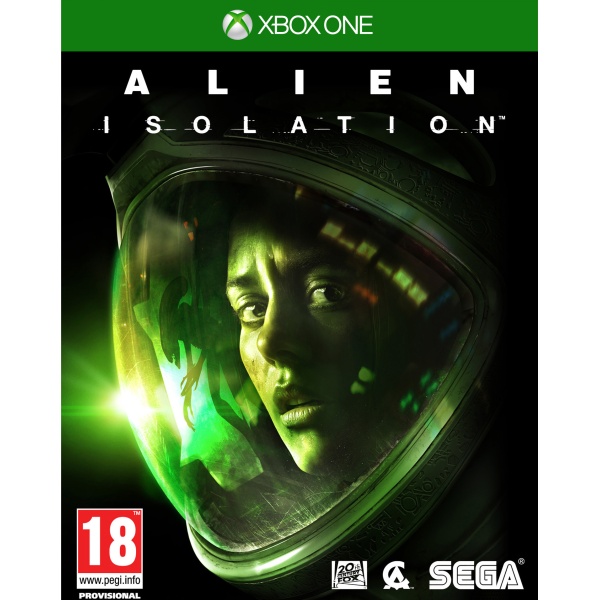
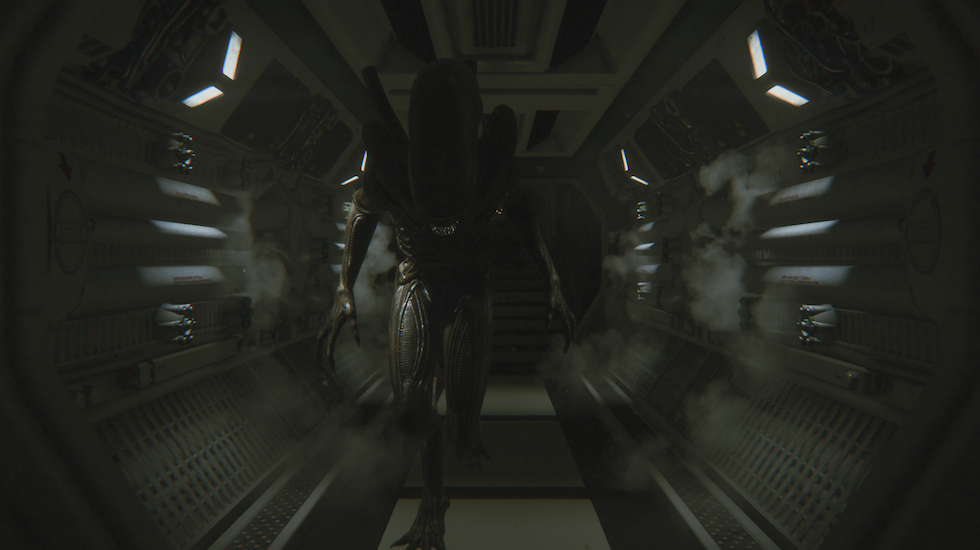
Horror on the Lens: Alien Isolation (Dev. by Creative Assembly, Published by Sega)


Alien-IsolationThere’s a quote from one of my old White Wolf books – I think Richard Dansky wrote it in Wraith:The Oblivion – that goes like this:

“The other aspect of horror is its sense of finality and the inability of a character to change it. If terror is the moment when the monster charges down the hall, horror is the instant you discover your feet are rooted to the spot.” 

Everyone who’s seen Ridley Scott’s Alien remembers the scene where Lambert is cornered by the Alien. Yaphet Kotto’s Parker is yelling at her to get out of the way so that he could use his Flamethrower, but she replies, crying..”I can’t!” I always thought that all she had to do was just kind of jump down and crawl or roll and then Parker could blast the damn thing. The movie would end. There’d be a gaping hole of acid in the Nostromo, but our heroes would get in the lifeboat and leave.

And yet, in playing Sega and Creative Assembly’s “Alien Isolation”, I found myself in almost the exact same position, huddled inside of a locker minutes after being introduced in the Alien and utterly terrified to move. Even worse, I’ve had situations where it appeared and I’m frozen in place, completely drawing a blank on my next move. I owe both Brett and Lambert an apology, rest their characters souls.

In the game you play Amanda Ripley, daughter of Ellen Ripley in the Alien films. In the special edition of James Cameron’s Aliens, there’s a brief scene between Burke and Ellen Ripley mentioning her daughter. For you trivia fans, the image used in that film was actually Sigourney Weaver’s actual mother. Anyway, It’s been 15 years since the disappearance of the Nostromo and Amanda is searching for any kind of clue that will help her find her mother or find out what happened to her. Supposedly, the flight recorder for the Nostromo was recovered and taken to Sevastopol station, a ship of roughly the same size. Basically, it’s a starship the size of Hogwarts. After finding herself separated from her crew, she has to both get her answers and find her way out of the station.

Easier said than done, of course. This game knows no mercy, even on it’s easiest setting.

The lighting effects are wonderful in next gen (especially PC). That molotov will only make the Alien mad.

The lighting effects are wonderful in next gen (especially PC). That molotov will only make the Alien mad.

The first rule of Alien Isolation is knowing that there are no safe places. Where most games have mechanics that allow you to take a breather to gear up and plan ahead or pause to get out the right weapon, Isolation will keep flowing as you take action. In Metal Gear, your game pauses when you use your backpack to look through your weapons. In Resident Evil (at least the earlier renditions), you had areas that were designated Save Rooms, places where the monsters couldn’t get at you. Alien Isolation does just the opposite.  Unless you’re checking your map for your next location, the game doesn’t pause. I’ve died while reading information on a workstation. I’ve died while rewiring a door. I’ve even died while putting myself in a locker and walking away from the console for food. It’s a strange kind of game design that forces you to keep one eye on what you’re doing and the other scouting around you to make sure you’re not being stalked. You essentially become a meerkat, poking its head up and going..”Did you hear something?”

And the sound is downright fantastic, especially where the Alien is involved. This is where the true horror lies. Anyone who is familiar with the Alien franchise knows what a Xenomorph looks like. We’ve seen so many of them over the years that they’ve lost that fear factor. The horror doesn’t come from having it charge you, but knowing how close it can be before everything gets to that point. There are tons of playthrough videos out there, and it’s great to see the reactions of players as they navigate this. If I worked at Creative Assembly, I’d chuckle at some of them with pride.

Case in Point: In one area, I open a door to a hallway. It’s clear, but I hear something behind me, causing me to duck behind some boxes. Taking out a noisemaker, I figure I can throw the noisemaker out the way I came (before the door closes) and quickly make my way towards my objective. As I slowly step backwards and to my left ready to pull a Romo-like pass, I just happen to turn to look at the direction I need to go.

The Alien is right there in that entraceway, standing at full height and is peering into the room behind me. There’s a collective “Holy shit!” from everyone in the room I’m in, and I freeze. It must have shot up a vent and came down a vent behind me somewhere. The Xenomorph doesn’t see me, and goes into the room it was looking at. This frees me to make my way down the hallway I need to travel, leaving a trail of fresh urine in my wake.

Heavy footsteps echo in the dark, and when it moves from the ground to the vents, there’s a distinct difference. The game begs to be played either on an extreme surround sound system or noise canceling headphones. If you even more courageous, you can enable your Xbox’s Kinect or PS3/4’s Camera – the microphone in both will pick up the sounds of your room. So, if you’re hiding in a locker with the Xenomorph outside and a friend yells out…”Are we ordering Chinese tonight?!”, the Alien will assume you’re a tender morsel dipped in duck sauce and take you out.

From a control standpoint, Alien Isolation is simple enough that you might not forget what to do when in a panic. For the more complex acts, like lighting a flare and throwing it, you’re given on screen instructions to help you follow through. This becomes a hit or miss at first. While you’re learning that action, there’s always a chance you’ll find yourself under attack by the Xenomorph. A training room feature would be nice here, but at the same time, you’re figuring out what to do with these items just as Ripley does. You’ll find yourself scouting safe areas (and by this, I mean under a table somewhere for a minute) ahead of time to craft different items out of the spare parts you find. At your disposal are flares, medkits, EMP’s, Noisemakers, Smoke Bombs, and more. Of course, before these items can be made, you’ll have to search around for the actual blueprints (which can be anywhere). The game will thankfully teach you how to use items as you get them (if you pay attention). Eventually, you’ll get Molotovs and Flamethrowers, but the Alien understands the nature of fire. To quote Newt, “It won’t make any difference.”

As Ripley turned the corner for a bite to eat from the lunchroom, she suddenly lost her appetite.

As Ripley turned the corner for a bite to eat from the lunchroom, she suddenly lost her appetite.

Saving the game can also be a nuisance at times. Rather than having an autosave, the system incorporates the added task of having to find Save Stations disguised as phone booths to save your progress. Just as with everything else, you have the ability to die if any enemy happens to be near. It can become annoying if you’re in an area where you have a large task and find yourself all the way back at previous place once you die. It’s a drawback, indeed, but it also inspires the player (or it did for me anyway) to treat these stations like an oasis in the middle of a long stretch of desert. You’d think you were playing Ninja Gaiden sometimes, without all the flipping.

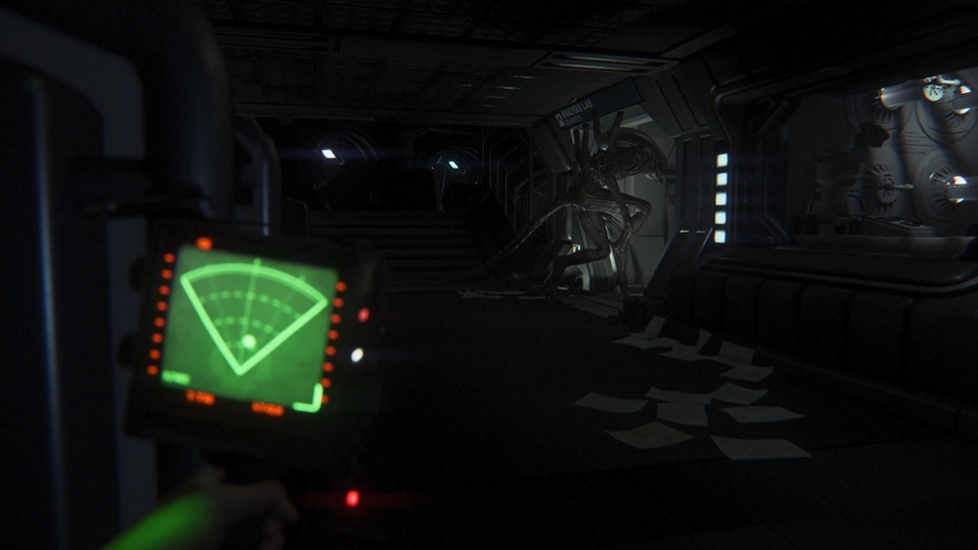
Navigating Sevestopol is done in a Metroid / Metal Gear like fashion. Basically, some areas will be locked to you without the right tool. Once you find it (be a blowtorch or a wrench), you can come back to that area. I’m not exactly sure how I feel about this just yet. It’s not exactly linear in that sense, but at the same time, I stopped playing Metroid Prime for almost the same reason. If it works for you, you’ll love it. If not, you might find yourself groaning in agony. If you’re lost, your handy Motion Tracker will help you find your nearest objective by way of a marker on the outside of your display.

4

Even in Space, the Alien can hear that beep. Put that Motion Tracker away if you have it in your line of sight. Note the marker on the outer edge telling you where to go.

Alien Isolation is slow. I mean………slow. Not in the story so much, but in the movement. You’ll want to run from point A to Point B, but with the enemies around, you’ll will sneak around for nearly the entire duration of the game (from what I’ve played so far). Don’t even bother sprinting, especially on the hardest difficulty. If you feel you’ve enough patience to play the game in this fashion, it’s a treat. If you’re hoping for something more Splinter Cell / Metal Gear like in that you’re stalking prey, it’s not happening here. Alien Isolation may have On Site Procurement of weapons, but you’ll find these are to be used sparingly, either due to the lack of ammunition / fuel, or from the echoing boom from firing the weapons. In using them you’re indirectly screaming “Hey! I’m right here on the southwest corner of the 3rd floor, kill me now! Do it!! I’m Here!!”

There are other threats on Sevastopol. You have the remaining humans on board who are just trying to survive, synthetics that can swarm you (like Bishop or Ash but not as technologically advanced), but these are enemies that can be defeated depending on what you have on you, and even then, they’re formidable. The Xenomorph, however is an 8 foot beast who delivers a one hit kill to you every time. Its presence will have you hiding in a locker frantically checking your motion tracker – but note that even enemies can sometimes hear the beep coming from it. You may even contemplate how long it’ll take for you to adjust to living in said locker for the rest of your days. According to Creative Assembly, the Alien was built with an adaptable AI that changes on the fly. I’ve had strange interactions in my experiences:

The Alien has no set patrol patterns as far as I can tell. You can watch it walk into a side room from a hiding point at the other end of the room, only to find it double back to the next room you enter. Despite how slow or silent you can be, the doors you move through still make noise, so as you progress, you never really “lose” the Alien so much as you throw it off for a minute or two.

The senses on this thing are creepy. If you are walking fast enough to hear your own feet on the floor, I absolutely guarantee you the Alien knows, too. Again, the Motion Tracker is your friend when it’s at a distance, but it’s also a problem if you’re close. My rule of thumb is that if I have a visual on it, the Motion Tracker isn’t necessary. Even then, use it sparingly to find where you need to go.

Vents. I can’t even tell you how many times I’ve had a chance to escape via a vent and chose a closet or death over it. I’m told you can use these to move around and escape even, but I haven’t even bothered.

Visually, I’ve played this on both the PS3 and the PS4. There’s nothing wrong with the PS3’s version of the game graphically (which is amazing), but if you have access to one, the lighting engines are just better on the next gen consoles. Shadow affects are nice between the two, but there’s a better gradient on the PS4’s newer hardware and smoke / fire effects are that much stronger on that system. Also note that the PS3 runs the game at about 720p, while the PS4 easily handles a 1080p playthrough. I am told that there can occasionally be some glitches where in crawling, you can fall through a room, but I have yet to run into these.

Renderings of the Sevastopol feel like they’re taken right from the first Alien film, as Creative Assembly was pretty much given as much access as they could get to 20th Century Fox’s archives. If you ever wondered what it would feel like to walk those dark halls of the Nostromo with a giant man sized Bone Dragon at your heels, this is the game for you. From the title sequence alone, you get an idea that CA were fans of the first film, and tried to design a game that does its best to immerse you into that universe. It doesn’t get everything right, but it does present the player with a sense of fear and stress unlike anything I’ve played before. Perhaps it’s just me.

In terms of drawbacks, one of the problems comes in the renderings of humans. They don’t seem to have the same sense of care that the Alien gets, most of them walking around with “dead eye” syndrome (like in Final Fantasy: The Spirits Within). The voice acting is okay, but isn’t particularly memorable. It’s like watching a Friday the 13th film. Do you really remember Kevin Bacon’s last lines before he was killed? Maybe, maybe not, but you do remember how he died.

ps4_online_preview_screen001_copy

If this is what you see from your Point of View, you’re probably already dead.

 Part of the soundtrack is built off of Jerry Goldsmith’s original score, and the same also features that weird “space wind” sound occasionally, which is so damn eerie. This may actually be (despite it’s flaws) the best movie tie-in/adaptation I’ve ever played. Most movie related games are either rushed projects (I’m looking at you Gearbox. I love Borderlands, but I remember the bad taste of Aliens: Colonial Marines) or fail to completely capture the feel of the movie. I’m very eager to see what Creative Assembly does next, Alien related or not. I’ve truly had fun with this game, despite it being as frustrating as Dark Souls.

Overall, Alien Isolation is a solid game for any fan of the original film. It’s the closest you’ll get to experiencing that universe (or at least playing the ultimate version of Cat & Mouse), even though the slow pace, saving mechanic and unforgiving AI may prove frustrating / unexciting to some.

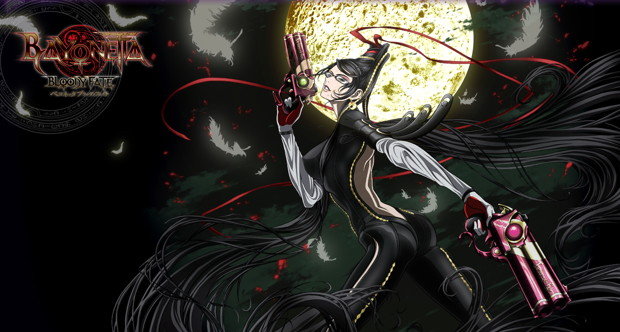
Bayonetta Game to Get Anime Film


bayonettabloodyfate

“Let’s dance boys!” — Bayonetta

One of the most entertaining and fun games of this current generation of consoles that I’ve ever played came out in the Spring of 2010. The game I speak of is the hack-and-slash title Bayonetta from Platinum Games. It’s a game that was born from the hyper-kinetic action game series Devil May Cry. In fact, the game’s designer was also the designer for the Devil May Cry series and it shows in this heroine-led title.

As I had mentioned on a very early review of the title, Bayonetta is quite the over-the-top game with unique-looking visuals and imagery that combined Judeo-Christian art designs with the anime-inspired aesthetics that has been the design staple of the Devil May Cry series.

I was actually surprised that the game didn’t get an anime series right away to complement it the way some Japanese games tend to get when they become popular. Yet, despite waiting over three years to get one fans of the game will finally have their wish.

Bayonetta: Bloody Fate is an anime series due out this November from studio house GONZO. It looks to be an adaptation of the game’s storyline and will have Fuminori Kizaki of Afro Samurai fame in the director’s chair. The art design of the series will lean heavily on the game’s original character designs by Mari Shimazaki which should be good news to Bayonetta fans everywhere.

The trailer for the anime already hints at using the fan service moments from the game that made the title so popular but at the same time so controversial within some of the gaming community. The anime will be shown in a limited release in Japan this November with no word yet on whether it will make it over to the West in one type of release or another. I bet on it becoming a video release down the line.

Source: Anime News Network

VGM Entry 65: Follin in the 90s


VGM Entry 65: Follin on the SNES
(Thanks to Tish at FFShrine for the banner)

The average quality of Tim Follin’s compositions seemed to progressively decline with every new improvement to technology. A sort of daredevil musician accustomed to breaking barriers and pushing boundaries, I think the relative freedom of SNES composition forced him to find new forms of inspiration. Sometimes the muses moved him, and quite often they did not. When it did click for him, he showcased the same level of creative aptitude he’d been stirring up the gaming music world with since 1985.

http://www.youtube.com/watch?v=aRarpk3WaR0

Plok (developed by Software Creations, first published by Tradewest, 1993) was an instance in which Follin most certainly did rise to the challenge. For a goofy little game, here was a simultaneously ridiculous and wonderful score.

Tim and Geoff collaborated on this one, as they had often times before (I may well have falsely credited Tim with Geoff’s work on occasion), and it all came together exceptionally well in this instance. The track beginning at 1:48, “Venge Thicket”, especially exhibits precisely the sort of upbeat prog rock for which Tim excels, with a definite Ghouls’n Ghosts vibe. The track at 5:00, “Cotton Island”, does a delightful job of busting out in trademark over-the-top Follin style while remaining entirely within the corny and fun setting of the game it represents. “Akrillic“, not featured in the above compilation, is more of a smooth, relaxing jazz-prog ride that far exceeds the game for which it was written.

Plok was not the first great Super Nintendo soundtrack by the Follin brothers. Tim and Geoff also collaborated for Spider-Man and the X-Men in Arcade’s Revenge, another Software Creations development, published by LJN in 1992. It was, as it turns out, the only Follin game I actually owned as a kid, and its music was the leading cause in my purchasing it after playing a rental. Tim has supposedly cited Guns N’ Roses as a musical influence, but it’s only on the Arcade’s Revenge title theme that you can clearly hear it.

The whole rock and roll approach to composition was not a one-time go for the Follin brothers, though it was fairly foreign to their pre-SNES games. They would employ a much heavier rock influence throughout most of their SNES catalogue, most obviously on Rock n’ Roll Racing (Interplay, 1993). But it didn’t always work. Arcade’s Revenge was more the exception than the rule. In any case, it was not strictly rock, and the music of the Gambit stages in particular exhibit a wide variety of electronic beats intermixed with rock and prog.

The music to the Spider-Man stages was perhaps the most memorable of the game for me, and not merely because they were the only ones I could consistantly beat. It’s definitely the most diverse song in the game, intermingling prog and classical with some funk and jazz in a subdued sort of way that matched the cool vibe of the opening level, where you infiltrate a high security facility with a smoggy night sky as your backdrop. It made an otherwise tedious game well worth playing. . . . With a Game Genie.

The Follin brothers were mostly committed to the SNES throughout the 1990s, but at least one incursion was made into the world of the Genesis/Mega Drive. To the best of my knowledge Tim is responsible for the title screen music to Time Trax, and he probably wrote it in 1993 or 1994. Its extension from the Arcade’s Revenge sound should be fairly apparent. Unfortunately neither the game itself nor any other songs from it are available. Malibu Games released a SNES version with an entirely different score in 1994, but the Mega Drive version was dropped prior to publishing.

VGM Entry 60: Splatterhouse


VGM Entry 60: Splatterhouse
(Thanks to Tish at FFShrine for the banner)

Today is October 1st, and Shattered Lens readers probably have a good idea of what that means.

http://www.youtube.com/watch?v=BPFh7W1yTz4

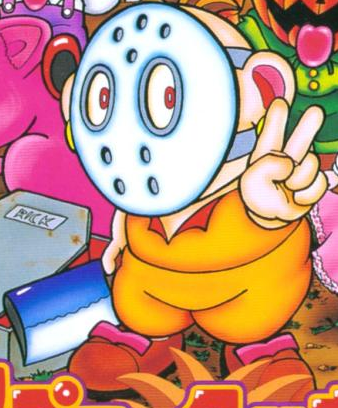
Namco’s Splatterhouse series first emerged in the arcades in 1988. As the advertisement poster used in this music video suggests, it was one of the first video games that really possessed the graphical capacity for some good old fashion gore. You play as Rick Taylor, a run of the mill college student who takes refuge from a thunderstorm in an old rickety mansion and inevitably finds himself demonically possessed, hacking and slashing his way through all sorts of hellspawn and ultimately butchering his girlfriend before defeating the mansion’s demon fetus-spawning womb and escaping. Quality stuff.

The game is accompanied by quite an impressive soundtrack.

http://www.youtube.com/watch?v=otH1qUc_kjw

When not taken to weird, incoherent noises such as on “Poltergeist”, the game has a knack for some rather pretty tunes that are only disturbing when placed in context. (The theme for Jennifer is one such instance; let’s not forget that the scene results in you chopping her head off.) I am not sure whether Yoshinori Kawamoto or Katsuro Tajima composed Splatterhouse. The former name crops up slightly more often on vgm websites, but trusting the majority consensus has lead me astray plenty of times before. Unfortunately, Namco have featured so seldom in my gaming music compilation that I am not really in a position to take an educated guess.

http://www.youtube.com/watch?v=Yf313hg_xW4

Splatterhouse is probably not thought of by most gamers as an arcade series. The original 1988 Splatterhouse only found obscure ports–to the PC Engine/TurboGrafx-16 in 1990 and the Fujitsu FM Towns in 1992. Its sequels made a bigger splash, becoming staples of the Sega Genesis/Mega Drive. Splatterhouse 2 and Splatterhouse 3 were released only seven months apart, in August 1992 and March 1993 respectively.

Both sequels were composed by Milky Eiko, and despite their wide acclaim, Milky’s rather outlandish pseudonym does not seem to have surfaced since. I could not find any other Eiko associated with Namco, and he must be regarded as both one of the last and one of the most famous game composers to be buried in complete anonymity, before composition credits became standard.

On an odd final note, there was actually another series game, Splatterhouse: Wanpaku Graffiti, released in 1989. It was an SD game, that is, super deformed, which generally refers in video games to over the top, excessively cute anime portrayals of familiar characters from earlier games. Released exclusively on the Famicom, Wanpaku Graffiti offered good clean serial murder for the whole family.

VGM Entry 59: Street Fighter II and SNES domination


VGM Entry 59: Street Fighter II and SNES domination
(Thanks to Tish at FFShrine for the banner)

An enormous disparity had emerged between the Super Nintendo and competing platforms by the early to mid-90s. The Sega Genesis/Mega Drive, released two years sooner, still didn’t have much to offer, and the arcade was fading fast. The former simply couldn’t compete with the SNES’s ability to simulate real instrumentation, and the latter, I suspect, was no longer funded the way it used to be. This lends itself to a number of comparisons, but in consideration of the fact that my available time for writing these articles is rapidly coming to an end, let’s just jump straight to the point.

http://www.youtube.com/watch?v=gR38veZ3JrM

The Street Fighter II series is a massive and confusing string of titles through which Capcom managed to milk a great deal of money releasing minor updates and new characters over a short period of time. The original Street Fighter II came out for the arcade in 1991. This was followed (in the arcade) by Street Fighter II: Champion Edition (April 1992), Street Fighter II: Hyper Fighting (December 1992), Super Street Fighter II: The New Challengers (October 1993), and Super Street Fighter II Turbo (March 1994).

If that were all, it would be fairly easy to sort out, but each of these games was given a different title based on region and platform. Street Fighter II Turbo for the SNES, for instance, was a port of Street Fighter II: Hyper Fighting, not Super Street Fighter II Turbo. Street Fighter II: Special Champion Edition for the Sega Genesis/Mega Drive was not a port of Street Fighter II: Champion Edition, but rather of Hyper Fighting. The additions made in the original Champion Edition were carried over into most future versions of the game and ports, such that the original Sega Master System Street Fighter II (released in Brazil, where there was inexplicably still an SMS market, in 1997) was actually Street Fighter II: Champion Edition.

I would love to sort all this in a nice coherent list, but it would take me all day, and as I said, my time for writing these articles is starting to run short. So let’s just look at the version currently playing: Super Street Fighter II: The New Challengers. This one was released for the Super Nintendo in 1994 as simply Super Street Fighter II. Skip ahead to 5:12 and you’ll hear a delicious little oriental arrangement reminiscent of Miki Higashino’s Yie Ar Kung-Fu. (Again, time restricts me from actually finding the name of the song.)

Wikipedia credits Isao Abe and Syun Nishigaki with composing the Super Street Fighter II soundtrack. This is a little confusing as well, since Isao Abe and Yoko Shimomura get credited for the original Street Fighter II and a lot of the music is the same, but whoever wrote it, you’ve now heard the arcade version of the song, and I think we can all agree that at least in the 80s sound quality (not necessarily composition and arrangement) was substantially better in the arcade than on any home system.

http://www.youtube.com/watch?v=fkEQyIDdA-I

The same song appears in the SNES Super Street Fighter II song compilation at 4:29, and I don’t think I need to point out how it’s better. Here’s a game released for a 1990 system, and the quality of sound is decisively better than Capcom’s 1993 arcade release. Forget about state of the art technology in the arcade; I think at this point companies were cutting costs, and high-end sound systems had to go.

http://www.youtube.com/watch?v=Uo9bgGbK_lA

Here’s another case in point. Shining Force (Sega, 1992) was a tactical RPG released for the Sega Genesis/Mega Drive. Composed by Masahiko Yoshimura, it is one of the most highly regarded soundtracks on the system. Aside from a ton of spin-off titles, Shining Force as a series only saw three installments, and each of these featured a different composer. Motoaki Takenouchi, for all his talents, didn’t do such a hot job with Shining Force II (Sega, 1993), and the third was released on the Saturn, so we’ll just focus on the original.

Masahiko Yoshimura did a really outstanding job here with the limited resources available to him, especially when the gameplay situation called for intensity. The tracks beginning at 1:47 and 2:34 especially impress me in this regard. Yoshimura’s militant snare carries the day, and there’s also something interesting going on in company with the bass. The deep piano tones on this second track play tricks on my ears, projecting a piano vibration onto the bass when I listen to the song as a whole which clearly isn’t there when I focus on the bass specifically. Both at the start of the 1:47 track and mid-way into the next, around 3:19, he musically employs a tone that sounds more like a jumping sound effect in order to simulate an instrument sample that probably wasn’t available on the system, and it works. You can catch some more of this in the track that kicks off at 7:23.

Packed with catchy songs creatively arranged to artificially simulate a higher degree of orchestration than the system allowed, Shining Force was a great success.

But what it took a lot of creativity to pull off on the Genesis the SNES made easy. Jun Ishikawa and Hirokazu Ando (both of Kirby series fame) composed Arcana (HAL Laboratory, 1992) the same year Shining Force came out, and the improvement in sound quality was staggering. RPGs to a large extent defined the SNES. I have no statistics to back this up, but I have to imagine more popular games outside of Japan fell into the RPG/adventure/tactics spectrum on the SNES than on any other system, to such an extent that NOA even incorporated an “Epic Center” column into Nintendo Power for two years (March 1995-November 1996).

An end date of late 1996 roughly coincides with the North American launch of the Nintendo 64, when Nintendo Power subscribers began to feel the effects of the cartridge gaming fallout. RPGs were big games, calling for big capacity, and the Playstation rapidly became developers’ new system of choice.

But this was 1992, and even little known, quickly forgotten titles like Arcana were blowing Sega and arcade gaming out of the water.

VGM Entry 58: Illusion City


VGM Entry 58: Illusion City
(Thanks to Tish at FFShrine for the banner)

Illusion City never saw an English translation. Micro Cabin first released it in December 1991 for the MSX turboR, and this was rapidly followed by versions for the PC-9801/PC-88VA (January 1992), FM Towns (July 1992), Sharp X68000 (July 1992), and a bit later the Sega CD (May 1993).

http://www.youtube.com/watch?v=l7Ec6UbzNqg

On a completely irrelevant note, I finally looked up why they called it the Towns, and apparently Fujitsu named their 1989 PC after 1964 Nobel Prize in Physics winner Charles Hard Townes. Aaanyway, Illusion City had a soundtrack to rival the SNES legends, and that’s about all you’ll ever find concerning the game in English. It *gasp* doesn’t even have an English Wikipedia page.

The music collections you’ll find scattered across youtube–and these are relatively abundant–showcase the MSX turboR version, so I will to. Two years behind our current historical progression or three years after the original release of Snatcher, I thought it best to bring the game up now since they’re occasionally compared. The two have next to nothing in common concerning gameplay, but they are both cyberpunk, and I gather they have some common plot features. (Not that I would know, short of digging up a fan translation.)

http://www.youtube.com/watch?v=hQw7MA8ogeA

Illusion City is not a visual novel. It’s an RPG. The best you’ll find concerning what style of RPG are a few stills here and there; I am thoroughly convinced that no Illusion City gameplay video exists on youtube. You’ll find plenty of videos of the introduction, and there’s an ending/credits roll video out there for the Sega CD version. That’s about it. But with these credits, conveniently originally in English, and a last resort Google Translate of the game’s Japanese Wikipedia entry, we can piece together its authorship easily enough.

The music was composed by Tadahiro Nitta (the same Nitta responsible for Micro Cabin’s Final Fantasy MSX port), Yasufumi Fukuda, and Koji Urita (Kouji Urita in the credits). These are the names listed on the wiki, and the Sega CD credits clearly distinguish them (“Music Compose”) from composers contributing new material to the port (“Mega-CD Special Music”). This latter group consists of Hirokazu Ohta, who “arranged and computer programmed” the intro and end-game music, and Yasufumi Fukuda, who added new combat music. Lastly the credits list Hirotoshi Moriya and Masato Takahashi under “sound” for the “Mega-CD Work Staff”.

There we go: clean and concise credits. How often does that happen on a Japanese PC game port?

http://www.youtube.com/watch?v=fFyje2308vI

In so far as this is the first cyberpunk RPG I know of (the Phantasy Star series comes to mind as a similar comparison), Tadahiro Nitta, Yasufumi Fukuda, and Kouji Urita had their work cut out for them. Where Masahiro Ikariko and company were able to score Snatcher more or less like a movie, Illusion City required themes for all of the contrivances of a standard RPG. The sort of poppy vibe with which Tokuhiko Uwabo flavored Phantasy Star II, to use a game I’ve previously showcased, can’t fly in cyberpunk–if that is in fact what kind of game Illusion City is, as many have claimed. It needed something a bit more dark and grimy.

Whether they really pulled it off is debatable, but if “City Noise” (3:37 in the present video) is in fact the main town theme then they definitely had the right idea. Oh, it’s not dark on the scale of Snatcher, but I get the sneaking suspicion anyway–mainly from the Sega CD intro and outros–that this is more of a futuristic adventure game with cyberpunk overtones than Akira-worship. It definitely succeeds in creating a futuristic RPG soundtrack to a far greater extent than what I’ve heard of Phantasy Star, and it’s got a decently dark edge.

oldskoolgamertje on youtube has provided a complete soundtrack of the MSX version for your enjoyment. Cheers.