Today’s scene that I love is a chaotic scene in which a fragments of a meteor cause a tidal wave to crash over Hong Kong. It’s chaos on a budget in 1979’s Meteor! This scene was actually filmed in Los Angeles and featured cardboard cut-outs of buildings in a big water tank.
Tag Archives: Sean Connery
Days of Paranoia: The Anderson Tapes (by Sidney Lumet)
In 1971’s The Anderson Tapes, Sean Connery stars as Duke Anderson.
Duke is a career criminal, a safecracker who has just spent ten years in prison. He’s released, alongside Pops (Stan Gottlieb), who spent so much time behind bars that he missed two wars and the Great Depression, and the quirky Kid (Christopher Walken, making his film debut). Duke immediately hooks up with his former girlfriend, Ingrid (Dyan Cannon), and decides to rob the luxury apartment building where Ingrid is now living.
Of course, Duke will have to put together a crew. It’s not a heist film without a quirky crew, is it? Duke recruits the Kid and Pops. (The Kid is happy to be in the game but he’s not a fan of violence. Pops, meanwhile, has none of the skills necessary for living in the “modern” world and would much rather return to prison.) Duke also brings in the flamboyant Tommy Haskins (an overacting Martin Balsam) and driver Edward Spencer (Dick Anthony Williams). Duke goes to the mob for backing and Pat Angelo (Alan King) gives it to him on the condition that he take along a sociopathic racist named Socks (Val Avery) and that Duke kills Socks at some point. Duke reluctantly agrees.
So far, this probably sounds like a conventional heist film. Director Sidney Lumet mixes comedy and drama with uneven results but, overall, he does a good job of ratcheting up the tension and The Anderson Tapes is a good example of one of my favorite mini-genres, the “New Yorkers will be rude to anyone” genre. At first glance, Sean Connery seems to be playing yet another super smooth operator, a confident criminal with a plan that cannot fail. Duke seems like a criminal version of James Bond, However, as the film progresses, we start to suspect that things might be getting away from Duke. When Duke has to go the Mafia for support and is told that killing Socks is now a part of the job, we see that Duke isn’t as in-control of the situation as we originally assumed. This is the rare Sean Connery film where he has someone pushing him around.
(Apparently, Connery took this role as a part of his effort to escape being typecast as Bond. Perhaps that explains why Duke seems like almost a deconstruction of the James Bond archetype.)
Of course, what really lets us know that Duke isn’t as in-charge as he assumes is the fact that four different law enforcement agencies are following his every move. From the minute he gets out of prison, Duke is being watched. The apartment is bugged. Security cameras records his every move. Once the heist begins, we’re treated to flash forwards of breathless news reports. The Anderson Tapes is less a heist film and more a portrait of the early days of the modern Surveillance State. Of course, none of the agencies make any moves to stop Duke because doing so would reveal their own existence. The film really does become a portrait of a government that has gotten so big and intrusive that it’s also lost the ability to actually do anything.
The Anderson Tapes is entertaining, even if it’s not really one of Lumet’s best. Connery is, as always, a fascinating screen presence and it’s always entertaining to see a young Christopher Walken, showing early sings of the quirkiness that would become his signature style. The Anderson Tapes is a portrait of a world where you never know who might be listening.
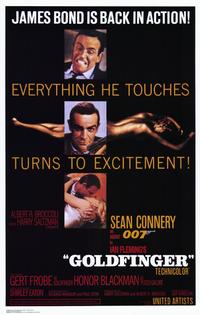
Scenes That I Love: “No, Mr. Bond….” from Goldfinger
Seeing as how today would have been Gert Frobe’s birthday, it seems only appropriate that today’s scene of the day should be one of the best moments from the original Bond franchise. In 1964’s Goldfinger, Frobe sets the standard by which all other Bond villains would be judged.
THE UNTOUCHABLES (1987) – Happy 70th Birthday, Kevin Costner!

There was a time in my life, before I could drive, when I would beg my parents to stop at the video store every time we went to the neighboring town of Conway, Arkansas. The town I grew up in was too small to have more than just a gas station, so this movie buff had to take advantage of every trip to town. One night when we were headed home, my parents relented to my repeated requests, so we stopped off at Budget Video. I wanted to choose all the movies, but unfortunately mom and dad would also let my brother and sister choose movies from time to time as well. On this particular night, my brother wanted to rent THE UNTOUCHABLES (1987). I don’t remember what I was wanting, but I do remember that it was not THE UNTOUCHABLES. I probably pouted a little bit, but we ended up taking THE UNTOUCHABLES home with us. We turned it on that night, and I’ll gladly admit that I was 100% wrong. THE UNTOUCHABLES immediately became one of my favorite films. Great job, bro!
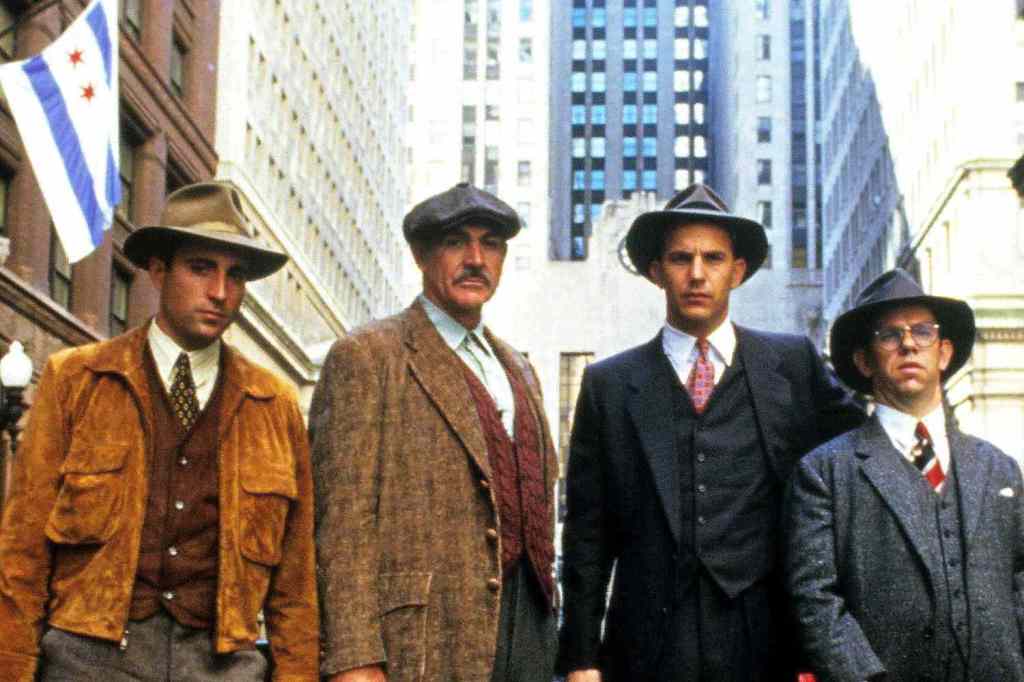
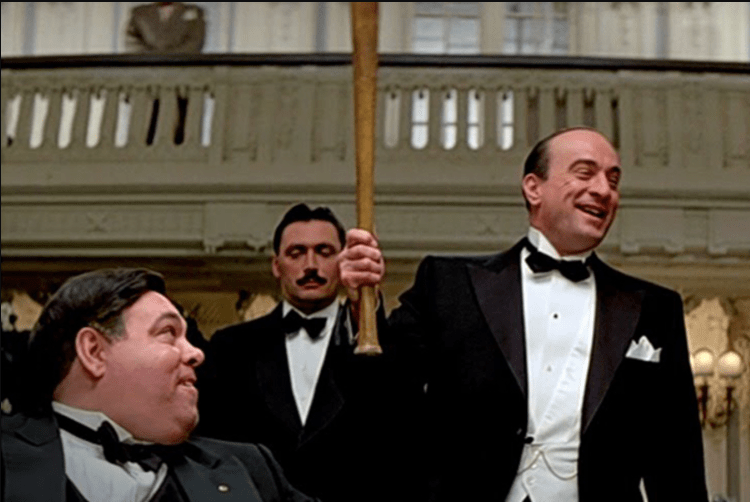
It’s 1930 and Prohibition is the law of the land in the United States of America. Treasury agent Eliot Ness (Kevin Costner) has been given the seemingly impossible task of bringing down notorious gangster Al Capone (Robert De Niro), who supplies booze to nearly all of Chicago. Capone doesn’t just supply the booze, he rules Chicago with an iron fist; and if you’re a local business who doesn’t want to buy his product, he just may blow your ass up! Ness’ job is made especially difficult due to the rampant corruption in Chicago, where everyone from the Mayor, to the judges, lawyers, and law enforcement officers are all on Capone’s payroll, making it pretty much impossible to trust anyone. In a complete stroke of luck, Ness encounters the honest Irish American policeman James Malone (Sean Connery) and asks him to join him in bringing down Capone. With Malone, Ness has found that honest and badass cop who’s not afraid to go up against Capone and his goons. Knowing that most of the police force is already compromised, the two men head to the police academy to try to find another honest cop. This turns out to be another great move as they come upon an Italian American trainee named George Stone (Andy Garcia), who’s a prodigy with a gun. Their last, and greatest move in this humble CPA’s opinion, comes when they accept accountant Oscar Wallace (Charles Martin Smith) to their team. Wallace is convinced that the key to bringing down Capone is trying to build a tax evasion case against him. He’s initially laughed at, but it’s soon apparent that this accountant knows his debits and credits, and his expertise may be just what’s needed to end Capone’s reign of terror once and for all.

I’ve always considered THE UNTOUCHABLES to be a near perfect film. One of the main reasons I find the film so perfect is the direction of Brian De Palma. I’ve been a fan of his “style” for so long, with films like DRESSED TO KILL (1980) and BLOW OUT (1981), but I think he just nails the material here. There are so many great scenes, but the “Union Station” sequence has to be one of the most perfectly choreographed sequences of all time. The building of the tension, the slow-motion shootout when the bad guys arrive, and finally the badass resolution all prove what an absolute master De Palma could be with the right material. De Palma claims that he made up the series of shots as he was filming the scenes at the train station, making the final product that much more impressive. And this all plays out against the background of a “lullaby theme” composed by the legendary Ennio Morricone (THE GOOD, THE BAD, AND THE UGLY). This is what “cinema” is all about.
THE UNTOUCHABLES has an amazing cast of actors to bring its “based on real events” story to life. Kevin Costner was just beginning to emerge as a movie star when this movie was made back in 1987. Especially as a younger actor, Costner was good at projecting both a certain innocence, tempered with the willingness to do what it takes to get the job done once his family and friends are put in danger. And what can you say about actors like Sean Connery and Robert De Niro?!! Connery is so charismatic, wise, and tough as the beat cop who shows Eliot Ness how to beat Capone… ”he sends one of yours to the hospital, you send one of his to the morgue!” He’s a beat cop because he’s incorruptible, and Connery projects that stubborn honesty perfectly. I’m so glad that Connery won an Oscar for this performance, as it would be the only time he would ever be nominated for an Academy Award. He’s amazing in this role, even if his accent is Scottish rather than Irish (a notable controversy at the time). Connery may have won the Oscar, but Robert De Niro matches him scene for scene. His ability to make Capone both charismatic and evil in equal measure is an example of what makes De Niro special as an actor. So many actors phone in these types of broad performances, but not De Niro. I also just think it’s cool that De Niro admitted that his performance was heavily influenced by Rod Steiger’s in 1959’s AL CAPONE. I love Steiger and consider this a wonderful tribute. Throw in a young Andy Garcia, the always underrated Charles Martin Smith, and a creepy Billy Drago as Frank Nitti, and you have one of the better casts ever assembled. I especially became a fan of Garcia based on his performance in THE UNTOUCHABLES.
The last person I want to mention is the screenwriter, David Mamet. His screenplay is another perfect element of THE UNTOUCHABLES. The same man who has directed his own films like HOUSE OF GAMES (1987), HOMICIDE (1991), THE SPANISH PRISONER (1997), and SPARTAN (2004) knows how to write a great screenplay. There are so many amazing moments, from the “baseball bat” sequence to the “Stone recruitment” scene, and even Ness’ “he’s in the car” line about Frank Nitti, it’s a muscular screenplay full of big-time moments of audience satisfaction.
At the end of the day, THE UNTOUCHABLES is just a great movie. I still periodically thank my brother for picking it out that fateful day in the late 80’s, and it will always be one of my very favorites. It’s one of those movies that I recommend with zero reservations!
Check out the trailer below, and if you’re smart, you’ll watch one of the great movies of the 1980’s, Brian De Palma’s THE UNTOUCHABLES.
Scenes That I Love: Malone First Meets Ness In The Untouchable
In honor of what would have been Sean Connery’s 93rd birthday, today’s scene that I love comes from the film for which Connery won an Oscar, 1987’s The Untouchables.
In this scene, Kevin Costner’s Eliot Ness first meets Sean Connery’s Jim Malone.
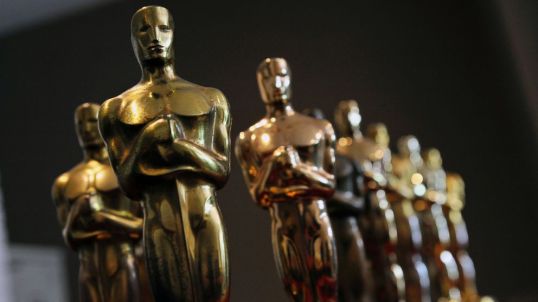
10 Oscar Snubs From The 1960s
Ah, the 60s. Both the studio system and the production code collapsed as Hollywood struggled to remain relevant during a time of great social upheaval. The Academy alternated between nominating films that took chances and nominating films that cost a lot of money. It led to some odd best picture lineups and some notable snubs!
1960: Psycho Is Not Nominated For Best Picture and Anthony Perkins Is Not Nominated For Best Actor
To be honest, considering that the Academy has never really embraced horror as a genre and spent most of the 60s nominating big budget prestige pictures, it’s a bit surprising that Psycho was actually nominated for four Oscars. Along with being nominated for its production design and its cinematography, Psycho also won nominations for Alfred Hitchcock and Janet Leigh. However, Anthony Perkins was not nominated for Best Actor, despite giving one of the most memorable performances of all time. The film literally would not work without Perkins’s performance and, considering that Perkins pretty much spent the rest of his career in the shadow of Norman Bates, it’s a shame that he didn’t at least get a nomination for his trouble. Psycho was also not nominated for Best Picture, despite being better remembered and certainly more influential than most of the films that were.
1962: The Man Who Shot Liberty Valance Is Almost Totally Snubbed
The Man Who Shot Liberty Valance was not totally snubbed by the Academy. It received a nomination for Best Costume Design. But still, it deserved so much more! John Ford, James Stewart, John Wayne, Lee Marvin, Vera Miles, and the picture itself were all worthy of nominations. Admittedly, 1962 was a year full of great American films and there was a lot of competition when it came to the Oscars. Still, The Man Who Shot Liberty Valance definitely deserved a best picture nomination over the bloated remake of Mutiny on the Bounty. Today, if the first Mutiny on the Bounty remake is known for anything, it’s for Marlon Brando being difficult on the set. But The Man Who Shot Liberty Valance is still remembered for telling us to always print the legend.
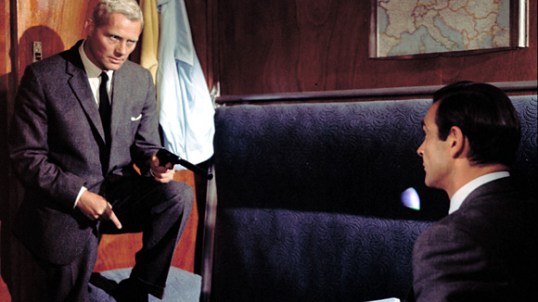
1964: From Russia With Love Is Totally Snubbed
The same year that the Academy honored George Cukor’s creaky adaptation of My Fair Lady, it totally ignored my favorite James Bond film. From Russia With Love is a Bond film that works wonderfully as both a love story and a thriller. Sean Connery, Lotte Lenya, Robert Shaw, and Terence Young all deserved some award consideration. From Russia With Love was released in the UK in 1963. In a perfect world, it would have also been released concurrently in the U.S., allowing From Russia With Love to be the film that gave the the Academy the chance to recognize the British invasion. Instead, Tom Jones was named the Best Picture of 1963 and From Russia With Love had to wait until 1964 to premiere in the U.S. It was snubbed in favor of one of old Hollywood’s last grasps at relevance.
1964: Slim Pickens Is Not Nominated For Best Supporting Actor
Playing three separate roles, Peter Sellers dominates Dr. Strangelove: Or How I Learned To Stop Worrying And Love The Bomb. But, as good as Sellers is, the film’s most memorable image is definitely Slim Pickens whooping it up as he rides the bomb down to Earth. George C. Scott and Sterling Hyaden also undoubtedly deserved some award consideration but, in the end, Pickens is the one who brings the film to life even as he helps to bring society to an end.
1967: In Cold Blood Is Not Nominated For Best Picture
In Cold Blood, though not a perfect film, certainly deserved a nomination over Dr. Doolittle. In Cold Blood is a film that still has the power to disturb and haunt viewers today. Dr. Doolittle was a box office debacle that was nominated in an attempt to help 20th Century Fox make back some of their money.
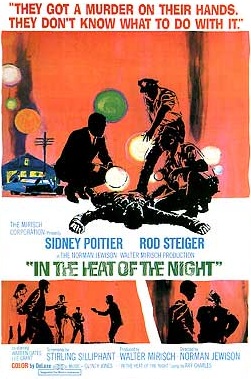
1967: Sidney Poitier Is Not Nominated For Best Actor For In The Heat Of The Night
In 1967, Sidney Poitier starred in two of the films that were nominated for Best Picture but somehow, he did not pick up a nomination himself. His restrained but fiercely intelligent performance in In The Heat Of The Night provided a powerful contrast to Rod Steiger’s more blustery turn. That Poitier was not nominated for his performance as Virgil Tibbs truly is one of the stranger snubs in Academy history. (If I had to guess, I’d say that the Actors Branch was split on whether to honor him for In The Heat of the Night or Guess Who’s Coming To Dinner or even for To Sir With Love and, as a result, he ended up getting nominated for none of them.)
1968: 2001: A Space Odyssey and Planet of the Apes Are Not Nominated For Best Picture
Neither one of these classic science fiction films were nominated for Best Picture, despite the fact that both of them are far superior and far more influential than Oliver!, the film that won that year.
1968: The Good, The Bad, and the Ugly Is Totally Ignored
Not even Ennio Morricone’s score received a nomination!
1968: Petulia Is Totally Snubbed
Seriously, I don’t know what was going on with the Academy in 1968 but it seems they went out of their way to ignore the best films of the year. Richard Lester’s Petulia is usually cited as one of the definitive films of the 60s but it received not a single Oscar nomination. Not only did the film fail to receive a nomination for Best Picture but Richard Lester, George C. Scott, Julie Christie, Shirley Knight, Richard Chamberlain, and the film’s screenwriters were snubbed as well.
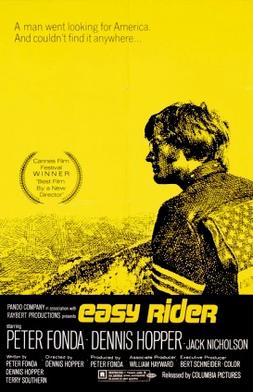
1969: Easy Rider Is Not Nominated For Best Picture
Yes, I know. Easy Rider is a flawed film and there are certain moments that are just incredibly pretentious. That said, Easy Rider defined an era and it also presented a portrait of everything that was and is good, bad, and timeless about America. The film may have been produced, directed, and acted in a drug-razed haze but it’s also an important historical document and it was also a film whose success permanently changed Hollywood. Certainly, Easy Rider’s legacy is superior to that of Hello, Dolly!
Agree? Disagree? Do you have an Oscar snub that you think is even worse than the 10 listed here? Let us know in the comments!
Up next: It’s the 70s!
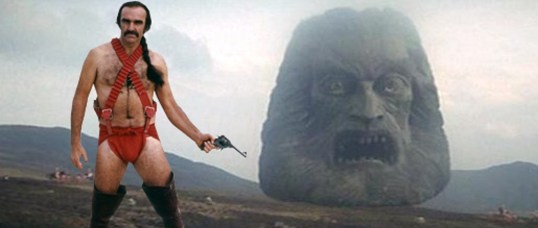
Scenes That I Love: The Opening of John Boorman’s Zardoz
Today, the Shattered Lens wishes a happy 90th birthday to the great British filmmaker, John Boorman! Here is a scene that we love, the opening of Boorman’s 1974 film, Zardoz! Fresh from directing and receiving an Oscar nomination for Deliverance, Boorman turned down a chance to direct the original Exorcist so he could bring Zardoz to cinematic life.
(Of course, Boorman would direct the first sequel to The Exorcist.)
Directed by John Boorman and featuring Sean Connery, here is the opening of Zardoz!
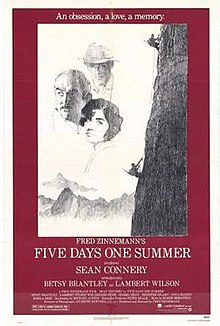
Five Days One Summer (1982, directed by Fred Zinnemann)
In 1932, Dr. Douglas Meredith (Sean Connery) is living in Switzerland with a much younger woman named Kate (Betsy Brantley), whom Meredith introduces as being his wife. When Meredith and Kate go on a climbing holiday in the Alps, they hire a young guide named Johann (Lambert Wilson). As they climb the mountains they not only discover a dead body but Meredith becomes suspicious that Kate might be falling for their guide. Meanwhile, Johann discovers that truth between Meredith and Kate’s forbidden relationship. Two men may go up the mountain but, in the end, only one man comes down.
Director Fred Zinnemann had a long career behind the camera, starting as an apprentice in Germany before coming to Hollywood in 1929. (He was one of the many German and Austrian directors to immigrate as things grew steadily worse in post-war Germany. He would soon be joined by Fritz Lang, Billy Wilder, Robert Siodmak, and many others.) Zinnemann was a master craftsman who made several good film without ever really developing a trademark style. Among his best-known (and Oscar-nominated) movies are High Noon, From Here To Eternity, The Nun’s Story, A Man For All Seasons, and Julia. Unlike a lot of his contemporaries, Zinnemann never resorted to changing his filmmaking habits in an effort to keep up with the new wave of the 60s and the 70s. As a result, he never humiliated himself the way that some of the other Golden Age directors did during the final years of their careers. Instead, he continued to put together well-constructed but old-fashioned and occasionally stodgy movies. Five Days One Summer was his final film. It was one that he had been trying to make for close to 40 years and the combination of the critical drubbing that greeted the film and its failure at the box office inspired Zinnemann to retire from filmmaking.
The love story at the center of Five Days One Summer is a bland one and Brantley doesn’t have much in the way of chemistry with either Connery or Wilson. But the love story is just a distraction from the true star of the movie, the mountain. Some of the mountain climbing segments are amazing to watch and knowing that the three stars were actually putting their lives at risk to get some of the shots makes it all the more impressive. At its worse, the film is a visually impressive but old-fashioned travelogue. At its best, it puts you right on the mountain. The film is far from perfect and it’s certainly not one of Zinnemann’s best but, at the same time, it is hardly the disaster that it’s often described as having been. I think some critics are so wedded to the narrative of the once-great director making a film that proves how out of touch he is with contemporary audiences (think of the final films of Otto Preminger, Richard Brooks, Elia Kazan, and George Stevens) that they overlooked that Zinnemann’s final film is a respectable, middle-of-the-road feature.
Ignore the film’s wan story and instead just concentrate on the amazing scenery and you’ll see that Five Days One Summer was not a terrible film for an old craftsman like Fred Zinnemann to go out on.
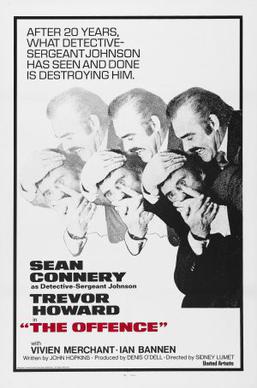
The Offence (1972, directed by Sidney Lumet)
After a suspected child molester named Baxter (Ian Bannen) dies while being interrogated in police custody, Detective Superintendent Cartwright (Trevor Howard) head up the internal affairs investigation. Baxter was beaten to death by Detective Sergeant Johnson (Sean Connery), a 20-year veteran of the force who has seen the worst that humanity has to offer. Did Johnson allow his anger over Baxter’s crimes to get to him or did something else happen during the interrogation?
When Sean Connery agreed to play James Bond for a final time in Diamonds are Forever, he did it under the condition that United Artists agree to back two of Connery’s non-Bond film projects. UA agreed, though they did insist that neither film cost more than $2,000,000. One of those projects was an adaptation of Macbeth, which was canceled in the wake of Roman Polansi’s version of the Scottish play. The other project was The Offense.
Based on a play by John Hopkins, The Offence is the type of movie that probably would have never been made if not for the interest of a big star, like Connery. The story is downbeat and grim and audiences are essentially asked to spend nearly two hours in the presence of two very unlikable men. Baxter is an accused child molester while Johnson is a bully who has been driven so mad by the things that he’s seen that he’s not only violent on the job but also on at home. Director Sidney Lumet directs with a cold and detached style, refusing to provide any sort of relief from the intensity of the film’s interrogations. The film is set up as an acting showcase for Connery and Bannen, giving both of them a chance to show what they could do with two unpredictable characters.
Unfortunately, not many people got a chance to see their performances. Even though Connery kept the budget under a million dollars and despite both the film and his performance being critically acclaimed, United Artists barely released The Offence and it took 9 years for the film to make back it’s meager budget. It didn’t even get released in France until 2007. Connery, however, often cited The Offence as being one of his best films and said that his performance in the film was his personal favorite.
The movies is too stagey and talky to be entirely successful but Connery was right about his performance. It’s one of his best and it retains its power to disturb to this day. Connery often chafed at being typecast as James Bond. With The Offence, Connery plays a character who is nothing like Bond. Everything about Johnson is brutal and seedy. While it’s impossible not to initially sympathize with his anger towards the state of the world, Connery reveals that Johnson’s self-righteous anger is actually a shield for his own dark thoughts and desires. He’s a bully, an angry man who grows more and more insecure as the film progresses and Baxter continues to see through him. Connery makes Johnson sympathetic, frightening, pathetic, and dangerous all at the same time. The Offence is a film that proves that Sean Connery was not only a good Bond but also a great actor.
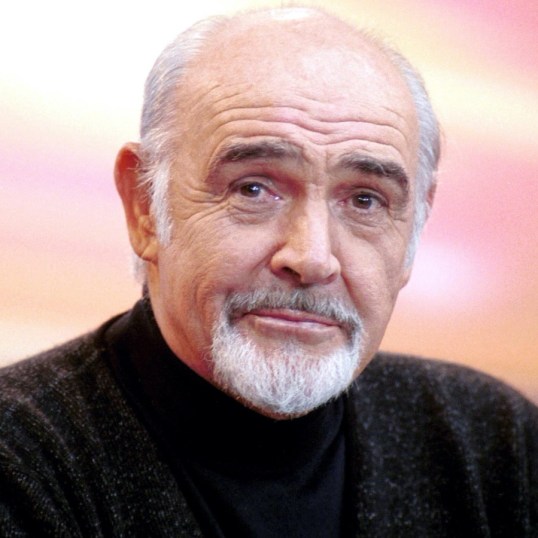
Sean Connery Has Died
The greatest James Bond passed away earlier today in The Bahamas. He was 90 years old.
Actually, it’s unfair to refer to Connery as simply being the greatest James Bond. He was a great actor, period. Yes, he will always be best known for playing James Bond but he also appeared in dramas, comedies, adventure films, and even the occasional sci-fi flick. He was an actor who epitomized an era of filmmaking. One can only imagine how Sean Connery would react to someone demanding that he apologize for a tweet.
Sean Connery, R.I.P.