So, it seems appropriate to share a scene that I love from my favorite Star Wars film, Starcrash!
Okay, technically, Starcrash is not part of the Star Wars franchise. This 1978, Luigi Cozzi-directed film is usually considered to be one of the more blatant rip-offs of Star Wars. But you know what? I love Starcrash. I’ve seen Star Wars and I’ve seen Starcrash and Starcrash is a lot more fun. Not only does Starcrash feature Marjoe Gortner, David Hasselhoff, Joe Spinell, and Caroline Munro but it also features the one and only Christopher Plummer as the emperor of the universe.
In the scene, Hasselhoff and Munro inform Plummer that they only 45 seconds before a planet explodes. Plummer, however, has the perfect solution and his delivery of the line “HALT …. the flow of time!” is one of the many things that makes Starcrash one of the greatest films ever made.
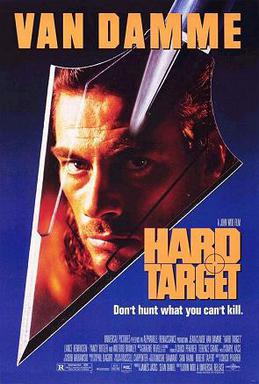
Today, the Shattered Lens wishes a happy 76th birthday to the one and only John Woo! And what better way to celebrate than with a scene that we love? 1993’s Hard Target was not only John Woo’s first American film but it’s also one of the few films to make perfect use of Jean-Claude Van Damme (not to mention Wilford Brimley and Lance Henriksen)!
Today’s scene is hard Target’s epic shootout and chase scene. Nearly 30 years later, it’s still exciting to watch.
Today, the Shattered Lens celebrates the 78th birthday of the iconic screenwriter and director, John Milius!
While director Francis Ford Coppola definitely put his own stamp on 1979’s Apocalypse Now, the film started life as a script written by John Milius and the film itself is full of dialogue that could only have been written by Milius. The most famous example is Robert Duvall’s monologue about the smell of napalm in the morning. Actually, the entire helicopter attack feels like pure Milius. Reportedly, Duvall’s character was originally named Colonel Kharnage but, by the time the movie was made, his name had become Kilgore. It’s still not exactly a subtle name but it’s not quite as obvious as Kharnage.
(When James Caan read the script, he loved the role so much that he was offended to not be offered it and, as a result, he turned down offers to play not only Willard but also Kurtz.)
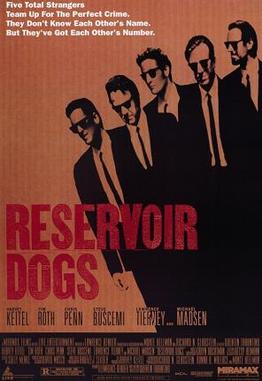
In honor of Quentin Tarantino’s birthday, today’s scene of the day is the opening coffeeshop scene from Tarnatino’s directorial debut, 1992’s Reservoir Dogs.
While Tarantino will always be better appreciated as a director than an actor, it does seem somewhat appropriate that the very first lines in the very first Tarantino film are spoken by Tarantino himself. There’s also something undeniably likable about Tarantino laughing at the sound of his own dialogue.
The 1965 film, Doctor Zhivago, is not only notable as one of the many David Lean-directed films to be nominated for Best Picture. It’s also remembered as being one of two Best Picture nominees to feature, albeit in a small role, the madman of European cinema, Klaus Kinski.
In this scene, set in the aftermath of Russia’s communist revolution, Kinski explains why he, despite being a prisoner, is the only free man on the train. Due to his German accent, Kinski was dubbed by actor Robert Rietty and he doesn’t have much screen time but he still manages to steal the movie.
This great composer is probably best known for his dream-like and haunting work for the films of David Lynch. Among the many songs and musical pieces that he’s done for Lynch, he composed the jitterbug music that opened David Lynch’s 2001 film, Mulholland Drive. The scene below features the perfect mix of Lynch’s visual vision and Badalamenti’s musical ear. What I especially like about this scene is that the music starts out as a very cheerful and vaguely generic but then it grows steadily more ominous as the scene plays out.
Here it is. The haunting opening of one of the best films of the current century:
The scene below is from the 1953 film, Julius Caesar. This Oscar-nominated Shakespearean adaptation had a cast that was full of distinguished actors. James Mason played Brutus. The great John Gielgud played Cassius. Louis Calhern was Caesar while other roles were filled by Deborah Kerr, Greer Garson, Edmond O’Brien, George Macready, John Hoyt, Edmund Purdom. and a host of other distinguished thespians. And yet, the best performance in the film came from an actor who, at the time, no one considered to be a Shakespearean. Marlon Brando brought his method intensity to the role of Mark Antony and the result was a performance that is still electrifying today.
On YouTube, someone referred to this as being “the world’s greatest speech delivered by the world’s greatest actor.” Sounds good to me!
Today is not only the 1st of March. It’s not only Texas Independence Day. It’s not only Zack Snyder’s birthday. It’s not only the day of Texas primaries. It’s not only the day when the State of the Union address is scheduled to be given (yawn!). It’s also Mardi Gras!
What a busy day!
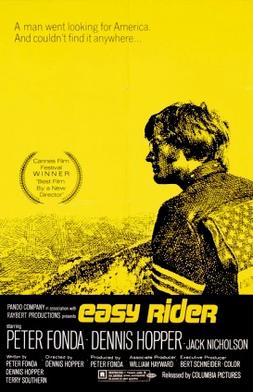
For today’s scene that I love, here is the Mardi Gras/Cemetery sequence from 1969’s Easy Rider. Featuring Peter Fonda, Dennis Hopper, Karen Black, and Toni Basil walking through the streets of New Orleans, this scene was actually filmed during Mardi Gras. Those are real Mardi Gras floats and real Mardi Gras participants staring at the camera. That’s an actual citizen of New Orleans with whom Dennis Hopper appears to have nearly gotten into a fight. And, in the cemetery scene, that was real acid that Peter Fonda took.
Here is today’s scene. The scene is age-restricted so you’ll actually have to click on “watch on YouTube” to see it.
If you don’t want to click on “watch on YouTube,” here is a shorter version that just features the parade without the admittedly disturbing cemetery stuff.
I like how Toni Basil can’t help but dance, no matter what.
Today is Zack Snyder’s 56th birthday! Happy birthday, Mr. Snyder!
Down here in Texas, today is also primary day. Voters will be selecting the candidates who will run in the November general election. I already know who I am voting for and, more importantly, I know who I hope doesn’t win his primary because there’s no way I want to spend 8 months watching his commercials every time I turn on TV or try to watch a YouTube video. Seriously, the dude is freaking annoying….
Anyway, with all that in mind, this advice from 2011’s Sucker Punch seems appropriate for today, both as an election day message and a reminder of the uniquely weird vision of Zack Snyder!
Today, the Shattered Lens wishes a happy 89th birthday to Bob Rafelson, who was one of the first directors to not only truly recognize the genius of Jack Nicholson but also one of the co-creators of the Monkees. (In fact, Rafelson brought the Monkees and Nicholson together when he made his directorial debut with 1968’s Head. The Monkees starred in the film while Nicholson wrote the script.) After getting his start on television, Rafelson became one of the leading figures of the Hollywood counterculture that came to power in the late 60s and the early 70s and a business partner of producer Bert Schneider, Rafelson also played a role in the creation of such classic films as Easy Rider, The Last Picture Show, and Hearts and Minds. Like Nicholson, Rafelson was never a hippie. Instead, his vision was closer to the vision of Jack Kerouac and Neal Cassady. Rafelson and Nicholson brought the sensibility of the Beat Generation to Hollywood and, for a while at least, they changed the face of American culture.
In honor of Bob Rafelson’s birthday, today’s scene that I love comes from his 1970 film, Five Easy Pieces. In this Oscar-nominated film, Jack Nicholson plays Bobby Dupea. Born to a wealthy and music-obsessed family, Bobby currently works in an oil field and is alternatively angry, cynical, and idealistic. (That both the main character and the director shared the same first name is probably not a coincidence as Rafelson also came from an artistic family. Though many of Bobby’s famous outbursts — especially the famous one involving a chicken sandwich — were based on things that had actually happened to Nicholson, the character was equally based on Rafelson.) After Jack Nicholson’s Oscar-nominated turn in Easy Rider,Five Easy Pieces featured Nicholson playing the type of role for which he would be best-known in the 70s, the wayward rebel who must choose between being a part of society or being forever an outcast.
In this scene, Bobby and his oilfield co-worker find themselves stuck in a traffic jam. Bobby gets a chance to show off both his temper and his talent. It’s a great scene and Nicholson gives such a strong performance that it’s only later that you realize that Bobby’s anger didn’t really accomplish much. That was a recurring theme in Nicholson’s early films. With this scene, Bob Rafelson captures both a man and a country in conflict.
Five Easy Pieces would be nominated for Best Picture, though it would lose to Patton. After his supporting nomination for Easy Rider, Nicholson received his first best actor nomination for this role here. (Again, Patton triumphed, though George C. Scott famously refused to accept his Oscar.) Sadly, Bob Rafelson was not nominated for Best Director.
Equally sadly, Rafelson’s subsequent films received mixed reviews (though most have been positively reevaluated in recent years) and struggled at the box office. With Hollywood becoming more concerned with finding the next blockbuster than producing films about existential wanderlust, Rafelson often struggled to bring his vision to the screen. He hasn’t directed a film since 2002’s No Good Deed. However, his work lives on amongst serious film students and historians of the 70s. If any director’s work is worthy of rediscovery and reevaluation, it’s Bob Rafelson’s.

 Through the Shattered Lens