There’s a lot of disturbing scenes in the original Night of the Living Dead but I’ve always loved this live, televised interview with the chief of police. First, there’s the delivery of that classic line. “….they’re all messed up.” Yes, they are. Then there’s the fact that the chief doesn’t seem to be particularly perturbed by the fact that the dead are coming back to life. Instead, his attitude is very straight-forward. It’s happening, we need to take care of it, let’s arm some civilians.
Of course, this interview sets up the film’s ending, in which we learn that those helpful civilians with guns are a bit trigger happy and sometimes, the living get in the way. When you first see this interview, it’s easy to laugh at the sight of the chief’s posse and everyone’s odd confidence that the dead will somehow just go away. (Death, after all, is the one thing that is guaranteed to happen to everyone eventually.) Once you know how the story’s going to end, though, this scene becomes much more ominous.
In this scene below — which does count as a spoiler, in case you’re one of those annoying toaduckers who complains about stuff like that — the House finally gets its revenge on the obnoxious family that’s been living inside of it. Now, taken out of context, it may seem a bit harsh to describe the scene as being a crowd pleaser but, if you’ve sat through the entire film, it’s hard not to cheer a little when the chimney comes down.
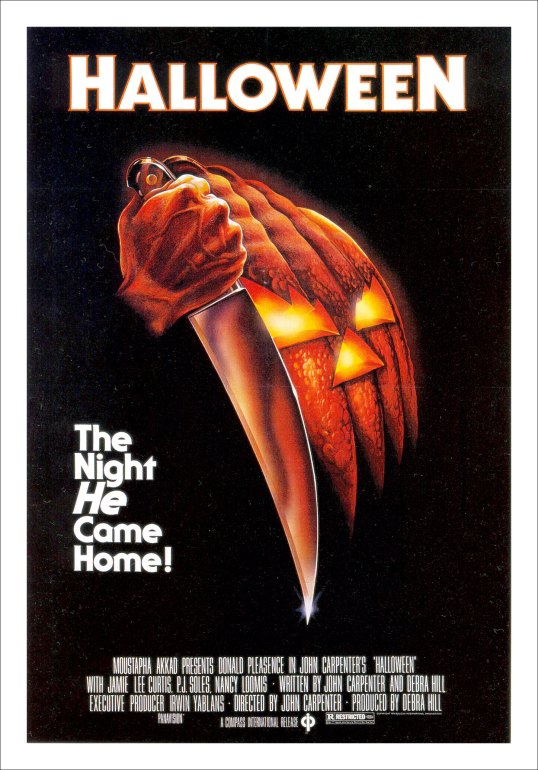
To go along with my review of Curtis Richards’s Halloween novelization, today’s scene that I love comes from the film Halloween…. kinda. It wasn’t included in the theatrical release but, instead, it was later added when Halloween made it’s network television premiere.
Now, I’ve actually heard two stories about this scene. One story is that it was shot during the filming of the original Halloween but that it was cut out of the theatrical release. When Halloween premiered on television, the network needed some footage to pad out the running time so this scene was re-inserted.
The other version is that the scene was specifically filmed for the television version of the film. According to this version, the scene was in an early version of the script but Carpenter didn’t film it until after Halloween had already had its theatrical release and was set to make it’s television debut.
(Personally, to me, the second version sounds more plausible.)
Regardless of when this scene was filmed, I like it quite a bit. In this scene, Dr. Loomis (Donald Pleasence) attempts to get his colleagues to understand just how dangerous Michael Myers actually is. This, of course, was a running theme for the character of Dr. Loomis and it has always amazed me that no one was ever willing to listen to him. Loomis spent the last 30 years of his life telling people that Michael was an unstoppable killer. Every single time, he was proven correct. And yet no one ever listened to him!
This scene gives us a chance to see Dr. Loomis in a professional setting, as well as giving us a glance of an adolescent Michael at Smith’s Grove Sanitarium. “You’ve fooled them, Michael …. but not me.”
As someone who has seen all of the Halloween films multiple times, I have to say that Donald Pleasence’s performance as Dr. Loomis, especially in the first 2 films, has always been underrated. Pleasence gave a convincing portrait of a man who had spent the last ten years of his life dealing with evil on a daily basis. Who could blame him for being a bit fanatical? Wouldn’t you be if you had spent that much time staring into Michael’s soulless eyes?
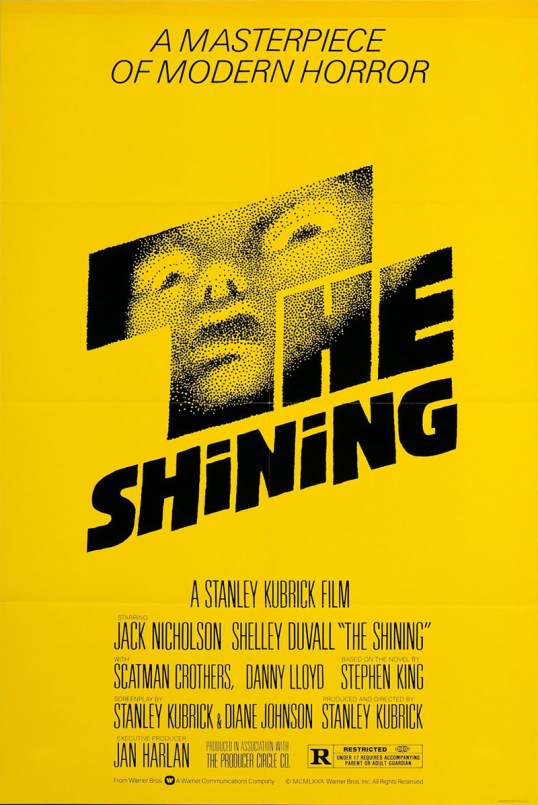
As I’ve stated many times on this site, Stanley Kubrick’s The Shining is one of my favorite horror films and it’s also one of the few horror films that can still scare me even after I’ve seen it hundreds of time. Those two little “Come and play with us” girls still freak me out and I still think about the blood pouring out of that elevator at least once a month.
That said, one of my favorite scenes from The Shining comes early on in the film. It’s the scene where Jack Torrance (Jack Nicholson, of course) is driving his family to the Overlook Hotel for the first time. He’s already visited for his job interview but this is the first time that his family is going to see their new home. And, as you can tell in this scene, he already appears to be kind of sick of them.
Seriously, when someone is driving and has that expression on his face, don’t ask him about the Donner Party.
What I love about this scene is Nicholson’s obvious exasperation. You can just tell that he’s thinking, “I’m going to be stuck in a hotel with these two for months.” I especially love the way that he delivers the line about Danny learning about cannibalism from the television. (Of course, I think one reason why Jack is upset is because Wendy’s the one who brought up the Donner Party, in the first place. If you don’t want your child to know about cannibalism, don’t randomly start talking about a famous example of it. That’s parenting 101, I’d think.)
Seriously, if I was a passenger in that car, that is exactly when I would say, “Pull over and let me out. This is not going to end well.”
Since today is Dario Argento’s 80th birthday, I’m going to share a scene that I love that he directed.
I love the opening of Argento’s 1971 giallo, Four Flies On Grey Velvet. This was Argento’s third film as a director and it tells the story of an American drummer who gets caught up in a gruesome murder. In the opening credits, we watch as Michael Brandon drums away and finds time to take care of a distracting fly. In just a matter of minutes, Argento tells us everything we need to know about our hero and the role that he’ll be playing in this film. Like the best drummers, he holds everything together and that’s a good skill to have because, in typical Argento fashion, his entire life is about to fall apart.
Werner Herzog and Friend (Image from the documentary The Burden of Dreams)
Since today is Werner Herzog’s birthday, I thought I would share a Herzog scene that I love.
Herzog is such an iconic and eccentric figure that I think there’s a tendency to overlook just how good of a director and a storyteller he actually is. People just tend to think of him as being the man with the German accent who makes random comments about how the universe is governed by chaos.
But, he’s actually a brilliant director as well and if you need proof, just watch his 1972 film, Aguirre, The Wrath of God. The scene below is actually from the final few minutes of the film so I guess it’s technically a spoiler if you haven’t seen the film yet. That said, people who get upset about spoilers are wimps.
Klaus Kinski plays Aguirre, a Spanish conquistador who attempts to conquer the South America by floating down the Amazon River. Things don’t quite go the way that he intended. By the end of the film, all of his man are dead and a large amount of monkeys are congregating on his raft. Has Aguirre conquered the monkeys or have they conquered him?
The film is 1968’s Danger Diabolik! The music is courtesy of Morricone. The direction is courtesy of Mario Bava. Does the scene make any sense? Does it have to? This film is all about pure style and it’s hard to think of any place as stylish (by 1968 standards) as Valmont’s Nightclub.
Today, as we continue to honor the memory of Ennio Morricone and celebrate the birthday of Mario Bava, this just seems like the perfect scene to share.
Stanley Kubrick would have been 92 years old today!
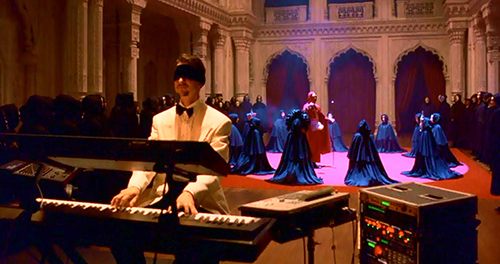
In honor of this visionary and his career, here is a wonderfully creepy scene from his final film, 1999’s Eyes Wide Shut. Like so many of Kubrick’s films, it took a while for people to really appreciate Eyes Wide Shut. It’s an odd and, at times, frustrating film but still a film touched by genius.
In this scene, Tom Cruise discovers that it’s not quite as easy to crash a super secret party as he thought it would be.
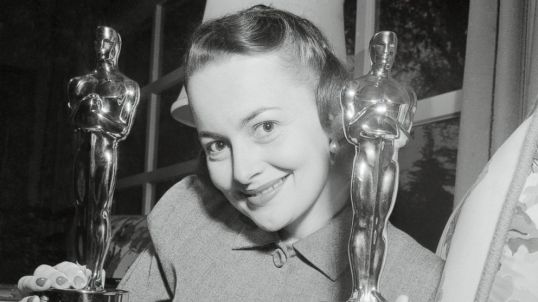
I woke up today to the news that Olivia De Havilland, the last of the great Golden Age stars, had died. She was 104 years old and she spent all of those years as the epitome of a type of grace and class that we really don’t see much nowadays. Her famous feud with her sister Joan Fontaine aside, it’s impossible to imagine an actress like Olivia de Havilland getting caught up in a silly twitter fight.
Here she is with one of her most frequent co-stars, Errol Flynn. This short but sweet scene is from The Adventures of Robin Hood.
Mel Brooks. What can you say Mel Brooks? Not only did he help to redefine American comedy but he was also responsible for bringing David Lynch to Hollywood. Brooks was the one who hired Lynch to direct The Elephant Man. It can probably be argued that, if not for Brooks, Lynch’s feature film career would have begun and ended with Eraserhead. Brooks not only hired Lynch but also protected him for studio interference. When the execs tried to make Lynch remove two surrealistic sequences from The Elephant Man, Brooks stood up to them. When they requested a more conventional biopic, Brooks defended Lynch’s vision and the result was one of the best films ever made.
Of course, Brooks isn’t listed in the credits of The Elephant Man. Though he produced the film, he went uncredited because he didn’t want people to assume that the movie was a comedy. By doing so, Brooks missed out on an Oscar nomination but he also ensured that the film was taken seriously. It’s hard not to respect someone who was willing to go uncredited to help make the film a success.
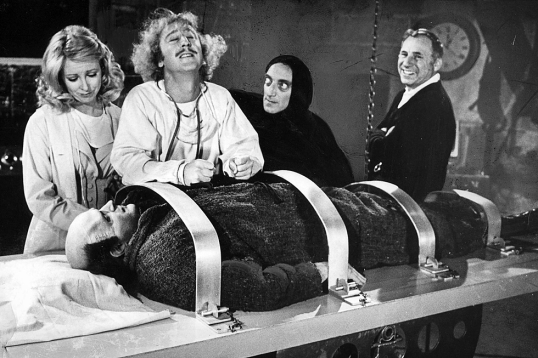
Though Brooks, as a producers, was responsible for a number of serious films, there’s a reason why Brooks is associated with comedy. He’s a very funny man and he directed some very funny films. In honor of Mel Brooks, here’s a scene that I love from 1974’s Young Frankenstein.



 Through the Shattered Lens