In this scene from 1982’s Poltergeist, JoBeth Williams not only falls in what was meant to be the family swimming pool but she also discovers that she’s not alone in that pool.
The skeletons were real. I would have screamed too.
In this scene from 1982’s Poltergeist, JoBeth Williams not only falls in what was meant to be the family swimming pool but she also discovers that she’s not alone in that pool.
The skeletons were real. I would have screamed too.

I don’t care what Stephen King says. Stanley Kubrick’s adaptation of The Shining is great.
One of King’s big complaints about the film is that Jack is obviously unhinged from the start. King is right that Jack Nicholson plays Jack Torrance as being someone who has a few screws loose even before he starts to work as the caretaker. But it works for the film, as can be seen in this scene in which Stuart Ullman tells Jack about what happened to previous caretaker.
Incidentally, Barry Nelson’s performance as Ullman is seriously underrated. Ullman is a far more interesting character in the movie than he was in King’s book. For that matter, the same can be said of just about every character in the movie as opposed to the way King envisioned them in his novel. Maybe that’s the main reason King doesn’t like this movie. Kubrick understood King’s story better than King himself did.

In this scene from 1979’s Zombi 2, a group of humans try to destroy the zombies that are invading a small hospital on an isolated island. Director Lucio Fulci later pointed out, in many interviews, that he used the same clips of Al Cliver throwing a Molotov cocktail and firing a shotgun multiple times in the scene.
Two things to note about this scene:
First off, it captures what is truly scary about zombies. They are relentless. They do not stop coming. No matter how many you destroy, there’s always another one following behind it.
Secondly, Italian zombies actually looked like decaying walking corpses that are on the verge of falling apart. That was one huge difference between the Italian zombie films and many of the ones that were made in America.
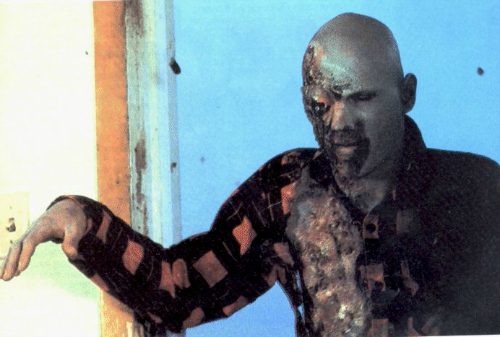
The original Dawn of the Dead, which was released in 1978 and directed by George Romero, is not only one of the most influential horror films of all time. (Even more so than Night of the Living Dead, Dawn was responsible for inspiring the Italian zombie boom.) It’s also a rather dark satire of humanity and commercialism. With the world ending, both humans and zombies head to the mall. Briefly, the humans manage to form their own peaceful society but, inevitably, they end up screwing it all up. The Dead may be slow and not particularly intelligent but, as poor old Steve discovered in that elevator, they’re absolutely determined to get what they want.
Dawn of the Dead ends with an apocalytpic combination of bikers, zombies, and one helicopter that has next to no fuel. Our two remaining survivors head off in search of some place safe but we all know that helicopter isn’t going to stay in the sky for long. In its way, the ending of Dawn of the Dead is even more bleak than the end of Night of the Living Dead. The characters in Night of the Living Dead were dealing with a menace no one understood and their inability to work together was largely the result of shock and panic. In Dawn of the Dead, everyone knows that the Dead are returning to life and everyone knows how to stop them but people still cannot set aside their differences long enough to do so. Even with the world ending, Peter gets some joy out of shooting one of the (living) bikers. His smirk suggests that one doesn’t need to be a zombie in order to sacrifice their humanity.
With the end of this film, Romero’s message is clear. Society gets what it deserves.
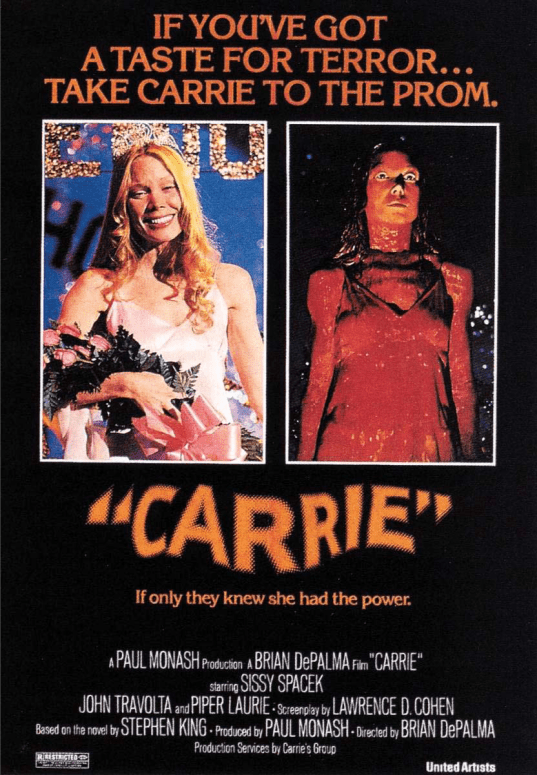
When it comes to the 1976 film, Carrie, we tend to focus so much on what Carrie does at prom that we forget about what she does while she’s walking home.
The prom scene, to me, is disturbing because Carrie not only kills her bullies but also a lot of people who probably weren’t actually laughing at her. The floppy-haired photographer wearing the dorky fake tuxedo? That dude did not deserve to die in a fiery inferno!
However, the scene in which Carrie blows up Chris and Billy is extremely satisfying because there’s no doubt they deserved it.
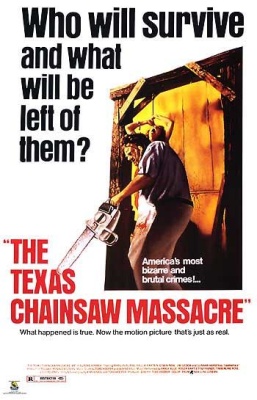
This scene, from 1974’s The Texas Chainsaw Massacre, only last 52 seconds but that’s all the time that it needs. Leatherface makes his first appearance and, sadly, Kirk exits the film.
What makes this scene so effective is that, even though it’s obvious that something bad is going to happen, Leatherface still seems to pop up out of nowhere. When he does kill Kirk, he does it so efficiently and without hesitation that there’s little doubt that this is just an ordinary day for him. When Leatherface slams that door, what he’s truly saying is that he’s very busy and he’d appreciate it if people just stopped bothering him for an hour or two.
For his part, Kirk really shouldn’t have just gone into someone’s house uninvited. That’s really not Texas manners. That said, I do think Leatherface did overreact just a bit. Killing a guest isn’t really an example of good manners either.
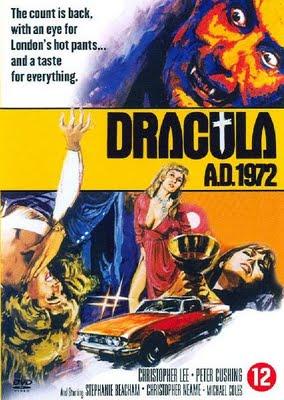
Even in the year 1972, Count Dracula (Christopher Lee) could not escape Prof. Van Helsing (Peter Cushing). Of course, the Van Helsing here was a descendant of the Van Helsing who gave Dracula such a hard time in the 19th century but still, Dracula was not thrilled to see him.
This scene is from Hammer’s Dracula A.D. 1972. It’s not generally considered to be one of the better Dracula films but I enjoy any chance to see Peter Cushing and Christopher Lee (who were the closest of friends off-screen) acting opposite each other.
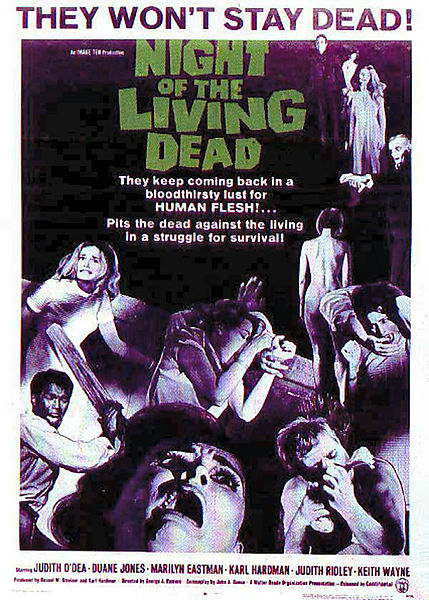
I remember the first time that I ever watched the original Night of the Living Dead, I was really stunned and, to be honest, quite upset by the death of Tom and Judy. They were so likable and earnest that I guess I naturally assumed that they would survive or, at the very least, they wouldn’t die in such a pointless manner. But, ultimately, that’s what made Night of the Living Dead such a frightening film. It didn’t matter who you were or what you’re intentions were. The Dead were going to kill you and then they were going to eat you.
Honestly, everyone should have just stayed in the cellar.
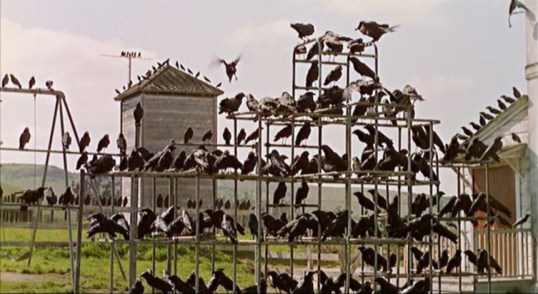
Now, in all honest, it’s not just The Birds that cause chaos in this scene from Alfred Hitchcock’s 1963 film of the same name. I will never understand why that gentleman decided that he just had to light up a cigar at that particular time. And if he had used a lighter instead of a match, he could have prevented a lot of trouble.
That said, you do have to respect the Birds for somehow knowing that he would do exactly that and therefore, making sure that the gasoline ended up right around his feet. Those birds are clever!
Seriously, though, this scene really creeps me out. I think it’s because there’s so many birds and, as this scene showed, there was absolutely no way the humans on that island were going to be able to win this particular battle.
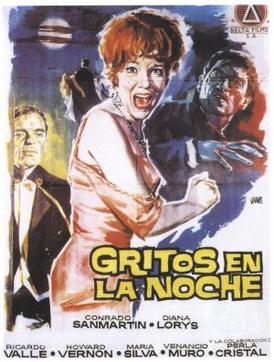
For today’s horror scene that I love, I present to you the opening of Jess Franco’s 1962 film, The Awful Dr. Orlof.
Franco doesn’t have the best critical reputation but I’ve always felt that, when he wanted to and actually had the time and the budget, he was capable of directing some memorably surreal scenes. The opening of The Awful Dr. Orlof is full of atmosphere and sudden horror. It plays out like a dream of dark and disturbing things. Franco often claimed to a disciple of Orson Welles (and Franco reportedly did do some second unit work on Chimes At Midnight) and the opening of Dr. Orlof, with its shadowy cinematography and its skewed camera angles, does definitely show some Wellesian influence.
From 1962, here’s the opening of The Awful Dr. Orlof:
 Through the Shattered Lens