Deliverance (1972, directed by John Boorman, DP: Vilmos Zsigmond)
“Machines are going to fail!” Lewis Medlock says in Deliverance, delivering a line that feels even more relevant today than it might have in 1972. Lewis is the athlete and self-styled alpha male who drags his friends on a canoeing trip that involves some dangerous rapids. When Lewis suffers a compound fraction, it’s a shocking moment because, up until that point, Lewis seemed invulnerable to harm. Even when they return to civilization and Lewis learns he might lose his leg, he remains defiant.
Lewis was played by the late Burt Reynolds, who born 89 years ago today. In this scene that I love, Lewis explains his philosophy to his best friend and eventual savior, Ed Gentry (Jon Voight).
On this date, 115 years ago, Lon Chaney, Jr. was born in Oklahoma City. At the time, Oklahoma wasn’t even a state. His father was the actor Lon Chaney Sr.
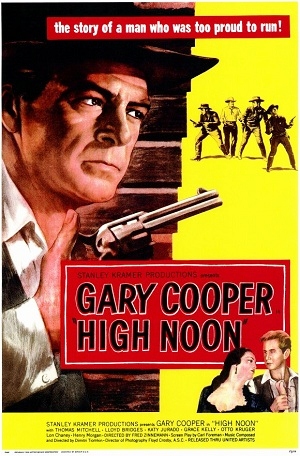
Originally named Creighton Chaney, Lon Jr. followed in his father’s footsteps. Like many sons of famous men, he often struggled to escape his father’s shadow. While he would never be mistaken for a man of a thousand faces, Lon Chaney, Jr. did make a name for himself, first as Lenny in the Oscar-nominated 1939 film version of Steinbeck’s Of Mice and Men and then as Larry Talbot, the unfortunate man who found himself cursed to turn into the Wolf Man whenever the moon was full. Chaney spent the majority of his career appearing in horror films and, later, westerns. Not only did he play The Wolf Man but he was also one of the many actors to take a shot at playing both Frankenstein’s Monster and Dracula. Later, he would appear in a series of low budget horror films that were often a far cry from his best-known films. In his later years, he was a favorite of producer/director Stanley Kramer, who cast him in both High Noon and The Defiant Ones and who once said that Chaney was one of the finest character actors in Hollywood. His deep voice and craggily face made an undeniable impression in those later films. Looking at him, you could see had lived a tough life but he had the heart of a survivor.
In today’s scene that I love, Larry Talbot learns the facts about being a werewolf. From 1941’s The Wolf Man, here is Lon Chaney, Jr in his signature role.
In honor of Joe Pesci’s birthday, today’s scene that I love comes from 1990’s Goodfellas. This iconic scene was largely improvised by Joe Pesci and Ray Liotta. Reportedly, Pesci based the scene on an actual incident that he observed.
It’s also interesting to note that Tommy’s comment of “you might fold under pressure” turns out to be true.
Today’s scene that I love comes from my favorite Greydon Clark movie, 1990’s The Forbidden Dance!
Yes, this scene is technically a spoiler. It’s got music! It’s got dancing! It has some deeply questionable stereotypes and some obvious virtue signaling! It has that classic line, “We should just boycott their ass!” It’s got Sid Haig! It’s got everything you could ever hope for!
And remember — this film is dedicated to the preservation of the rain forest.
Today’s scene that I love features future President Ronald Reagan, giving what he considered to be his best performance in 1942’s Kings Row. He liked one of the lines in this scene so much that he used it as the title for autobiography.
On what would have been Ronald Reagan’s 114th birthday, here is today’s scene that I love.
Joseph Cotten passed away 31 years ago today. Cotten appeared in a lot of good films and worked with many important directors but he will always be remembered for bringing to life Jedidiah Leland, the drama critic in Citizen Kane. I liked the character so much that I paid tribute to him with my penname, though I substituted an A for the first I.
Cotten played Jedidiah as both a young man and an old man in Citizen Kane. The first time I saw the movie, I reacted to the young Leland. With each passing year, I think I understand better what the older Leland was talking about when he said that memory is the greatest curse ever inflicted on the human race.
(Even retired and living in what appears to be a nursing home, Jedidiah Leland still spoke like a drama critic.)
Since today is Michael Mann’s birthday, today’s scene that I love comes from his 1986 film, Manhunter.
In this scene, a blind woman (played by Joan Allen) pets a sedated tiger while her new boyfriend (Tom Noonan) watches. This would actually be a pretty romantic scene if not for the fact that her boyfriend is also a homicidal maniac. This is a scene that, when you watch the film, seems to come out of nowhere but, when you look back, you realize it was one of the key moments in the narrative. While the killer watches the woman who represents a possible redemption embrace another predator, the profiler played by William Petersen continues his way into the killer’s tortured psyche.
Today would have been George Romero’s 85th birthday.
Today’s scene of the day comes from Romero’s best film, Night of the Living Dead. In this scene, an attempt to escape from a farmhouse ends in disaster. As was typical of all of Romero’s films, the disaster has less to do with the zombies and more to do with humans that simply can’t work together.
The upload isn’t great but this scene still represents Romero’s vision of a society working to destroy itself.
Today’s scene that I love comes from Michael Cimino’s Heaven’s Gate.
You know what? I’ve read that some people consider this scene with the skating fiddler to be an example of Cimino’s tendency towards self-indulgence. The oft-made claim is that it’s a scene where Cimino is more interested in showing off than moving the story forward. That may be true but still, I don’t care what anyone says, I like this scene. It captures the communal joy of the settlers before the arrival of the mercenaries who have been hired to force them out of their homes. To understand why the settlers fight, you also have to understand what they’re being expected to give up.
Today’s scene — or really, I should say scenes — that I love comes from 1960’s The Time Machine.
Watch as Rod Taylor travels from 1900, all the way to the very far future. As you’ll notice, this upload is just of the scenes of Taylor watching the years fly by while sitting in his machine. Taylor does leave the machine twice — once to see Britain in 1917 and a second time to experience 1966 but those scenes aren’t included here. That said, the time travel effects are simple but hold up well and Taylor’s disillusioned feelings about witnessing “a new war,” were ones that were undoubtedly very relatable to audiences in 1960.