Mia & Roman is a short film that was filmed in 1968 to promote the release of the classic horror film, Rosemary’s Baby.
The film profiles director Roman Polanski and actress Mia Farrow, both of whom appear as being young and full of hope. (It’s sad to think that, just a year after appearing happy and optimistic in the film, Polanski’s wife and unborn child would be murdered by the Manson family. Polanski, of course, would later end up fleeing the country and he remains controversial to this day. Mia, meanwhile, would eventually become both the mother of Ronan Farrow and an overrated SyFy live tweeter.) Along with serving as a time capsule of the 1960s (and you know how much I love time capsules), Mia & Roman also features some behind-the-scenes footage from the making of Rosemary’s Baby.
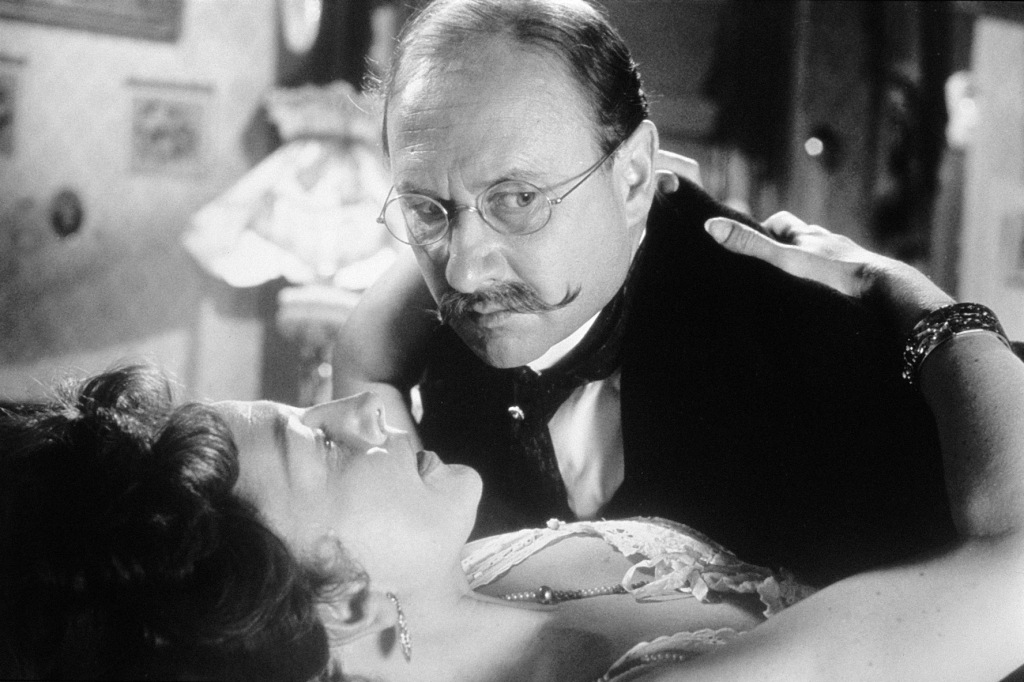
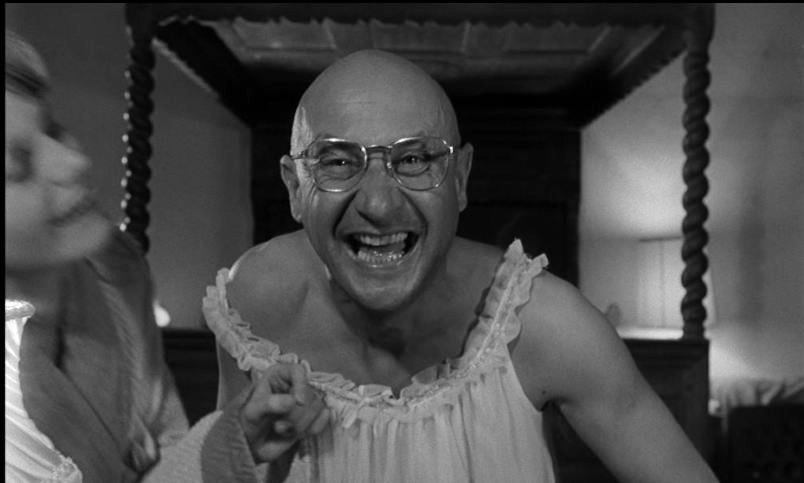
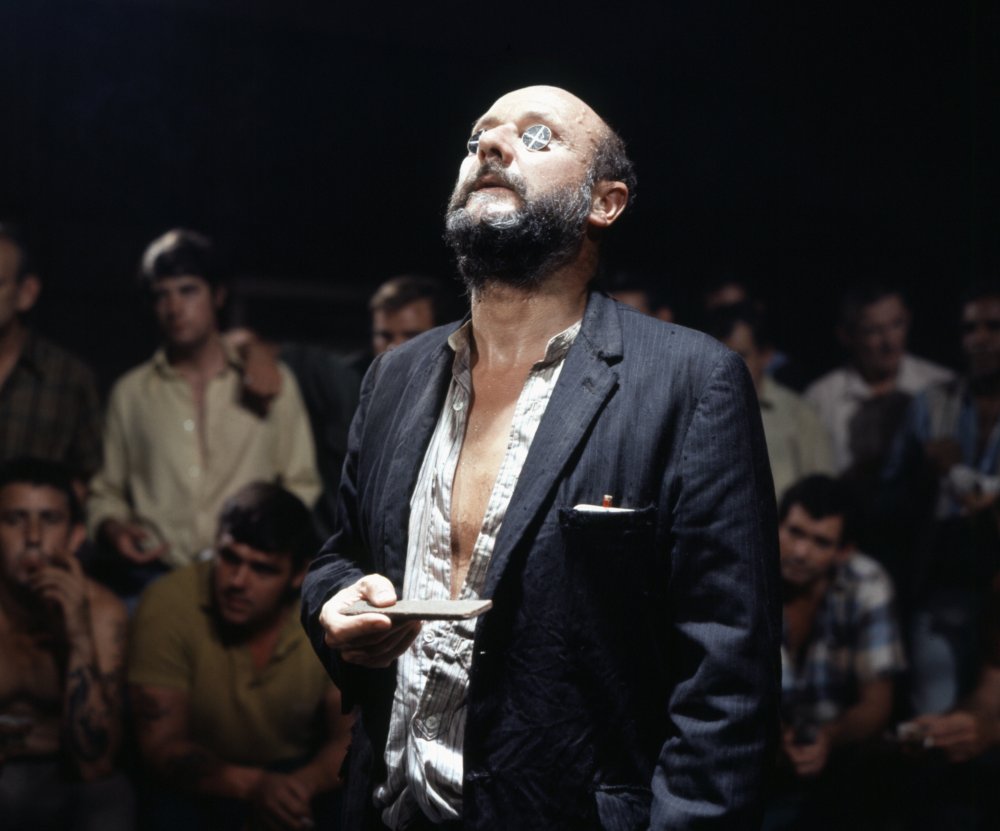
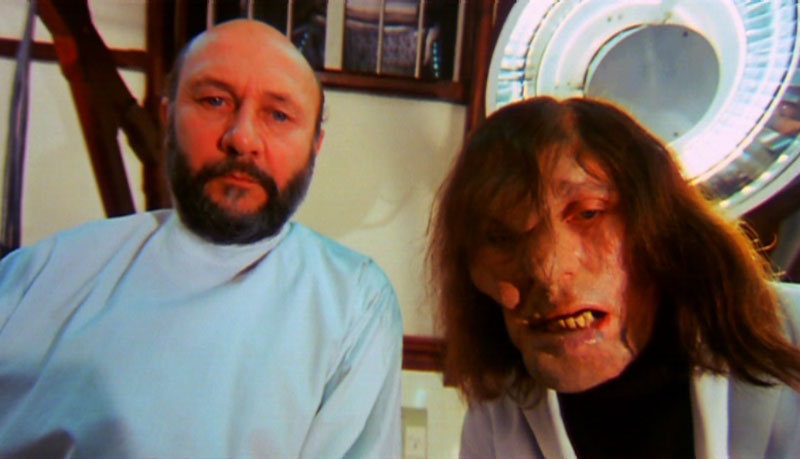
Yesterday would have been Donald Pleasence’s 96th birthday. Pleasence is best remembered for playing Blofeld in You Only Live Twice and the obsessive Dr. Sam Loomis in the Halloween films but, over the course of his long career, he appeared in over a hundred other films. These 4 shots come from 4 of them.
In the 2010 film The Ghost Writer, Ewan McGregor plays a character known as the Ghost. We never actually learn the name of his character and that’s perhaps appropriate. The Ghost has made his living by being anonymous. He’s a ghost writer. He’s the guy who is hired to help inarticulate and occasionally illiterate celebrities write best-selling biographies.
The Ghost has been given a new assignment. He is to ghost write the memoirs of former British Prime Minister Adam Lang (Pierce Brosnan). Despite the fact that Adam is one of the most famous men in the world, the Ghost is not initially enthusiastic about working with him.
First off, there’s the fact that Adam and his wife, Ruth (Olivia Williams), are currently hiding out in America because America is one of the few countries that will not extradite him to be prosecuted for war crimes at the International Criminal Court. It seems that Adam (much like Tony Blair) is a controversial figure because of some of the actions he may have authorized as a part of the war on terror. Not only does the Ghost have political objections to working with Adam but he has to leave his London home and go to Massachusetts in order to do so.
Secondly, there’s the fact that, once the Ghost arrives in America, he discovers that — for such a controversial figure — Adam is actually rather boring and seems to have very little knowledge about anything that he did while he was prime minister. Instead, he seems to be more interested in spending time with his mistress (Kim Cattrall, giving the film’s one bad performance). Ruth seems to be the political (and smart) one in the marriage.
And finally, there’s the fact that the Ghost is actually the second writer to have worked with Adam. The previous writer mysteriously drowned. While that death was ruled to be an accident, the Ghost comes to suspect that it was murder and that the motive is hidden in the first writer’s manuscript…
The Ghost Writer is a favorite of mine, a smart and witty political thriller that features great performances from Ewan McGregor, Olivia Williams, and Pierce Brosnan. Brosnan especially seems to be having a lot of fun sending up his dashing, James Bond image. Roman Polanski directs at a fast pace and maintains a perfect atmosphere of growing paranoia throughout the entire film. In the end, The Ghost Writer proudly continues the tradition of such superior paranoia films as The Conversation, Three Days of the Condor, and the Parallax View.
Incidentally, I have a theory that Adam Lang was also the unseen Prime Minister who was featured in Into the Loop. Watching The Ghost Writer, it’s hard not to feel that Adam really feel apart without Malcolm around to help him out.
One of the best films to be released in American theaters last year was also one that never really got as much recognition as it deserved.
Roman Polanski’s Venus In Fur (which, itself, is based on a play by David Ives that was loosely adapted from a novel written by Leopold von Sacher-Masoch, whose name and book would inspire the term masochism) features only two characters. Thomas (Mathieu Almaric) is a neurotic playwright and director whose latest production is based on Sacher-Masoch’s book, Venus in Furs. Vanda (Emmanuelle Seigner) is an actress who shows up late to audition for a lead role.
At first, Thomas is annoyed with and condescending towards the actress. After all, she shows up late for the audition and gives a rather long and convoluted explanation as to why. (It involves a dog wanting to fuck her.) Despite the fact that she’s auditioning for a play set in the 19th century and featuring repressed members of the upper class, she shows up for the audition wearing leather and a dog collar. (“I’m usually really demure and shit…” she assures him.) At first, Thomas refuses to allow her to audition and says that there’s nobody in the theater for her to read with. Vanda suggests that he read with her. Reluctantly, Thomas agrees…
And suddenly, Vanda goes from begging for his permission to taking control of the situation. It turns out that she’s brought a period costume with her. Before going up to the stage, she skillfully sets the stage lights to create the perfect effect. (A stunned Thomas admits that he’s not even sure how the lighting board works.) And when they’re on stage together, Vanda stuns Thomas by suddenly transforming herself into the character that he wrote.
The audition itself quickly becomes a not-quite friendly game between the two. (This is a film that anyone — even little community theater actresses like me — who has ever auditioned for a role should be able to relate to.) Vanda frequently interrupts the audition to question what Thomas has written and Thomas finds himself growing more and more disoriented as he’s frequently pulled out of the world he created and into reality.
Whenever challenged by Vanda, Thomas argues that the play has no deeper meaning. It’s simply an adaptation of a work of literature. However, as the audition continues, it becomes apparent that there’s more to the play and to the two people on stage than was originally apparent…
Venus in Fur is a fascinating film. In its way, it’s also a playful one. (You have to love the scene where a lingerie-clad Vanda suddenly takes on the role of therapist and perfectly psychoanalyzes Thomas’s fiancee. Never has the invoking the name of Jacques Derrida led to so much laughter.) Intelligently filmed by Polanski and wonderfully acted by both Amalric and Seigner, the power struggle between Thomas and Vanda makes for compelling viewing.
And hey, it’s currently on Netflix so you can watch it anytime you want. Of course, it is subtitled but so what? If you don’t know how to read, how did you make it through this review?
Seriously, find 93 minutes to spare and watch Venus In Fur.
Our latest entry into the 44 Days of Paranoia is a dark masterpiece. Based on a script by Robert Towne, directed by Roman Polanski, and starring Jack Nicholson, 1974’s Chinatown is one of the greatest films ever made.
Chinatown takes place in 1940s Los Angeles. Private Investigator Jake Gittes (Jack Nicholson) is hired by a woman (Diane Ladd) who claims that her name is Evelyn Mulwray. She wants Gittes to follow her husband, Hollis, and discover whether he’s having an affair. Gittes gets some pictures of Hollis with a young woman (Belinda Palmer) and hands them over to Evelyn.
The next day, the pictures are published on the front page of the newspaper and Gittes is confronted by another woman (Faye Dunaway) who explains that she — and not the woman who hired him — is the actual Evelyn Mulwray. Gittes then learns that Hollis has turned up dead, drowned in a reservoir.
Gittes suspects that Hollis was murdered and launches his own investigation. This eventually leads Jake to Hollis’s former business partner, Noah Cross (John Huston). Noah also happens to be the father of Evelyn and he offers double Gittes’s fee if Gittes will track down Hollis’s younger girlfriend.
As his investigation continues, Gittes discovers that Hollis’s murder was connected to both the continued growth of Los Angeles as a city and a truly unspeakable act that occurred several years in the past. Nobody, it turns out, is what he or she originally appears to be. To say anything else about the plot would be unfair to anyone who hasn’t seen Chinatown before.
Since I first started reviewing films for this site, one of the things that I’ve discovered is that it’s actually easier to review a bad film than a good film. It’s easier to be snarky and cynical about the latest film from Michael Bay or Roland Emmerich than it is to explain why a film works. There’s a famous saying about pornography: “I don’t know what it is but I know it when I see it,” and sometimes that’s the way I feel whenever it comes time to try to review a great film.
Consider Chinatown. At its heart, Chinatown is an homage to the old film noirs of the 40s and 50s. Now, I have to admit that I’ve lost track of how many noir homages I’ve seen. It seems like every director has to make at least one hard-boiled, morally ambiguous detective film. Chinatown has all of the familiar elements — the hero is a private investigator, Evelyn Mulwray initially appears to be a classic femme fatale, the dialogue is appropriately cynical, and the plot is full of twist and turns. Even the film’s theme of political conspiracy serves to remind us that most noirs used their detective stories as a way to explore the hidden underbelly of American society.
And yet, with Chinatown, Polanski, Nicholson, Towne, and producer Robert Evans took all of those familiar elements and used them to create one of the greatest films ever made.
Why is Chinatown such a great film?
Some of the credit has to go to Jack Nicholson who, in the role of Jake Gittes, gives perhaps his best performance. As I mentioned above, Gittes is, in many ways, a stock character but Nicholson brings so much nuance and depth to the role that it doesn’t matter. Nicholson’s trademark cynicism and sarcasm are both to be found here but he also brings a cocky recklessness to the role. Gittes is such a charismatic and likable hero and so confident in himself that it makes the film’s ending all the more shocking.
As good as Nicholson is, he’s matched at every turn by John Huston’s Noah Cross. Noah Cross is one of the most vile characters to ever appear on-screen, which is why Huston’s rather courtly performance is all the more disturbing. When Gittes confronts Noah about the worst of his many crimes, Cross simply responds that a man is never sure what he’s capable of until he does it. Huston delivery of the lines leave us with little doubt that Noah believes every word of what he’s just said.
In the end, though, most of the credit has to go to Roman Polanski’s direction and Robert Towne’s script. Towne’s script provides a genuinely challenging and thought-provoking mystery, while Polanski’s stylish direction keeps the view continually off-balance and unsure of who is telling the truth. Reportedly, Polanski and Towne had a contentious relationship, with Polanski changing the ending of Towne’s script to make the film much more downbeat. In the end, Polanski made the right choice. The film ends the only way that it possibly could.

 Through the Shattered Lens