Drug kingpin Frank White (Christopher Walken) has been released from prison and is again on the streets of New York City. Frank might say that he’s gone straight but, as soon as he’s free, he’s partying with his old crew (including Laurene Fishburne, Steve Buscemi, Giancarlo Esposito, and others). While Frank’s agent (Paul Calderon) goes to all of the other city’s gangsters and explains that they can either get out of Frank’s way or die, three detectives (Victor Argo, David Caruso, and Wesley Snipes) make plans to take Frank out by any means necessary. Meanwhile, Frank is donating money to politicians, building hospitals, and presenting himself as New York’s savior.
KingofNewYork is the epitome of a cult film. Directed by Abel Ferrara, the dark and violent King of New York was originally dismissed by critics and struggled to find an audience during its initial theatrical run. (It was lumped in with and overshadowed by other 1990 gangster films like Goodfellas and Godfather Part III.) But it was later rediscovered on both cable and home video and now it’s rightly considered to be a stone cold crime classic. Walken gives one of his best performances as Frank White and that’s not a surprise. The film was clearly made to give Walken a chance to show off what he could do with a lead role and Walken captures Frank’s charisma and humor without forgetting that he’s essentially a sociopath. Walken gives a performance that feels like James Cagney updated for the end of the 80s. What’s even more impressive is that all of the supporting characters are just as memorable as Walken’s Frank White. From Laurence Fishburne’s flamboyant killer to David Caruso’s hotheaded cop to Paul Calderon’s slippery agent to Janet Julian’s morally compromised attorney, everyone gives a strong performance. (I’m usually not a Caruso fan but he’s legitimately great here.) They come together to bring the film’s world to life. Everyone has their own reason for obsessing on Frank White and his return to power. I’ve always especially appreciated Victor Argo as the weary, veteran detective who finds himself trapped by Caruso and Wesley Snipes’s impulsive plan to take down Frank White. Frank White and the cops go to war and it’s sometimes hard to know whose side to be on.
Director Abel Ferrara has had a long and storied career, directing films about morally ambiguous people who are often pushed to extremes. Personally, I think KingofNewYork is his best film, a portrait of not just a criminal but also of a city that combines the best and the worst of human nature. The action is exciting, the cast is superb, and Frank’s justifications for his behavior sometimes make a surprising amount of sense. Thought there’s occasionally been speculation that it could happen, there’s never been a sequel to King of New York and it doesn’t need one. KingofNewYork is a film that tell you all that you need to know about Frank White and the city that he calls home.
First released in 1999, Summer of Sam is Spike Lee’s sprawling, frustrating, flawed, occasionally compelling, and ultimately rather intriguing film about the summer of 1977 in New York City.
As one can guess from the title, it was a summer that was dominated by the reign of terror of the serial killer known as the Son of Sam. While New York suffered one of the hottest summers on record, the Son of Sam shot couples while they sat in their cars. Because all of his victims had been women with long, dark hair, women across the city wore blonde wigs. While the police searched for the killer, the city was also caught up in the World Series. Club 57 was the hottest club in New York but a growing number of rebels, inspired by the news that was coming out of the UK, eschewed the glitz of disco for the gritty and deliberately ugly aesthetic of punk and the Mud Club.
Though the film is centered around the murders of the Son of Sam, he remains a largely shadowy figure in the film. Played by Michael Badalucco, David Berkowitz spends most of his time in his filthy home, yelling at the dog across the street and writing cryptic messages on the walls. He only gets a few minutes of screen time because the film is ultimately less about the Son of Sam’s crimes and more about how one Italian-American neighborhood in New York deals with the atmosphere of fear and paranoia created by those crimes. It’s a neighborhood that’s ruled over by the ruthless but benevolent Luigi (Ben Gazzara). When the two detectives (Anthony LaPaglia and Roger Guevener Smith) come to the neighborhood in search of information, they know that Luigi is the man to see.
Vinny (John Leguizamo) is one of the neighborhood’s citizens, a hairdresser who hasn’t let his marriage to Dionna (Mira Sorvino) stand in the way of his compulsive womanizing. Vinny is the type who cheats on his wife and then goes to Confession to get forgiveness. He’s the type who gets angry whenever Dionna wants to have sex with the lights on or do anything other than a quick three minutes in the missionary position. When he realizes that the Son of Sam was watching him while he was having sex in a car with Dionna’s cousin and that he could have been one of his victims, Vinny starts to spin out of control. Vinny’s childhood friend is Ritchie (Adrien Brody), who shocks everyone when he spikes his hair, puts on a Union Jack t-shirt, and starts speaking with a fake British accent. Ritchie and his girlfriend, Ruby (Jennifer Esposito), embrace the punk lifestyle and even put one the Son of Sam’s letters to music when they perform at the Mud Club.
It’s an ambitious film but it’s also an overlong film, one where the slow spots can truly test the viewer’s patience. With a 142-minute running time, Summer of Sam finds the time to touch on almost every trope of the late 70s. Vinny and Dionna hit the clubs, where the usually quiet Dionna truly comes to life as she dances. (Vinny’s moves are far less impressive. Tony Manero would have laughed at him.) Ritchie not only embraces punk rock but he also makes his money by performing in live sex shows. When a mysterious man offers to give Vinny and Dionna a ride in his limo, it’s hard not to smile when it’s revealed that he’s taking them to the infamous sex club, Plato’s Retreat. One can respect Lee’s ambition while still finding the film itself to be a bit too self-indulgent for it’s own good.
Spike Lee, for all of his other talents, has never been a particularly subtle director. Vinny and his friends spend a lot of time hanging out at the end of street, strategically placed in front of a sign that loudly proclaims, “DEAD END.” At one point, Vinny is inspired to run to his window and start screaming insults at the Son of Sam and Leguizamo’s histrionic delivery of the lines make it impossible to take his anguish seriously. At the same time, there are moments that work brilliantly. I particularly liked the scenes that took place during the blackout of 1977. Luigi automatically knows how to keep control in his neighborhood and he sends his men out with baseball bats, channeling their aggression into a search for the phantom serial killer. For every scene that doesn’t work, there’s a scene like the Baba O’Riley montage or Vinny, Dionna, Ritchie, and Ruby having a candlelit dinner.
“We really dig your vibe.”
John Leguizamo is shrill and miscast as Vinny, though I’m not sure if anyone could have made much of such a one-dimensional characters. I preferred the performances of Mira Sorvino, Adrien Brody, and Jennifer Esposito, who all brought their characters to authentic life. (I especially liked how Brody switched from being tough to being a wounded child at the drop of a hat.) As is so often the case with Lee’s films, it’s the supporting actors who make the strongest impression. I loved Mike Starr’s earthy performance as Ritchie’s father and Ben Gazzara’s sly turn as the neighborhood mobster. Bebe Neuwirth is underused but memorable as Vinny’s boss.
The film is overstuffed and overlong but it effectively portrays a community in the grips of paranoia and anger. In the end, the film is epitomized by a scene in which the neighbor’s dog enter David Berkowtiz’s living room and starts yelling at him in the voice of John Turturro. It’s a scene that’s so ludicrous that it somehow becomes effective. It’s a scene that most directors would have left on the editing room floor but Spike Lee included it. It takes courage to write, film, and keep a scene like that. Summer of Sam is a wreck of a film but it’s also ultimately a compelling portrait of a community coming apart. In the end, just as in real life, Berkowitz is brought to justice and a community is left wondering what to do now.
Summer of Sam features some of Spike Lee’s best work and also some of his worst. The film opens with columnist Jimmy Breslin describing New York as being the city that he both loves and hates and that’s the way that I feel about this film. For all of its flaws, there’s enough strengths to make up for them. It’s a New York story and, appropriately, it’s just as messy as the city that it is about.
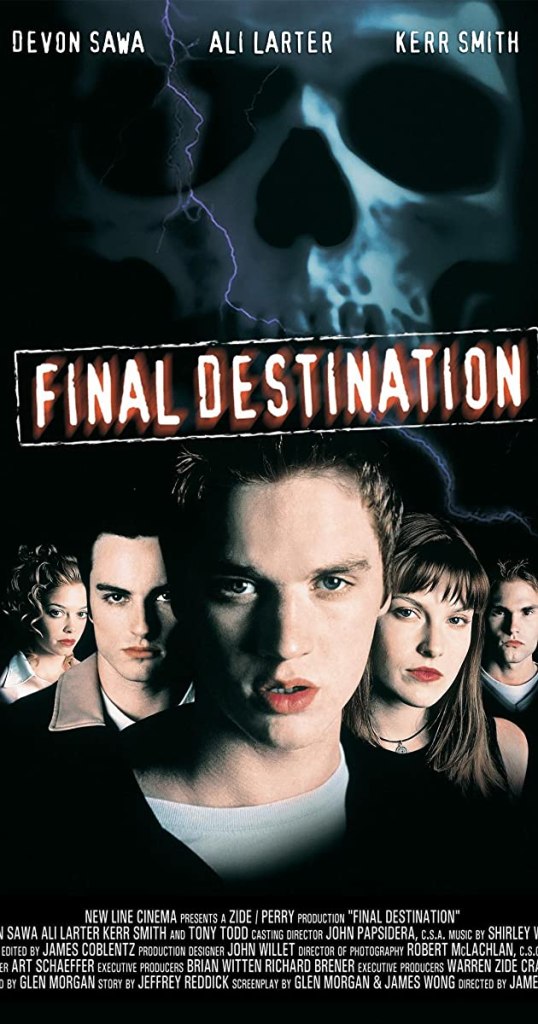
I was recently rewatching the 2000 film, Final Destination, and a few things occurred to me.
Number one, no one ever really thanks Devon Sawa for getting them off that plane before it explodes. Final Destination opens with a group of high school students boarding a plane so that they can go on their senior class trip to Paris. (I wish I had gone to their high school. Our senior class trip was to …. well, we didn’t get one.) When Alex Browning (Devon Sawa) has a vision of the plane exploding, he freaks out and he, his teacher, and a few other students are kicked off the plane. Needless to say, everyone’s pretty upset with Alex but then, just a few minutes after taking off, the plane does explode. Alex was right. He saved everyone’s lives.
And yet, no one ever says, “Thank you, Alex!” Instead, everyone is still like, “Hey, that’s the weirdo that ruined our trip to Paris!” No, the plane exploding is what ruined your trip to Paris. Alex saved your life! Poor Alex. And yet, it kind of makes sense. In the face of inexplicable tragedy, people need someone to blame and Alex is a convenient scapegoat.
That scapegoating continues once the survivors of the flight start to mysteriously die. No one wants Alex near them, even though Alex has managed to figure out that Death is stalking them because they messed up its plans by getting off of that plane. Then again, Alex doesn’t always come across as if he’s the most stable person in the world. Gaunt and hallow-eyed, Sawa portrays Alex as someone who haunted by survivor’s guilt even before it became obvious that he and his former friends were being targeted. Sawa, it should be said, gives a remarkably good performance in Final Destination.
Another thing that occurred to me as I rewatched Final Destination is that, in this film, Death doesn’t have much of a sense of humor. The Final Destination sequels are notorious for their elaborate and often ironic death scenes, the majority of which seem to indicate that Death might be a little bit too clever and precocious for its own good. However, in the first Final Destination, Death is a lot more direct and, in some ways, a lot more sadistic. Terry Chaney (Amanda Detmer) steps out in the street and gets run over by a bus. Goofy Billy Hitchcock (Seann William Scott — why two n’s Seann!?) makes the mistake of standing too close to the railroad tracks and he loses the top half of his head. Death really only get creative when it comes to taking out Todd Waggner (Chad E. Donella) and Ms. Lewton (Kristen Cloke) and, even then, it’s methods are nowhere near as elaborate as they would eventually become.
The final thing that I noticed is that Final Destination holds up really well. It’s hard to remember now but, when Final Destination first came out, a lot of critics dismissed it as just being a slasher film with a slightly clever twist. But actually, that twist is far more than just “slightly” clever and the film really does a lot more with the idea than it’s often given credit for. Final Destination is a film full of thrills and chills — I still freak out at some of those death scenes — but it’s also a film that always makes me think about mortality. Has our destiny already been written? Can we defeat death? Or are we just pawns with our fates predetermined? In the end, that’s what makes Final Destination so effective. We all know that we can’t escape death, both in real life and in the movies. The one thing that everyone has in common is that death is eventually going to come for all of us. It’s the one enemy that we can’t defeat or laugh away. Instead, all we can do is try to hold it off for a while. Final Destination taps into the fears that we all have.
The plot is clever. The script is frequently witty. I liked the fact the characters were all named after horror movie icons. Plus, you got Tony Todd dominating the entire film with just a brief role. Final Destination is a classic.
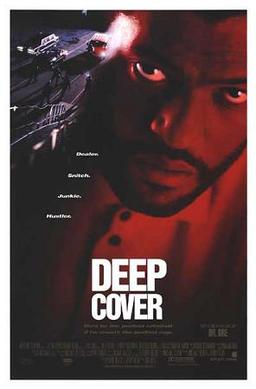
When Russell Stevens was 10 years old, he saw his father get gunned down while holding up a liquor store. Now, 20 years later, Russell (Laurence Fishburne) is a cop who is so straight that he doesn’t even drink. But because of his father’s background, a psychological profile that indicates Russell is unique suited to understand how the criminal mind works, and the fact that he has no loved ones at home, he is recruited to work undercover. His weaselly handler, Carver (Charles Martin Smith), explains that going undercover means that Russell is going to have to become a criminal 24/7. He can’t just do his job for 8 hours a day and then go back to his normal life at night.
With the government’s money, Russell sets himself up as a dealer, buying and selling the drugs that are destroying his community. It does not take long before Russell meets David Jason (Jeff Goldblum), a lawyer and aspiring drug kingpin. At first, David makes Russell as being an undercover cop but, after Russell is arrested by the righteous but clueless Detective Taft (Clarence Williams III), David changes his mind and brings Russell into the operation. The line between being a cop and a criminal starts to blur, especially after David and Russell start to bond over their mutual dislike of their boss, Felix (Gregory Sierra). It doesn’t take long for Russell to get in over his head.
There have been a lot of films made about undercover cops losing themselves in their new criminal identity but few take the story to its logical conclusion like Deep Cover does. Russell may start out as a straight arrow but, by the end of the movie, he’s killed a dealer in cold blood and broken his own personal pledge to never do cocaine himself. He also discovers that David is often a more trustworthy partner than his own colleagues in law enforcement. Fishburne and Goldblum both give excellent, spot-on performances as Russell and David and they’re supported by an able cast of weasels and tough guys. I especially liked Charles Martin Smith’s performance as Carver. (When Russell asks Carver if he’s ever killed a man, Carver laughs and says that he went to Princeton “just to avoid that shit.”) Gregory Sierra is also great in the role of Felix and I loved that, of all people, Sidney Lassick played one of Felix’s henchmen. That’s like seeing John Fiedler play the Godfather.
One of the best crime thrillers of the 90s, Deep Cover is not only a detective film but it’s also a politically-charged look at why America’s war on drugs was doomed to failure. No sooner does Russell get into position to catch the man behind Felix’s operation than he’s told to drop the case because the State Department thinks that the drug lord could be politically helpful to them in South America. As Russell discovers, the War on Drugs is more interested in taking out the soldiers on the streets than the generals in charge. While men like Carver sit in their offices and move people around like pieces on a chess board, people like Russell are left to clean up the mess afterward.
So, here I am. January is nearly over. The Oscar nominations have already been announced. 2018 is well under way and yet, I still have 158 films on the DVR that I need to watch and a few 2017 releases that I still need to catch up on. At this point, I’ve accepted that I’ll probably never truly be “caught up” when it comes to watching movies. But, that’s okay. I love movies too much to ever regret having an excuse to watch more.
On Wednesday night, I watched Marshall, which came out last October. A film about the early life of civil rights activist and future Supreme Court justice Thurgood Marshall, Marshall seemed like a movie that would perfectly capitalize on the current political atmosphere. The film starred Josh Gad and Chadwick Boseman and a lot of people — including me — assumed that the excitement over Boseman as Black Panther would also translate into excitement over a chance to see him in this film. (For that matter, Josh Gad has also recently been proving himself to be a far better actor than I originally believed him to be. Never again will I refer to Gad as being the poor man’s Jonah Hill.) The film’s reviews were respectable. Quite a few sites, including this one, listed Marshall as being a potential Oscar nominee.
And yet, when the movie was released, it fell flat at the box office. On the week of its release, it finished in 11th place. I guess there’s a lot of reasons for that. Personally, I think it would have done better if the film had been released in November or December. In a month that is traditionally dominated by horror movies and the last gasps of a few summer blockbusters, Marshall seemed somewhat out-of-place. Perhaps Marshall would have stood a better chance if it had been given a limited release in December, with a big awards push for Chadwick Boseman. Who knows? As it is, it ended up losing money and it only received one Oscar nomination, for best original song.
Having now watched Marshall, I can say it’s a good movie, though perhaps never quite as good as you want it to be. It takes place in 1940. After making a name for himself defending blacks in the South, attorney Thurgood Marshall travels to Connecticut to defend a black chauffeur (Sterling K. Brown) who has been accused of raping a white woman (Kate Hudson). It soon becomes obvious that Northern justice is just as corrupted by bigotry as Southern justice. A racist judge (James Cromwell) rules that Marshall will not be allowed to even speak in court. Marshall ends up advising the chauffeur’s attorney, an insurance lawyer named Sam Friedman (Josh Gad). All of Sam’s friends expect him to just make a deal with the smug prosecutor (Dan Stevens) and move on. However, Sam believe his client to be not guilty and, with Marshall’s help, is determined to win an acquittal.
Director Reginald Hudlin never seems to be quite what type of movie he’s trying to make. Sometimes, the film feels like a reverent biopic. Other time, it’s an old-fashioned courtroom drama, complete with different flashbacks depending on who is doing the testifying. And then other times, Marshall is an extremely stylish film that almost turns Thurgood Marshall into a comic book super hero. Fortunately, Chadwick Boseman is such a talented and charismatic actor that he holds all of the disparate elements of the film together. Not only does Boseman bring intelligence and righteous anger to the role, he also brings a sense of fun. As played by Boseman, Marshall isn’t just outsmarting a prejudiced system and putting racists in their place. He’s also having a good time while he’s doing it. Boseman is a lot of fun to watch and he gets good support from Josh Gad and Sterling K. Brown.
Marshall may not be a perfect film but Chadwick Boseman is always watchable. The excitement over Black Panther has proven that Boseman is a star but Marshall shows that he’s a pretty good actor as well.
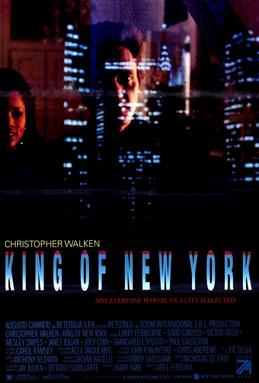 Drug kingpin Frank White (Christopher Walken) has been released from prison and is again on the streets of New York City. Frank might say that he’s gone straight but, as soon as he’s free, he’s partying with his old crew (including Laurene Fishburne, Steve Buscemi, Giancarlo Esposito, and others). While Frank’s agent (Paul Calderon) goes to all of the other city’s gangsters and explains that they can either get out of Frank’s way or die, three detectives (Victor Argo, David Caruso, and Wesley Snipes) make plans to take Frank out by any means necessary. Meanwhile, Frank is donating money to politicians, building hospitals, and presenting himself as New York’s savior.


 Through the Shattered Lens