8 Shots From 8 Films: Special Robert Evans Edition


4 Or More Shots From 4 Or More Films is just what it says it is, 4 shots from 4 of our favorite films. As opposed to the reviews and recaps that we usually post, 4 Shots From 4 Films lets the visuals do the talking!

95 years ago today, Robert Evans was born in New York City.  He started out working in his brother’s clothing business but a chance meeting with actress Norma Shearer led to him becoming an actor.  And while Evans, by his own account, was not a particularly good actor, he did prove himself to be very skilled at playing the games of Hollywood.  Evans eventually moved from acting to production, first as an executive at Paramount and then as an independent producer.

He lived a life as glamorous and tumultuous as the stars of his pictures and his memoir, The Kid Stays In The Picture, is considered to be one of the classic show biz autobiographies.  He hung out with cinematic rebels like Jack Nicholson and Robert Towne and counted Secretary of State Henry Kissinger as a friend.  He suggested that Francis Ford Coppola should direct The Godfather and, when Paramount put pressure on Coppola to cut the film down to two hours, it was Evans who famously announced that a two-hour Godfather was nothing more than a trailer.  He lost Ali MacGraw to Steve McQueen and, again by own account, he lost a lot of potentially productive years to cocaine.  (The Cotton Club scandal is one of the wildest in the history of Hollywood, though it should be noted that Evans himself was never charged with any wrongdoing.)  But, for all that he lost, Evans continues to gain admirers as being the epitome of the producer who was willing to take chances.  For all of his flamboyance, Evans had an eye for good material and the willingness to protect his directors.  In many ways, he was as important to the cinematic revolution of the 70s as the directors that he hired.  When Evans passed away in 2019, it was truly the end of an era.

Here, in honor of the birth and legacy of Robert Evans, are 8 Shots from 8 Films that Evans produced, either as studio chief at Paramount or as an independent producer.

8 Shots From 8 Robert Evans Films

Rosemary’s Baby (1968, dir by Romnn Polanski, DP: William A. Fraker)

Love Story (1970, dir by Arthur Hiller, DP: Richard Kratina)

The Godfather (1972, dir by Francis Ford Coppola, Cinematography by Gordon Willis)
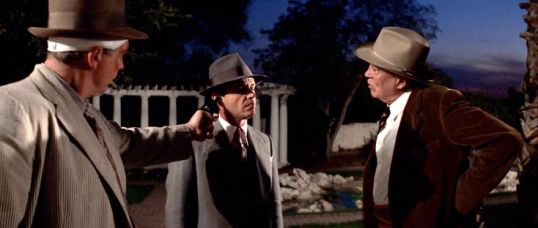
Chinatown (1974, dir by Roman Polanski, DP: John A. Alonzo)

Marathon Man (1976, dir by John Schlesinger, DP: Conrad Hall)

The Cotton Club (1984, dir by Francis Ford Coppola, DP: Stephen Goldblatt)
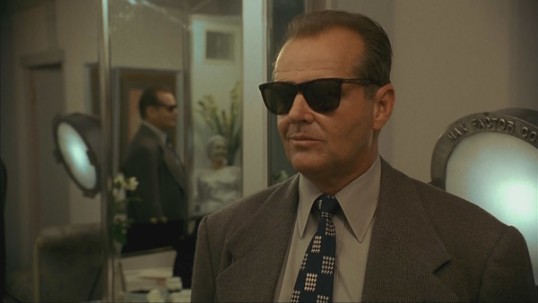
The Two Jakes (1990, dir by Jack Nicholson, DP: Vilmos Zsigmond)

Sliver (1993, dir by Phillip Noyce, DP: Vilmos Zsigmond)
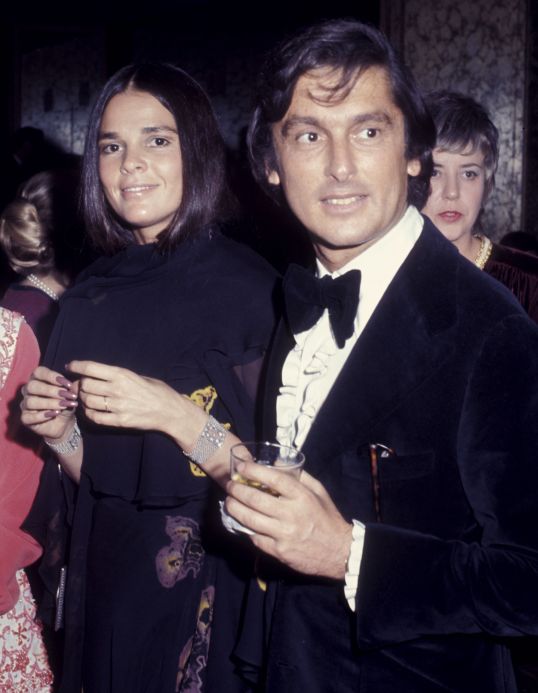
Great Moments In Television History #34: The Hosts of Real People Say “Get High On Yourself!”


In the fall of 1981, producer Robert Evans and NBC collaborated on Get High On Yourself week.  For one week, the network featured its stars encouraging viewers to “Get High On Yourself!:”  It all led up to a Get High On Yourself special, which Evans supervised as a part of the community service to which he was sentenced after he was caught getting high on cocaine.

In this clip, the hosts of an early reality show called Real People encourage viewers to “get high on yourself.”  Of the hosts, Fred Willard was probably the only one who wasn’t high when this was filmed.  Seen today, it’s impossible to watch this without feeling like Willard is doing a bit in an unreleased Christopher Guest movie.

Previous Moments In Television History:

  1. Planet of the Apes The TV Series
  2. Lonely Water
  3. Ghostwatch Traumatizes The UK
  4. Frasier Meets The Candidate
  5. The Autons Terrify The UK
  6. Freedom’s Last Stand
  7. Bing Crosby and David Bowie Share A Duet
  8. Apaches Traumatizes the UK
  9. Doctor Who Begins Its 100th Serial
  10. First Night 2013 With Jamie Kennedy
  11. Elvis Sings With Sinatra
  12. NBC Airs Their First Football Game
  13. The A-Team Premieres
  14. The Birth of Dr. Johnny Fever
  15. The Second NFL Pro Bowl Is Broadcast
  16. Maude Flanders Gets Hit By A T-Shirt Cannon
  17. Charles Rocket Nearly Ends SNL
  18. Frank Sinatra Wins An Oscar
  19. CHiPs Skates With The Stars
  20. Eisenhower In Color
  21. The Origin of Spider-Man
  22. Steve Martin’s Saturday Night Live Holiday Wish List
  23. Barnabas Collins Is Freed From His Coffin
  24. Siskel and Ebert Recommend Horror Films
  25. Vincent Price Meets The Muppets
  26. Siskel and Ebert Discuss Horror
  27. The Final Scene of Dark Shadows
  28. The WKRP Turkey Drop
  29. Barney Pops On National TV
  30. The Greatest American Hero Premieres
  31. Rodney Dangerfield On The Tonight Show
  32. The Doors Are Open
  33. The Thighmaster Commercial Premieres

8 Shots From 8 Films: Special Robert Evans Edition


4 Or More Shots From 4 Or More Films is just what it says it is, 4 shots from 4 of our favorite films. As opposed to the reviews and recaps that we usually post, 4 Shots From 4 Films lets the visuals do the talking!

92 years ago today, Robert Evans was born in New York City.  He started out working in his brother’s clothing business but a chance meeting with actress Norma Shearer led to him becoming an actor.  And while Evans, by his own account, was not a particularly good actor, he did prove himself to be very skilled at playing the games of Hollywood.  Evans eventually moved from acting to production, first as an executive at Paramount and then as an independent producer.

He lived a life as glamorous and tumultuous as the stars of his pictures and his memoir, The Kid Stays In The Picture, is considered to be one of the classic show biz autobiographies.  He hung out with cinematic rebels like Jack Nicholson and Robert Towne and counted Secretary of State Henry Kissinger as a friend.  He suggested that Francis Ford Coppola should direct The Godfather and, when Paramount put pressure on Coppola to cut the film down to two hours, it was Evans who famously announced that a two-hour Godfather was nothing more than a trailer.  He lost Ali MacGraw to Steve McQueen and, again by own account, he lost a lot of potentially productive years to cocaine.  (The Cotton Club scandal is one of the wildest in the history of Hollywood, though it should be noted that Evans himself was never charged with any wrongdoing.)  But, for all that he lost, Evans continues to gain admirers as being the epitome of the producer who was willing to take chances.  For all of his flamboyance, Evans had an eye for good material and the willingness to protect his directors.  In many ways, he was as important to the cinematic revolution of the 70s as the directors that he hired.  When Evans passed away in 2019, it was truly the end of an era.

Here, in honor of the birth and legacy of Robert Evans, are 8 Shots from 8 Films that Evans produced, either as studio chief at Paramount or as an independent producer.

8 Shots From 8 Robert Evans Films

Rosemary’s Baby (1968, dir by Romnn Polanski, DP: William A. Fraker)

Love Story (1970, dir by Arthur Hiller, DP: Richard Kratina)

The Godfather (1972, dir by Francis Ford Coppola, Cinematography by Gordon Willis)

Chinatown (1974, dir by Roman Polanski, DP: John A. Alonzo)

Marathon Man (1976, dir by John Schlesinger, DP: Conrad Hall)

The Cotton Club (1984, dir by Francis Ford Coppola, DP: Stephen Goldblatt)

The Two Jakes (1990, dir by Jack Nicholson, DP: Vilmos Zsigmond)

Sliver (1993, dir by Phillip Noyce, DP: Vilmos Zsigmond)
6 Trailers In Memory of Robert Evans


As Jeff reported earlier today, the famed Hollywood producer Robert Evans passed away this weekend.  As a student of both Hollywood and history, I have to say that I always found Evans to be a rather fascinating figure.  It seemed inevitable that his name would pop up whenever I read a book, an article, or even just an interview concerning the films of the 60s, 70s, and 80s.  Robert Evans was nice enough to follow me on twitter and we even exchanged tweets on occasion.

As a producer, Robert Evans is probably more associated with gangster movies like The Godfather and The Cotton Club than horror films.  But Evans was involved in a few “scary” and horror-adjacent films, both as an actor and a producer.  So, tonight’s edition of Lisa Marie’s Favorite Grindhouse Trailers is dedicated to Robert Evans.

  1. Man of a Thousand Face (1957)

As an actor, Evans began his career by playing Irving Thalberg in this biopic of Lon Chaney, Sr.  Evans was specifically chosen for the role by Thalberg’s widow, Norma Shearer.  Not surprisingly, the trailer below concentrates on James Cagney’s performance as legendary horror star, Lon Chaney, Sr.

2. The Fiend Who Walked The West (1958)

One of Evans’s rare starring roles was in this western-horror hybrid.  Yes, that’s Robert Evans as the “kooky killer.”

3. Rosemary’s Baby (1968)

As head of production at Paramount, Evans was responsible for greenlighting this classic horror film, starring Mia Farrow.  Reportedly, Evans arranged for his friend, Jack Nicholson, to screen test for the role of Rosemary’s husband.

4. Marathon Man (1976)

Evans produced this film.  Technically, Marathon Man was a thriller/spy movie.  But the scenes of Dustin Hoffman in the dentist chair definitely qualify as horror.

5. Sliver (1993)

After spending the 80s financially bereft and an almost forgotten figure, Evans made a comeback by producing this incredibly silly “erotic” thriller.

6. Jade (1995)

Sliver did well enough at the box office that Evans followed it up with another, similarly silly thriller.

Of course, while it’s tempting to laugh at films like Jade and Sliver, it should be remembered that Evans was also involved with some of the best and most important films of all time.  Next time you watch The Godfather, be sure to say a little thank you to Robert Evans.

R.I.P.

The Kid Stayed In The Picture: Robert Evans, R.I.P.


Robert Evans was a true Hollywood character and I think that, if he hadn’t existed, someone would have had to have created him.  He went from selling clothes to starring in B-movies to producing blockbusters.  He made and lost and remade a fortune while marrying one of the most beautiful women in the world, Ali MacGraw.  Among his friends were Jack Nicholson, Warren Beatty, Henry Kissinger, and Robert Towne.  Among his enemies was occasionally Francis Ford Coppola, who never would have directed The Godfather if not for Evans’s insistence that he be given the job.  Dustin Hoffman was nominated for an Oscar for playing Evans in Wag The Dog.  In Orson Welles’s The Other Side of the Wind, Geoffrey Land played “Max David,” a studio executive who was obviously meant to be Evans.

Bob Evans’s lows were almost as intense as his highs.  Forced out of his position at Paramount, Evans went independent and produced Chinatown.  Evans married Ali MacGraw, just to lose her to Steve McQueen.  He was arrested for cocaine possession and then went on to produce one of the great pop cultural moments of the 80s, the anti-drug tv special, Get High On Yourself.  He lost a fortune on The Cotton Club but made a comeback in the 90s.

In 1994, He also wrote on the greatest Hollywood memoirs of all time, The Kid Stays In The Picture.  Written in Evans’s trademark mix of cynicism and sentiment, The Kid Stays In The Picture tells a warts-and-all story of fast times and big talent in Hollywood.  With both the book and a subsequent documentary of the same name, Robert Evans let the world know who he was and that he wasn’t going to apologize for a damn thing.

Robert Evans died on Saturday, in Beverly Hills.  He was 89 years old and with his passing, an amazing story of Hollywood comes to a close.

Rest in Peace, Bob Evans.

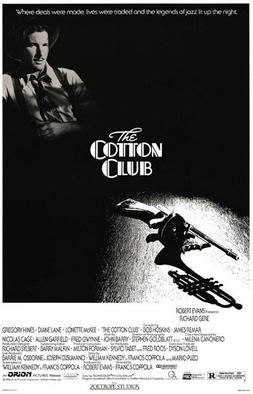
A Movie A Day #264: The Cotton Club (1984, directed by Francis Ford Coppola)


The time is the 1930s and the place is New York City.  Everyone wants to get into the Cotton Club.  Owned by British gangster Owney Madden (Bob Hoskins), the Cotton Club is a place where the stage is exclusively reserved for black performers and the audience is exclusively rich and white.  Everyone from gangsters to film stars comes to the Cotton Club.

It is at the Cotton Club that Dixie Dwyer (Richard Gere) meets everyone from Dutch Shultz (James Remar) to Gloria Swanson (Diane Venora).  Shultz hires Dixie to look after his girlfriend, Vera (Diane Lane).  Swanson arranges for Dixie to become a movie star.  Meanwhile, Dixie’s crazy brother, Vincent (Nicolas Cage), rises up through the New York underworld.  Meanwhile, dancing brothers Sandman and Clay Williams (played by real-life brothers Gregory and Maurice Hines) are stars on stage but face discrimination off, at least until Harlem gangster Bumpy Rhodes (Laurence Fishburne) comes to their aid.

The Cotton Club was a dream project of the legendary producer, Robert Evans, who was looking to make a comeback after being famously charged with cocaine trafficking in 1980.  Having commissioned a screenplay by his former Godfather collaborators, Mario Puzo and Francis Ford Coppola, Evans originally planned to direct the film himself.  At the last minute, Evans changes his mind and asked Coppola to direct the film.  After working with him on The Godfather, Coppola had sworn that he would never work with Evans again. (When he won an Oscar for The Godfather‘s screenplay, Coppola pointedly thanked everyone but Robert Evans.)  However, by 1984, a series of box office flops had damaged Coppola’s standing in Hollywood.  Needing the money, Coppola agreed to direct The Cotton Club.

Evans raised the film’s $58 million budget from a number of investors, including Roy Radin.  Roy Radin was best known for putting together Vaudeville reunions in the 70s and being accused of raping an actress in 1980.  Radin and Evans were introduced to each other by a drug dealer named Lanie Jacobs, who was hoping to remake herself as a film producer.  During the production of The Cotton Club, Radin was murdered by a contract killer who was hired by Jacobs, who apparently felt that Radin was trying to muscle her out of the film production.

While all of this was going on, Coppola fell into his familiar pattern of going overbudget and falling behind schedule.  This led to another investor filing a lawsuit against Orion Pictures and two other investors, claiming fraud and breach of contract.  When the film was finally released, it received mixed reviews, struggled at the box office, and only received two Oscar nominations.

With all of the murder and drama that was occurring offscreen, it is not surprising that the film itself was overshadowed.  The Cotton Club is a disjointed mix of gangster drama and big production numbers.  As always with post-Apocalypse Now Coppola, there are flashes of brilliance in The Cotton Club.  Some of the production numbers are impressive and visually, this movie has got style to burn.   However, among the leads, neither Richard Gere nor Diane Lane seem to be invested in their characters while the talented Hines brothers are underused.  The supporting cast is full of good character actors who are all in a search of a better script.  A few do manage to make an impression: James Remar, Bob Hoskins and Fred Gwynne as veteran gangsters, Nicolas Cage as the film’s stand-in for Mad Dog Coll, and Joe Dallesandro as Lucky Luciano.  The Cotton Club is sometimes boring and sometimes exciting but the onscreen story is never as interesting as what happened behind the scenes.