6 Good Films That Were Not Nominated For Best Picture: The 1940s


Gary Cooper. Joan Fontaine, Mary Astor, and Donald Crisp at the 1942 Oscars.

Continuing our look at good films that were not nominated for best picture, here are 6 films from the 1940s.

Shadow of a Doubt (1943, dir by Alfred Hitchcock)

Amazing, Alfred Hitchcock never won the Best Directing Oscar.  In fact, it was rare that his films were even nominated.  (Though Rebecca did win Best Picture, it could be argued that film’s style was as much to due to David O. Selznick as it was to Hitchcock.)  One of the best of Hitchcock’s unnominated films was Shadow of a Doubt.  With its dark sense of humor and wonderful performances from Joseph Cotten and Teresa Wright, Shadow of a Doubt was Hitchcock at his best.  It was also, perhaps, a bit too darkly subversive for the Academy.

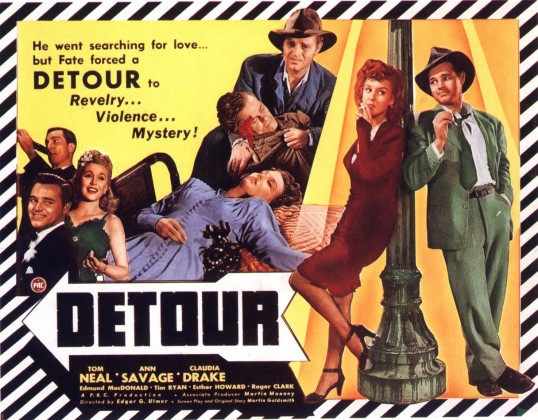
Detour (1945, dir by Edgar G. Ulmer)

The ultimate film noir nightmare, Detour was actually well-received when it was originally released, though it would take a while for the film to be recognized as a true classic.  Still, there was no way that the Academy was going to nominate a low-budget B-movie about a guy who hitchhikes across America and manages to accidentally kill two people.  Detour was far too nightmarish and surreal for the Academy but it’s remained one of the most influential films ever made.

Gilda (1946, dir by Charles Vidor)

Another classic film noir, Gilda is the film that, for many, will always define Rita Hayworth.  Through the film was a financial and critical success, it was ignored by the Academy.  The success of this film and the popularity of Hayworth’s performance led to the fourth atomic bomb to ever be detonated being named Gilda.  Rita Hayworth was reportedly not happy to hear it.

Black Narcissus (1947, dir by Michael Powell and Emeric Pressburger)

One of the most visually stunning films ever made, Black Narcissus won Oscars for Best Cinematography and for Art Design but it received no other nominations, not even for the outstanding performances of Deborah Kerr and Kathleen Byron, as two nuns who have very different reactions to the Himalayas.

Out of the Past (1947, dir by Jacques Tourneur)

A world-weary private investigator (Robert Michum) is hired by a slick and psychotic gangster (Kirk Douglas) and ordered to track down the gangster’s girlfriend (Jane Greer).  So beings this rather melancholy and introspective film noir, one that is distinguished by wonderfully shadowy photography and which features one of Mitchum’s best performances.  Sadly, the Academy recognized neither the film nor Mitchum’s performance.

Portrait of Jennie (1948, dir by William Dieterle)

This haunting and dream-like fantasy stars Joseph Cotten as a painter who meets, paints, and falls in love with a mysterious woman (Jennifer Jones) who may not be what she seems.  The film was apparently not a huge success when it was first released but, seen today, it’s hard not to get swept up in the film’s romantic sadness.  Though it received a nomination for Best Cinematography, it was otherwise ignored by the Academy.

Up next, in about an hour or so, the 1950s!

Dark Valentine: THE LOVES OF CARMEN (Columbia 1948)


gary loggins's avatarcracked rear viewer


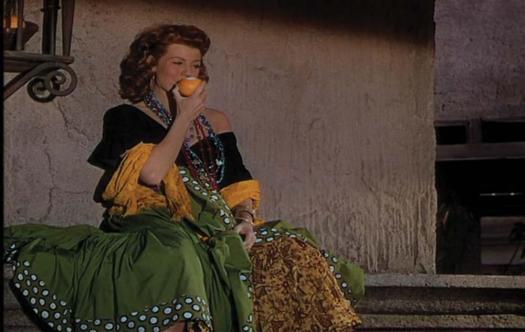
Love takes many strange forms, none more strange than the obsessive love Don Jose has for the Gypsy temptress Carmen in THE LOVES OF CARMEN, Columbia Pictures’ biggest hit of 1948. The film, based on Prosper Merimee’s 1845 novella and Georges Bizet’s famous opera, reunites GILDA stars Rita Hayworth and Glenn Ford with director Charles Vidor, and though it’s in glorious Technicolor and set in 1800’s Spain, it’s got a lot of film noir elements going for it: there’s the protagonist caught in a rapidly moving downward spiral, the amoral femme fatale, crime, murder, and a bleak, downbeat ending. Think I’m stretching a bit? Let’s take a look…

Young nobleman Don Jose arrives in Seville with a dragoon squadron, a corporal with political ambitions and a bright future ahead of him… until he meets Carmen, a gorgeous red-haired Gypsy who is an expert manipulator. Jose is enchanted by this free-spirited…

View original post 623 more words

Roomful of Mirrors: Orson Welles’ THE LADY FROM SHANGHAI (Columbia 1947)


gary loggins's avatarcracked rear viewer

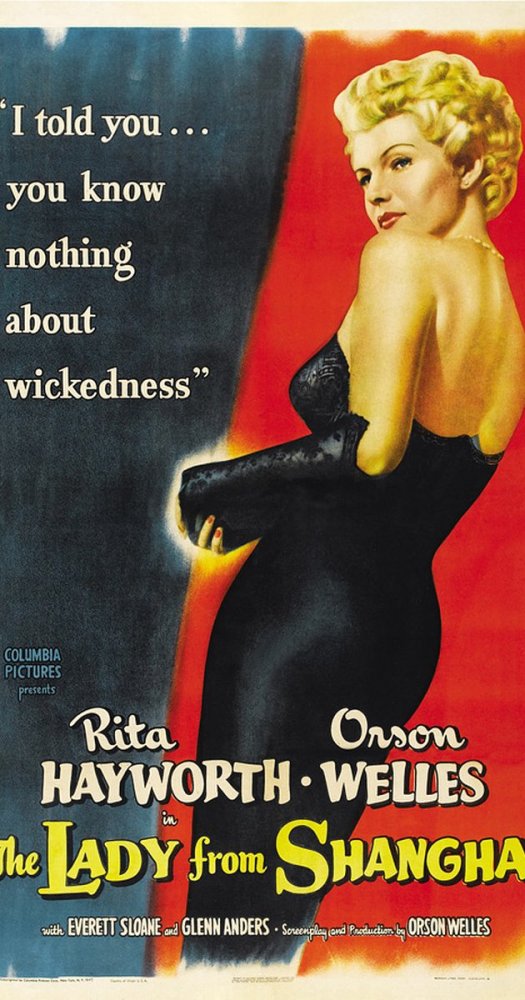
For my money, THE LADY FROM SHANGHAI is the perfect film noir, a tour de force by producer/writer/director/star Orson Welles that assaults the senses and keeps the viewer enthralled at all times. All this despite the meddling of Columbia Pictures czar Harry Cohn, who demanded Welles reshoot scenes and ordering its 155 minute running time cut down to 87. The version we see today, released in the states in 1948 (it was first run in France six months earlier), is still a brilliant piece of filmmaking thanks to the immense talents of Welles and his cast and crew.

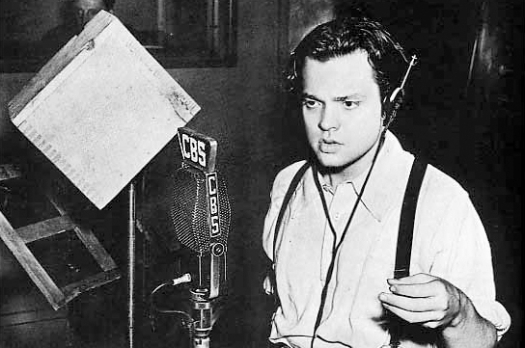
Orson Welles scared the pants off American radio listeners with his Oct. 30, 1938 “Mercury Theatre on the Air” broadcast of H.G. Wells’ WAR OF THE WORLDS. Signed to an unprecedented contract by RKO, Welles’ first feature was of course CITIZEN KANE (1941), now considered by many the greatest film ever made. The film didn’t light…

View original post 705 more words

Hot in Argentina: Rita Hayworth in GILDA (Columbia 1946)


gary loggins's avatarcracked rear viewer

If COVER GIRL made Rita Hayworth a star, then GILDA propelled her into the stratosphere. This 1946 film noir cast Rita at her smoking hot best as the femme fatale to end ’em all. Surrounded by a Grade A cast and sumptuous sets, GILDA gives us the dark side of CASABLANCA , moved to Buenos Aires and featuring star-crossed lovers who are at lot less noble than Rick and Ilsa ever were.

“Every man I knew went to bed with Gilda… and woke up with me”, Hayworth is famously quoted as saying. Who could blame them, as Rita is absolutely stunning in this film. From our first glimpse of her, popping into view with that iconic hair flip…

…to her sultry faux striptease singing “Put the Blame on Mame”, Rita burns up the screen with her smoldering sexuality. Lines like “If I’d been a ranch,  they’d’ve named me the Bar Nothing” leave no doubt…

View original post 565 more words

Lisa Watches An Oscar Nominee: Separate Tables (dir by Delbert Mann)


As some of you may know, I have been on a mission for a while now.  My goal is to see and review every single film that has been nominated for best picture by the Academy of Motion Picture Arts and Sciences.  (Of course, with the 1928 nominee, The Patriot, being a lost film, that may seem like an impossible mission.  No matter!  For me, nothing is impossible.  What Lisa wants, Lisa gets.)  For that reason, I spent part of last night watching the 1958 best picture nominee, Separate Tables, on TCM.

Separate Tables is one of the more forgotten of the best picture nominees but then again, the 50s were not the greatest decade as far as the Academy was concerned.  Consider some of the other films released in 1958: Big Deal on Madonna Street, High School Confidential, Indiscreet, The Last Hurrah, Machine-Gun Kelly, The Fly, The Blob, The Horror of Dracula, The Revenge of Frankenstein, Some Came Running, Thunder Road, A Touch Of Evil, and Vertigo!  The thing they all have in common is that none of them were nominated for best picture but Separate Tables was.

That’s not to say that Separate Tables was, in any way, a bad film.  Actually, it’s a pretty good film and I’m glad that I watched it.  It’s not bad at all.  However, it is … what’s the right term to use here?  Stately perhaps?  Maybe stagey.  Separate Tables is based on two one-act plays and, though it’s obvious that some effort was made to open up the material, it still feels undeniably stage-bound.  Separate Tables was directed by Delbert Mann, who had previously won an Oscar for his lively direction of Marty.  With Separate Tables, his direction is far less lively.  Watching it, you get the feeling that he was not only straight-jacketed by the theatrical origins of the material but also by the fact that the film was clearly made to win Academy Awards.

So, ignore the direction and pay attention to the performances.  Separate Tables works best as a tribute to good acting.  The film follows the lives of several guests at an English seaside hotel.  Some people are just staying for a few days.  Some people live at the hotel.  John Malcolm (Burt Lancaster) is a moody writer, a recovering alcoholic who is planning on asking the hotel’s manager, the level-headed Pat Cooper (Wendy Hiller), to marry him.  Of course, then his ex-wife, Anne (Rita Hayworth), shows up.  As quickly becomes obvious, John and Anne may hate each other but they also love each other.  Neither one is particularly sympathetic but, in their scenes together, Lancaster and Hayworth do create a fascinating portrait of mutual self-destruction.  Ultimately, you’re left with the impression that both of them are so self-destructive that they belong together, if just to keep from drawing anyone else into their messed up orbit.

And then there’s Major Pollock (David Niven).  David Niven won the Oscar for Best Actor for his role as Major Pollock and he does give an excellent performance.  Major Pollock is one of those roles that often seems to attract comedic actors looking for a chance to prove their dramatic abilities.  When he first appears, he seems to be a bit of a joke but then, as the film progresses, we learn that he’s actually struggling with his own demons.  In the case of Major Pollock, those demons are more hinted at than defined.  As we learn at the start of the film, Pollock was convicted of “harassing” several “young women” at a movie theater.  Separate Tables does not make clear how young or, for that matter, the exact details of the harassment.  Some residents of the hotel want Major Pollock to be kicked out of the hotel.  Some residents say that it is none of their business and that everyone deserves a second chance.  John Malcolm is in the latter group, though he’s more concerned with his ex-wife than with the scandalous Major (who, to no one’s great surprise, isn’t actually a major and whose war stories have all largely been lies).  Also seeking to defend Major Pollock is the shy Sibyl (Deborah Kerr, playing against type).  Sibyl’s mother (Gladys Cooper) is among those most determined to exile Pollock.

And really, the only reason this plotline works is because of the performances of Niven and Kerr.  As written, it’s way too vague about the exact details of what it was that Pollock did.  We’re just told that he was caught “behaving immorally.”  (According to Wikipedia, Pollock was originally written as being gay but, apparently, that was considered to be too controversial for 1958, hence the mention that Pollock’s crime involved “young women.”)  But Niven gives such a soulful and wounded performance that, much like Sibyl, you want to believe the best about him.  You want to give him a second chance, even though you know he’s going to let you down.  As Major Pollock, David Niven uses his trademark charm to paint a portrait of a man who is painfully aware that he has little to offer beyond charm.

At the same time, I was surprised by how little screen time Niven actually had in Separate Tables.  The majority of the film is taken up with Lancaster and Hayworth.  Niven definitely deserved some consideration for best supporting actor but best actor?  Not in the year that saw Orson Welles in Touch of Evil and James Stewart in Vertigo.

Separate Tables is not a great film, at least not in the way that we might wish that a film nominated for best picture would be.  It’s way too stagey and vague.  But, with all that in mind, it’s still wonderfully acted and always watchable.  It may not be great but it is very, very good.

Separate Tables was nominated for best picture but lost to Gigi.

She Was Never Lovelier: Rita Hayworth in COVER GIRL (Columbia 1944)


gary loggins's avatarcracked rear viewer

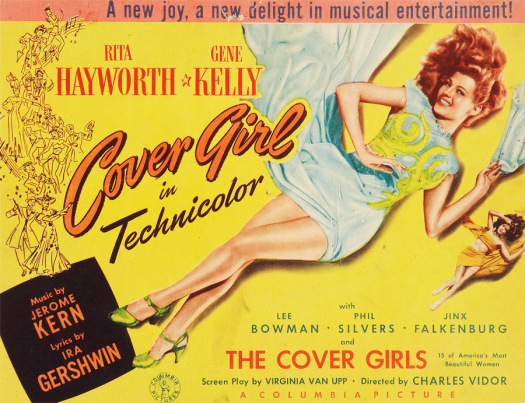
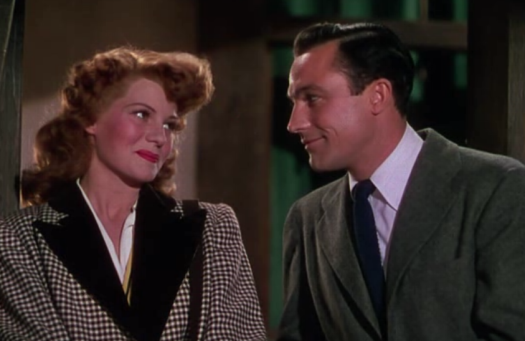
Bright, bold, and bouncy, COVER GIRL was a breakthrough film for both Rita Hayworth and Gene Kelly. Sultry, redheaded Rita had been kicking around Hollywood for ten years before Columbia Pictures gave her this star-making vehicle, while Kelly, on loan from MGM, was given free rein to create the memorable dance sequences. Throw in the comedic talents of Phil Silvers   and Eve Arden , plus a bevy of beauties and songs by Jerome Kern and Ira Gershwin, and you have what very well may be the quintessential 40’s musical.

Rusty Parker (Rita) is a hoofer at Danny McGuire’s (Kelly) joint in Brooklyn (where else?). She enters a contest sponsored by Vanity Magazine to find a new cover girl for their 50th anniversary issue. Editor John Coudair ( Otto Kruger ) spots her and is reminded of the girl he once loved and lost (who turns out to have been…

View original post 696 more words

Never Nominated: 16 Actresses Who Were Never Nominated For An Oscar


The late actress Deborah Kerr was nominated for six Oscars over the course of her distinguished career.  She never won and, in fact, she currently holds the record for the most Best Actress nominations without a victory.

But, at least, Deborah Kerr was nominated!

The 16 actresses below have never been nominated for an Oscar, despite some excellent and compelling performances.  10 of them still have a chance to be nominated.  Sadly, 6 of them are no longer with us.

  1. Emily Blunt

Emily Blunt came close this year.  She received a SAG nomination for her performance in Girl On The Train and some of the critics groups also honored her work.  However, when the Oscar nominations were announced, Meryl Streep was nominated for a film nobody saw and Emily Blunt was nowhere to be seen.  This year, she’s in good company, as neither Amy Adams nor Annette Bening picked up expected nominations either.  Personally, I didn’t care much for Girl on the Train.  I would have much rather seen Blunt nominated for Looper, Sicario, or even Edge of Tomorrow.  Blunt will be nominated eventually.

2. Dale Dickey

You may not know Dale Dickey’s name but you’d recognize her if you saw her.  She usually plays characters who are strong, outspoken, and occasionally a little scary.  You never want to get on the bad side of someone played by Dale Dickey.  To date, Dickey’s most award-worthy role was in Winter’s Bone.  She also had a memorable (if small) role in Hell or High Water, playing the bank teller who, when asked if the men who robbed her were black, replies, “Their skin or their souls?”

Melancholia

3. Kirsten Dunst

As a result of Bring It On, Dunst is often thought of as being the ideal cheerleader.  But, by far, her most award-worthy turn was in a film that was about as different from Bring It On as possible, Melancholia.  Dunst was just twelve when she was first mentioned, for her performance in Interview With A Vampire, as a potential nominee.  She was also very good in Marie Antoinette and the overlooked Crazy/Beautiful.  Dunst fell off the radar for a while but she’s been quietly making a comeback.

4. Greta Gerwig

Greta Gerwig is my spirit animal.  She deserved a nomination for Francis Ha and for Damsels in Distress before that.  She’ll be nominated some day.

5. Rebecca Hall

Rebecca Hall received some Oscar buzz last year for Christine.  I haven’t seen Christine but I think that her performances in 2008’s Vicky Christina Barcelona and especially 2010’s Please Give were criminally overlooked.

6. Katharine Isabelle

Though Isabelle is best known for Ginger Snaps, I think she deserved a nomination for last year’s underrated 88.  One of the best actresses working today, Isabelle will hopefully get a role worthy of her talents.

Film Review Under the Skin

7. Scarlett Johansson

It’s a bit of a shock that Scarlett Johansson has yet to be nominated.  Her work in Lost in Translation was just as important to that film’s success as Bill Murray’s.  And her performance in Under the Skin remains one of the bravest pieces of acting to ever be put on screen.

8. Ashley Judd

Unfortunately, Ashley Judd now seems to be more concerned with political activism than acting.  It’s been a while since she’s appeared in a really great role (and no, the Divergent movies don’t count).  Judd’s best work came in the 90s, when she gave award-worthy performances in Ruby in Paradise, Heat, and especially Normal Life.

9. Kelly MacDonald

Scottish actress Kelly MacDonald doesn’t make enough movies but it’s still hard not to feel that she’s been overlooked by the Academy.  Not only did she hold her own in Trainspotting but her performance in No County For Old Men provided that otherwise cold film with a much-needed heart.

Kristen Stewart

10. Kristen Stewart

Kristen Stewart managed to survive the Twilight films and has emerged as a consistently interesting actress.  Her work in Clouds of Sils Maria won her a Ceasar but was overlooked by the Academy.  Before that, Stewart did excellent work in Into the Wild, Adventureland, Still Alice and Welcome to the Rileys.

Sadly, these six unnominated actresses are no longer with us:

  1. Rita Hayworth

That the wonderful Rita Hayworth was never nominated — not even for Gilda — is nothing less than mind-blowing.

2. Myrna Loy

Myrna Loy was an actress who was such a natural that she made it look easy.  Perhaps that’s why she wasn’t even nominated for The Thin Man.

Marilyn

3. Marilyn Monroe

Perhaps one of the most tragic actresses in the history of Hollywood, Monroe was never nominated despite giving some of the most iconic performances in film history.  I would even make the case that she deserved a nomination for her tiny cameo in All About Eve.

4. Maureen O’Hara

Despite great performances in classic films like The Quiet Man and Miracle on 34th Street, Maureen O’Hara was never nominated for the Oscar she deserved.

detour1

5. Ann Savage

You may not recognize the name but if you’ve ever seen Detour, you know Ann Savage.  Savage largely appeared in low-budget noirs and she always gave performances that were just as fierce as her last name.

Edie!

Edie!

6. Edie Sedgwick

Sadly, Edie never got a chance to play a truly award-worthy role.  Actually, since almost all of her films were underground Andy Warhol movies, it’s debatable whether she ever played a role at all.  During the 1960s, as one of the top models in New York (a so-called “youthquaker”), Edie was best known for being herself.  But, whenever I see Edie in an old Warhol film like Vinyl or even in something like Ciao! Manhattan, I see what a great actress she could have been if she’d only been given the chance.

Edie Sedgwick (1943 -- 1971)

Edie Sedgwick (1943 — 1971)