First released in 1959 and starring the great Vincent Price, the original House on Haunted Hill is a bit of a Halloween tradition here at the Shattered Lens.
The House on Haunted Hill features Price as a millionaire who invites five people to a party that he and his wife are throwing in a supposedly haunted house. Price explains that anyone who can actually make it through the entire night will receive $10,000. (That’s the equivalent of a $110,000 today.) Is the house truly haunted? The groundskeeper (Elisha Cook, Jr.) certainly seems to think so!
This is a classic haunted house movie, featuring Price at his best and a number of genuinely fun twists. Even if you’ve seen it a hundred times, you need to watch it again. Here is …. THE HOUSE ON HAUNTED HILL!
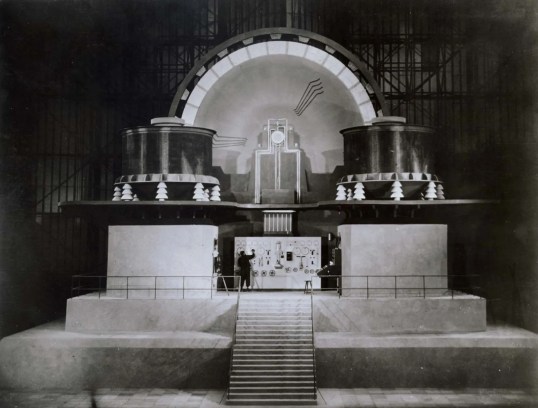
If pressed, I could certainly make the argument that it could be considered to be at least partially a horror film. It’s work of German Expressionism, a cinematic movement that was definitely an influence on the emerging horror genre. It features a mad scientist named Rotwang (Rudolph Klein-Rogge), who designs a robot that he hopes he can transform into his lost love, a woman who instead chose to be with the wealthy and powerful Joh Fredersen (Alfred Abel). The robot instead adopts the form of the saintly Maria (Brigitte Helm) and becomes a temptress who inspires a violent revolution in Fredersen’s city. At one point, when Fredersen’s son, Freder (Gustav Frohlich), falls ill, he has a hallucination of the machines under the city transforming into a demon the devours the workers. Later, statues of the Seven Deadly Sins come to life. The film ends with the message that “The Mediator Between the Head and the Hands Must Be the Heart,” which is exactly the type of empty slogan that repressive regimes have used to defend their own horrific abuses of power. It’s right up there with John Lennon’s Imagine as far as horrifying ideological statements are concerned. (The world will live as one as long as everyone imagines the exact same thing. Don’t ask what will happen to those who imagine something different than an empty world shaped by ideology.)
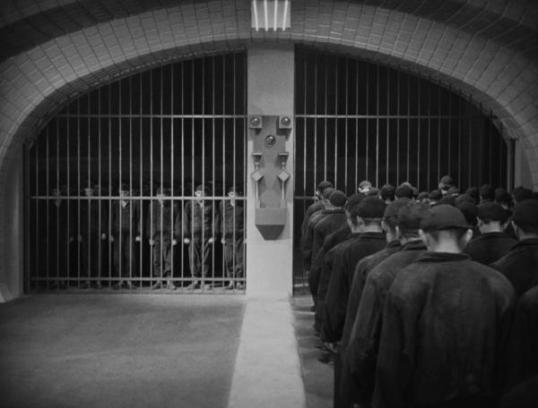
That said, Metropolis is, at best, a horror-adjacent film. As much as I want to hammer it into a straight horror film for the sake of October, Metropolis is better describe as being one of the first great science fiction films. Director Fritz Lang creates two visually stunning worlds, one on top of the other. Above ground, the city of Metropolis is all about towering skyscrapers, airplanes (at a time when they were still a novelty), high speed rail, and even the occasional zeppelin. It’s a sleek and beautiful city, where the inhabitants all seem to be rich and everyone is too busy enjoying the gardens and the clubs to truly pay much attention to what is happening beneath them. Underground is where one finds the machines that keep the city moving and also the anonymous workers who often risk their lives to keep those machines from breaking down. Underground, the city is dirty and dark and the workers go about their activities with the realization that things are never going to get better for them. Above ground, Metropolis is paradise but below it, the city is a hellscape.
Joh Fredersen is the man who created and controls Metropolis. His office is in the new Tower of Babel, a symbol of how there’s no communication between Fredersen and those who work underneath the city. He’s not an evil man, as much he’s just one who chooses to remain unaware about the conditions underground. When his son meets and falls in love with the peaceful activist Maria, Fredersen does not listen to either one of them but instead plots on how to discredit her. Fredersen’s old friend Rotwang has a robot but, what Frederson does not know, is that Rotwang has never forgiven Fredersen for marrying the woman that Rotwang loved. Rotwang creates his robot not to discredit Maria but to instead inspire the workers to destroy the machines and kill Fredersen’s son.
(Like so many other Marxist films, Metropolis ultimately doesn’t have much respect for the workers that it tries to uplift. They’re almost all portrayed as being easily led and incapable of thinking for themselves. At best, they’re noble savages. At worst, they’re drones.)
Even seen today, Metropolis remains a technical marvel. The underground scenes, with their emphasis on huge machines that seem to dwarf the men who work on them, are still visually powerful while the above ground scenes still make Metropolis itself look like the type of city where many of us would want to live. The scenes in which the robot is transformed into Maria is a silent spectacle of lights, science and madness. Beyond that, the acting holds up surprisingly well for a silent film. Alfred Abel plays Fredersen not as being a tyrant but instead as just a man who has been rich for so long that he’s no longer aware of how anyone else is living. Rudolf Klein-Rogge turns Rotwang into one of the great mad scientists. And Brigitte Helm leads the worker’s rebellion with a nearly feral intensity. Her dance scene is a classic, with every move meant to seduce the citizens of Metropolis into destroying their own city.
Metropolis remains a visual feast and, over the course of nearly 100 years, it’s inspired countless other science fiction and horror films. Every film that features a dystopian future city owes a debt to Metropolis. It may only be horror adjacent but it’s still worth seeing this October season.
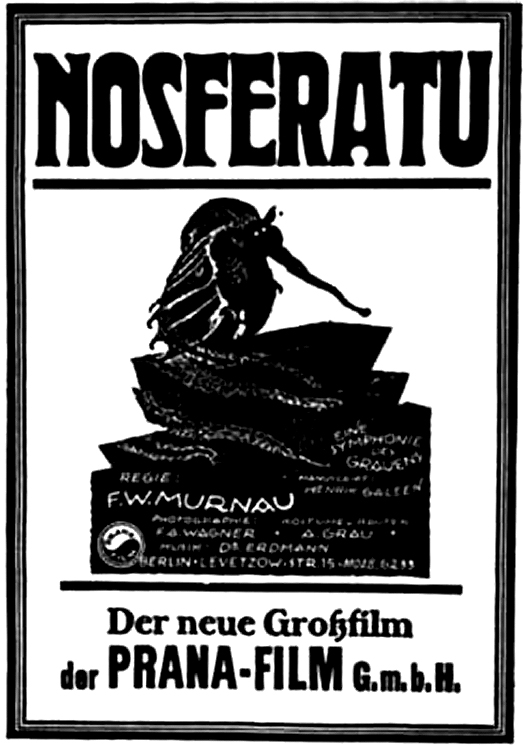
First released in 1922, the original and silent Nosferatu remains a masterpiece.
The story …. well, we all know that story. Even if you’ve never seen any of three film versions of Nosferatu, you still know the story because it’s basically just Dracula with the names and the locations change. Dracula is now Count Orlok (Max Schreck), a mysterious nobleman with bat-like features and a fascination with blood. Jonathan Harker, the estate agent who traveled from England to Transylvania to visit with Dracula, is now Thomas Hutter (Gustav van Wangenheim), a real estate agent who travels from Germany to Transylvania to see Count Orlok. The mad, bug-eating Renfield is now the mad, bug-eating Knock (Alexander Granach). Mina Harker is now Ellen (Greta Schroder). Prof. Van Helsing is now Professor Bulwer (John Gottowt). Dracula came to England aboard the Demeter. Count Orlok comes to Germany about the Empusa.
There are a few differences, of course. Director F.W. Murnau may have used Dracula as his starting point but he brought his own ideas and sensibility to the project as well. In Nosferatu, Orlok received his vampiric powers from the demon Belial and he not only drinks blood but he also brings with him the threat of plague. The Empusa brings not just Orlok but also thousands of rats who spread disease in the German town of Wisburg. The town, which is so vibrant during the early parts of the film, soon becomes a dark and ominous place where the people blame Knock for every curse the Orlok has brought to them. If Dracula could be destroyed by a stake to the heart and stopped by a cross, Orlok can be stopped by a pure woman sacrificing herself and allowing him to drink her blood as the sun rises. Orlok, for all of his feral cleverness, cannot resist the twin temptation of blood and innocence. It leads to an ending that’s quite a bit different from the ending of Bram Stoker’s novel. In Werner Herzog’s 1979 remake of the film, the insinuation was that the town itself was not worth the sacrifice. F.W. Murnau is far less cynical.
Typically, it takes some effort to adjust to watching a silent movie. Everything from the frequently melodramatic title cards to the overly expressive acting can tend to make silent cinema seem more than a little campy. Nosferatu, however, requires less adjustment than most because it’s a film that it still being imitated to this day. The images of Orlok standing on the bridge of the ship or slowly entering Hutter’s room or leaning down over Ellen’s neck are so haunting and dream-like that it doesn’t matter that they are found in a silent film. Fear is the universal language and Murnau’s visuals still carry a lot of power.
Made at a time when the world was still recovering from the carnage of the First World War, Nosferatu perfectly captures the feeling of innocence and optimism being replaced by despair and paranoia. It’s been argued that Nosferatu reflected the fears and anxieties of post-war German society, with the vampire representing the fear of Germany being taken over by outside forces. There’s probably something to that. Tragically, those fears also led to the rise of Hitler so I’ll just say that the majority of the cast of Nosferatu fled Germany when Hitler came to power. John Gottowt, the film’s version of Van Helsing, was murdered by the SS. Director F.W. Murnau died in a car accident before Hitler came to power but, as a gay man, he would not have been welcome in Hitler’s Germany.
The film itself was a hit when it was first released in Germany. Unfortunately, calling the vampire Orlok instead of Dracula did not dissuade Bram Stoker’s widow from suing for copyright infringement. Mrs. Stoker won her case and all copies of Nosferatu were ordered destroyed. Fortunately, a few prints survived and Nosferatu continues to be regarded as one of the greatest horror films ever made.
2004’s Godzilla: Final Wars once again reboots the Godzilla franchise.
Godzilla: Final Wars opens with a narrator explaining that a series of environmental disasters have led to giant monsters attacking various cities over the course of the 20th Century. Perhaps the most fearsome of those monsters was a giant dinosaur named Godzilla that breathed radioactive fire. The same environmental disasters that created the monsters also gave rise to a group of mutant humans who had psychic powers. The mutants were recruited into Earth Defense Force to battle the monsters. Godzilla was finally imprisoned in the ice of Antarctica as the result of an attack led by a heroic American Douglas Gordon (Don Frye).
It may seem like Earth is in good hands but, after Gordon is suspended for damaging EDF property during a battle with a monster, the mummified remains of Gigan are found. This somehow leads to an appearance of those two annoying little girls who always follow Mothra around. A battle of good vs evil is coming, they explain. Everyone will have to choose a side. Okay, I choose the side of good. Hey, that was easy!
Soon, aliens arrive. Led by the fanatical Controller (Kazuki Kitamura), they cause all of the other monsters to attack every major city on Earth. Cue scenes of the Statue of Liberty in ruins, the Eiffel Tower getting destroyed, and the Sydney Opera House getting crushed. Almost every monster from every previous films shows up, even the American version of Godzilla! While the members of the EDF attempt to fight the aliens, the monsters appear to be unstoppable. Maybe Godzilla needs to be freed from Antarctica. Too bad the paper pushers at the EDF suspended Major Gordon….
Oh, how I love Godzilla: Final Wars. It’s over two-hours of nonstop action, nonstop monsters, and Kazuki Kitamura giving one of the most insanely over-the-top performances that I’ve ever seen. It’s a big, colorful celebration of the entire Godzilla franchise and it features cameos from every monster that matters. (It also features that lame son of Godzilla but nothing’s perfect.) Ghidorah makes an appearance towards the end. It’s not a Godzilla film without a final battle with Ghidorah.
Godzilla: Final Wars is terrifically entertaining. Surprisingly, it was also the last Godzilla film for ten years. When Godzilla returned, it would again be in an American film. In fact, it would be 12 years before there was another Japanese Godzilla film.
“Welcome to the Woodchuck Music Festival, three days of peace, love, and death.”
Your emcee is a bearded John Belushi and, in between warning the audience about spiked drugs and encouraging the people climbing the sound tower to jump off from the high spot possible, he introduces several musical acts. Christopher Guest appears as Bob Dylan, repeatedly walking to and then retreating from the stage until Belushi produces enough money to convince him to perform a song called Positively Wall Street. Introduced as the ultimate “bummer” by Belushi, Joan Baez (Rhonda Coullet) comes out on stage with a baby and rambles about her imprisoned husband David (whose hunger strike was so successful that he and the inmates of Cell Block 11 have all starved to death) before singing a protest song with a title that I can’t repeat. Joe Cocker (Belushi) sings while shaking on stage. James Taylor (Christopher Guest) attempts to perform but his band (including Belushi and Chevy Chase) are too zoned out on heroin to play their instruments. The owner of Yasser’s Farm (played by Christopher Guest) comes out to praise everyone in the audience who has already died. Finally, a heavy metal group called Megadeath (no, not that Megadeth!) come out on stage and turn up their amplifiers so loud that the entire audience dies at the end of their song.
An Off-Broadway production that premiered in 1973 and ran for over 300 performance, National Lampoon’s Lemmings has achieved legendary status amongst comedy nerds. It’s rare that you read any history of Saturday Night Live, Second City, or This Is Spinal Tap without coming across a reference to Lemmings. Along with satirizing Woodstock and the 60s counterculture in a way that probably few would have the guts to do today, the production features Belushi, Chase, and Guest before any of them became (however briefly) stars. Fortunately, HBO — which started broadcasting a year before the premiere of Lemmings — filmed one of the stage shows.
Viewed today, Lemmings still carries a strong satiric bite. Though Lemmings was clearly a 70s production, much of its humor still feels relevant today. The vapid political posturing, the greed disguised as altruism, the audience blindly following their idols, there was little in Lemmings that one can’t see today just by spending a few minutes on social media. Beyond the humor, though, Lemmings is a chance to see Belushi, Chase, and Guest as youngish men who had their entire lives ahead of them. Chase is surprisingly likable, playing up his goofy physical comedy. Guest disappears into each role that he plays, with his impersonation of Dylan being the clear highlight. That said, Belushi is the clear star of the show, delivering the most absurd of lines with an engaging sincerity. As I watched Lemmings, it was hard not to wonder what type of roles John Belushi would be playing today. Would he still be doing comedy? Would he have faded away? Or, like Bill Murray (or, for that matter, Jim Belushi), would he now be appearing in a mix of comedic and serious roles?
We’ll never know. But we’ll always have his performance as Joe Cocker.
In 2019’s PlaytheFlute, Brett Varvel plays Brandon Cobb.
Brandon has just been hired as youth minister at a suburban church. Brandon is young and ambitious and his hope is to build the church’s youth ministry into one of the largest in the city. Instead, he discovers that the church’s teenagers are, for the most part, a bunch of spoiled brats who refuse to read and learn their assigned Bible verses. Apparently, they’ve managed to chase off every youth minister they ‘ve had. Will Brandon be able to get through to them?
My question, though, is why Brandon is the one who has to get through to them. Where are the parents in this mess? Loretta Swit does turn up as one concerned parent but her daughter, who speaks with a stammer, doesn’t even want to go the youth group because of some boys who keep making fun of the way she talks. (I stuttered up until I was about 12 so I could relate.) But where are the other parents? A church youth group is not like high school. You’re not legally required to attend. Your parents aren’t going to be charged if you get caught skipping. The kids are obviously in the youth group because their parents took them to church and told them to attend. So, shouldn’t the parents be the ones who get yelled at when their out-of-control brats chase off a youth minister?
Brandon struggles. No one laughs at his Dad jokes. His attempts to open up about his past are met with stony silence. This youth group is hardcore! Finally, Brandon challenges the worst member of the youth group gang to a race. Brandon loses the race to the younger man but everyone is impressed by his determination. He was willing to humiliate himself just to get them to listen to him. And so, they start to listen.
The film is narrated by one of Brandon’s former students, who explains that Brandon has recently died. At first, I thought maybe Brandon had a heart attack after challenging a much younger man to a footrace. Instead, Brandon died of cancer. Brandon may be gone but his students will always remember him and cherish the memory. That’s kind of sweet.
This is another Rich Christiano film. Christiano, along with his brother Dave, was one of the pioneers of modern faith-based filmmaking. He’s been directing and producing films since the early 90s and the format has always remained the same. A Christiano film is usually rather talky, has a few moments of boomer humor, and typically ends on a sentimental note. That’s certainly the case with Play theFlute, a very slow movie that seems to have its heart in the right place.
Christiano did manage to get a few familiar faces for the film. (At least, they’re familiar if you watch a lot of old television shows like I do.) I already mentioned Loretta Swit as one of the mothers. Clint Howard shows up as the manager of a restaurant who is upset to learn that his employees have been screwing with the time clock. And Fred Grandy — GOPHER! — shows up as a minister. One thing I recently learned is that Fred Grandy actually served in the U.S. House of Representatives after he appeared on TheLoveBoat. We need more former sitcom stars in politics. I’m looking at you, Matt LeBlanc!
Anyway, where as I? Oh yeah. This movie was inoffensive but not particularly compelling. Who knew church youth groups were such a hotbed of rebellion?
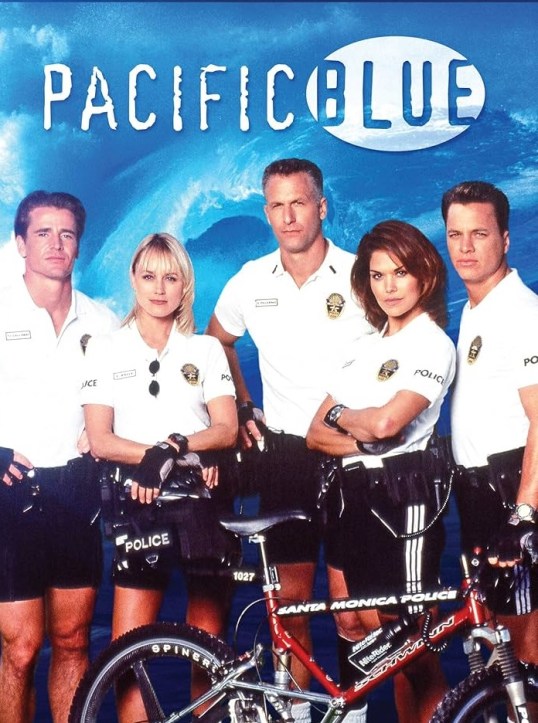
Welcome to Late Night Retro Television Reviews, a feature where we review some of our favorite and least favorite shows of the past! On Tuesdays, I will be reviewing Pacific Blue, a cop show that aired from 1996 to 2000 on the USA Network! It’s currently streaming everywhere, though I’m watching it on Tubi.
This week, the bike patrol continues to be largely ineffective.
Episode 3.2 “Ties That Bind”
(Dir by Sara Rose, originally aired on August 10th, 1997)
TC is excited because Jeff Pierce has moved to Santa Monica. I had no idea who Jeff Pierce was but the show explained that he was some sort of professional bike rider. Even if Jeff Pierce hadn’t been credited as “himself,” I would have guessed that he was a professional athlete just by how bad of an actor he was.
Pierce needs help retrieving his pink competition shirt. TC and Victor help him out. That was nice of them. Pierce challenges the thief to a race and the thief is so excited about getting to race Jeff Pierce that he doesn’t even mind when he gets arrested at the finish line. He even gets an autographed picture of Jeff Pierece!
Meanwhile, Gloria Allred also appears as herself. She appears as an advocate for a group of women who are protesting the release and the return of former serial killer Conway Henriksen (Marc Riffon). Conway has spent ten years in a mental hospital and he says that he’s now reformed. However, after he gets harassed by some of his former victims (apparently, he didn’t kill everyone) and his house house is set on fire, Conway snaps and kidnaps Cory’s best friend, Billie (Rainer Grant). Conway thinks that Billie is his abusive mother and he starts quoting from the Bible and the overacting gets a bit embarrassing. Finally, Conway shoots himself.
Now, this storyline had potential. Conway was sincere in his desire to start his life over again but the harassment campaign pushed him over the edge. Unfortunately, because this is Pacific Blue, the idea of the people trying to protect their neighborhood from a serial killer pushing the guy into becoming just that was left largely unexplored. Instead, everyone just breathes a sigh of relief after Conway shoots himself.
Finally, Chris’s real father (Kent McCord), shows up at headquarters and explains to Chris that, despite what her mother told her, he didn’t actually die in Vietnam. Instead, he’s been working as a commercial pilot and now he wants to get to know Chris. Chris, of course, acts like a total bitch about it, especially after she discovers that he’s married and that Chris has a teenage half-sister who is as much of a sullen brat as she is. Still, Chris eventually forgives her father for having a life and the episode ends with Chris and her real father going sky-diving. This episode missed an opportunity to have Gloria Allred and Jeff Pierce join them in jumping out of the plane. That would have been classic Blue.
On tonight’s episode of Hammer House of Horror, a family picks up a hitchhiker. A subsequent tragedy leaves a wife wondering if her husband is actually her husband. This is a creepy and twisty episode that is guaranteed to inspire just a little paranoia.
This episode originally aired on November 29th, 1980.
Charles Bronson appeared in three episodes of the ALFRED HITCHCOCK PRESENTS T.V. series. His first two appearances came in the first season in early 1956 when Bronson was still in the early stages of his career. When “The Woman Who Wanted to Live” aired on February 6th, 1962, Bronson’s standing in the film and television community had risen dramatically. Since those first two appearances, he had headlined several low budget films (MACHINE GUN KELLY and SHOWDOWN AT BOOT HILL), starred in his own television series (MAN WITH A CAMERA), and even co-starred as one of the seven gunmen in the western classic, THE MAGNIFICENT SEVEN! As opposed to those two early appearances, Bronson was a well known commodity to audiences in 1962, and he was on the precipice of breaking out in even bigger roles, as THE GREAT ESCAPE and THE DIRTY DOZEN were just over the horizon!
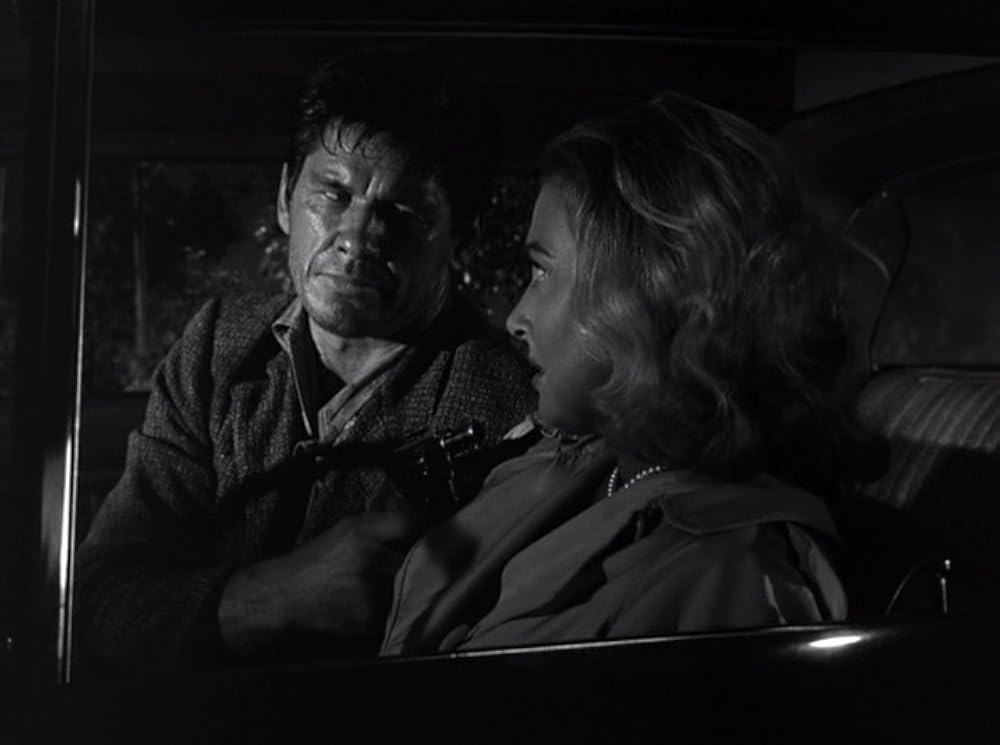
In “The Woman Who Wanted To Live,” we meet escaped convict Ray Bardon (Charles Bronson), a hardened criminal who was shot in the arm when busting out of prison. In serious pain and in need of some quick cash and a getaway vehicle, Bardon robs a remote gas station, even killing the attendant when he makes a move for his gun. Soon a beautiful young woman named Lisa (Lola Albright) drives up to the station. Bardon wants to steal her car and take off, but surprisingly Lisa, who sees his wounds, convinces him to let her drive him wherever he wants to go. As Bardon wonders why she’s willing to help him, Lisa assures him that she will do whatever he wants her to do as she just wants to stay alive. As they flee into the night, they have to deal with a flat tire and a gang of dangerous thugs, but Lisa continues to help Bardon and even passes up a couple of opportunities to take off to safety. Why is Lisa so invested in Bardon’s survival? If you’re guessing there’s more to the story, you would definitely be right!
After watching all three of Charles Bronson’s episodes of ALFRED HITCHCOCK PRESENTS, I believe that “The Woman Who Wanted To Live” just may be the best of the bunch. It’s not as creepy as “And So Died Riabouchinska,” and it certainly doesn’t play up the black comedy like “There Was An Old Woman,” but it does pack quite the emotional punch. First, the story is very effective, as we watch the bond that seems to be developing between the escaped criminal and his captive. You can’t help but wonder if we may be watching two twisted souls who may actually need each other. Hitchcock was always good at throwing people into desperate situations together, and script definitely goes that route here. In the short 25 minutes contained in this episode, each character is given the opportunity to truly help the other, as she helps mend his wounds and he protects her from roadside thugs with bad intentions. Even as the two help each other, as the story plays on, a tightening grip seems to take hold on the audience as to why Lisa hasn’t escaped when she’s had her chances. The strength of the episode just may be the fact that when the big reveal happens, it’s as plain as the nose on your face even though I never considered it a single time, something I have in common with our criminal, Frank Bardon. Second, this episode features two excellent performances from the stars. Interestingly, Charles Bronson and Lola Albright would appear together in the Elvis movie, KID GALAHAD, later this same year. As usual, Bronson brings a real world intensity to the role of the wounded and desperate criminal. With his lived in features, Bronson is incapable of presenting himself in a way that doesn’t seem true and authentic, whether he’s playing a cop or a killer, and his presence here is a clear indicator of his impending stardom. In a tribute to Albright’s performance, the two stars have quite a nice chemistry together, and she steals the final scenes as her character transforms right in front of our eyes and we understand why she’s refused to run away.
With its strong script and the excellent lead performances from Bronson and Albright, I easily recommend “The Woman Who Wanted To Live” as a superior episode of ALFRED HITCHCOCK PRESENTS. This episode truly surprised me and has lingered with me since I first watched it a few days ago.
In 1948, one of the richest men in Georgia committed a murder.
John Wallace was a landowner, back when that title actually meant something. He was known as the boss of Meriweather County. Everyone in the county seemed to work for Wallace in one way or another. He controlled the county officials. The sheriff enforced the law only as far as John Wallace would allow him. The bootleggers had to pay Wallace for protection. When one bootlegger, a sharecropper named Wilson Turner, failed to do so, he was fired and kicked off of Wallace’s land.
Turner retaliated by stealing two of Wallace’s cows.
Wallace responded by murdering Turner.
Because Turner attempted to flee and Wallace chased after him, Wallace committed the murder not in Meriweather County but in neighboring Coweta County. What Wallace didn’t realize was that this meant the investigation didn’t fall under the jurisdiction of his hand-picked sheriff. Instead, Sheriff Lamar Potts of Coweta County headed up the investigation. John Wallace was eventually arrested by Sheriff Potts and he was eventually convicted of murdering Wilson Turner. At the time, the case drew a lot of attention both because of Wallace’s wealth but also because two of the main witnesses for the prosecution were the two black men who Wallace forced to help him dispose of Wallace’s body.
It’s an interesting story, largely because the history of America is full of men like John Wallace, people who set up their own little dictatorships. It’s often portrayed as being a Southern phenomena but John Wallace really wasn’t that much different from the crude political bosses who, for decades, dominated politics in city like New York and Chicago, the type who held onto power through a combination of intimidation and patronage. In my home state of Texas, George Berham Parr inherited the political machine that controlled Duval and Jim Wells County. Parr committed numerous crimes during his time as the “Duke of Duval” but he had important friends. He was the one who “found” the votes necessary for Lyndon Johnson to win a senate seat in 1948. (In return, Johnson got Harry Truman to pardon Parr for failing to pay his taxes.) Parr is also suspected of having been involved in at least one murder but it wasn’t until LBJ himself retired from politics that anyone truly investigated Parr’s activities. In 1974, he was again convicted of failing to pay his taxes and Parr was later found dead at his ranch. Suicide was the official police ruling.
As for the story of John Wallace, it was turned into a made-for-TV movie in 1983. Murder in Coweta County stars Andy Griffith as John Wallace and Johnny Cash as Sheriff Potts. Griffith, playing a soulless villain, is chilling as John Wallace. Wallace is all-smiles and good ol’ boy charisma whenever there’s a crowd around but, once it’s just him and his cronies, a different side comes out. Wallace thinks that he can get away with murder because he’s been able to get away with everything else. Sheriff Potts is determined to see that justice is done. Murder in Coweta County is an atmospheric Southern crime story, one that is so full of atmosphere that you can feel the humidity. While Johnny Cash was definitely a better singer than an actor, Andy Griffith’s villainous turn makes the film worth watching.





 Through the Shattered Lens