What Lisa Marie Watched Last Night #223: Black Eagle (dir by Eric Karson)


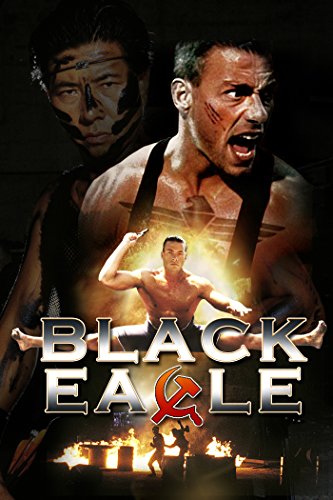
Last night, I watched the 1988 “action” film, Black Eagle!
Why Was I Watching It?

Last night, I watched Black Eagle as a part of the Monday Action Movie live tweet.  Going into the film, I knew that it starred Sho Kosugi and Jean-Claude Van Damme and that was enough for me.  As the film started, I was happy to see that it took place in Malta.  I spent the summer after I graduated from high school in Europe and I spent a few days visiting Malta, its museums, and especially its beaches.  I have good memories of the Malta days and especially the Malta nights.

What Was It About?

I’m not really sure what the film was about.  I watched all 100 minutes of it and, as far as I could tell, an American airplane crashed off the coast of Malta so the CIA brought in Ken Tani (Sho Kosugi) to dive into the sea and retrieve something important from the plane.  However, a Russian named Andrei (Jean-Claude Van Damme) also wanted whatever it was that was on the plane so he and his people ended up chasing Ken all over Malta, an island that I have visited.

Ken was also on vacation so, when he wasn’t killing people, he was hanging out with his two sons, Brian (Kane Kosugi) and Denny (Shane Kosugi).  The CIA helpfully sent along one of their agents, Patricia Parker (Doran Clark), and she acted a sort of nanny while Ken was busy fighting the Russians.  Also helping Ken was a Jesuit (Bruce French) who also happened to be an explosive expert.  I don’t think the Vatican would approve of a priest blowing up boats and building but everyone knows better than to argue with a Jesuit.

What Worked?

Jean-Claude Van Damme didn’t really do much in this movie but he still looked good and he got to do the splits a few times.  In fact, it was kind of funny to watch him actively search out any possible excuse to do a split.  I had a lot of fun imagining that Andrei only became an international spy so that he could show off his gymnastic abilities.  It’s too bad he missed out on Gymkata.

The Maltese scenery was lovely, even if the film itself was a bit grainy.  Have I mentioned that I’ve been to Malta?

What Did Not Work?

Oh, that Sho Kosugi.  He was great when he was fighting people and tossing them off of buildings but whenever he had to actually deliver dialogue and try to show emotion …. AGCK!  There’s a reason why Sho Kosugi’s most popular American films — Enter the Ninja, Ninja III: The Domination — feature him playing a villain.  Even when Kosugi was acting opposite his children, he seemed to be in a fairly bad mood.

At one point, Ken asked the priest how he became an expert in demolitions.  “Ever hear of a place called Vietnam,” the Jesuit replied and I groaned as I realized that Ken had made one of the biggest mistakes of his life.  If there’s one thing that I understand as a result of being raised Catholic, it’s that you never ask a Jesuit for his origin story unless you’ve got a few hours to kill.

To be honest, the film could have used even more scenes about Malta, a lovely place of which I have many good memories.

“Oh my God!  Just like me!” Moments

I’ve been to Malta.

Lessons Learned

Definitely go to Malta if you get a chance.

Horror Film Review: Child’s Play (dir by Tom Holland)


A few months ago, I rewatched the original 1988 Child’s Play.

I have to say that I was surprised by just how well the film held up.  Today, of course, everyone knows about Chucky.  Everyone know that Chucky was originally Charles Lee Ray (Brad Dourif), a serial killer who was chased into a toy store by police detective Mike Norris (Chris Sarandon).  Knowing that he had little chance of escaping and not wanting to go to back to prison or face the electric chair, Charles Lee Ray performed a quick occult ceremony.  While lighting crashed all around the store, Charles transported his soul into a “Good Guy” doll.

That doll was later purchased by a hard-working, single mom named Karen Barclay (Catherine Hicks).  She gave the doll to her six year-old son, Andy (Alex Vincent).  There was nothing that Andy wanted more for his birthday than a talking Good Guy doll.  Unfortunately, Good Guy dolls were also very expensive and Karen wasn’t sure if she’d ever be able to afford to buy one.  But, when she ran into a homeless guy who happened to be selling stolen merchandise out of his shopping cart, Karen was able to make Andy’s birthday a happy one!  Andy unwrapped the doll and smiled as the doll introduced himself as being “Chucky” and asked if he wanted to play.

Unfortunately, it soon turned out that Charles Lee Ray wasn’t going to stop killing people just because he was now trapped inside the doll.  If anything, being trapped in the doll made Ray even more homicidal.  It makes sense if you think about it.  I’m sure that Charles Lee Ray didn’t realize that performing that voodoo curse would cause him to wake up as a plastic toy wearing overalls and being expected to be a 6 year-old’s best friend.

Anyway, Chucky went on a rampage, killed several people, and everyone blamed Andy.  Not even Karen believed Andy when Andy explained that Chucky was the one killing people with toy hammers and blowing up houses.  Or, at least, Karen didn’t believe Andy until she herself was attacked by Chucky.  With Chucky freaking out about the prospect of being stuck in the doll’s body for the rest of his existence and wanting to possess his new owner instead, Karen and Mike teamed up to protect Andy from the world’s worst birthday present.

To be honest, Child’s Play shouldn’t work as well as it does.  The story is ludicrous, even by the standards of late 80s horror.  There’s no way that a doll should be able to do things like throw a hammer with enough force to send someone flying out of a window.  (Making the scene even stranger is the fact that it’s not even a real hammer but instead a little plastic Good Guy hammer.)  And yet, the film does work and not just as an example of nostalgic camp.  This is a scary and emotionally effective story, even if you already know the truth about Chucky.  It helps that Alex Vincent gives a totally natural, uncutesy performance as Andy.  Your heart really breaks for him as he begs the adults in his life to understand that it’s Chucky who is doing all of the bad things and not him.  As well, Catherine Hicks deserves a lot of credit for taking her role seriously.  And finally, the great Brad Dourif does wonders with just his voice.  At first, it’s undeniably funny to hear his angry voice coming out of Chucky but Dourif delivers his lines with such unhinged conviction that it’s actually rather frightening when he suddenly drops the act and starts cursing out Karen.  After all of the sequels and the subsequent television shows, Chucky himself has become a bit of a pop cultural icon.  He’s almost as lovable as Freddy and Jason combined.  But in the first Child’s Play, that doll is seriously scary.  He may be small but he has the energy and ruthlessness of a feral beast.  When he attacks, you have no doubt that he’s not going to stop until he’s gotten what he wants and what he wants is usually for someone to die.

The first Child’s Play earns its status as a horror classic by being surprisingly scary and also surprisingly emotional.  You really do end up caring about Karen and Andy.  When Karen finally went after that smug, murderous doll, I definitely cheered a little.  Take that, Chucky!

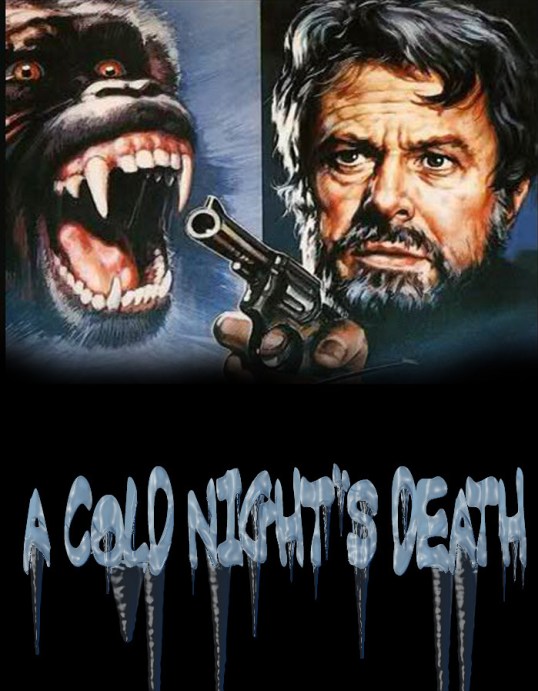
Horror on the Lens: A Cold Night’s Death (dir by Jerrold Freedman)


For today’s Horror on the Lens, we have a made-for-TV movie from 1973.  As you can tell from the video below, it originally aired as a part of ABC’s Tuesday Night At The Movies so it’s only appropriate that we are also sharing it on Tuesday.

A Cold Night’s Death tells the story of two scientists (Eli Wallach and Robert Culp) who are sent to a remote research station to investigate the apparent disappearance of another scientist.  They soon come to suspect that they may not be alone and soon, paranoia rears its ugly head.  With its frozen landscape and its ominous atmosphere, this movie feels like a distant cousin to John Carpenter’s The Thing.

Enjoy!

October Positivity: Early Warning (dir by David R. Elliott)


First released in 1981, Early Warning opens with a shot of a crowded, polluted city.  On the soundtrack, we hear the voices of newscasters.  The world is tottering on the brink of war.  Gas prices are skyrocketing.  Inflation is rising.  People are losing their jobs and their homes and many of them are having to skip meals in order to have enough food to last through the week.  Riots are breaking out across America.  Crime is running rampant.  The rich are getting richer.  The poor are getting poorer.  The President is a doddering old fool who sounds incapable of bringing America together.

Wow, that all certainly sounds familiar!  It’s tempting to say that Early Warning predicted the state of the world in 2022.  However, the truth of the matter is that the movie was made at the tail end of the Carter years and, as we all know, history tends to repeat itself.

Early Warning makes the argument that all of the problems in the world are due to the …. are you ready for this? …. One World Foundation.  (The One World Foundation could have picked a less obviously evil name.)  Led by Alexander Stonefield (Joe Chapman), The One World Foundation manipulates humanity by raising prices, destroying cities, and causing natural disasters.  They have a plan to start a nuclear war, by encouraging countries to invade one another and then supplying nuclear weapons to both sides.  They’ve decided that the best way to control humanity is to assign everyone a number and to…. okay, well, you know where this is going, don’t you?  Yes, this is one of those movies.  Before Left Behind, there was Early Warning!

The One World Foundation may be able to manipulate the world but their security sucks because a reporter manages to sneak into their headquarters and record a meeting where Stonefield explains, in exacting detail, everything that he’s planning on doing.  (You have to wonder why Stonefield even felt the need to have that meeting.)  The reporter is caught by a group of silly-looking guards who all wear white knee socks and tap shoes.  He’s killed but not before he put the recording in a mail box.  That’s putting a lot of trust in the U.S. Postal Service but whatever.

Another journalist, Sam Jensen (Christopher Wynne), teams up with a religious activist named Jenny Marshall (Delana Michaels) and soon, they’re doing their own investigation.  It turns out that the One World Foundation is going to have yet another meeting, this one at a hotel in the middle of the desert.  While Sam and Jenny try to uncover the truth, they fall in love but, unfortunately, Sam’s not a believer.  Can this be fixed before Sam is gunned down by a mysterious, helicopter-riding assassin known as The Cobra?

Early Warning is a bit of an odd film.  Jenny is often inappropriately cheerful, even when she’s got guards in knee socks trying to kill her.  Sam is a remarkably whiny hero.  There’s a strange sequence in which Sam and Jenny stumble across a survivalist compound in the middle of the desert and one of the survivalists is played by none other than George “Buck” Flower.  But perhaps the strangest thing about the movie just how low-rent and incompetent the One World Foundation is.  For an organization that can drive countries to war and wipe out someone’s savings just by pushing one button, One World has a remarkably difficult time tracking down two people.

(Of course, that’s always been my issue with most conspiracy theories.  It’s hard for me to buy that a group could be competent enough to control the world while also being too incompetent to properly cover up their activity.)

Early Warning is an early example of an evangelical end-of-the-world thriller.  One gets the feeling that the filmmakers were probably inspired by the then-recent success of The Omen films.  The budget was obviously low but that often works to the film’s advantage.  The grainy images feel appropriate for a movie about paranoia.  What doesn’t work to the film’s advantage are the stilted performances and a screenplay that can never decide whether it wants to primarily thrill the audience or primarily preach at them.  Still, to me, it’s interesting as an early example of a cinematic genre that, even if it doesn’t get much publicity, is still going strong.  It’s also interesting to see that, in 1981, people were just as quick to say the world was ending as they are in 2022.  The world appears to have been ending for a while now.

Horror On TV: Ghost Story 1.3 “At the Cradle Foot” (dir by Don McDougall)


On tonight’s episode of Ghost Story, James Franciscus plays a father who discovers that trying to change the future isn’t as cut-and-dried as it seems.  When Paul (Franciscus) dreams that his daughter is going to be murdered 20 years in the future, he moves to the town from his dream to try to prevent it.  He ends up falling in love with Julie (Meg Foster), who happens to be engaged to man named Ed (Karl Swenson) who looks just like the man who Paul dreamt was going to murder his daughter!

This episode originally aired on September 29th, 1972.

The TSL’s Horror Grindhouse: The Bunker Game (dir by Robert Zazzara)


The Bunker Game, which made its debut on Shudder earlier this year, opens with what appears to be a bit of alternate history worldmaking.   The viewer watches a black-and-white documentary that presents a world in which the Nazis conquered Europe during World War II but, ten years after Germany’s victory, the United States dropped an atomic bomb.  As a result, Europe is now an atomic wasteland.  A handful of survivors managed to find shelter in Italy, hiding out and forming a new society in an underground bunker that was built by Mussolini in the 30s.  The underground society is an authoritarian one, where mad scientists experiment on the citizens and storm troopers seem to be around every corner.  However, there is a small rebellion brewing….

Sounds potentially interesting, right?  Well, don’t get too attached to the alternative history spin because, within the first few minutes of the film, it’s revealed that the people in the bunker aren’t actually citizens of an authoritarian state and, while the Bunker is indeed real, the rest of Europe is just fine.  It turns out that documentary was just a part of an elaborate and very expensive game.  Instead of being the last refuge of the Third Reich, the Bunker is full of LARPers, people who have spent a good deal of money so that they can spend a week pretending to be …. well, Nazis.

Now again, this sounds like it could be potentially interesting.  Why would a group of people pay money in order to enter a real underground bunker and pretend to be some of the most evil people who have ever existed?  It’s an intriguing premise but, just as with the alternate history angle, don’t get to attached to it because it doesn’t take long for the film to abandon the whole LARPing plot.

Instead, unforeseen circumstances lead to the game ending early and most of the LARPers heading home. The Bunker Game proceeds to tell a fairly standard story about a handful of people who find themselves isolated in the now-deserted Bunker.  When one of their friends disappears, they split up to search for him and soon, some sort of supernatural force is killing them one-by-one.  The group is made up of identifiable types.  One person is quirky.  Another person is serious and professional.  Another is a stereotypical zoomer.  Another one is too uptight and obviously destined to go crazy before the movie is over.  For the most part, the film focuses on Laura (Gaia Weiss) and her cousin, Harry (Mark Ryder).  Harry is determined to leave the Bunker and never again deal with any LARPers.  Laura, meanwhile, finds herself strangely drawn to the Bunker, even once it becomes obvious that something is killing all of her friends.  Harry cannot understand why Laura would want to be part of the Bunker Game in the first place.  Laura cannot understand why anyone would want to live in the real world.  Most viewers will probably be able to guess where this is all going.

That said, The Bunker Game gets the job done.  The underground bunker is a wonderfully creepy setting and, even if they are playing types, the cast still does their best to bring their characters to life.  (Of course, all of them are playing characters who spent a lot of money so that they could pretend to be Nazis so, well-acted or not, most viewers will have limited sympathy for them.)  Though it’s hard not to regret that the film didn’t do more with its potentially interesting plot, director Roberto Zazzara does a good job of creating and maintaining a properly ominous atmosphere.  For what it is, The Bunker Game works well enough.  One can regret that it’s not thematically challenging while also acknowledging that, whatever flaws the narrative may have, the film still gets the job done.  Those who are just looking for a well-made horror film and who aren’t necessarily concerned with whether or not the plot makes total sense will probably enjoy The Bunker Game.

Retro Television Reviews: Hang Time 1.9 “Stranded” and 1.10 “The Sweat Shack”


Welcome to Retro Television Reviews, a feature where we review some of our favorite and least favorite shows of the past!  On Mondays, I will be reviewing Hang Time, which ran on NBC from 1995 to 2000.  The entire show is currently streaming on YouTube!

I’ll always remember, me and my friends at Hang Time!

It’s time to check in and see what’s happening at Deering High!

Episode 1.9 “Stranded”

(Directed by Howard Murray, originally aired on November 4th, 1995)

“Great!” Sam announces halfway through this episode, “we’re all stuck together and we hate each other!”

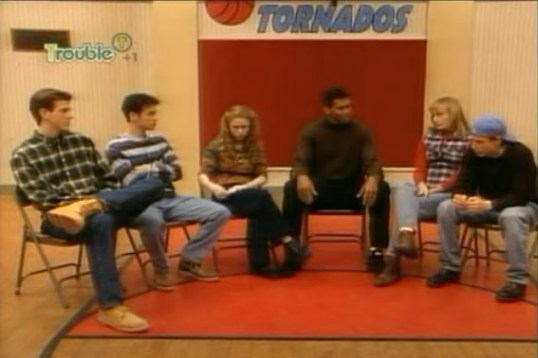
And yes, it is true.  After a terrible loss, Coach Fuller makes the team come in for a Saturday morning practice.  Only a few members of the team make it due to the fact that it’s snowing and those who do make it end up getting trapped in the gym by the blizzard!  Way to go, Coach!

This actually wasn’t a bad episode.  For one thing, memories of the 2021 Texas blizzard are still fresh on my mind so, for once, I could relate to what the characters on the show were going through.  I actually have been snowed in, with the power going on-and-off.  Fortunately, I wasn’t trapped in a gym.  I was in my house, with a book to read.

The majority of the episode was taken up with a group therapy session, in which Fuller tried to get the team to open up about both the loss and their feelings to each other.  And while I initially groaned when the scene started, it was actually handled fairly well.  We got to hear each character’s inner thoughts and it turned out that most of them were just as tired of Julie being the center of every storyline as the viewers undoubtedly were.  Add to that, a new member of the cast made an appearance when one brave boom mic made an appearance, hovering over the group.

While everyone tried to figure out how to survive being stuck in the gym overnight (did none of these high school students have parents trying to dig them out?), Julie and Chris debated whether they could both date and be teammates and Mary Beth, who was in the gym despite not being a member of the basketball team, tried to take care of the fake baby that she had been assigned for a class assignment.

As I said, this was not a bad episode.  Chris and Julie were still an amazingly boring couple but, with this episode, it felt as if the cast had finally come together as an ensemble.  Still, it’s strange that the episode ended with Michael saving everyone in the high school as opposed to say the parents who were undoubtedly wondering to where their children had disappeared during the worst blizzard in Indiana history.  Did the adults in town just not care about their high school basketball team?

Episode 1.10 “The Sweat Shack”

(Directed by Howard Murray, originally aired on November 11th, 1995)

This was a weird episode.  Mary Beth’s father demanded that she get a job so, somehow, she ended up as manager of the Sports Shack (which is the store in the mall where most of the characters work).  At first, Mary Beth is too lenient of a boss.  Then she become too strict of a boss.  All of her employee go on a strike but is there really a Sports Shack union?  Is the strike even legal?  Couldn’t everyone be arrested for disturbing the peace and, even more importantly, why can’t Mary Beth just fire all of them and hire cheap replacements?  That would definitely cut down on payroll.

Meanwhile, Coach Fuller is in charge of a new exchange programs where members of the basketball team pair up with girls from Russia and …. wait, WHAT!?  Earl gets a Russian who loves hanging out with him.  Michael gets a Russian who is overweight so, of course, the audience goes, “Whoa!”  “You are fresh prince,” the Russian tells Michael, on account of the fact that Michael appears to be the only black student at Deering High.  “Hah hah hah!” the audience responds.  Eventually, Michael learns an important lesson about not judging Russian mail order brides by their weight.  It’s all more than a little cringey but it is kind of sweet that Earl’s exchange student even follows him around while he’s working his security job at the mall.

Anyway, this one of those episode that kind of felt as if it was just a mix of scenes and storylines that had been cut from other episodes.  Perhaps it would have been better if everyone had been trapped at the mall by another blizzard.  Seriously, blizzards bring out the best of this show.

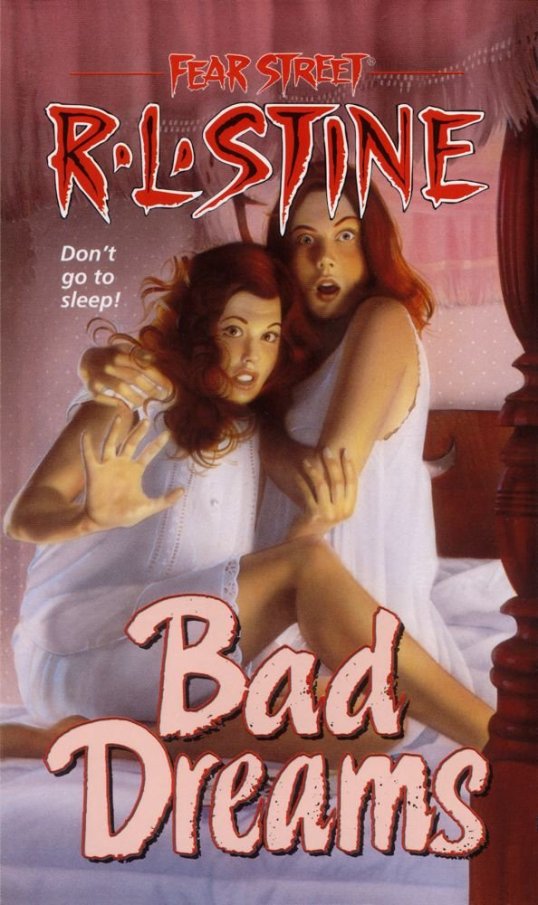
Horror Novel Review: Bad Dreams by R.L. Stine


First published in 1994, Bad Dreams is yet another R.L. Stine YA novel about life on Fear Street.

This time, it’s Maggie and her younger sister Andrea who have moved into a new house on Fear Street.  Maggie and Andrea are rivals about almost everything.  They’re both super competitive swimmers who are fighting for the right to represent their high school at the State Championship.  They both like Justin, who is typical boring R.L. Stine boyfriend.  They ever argue over who should get the ornate bed in Maggie’s new bedroom.  Because Maggie agreed to let Andrea have the bigger room, Maggie gets to keep the bed.

I don’t know, Maggie.  You might want to rethink that.

It turns out that the last owner of the bed was actually stabbed to death while laying on top of it.  Soon, Maggie is having disturbing dreams where she sees the murder happening.  Is Maggie being contacted from beyond the grave or are her dreams warning her that she’s about to become the next victim?  And what about all the strange noises coming from the attic?

Soon, Maggie is struggling when it comes to school and swimming because she’s just not getting enough sleep!  (This book made me happy that I’ve never needed more than 3 hours of sleep to function.)  However, the other two girls who are competing against Maggie and Andrea for a chance to go to State each falls victim to a bizarre accident!  Someone is taking out the competition!  Is it the ghost?  Is it Andrea?  Could it even be Maggie herself!?

Will Maggie be able to solve the mystery?  Will she eventually get a good night’s sleep and fulfil the promise of having sweet dreams?  Will she and Andrea ever be able to put aside their sibling rivalry?  And who will go to State!?

And, perhaps most importantly, does anyone really care?

As far as the plot is concerned, Bad Dreams is an example of R.L. Stine on autopilot.  All of the questions are eventually answered but the answers seem to come out of nowhere and it’s hard to escape the feeling that Stine pretty much just kept writing until he reached the minimum word requirement and then he decided to quickly wrap things up without really worrying about whether or not he had provided enough clues to keep the reader from feeling as if she had been denied a fair chance to solve the mystery on her own.  That said, the first of Maggie’s dreams was nicely creepy and the constant arguing between Maggie and Andrea was kind of entertaining.  I’ve got three older sisters so I imagine that every single one of them could probably have related to Maggie at some point while we were all growing up.  (It also helped that Andrea and Maggie had red hair, just like me!)  Plus, all of the drama around the swim team reminded me of the later episodes of Saved By The Bell: The New Class, in which it suddenly turned out that everyone at Bayside was obsessed with the swim team.  Today, books like this are best used for nostalgia and that’s what I definitely felt while reading Bad Dreams.

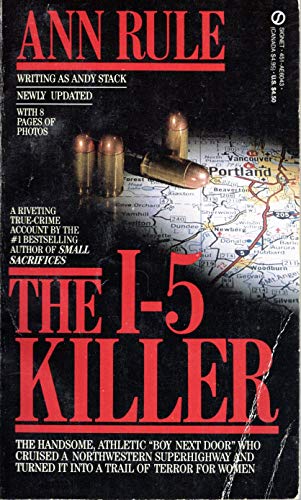
Book Review: The I-5 Killer by Ann Rule


Yesterday, I reviewed The Serial Killer Letters, a book that is largely made up of letters written by serial killers.  As I mentioned in my review, I was particularly disturbed by the many letters that were written by Randall Woodfield, a former football player who is currently serving a life sentence for one murder but who has been linked to 44 others.

What was it that so disturbed me about Woodfield’s letters, beyond the fact that they were the words of a man who targeted women who physically resembled me?  Some of it was the fact that Woodfield took a flirtatious tone in his letters, presenting himself as being just a charming but hapless guy who ended up suffering from a bit of bad luck.  The fact that he included shirtless pictures of himself with his letters was undeniably icky.  There was also the fact that, despite having been linked to several murders by DNA and a lot of other evidence, Woodfield continued to adamantly claim that he had been set up and railroaded and basically misrepresented by everyone who had ever written or spoken about his case.  In fact, Woodfield was so adamant that, when first reading his words, it was tempting to question why someone who has been serving a life sentence since 1981 and who has no hope of ever getting out would not just go ahead and confess.  Even the author of The Serial Killer Letters admitted to initially feeling conflicted about Woodfield and his claims of innocence.  However, in order to believe Woodfield’s story, you would have to believe that cops in several different jurisdictions all decided to independently conspire against one person.  Considering that his DNA has been linked to several cold cases, you’d have to accept that the DNA evidence was planted at a time when most people weren’t even sure what DNA was.  You would have to ignore all of the other evidence against Woodfield.  You would also have to explain away the fact that three of Woodfield’s suspect victims were acquaintances of his and that all three of them died around the same time and in similarly violent circumstances.  One could accept that a gigantic conspiracy was formed to put Randy Woodfield in prison.  Or one can accept that Randy Woodfield is guilty.

In Woodfield’s letters, he spent a good deal of time ranting about the true crime writer Ann Rule.  In 1984, Rule wrote a book about Woodfield’s crimes, The I-5 Killer.  In fact, Woodfield devoted so much space to accusing Rule of being a part of a conspiracy against him that I felt the need to read The I-5 Killer to see what Rule had to say.  It’s pretty much a standard true crime book, one that gives the sordid details of Woodfield’s crimes while also detailing the investigation that led to Woodfield’s arrest.  The book delves into Woodfield’s background, revealing him to have been a popular high school athlete who, even at the age of 14, had a disturbing compulsion to expose himself to complete strangers.  Woodfield drifted after high school but he was a good enough football player to be drafted by the Packers.  Unfortunately, even while at training camp, Woodfield couldn’t stop exposing himself to strangers.  The Packers decided they didn’t need him on their team and Woodfield instead became a thief, a rapist, and a murderer.  At the same time, he also worked as a bartender and always had a new girlfriend who was willing to help finance his lifestyle.  The book is full of quotes about how charismatic Woodfield could be while tending bar.  However, there’s also a lot of quotes concerning the fact that even Woodfield’s friends and defenders thought he was an idiot.

The book details Woodfield’s crimes and the efforts of one of the survivors of his rampage to not only recover from being shot but also to find the courage to come face-to-face with Woodfield in court.  It makes for disturbing reading but the book should also be praised for revealing that Randy Woodfield was not a Hannibal Lector or a Dexter Morgan or any of the other charming, fictional murderers who tend to turn up in the movies or on television.  Randy Woodfield was a loser, through and through.  His motives were not complex and his methods were not clever.  He was an idiot.  One can understand why Woodfield hates Rule’s book but the book itself provides an invaluable service.  After you read enough true crime books, you come to realize that most murderers are, for the most part, very dull people.

The edition that I read included an update on Woodfield in prison.  It mentioned that Woodfield had become a prolific letter writing and that he always made sure to send everyone a shirtless picture of himself before asking them for money.

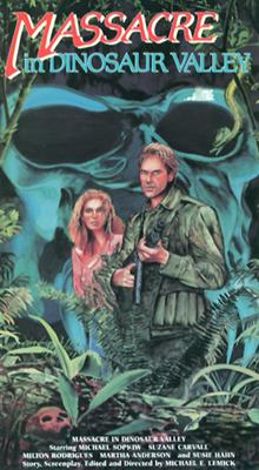
International Horror Review: Massacre in Dinosaur Valley (dir by Michele Massimo Tarantini)


As I watched the 1985 Italian film, Massacre in Dinosaur Valley, I found myself wondering one thing.

“Where are the dinosaurs!?”

Perhaps I’ve been spoiled by the Jurassic Park franchise but whenever I see the word “dinosaur” in a title, I expect to see dinosaurs.  That’s actually probably the main reason why I, or anyone else for that matter, would watch Massacre in Dinosaur Valley.  Unfortunately, there are no dinosaurs in this film.  Instead, a paleontologist shows up to explain that the valley is called Dinosaur Valley because it is the home to so many fossils.  This, of course, is the equivalent of telling us that, even though a city is really boring now, you should have seen it several thousand years ago.  Unfortunately, we also don’t get to see any fossils in Massacre in Dinosaur Valley.

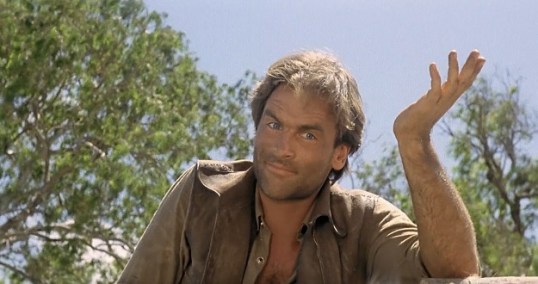
An actual screen shot from Massacre in Dinosaur Valley

There is, however, a massacre.  When a plane crashes in the valley, the pilot is killed but the majority of the passengers survive.  Insane Vietnam vet John Heinz (Milton Rodriguez) declares himself to be the leader of the survivors, even while his drunk wife (Marta Anderson) taunts him about everything from his lack of sexual prowess to the fact that his war record apparently isn’t as impressive as he claims.  The majority of the survivors would rather be led by Kevin Hall (Michael Sopikw), a soldier of fortune who is first introduced hitching a ride on a truck and then admitting that he doesn’t even have the five dollars that he promised to pay the driver.  Kevin seems like a bit of a loser but he’s better looking than Heinz and a good deal more laid back as well.

That said, it really doesn’t matter whether Kevin or John is in charge of the survivors because, what the valley lacks in dinosaurs, it makes up for in cannibals.  When the cannibals attack, the survivors rather foolishly split up and quickly discover that, if the cannibals don’t get you, the quicksand will.  Kevin ends up making his way through the jungle with Myara (Gloria Cristal) and Belinda (Susan Hahn).

Massacre in Dinosaur Valley was released towards the end of the infamous Italian cannibal cycle.  In Italy, it was originally given the much more honest title of Nudo e selvaggio, which translates to Naked and Savage.  In some parts of the world, it was released as Cannibal Ferox 2, in an effort to associate the film with Umberto Lenzi’s infamous shocker.  The plot of Massacre in Dinosaur Valley obviously owes much to Cannibal Ferox.  Fortunately, there’s far less animal cruelty in Massacre In Dinosaur Valley.  Unfortunately, the plot moves slowly and none of the film’s violence or gore is as nightmarishly realized as in the equivalent scenes from Ferox.  As well, no one in the Dinosaur Valley cast can really duplicate the charisma of Ferox‘s Giovanni Lombardo Radice, Lorraine De Selle, and Zora Kerova.

That said, even if he wasn’t a particularly dynamic actor, Michael Sopkiw was still a likable lead and he was the best thing that Massacre In Dinosaur Valley had going for it.  Sopkiw is a bit of an enigmatic figure when it comes to the history of Italian exploitation films.  He was an American actor and a model who, in quick succession, starred in four Italian films.  He started his career with Sergio Martino’s 2019: After The Fall of New York and then went on to star in Lamberto Bava’s Blastfighter and Monster Shark before ending his acting career with Massacre In Dinosaur Valley.  Sopkiw was good looking and he had a likeable screen presence.  It’s easy to imagine that he could have had a career similar to Michael Dudikoff’s if he had stuck with it.  But Sopkiw apparently decided that acting in B-movies wasn’t for him and he instead went into botany and started a company that makes special glass bottles that protect their contents from exposure to the sun.  Good for him.