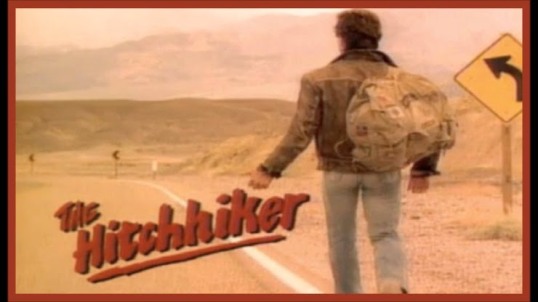
Horror Book Review: Gimme a Kiss by Christopher Pike


The 1988 book, Gimme a Kiss, deals with everyone’s worst nightmare.

Jane Retton’s diary has been stolen, photocopied, and passed around all of the students at her high school!  Everyone at the school is reading about how Jane lost her virginity to her committed boyfriend and how she totally loves him.  Everyone at the school declares that this makes Jane a total whore, even though the diary makes it clear that Jane has only had sex with her boyfriend and she only did that after she was sure that she was in love with him.

Here’s the thing, though.  The diary is a lie!  Jane is still a virgin and the only thing that she wrote in her diary was her fantasy about what she would like to do with her boyfriend!  And now, just because Jane has upset the school’s snooty cheerleaders, everyone thinks that she’s sexually active….

Wow, this book is really a product of the 1980s.

Anyway, Jane decides that the best way to handle all of this would be to fake her death so she decides to pretend to fall off of a boat and …. wait, what?  I’m not really sure that I see Jane’s logic here.  It didn’t make much sense when I read the book and, looking back on it, it still doesn’t make much sense.  Still, Jane decides to fake her death so that everyone will reconsider the way they treated her while she was alive.  (Because, certainly, it’s not like everyone’s going to be even more pissed off at her if they discover they were put through a peroid of mourning for nothing….)  But then someone starts coming after Jane and her classmates for real…. Could Jane’s true enemy be someone close to her?

This book was only 122-pages long.  It was a quick read, which is always a good thing.  The plot didn’t make a bit of sense and it felt like something that Christopher Pike just tossed on the page to make a deadline.  As opposed to other Christopher Pike books, the characters come across as being rather flat.  I will applaud the book for embracing the melodrama, especially in the scene where Jane learns the real reason why she’s being targeted.  But otherwise, this is lesser Pike.

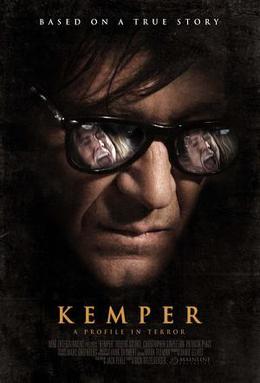
October True Crime: Kemper: The CoEd Killer (dir by Rick Bitzelberger)


The city of Santa Cruz, California is gripped by fear as two separate serial killers stalk and murder young women.  Detective Tom Harris (Christopher Stapleton) may not have many clues but he does have a brilliant best friend named Edmund Kemper (Robert Sisko).  Though most people just see Kemper as being a nerdy, middle-aged house painter who lives with his abusive mother, Harris understands that Kemper is actually a genius who has an instinctive understanding of the criminal mind.  With Kemper’s help, Harris is able to take down one of the killers.  Kemper celebrates by murdering his own mother and then calling Harris and revealing himself to be the other killer.  Harris must now track down Kemper before he can murder again.

2008’s Kemper: The CoEd Killer is very loosely based on the true story of serial killer, Edmund Kemper.  And by loosely, I mean that it has next to nothing in common with what actually happened.  In real life, Kemper was indeed a genius who lived with his mother and he did kill several hitchhikers.  However, Kemper committed the majority of his murders in the early 70s and, by most accounts, he did not have any friends on the police force.  Nor did he play a cat-or-mouse game with the police.  Instead, he committed ten murders and turned himself into the police after killing his mother and her best friend.  He was sentenced to life imprisonment.  Once in prison, he was frequently interviewed by FBI agents who were looking to understand how the mind of a serial killer works.  According to veteran profile John Douglas, Kemper proved to be an amiable and honest interview subject and much of the science behind what is known as profiling is a result of the insights that Kemper provided.  Douglas has described Kemper as being the most likable serial killer that he ever met, which is something that I’m sure provided little comfort to the families of the women that he killed.

In the movie, Kemper is a modern-day serial killer who calls the police on his cell phone.  (A major plot point involves Detective Harris trying to trick Kemper into getting frustrated enough to call the police station’s landline so it will be easier to trace his call.)  Kemper taunts the police and kidnaps a woman and holds her hostage in an attempt to mess with Detective Harris’s mind.  Kemper doesn’t so much come across as being particularly clever as much as the police themselves just come across as being amazingly bad at their jobs.  Somehow, they can’t find Kemper in the city, even though he never makes an attempt to disguise his distinctive appearance and continues to eat at the same diner where he and Harris ate at before Kemper revealed himself to be a killer.  The film’s version of Edmund Kemper takes the idea of hiding in plain sight quite literally.

The film has the same flat, made-for-video look that one tends to find in a lot of these low-budget serial killer biopics.  None of the acting is particularly effective, though Patricia Place does have a few memorable moments as Kemper’s foul-tempered mother.  For the most part, this is a true crime film that you can safely skip.

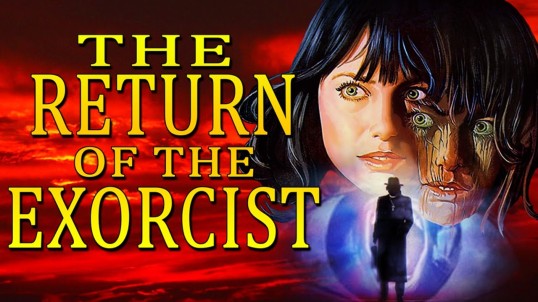
Horror Film Review: The Return of the Exorcist (dir by Angelo Pannaccio and Luca Damiano)


The 1975 Italian film, The Return of the Exorcist, opens with a disjointed series of flashbacks that gradually reveal why a young man named Piero (Jean-Claude Verne) is currently bound in a bed in a monastery.  What the flashbacks do not reveal is why Piero features one of the most fearsome mullets to ever been seen in an Italian film.  Seriously, I get that this film was shot in 1975 but it’s a little bit hard to be intimidated by someone who obviously spends hours a day obsessing over his mullet, regardless of what may or may not have possessed him.

Piero, we learn, is 17 years old and his troubles started when he was outside with his camera and he came across a naked woman (Mimma Biscardi) standing in the middle of a lake.  Piero took her picture and the woman laughed at him.  When Piero’s friends approached, the woman suddenly vanished.  When Piero developed the pictures, the woman was not in them.  He went back to the lake and discovered a medallion which, rather foolishly, he chose to wear.

Of course, because of the film’s flashback structure, we already know that the woman was previously sacrificed at a Satanic orgy and that her body was possessed by a succubus and, because Piero was stupid enough to put on that medallion, the succubus has now entered him.  Piero is soon acting strangely.  When he insults his girlfriend, Sherry (Sonia Viviani), she abandons him and eventually ends up at a club where she dances the night away.  Meanwhile, in his bedroom, Piero has a vision of the woman mocking him.  Piero grabs a knife and slashes it across the woman’s throat.  While this doesn’t effect the woman, it does lead to Sherry dying at the club.

The strangeness continues and Piero’s actions become progressively more and more disturbing.  After Piero attempts to assault both his mother (Francoise Prevost) and his sister, a nun named Elena (Patrizia Gori), the decision is made to call in an Exorcist.  The Exorcist arrives at the monastery and….

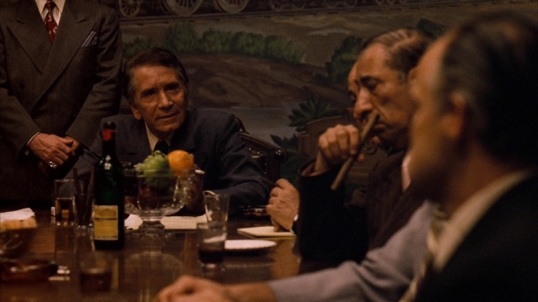
IT’S BARZINI!

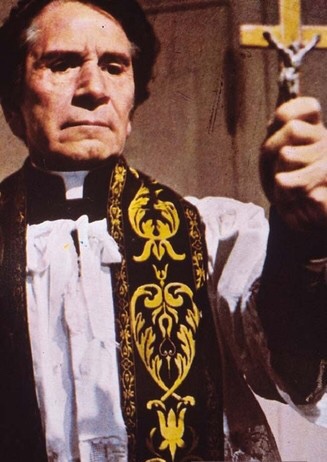
Well, no, actually The Exorcist does not have a name.  In the credits, he is simply listed as “Exorcist.”  One can guess from the film’s title that the plan was to trick audiences into thinking that the character was either Father Merrin or Father Karrras from The Exorcist but anyone who has seen that film know that would be impossible.  The important thing is that this film’s Exorcist is played by Richard Conte, who previously played Barzini in The Godfather.

(For the record, Richard Conte actually had a pretty long career and played a lot of roles before he was cast as Barzini.  In fact, Conte was prominent enough that he was initially considered for the role of Don Vito Corleone.  Before The Godfather, Conte appeared in films like Ocean’s 11, The Greatest Story Ever Told, The Big  Combo, Tony Rome, and Lady in Cement.  After The Godfather, Conte appeared in several Italian films, like this one.  The Exorcist was actually his final film role, as he died of a heart attack shortly after shooting.)

What type of exorcist is Richard Conte?  He’s a very tough one.  As opposed to the scholarly Merrin and the conflicted Father Karras, Conte’s Exorcist comes across as if he’s ready to step into that bedroom and just literally slap the Hell right out of Piero.  And considering just how annoying a character Piero was, I don’t think anyone would have objected.

Anyway, Conte really doesn’t show up in the film until it’s close to being over and the Exorcism plays out pretty quickly.  The majority of this film is made up of scenes of Piero imagining the Succubus naked or the Succubus taking over Piero’s body so that it can go after his girlfriend, his mother and his sister.  There’s reason why this film is also known as Naked Exorcism.  It’s unapologetically sleazy, as many of the Italian Exorcist films were.  It’s also a bit boring, mostly because Piero is such a doofus that you really don’t care what happens to him.  They should have just tossed him in the lake and tested whether he weighed more than a duck.  Conte is a tough exorcist but the film itself is forgettable.

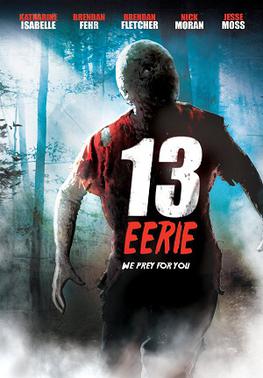
Horror Film Review: 13 Eerie (dir by Lowell Dean)


The 2013 film, 13 Eerie, takes place on an island that is not quite as deserted as our heroes originally assumed.

The island, known as the Eerie Strait, was once the home of a brutal, maximum security prison.  The island is full of abandoned buildings and abandoned vehicles, all of which sit there as monuments to the brutality of mass incarceration.  Prof. Tompkins (Michael Shanks) teaches a class in Forensic science and he brings six of his best students (played by Katharine Isabelle, Brendan Fehr, Brendan Fletcher, Jesse Moss, Kristie Patterson, and Michael Eisner) to the island.  With the help of an ex-convict named Larry (Nick Moran), Tompkins has set up several fake crime scenes (often featuring very real corpses) for his students to investigate.  For the class, the students are required to work in teams of two and the teams are not allowed to communicate with each other.  However, each team is given a walkie-talkie so that they can still communicate with Tompkins.

Now, just speaking for myself, I would probably drop the class rather than take part in any of this.  Seriously, as soon as you tell me that I’m going to have to spend my weekend hanging out at an abandoned prison and examining real corpses, I would probably walk out of the classroom and switch majors.  (Then again, I probably wouldn’t be majoring in forensics to begin with.)  But Tompkins’s students are very enthusiastic about heading off to the island.  I guess if doing obviously dumb things, going off to an isolated location with an ex-con would be an attractive option.

Anyway, the students head over to the Island and — surprise! — it turns out that there’s a lot of extra dead bodies lying around.  At first, the students think that the extra bodies are all a part of their class but then some of the dead bodies come back to life.  It turns out that the island — much like the prison camp in Garden of the Dead — was once used a place to experiment on prisoners.  As a result, many of the former prisoners have now been transformed into flesh-eating zombies who roam the island and look for new victims.

(And again, anyone who has ever seen a zombie movie, should have realized that this would happen.  It always amazing me that people in zombie movies have apparently never come across Night of the Living Dead on television late at night.  At the very least, you would think that these people would have at least read an article or two about The Walking Dead.  And really, even if you have somehow gone your entire life without being exposed to any zombie media, the sight of the dead walking around should be enough to convince most people to run away.)

13 Eerie has some atmosphere but it doesn’t really bring anything new to the zombie genre.  In fact, it so closely follows the rules of the genre that it actually gets kind of boring.  I appreciated, as always, the committed performance of Katharine Isabelle and I also liked that the film ended on a bit of a down note.  But, for the most part, 13 Eerie doesn’t bring anything new to the world of the living dead.

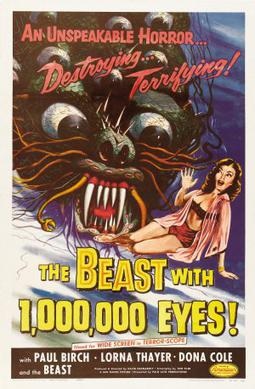
Horror Film Review: The Beast With A Million Eyes (dir by David Kramarsky, Lou Place, Donald Myers, and Roger Corman)


The 1955 film, The Beast With A Million Eyes, has three credited directors and reportedly, Roger Corman also stepped in and took over the direction as well, even though he received no screen credit.  That’s a lot of directors for a relatively simple sci-fi/horror film.  Reportedly, the problem with the directors came from the fact that The Beast With A Million Eyes was a non-union production and, after one day of production, the unions threatened to picket the set and basically shut down production unless the entire cast and crew signed up for the guilds.  The unions eventually got their members and their money but all of the drama set production so far behind that Roger Corman stepped in, fired award-winning cinematographer Floyd Crosby, and proceeded to finish up the film himself.

As for the film itself, it takes place in the California countryside.  Allan Kelly (Paul Birch, who was one of the first guys to get killed in The War of the Worlds and later played the dying alien in Corman’s Not Of This Earth) has no use for modern society and he has moved his family to a ranch in the California desert.  His family is not particularly happy about this.  His wife, Carol (Lorna Thayer), hates being isolated from the world.  Their teenage daughter, Sandy (Dana Cole), is lonely and has a strained relationship with her mother.  The only thing that makes Sandy happy is her boyfriend (played by Dick Sargent, who would later take over the role of Darin on Bewitched) and her dog.  Perhaps the worst part of living out in the desert is that their handyman is a weirdo known as Him (Leonard Tarver).

Now, I should mention that, when I was growing up, my family moved around a lot.  I spent a while living on a few farms that were owned by my aunts, uncles, and grandparents.  Even after we finally settled down in Texas, I would still frequently visit their farms.  I enjoyed visiting the farms, even though I’m pretty much a city girl at heart.  I can say that The Beast With A Million Eyes definitely captured the isolated feel of country life.  Watching the film, I could feel the heart of the unforgiving sun.  I could feel the feeling of tall grass against my bare legs.  And, at times, I could even remember the sound of roosters in the distance and crickets and grasshoppers chanting in the night.

Fortunately, my family was never bothered by aliens while we were on the farm.  Unfortunately, the same cannot be said for the family at the center of The Beast With A Million Eyes.  An alien decides to test its invasion plan on the family.  First, the animals turn against the family, including the poor family dog.  (This is probably not a film to watch if you feel about dogs the way that I feel about cats.)  Then, the handyman suddenly turns against the family as well.  The alien is taking over the minds of the living beings around, starting with animals and then moving on to humans.  Can the family defeat the aliens?  And will nature ever be the same?

Hey, I liked The Beast With A Million Eyes!  Usually, when the film has a lot of directors, it results in a disjointed mess but The Beast With A Million Eyes actually had an interesting story and a lot of country atmosphere.  As opposed to the stereotypically perfect 50s family, the family at the center of The Beast With A Million Eyes is believably dysfunctional but, in the end, they have to come together to save the humanity.  I just hope the rest of the world would be willing to do the same.

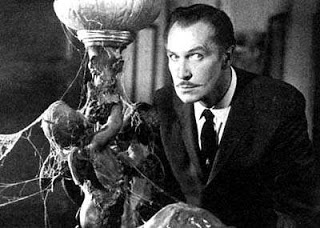
Horror On The Lens: House On Haunted Hill (dir by William Castle)


The original The House on Haunted Hill is a classic and one that we make it a point to share every Halloween.  And since October is now halfway over, now seems like the perfect time to do so!

Be sure to check out Gary’s review by clicking here!

Enjoy Vincent Price at his best!

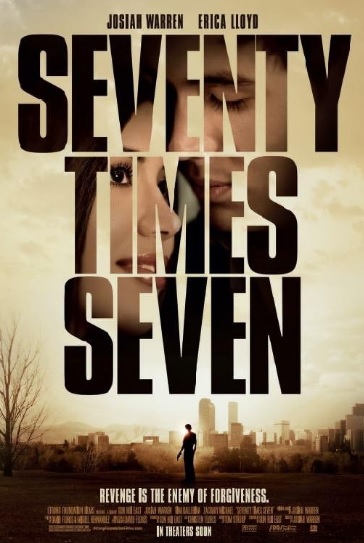
October Positivity: Seventy Time Seven (dir by Josiah David Warren)


After you watch enough independent, low-budget, and semi-amateur films, you really do come to appreciate the value of a good sound crew.

I mean, seriously, film audiences often take clear sound for granted.  They make the mistake of assuming that it’s easy to clearly capture all of the dialogue or to recreate the sound of a gunshot or an explosion.  It’s only when you see a film that doesn’t feature a clear soundtrack that you start to appreciate just how much you take for granted.

Take the 2012 film, Seventy Times Seven.  Now, in the film’s defense, the dialogue is clear in every scene.  You can hear when people are talking and you can understand the words that are coming out of their mouth.  Still, this film features a lot of scenes that were shot outdoors.  Some scenes were shot noticeably close to a highway.  You can hear every bird chirping, every car driving by, every insect buzzing nearby, and every gust of wind that hits the microphone.  On the one hand, one could argue that the film is capturing the authentic sounds of reality.  On the other hand, it does get to a bit distracting.

The film is all about the importance of forgiveness, which is something that I happen to feel pretty strongly about.  I think most of the problems in the world are due to the fact that people have not only forgotten how to forgive but also they’ve forgotten why it was important to forgive in the first place.  So, I can’t complain about the film’s message.  The execution, on the other hand….

David Anderson (Josiah David Warren) appears to have it all.  He’s got a nice house.  He’s got a nice ranch.  He’s got a beautiful new wife, Jacqueline (Tina Ballerina).  And Jacqueline’s pregnant!  David, who hopes to eventually become a father to seven children, is excited!  (It’s easy to say you want seven children when you’re not the one who has to actually give birth to them.)  Everyone’s excited, except for David’s sister-in-law Jenny (Erica Lloyd) and David’s somewhat sketchy best friend, Brayden (Timothy McGrath).  Jenny is upset because she’s been unsuccessfully trying to get pregnant for over a year.  Brayden is upset because he used to date Jacqueline and he’s never really gotten over her.

One day, David comes home to discover that someone has broken into the house and murdered Jacqueline!  Convinced that the police don’t know what they’re doing (and this film does take place in Denver so it’s totally possible that David is right about this), David becomes determined to track down the murderer and get his own revenge.  Even though Jacqueline once touched his heart with a story about how she forgave a man who once mugged her, David is convinced that the time for forgiveness is over.

So, who could the murderer be?  Is it Jenny, who is just upset because she desperately wants to have a child of her own?  Or is it Brayden, who spends his time smirking and talking about how he doesn’t believe in any of that God stuff.  Jenny is the one who is eventually arrested but, from the moment Brayden refuses to take part in a prayer circle, we pretty much know who the guilty party is.

As I said, the film’s execution leaves a lot to be desired.  The performances are stiff, the film is full of slow spots, and the dialogue is often awkwardly didactic.  It’s the type of film where someone notices that David’s father still looks young and healthy and someone else earnestly responds, “He looks that young because of God.”  It doesn’t help that the film makes Brayden’s guilt so obvious that it actually diminishes David as a character when David doesn’t automatically figure that Brayden killed his wife.  Brayden might as well be wearing a scarlet M on his chest.

That said, the film’s overall message isn’t bad.  Embrace forgiveness and refuse to allow hate to dominate your life.  We should all give that a try.

Late Night Retro Television Reviews: Nightmare Café 1.3 “Fay & Ivy”


Welcome to Late Night Retro Television Reviews, a feature where we review some of our favorite and least favorite shows of the past!  On Mondays, I will be reviewing Nightmare Cafe, which ran on NBC from January to April of 1992.  The entire show is currently streaming on YouTube!
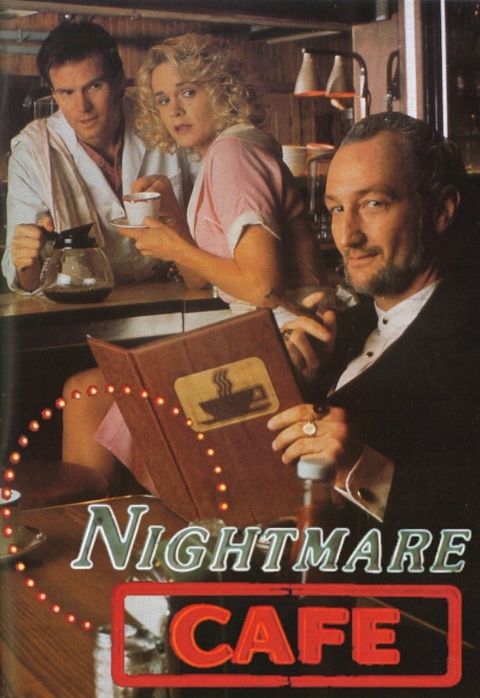
This week, Fay’s sister comes to visit!

Episode 1.3 “Fay & Ivy”

(Dir by Christopher Leitch, originally aired on March 13th, 1992)

The third episode of Nightmare Café opens with a young woman named Ivy (played by Molly Parker) coming to the big city with her boyfriend, Jesse (Peter Outerbridge).  Ivy is totally excited to be in the big city because she thinks that she’s going to finally track down her older sister.  Ivy’s sister left home ten years ago and Ivy isn’t even sure what she looks like.  However, for ten years straight, Ivy’s sister sent her letters about how great life in the city was.  The last of her sister’s letters invited Ivy to come out to the city herself.

Jesse is a bit less excited about the prospect of finding Ivy’s sister.  In fact, Jesse is a bit of a controlling jerk who “accidentally” drops one of the letters while he and Ivy are getting off the train.  Jesse is coming to the big city so that he can find new ways to make money, like robbing a convenience store while the clueless Ivy waits outside.

As for the dropped letter, it’s picked up by Robert Englund’s Blackie, who reads the letter, has a good laugh, and then speaks straight to the audience.  Blackie informs us that Ivy’s sister is Fay and that Fay probably doesn’t even remember inviting Ivy to come see her.

As Blackie puts it: “I wonder if she remembers issuing this invitation.  She’d just as soon forget.  You suppose the café will let her forget?  I don’t.”

And, sure enough, Ivy and Jesse eventually end up in the Nightmare Café. were Fay is the waitress and Frank is the cook.  Fay, who earlier was saying that she felt like there was still some things in her former life that she needed to take care of, is shocked to see Ivy.  For her part, Ivy doesn’t recognize Fay.  And, for Jesse’s part, he gets upset when Fay starts asking Ivy too many questions about her life back home.  Jesse grabs Ivy and the two of them leave the café.

Frank leaves the café to search for Ivy and Jesse, saying that he’s getting bored with being stuck in the building.  (In a mildly amusing subplot, the café actually gets offended by Frank’s comments and requires Frank to apologize before he’s allowed to later reenter the building.)  Ivy and Jesse, meanwhile, end up in a tattoo parlor where Jesse gets a tattoo from none other than Blackie himself.  (Robert Englund appears to be having a ball playing a tattoo artist.)

As for Fay, she uses the cafe’s phone to call her mother.  When Fay identifies herself, her mother (Penny Fuller) refuses to believe that Fay is calling.  Fay, realizing that her mother has never forgiven her for leaving home, tells her mom that Ivy is in the city and that she’s in trouble.  Fay then has what appears to be a café-inspired hallucination in which she finds herself talking to her mother face-to-face and the two of them discuss their strained relationship.  It’s a touching scene, well-played by Penny Fuller and Lindsay Frost.

In the end, everyone ends up back at the café.  Jesse returns to the café to try to rob it and he drags Ivy (who now knows that Fay is her sister) with her.  Frank returns to the café with Ivy’s mother, who says that she came to the city after having a weird dream in which Fay called her to tell her that Ivy was in trouble.  Finally, Blackie shows up so that he can zap Jesse into the back of a police car.

With Jesse gone, Fay, Ivy, and their mother have a cup of coffee.  While declining to mention that she’s actually dead, Fay does say that it’s a bit too late for her to fix her relationship with her mother.  But there’s still time for her mom and Ivy to talk and get to know each other.  Ivy and her mom, for their part, both think that Fay left home and disappeared because she works for the federal government.

This was kind of a sad episode, really.  Fay wants to heal her relationship with both her mother and her sister but, in the end, she’s forced to accept that she’s dead and they’re not.  Fay and Frank can help people live better lives but their own lives are pretty much over and they’re going to spend an eternity in the Nightmare Café.

I liked this episode, which was considerably more straight-forward in its storytelling approach than the previous two.  What it lack in surreal imagery, it made up for in genuine emotion.

Next week, the café helps a dying detective sold one last murder!
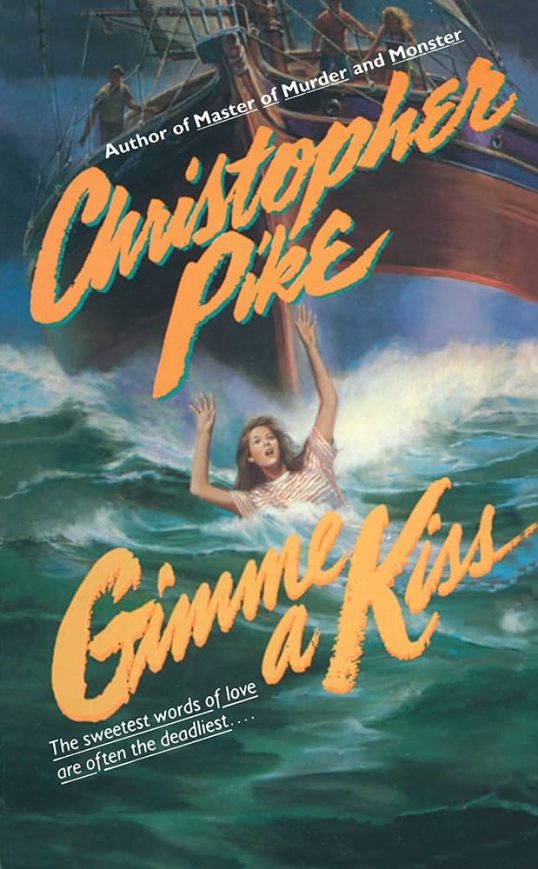
Horror on TV: The Hitchhiker 5.16 “Hootch” (dir by Leon Marr)


Tonight’s episode of The Hitchhiker depicts what happens with a greedy woman (Stephanie Zimbalist) attempts to force her Vietnam vet brother out of the house that has been his only sanctuary from all the troubles of the world.  Needless to say, things do not go well.

This episode originally aired on September 16th, 1989.

The TSL Horror Grindhouse: Garden of the Dead (dir by John Hayes)


The 1972 film, Garden of the Dead, takes place in a prison camp that sits out in the middle of what appears to the bayous.  The prisoners spend their days working on the chain gang, breaking rocks and cleaning highways.  The tough-as-nails guards spend their days watching the prisoners and carrying around their rifles.  This is the type of prison camp where the prisoners are all talkative and boastful and the guards all wear sunglasses and every day is just like the next.

A group of prisoners are trying to brighten things up on the chain gang by using some experimental formaldehyde to get high.  I’m sure that won’t lead to any complications!  When the prisoners later try to escape from the prison camp, they’re quickly captured by the guards who proceed to violate all sorts of laws by gunning the prisoners down and then ordering the other prisoners to bury the dead bodies in the prison camp’s garden.

That night, the dead prisoners come back to life as zombies.  Does this happen because they were getting high off of the formaldehyde or is it because the chemicals themselves were leaked into the garden?  The film doesn’t make it particularly clear but it doesn’t matter.  What’s important is that they’re now zombies.  You really don’t need a whole lot of explanations when it comes to zombies.  The dead prisoners are still obsessed with getting high and they start to kill everyone in the camp as a part of their effort to get their precious formaldehyde.

I’ll just admit right now that I absolutely love Garden of the Dead.  Some of that is because Garden of the Dead is a very short movie, clocking in at barely an hour’s running time.  It was a film that was obviously designed to be the second half of a double feature but no matter!  That short running time means that there’s no need for extra padding and the action move quickly.  The film ends before the viewer gets bored with the somewhat repetitive zombie action.  Seriously, we need to normalize 50 minute films.

Another thing that I love about Garden of the Dead is that it is full of foggy bayou atmosphere.  The film itself was obviously shot on a very low budget and on very cheap film but the grainy images actually contribute to the film’s nightmarish feeling.  The film captures the feeling of being isolated in the middle of nowhere.  One reason why the zombies in this film are frightening is because there’s literally nowhere safe to hide from them.  Even if you can get out of the prison camp, you’ll still have to brave the wilderness that surrounds it.

Finally, I liked that the zombies in Garden of the Dead were smarter than the average zombies.  Instead of just stumbling around and trying to eat every living thing that they met, these zombies worked together to get what they wanted.  I especially liked the spazzy zombie who was always running around the prison camp and jumping and yelling at everyone.  These are zombies who clearly enjoy being zombies and it makes Garden of the Dead all the more effective.

Garden of the Dead is a grindhouse gem!

<– October Hacks: Meatcleaver Massacre (dir by Ed Wood)

The Phillies Win Game One Of The NLCS  –>