Lisa Marie’s Week In Television: 2/2/25 — 2/8/25


Here’s a few thoughts on what I watched this week.

Abbott Elementary (Wednesday Night, ABC)

I’m one episode behind as far as Abbott goes.  This week, I watched the golf course episode but I still need to watch the science fair episode.  I’ll do it tomorrow before the Super Bowl.  As always, the episode made me laugh.  The show has done marginally better with the gentrification subplot than it did with the charter school storyline a few seasons ago.

Dark (Netflix)

Case and I continuing to watch this creepy German show.  This is the only show I’ve ever seen that’s actually held my attention while the characters discuss physics.

Hell’s Kitchen (Fox, Thursday Night)

And we have a winner!  Kyle’s door open and he is the latest chef to win a season of Hell’s Kitchen.  I did like Kyle but I have to admit that I lost interest in this season after both Brandon and Egypt were eliminated.  I still can’t see Kyle as a head chef.  Brandon had a bad night and Egypt lost an arbitrary contest but I still feel like either one of them would have been a better winner.  That said, anyone who has ever tasted my cooking knows that I wouldn’t have even made it past the first 10 minutes of the first episode of Hell’s Kitchen.  Congratulations to Kyle on his victory and on proving people like me, who were pretty dismissive of his chances at first, wrong.

King of the Hill (Hulu)

I watched the episode where Bill’s touchdown record was broken and, with Hank’s encouragement, Bill rejoined the high school team in an effort to win it back.  “You the man, Bill …. don’t look down at your leg.”

Kitchen Nightmares (Fox, Tuesday Night)

Chef Ramsay was, again, in New Orleans this week.  The New Orleans shows have been kind of boring.  None of the restaurants have really been that appealing, either before or after their makeover.  You have to wonder how many times Chef Ramsay is going to have to invite an ex-football player to come and convince people to do their job.  It’s kind of funny how the only thing many of these restaurants really need is for a former member of the Saints to show up for five minutes.

After being bored with the trip to New Orleans, I hopped on Tubi and revisited the Amy’s Baking Company episodes from seasons 6 and 7.  Now that was classic Ramsay chaos!  I like it when Chef Ramsay is nice to the chefs on Hell’s Kitchen but, when it comes to Kitchen Nightmares, I just want him to rip the place apart!

Scamanda (Hulu)

On Wednesday, I watched the first episode of this NBC docuseries about a woman who pretended to have cancer and who swindled a lot of people out of a lot of money.  It was an interesting episode.  People pretending to be sick to get money from people is hardly a new phenomena but it was interesting to see not only how far Amanda took it but also how gullible people really were.  (They really wanted to believe.)  The film did have a few regrettable reenactments, including a truly risible one of a bunch of churchgoers literally throwing money at Amanda’s feet.  Still, it’s an interesting story.

Watched and reviewed:

  1. CHiPs
  2. Fantasy Island
  3. Friday the 13th: The Series
  4. Highway to Heaven
  5. The Love Boat
  6. Malibu CA
  7. Miami Vice
  8. Monsters
  9. Pacific Blue
  10. St. Elsewhere

Song of the Day: Raiders March by John Williams


Today is the 93rd birthday of the great composer John Williams and today’s song of the day is one of his greatest compositions.  Here’s is John Williams, conducting Raiders March (from the Indiana Jones films) in Vienna.

Late Night Retro Television Review: Friday the 13th: The Series 3.1 and 3.2 “The Prophecies”


Welcome to Late Night Retro Television Reviews, a feature where we review some of our favorite and least favorite shows of the past! On Fridays, I will be reviewing Friday the 13th: The Series, a show which ran in syndication from 1987 to 1990. The entire series can be found on YouTube!

This week, we start season 3!

Episode 3.1 and 3.2 “The Prophecies”

(Dir by Tom McLoughlin, originally aired on October 7th, 1989)

The third season starts with a 90-minute episode, one that was split into two parts when the show was later re-aired.  It’s a rather strange episode, one that takes the Curious Goods crew far from Canada and one that also see Ryan transformed into a…. well, we’ll get to that.

When the episode starts, Ryan is in a state of shock because he recently ran into his mother (Jill Frappier) while visiting the grave of his brother.  His mother walked out on Ryan and his father after the death of Ryan’s brother and the reunion between the two leaves Ryan feeling conflicted.  As he blames himself for both the death of his brother and his father, he can’t help but wonder what he would do if he had the opportunity to do everything over again.

Meanwhile, Micki is running the antique store with none other than Johnny Ventura.  Last season, Micki disliked Johnny and she had ever right to as Johnny tended to be a little bit stalker-ish in his behavior towards her.  But, with the start of this season, it appears that all has been forgiven.

As for Jack, he’s in a small town in France.  He received a letter from Sister Adele (Marie-France Lambert) telling him about some apocalyptic visions that she’s been having.  Those visions are largely the result of fallen angel Asteroth (Fritz Weaver), who is determined to bring the AntiChrist into the world by following the step laid out in the Books of Lucifer.  He has to kill a nun and he’s decided that Adele is that nun.  However, Asteroth cannot get to her.

But then Jack gets shoved down a flight of stairs and ends up in the hospital.  Ryan, Micki, and Johnny fly over to France.  Ryan is promptly possessed by the Devil and he murders Sister Adele!  But now, for some reason, Asteroth also needs to murder a young girl who seems to know Ryan and whose presence in the episode is never really explained.  In order to free Ryan from being possessed, it’s necessary to transform him back into a small child.  Eventually, God gets tired of all this and Asteroth bursts into flame.

The ending is a bit ambiguous about what this all means but I do know that this was John D. LeMay’s last episode and that Johnny Ventura will become a series regular as well.  (Steven Monarque, who played Johnny, is still listed as a guest star in this episode.)  So, I guess Ryan, who no longer has any memory of Micki or any of his Curious Goods adventures, is going to go live with his mother and grow up again and I’d love to know how Jack and Micki are going to explain that to his mom.

This was a weird way to write Ryan out of the show.  (If anything, Ryan sacrificing himself to save Micki and/or Jack would have made much more sense and been just as powerful an ending.)  But, with all that mind, this was still a good episode.  While the episode did not film in France, it does feature some location work in Quebec and those scenes are full of ominous atmosphere.  Fritz Weaver was an appropriately creepy Asteroth.  Speaking of being creepy, John D. LeMay did a great job playing possessed Ryan.  This episode was not always easy to follow but it was scary and atmospheric and it worked surprisingly well.

Bye, Ryan!  I’ll miss you.

Film Review: Mouse of Horrors (dir by Brendan Petrizzo)


As a horror fan, I always appreciate a good slasher film.  As dark and as disturbing as they can be, they’ve also helped me to face down a lot of my own real-life fears.  Watching a good slasher film can be cathartic.  You may be scared when you’re watching and, if you’re like me, you’ll probably put your hands in front of your eyes during the more graphic kills but, when the end credits roll, you feel proud of yourself for having made it all the way through.

Again, that’s a good slasher film.

A bad slasher film can be, if you’ll excuse the expression, absolute terror.

Mouse of Horrors is not a good slasher film.  It’s a film about Chloe (Natasha Tosini) and her friends who, after about 15 minutes of filler, finally go to the “fun fair.”  It turns out that the fair is not very fun because it’s home to Dr. Rupert (Chris Lines) and his two sons, one of whom wears a mouse mask and another of whom wears a bear mask.  They’re Mickey and Winnie, though they’re never explicitly called that over the course of the film.  (The Mouse is played by Lewis Santer while the Bear is played by Stephen Staley).  Dr. Rupert needs body parts so he sends his two sons out to collect them.  As you may have guessed, this leads to a lot of scenes of spurting blood, hacked-off limbs, and screams.  Mickey and Winnie do not speak but Dr. Rupert does.  In fact, the old man will not shut up.  Even if he wasn’t some old weirdo demanding that his sons hack up random people, Dr. Rupert would be an annoying old crank.

Let’s give some credit where credit is due.  The Mouse has potential and physically, Lewis Santer does a good job of portraying The Mouse’s jumpy style of movement.  The Mouse mask is creepy, or at least it is at first.  Eventually, I got bored with looking at the Mouse and, by the time the Bear started fighting with the Mouse, I no longer cared much about looking at either of them.  Still, the killer is one of the most important parts of a slasher film and the Mouse had potential.  The setting of the carnival also had potential, though most of it went unused.

The rest of the film, though …. ugh!  Seriously, this was one of the worst edited films I’ve ever seen, including one scene where a day for night scene went totally day for a few shots.  The story dragged.  (It takes 20 minutes to get them to the fun fair when the film really should have started with them already there.)  I was never quite sure where the Mouse was in relation to anyone else in the film, negating any chance of generating suspense.  Why was the town suddenly deserted?  Why did everyone else at the fun fair suddenly disappear except for Chloe and her friends?  Why did the Mouse go the local pub to kill a bartender instead of just staying at the fun fair?  Does the Mouse walk around town with his mouse mask on?  How does he get away with that?  I’ve always been the first to say that enjoying a horror film requires a certain suspension of disbelief but the audience has every right to expect some sort of reward for playing along.  This film doesn’t offer that reward.

Get ready for a lot more films like this. Copyrights are expiring and everyone wants to either make a film based on their childhood nightmares or get revenge on their English teacher for making them read a book in high school.  This was not the first killer Mickey film and I doubt it will be the last.

Retro Television Review: St. Elsewhere 1.11 “Graveyard”


Welcome to Retro Television Reviews, a feature where we review some of our favorite and least favorite shows of the past! On Fridays, I will be reviewing St. Elsewhere, a medical show which ran on NBC from 1982 to 1988.  The show can be found on Hulu and, for purchase, on Prime!

This week, a handful of doctors save two patients and lose one.

Episode 1.11 “Graveyard”

(Dir by Victor Lobl, originally aired on January 18th, 1983)

It’s the graveyard shift at St. Eligius.  The halls and the cafeteria are dark.  The ER is oddly calm.  There are only a few patients to be looked after and most of the doctors are playing poker and talking about the rather boring subject of Dr. Samuels’s love life.

Only a handful of the series regulars make an appearance in this episode but that’s fine.  This episode actually provides a nice break from having to keep track of where everyone is.  Unfortunately, as I already said, a lot of this episode is centered around the character of Dr. Samuels.  Nothing against the late David Birney, who did a perfectly acceptable job in the role, but Dr. Ben Samuels is just not that interesting of a character.  He’s a dedicated surgeon who feels too much, drinks too much, and wants to sleep with his colleagues.  That’s fine but I grew up watching General Hospital.  I’ve seen a hundred doctors just like Samuels on television.

To me, the far more interesting characters are the people like David Morse’s Jack Morrison or Ed Begley, Jr’s Victor Ehrlich or even Terence Knox’s Peter White.  They’re doctors who screw up and aren’t always brilliant and sometimes say the wrong things.  They feel like real people whereas Dr. Samuels just feels like a cliche, a holdover from some other medical show.  Samuels is not a particularly compelling character and, when I did some research, I was not surprised to discover that David Birney only appeared on one season of the show.

G.W. Bailey’s Hugh Beale also only appeared in the first season and that’s a shame because Bailey’s performance as Beale has been one of the first season’s real pleasures.  Bailey plays Beale as a compassionate man who often pretends to be more naive than he is.  As a Southerner, he’s an outsider on this Boston-set show and, being an outsider, he can often relate to the patients in the psych ward.  Of course, that still doesn’t stop Dr. Beale’s main patient, Ralph the Birdman, from throwing himself off the roof of the hospital in this episode.  To be honest, I already suspected things weren’t going to go well for Ralph on this show but his suicidal jump still upset me.  As annoying as the character was, he was also finally making some progress.  He finally admitted he wasn’t a bird.  And then he proved it by showing that he couldn’t fly.

While Ralph plunged to his death, Dr. Samuels saved a gunshot victim (played by Tom Hulce).  And Jack allowed the father (James Hong) of one of his comatose patients to perform a Chinese ritual that led to the patient waking up and eventually walking into the cafeteria, where the doctors were playing poker.  “Who ordered the Chinese?” Fiscus asked and …. ugh.  Not cool, Fiscus.

It was a night of triumph and tragedy.  Ralph died but Dr. Samuels and Dr. Paxton agreed to give their relationship another try which …. eh.  I don’t care about Samuels and Paxton.  For the most part, though, I liked this episode.  The smaller cast made it easier to keep track of things and the poker game banter reminded me that the doctors are all people too.  Still, I have to feel bad for Ralph.  All he wanted to do was fly.

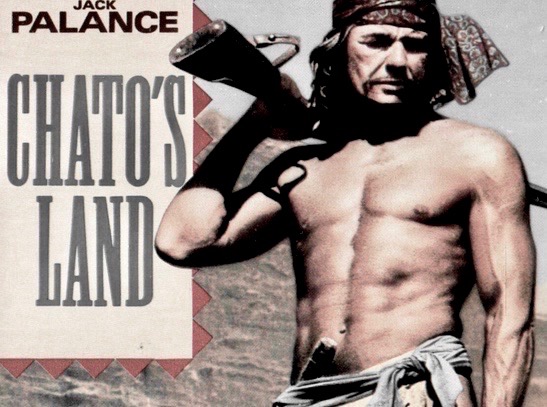
CHATO’S LAND (1972) – Jack Palance leads a posse after Charles Bronson!


One of the most enjoyable things about being a dad is introducing your favorite things to your kids. I taught my son Hank the sports of basketball, baseball, and golf, and even now there’s nothing we enjoy doing more together than playing a round of golf. Of course, as one of the world’s biggest Charles Bronson fans, I’ve introduced him to many films starring my cinematic hero. It seems that two movies have stood the test of time and have gone on to become two of his favorite movies. The fact that THE DIRTY DOZEN (1967) is one of his favorites isn’t a big surprise as he’s always enjoyed playing video games set during World War II. The other, CHATO’S LAND (1972), was more of a surprise. A few years ago, when Hank was home from college, I asked him if there was a movie he wanted to watch. It could have been any movie in the world, and I was honestly a little surprised when he said he’d been wanting to watch CHATO’S LAND again. Needless to say, this dad was very proud. 

Charles Bronson is Pardon Chato, a half breed Apache who’s minding his own business and having a drink in the saloon, when a small-town sheriff decides to give him hell just for being a “breed.” Forced to kill the racist POS in self-defense, Chato heads out of town a day ahead of the posse led by the former confederate Captain Quincey Whitmore (Jack Palance). Whitmore may be leading the posse, but the Hooker Brothers (played by Simon Oakland, Ralph Waite, and Richard Jordan) are just as bigoted as the sheriff who was killed, and they set about bullying their neighbors into joining their hunt for Chato. A couple of the guys who go along because it’s “expected of them” are Joshua Everette (James Whitmore) and Gavin Malechie (Roddy McMillan). When the posse comes across Chato’s home and woman, some of the members decide the wise thing to do is rape her and tie her up as bait. This is clearly not going to work out well for the posse, even those who tried to stop the rape. Using his sneaky Indian skills and the help of a fellow Indian, Chato is able to create a diversion and rescue his woman, but his friend is killed in the process. With his friend murdered and his woman brutalized and raped, Chato is no longer willing to just run away. From this point forward, the hunters will become the hunted as he leads them all further into CHATO’S LAND. 

There are several things that I find interesting about CHATO’S LAND. This is the first of six films that director Michael Winner and Charles Bronson would make together. They would all be financially successful films with THE MECHANIC (1972) and the original DEATH WISH (1974) standing out as true 70’s classics. Charles Bronson’s last number one box office hit would be DEATH WISH 3 (1985), which would also be his final film with Winner. It should also be noted that the character of Chato would be an early precursor of the kind of character Bronson would go on to embody almost exclusively throughout the rest of his career, that of the quiet but deadly man of action. Chato only says 13 lines in the entire movie and most of those are in a Native American dialect. Chato doesn’t have that much actual screen time either, but his presence dominates every scene. He’s like the angel of death hanging over the entire proceedings waiting to strike, and Winner continues to build on this tension as the film moves towards its inevitable conclusion. It’s an incredible, physical performance that can only be delivered by an actor like Bronson. Finally, the film has an outstanding cast, a cast that Winner himself would call “as good a cast as I ever assembled.” In addition to Bronson, Jack Palance is excellent as the confederate captain who’s never gotten over losing the war, and who now finds himself losing the battle to control the men in the posse. James Whitmore and Roddy McMillan are solid as a couple of decent men who went along because they felt it was their duty to their neighbors, who now find themselves caught up in a bad situation with even worse men. And finally, Simon Oakland, Ralph Waite & Richard Jordan are the kind of men you love to hate as the ignorant and bigoted Hooker brothers. It doesn’t hurt your feelings at all to see those guys get what’s coming to them.

Overall, CHATO’S LAND is a very good western, dominated by Bronson’s presence in the same way that JAWS (1975) is dominated by a giant killer shark. It was also a hugely profitable film upon its initial release, guaranteeing that Bronson would continue to get starring roles in films backed by American studios. Bronson liked to work with the same directors once he felt comfortable with them, and his collaboration with Winner would prove to be extremely fruitful and help turn him into one of the biggest box office stars in America. Thanks, Michael! 

Late Night Retro Television Review: Highway to Heaven 3.12 “Oh Lucky Man!”


Welcome to Late Night Retro Television Reviews, a feature where we review some of our favorite and least favorite shows of the past!  On Thursdays, I will be reviewing Highway to Heaven, which aired on NBC from 1984 to 1989.  The entire show is currently streaming on Tubi and several other services!

It’s time to work at another youth center!

Episode 3.12 “Oh Lucky Man!”

(Dir by Dan Gordon, originally aired on December 10th, 1986)

Jonathan and Mark are working at a youth center …. again!

Don’t get me wrong.  There’s nothing wrong with Jonathan and Mark working at a youth center.  From what I’ve seen of this show, Michael Landon seemed to have a natural rapport with kids and Victor French’s grouchiness was always put to good use whenever he had to deal with someone younger.  It’s just hard not to notice that Jonathan and Mark seemed to go to several youth centers each episode and they almost always dealt with exact same issue.  Some kid is angry or insecure.  He may not have a father in his life.  Jonathan helps the kid admit his anger and learn to trust whoever wanted to adopt him.  Usually, this seemed to involve helping the kid find the courage to play a sport or something similar.

In this episode, the youth center is run by an ex-con named Jake (Thalmus Rasulal).  Mark was the one who arrested Jake and sent him to prison but Jake so impressed Mark with how he turned his life around that Mark ended up testifying in favor of giving Jake parole.  Jake opened up a youth center to “keep the kids out of the gangs.”  And again, there’s nothing wrong with that.  I admire anyone who comes out of prison and attempts to do something good for their community.  One of the truly shameful things about our justice system is that it’s been forgotten that prison is meant to rehabilitate.  We focus so much on punishment that we end up forgetting that we’re supposed to be a nation built on second chances.  Jake has made something out of himself and now, he’s giving back.

(And yes, that is your When Did Lisa Marie Become A Bleeding Heart? moment of the week,)

The problem is that his youth center desperately needs money.  It looks like everything is going to be alright when Mark wins $5,000,000 while taking the kids out for lunch.  Mark plans to give the money to the youth center.  He also plans to be there for a troubled kid named Brady (Ian Michael Giatti).  But when Mark is approached by Nina Van Slyke (Shannon Tweed), those plans change.  Nina claims to be the head of a charity and she convinces Mark that her charity could do a lot more good with the money than the youth center.  Mark finds himself falling in love with Nina and he even tells Jonathan that they’re partnership might be over.  However, Nina is actually a con artist who just wants to take Mark’s money for herself.

Will Mark see the error of his ways?  Of course!  And he’ll apologize to Brady for missing Brady’s big game and he’ll keep the youth center open by giving the money to Jake.  This is Highway to Heaven.  There’s not a cynical note to be found in this show.

That said, this episode was a bit uneven with the soap opera-like scenes of Nina and her partner (Roy Thinnes) plotting to cheat Mark never gelling with the more earnest scenes of Jonathan helping out at the youth center.  As always, this episode was well-intentioned and about as sincere as you can get.  The strength of this show is that it’s so sincere.  But Shannon Tweed felt like she was acting in a totally different show from Highway to Heaven.  As a result, this episode never quite came together as a cohesive unit.

Oh well.  At least Brady’s going to get a family!