May The Fourth Be With You: Looking Back At Star Wars


Today is Star Wars Day.  (It’s May 4th.  May the Fourth Be With You!  I’ll stop now.)  Five years ago, I ranked all of the Star Wars feature films that had been released up until that point from best to worst.  Here’s how I ranked them:

  1. The Empire Strikes Back
  2. Rogue One
  3. New Hope
  4. The Force Awakens
  5. Revenge of the Sith
  6. Return of the Jedi
  7. Solo
  8. The Rise of Skywalker
  9. The Last Jedi
  10. Attack of the Clones
  11. The Phantom Menace

Since that was a while ago, I decided to take a look back and see if I still felt the same way.  Here are my brief thoughts on each film, in order of release.

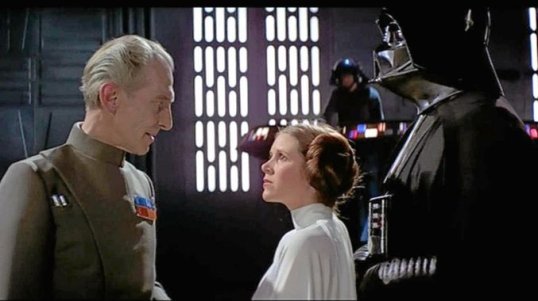
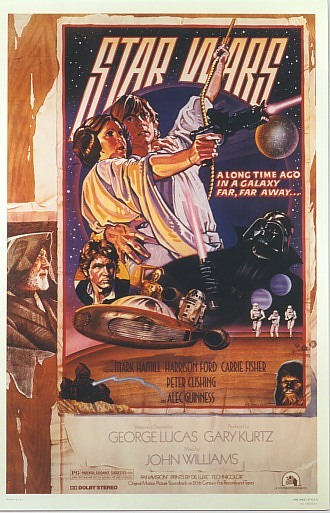
Star Wars: Episode IV — A New Hope (1977, directed by George Lucas) — A New Hope may not be the best Star Wars film but it’s still the most entertaining, even if George Lucas doesn’t seem to realize that.  A tribute to the serials and space operas that Lucas grew up with, A New Hope features great action scenes, special effects that hold up well despite not being as slick as modern CGI, and great performances from Alec Guinness and Harrison Ford.  Mark Hamill would eventually become a much better actor, though you might not guess just from his performance here.  Watching New Hope today, I really appreciate that the movie doesn’t get bogged down in overexplaining things.  We don’t need to know what the Clone Wars were specifically about or what the Kessel Run actually was.  They sound cool and that’s all that was really required.  Despite what some claim, there is absolutely no evidence that Darth Vader was meant to be Luke’s father in this move.

Star Wars Holiday Special (1978, directed by Steve Binder) — Only aired once, I debated whether to include it here or not.  I eventually did just because it features the debut of Boba Fett.  It’s as bad as you’ve heard but the special’s real since is that it’s incredibly boring.  Harrison Ford still looks happier here than he did in Return of the Jedi.

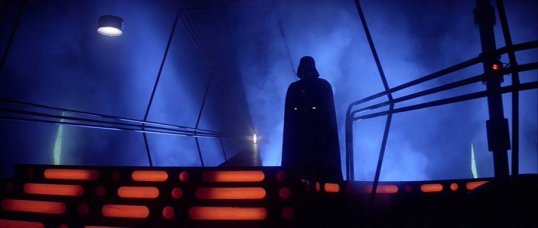
Star Wars: Episode V — The Empire Strikes Back (1980, directed by Irvin Kershner) — The best of the original trilogy, this installment was surprisingly dark, downbeat, and violent.  Mark Hamill finally started to show some signs of growth as an actor while Harrison Ford’s Han Solo continued to be the coolest rebel in the universe.  Combining the more thoughtful scenes with Yoda with the action-orientated scenes on Cloud City made this the most intelligent of the Star Wars films.  The battle on Hoth remains one of the best action scenes ever.  I think every kid who saw this movie wanted an AT-AT Walker.  I know I did.

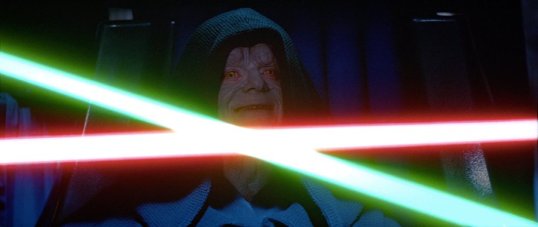
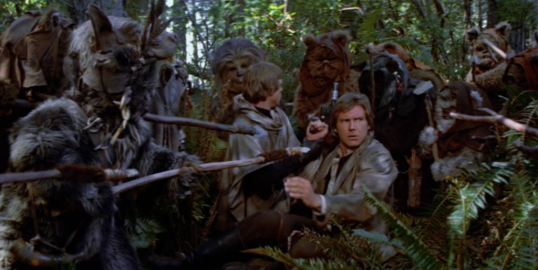
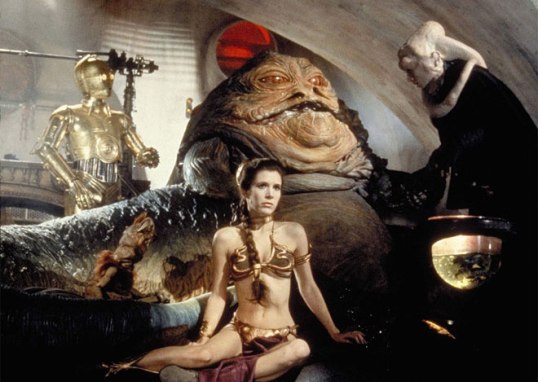
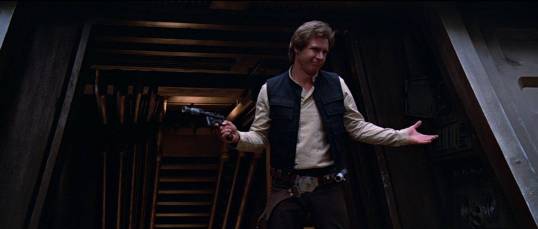
Star Wars: Episode VI — Return of the Jedi (1983, directed by Richard Marquand) — It’s not quite as bad as its reputation, largely due to the opening with Jabba the Hutt’s court.  Jabba is so grotesque and evil in this movie that it’s hard not to regret that the subsequent films made him into more of buffoon than a crime lord.  Brining back the Death Star made this film feel like a retread.  The Ewoks were created to sell toys but so was everything else in this movie.  Harrison Ford looks particularly grouchy at the end.

The Ewok Adventure (1984, directed by John Korty) and Ewoks: The Battle For Endor (1985, directed by Jim and Ken Wheat) — I guess if these had been successful, there would have been an Ewok television show.  The Ewok Adventure feels childish and features a narrator.  Battle for Endor is surprisingly violent for a movie about teddy bears.  Both films are more bland than truly bad.
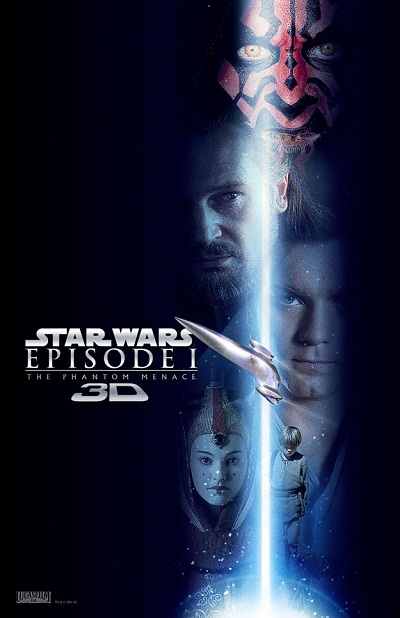
Star Wars: Episode I — The Phantom Menace (1999, directed by George Lucas) — There’s been some revisionism about this film.  Some people actually defend it now.  Not me.  It’s still pointless.  This movie started the trend of every popular film having to have an in-depth “mythology” behind it.  It turns out that the Evil Empire was all about trade routes and tariffs.  Jake Lloyd gets more blame than he deserves.  Overexplaining the Force was a sign of things to come.  This movie would feature Natalie Portman’s worst performance if not for…

Star Wars: Episode II — Attack of the Clones (2o02, directed by George Lucas) — As painfully generic as its title, this movie was responsible for Hayden Christensen having an undeserved reputation for being a bad actor.  I doubt any actor, no matter how talented, could make Lucas’s dialogue feel natural.

Star Wars: Episode III — Revenge of the Sith (2005, directed by George Lucas) — The only one of the prequels that actually added anything to what we already knew, Revenge of the Sith is dark, violent, and it doesn’t have as many slow spots as the other prequels.  Ewan McGregor finally gets a chance to act and Hayden Christensen and Natalie Portman are finally given actual characters to play.  Today, some people say it’s the best of the Star Wars films.  They’re wrong but it’s still pretty good.

The Clone Wars (2008, directed by Dave Filoni) — The only animated Star Wars film doesn’t get much attention and it does get bogged down in the mythology of the of the prequels.  No one really cares about the specifics of the Clone Wars.  The fact that it’s animated and clearly marketed at kids makes the dialogue easier to tolerate.
Star Wars: Episode VII — The Force Awakens (2015, directed by J.J. Abrams) — When this first came out, a lot of people (including myself) were so happy to have a new Star Wars film that we overrated it.  It’s hard to watch today without thinking about how bad things got after it was released but it does still hold up well as a space adventure, though Daisy Ridley’s blandness is more apparent on subsequent viewings.  The performances of Adam Driver and John Boyega still hold up.  The main attraction, though, is Harrison Ford returning as Han Solo.

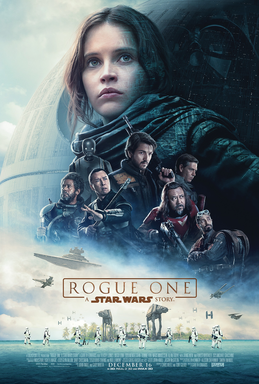
Rogue One: A Star Wars Story (2016, directed by Gareth Edwards) — The first stand-alone live action Star Wars feature film is a thrilling space adventures that holds up on subsequent viewings and works because the stakes actually feel real.  For the first time since New Hope, the Death Star is actually frightening.  This remains one of the best films in the franchise and it’s not surprising that it led to the best of the Star Wars television shows.

Star Wars: Episode VIII — The Last Jedi (2017, directed by Rian Johnson) — The haters are right about much of this film.  For all the complaints about Disney not allowing their Marvel directors much freedom, the Star Wars sequels shows what happens when a franchise isn’t sure where it wants to go.  Rian Johnson tries to bring Star Wars down to Earth but that’s not where we want Star Wars.  Rose Tico was an annoying character and her line about saving what we love deserves all of the mockery it received but Kelly Marie Tran still didn’t deserve to be run off of social media.  Turning Luke into a bitter old man was this film’s greatest sin.

Solo: A Star Wars Story (2018, directed by Ron Howard) — That this wasn’t a box office hit was the a clear warning sign that audiences were getting bored with Star Wars.  This Han Solo origin story isn’t bad.  Ron Howard could direct a film like this in his sleep.  It just feels unnecessary.  Alden Ehrenreich does his best but no one can replace Harrison Ford as Han Solo.

Star Wars: Episode IX — The Rise of Skywalker (2019, directed by J.J. Abrams) — J.J. Abrams tries to undo everything that Rian Johnson did in his film.  I don’t blame Abrams because Johnson’s film wasn’t great but just shrugging it all off doesn’t really work either.  The sequel trilogy, which started with such high hopes, ends with a whimper.  Daisy Ridley’s boring performance doesn’t help.

My rankings, as of 2025, are below:

  1. The Empire Strikes Back
  2. Rogue One
  3. New Hope
  4. Revenge of the Sith
  5. Return of the Jedi
  6. Force Awakens
  7. Solo
  8. Rise of Skywalker
  9. The Last Jedi
  10. Ewoks: Battle for Endor
  11. The Clone Wars
  12. The Ewok Adventure
  13. Holiday Special
  14. Phantom Menace
  15. Attack of the Clones
4 Shots From 4 Films: Special Star Wars Edition


4 Or More Shots From 4 Or More Films is just what it says it is, 4 shots from 4 of our favorite films. As opposed to the reviews and recaps that we usually post, 4 Shots From 4 Films lets the visuals do the talking!

Today, we wish all of our readers a happy May The Fourth Be With You Day!  It’s time for….

4 Shots From 4 Star Wars Films

Star Wars Episode IV: A New Hope (1977, dir by George Lucas, DP: Gilbert Talyor)

The Empire Strike Back (1980, dir by Irvin Kershner, DP: Peter Suschitzky)

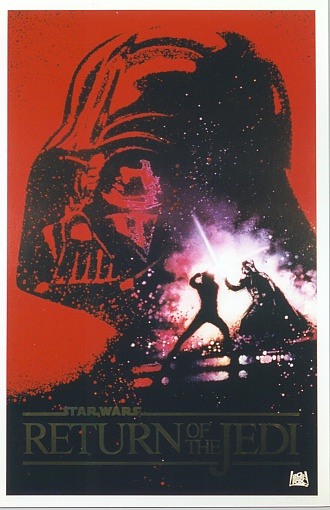
Return of the Jedi (1983, dir by Richard Marquand, DP: Alan Hume and Alec Mills)

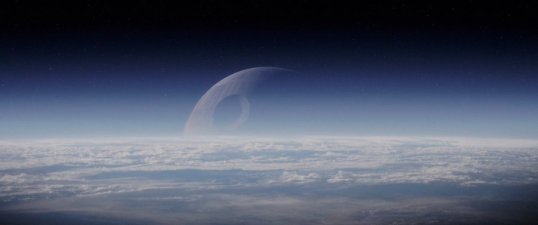
Rogue One (2016, dir by Gareth Edwards, DP: Greig Fraser)

4 Shots From 4 Films: Special Star Wars Edition


4 Or More Shots From 4 Or More Films is just what it says it is, 4 shots from 4 of our favorite films. As opposed to the reviews and recaps that we usually post, 4 Shots From 4 Films lets the visuals do the talking!

Today, we wish all of our readers a happy May The Fourth Be With You Day!  It’s time for….

4 Shots From 4 Star Wars Films

Star Wars Episode IV: A New Hope (1977, dir by George Lucas, DP: Gilbert Talyor)

The Empire Strike Back (1980, dir by Irvin Kershner, DP: Peter Suschitzky)

Return of the Jedi (1983, dir by Richard Marquand, DP: Alan Hume and Alec Mills)

Rogue One (2016, dir by Gareth Edwards, DP: Greig Fraser)

7 Films That David Lynch Turned Down


Let us take a moment to consider the career of David Lynch.

As we all know, David Lynch is one of America’s most unique and idiosyncratic directors, an unapologetic surrealist whose films always seem to come from a very dark and very personal place.  He began his career with Eraserhead and was then brought to Hollywood by Mel Brooks so that he could direct The Elephant Man.  Following the huge success of The Elephant Man, Lynch signed a contract with Dino De Laurentiis and directed Dune (a movie that Lynch later said was as close as he ever came to “selling out”) and the far better received Blue Velvet.

After the success of Blue Velvet, Lynch turned to television.  Twin Peaks was, in its way, Blue Velvet adapted for network television.  While people across the world were debating who killed Laura Palmer, Lynch won the 1990 Palme d’Or with Wild At Heart.  Frustrated with ABC’s attempts to interfere with the direction of Twin Peaks, Lynch became less involved with the televisions series and it was canceled after its second season.  Lynch’s cinematic prequel, Twin Peaks: Fire Walk With Me, was released an initially tepid response, though — like much of Lynch’s work — it has since been positively reevaluated.

In 1997, Lynch directed his most surreal film yet, Lost Highway.  He then shocked critics by directing the G-rated The Straight Story and proving that his surreal vision could be heart-warming as well as frightening.  When Lynch couldn’t get a network to commit to his proposed second televisions series, Lynch filmed some more footage and released the pilot as a feature film.  Mulholland Drive has gone on to be recognized as one of the greatest films of all time and it also earned Lynch his third Oscar nomination for Best Director.

Despite the success of Mulholland Drive, Lynch still struggled to find the financial backing for the films that he wanted to make.  In 2006, he directed Inland Empire, a film that’s as surreal as any that he’s ever directed and also, in its way, one of the most emotionally powerful films ever made.  Again, much like Fire Walk With Me and Lost Highway, Inland Empire was initially dismissed by critics but it has since been rediscovered.

Eat My Fer by David Lynch

Following Inland Empire, Lynch focused on painting, music, and promoting meditation and it was feared that he had retired from filmmaking.  In 2017, he brought Twin Peaks: The Return to Showtime and, for a few brief months, we were again enraptured by his genius.

David Lynch has directed ten feature films.  (Eleven, if you count Twin Peaks: The Return.  I do.)  He has one of the greatest filmographies of any living director.  But what about the films that David Lynch didn’t make?  In his memoir, Room to Dream, Lynch wrote about not only the projects for which he couldn’t find backing but also about several films that he was offered but turned down.

Here are a few of the films David Lynch turned down:

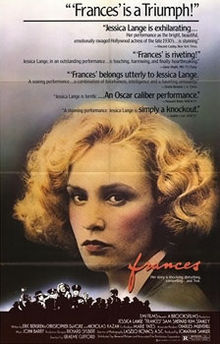
  1. Frances (1982)

Frances Farmer was a Golden Age actress who was famous for her refusal to conform to the demands of 1940s society.  She was outspoken in her political views.  She drank heavily.  She was open about her drug use.  Following the end of her affair with playwright Clifford Odets, Farmer had a nervous breakdown and was sent to a draconian mental hospital where she was horrifically abused, suffered through electroshock treatments, and was eventually lobotomized before being released in 1950.

It’s a pretty disturbing story and one can imagine that Lynch could have made a powerful film out of it, especially as Frances Farmer is the archetype for the troubled women who are often at the center of his films.  Mel Brooks, who also produced The Elephant Man, produced Frances and was hopeful that Lynch would direct it.  However, Lynch had already signed a contract with Dino De Laurentiis and was not available.  Frances was eventually directed by Graeme Clifford, who took a far more straight-forward approach to the material than Lynch would have.

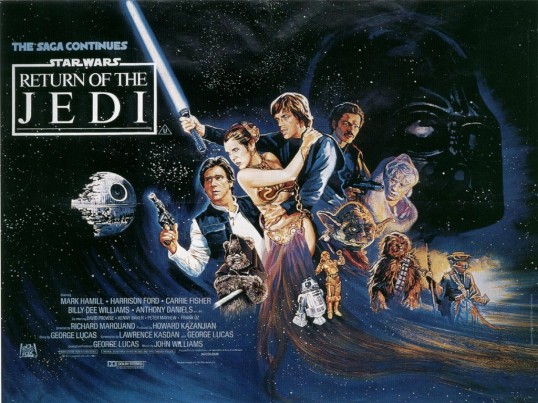
2. Return of the Jedi (1983)

This is probably the most famous of the films that David Lynch turned down.  George Lucas was a fan of Eraserhead and, in the early 80s, Lynch was riding high as a result of having received his first Oscar nomination for The Elephant Man.  Reportedly, Lucas actually did offer the film to Lynch.  Lynch turned him down, saying that he felt that the film would ultimately have been seen as being Lucas’s film and not the film of whoever was hired to direct it.  Instead, Lynch directed another sci-fi epic, Dune.  

Lucas reportedly then offered the film to another maverick director, David Cronenberg.  After Cronenberg turned it down, Lucas settled on Richard Marquand.

3. Tender Mercies (1983)

Robert Duvall won his first Oscar for this film, in which he played an alcoholic country singer who finds redemption with a Texas widow and her son.  This rather gentle film may seem like the furthest thing one would associate with Lynch but I personally think that David Lynch could have done a good job with it.  Tender Mercies is a film that feels like it might be distantly related to The Straight Story and Lynch’s unapologetic love of Americana would have served the story well.

Lenny Von Dohlen, who played a small role in Tender Mercies, later played the shut-in who had Laura Palmer’s diary in Twin Peaks.

4. Manhunter (1986)

Also known as Red Dragon, this film was the first to feature Dr. Hannibal Lecter.  The film was offered to Lynch by Dino De Laurentiis.  Lynch turned it down so he could concentrate on Blue VelvetManhunter was instead directed by Michael Mann, who — it must be said — filled the film with surreal imagery that occasionally felt very Lynchian.  Considering that Lynch’s films are full of flamboyantly evil men, it’s hard not to be curious what Lynch would have done with characters like Hannibal Lecter and Francis Dollarhyde.

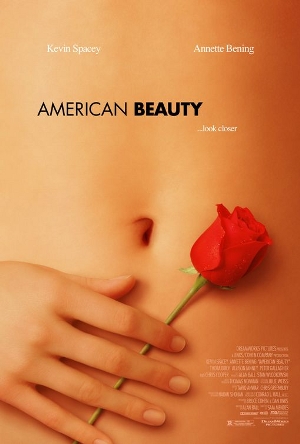
5. American Beauty (1999)

American Beauty was one of the many scripts that was sent to Lynch in the 90s.  Lynch turned the film down and it was instead made by Sam Mendes.  American Beauty went on to win Best Picture.  That said, it’s also one of the most pretentious film ever made and the fact that some people love it will never cease to amaze me.  Interestingly, one of the main problems with the film is that, as a director, Mendes often tries too hard to capture the mood and feeling that Lynch was later able to so effortlessly create in Twin Peaks: The Return.  Lynch probably could have made a decent film out of American Beauty but, fortunately for us, he devoted his attention to Mulholland Drive instead.

6. The Ring (2002)

This film was offered to Lynch but he turned it down. (Interestingly enough, when the film was made, it starred Naomi Watts, who had just appeared in Mulholland Drive and who went on to appear in both Inland Empire and Twin Peaks: The Return.)  I would have been curious to see what Lynch would have done with the killer video.

7. Motherless Brooklyn (2019)

In 1999, Lynch was among the directors who Edward Norton approached about directing a film version of the just-published detective novel, Motherless Brooklyn.  Lynch, who was working on Mulholland Drive, turned Norton down.  20 years later, Motherless Brooklyn was finally made into a film, with Norton starring and directing.

It’s hard to guess what the future holds for David Lynch.  There have been reports that Lynch will no longer make films though Lynch himself says that his disillusionment with cinema has been overstated.  There are also rumors that Lynch might give us another season of Twin Peaks.  Who knows?  Even if David Lynch spends the rest of his days promoting transcendental meditation and never again steps behind a camera, no one can deny that he’s given us some of the most amazing and important films of all time.  Happy birthday, Mr. Lynch!


Sci-Fi Film Review: Return of the Jedi (dir by Richard Marquand)


areturn1

As you’ve probably noticed, we’ve devoted this month to science fiction here at the Shattered Lens.  Gary Loggins reviewed THX-1138.  Valerie took a look at everything from The Star Wars Holiday Special to Turkish Star Wars to Return of the Ewok.  Ryan the Trashfilm Guru reviewed such Italian classics as Cosmos: War of Planets and War of the Robots.  Patrick Smith reviewed a terrifying Christmas movie about Santa. Myself, I’ve taken a look at such films as Contamination and 2019: After the Fall of New York.  

We’ve reviewed a lot of science fiction and we’ve got a lot more left to go.  (Keep an eye out for my reviews of Starcrash and The Humanoid over the upcoming few days.)  However, from the beginning, this month has always been centered around Star Wars.  You may have heard that there’s a little movie called Star Wars: The Force Awakens and it’s opening this week.  Apparently, a few people are excited about it.  Since we love reviewing little known art films here at the Shattered Lens, we decided why not review all of the previous Star Wars films during the week leading up to the release of The Force Awakens?  Jeff (a.k.a. the blogger known as Jedadiah Leland) started us off by reviewing The Phantom Menace.  Then Alexandre Rothier took a look at Attack of the Clones, followed by Jeff’s look at Revenge of the Sith.  Leonard Wilson was the next to step up to the plate, reviewing both A New Hope and The Empire Strike Back.

And now, it’s my turn to add my thoughts to this project.  It’s time to review the 1983 film, Return of the Jedi.  And I have to admit that, when I first thought about what I wanted to say in this review, I was totally intimidated.  Unlike my fellow writers here at the Shattered Lens, I’m hardly an expert when it comes to Star Wars.  Don’t get me wrong — I know the basics.  I know that Darth Vader is Luke’s father.  I know that Han Solo flies the Millennium Falcon and that Princess Leia is in love with him.  I know there’s an evil Empire and I know that there are rebels.  I’m not a virgin when it comes to Star Wars but, at the same time, I’m definitely not as experienced (with Star Wars) as most of my friends and fellow movie bloggers.

"Dang, Lisa, get over it!"

“Dang, Lisa, get over it!”

So, late this afternoon, when I sat down to watch Return of the Jedi, it was with more than a little trepidation.  My obvious panic and welling tears convinced Jeff to watch the movie with me and I was happy for that.  He loves Star Wars so I knew he could explain to me what was going on.

Finally, we watched Return of the Jedi and I discovered that I was panicking over nothing.  Return of the Jedi may be the third part of trilogy and I may not be an expert on the films that came before it.  But, even with all that in mind, Return of the Jedi is not a difficult film to figure out.  As opposed to the finales of Harry Potter, The Hobbit, and The Hunger Games, Return of the Jedi keeps things simple.  A good guy has been kidnapped by a bad guy.  The other good guys come to the rescue and then go to another planet so that they can fight an even bigger bad guy.  It’s not complicated.

As I watched Return of the Jedi and realized that I was having absolutely no problem following the film’s plot, I also realized that the Star Wars films are such a huge part of our culture that, regardless of how many of them we’ve actually sat through, everyone has absorbed them by osmosis.  Bits and pieces of it are everywhere, showing up in everything from TV sitcoms to political commentary.  (Remember how everyone used to compare Dick Cheney to Darth Vader?)  The Star Wars franchise is almost biblical in that respect.  At the same time, the fact that everyone knows about these movies makes them a little difficult to review.  You don’t so much watch a Star Wars film as you join in a universal experience.  As a reviewer, you definitely find yourself wondering what you can add to a conversation that everyone else has already had.

As a stand alone movie, Return of the Jedi is actually three separate films mixed together.  The first film deals with Luke Skywalker (Mark Hamill) showing up at Jabba the Hutt’s palace and rescuing Han Solo (Harrison Ford), Princess Leia (Carrie Fisher), Chewbacca (Peter Mayhew), and two robots from being tossed into a creature called the Sarlacc, which is basically a giant vagina out in the middle of the desert.  The second film deals with the rebels teaming up with a bunch of teddy bears and fighting the Empire on a jungle planet.  And the third film features Luke and Darth Vader (body of David Prowse, voice of James Earl Jones, face of either Sebastian Shaw and Hayden Christensen, depending on which version of the film you’re watching) dealing with their family issues while the Emperor (Ian McDiarmid) cackles in the background.  Some parts of the film work better than others.  The end result is entertaining but definitely uneven.

Star-Wars-Episode-VI-Return-Of-The-Jedi-Darth-Vader-darth-vader-18356239-1050-656

Jedi‘s heart belongs to that third film, the one dealing with Luke and Darth Vader.  I’ve read some pretty negative online comments about Mark Hamill’s performance in New Hope and Empire Strikes Back but, in Return of the Jedi, he brings an almost haunted intensity to the role of Luke.  In theory, it’s easy to be snarky about all the talk about the “Dark Side of the Force,” but, when you look in Hamill’s eyes, you totally understand what everyone’s going on about.  You see the fire and the anger but, even more importantly, you see the struggle between good and evil.  There’s a very poignant sadness to the scenes where he and his father prepare to meet the Emperor.

And speaking of the Emperor, he is pure nightmare fuel!  AGCK!

movies_star_wars_vi_return_of_the_jedi_1

As for the other two films to found within Return of the Jedi, the jungles of Endor didn’t do much for me.  Don’t get me wrong.  I thought the action scenes were handled well and, unlike apparently everyone else in the world, I was not annoyed by the inclusion of the Ewoks, the killer teddy bears who helped to the Rebels to take down the Empire.  I thought the Ewoks were cute and I actually got pretty upset when one of them was killed in battle.  If I had been alive when Return of the Jedi had been released, I probably would have wanted a stuffed Ewok and, I imagine, that was the main reason they were included in the film.  (I also imagine that’s the main reason why a lot of people can’t stand them.)

Return-of-the-Jedi-Ewoks-1024x515

So, no, the Ewoks did not bother me.  What did bother me was that under-construction Death Star floating out in the middle of space.  It bothered me because I really couldn’t imagine any reason why — after the first Death Star was apparently such a colossal failure — the Empire would insist on trying to do the exact same thing all over again.  This, along with the fact that they were rather easily defeated by a bunch of teddy bears, leads me to wonder whether the effectiveness of the Empire was just a little overrated.  I mean, the Emperor was scary but otherwise, everyone involved with the Empire was pretty incompetent.

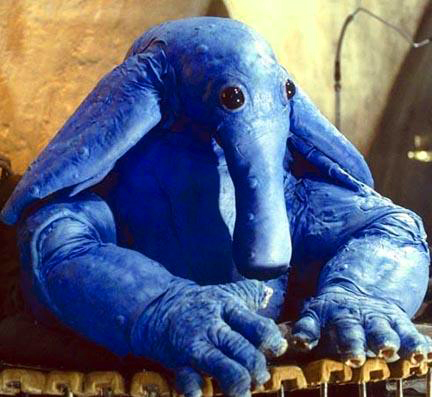
Far more impressive, as far as villains go, was Jabba the Hut.  In fact, Jabba and his decadent entourage were so memorable and colorful and evil and icky that they pretty much overshadowed almost everything else in the film.  I mean, Jabba even had a blue elephant playing music for him!  And I know that I’m supposed to be critical of the film for putting Leia in that gold bikini but you know what?  Leia may have been forced to wear a gold bikini but she never gave up her dignity or her defiance.  And when it came time to take out Jabba, Leia used the tools of her oppression to do so, strangling him with his own chains.  In that one scene, Leia proved herself to be a true rebel.

return01

There’s a lot that’s good about Return of the Jedi but, as I said earlier, it’s definitely an uneven film.  Richard Marquand’s direction is perhaps the epitome of workmanlike.  It’s efficient and it’s dependable and there’s absolutely nothing surprising or particularly challenging about it.

It’s interesting to note that, before Richard Marquand was selected as director, the job was offered to both David Lynch and David Cronenberg, two directors who are all about surprising and challenging the audience.  What would David Lynch’s Return of the Jedi been like?  Well, here’s one possibility:

As for David Cronenberg’s Return of the Jedi, it might have looked something like this:

For better or worse, the world got Richard Marquand’s Return of the Jedi, which I imagine was pretty close to what George Lucas wanted the film to be.

As I sit here finishing up this review and wondering just why exactly I was so intimidated earlier (seriously, this turned out to be one the easiest reviews that I’ve ever written), I estimate that 75% of the people that I know are currently sitting in a theater and watching The Force Awakens.  Keep an eye out for Arleigh’s review in the next few days!

And in closing, here’s that blue elephant that I mentioned earlier.  Dance!

Maxrebo