Film Review: Boiler Room (dir by Ben Younger)


Released in 2000, Boiler Room tells the story of Seth Davis (Giovanni Ribisi).

Seth is only 19 years old.  He’s the son of a federal judge and he’s also a college dropout.  Seth is making a pretty good living for himself, running a casino out of a house near the campus.  One night, a handsome 20something named Greg Weinstein (Nicky Katt) stops by and tells Seth that he could be making an even better living for himself as a broker at J.T. Marlin.

Located somewhere in Long Island, J.T. Marlin is a brokerage firm that is dominated by loud and young men.  Overseen by the ruthless Jim Young (Ben Affleck, doing the glorified cameo thing), J.T. Marlin is a place where everyone owns an expensive car, an expensive watch, and where everyone brags about how much money they’ve made.  The insults and slurs fly from desk to desk, as they tend to do whenever a bunch of wealthy, highly competitive guys get together.  J.T. is seduced by the atmosphere, even as he watches some broker breaks down due to the pressure.  He becomes friends with Chris Varick (Vin Diesel) and falls for receptionist Abbie Halpert (Nia Long), who just happens to be Greg’s ex-girlfriend.  Eventually, Seth gets good at his job.  Unfortunately, it turns out that his job is centered around tricking people into investing in a pyramid scheme and eventually, one of Seth’s clients, Harry (Taylor Nichols), ends up broke and without his family.  The guilt-stricken Seth realizes that he has a conscience.

Like a lot of these type of movies, Boiler Room is at its best when it starts, when it’s all about tough talk, rude jokes, and obsessive competition amongst a bunch of well-dressed good-looking guys.  Nicky Katt and Vin Diesel are so much fun to listen to that it’s hard not to regret that the entire film wasn’t just about them.  Things become significantly less interesting once the FBI shows up and Seth decides to become a snitch.  For the most part, no one like a snitch, even if they’re motivated by the purest of intentions.  To make a snitch likable, he has to be a truly compelling character, like Henry Hill in Goodfellas.  For the most part, audiences prefer anti-heroes who go down with the ship as opposed to the rats who jump into the first lifeboat they see.  In The Wolf of Wall Street, Jordan Belfort agrees to wear a wire but then slips his business partner a note, warning him.  That’s one of the reasons why The Wolf of Wall Street is still a classic while Boiler Room has been largely forgotten.  As a character, Seth just isn’t compelling enough to pull off the snitch act.  Nor does he really seem clever enough to pull off what he does at the end of the film.

That said, I do enjoy Boiler Room.  It’s largely due to the cast.  Nicky Katt, Vin Diesel, Scott Caan, Giovanni Ribisi, they were all young, energetic, and eager to show off what they could do.  While their characters competed to see who could make the most money, the actors competed to see who could steal the most scenes.  The film is ultimately only so-so but that cast is unforgettable.
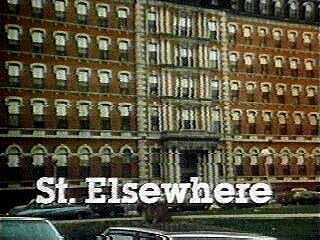
Retro Television Review: St. Elsewhere 1.2 “Bypass”


Welcome to Retro Television Reviews, a new feature where we review some of our favorite and least favorite shows of the past! On Fridays, I will be reviewing St. Elsewhere, a medical show which ran on NBC from 1982 to 1988.  The show can be found on Hulu!

This week, William Daniels claims the show as his own.

Episode 1.2 “Bypass”

(Dir by Thomas Carter, originally aired on November 9th, 1982)

“Hey, it’s Tim Robbins!”

Yes, the future Oscar winner shows up in the second episode of St. Elsewhere, playing a rich kid-turned-terrorist named Andrew Reinhardt.  Reinhardt, who no doubt learned all about Marxism during his first semester away at college, set off a bomb in a bank, killing two people and putting a woman named Kathleen McCallister into a coma.  Both Reihnhardt and McCallister have been brought to St. Eligius.  While Kathleen’s husband, Stephen (Jack Bannon), sobs in the hallway, Reinhardt acts like a petulant brat in his hospital room.

With the nurses refusing to change his sheets or even give him his morphine shots, it falls to Dr. Morrison to take care of him.  Reinhardt is not at all appreciative and Morrison finds himself conflicted.  How is he supposed to give proper medical treatment to someone who he despises?  Morrison is so conflicted that he even goes to Dr. Westphall.  Westphall responds by telling a long story about a time that he fell in love with a patient.  I’m getting the feeling that Morrison feeling conflicted and Westphall telling long stories are both going to be regular features on this show.

(The correct answer to Morrison’s question about how he can take care of a bad person is as follows: It’s your job and you’re getting paid to do it.)

This episode also gave the viewer a chance to get to know Dr. Craig, the very talented but very egotistical head of surgery who is played by the great William Daniels.  Dr. Craig holds a press conference to inform reporters about the conditions of both Reinhardt and Kathleen McCallister and declares that, despite its bad reputation, “St. Eligius is the place to be!”  He then proceeds to get angry when the press is more interested in talking to the surgeon who actually saved Kathleen’s life than to him.

Dr. Craig browbeats a Mr. Broadwater (Robert Costanzo) into getting bypass surgery done.  The surgery appears to have been a success but it’s hard to ignore that Craig essentially bullied the guy into getting a major operation, one that could have killed him if the least little thing had gone wrong.  Resident Victor Ehrlich (Ed Begley, Jr.) assists in the operation and, at one point, Dr. Craig intentionally head butts him when Ehrlich cannot name all of the arteries leading into the heart.  It’s a bit aggressive but, on the plus side, Ehrlich does learn all of the names.  Afterwards, Dr. Craig brags about how his own son is following in his footsteps and tells Mr. Broadwater’s son that some day, a new Dr. Craig will operate on him.  In other words, Dr. Craig is kind of a jerk but he’s good at what he does and he’s played by William Daniels so it’s hard to hold anything against him.

There were other subplots playing out in the background, the majority of which just seemed to be there to remind us that St. Elsewhere is an ensemble show and that, just because someone isn’t a major character in this episode, that doesn’t mean they won’t be important later on.  Psychiatrist Hugh Beale (G.W. Bailey) attempted to learn how to swim and ended up taking a class with a bunch of children.  Dr. Fiscus (Howie Mandel, the least convincing doctor ever) held court in the cafeteria and claimed that the hormones used in processing food were causing children to develop earlier than ever before.  Dr. Peter White (Terrence Knox) wandered around with a bunch of X-rays and begged everyone he met to help him understand what he was (or wasn’t) seeing.  If nothing else, this episode did a good job of capturing the idea of the hospital as being a place that’s always busy.

For the most part, though, it was Dr. Craig who carried this episode.  While Morrison and Westphall ponderously considered the implications of doing their jobs, Craig was an arrogant, angry, and brilliant dynamo and William Daniels’s high-energy performance was a pleasure to watch.  Whenever the episode started to slow down, Dr. Craig would liven things up by yelling at someone.  The hospital was lucky to have Dr. Craig and St. Elsewhere was lucky to have William Daniels.