For years, banker Jack Dundee (Robin Williams) had been haunted by a pass that he dropped in high school. The pass was perfectly thrown by quarterback Reno Hightower (Kurt Russell) but Jack couldn’t bring it in and, as a result, Taft High lost to its rival, Bakersfield. Adding to Jack’s humiliation is that he now works for The Colonel (Donald Moffat), a confirmed Bakersfield fan who also happens to be Jack’s father-in-law. When Jack visits a “massage therapist” (Margaret Whitton) and tells her about his problems, she suggests that he needs to replay the game. Getting everyone interested in replaying the game is not easy. No one wants to be humiliated a second time and Reno, who now fixes vans for a living, fears the he’s lost his edge. Jack dresses up in the Bakersfield mascot’s uniform and vandalizes the town. Finally, everyone is ready for the game. Now, it’s a matter of town pride.
The Best of Times is a likable comedy about getting older and wishing you could have just one more chance to be young again and to have your entire future ahead of you. Jack is haunted by that one dropped pass, feeling that it has cast a cloud over his entire life. Reno is still a town hero but he’s struggling financially and in debt to Jack’s bank. Replaying the game isn’t going to fix their lives but it is going to give them one last chance to relive their former glory and maybe an opportunity to learn that, even if they are getting older, they’re still living in the best of times. The world that these two men live in is skillfully drawn and believable, with character actors like Moffat, M. Emmet Walsh, R.G. Armstrong, and Dub Taylor adding to the local color. Jack and Reno’s wives are played by Holly Palance and Pamela Reed and they are also strong and well-developed characters. Finally, Robin Williams and Kurt Russell are a strong comedic team. Russell is perfectly cast as the aging jock and Williams gives one of his more restrained performances as Jack, allowing us to see the sadness behind Jack’s smile.
The stakes aren’t particularly high in The Best Of Times. It’s just a football game between some middle-aged men looking to regain their youth. But the story sticks with you.
There’s a brilliant scene that occurs towards the end of 1983’s The Right Stuff.
It takes place in 1963. The original Mercury astronauts, who have become a symbol of American ingenuity and optimism, are being cheered at a rally in Houston. Vice President Lyndon Johnson (Donald Moffat) stands on a stage and brags about having brought the astronauts to his supporters. One-by-one, the astronauts and their wives wave to the cheering crowd. They’re all there: John Glenn (Ed Harris), Gus Grissom (Fred Ward), Alan Shephard (Scott Glenn), Wally Schirra (Lance Henrisken), Deke Slayton (Scott Paulin), Scott Carpenter (Charles Frank), and the always-smiling Gordon Cooper (Dennis Quaid). The astronauts all look good and they know how to play to the crowd. They were chosen to be and sold as heroes and all of them have delivered.
While the astronauts are celebrated, Chuck Yeager (Sam Shepard) is at Edwards Air Force Base. Yeager is the pilot who broke the sound barrier and proved that the mythical “demon in the sky,” which was whispered about by pilots as a warning about taking unnecessary risks, was not waiting to destroy every pilot who tried to go too fast or too high. Yeager is considered by many, including Gordon Cooper, to be the best pilot in America. But, because Yeager didn’t have the right image and he had an independent streak, he was not ever considered to become a part of America’s young space program. Yeager, who usually holds his emotions in check, gets in a jet and flies it straight up into the sky, taking the jet to the edge of space. For a few briefs seconds, the blue sky becomes transparent and we can see the stars and the darkness behind the Earth’s atmosphere. At that very moment, Yeager is at the barrier between reality and imagination, the past and the future, the planet and the universe. And watching the film, the viewer is tempted to think that Yeager might actually make it into space finally. It doesn’t happen, of course. Yeager pushes the jet too far. He manages to eject before his plane crashes. He walks away from the cash with the stubborn strut of a western hero. His expression remains stoic but we know he’s proven something to himself. At that moment, the Mercury Astronauts might be the face of America but Yeager is the soul. Both the astronauts and Yeager play an important role in taking America into space. While the astronauts have learned how to take care of each other, even the face of government bureaucracy and a media that, initially, was eager to mock them and the idea of a man ever escaping the Earth’s atmosphere, Chuck Yeager reminds us that America’s greatest strength has always been its independence.
Philip Kaufman’s film about the early days of the space program is full of moments like that. The Right Stuff is a big film. It’s a long film. It’s a chaotic film, one that frequently switches tone from being a modern western to a media satire to reverent recreation of history. Moments of high drama are mixed with often broad humor. Much like Tom Wolfe’s book, on which Kaufman’s film is based, the sprawling story is often critical of the government and the press but it celebrates the people who set speed records and who first went into space. The film opens with Yeager, proving that a man can break the sound barrier. It goes on to the early days of NASA, ending with the final member of the Mercury Seven going into space. In between, the film offers a portrait of America on the verge of the space age. We watch as John Glenn goes from being a clean-cut and eager to please to standing up to both the press and LBJ. Even later, Glenn sees fireflies in space while an aborigines in Australia performs a ceremony for his safety. We watch as Gus Grissom barely survives a serious accident and is only rescued from drowning after this capsule has been secured. The astronauts go from being ridiculed to celebrated and eventually respected, even by Chuck Yeager.
It’s a big film with a huge cast. Along with Sam Shepherd and the actors who play the Mercury Seven, Barbara Hershey, Pamela Reed, Jeff Goldblum, Harry Shearer, Royal Dano, Kim Stanley, Scott Wilson, and William Russ show up in roles both small and large. It can sometimes be a bit of an overwhelming film but it’s one that leaves you feeling proud of the pioneering pilots and the brave astronauts and it leaves you thinking about the wonder of the universe that surrounds our Earth. It’s a strong tribute to the American spirit, the so-called right stuff of the title.
The Right Stuff was nominated for Best Picture but, in the end, it lost to a far more lowkey film, 1983’s Terms of Endearment. Sam Shepard was nominated for Best Supporting Actor but lost to Jack Nicholson. Nicolson played an astronaut.
Though the Academy of Motion Picture Arts and Sciences claim that the Oscars honor the best of the year, we all know that there are always worthy films and performances that end up getting overlooked. Sometimes, it’s because the competition too fierce. Sometimes, it’s because the film itself was too controversial. Often, it’s just a case of a film’s quality not being fully recognized until years after its initial released. This series of reviews takes a look at the films and performances that should have been nominated but were, for whatever reason, overlooked. These are the Unnominated.
First released in 1980, The Long Riders is one of the many films to tell the story of the James/Younger Gang.
A group of former Confederate guerillas who became some of the most notorious bank robbers to roam post-Civil War America and who were based in Missouri, the brothers who made up the James/Younger Gang were hunted by the Pinkertons and beloved by the citizens who viewed them as being 19th Century Robin Hoods. Following a disastrous attempt to rob a bank in Northfield, Minnesota, the Younger brothers were captured by the government while Jesse and Frank James made it back to Missouri. Jesse was shot in the back by Bob Ford while Frank subsequently surrendered to authorities and made a good living on the lecture circuit.
The Long Riders tells the story of the gang, from their first encounter with the heavy-handed Pinkertons to the Northfield raid to Frank’s eventual surrender. Director Walter Hill both celebrates the legend of the James/Younger Gang while also emphasizing that all the members of the gang were also individual humans who had their strengths and their flaws. Hill emphasizes the idea of the gang being a group of post-war rebels, still fighting a war against a government that is more interested in protecting banks than looking after people. The Long Riders deconstructs the legend while also celebrating it.
The main thing that sets The Long Riders apart from other films about the James/Younger Gang is the fact that the brothers are played by actual brothers. David, Keith, and Robert Carradine plays the Youngers. Randy Quaid plays Clell Miller while Dennis Quaid assumes the role of the cowardly Ed Miller. Nicholas and Christopher Guest make a memorably creepy impression as Charley and Bob Ford. And finally, Jesse and Frank James are played by James and Stacy Keach. (The Keaches also worked on the film’s script). And while Stacy is definitely the more charismatic of the Keach brothers, the film makes good use of James’s rather stoic screen presence. While the rest of the gang enjoys the outlaw life, James Keach’s Jesse is rigid, serious, and ultimately too stubborn and obsessive for his own good.
Now, the casting might sound like a gimmick but it works wonderfully. When Clell chooses the gang over Ed, it carries an emotional weight because we’re watching real brothers reject each other. The comradery between the Carradines carries over to the comradery between the Youngers and it also informs their occasional rivalry with the better known James brothers. While it is Stacy Keach and David Carradine who ultimately dominate the film, every brother in the cast makes a strong impression. Also giving a memorable performance is Pamela Reed as a defiantly independent Belle Starr, who loves David Carradine’s Cole Younger but marries Sam Starr (James Remar). The knife fight between Carradine and Remar is one of the film’s highlights, as is the violent and disastrous attempt to rob the bank in Northfield.
The Long Riders is an exciting and ultimately poignant western but sadly, it received not a single Oscar nomination, not even for the stunning cinematography or Ry Cooder’s elegiac score. Fortunately, just like the legend of the James/Younger Gang, The Long Riders lives on.
“So be it,” journalist Helen Grant dramatically announces as she lifts up her camera and starts snapping pictures of a body in a casket, “I’m …. a ….. WHORE!”
That is just one of the many wonderfully, over-the-top moments that can be found in the 1985 film, Scandal Sheet. Directed by David Lowell Rich, Scandal Sheet stars Burt Lancaster as Harold Fallen. If this movie were being made today, Fallen would be in charge of a TMZ-style website. Since this movie was made in the 80s, Fallen is the publisher and editor of a sleazy tabloid magazine. He specializes in stories about aliens and ghosts. When someone brings him in a story about the ghost of Grace Kelly haunting the beaches of Malibu, he announces, “Front page!” When someone else tells him about a woman who wants to marry a man from outer space but who can’t find anyone to perform the ceremony, Fallen arranges to get the woman a lawyer.
When Fallen isn’t tracking down ghosts and arranging for interplanetary marriages, he’s trying to destroy celebrities. When the film begins, he’s obsessed with taking down Ben Rowan (Robert Urich). We’re told that Ben Rowan is one of the world’s top movie star. (It’s important that we’re told this because there’s nothing about Urich’s bland performance that would lead us to suspect that to be the case.) Ben’s career is in trouble because he’s got a drinking problem. He just got out of rehab but no insurance company is willing to insure him. His wife, Meg North (Lauren Hutton), is demanding that Ben be cast in her latest movie. Everyone in Hollywood is like, “No way.”
It has the potential to be a big story and Fallen wants to be the first to break it. But to do so, he’s going to need an inside source. That’s where Helen Grant (Pamela Reed) comes in. Helen was Meg’s college roommate and she’s still friends with both her and Ben. Fallen decides to hire Helen to work for his magazine. The only problem is that Helen is a serious journalist. She writes stories about homeless children. She has no desire to work for a tabloid.
“I’ll pay you more than you’re making right now,” Fallen tells her.
Helen’s not interested.
“I’ll pay you $80,000 a year.”
Helen’s interested.
Against her better judgment, Helen accepts Fallen’s offer. At first, things seem okay. She’s a bit annoyed with having to work with a sleazy photographer named Simon (Peter Jurasik, giving a wonderfully reptilian performance) but she’s got a nice house and her son is going to a good school and she gets to use the company credit card and she even gets a housekeeper out of the deal!
Then Fallen tells her that her next assignment is to write about Meg and Ben. Helen refuses but she soon discovers that Howard Fallen is not an easy person to refuse. Not when he’s got people watching your every move, along with paying your housekeeper to spy on you. When her former boss (Max Wright) angrily tells her that no reputable magazine will ever work with her again, Helen is left with only two options: Become a whore or starve.
Scandal Sheet is a lot of fun. Just the fact that the main bad guy is named Howard Fallen should tell you almost everything you need to know about this movie. He’s Fallen — as in a fallen angel. At the end of the movie, he even wears all black with a white tie, which we all know is the typical modern-day costume of demons pretending to be human. (At one point, Fallen even says that he’s going to make someone an offer that they can’t refuse, giving us all a chance to see what The Godfather would have been like if Burt Lancaster had played Don Vito.) Lancaster gives a charismatic performance and he’s so effortlessly manipulative that it’s hard not to enjoy watching him, even if he is destroying innocent people. The rest of the cast is okay. As I said earlier, Robert Urich was a bit too bland to be a convincing film star but Pamela Reed does a good job of capturing Helen’s struggle to decide whether to side with good or evil and Lauren Hutton tears into the scenery with just the type of ferocity that a film like this requires. Late in the film, when she spits in Helen’s face, it’s the most dramatic spitting that you’ll probably ever see.
Scandal Sheet is an enjoyably over-the-top, anti-press melodrama. Watch it with someone who you would be willing to sell out for $80,000 a year.
Cadillac Man is a film that I had never heard of until I came across it while skimming what was available OnDemand last week. It was a film that I only watched because it starred Robin Williams. I have to admit that I have mixed feelings about including it in a tribute to Robin Williams because Cadillac Man was definitely one of his lesser films. However, while Cadillac Man may not be a very good movie, it does feature a very good performance from Robin Williams.
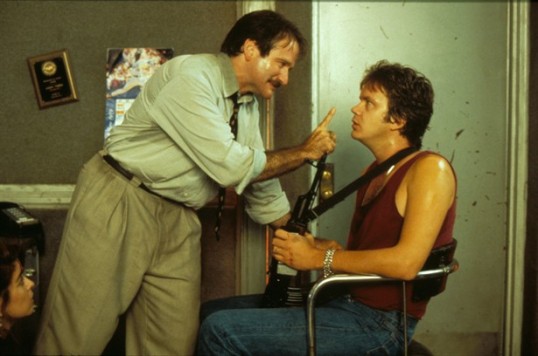
Released in 1990, Cadillac Man tells the story of Joey O’Brien (Robin Williams), who is the type of car salesman who has no problem approaching a widow at a funeral and telling her that now is the time to consider buying a new car. Joey’s a good salesman but he’s also deep in debt. He not only owes alimony to his ex-wife (Pamela Reed) but he also supporst two mistresses, a married one (a hilarious Fran Drescher) and a single one (Lori Petty). He’s also owes money to the local mafia don and, as the film begins, he’s been told that he has to sell 12 cars in two days or else he’ll lose his job.
On top of all that, Joey also has to deal with Larry (Tim Robbins), an insane jerk with a motorcycle and an assault rifle who takes the entire car dealership hostage because he’s convinced that his wife (Annabella Sciorra) is cheating on him. Larry spends most of the movie firing his rifle up in the air and screaming at the top of his lungs (and yet, it’s also clear that the audience is supposed to like him). As the cops surround the car dealership, Joey attempts to keep Larry under control while also trying to get back together with his ex-wife…
After I watched Cadillac Man, I looked up the rest of director Roger Donaldson’s credits. What I discovered was that Donaldson has directed a lot of movies (including guilty pleasureCocktailand the upcoming The November Man) but only one of them has been a comedy. The majority of his films are dramas like Thirteen Days and action films like November Man. In short, Roger Donaldson is not a comedy director. And when directors who aren’t experienced with comedy attempt to make a comedy, they almost always resort to having all of the actors shout their lines and run around like characters in a live-action cartoon. That is certainly the approach that Donaldson took in Cadillac Man and the end result was a film that far too often tried to substitute chaos for genuine comedy.
(As just an example of Donaldson’s lack of comedic touch, Annabella Sciorra went through almost the entire film with a bloody cut on her forehead. Even if her lines or her character had been funny, I would have never known it because I was spending too much time worrying about what the eventual scar would look like.)
And yet, here’s the thing. As bad as Cadillac Man turned out to be, Robin Williams was actually pretty good in it. Joey isn’t exactly a likable character but you root for him because of who is playing him. What’s interesting is that the role, even though it was definitely comedic, didn’t lend itself to the manic intensity that was the trademark of much of Williams’s comedy. Instead, the humor comes from the way that, while everyone else in his life is essentially going crazy, Joey O’Brien struggles to maintain his facade of calm and confidence. Williams portrays Joey as being the ultimate salesman and when Joey has to try to convince Larry to release his hostages, he approaches it almost as if he’s trying to sell Larry a car and it’s impossible not to admire Joey’s determination to close the sale without anyone else getting shot. As played by Tim Robbins, Larry is thoroughly unhinged. In fact, it’s probably one of the worst performances of Tim Robbins’ career but it’s obvious that he and Williams enjoyed playing off of each other. Whenever Robbins’ performance goes over-the-top, Williams’ performance brings things back down to Earth and provides whatever pleasure one can hope to get from a film like this.
And that’s why, despite the fact that Cadillac Man is not a particularly good film, it’s an appropriate tribute to the talent of Robin Williams. It’s one thing to give a good performance in a good film. However, it takes true talent to give a great performance in a total misfire.
And that’s exactly what Robin Williams did in Cadillac Man.
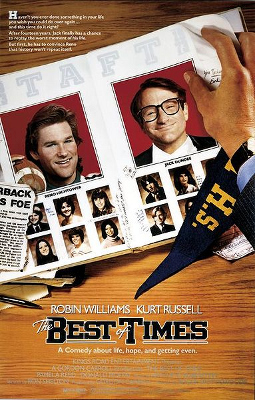 For years, banker Jack Dundee (Robin Williams) had been haunted by a pass that he dropped in high school. The pass was perfectly thrown by quarterback Reno Hightower (Kurt Russell) but Jack couldn’t bring it in and, as a result, Taft High lost to its rival, Bakersfield. Adding to Jack’s humiliation is that he now works for The Colonel (Donald Moffat), a confirmed Bakersfield fan who also happens to be Jack’s father-in-law. When Jack visits a “massage therapist” (Margaret Whitton) and tells her about his problems, she suggests that he needs to replay the game. Getting everyone interested in replaying the game is not easy. No one wants to be humiliated a second time and Reno, who now fixes vans for a living, fears the he’s lost his edge. Jack dresses up in the Bakersfield mascot’s uniform and vandalizes the town. Finally, everyone is ready for the game. Now, it’s a matter of town pride.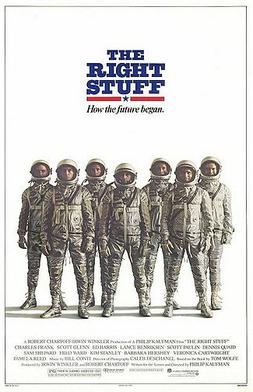


 Through the Shattered Lens