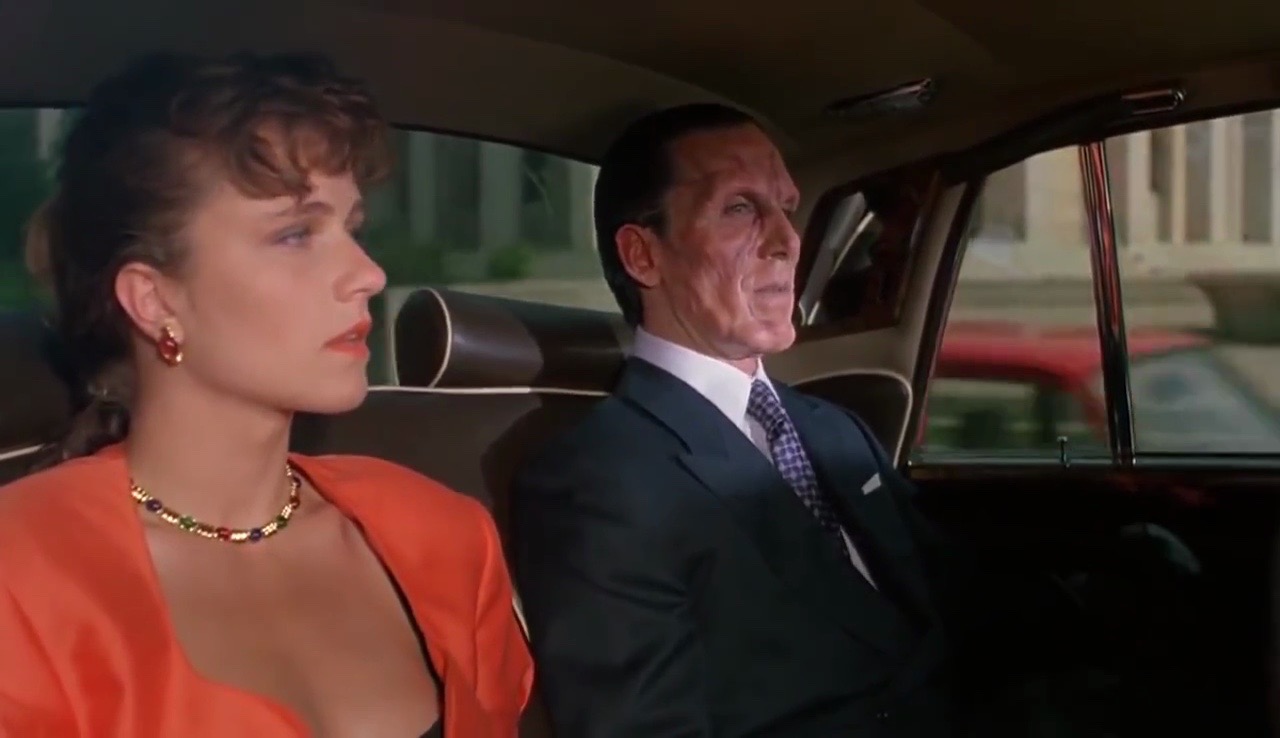
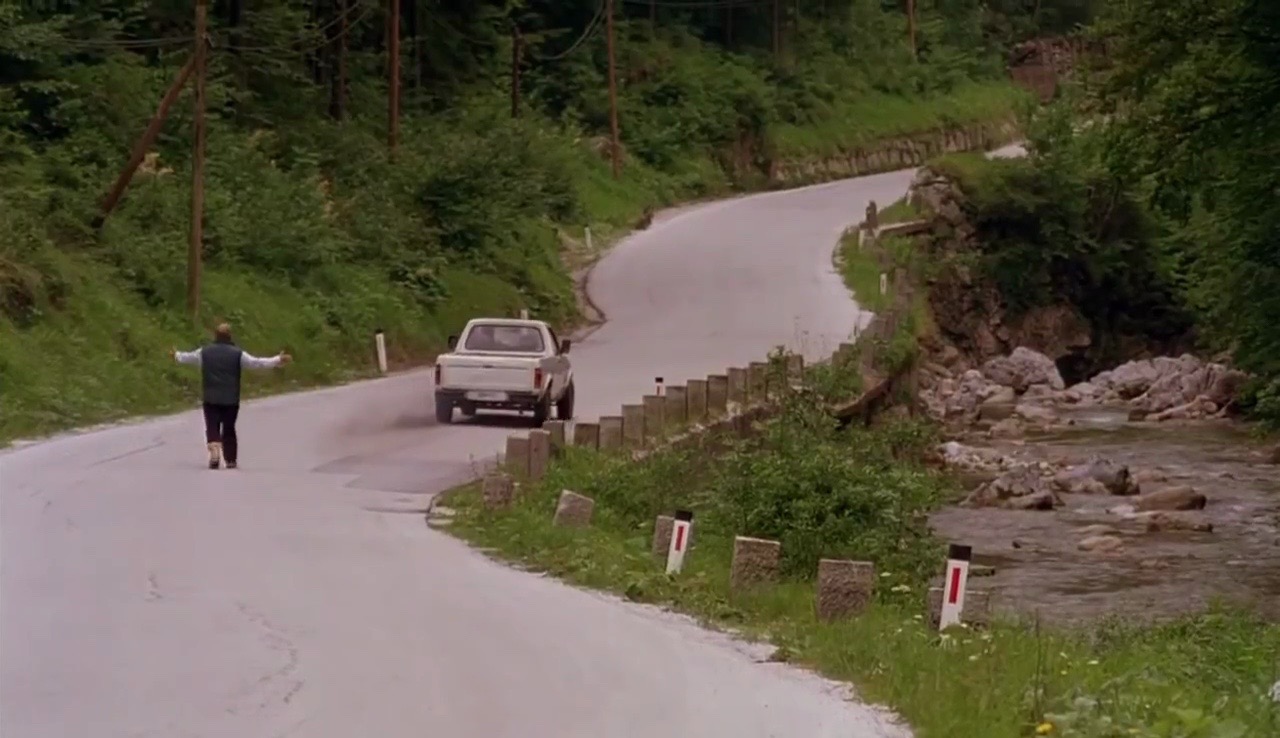
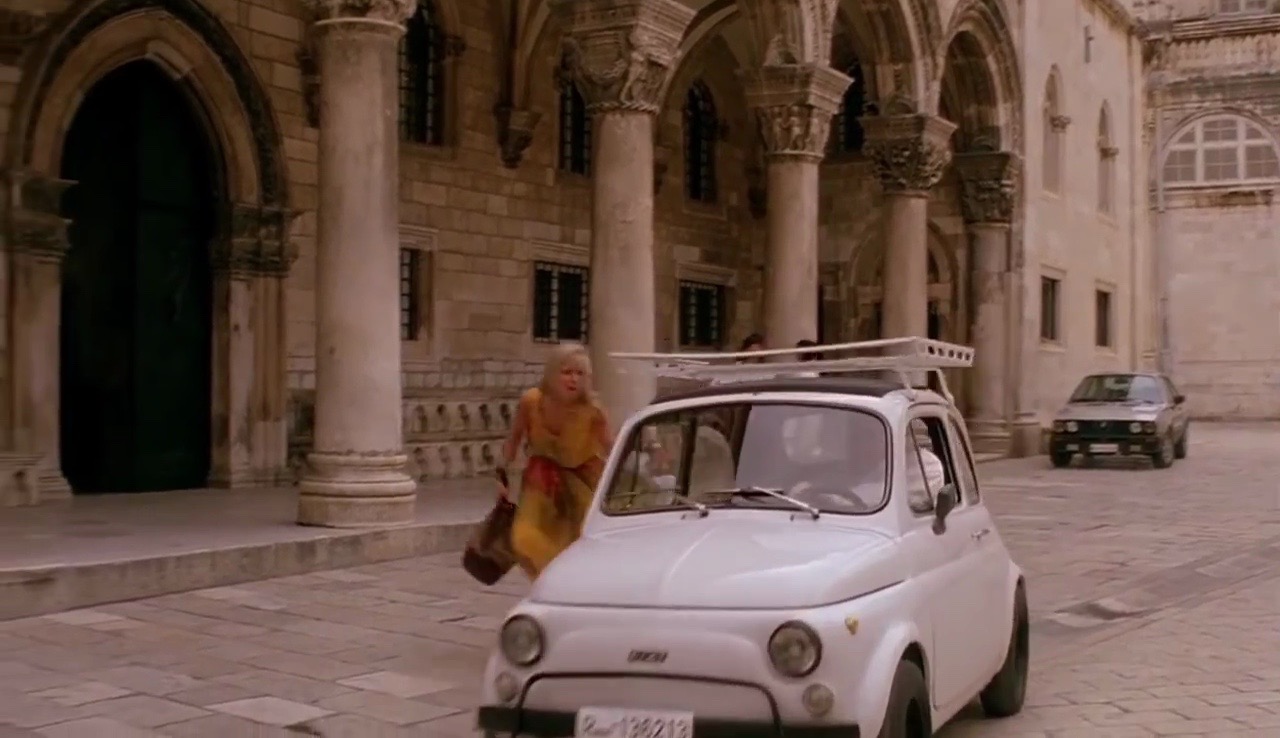
Star Vehicle: Burt Reynolds in WHITE LIGHTNING (United Artists 1973)


gary loggins's avatarcracked rear viewer

wl1

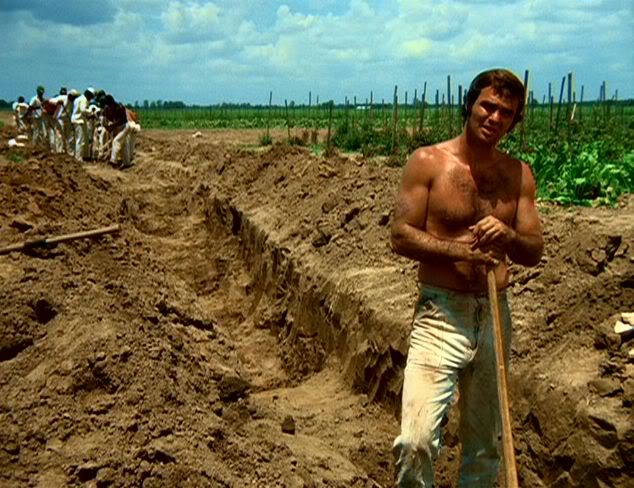
Burt Reynolds labored for years in the Hollywood mines, starring in some ill-fated TV series (his biggest success on the small screen was a three-year run in a supporting role on GUNSMOKE) and movies (nonsense like SHARK! and SKULLDUGGERY) before hitting it big in John Boorman’s DELIVERANCE. Suddenly, the journeyman actor was a hot property (posing butt-naked as a centerfold for COSMOPOLITAN didn’t hurt, either!), and studios were scurrying to sign him on to their projects. WHITE LIGHTNING was geared to the Southern drive-in crowd, but Reynolds’ new-found popularity, along with the film’s anti-authority stance, made it a success across the nation.

wl22

WHITE LIGHTNING takes place in rural Arkansas, and Gator McKluskey (Burt) is doing a stretch in Federal prison for running moonshine. His cousin visits and tells Gator his younger brother Donnie was murdered by Sheriff J.C. Connors, the crooked boss of Bogan County. A raging Gator tries to escape, but is immediately caught, so he…

View original post 690 more words

A Movie A Day #9: Gator (1976, directed by Burt Reynolds)


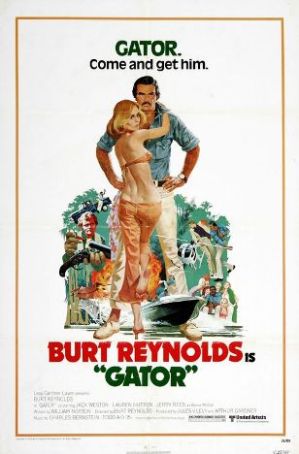
gatorposterGator McClusky is back!

Since the events in White Lightning, Gator (Burt Reynolds) has been released from prison and he’s now living in the Okefenokee Swamp.  Other than running moonshine, Gator is laying low and keeping to himself.  Gator may be done with the feds but the feds are not done with him.

Gator’s old friend, Bama McCall (Jerry Reed), is now unofficial boss of Dunston County and both the Department of Justice and the Governor of Georgia (played by talk show host Mike Douglas) are determined to take him down.  Federal agent Irving Greenfield (Jack Weston) is convinced that he can get Bama on charges of tax evasion.  But Irving’s from New York and he does not know how to talk to the good ol’ boys.  He needs someone on the inside and that’s where Gator comes in.

Gator not only starred Burt Reynolds but it was his directorial debut as well.  Though it’s a sequel to White Lightning, Gator feels like a very different movie.  Whereas Joseph Sargent kept White Lightning relatively serious, Reynolds take a more jokey approach with Gator.  Reynolds has his famous mustache and his hairpiece in Gator and the self-amused attitude that went along with them.  Gator is full of car chases, fist fights, willing women, and corny jokes.  It also has Lauren Hutton, playing a familiar character who would appear in all of Reynolds’s movies, the sophisticate who cannot resist Burt’s good ol’ boy, country charm.  In the 1970s, audiences couldn’t resist Burt’s good old boy charm, either.  Critics hated Gator but it made a lot of money.

Gator is dumb but fun.  The most interesting part of the movie is seeing Jerry Reed playing a ruthless villain.  Reed is thoroughly convincing as a Dixie Mafia crime boss, the type of redneck who earlier inspired Buford Pusser to pick up a baseball bat and destroy pool halls.  One year later, Jerry would play Burt Reynolds’s best friend in Smoky and the Bandit so it’s interesting to see them playing deadly rivals in Gator.

For tomorrow’s movie a day, Burt’s a football player in jail in The Longest Yard.

A Movie A Day #8: White Lightning (1973, directed by Joseph Sargent)


white-lightning-02

A year after co-starring in Deliverance, Burt Reynolds and Ned Beatty reunited for another movie about life in the backwoods, White Lightning.

White Lightning starts with two hippies, bound and gagged and floating in a canoe.  While a banjo plays in the background, two rednecks use a shotgun to blow the canoe into pieces.  They watch as the hippies drown in the swamp.  It turns out that one of those hippies was the brother of legendary moonshiner and expert driver, Gator McCluskey (Reynolds).  Gator is doing time but when he hears that his brother has been murdered, he immediately realizes that he was probably killed on the orders of corrupt Sheriff J. C. Connors (Ned Beatty).  The Feds arrange for Gator to be released from prison, on the condition that he work undercover and bring them enough evidence that they can take Connors down.

Back home, Gator works with a fellow informant, Dude Watson (Matt Clark), teams up with local moonshiner, Roy Boone (Bo Hopkins), and has an affair with Roy’s girl, Lou (Jennifer Billingsley).   Connors and his main henchman, Big Bear (R.G. Armstrong) both suspect that Gator and Dude are working for the government.  Since this is a Burt Reynolds movie, it all ends with a car chase.

A classic of its kind and a huge box office success, White Lightning set the template for almost every other film that Burt Reynolds made in the 1970s and 80s.  There is not much to the movie beyond Burt’s good old boy charm and Ned Beatty’s blustering villainy but if you’re in the mood for car chases and Southern scenery, White Lightning might be the movie for you.   Joseph Sargent also directed the New York crime classic, The Taking of Pelham One Two Three, and he gives White Lightning an edginess that would be lacking from many of Burt Reynolds’s later movies.

For tomorrow’s movie a day, it’s the sequel to White Lightning (and Burt Reynolds’s directorial debut), Gator.

white-lightning-05

Film Review: Captain America (1990, dir. Albert Pyun)


vlcsnap-2016-05-02-19h11m19s180

I don’t read comic books. I’m not a big fan of superhero movies. I’m not particularly a fan of the Marvel movies we have been getting. I couldn’t get my hands on the 70’s Captain America movies. Jedadiah had the nerve to write about the Turkish Captain America movie before I started writing on Through the Shattered Lens. I don’t really even recall much about the Chris Evans’ Captain America movies except he’s kind of lovable, but vapid. None of that matters. This is pure cheesy fun. The only real crime this movie commits is not having a budget. That, and I think they thought they were making a Bond film. Let’s dig in because to not talk about this film in detail would be an injustice.

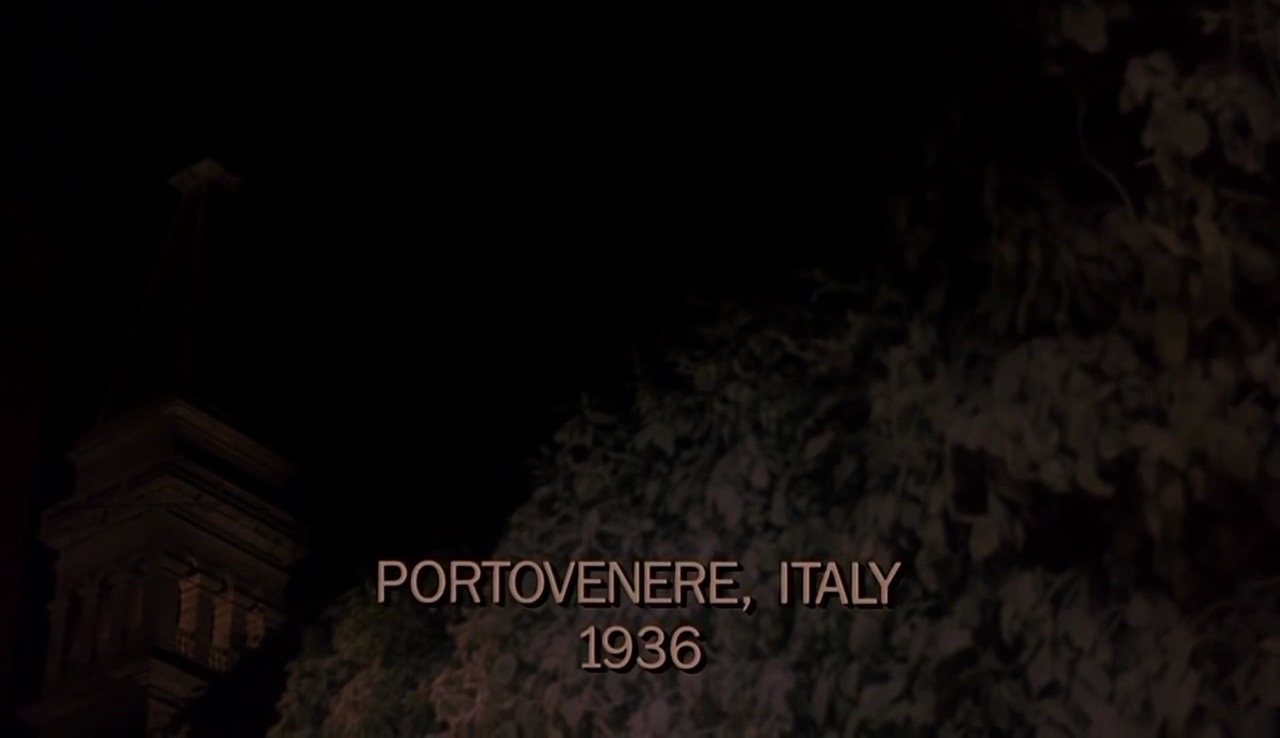
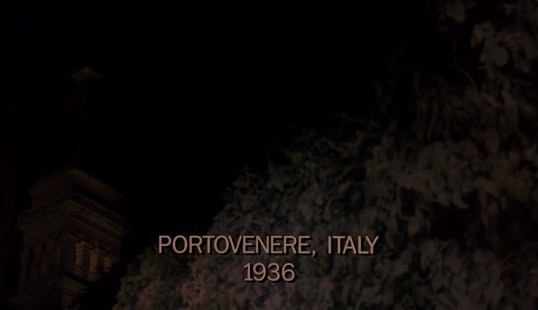
This movie drops you right into something that just screams Captain America: 1936 Italy.
vlcsnap-2016-05-02-19h09m35s172

Get used to title cards. This movie has a bunch of them even when they aren’t necessary, or don’t make any sense. We are introduced to a child prodigy when the movie bothers to subtitle the actors speaking foreign languages so we can actually know what’s going on. I thought I had a dubbed version of this movie for awhile. In come the Nazis or Fascists and they take the kid and kill his family. A tape recorder is running during this because he was playing the piano. It winds up recording the murder of his family.

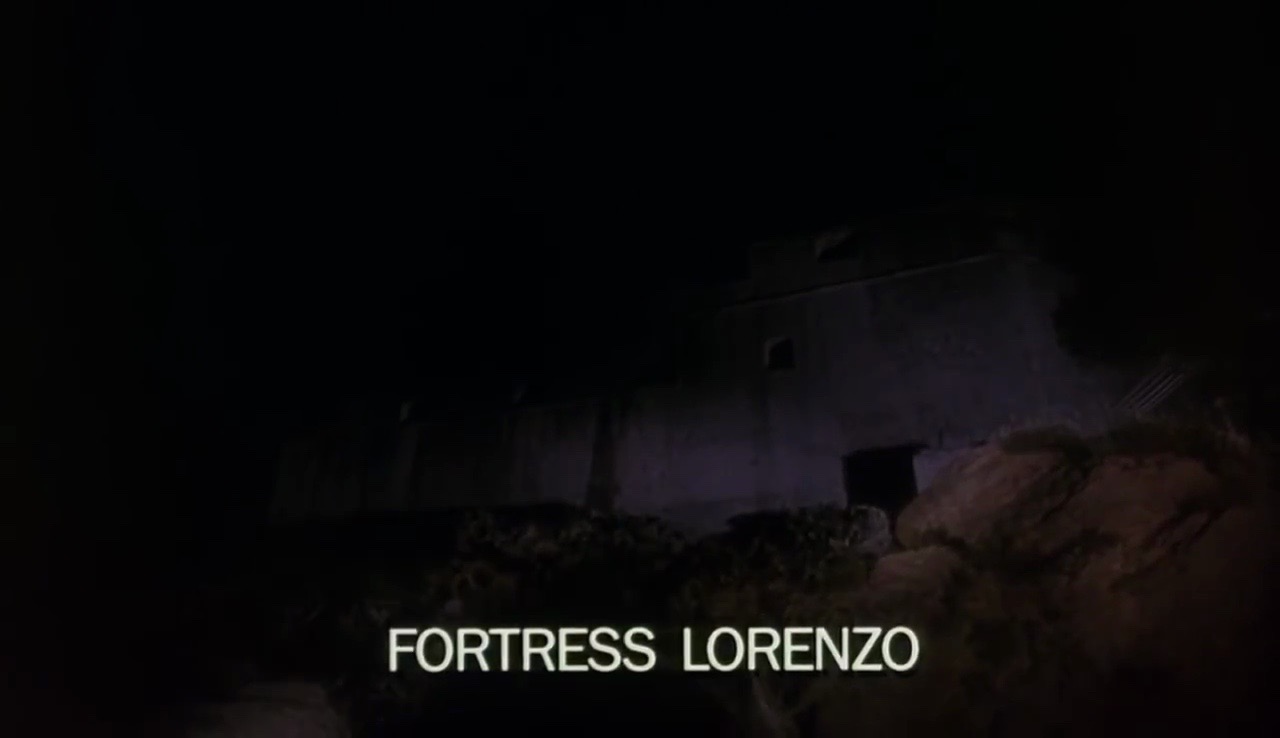
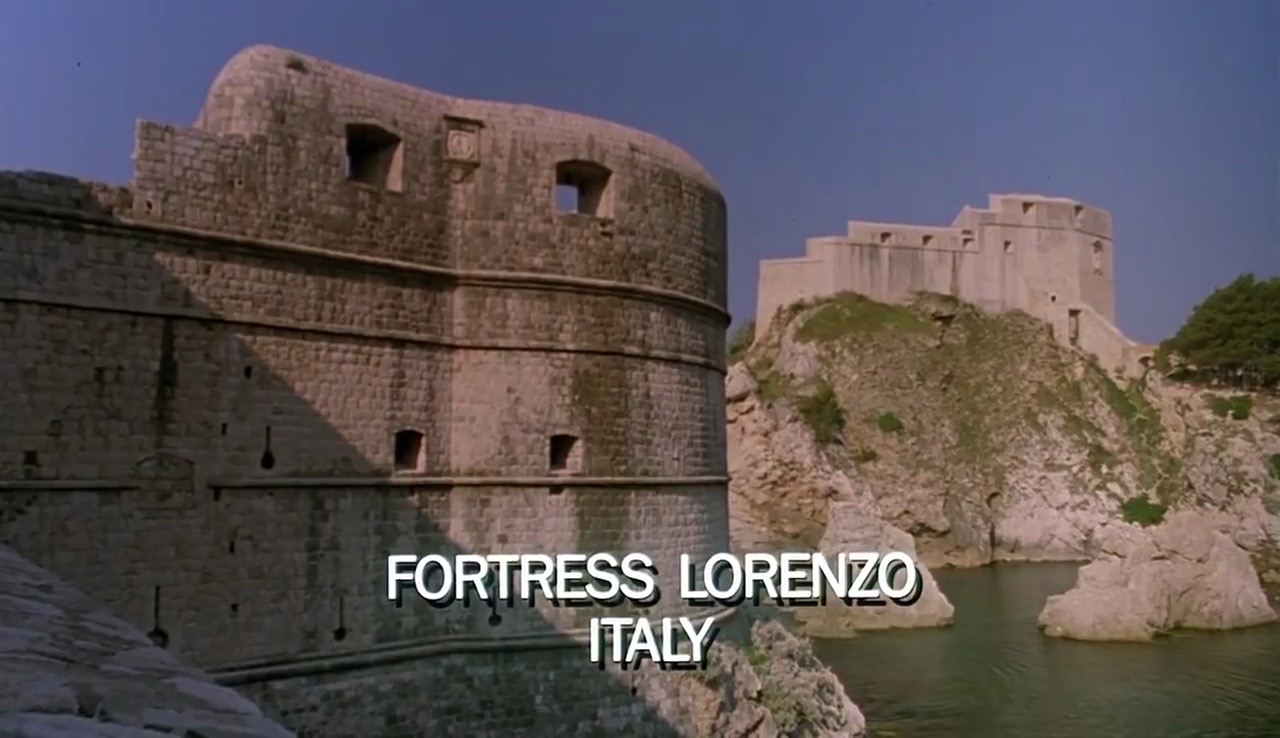
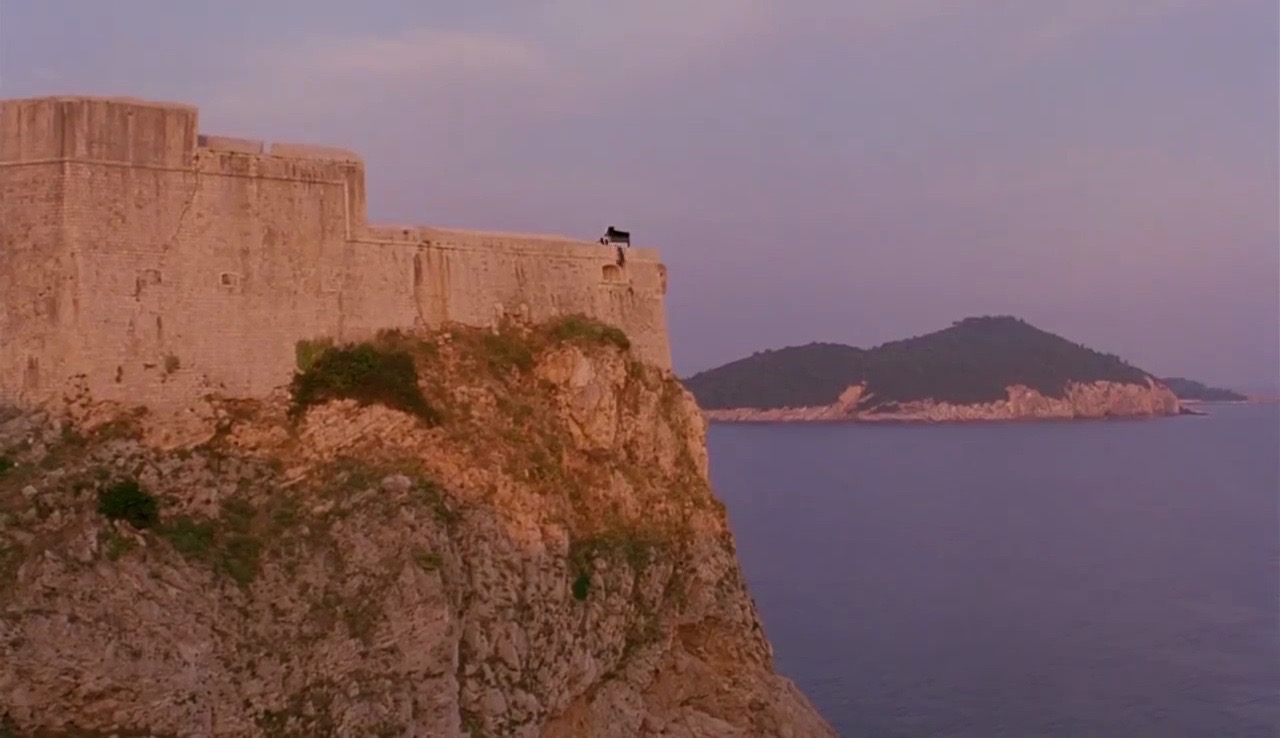
Now it’s off to Fortress Lorenzo. I know this because the title card tells me so.

vlcsnap-2016-05-02-19h14m28s879

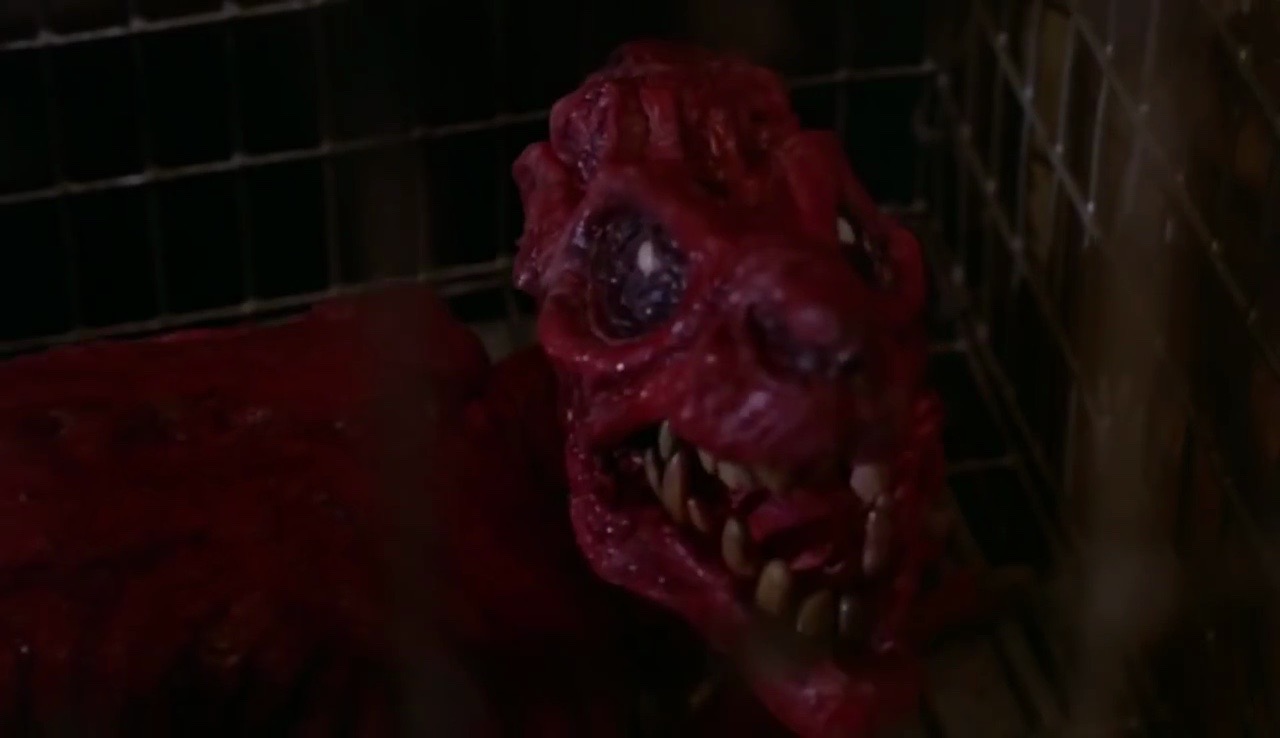
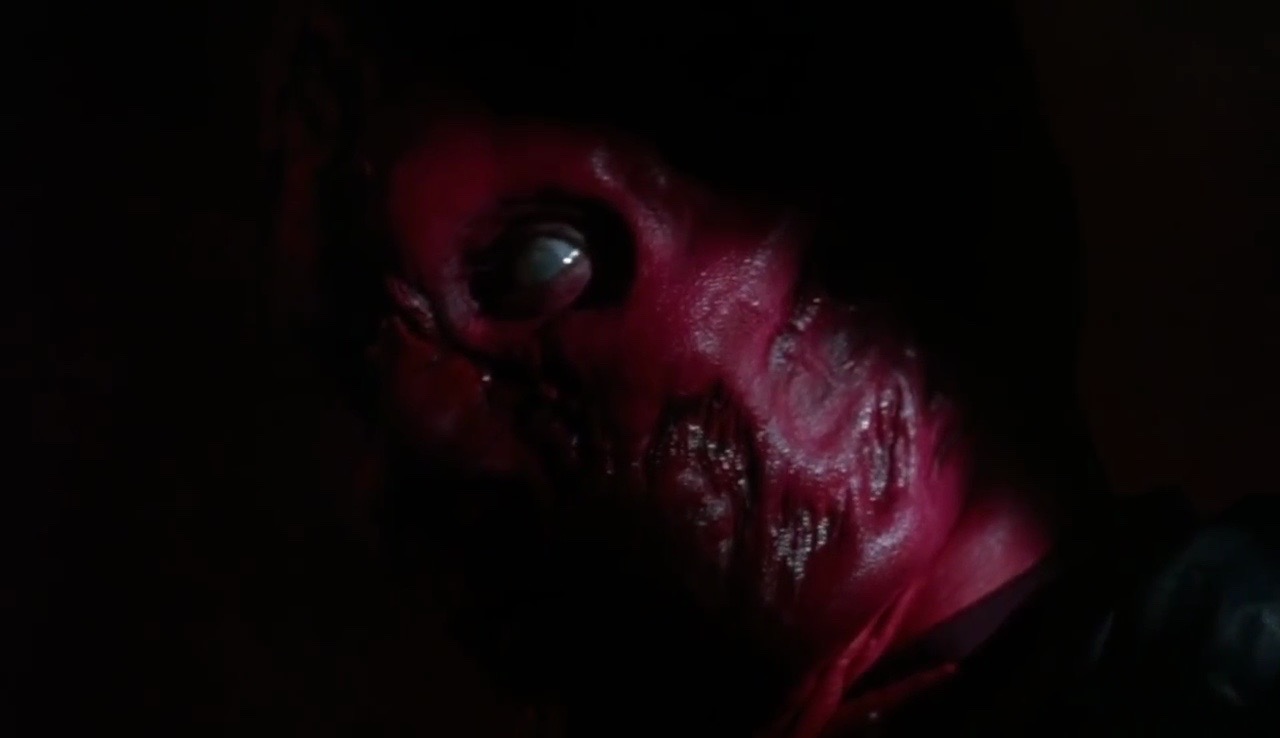
We are here because we need to watch the bad guys looking at stock footage of a white rat. Then the grand reveal!
vlcsnap-2016-05-02-19h18m07s150

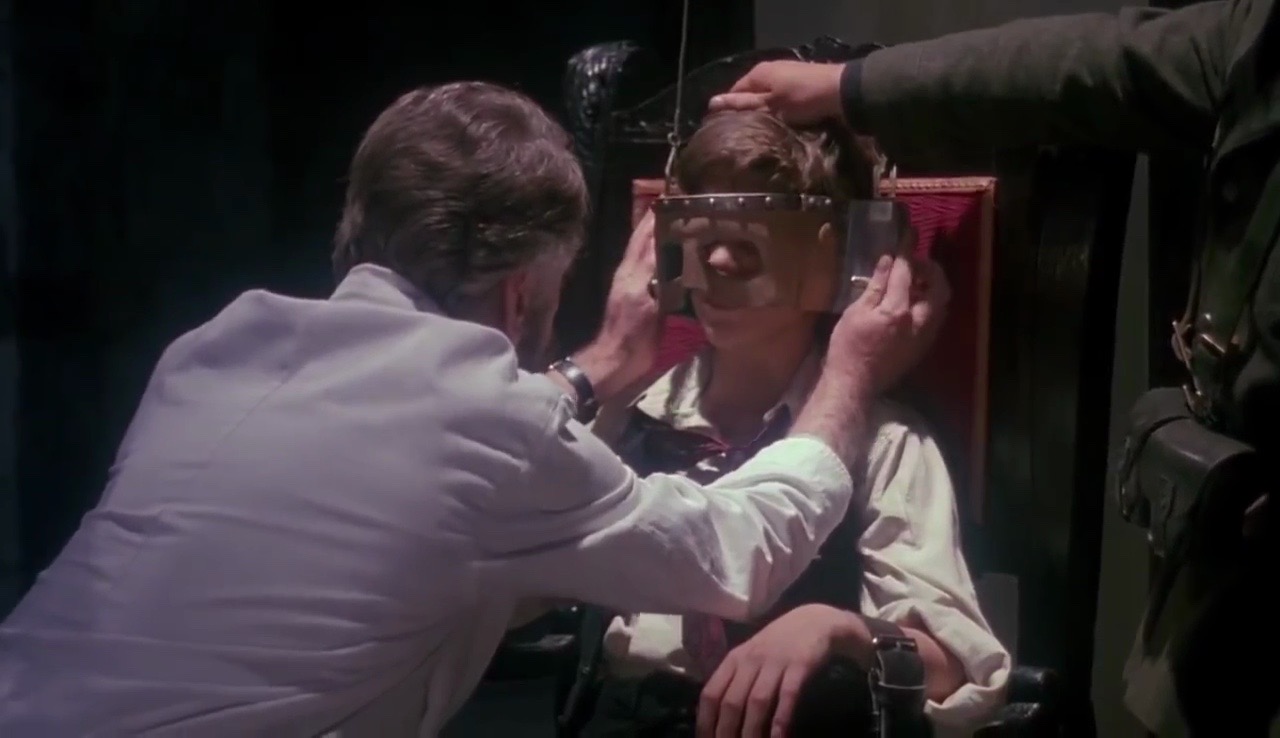
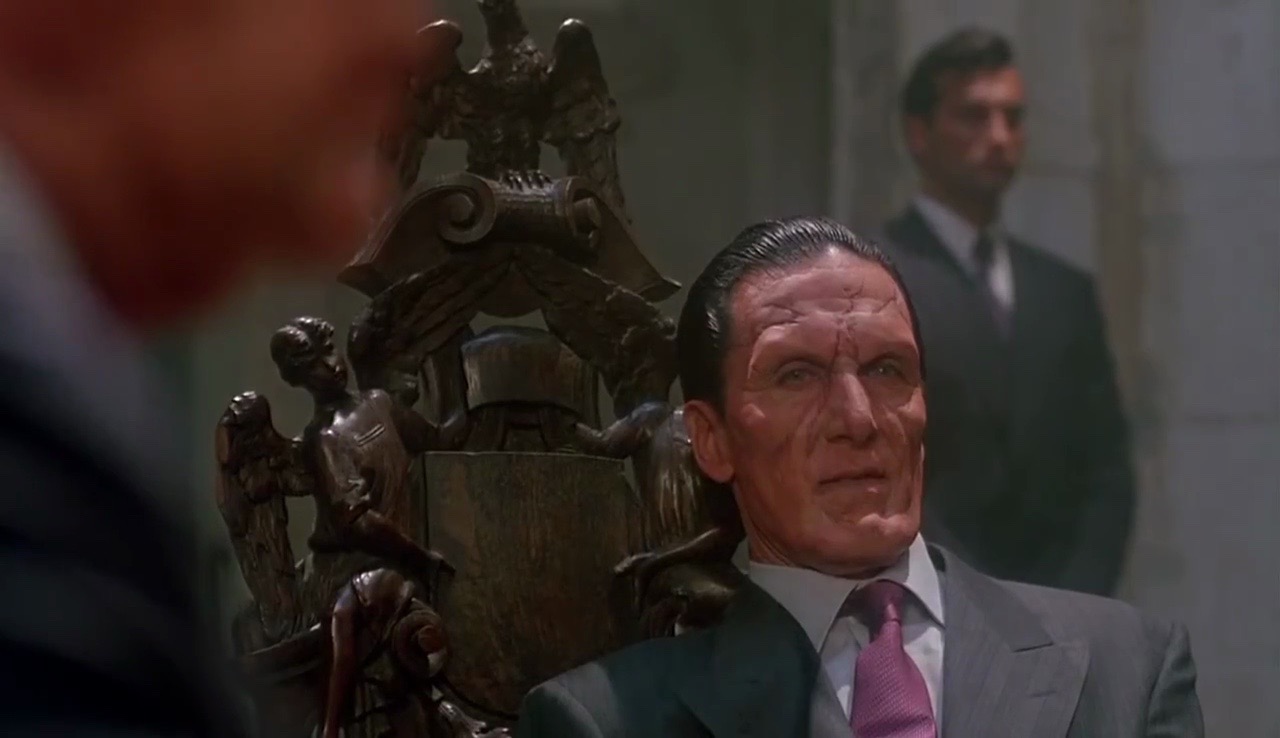
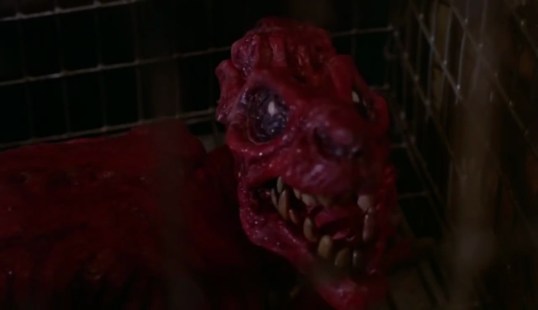
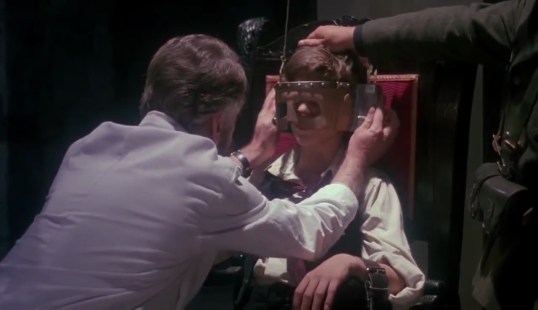
Okay, they are working with a low budget, but that is simply a rat they have turned into Red Skull Rat. We do actually get a real Red Skull (Scott Paulin) when they put the kid in what looks like an electric chair.
vlcsnap-2016-05-02-19h20m42s877

There’s a female scientist (Carla Cassola) here who doesn’t like what is being done to this kid and escapes as they zap him. What part is she going to play in this movie? Wait for it later. It’s kind of awesome and really stupid.

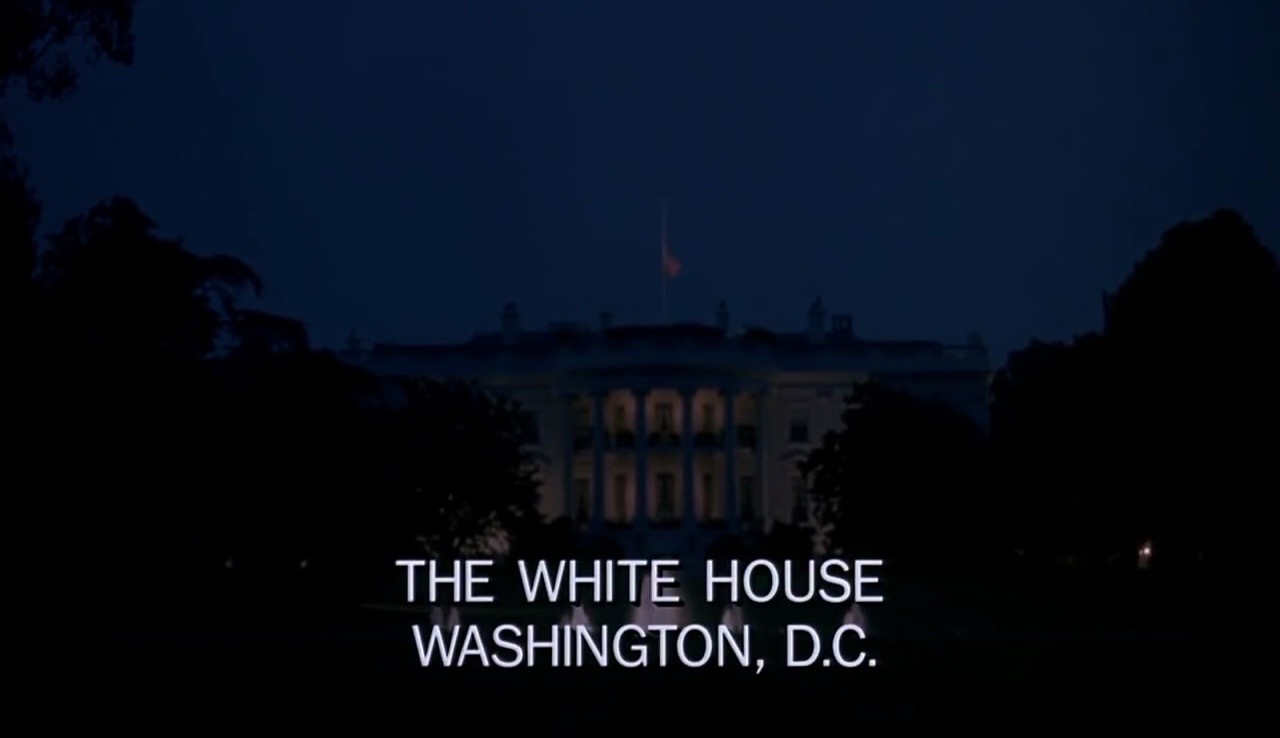
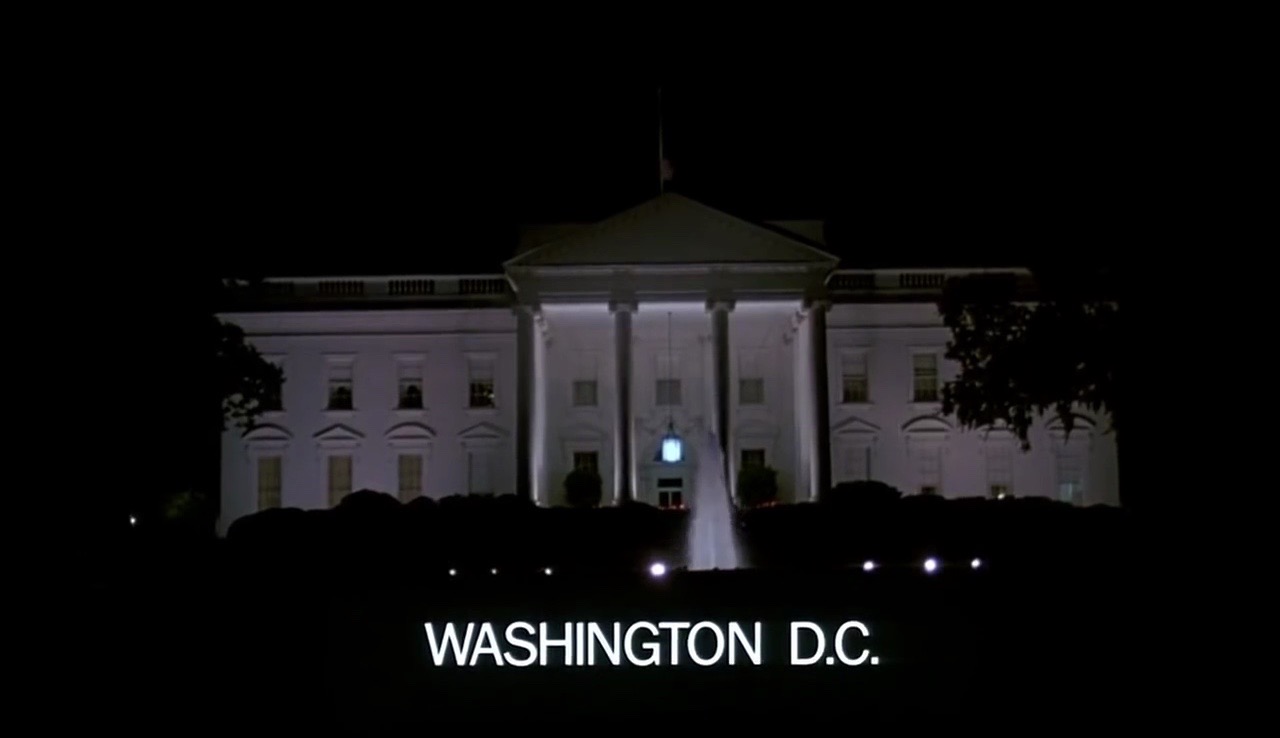
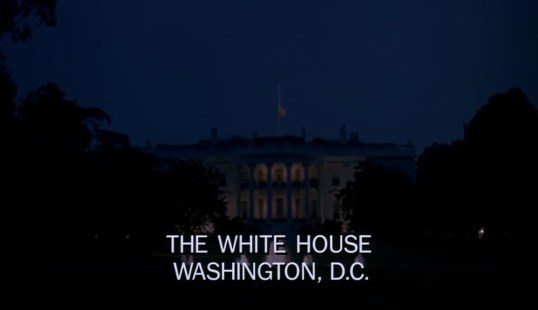
Now we cut to 7 Years Later, which means 1943 because again, title cards told me so. Two of them in case I can’t add and to make sure I know that 7 years have past for…um…reasons? Now we are at the White House, which is in Washington, D.C. Thank goodness for this title card. Otherwise, I might have been confused.
vlcsnap-2016-05-02-19h21m58s405

We find out that the scientist lady who escaped 7 years prior in 1936 Italy from Fortress Lorenzo perfected a process of taking a boy with birth defects and making him “as fast and as strong as an athlete” in America. Hitler already has Red Skull at this point. They plan to have a regiment of super soldiers and Steve Rogers has volunteered to be the first. You might be thinking right now that the few lines of dialog that were subtitled earlier mentioned how old the kid was so that adding 7 years would explain how Red Skull will appear as an adult. Of course not.

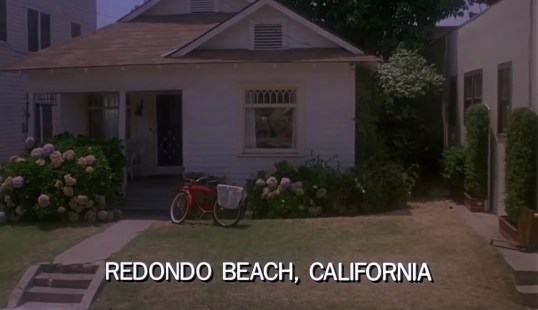
Now we go to Redondo Beach, California via another title card.
vlcsnap-2016-05-02-19h22m55s312

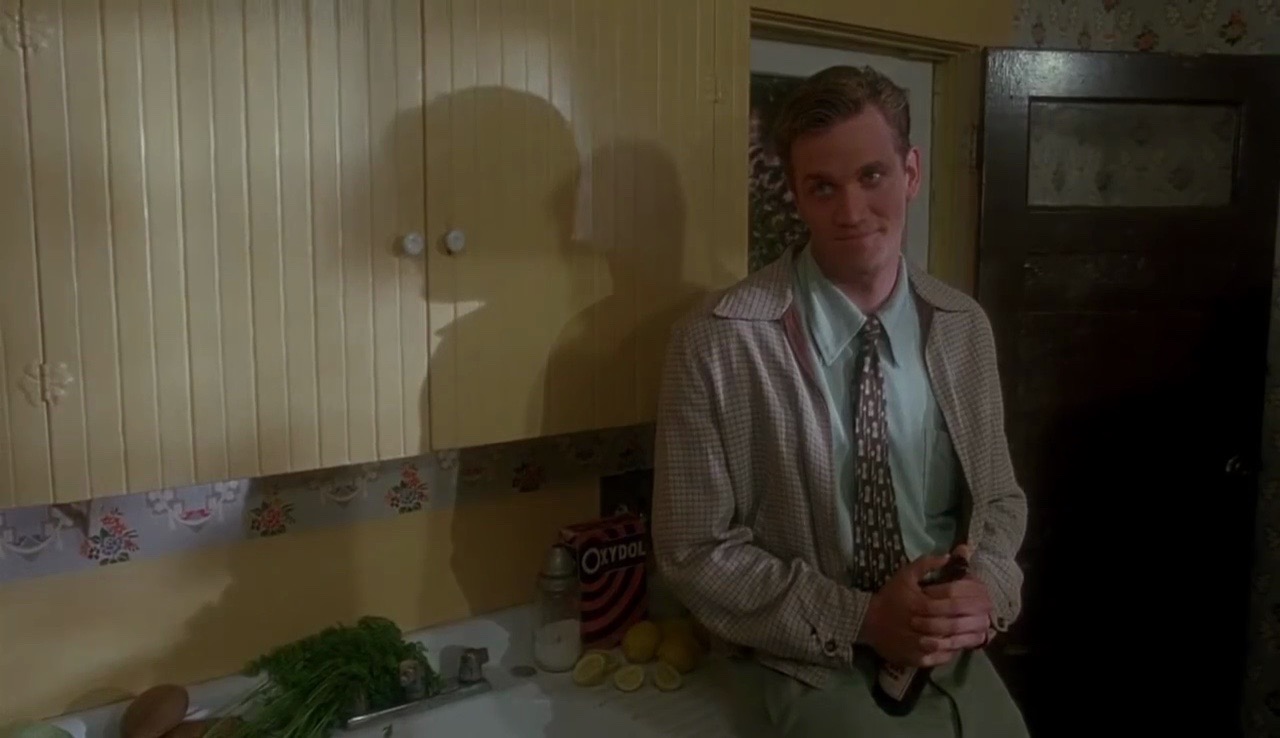
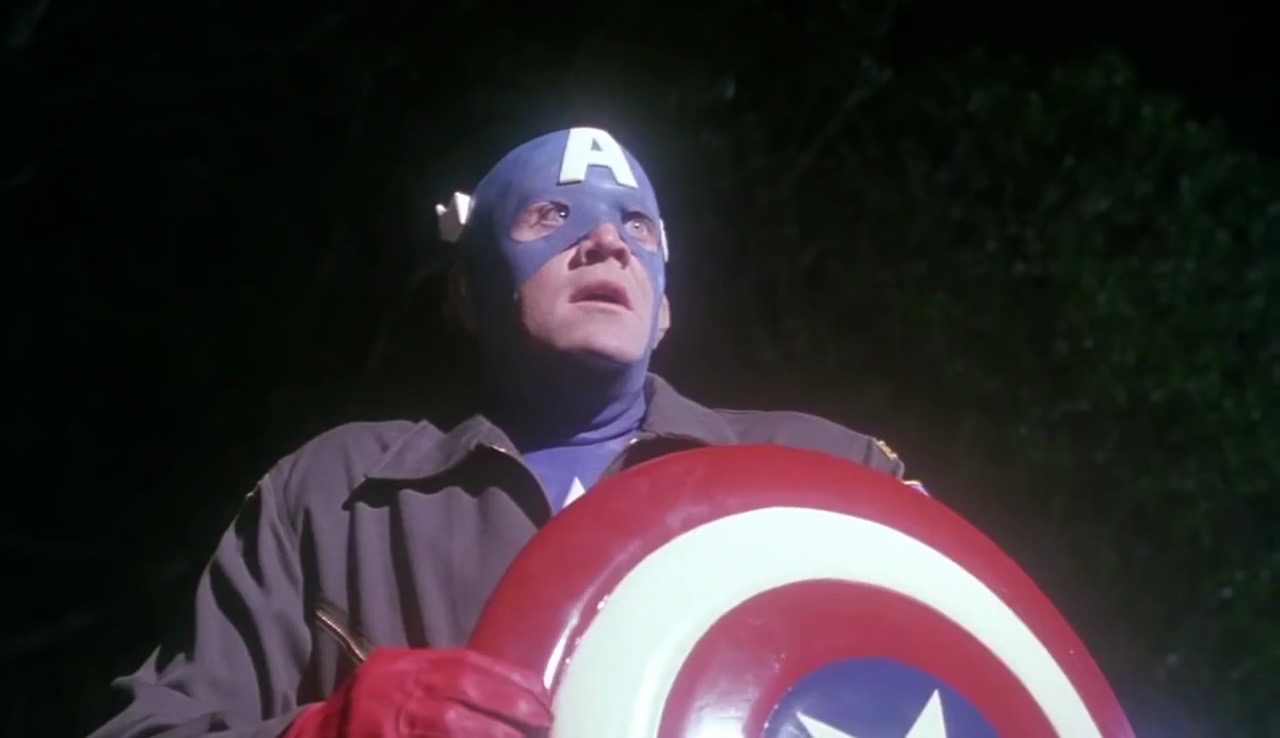
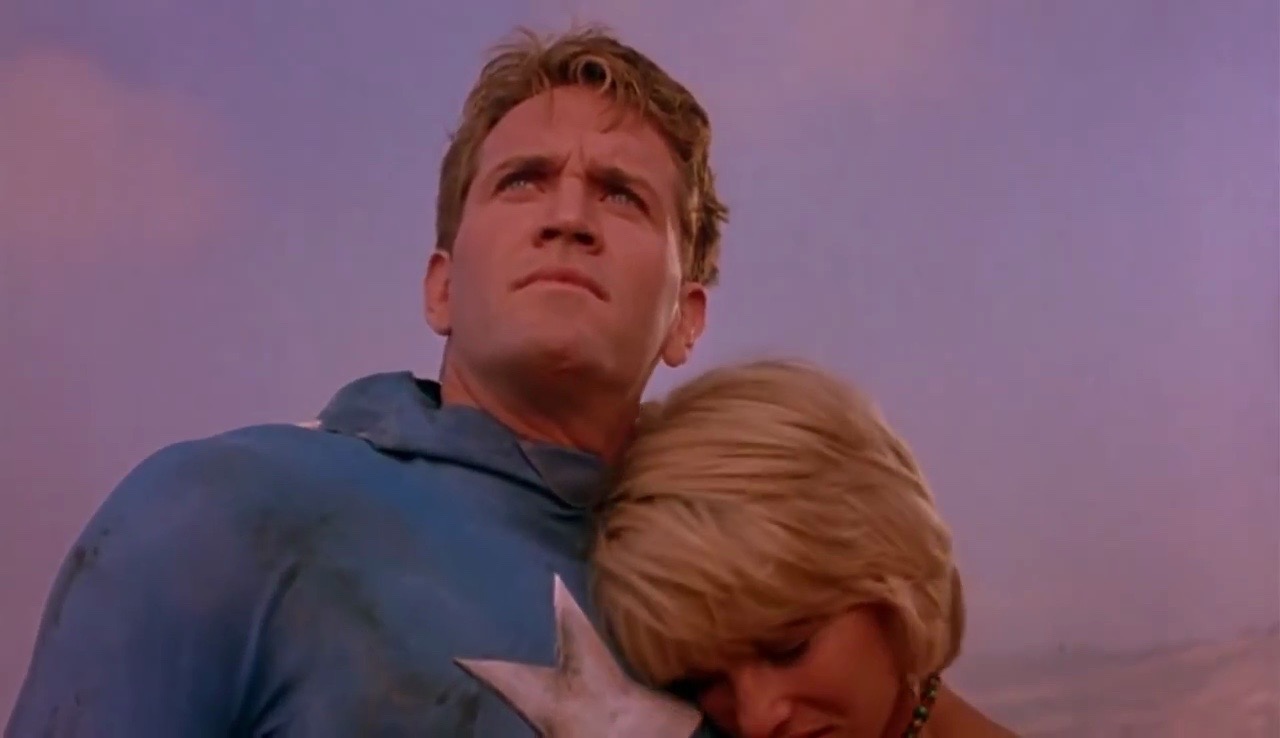
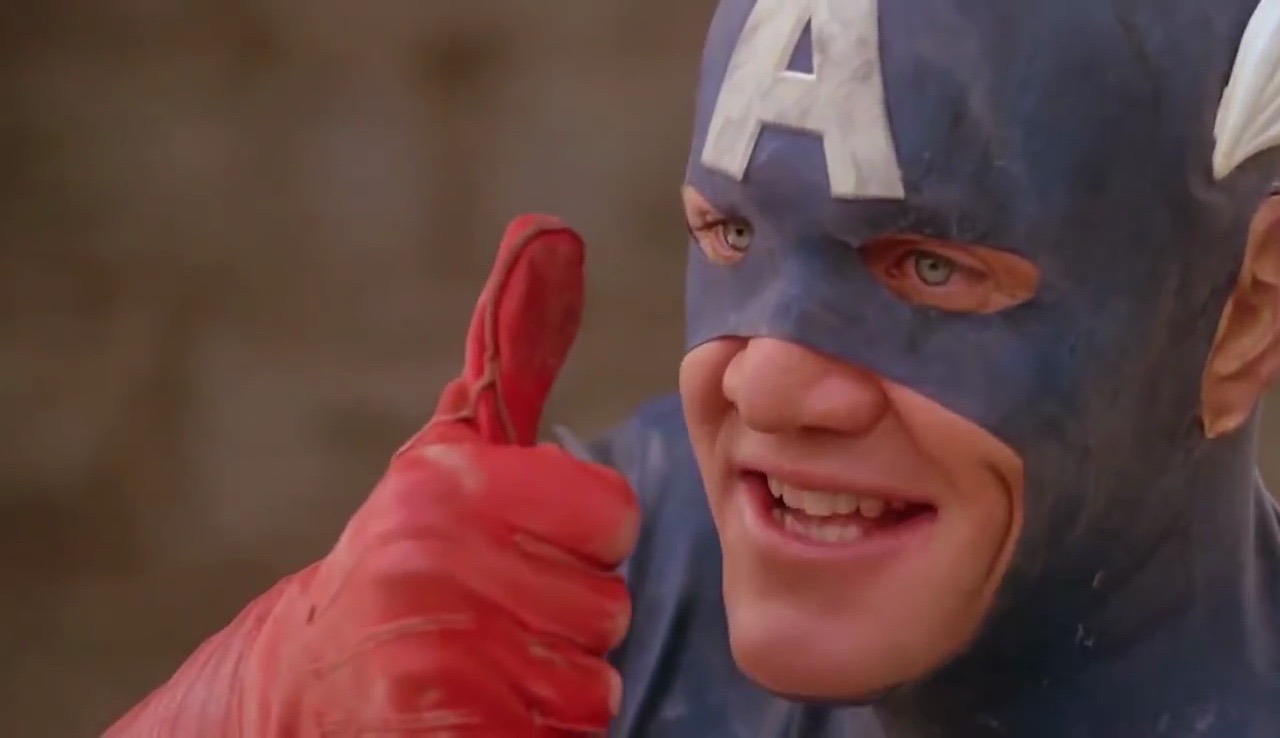
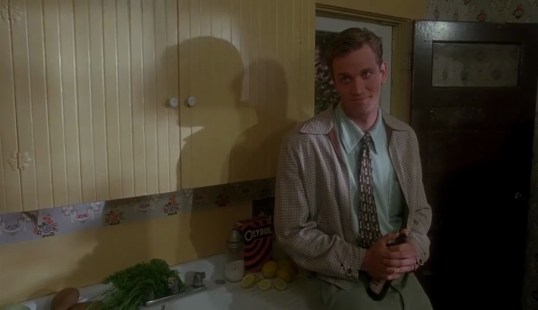
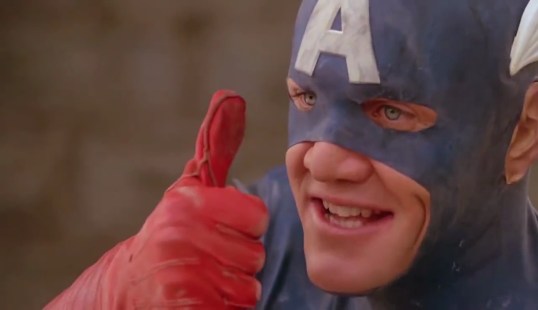
Meet 1990’s Captain America (Matt Salinger)!
vlcsnap-2016-05-02-19h23m48s502

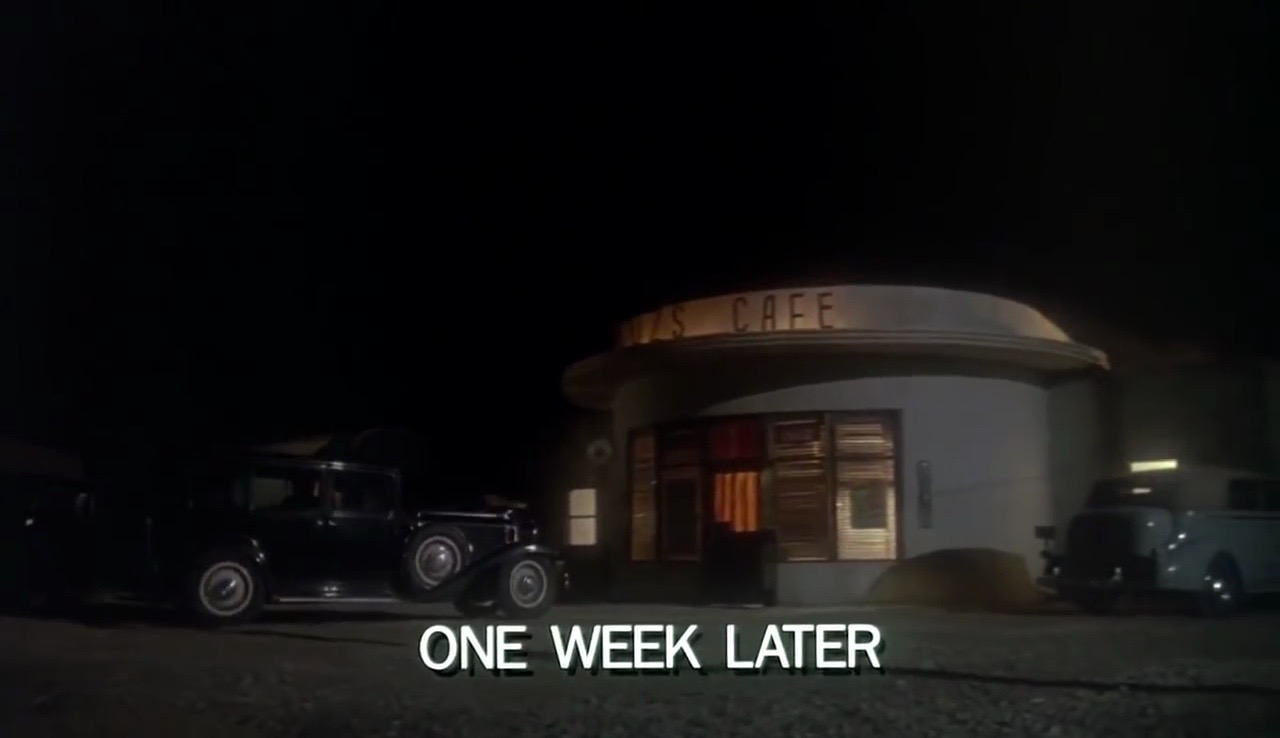
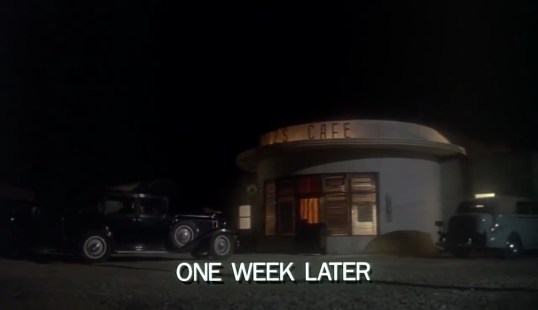
I did not try to catch him with looks like that on his face. He does that all on his own throughout this movie. He limps around and says goodbye to the family and girlfriend. Now it’s off to a top secret diner with scientist lady. They get there one week later. I know this because another title card tells me so.
vlcsnap-2016-05-02-19h30m24s023

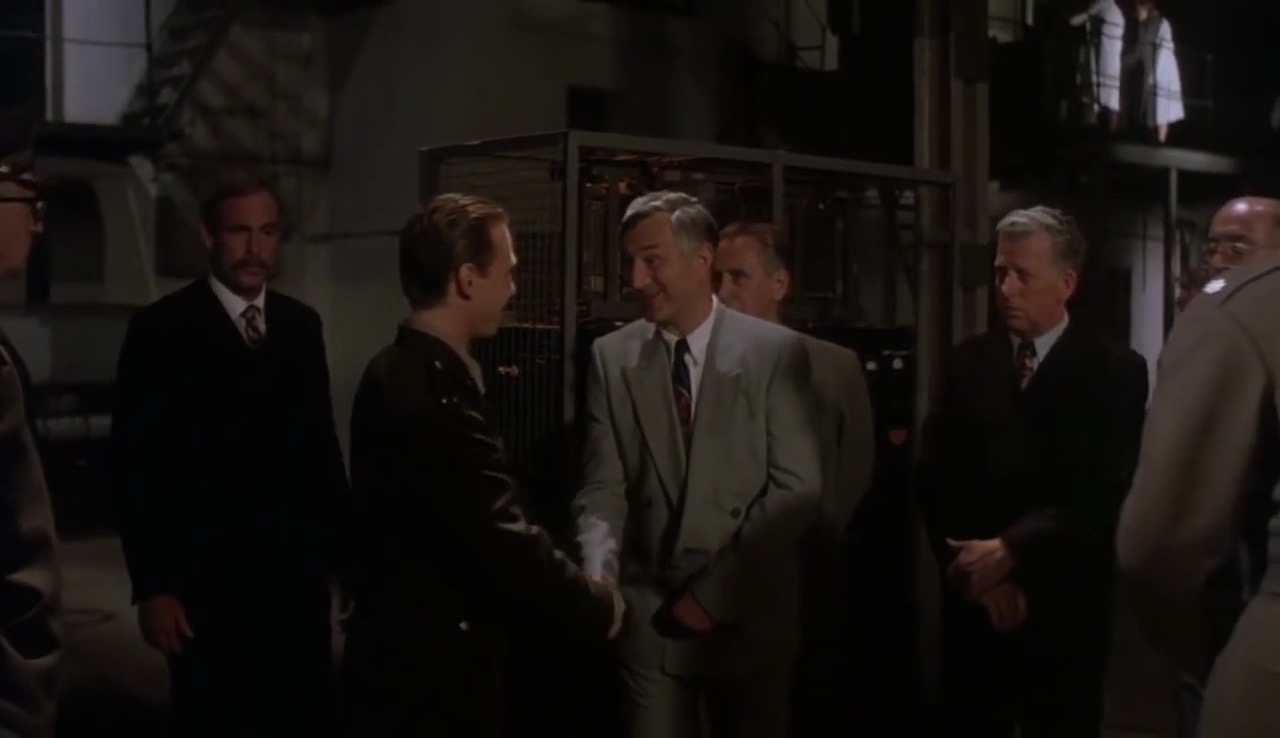
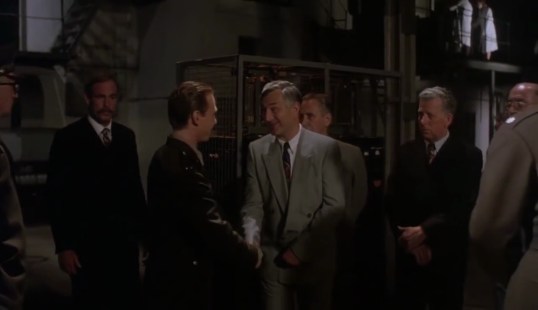
It would have been very confusing without it. At least I thought it was them. It turns out it’s a couple of military guys who proceed to go through a secret entrance in the cloakroom and down to an underground lab. Of course Senator Kirby is there.
vlcsnap-2016-05-02-19h32m55s279

Is that Jack Kirby? He really does call him Senator Kirby. He is also the only person he greets by name for no reason. They’ve kept all the details about this a secret between one guy and the lady because once they die, the movie can just randomly give Captain America his things without having to explain anything. How fast does that happen?

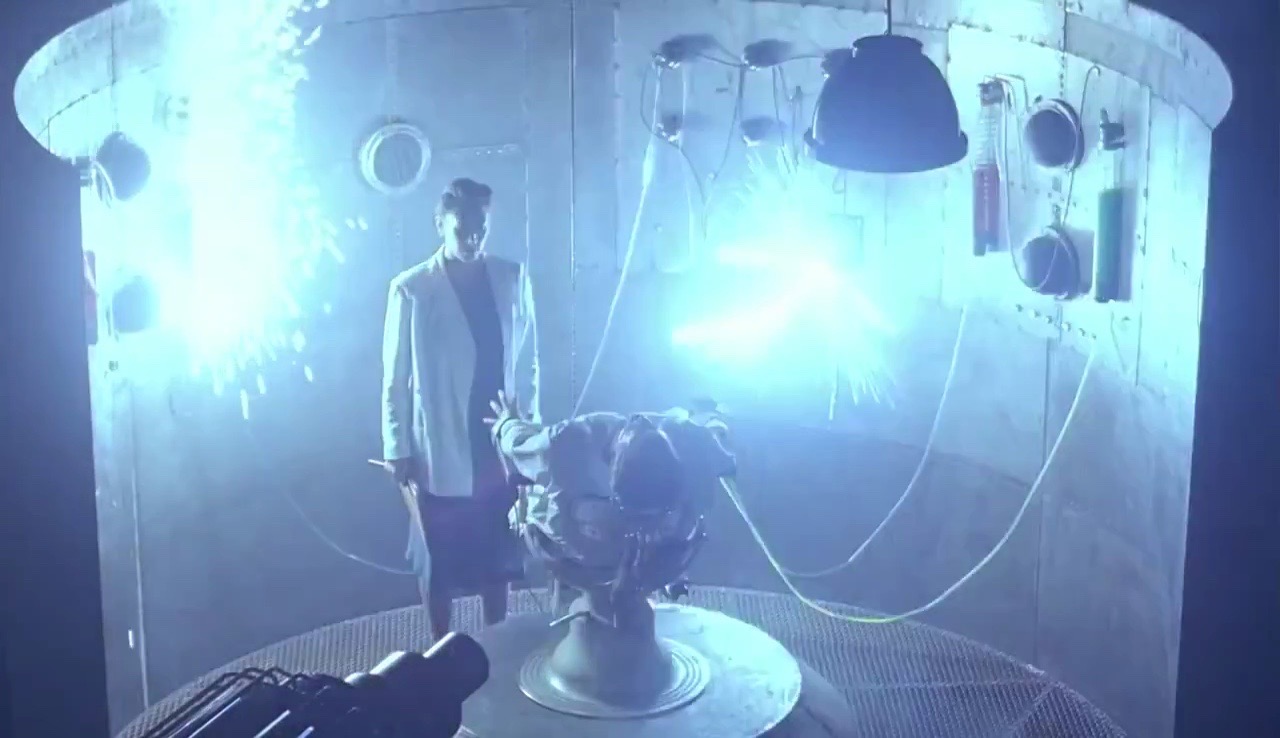
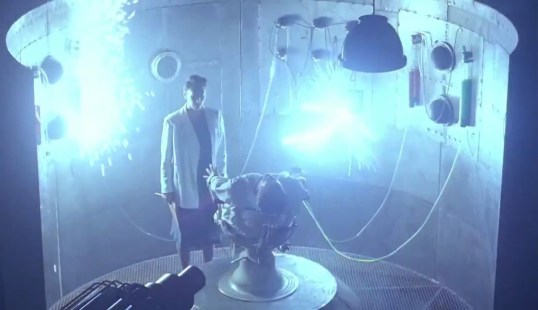
Zap him!
vlcsnap-2016-05-02-19h36m01s818

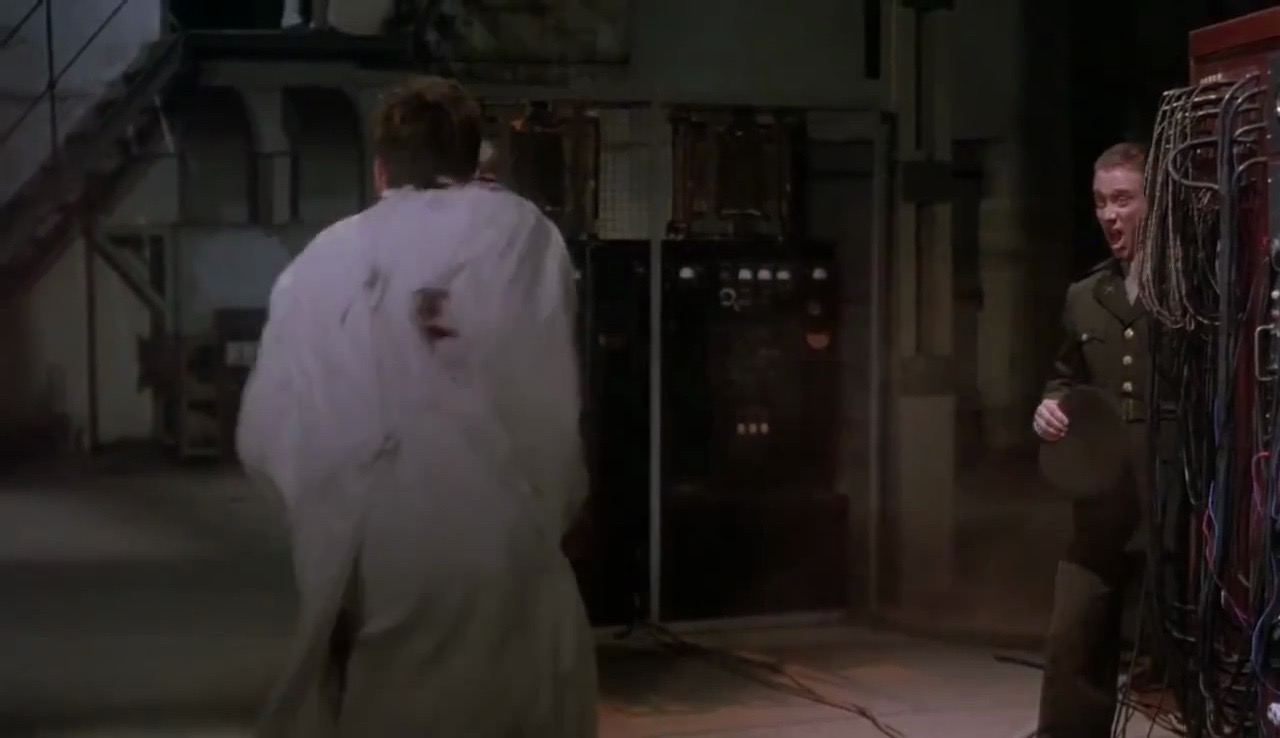
I love how during this they cut several times to parts of his body that don’t appear to change to show he is getting stronger. His vitals signs are stable. Thank God! Also, thank God for plot convenience because there’s a traitor in their midst you see. He immediately shoots and kills both the guy and the scientist before getting himself electrocuted. Captain America also takes a bullet to the chest.
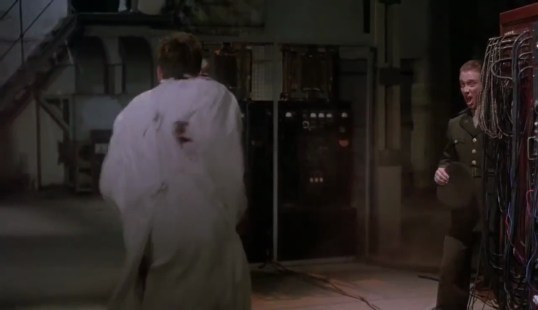
vlcsnap-2016-05-02-19h37m43s921

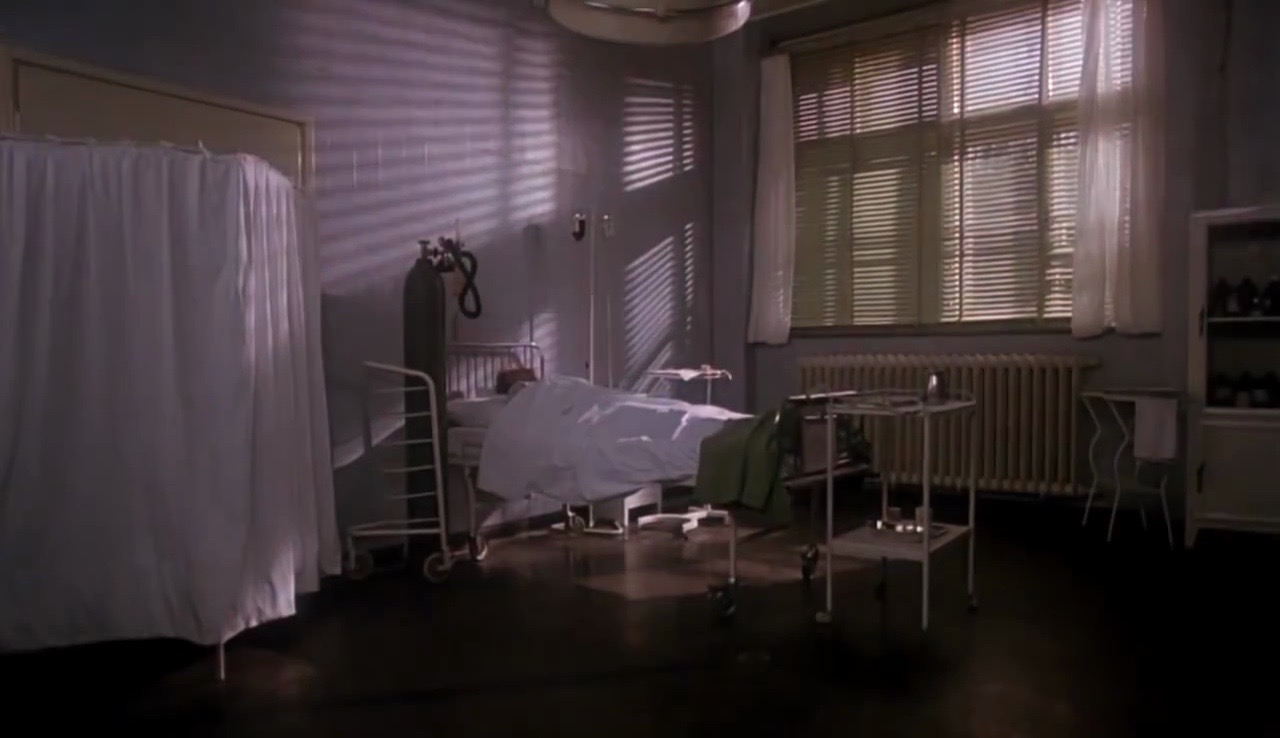
Don’t worry about him. We now cut to him lying in a bed.
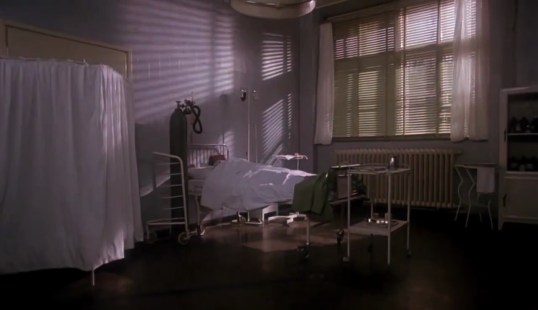
vlcsnap-2016-05-02-19h39m31s658

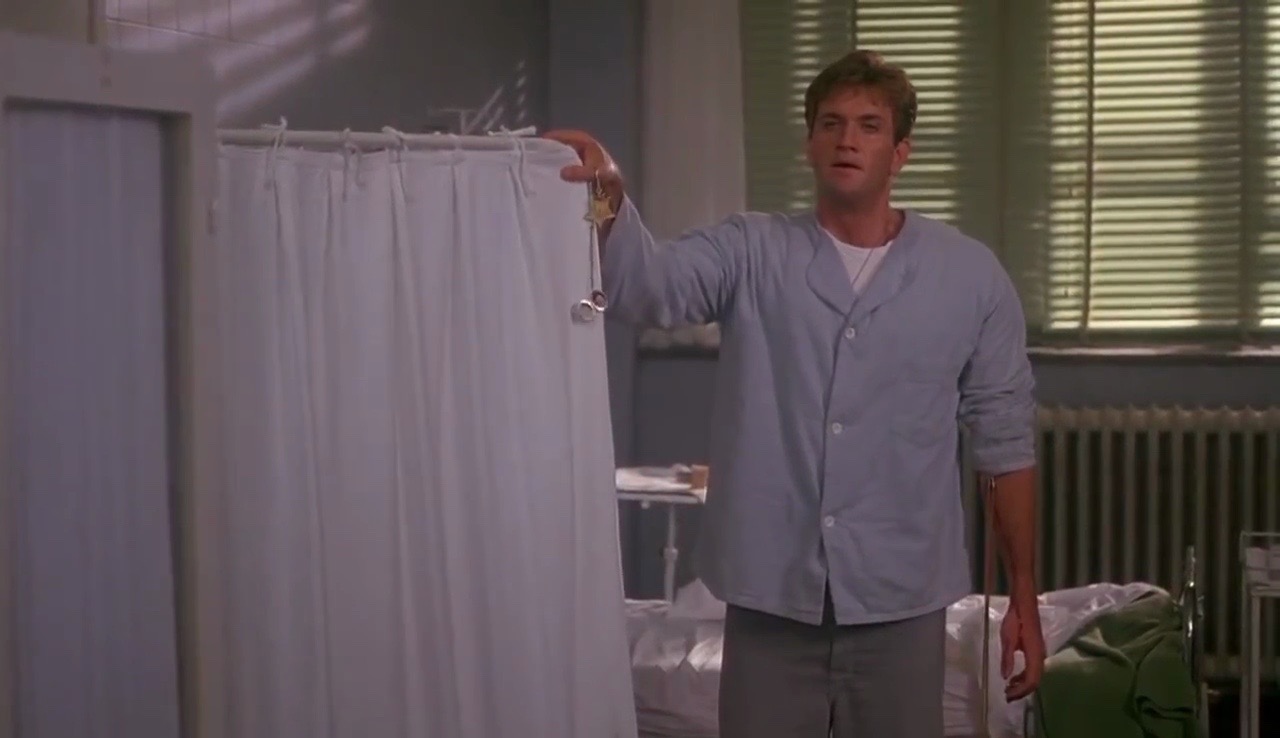
I can’t tell you how much time has passed, where this bed is located, or if this building is the White House or not because there wasn’t a title card to tell me so. Taking a bullet to the chest is really going to put the Captain down for awhile, right? I mean he’s not Superman or anything. They even said that earlier. That’s not a issue for 1990’s Captain America. He hears something about the bad guys having a launch site and he’s up and ready in the blink of an eye.
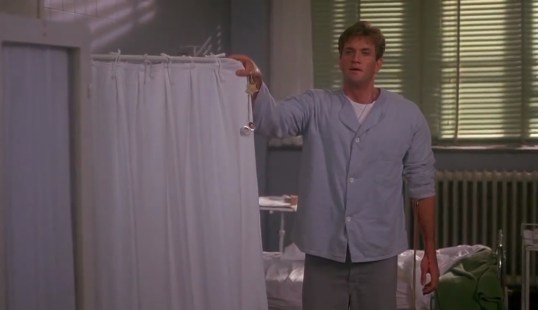
vlcsnap-2016-05-02-19h40m20s233

Then we cut to footage of a plane from so far back that we can’t tell it isn’t actually from 1943 or whenever it is now. He now has his uniform and his shield. The uniform is apparently fireproof and looks like it does because the scientist lady loved the red, white, and blue.
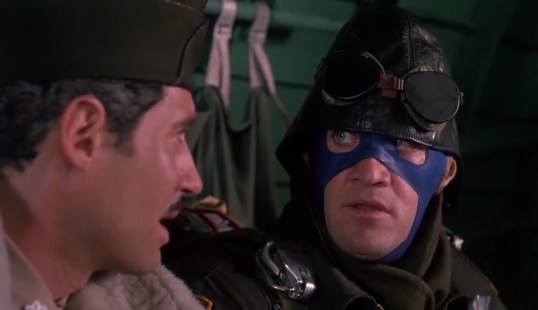
vlcsnap-2016-05-02-19h43m08s517

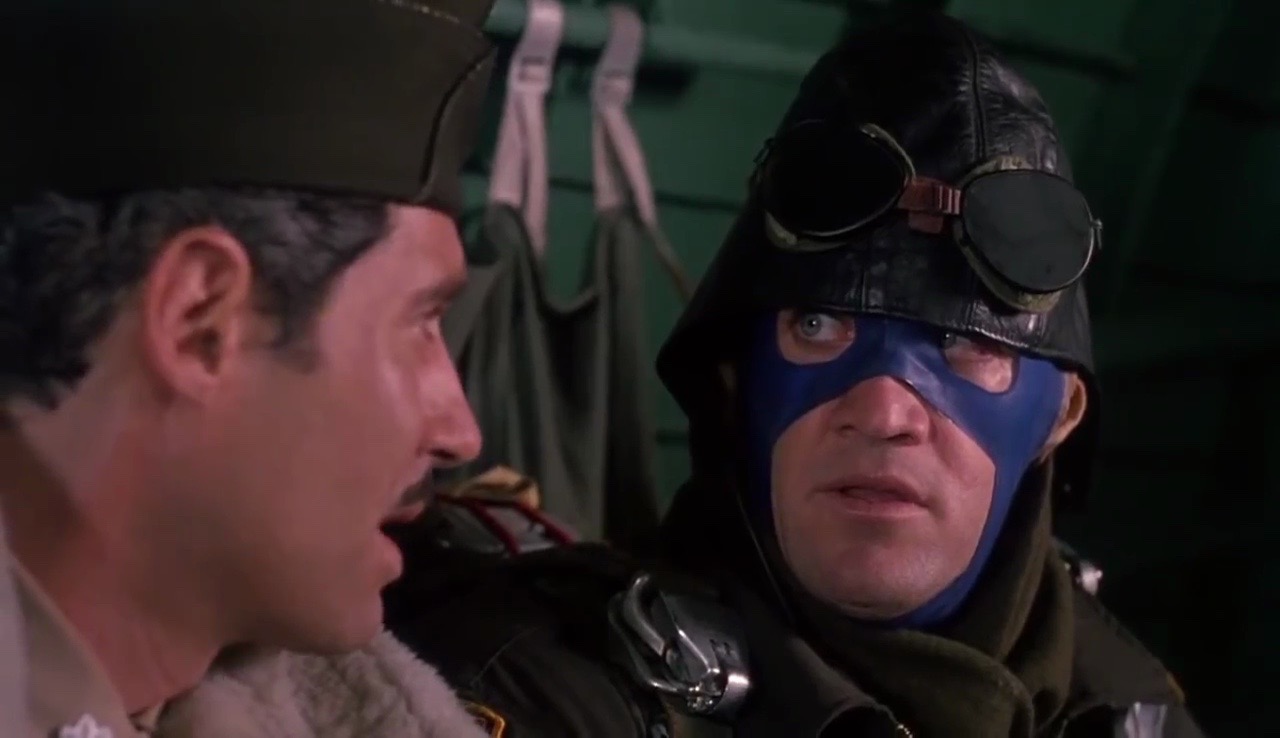
Captain America says that there’s something nobody has talked about. It’s that he would like some backup. Captain America wasn’t paying attention earlier. Since the traitor killed off the guy and scientist lady, he is the only one of his kind. Captain America jumps out of the plane and within seconds is spotted.

vlcsnap-2016-05-02-19h59m02s249

Then with probably the best special effects this movie has to offer, he throws the shield to knock down a guard tower. Cut to Red Skull who apparently is psychic because an alarm going off automatically means it’s Captain America.
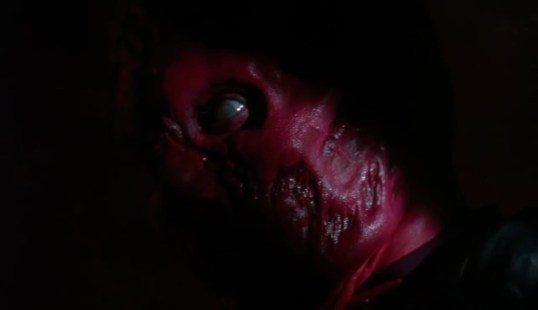
vlcsnap-2016-05-02-20h00m02s187

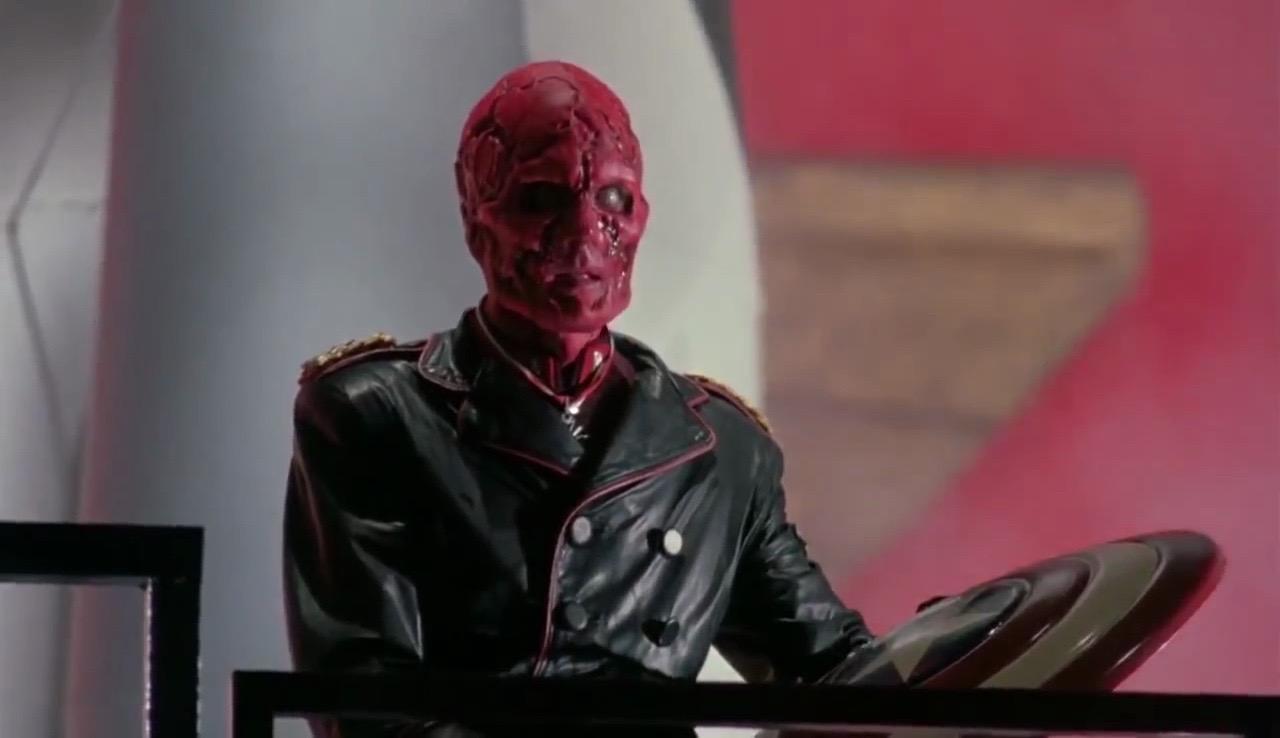
Meanwhile, Captain America is outside probably wondering why it’s necessary for him to be wearing the uniform when there’s no fire around. That’s of course when he blows some stuff up to make his own fire before entering the launch site. He spots Red Skull, says “holy mackerel”, and greets him by throwing his shield at him. Red Skull catches it without any trouble.
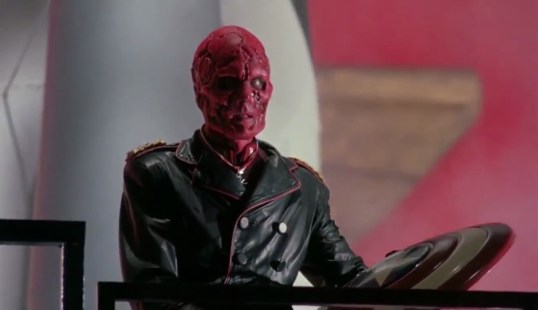
vlcsnap-2016-05-02-20h03m36s289

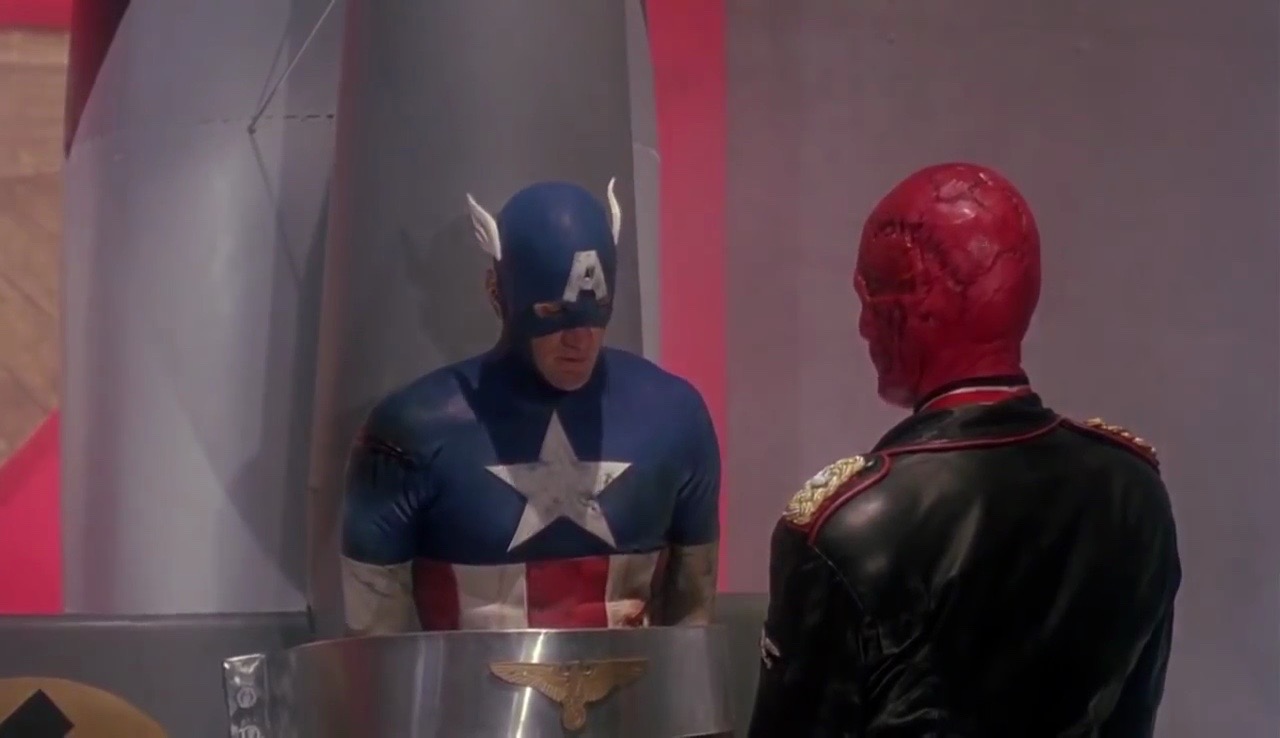
He throws the shield into the ground. Red Skull proceeds to beat Captain America up and straps him to a rocket.
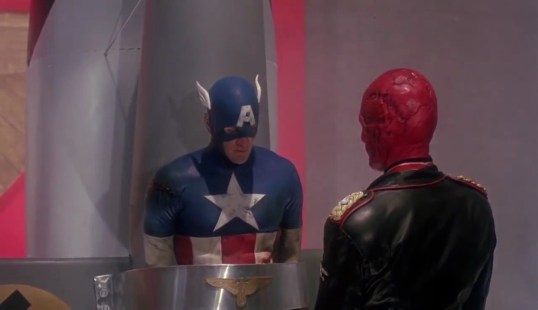
vlcsnap-2016-05-02-20h05m33s980

He mentions New York while he is strangling Captain America, but then tells him the rocket is going to the White House. Captain America grabs Red Skull’s hand to make him come along for the ride so Red Skull cuts off his own hand, and the missile launches. Now we cut to Washington, D.C. again.
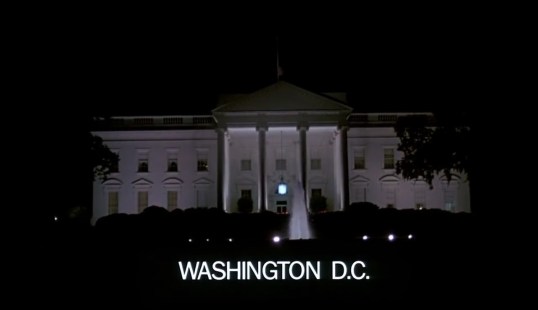
vlcsnap-2016-05-02-20h08m32s364

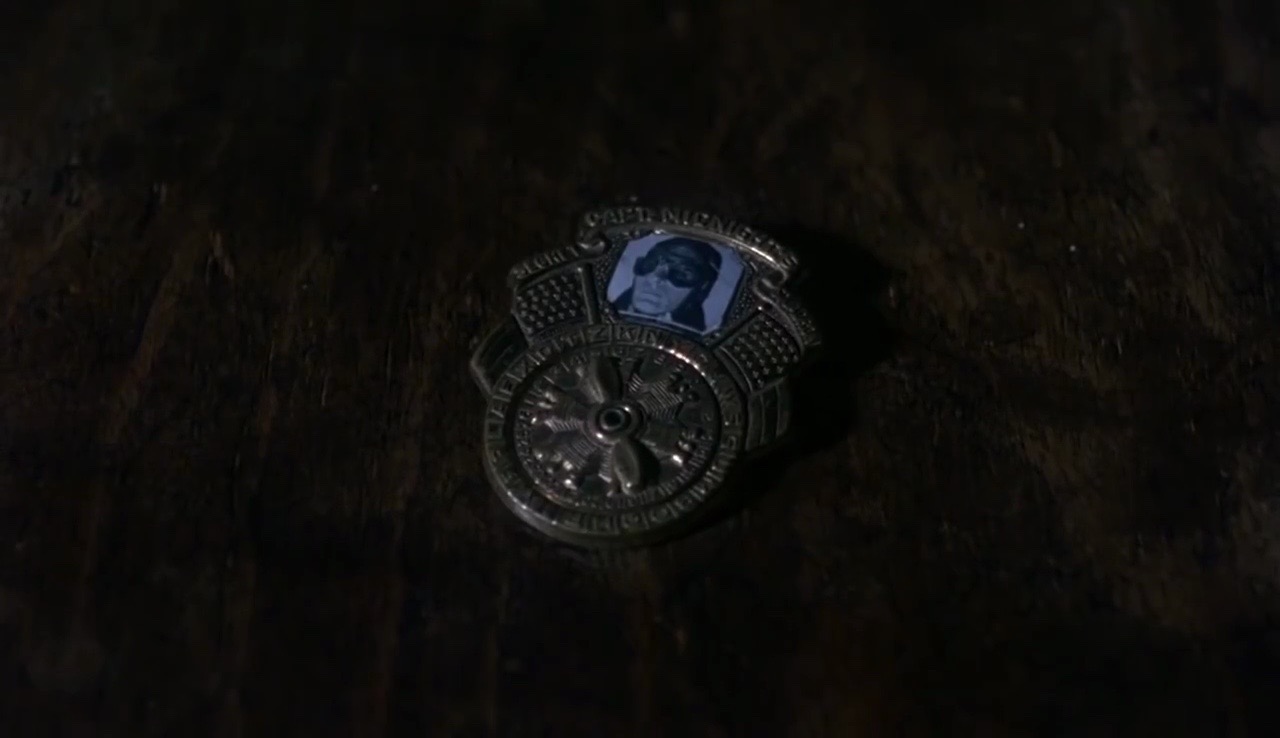
I’m not sure where in Washington, D.C. though because the title card doesn’t tell me this time. It cuts to another building and then to what I think is a hotel room. There’s a kid there who is up at 4 A.M. because he wants to see the president since the title card said the set he is on is in Washington D.C. Mom puts him to bed and the kid makes a wish to be the president one day. The kid is having none of this. He gets up and grabs his decoder ring.
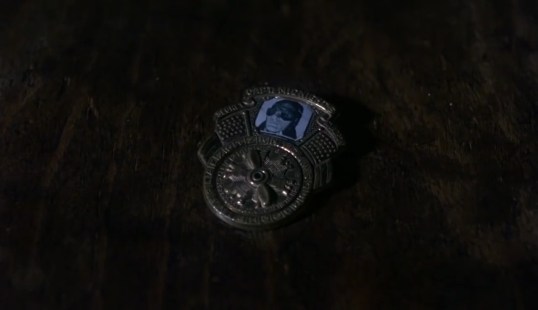
vlcsnap-2016-05-02-20h09m21s691

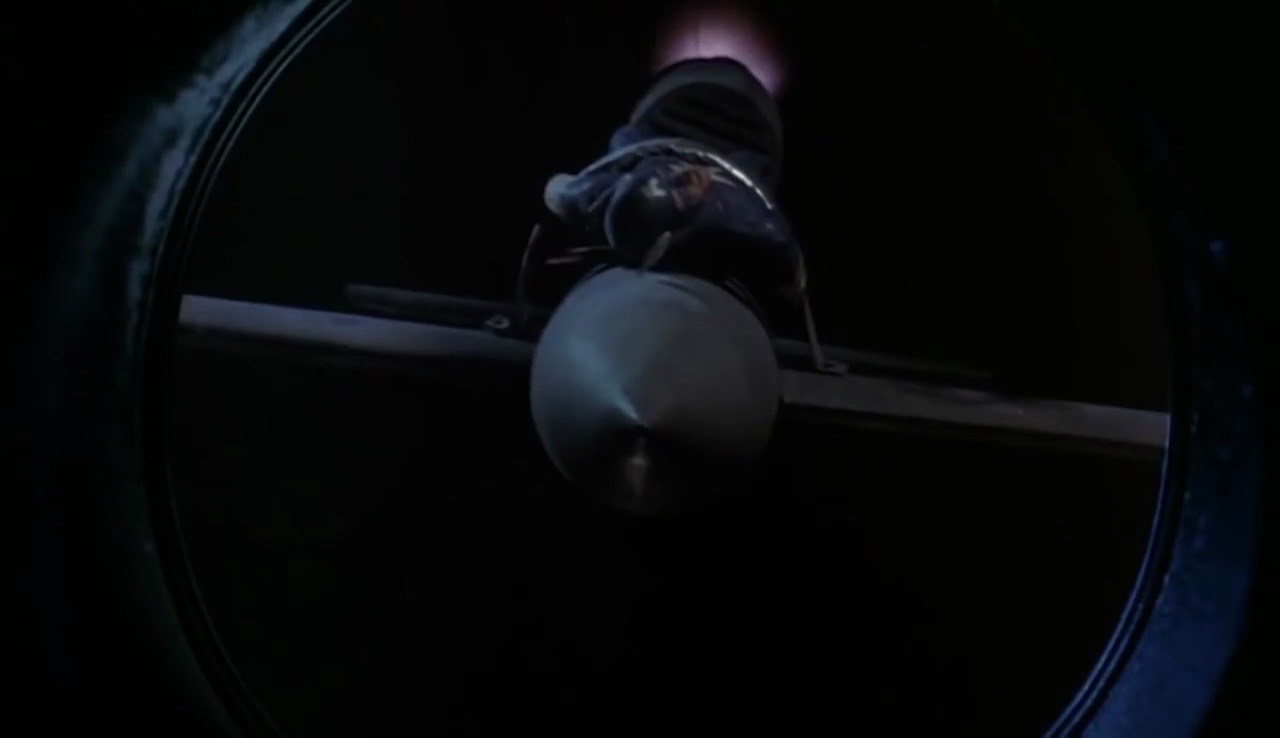
I’d make a joke about Ovaltine seeing as that is a Captain Midnight decoder ring, but something way better is about to happen. The kid now goes to that place we saw earlier and sees this through his camera.
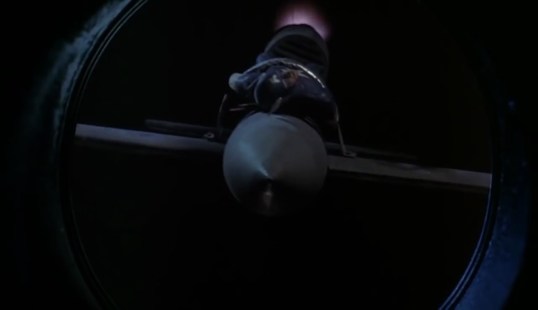
vlcsnap-2016-05-02-20h10m02s874

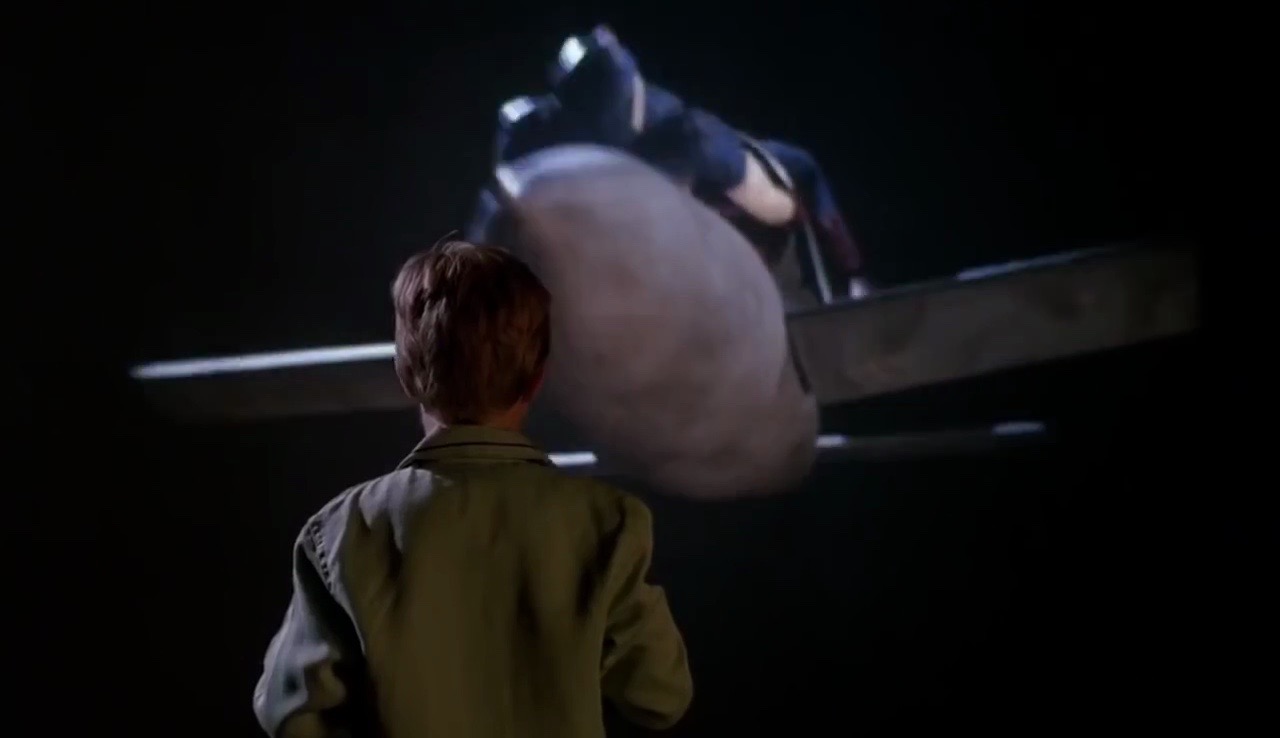
Captain America sees the kid so he punches and kicks on the rocket till a wing breaks off. The rocket nearly hits the kid.
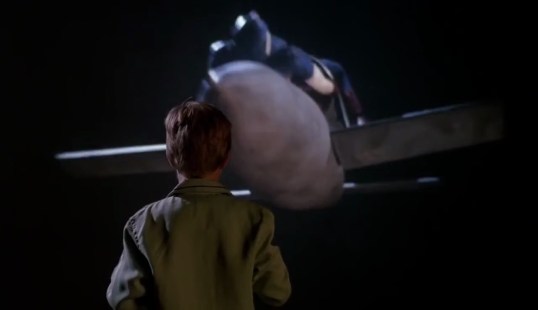
vlcsnap-2016-05-02-20h10m37s194

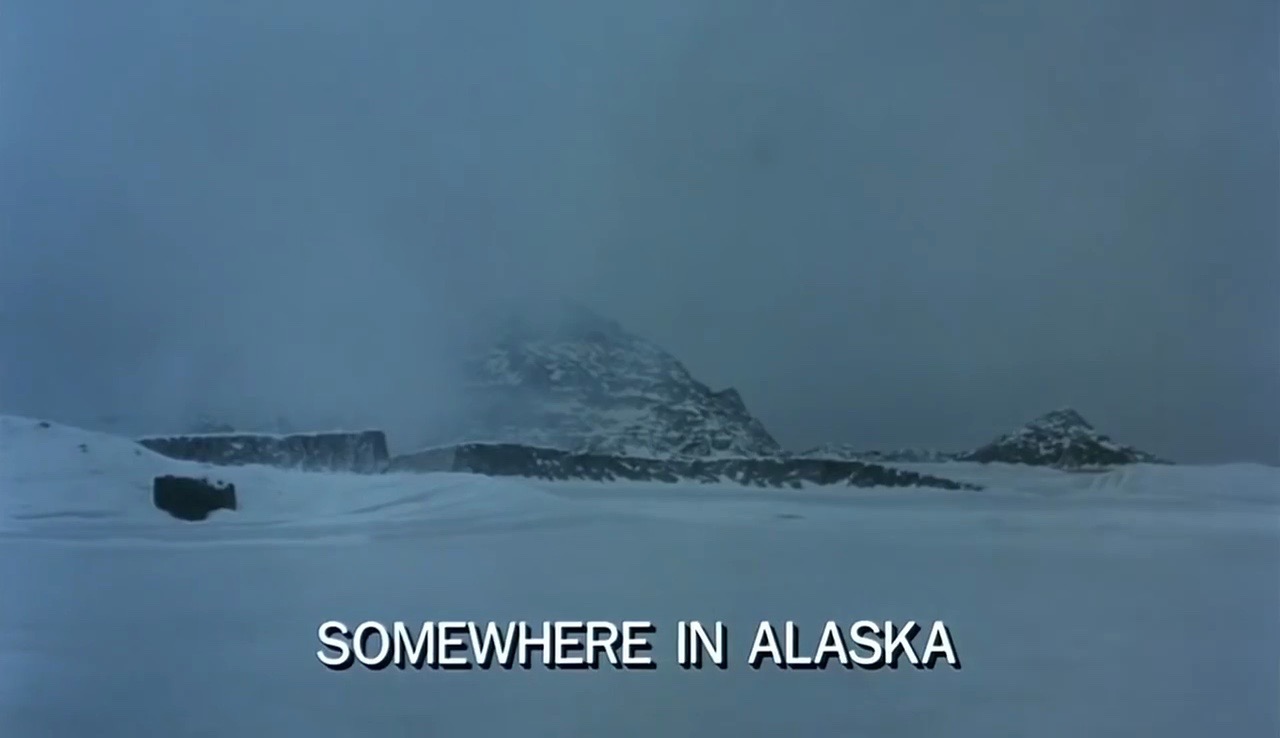
Then the rocket misses the building. That’s right. Captain America kicked and punched a rocket he was attached to and it changed its trajectory to miss the target. You won’t see Chris Evans do that in any Captain America movie. Probably because it’s bullshit. Anyhow, we now cutaway to somewhere in Alaska.
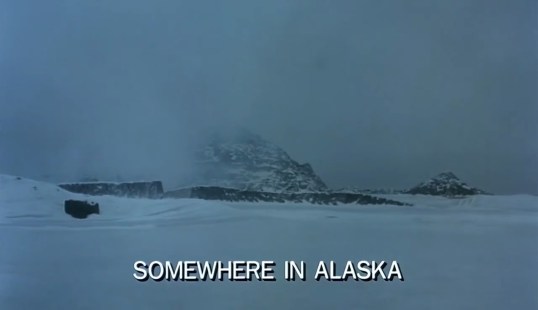
vlcsnap-2016-05-02-20h12m25s408

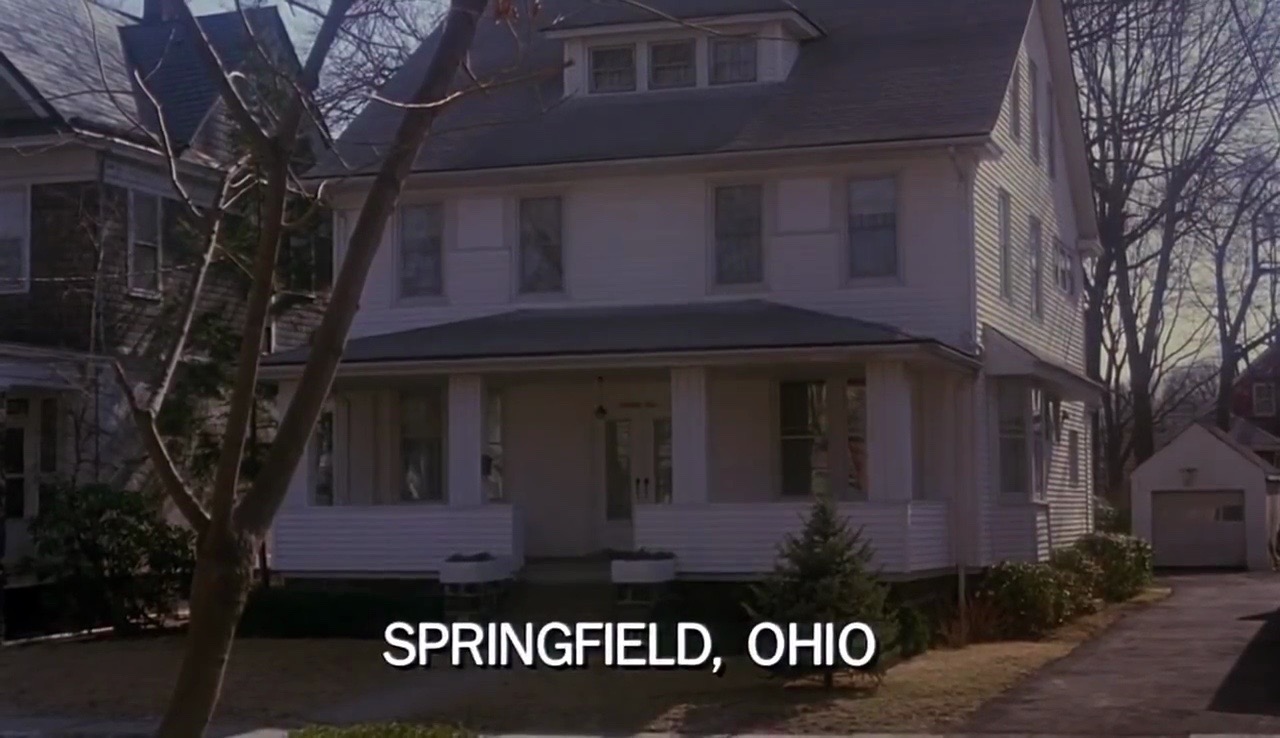
I’m not sure where in Alaska, but it certainly is “somewhere”. Wherever it is, the rocket crashes into the ground and there is a hand in a red glove sticking out of it now. I’m not sure rockets work that way so that missing the White House would place it in Alaska, but I’m no expert. However, I am an expert at reading title cards because I now know we are in Springfield, Ohio.

vlcsnap-2016-05-02-20h13m45s235

This is the house of the kid from earlier who is talking to his friend about what he saw. Thanks to him we find out that was the White House earlier. The movie also helps you to know that Captain America kicked off a wing from the rocket because if you blink during that scene you’ll miss it.

vlcsnap-2016-05-02-20h14m04s182

The kids decide they need to figure out who this guy on a rocket was. The blonde kid asks if he had a trident. The other kid says no, which means it wasn’t Sub-Mariner. The kid also rules out that it was the Human Torch because he would have blown up the rocket. Yes, the kids just ruled out that our current Captain America was strapped to the rocket. I would say that’s the coolest thing in this movie, but I’d be lying.

Now we fly through the decades to reach 1993. The kid grew up to be Ronny Cox who was elected as president in 1992. Ronny Cox is going to be leaving for Rome to try and negotiate a ban on “environmentally damaging industrial practices.” By that I mean he is going to Rome so that Red Skull can easily have him kidnapped.

We then cut to that place from earlier. There’s no title card, but thankfully it does look like the one that said the White House. Ronny Cox talks to a General Fleming who doesn’t like these new environmental guidelines President Ronny Cox has written up. He also isn’t happy that his leg lamp he had in A Christmas Story (1983) was broken because he’s played by Darren McGavin. Now we go to Fortress Lorenzo, Italy.
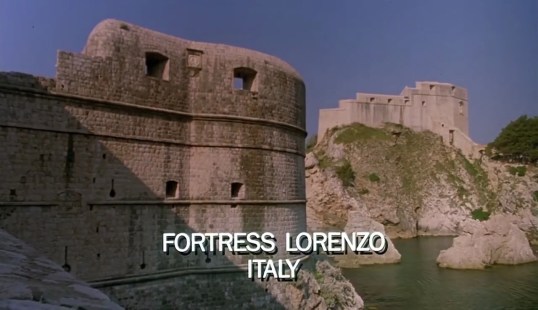
vlcsnap-2016-05-02-20h23m03s844

First necessary title card we’ve had in awhile seeing as the shot of this place was so dark earlier that it could have been anything. Not sure why we really need to know this is Fortress Lorenzo though seeing as they could have just used the same establishing shot and then cut to Red Skull inside or other established villains. Inside we find that Red Skull is a ventriloquist on top of being psychic because he doesn’t actually move his lips, but we hear his voice.
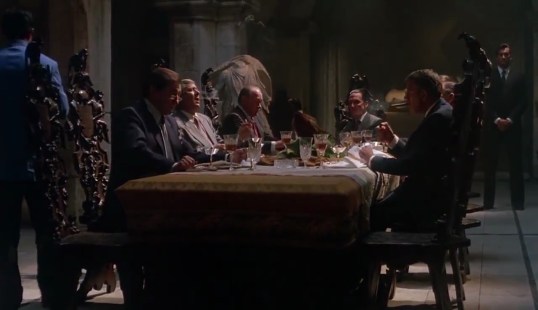
vlcsnap-2016-05-02-20h23m18s921

What’s that you say? He’s too far away in that screenshot to tell that his lips are closed? Don’t worry! His lips don’t move here either.
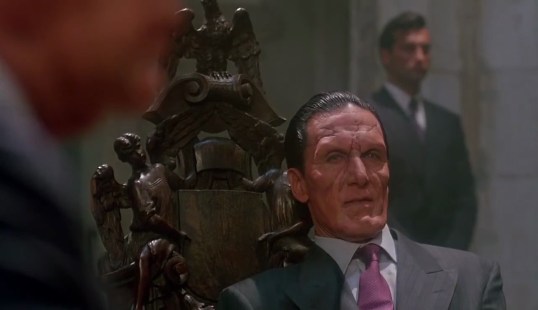
vlcsnap-2016-05-02-20h23m32s716

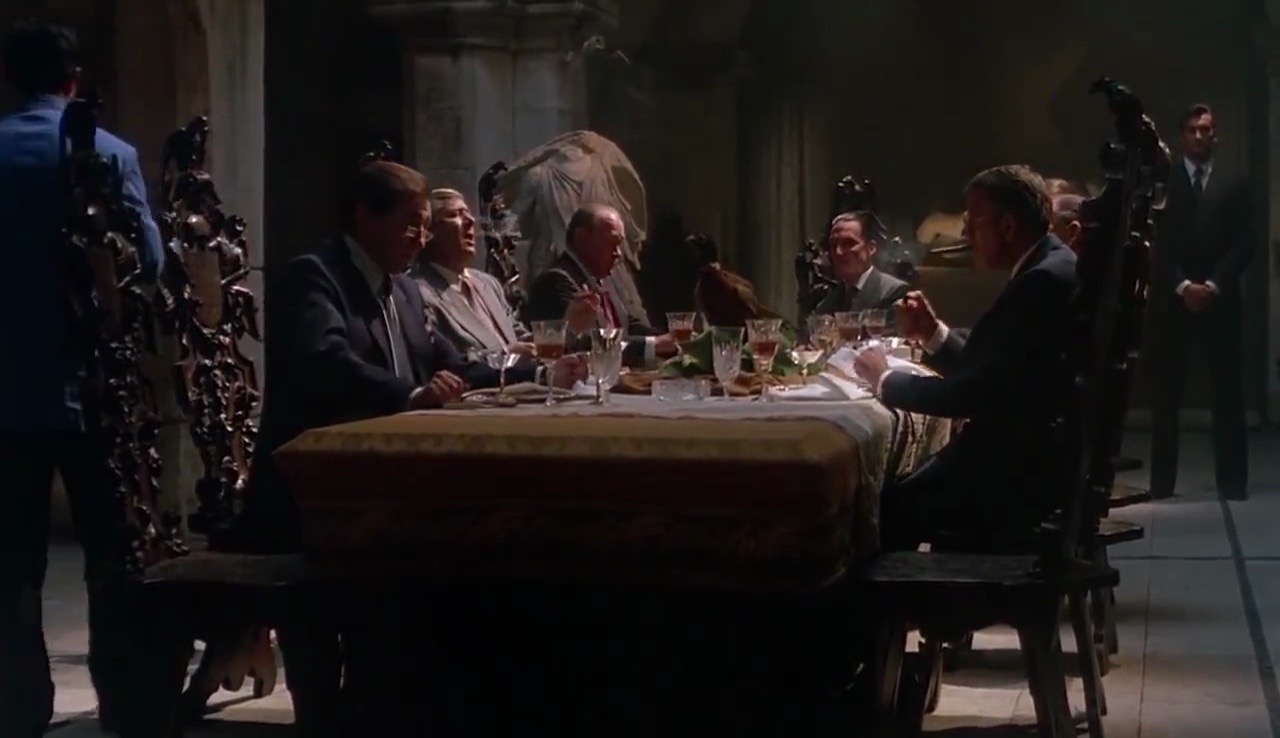
Finally, Red Skull decides it’s time to speak with his lips. This is when we find out that it was Red Skull that hired Sirhan Sirhan to kill Bobby Kennedy and Oswald to kill JFK. Also, it apparently cost over $22 million to kill Martin Luther King. Because doing these things were so tough and they didn’t get anything for it, he decides that instead of killing Ronny Cox, they should implant something into his brain to control him. Red Skull also isn’t so red anymore and has hair. He also wears gloves so we can’t see that he has both of his hands. I’m going to just stop calling him Red Skull at this point. He’s Red “Blofeld” Skull, or Redfeld for short.

Now we cut to Alaska.

vlcsnap-2016-05-02-20h31m26s061

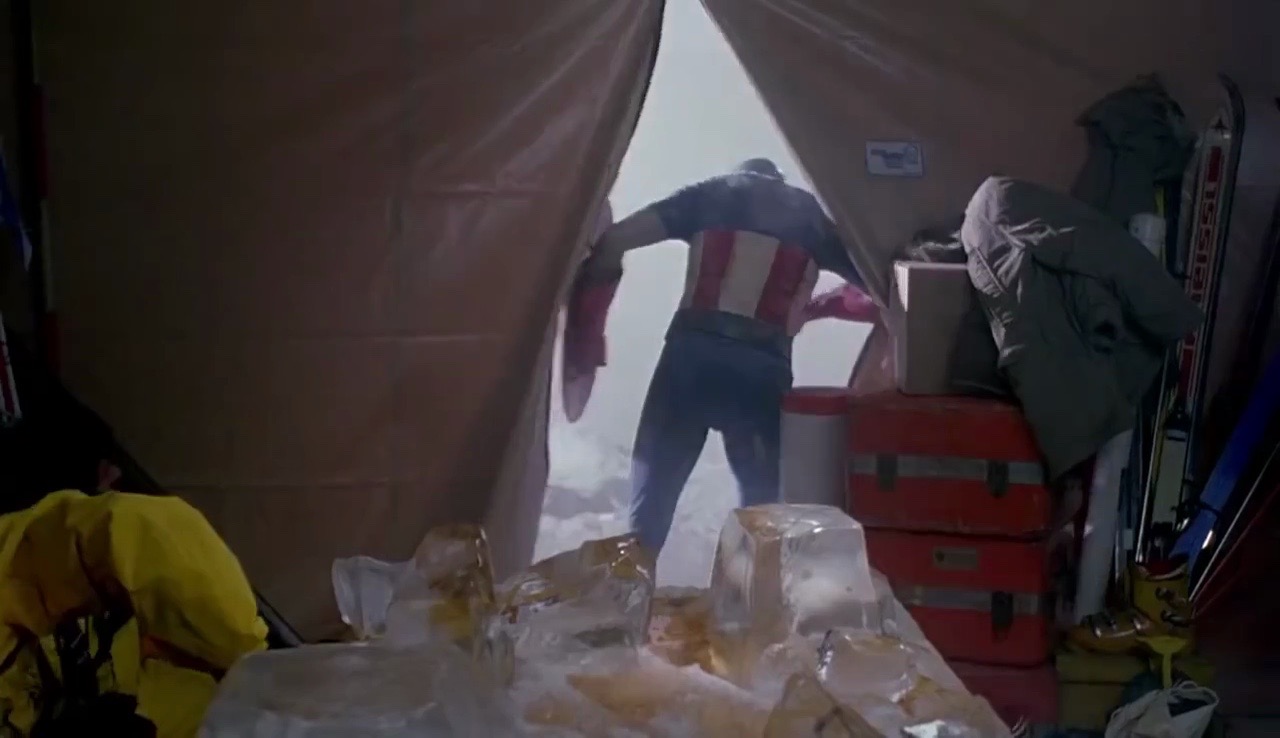
It is the same shot from earlier, but minus the “somewhere in” and the blue tint. Some Germans from a West German Alaskan Field Station find Captain America. I know this because of an actual sign and not a title card. They brought him back in a block of ice where we get blurry shots, closeups of eyes, and ice falling on the ground. Captain America has broken right out of the ice and immediately leaves without saying a word.
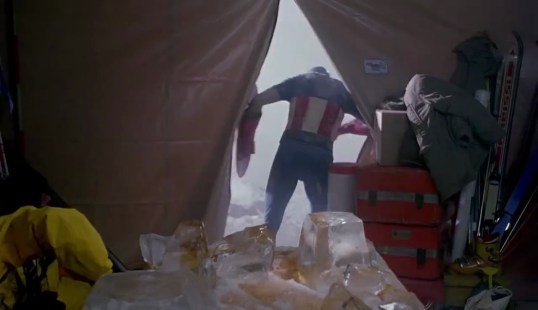
vlcsnap-2016-05-02-20h33m29s665

Captain America doesn’t have time to talk. He only has an hour left in the movie and hasn’t even made it back to California before going on vacation in Italy. That is his shield he is holding. It was nice of Redfeld to strap his shield to the missile along with him. No really, he did strap Captain America to the rocket with his shield.

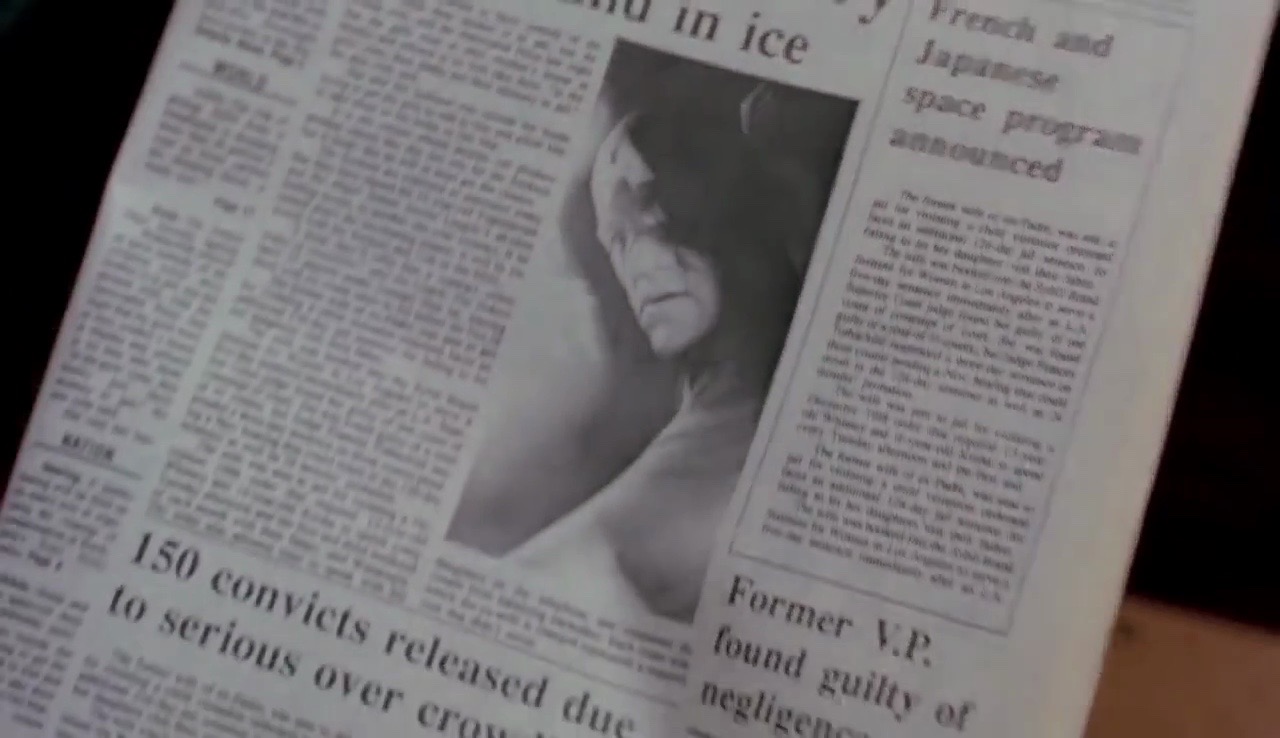
It’s off to the White House now. Ronny Cox looks at a paper filled with a lot of nonsense text that is repeated in several locations. There is also a picture taken by a scientist at the Alaskan station that he so did not take because we saw him take a picture of Captain America’s back and not a profile shot. None of that matters because as Ronny Cox is about to toss the paper onto a table, we see that 150 convicts have been released.
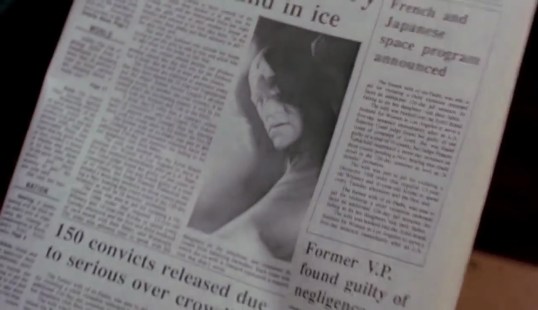
vlcsnap-2016-05-02-20h36m03s153

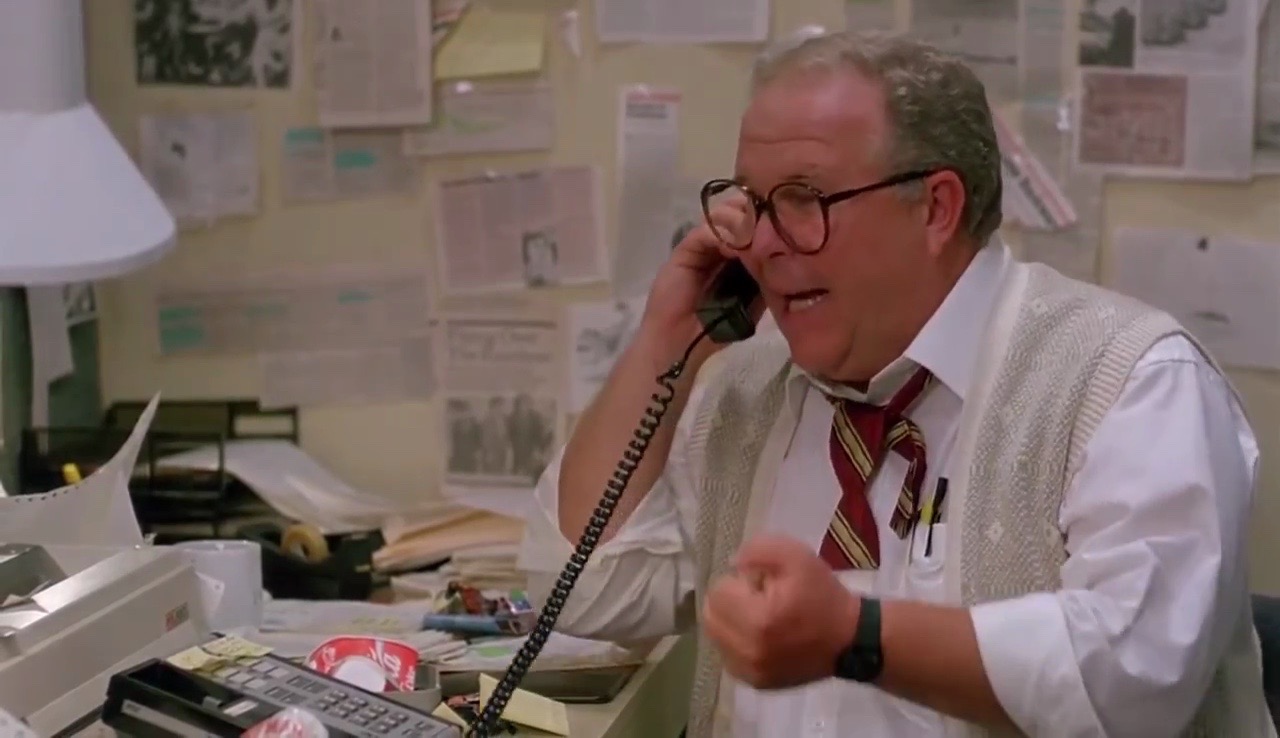
That must have been wonderful news for Menahem Golan who produced this movie. It meant there would be plenty of criminals on the street for Charles Bronson to shoot in Death Wish V (1994). Ronny immediately calls his old friend who now works for the Washington Dispatch, which was established in 1889. Again, I know this because an actual sign tells me. Don’t worry, the title cards come back. Ronny Cox’s old friend grew up to be Ned Beatty.
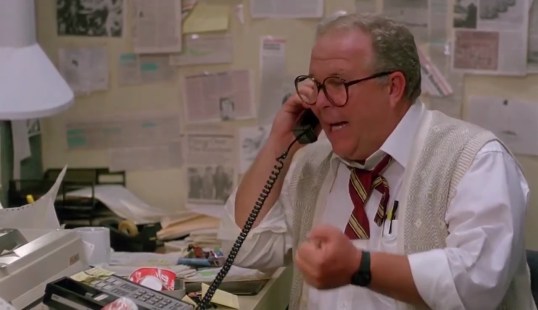
vlcsnap-2016-05-02-20h41m27s232

He is here because he already did Superman (1978) so he needed to balance that out with a Marvel movie. Beatty is off to find out what happened.

Then we go to Rome via a title card and are introduced to Redfeld’s daughter.
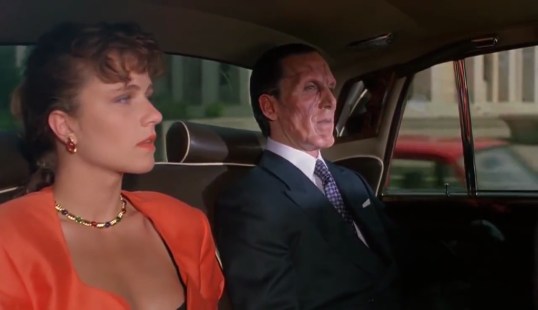
vlcsnap-2016-05-02-20h41m54s269

Why? Because Redfeld doesn’t do things himself anymore. He sends his daughter to deal with Captain America. How does that logic work? Redfeld couldn’t even keep his own hand against Captain America and he is a super soldier too. She’s not going to seduce him either. He is legitimately sending her to kill Captain America. Last time we saw Captain America he was in Alaska, but he has made his way to Northern Canada.

vlcsnap-2016-05-02-20h55m05s327

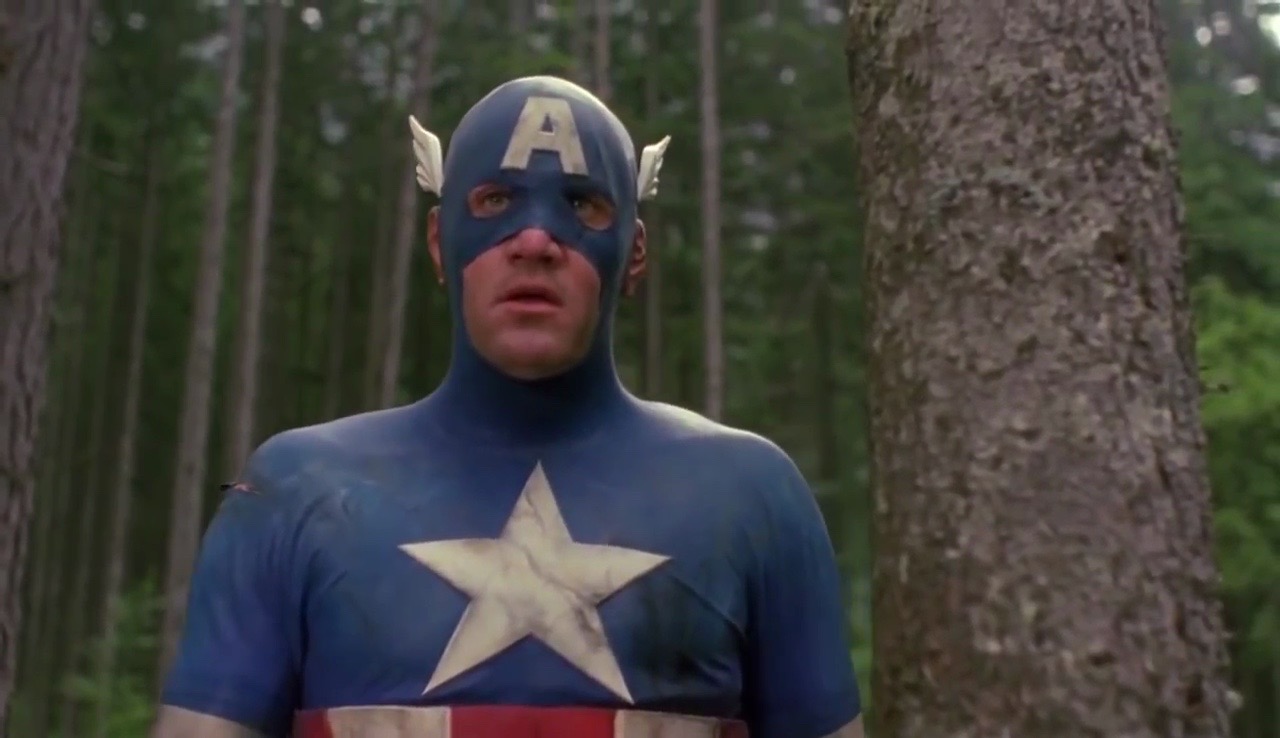
I love how it cuts to Captain America breathing heavily against a tree, to a chopper in the sky, and then to a newspaper being held by one of the bad girls that says “British Columbia Gazette”. Maybe because they realized that Northern Canada could mean he was over near Hudson Bay or that they thought their audience wouldn’t know where British Columbia was located. This did come out in 1990 (sort of) so I’m going with option number two.

The ladies immediately spot Captain America to which he gives us another great look.
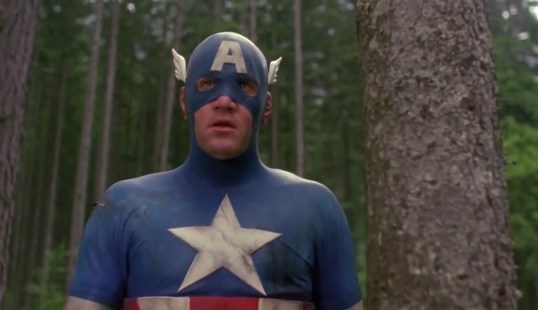
vlcsnap-2016-05-02-20h56m42s877

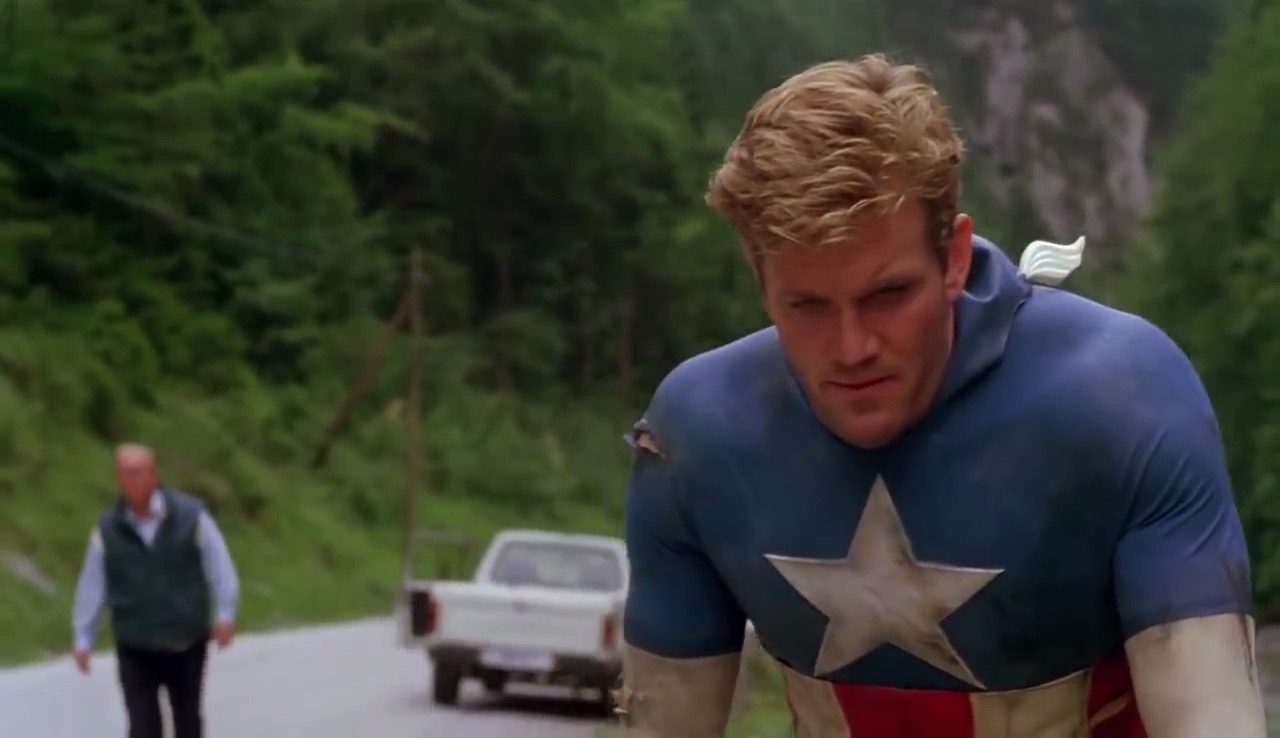
Ned Beatty is also out here driving around because somehow! What follows is Captain America being chased through the forest by women on motorcycles. He throws and hits the daughter in her helmet before getting shot by her in the arm. That’s when Ned Beatty shows up because just roll with it. He asks Captain America who they were and he says Nazis.

Now we get what is probably the most ridiculous thing in the movie. As Ned Beatty talks to Captain America, he notices that Beatty has a tape recorder made in Japan and is driving a Volkswagen. Captain America isn’t looking so good here.
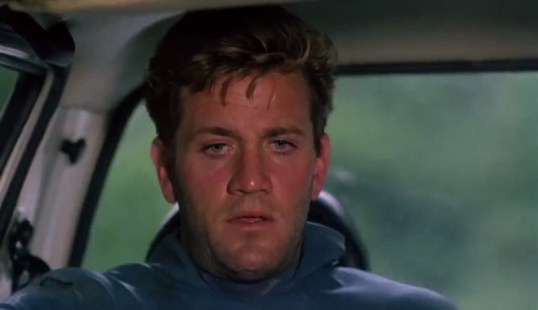
vlcsnap-2016-05-02-21h03m02s853

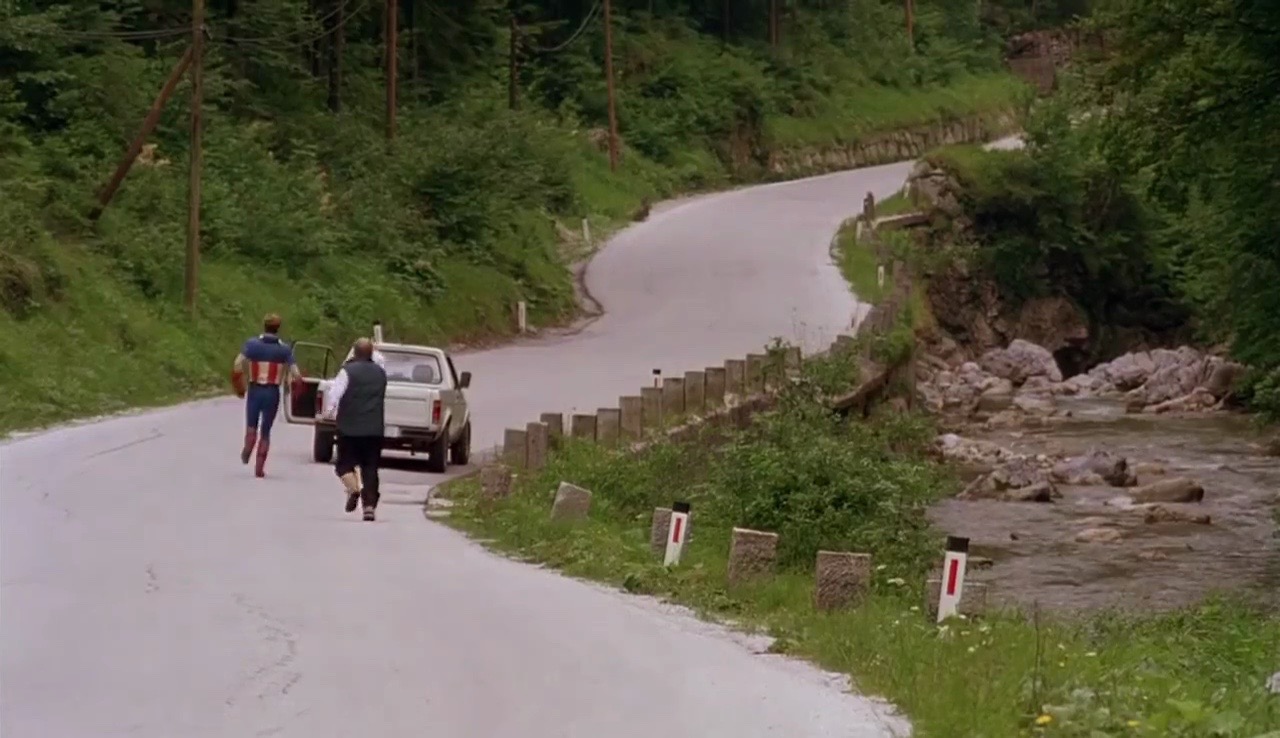
That’s when this happens.

vlcsnap-2016-05-02-21h06m57s816

vlcsnap-2016-05-02-21h07m26s144

vlcsnap-2016-05-02-21h07m36s159

vlcsnap-2016-05-02-21h09m02s948

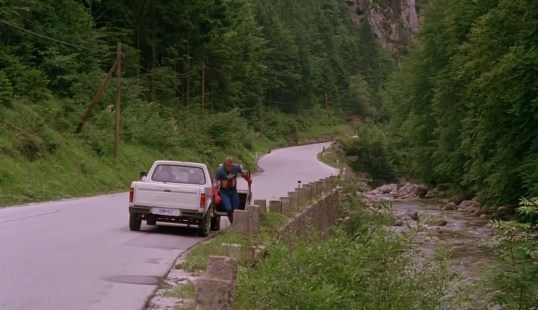
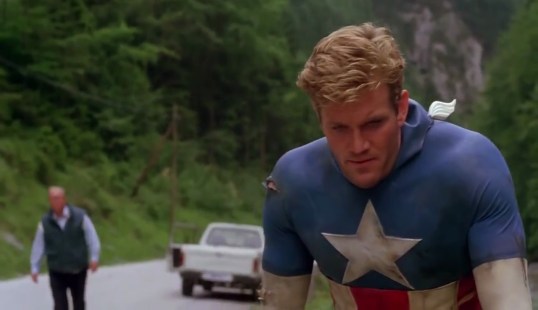
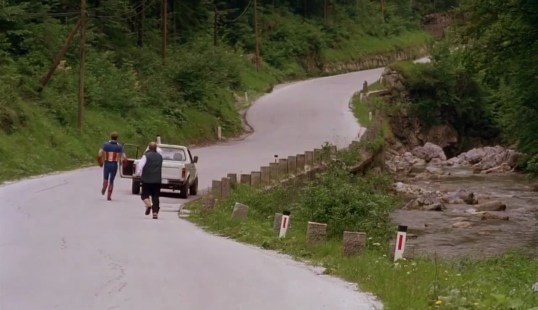
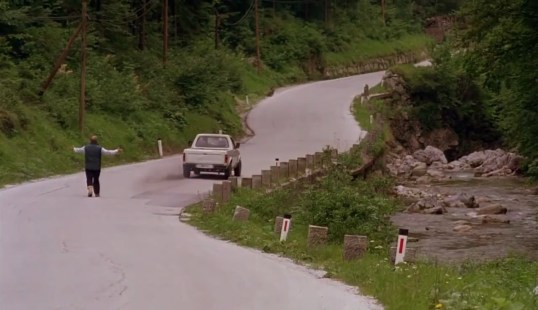
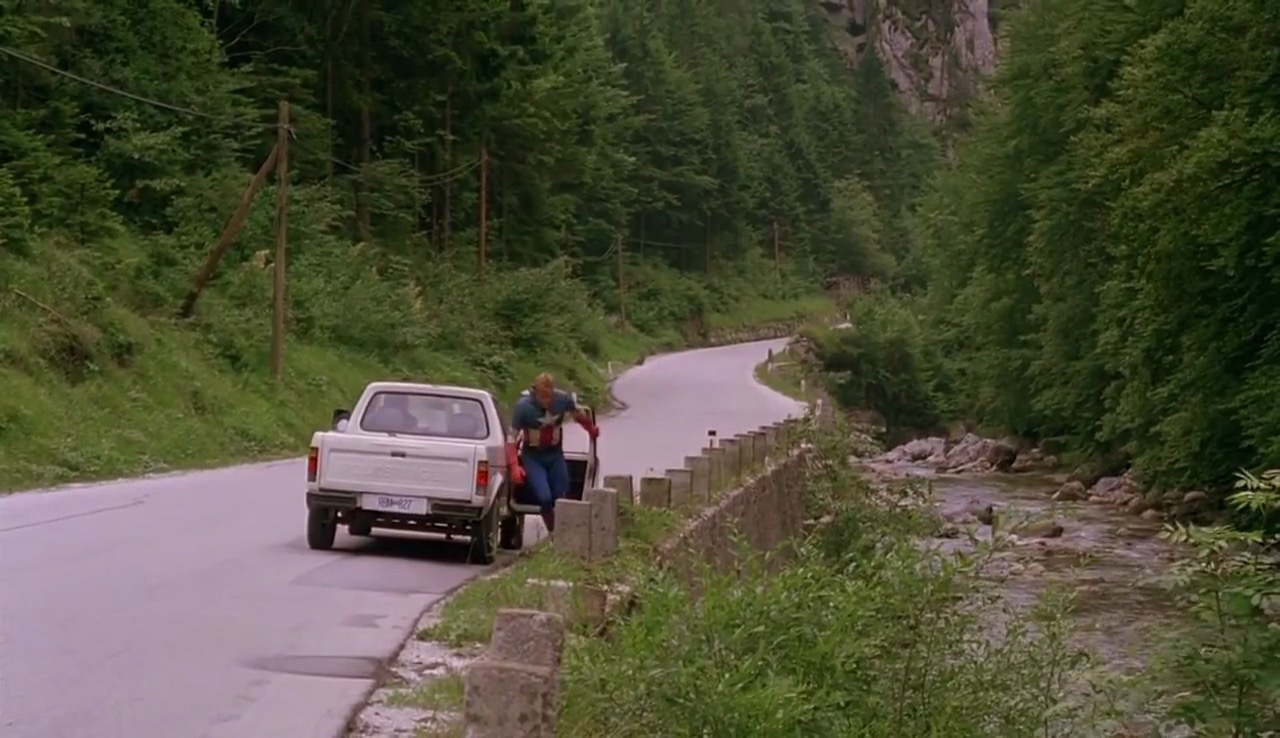
Yep! Captain America just pretended to be car sick so he could steal Ned Beatty’s car. You won’t see Chris Evans do that. Most likely because Captain America isn’t supposed to be a car thief. I also love that it’s Ned Beatty in particular he leaves in the middle of the wilderness.

He keeps driving till he runs out of fuel, then gets into the back of a truck. The truck then drives by the camera with it’s back door open and ocean in the background, which means Captain America has reached California.
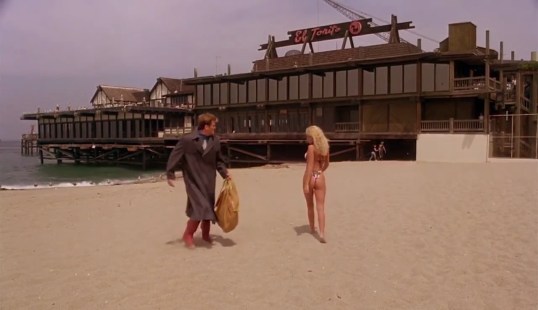
vlcsnap-2016-05-02-21h13m14s473

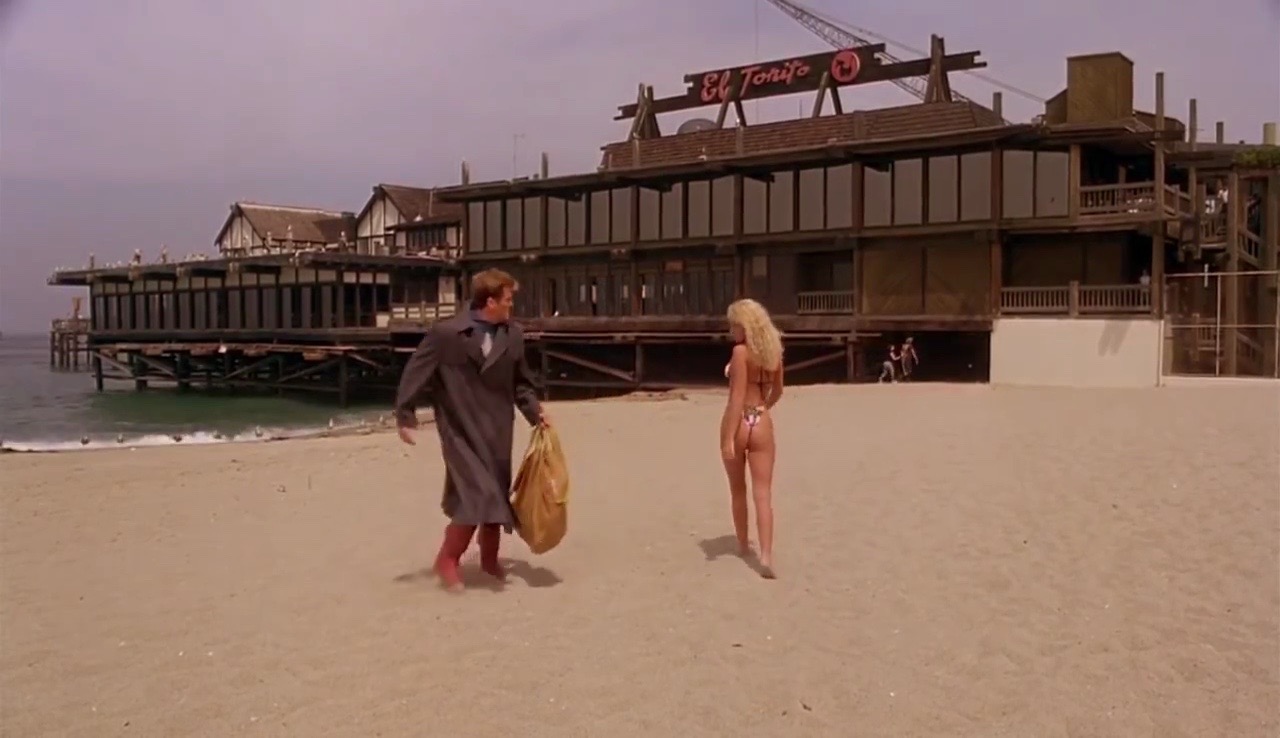
He also has a trench coat now and a bag conveniently big enough to hold his shield. He is very confused by this lady who probably was once an extra on Baywatch. He then finally finds his house from the beginning of the movie. A car pulls up in front of the place and this woman (Kim Gillingham) gets out.
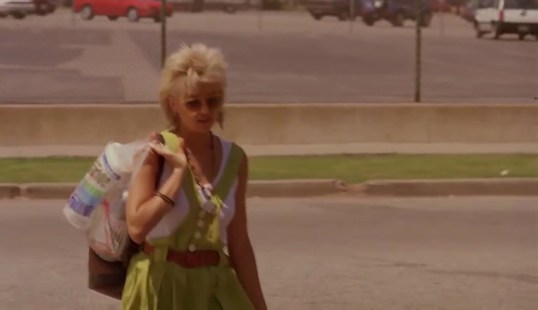
vlcsnap-2016-05-02-21h15m28s202

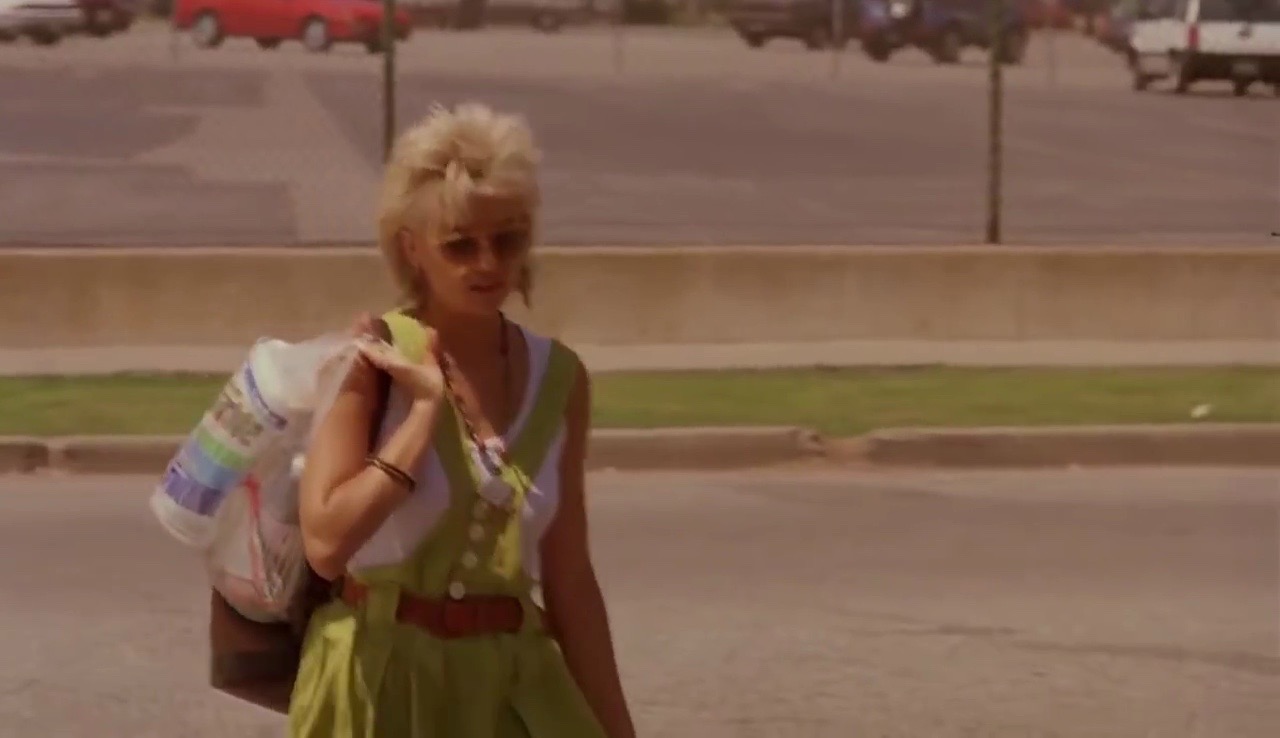
That of course means it’s Captain America’s girl from the 1940s who looked like this.

vlcsnap-2016-05-02-21h15m32s419

He tries to grab her, she hits him in the head with her purse, and Captain America falls to the ground.

vlcsnap-2016-05-02-21h16m10s626

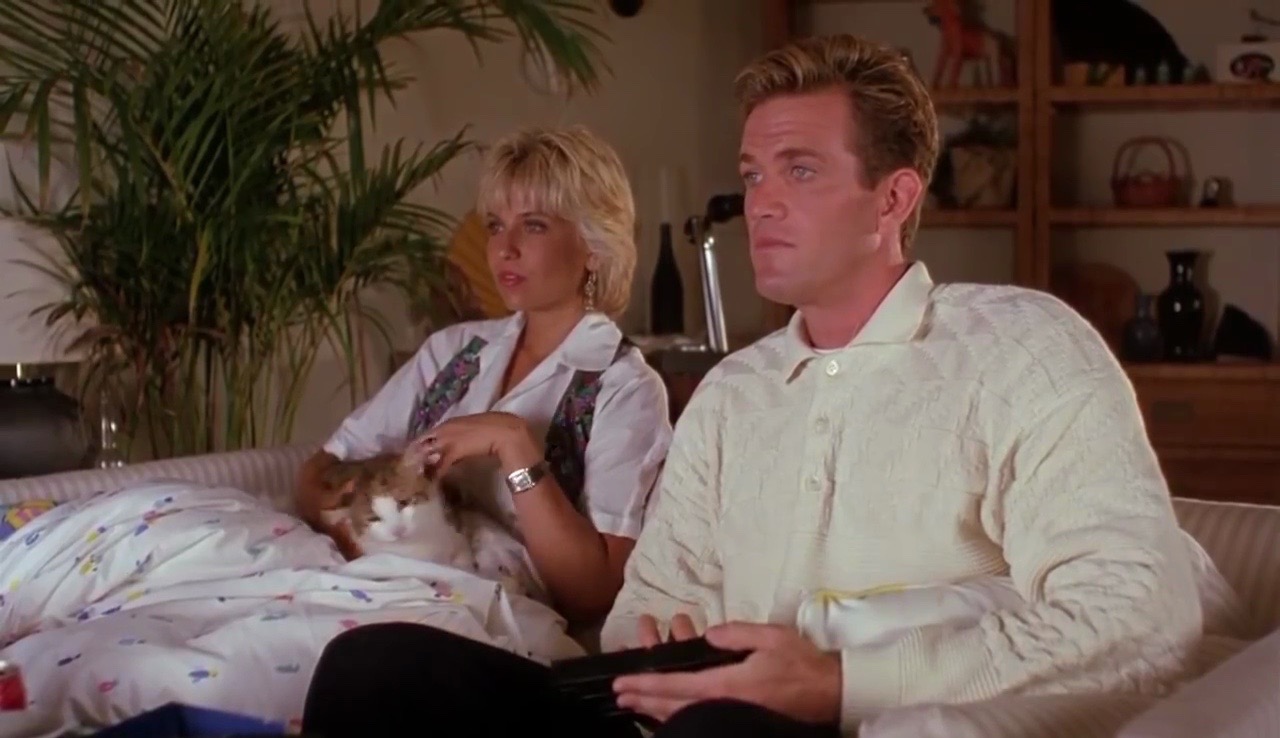
I guess he was crazy from the heat. Surprisingly, the credits say it is the same actress who played both roles. I don’t see it, but hair and makeup can do some amazing things. What did she have in her purse anyways that knocked him down so easily? We get a little reintroduction here between Captain America and his girlfriend in old lady makeup who is the mother of the blonde named Sharon.

Then we go back to Fortress Lorenzo where honestly Redfeld’s daughter appears to use the fact that Ned Beatty is a Pulitzer prize winning reporter as a reason that she couldn’t capture Captain America. I guess that means if Roger Ebert had been out there, then he would have also gotten Captain America to safety because he once won a Pulitzer prize. He also would have gotten his car stolen. She’s also convinced that the reporter can lead them to Captain America.

A few things happen now, but it just means that everyone knows where Captain America is now. What’s really important is that Captain America is now learning how to work a VCR.
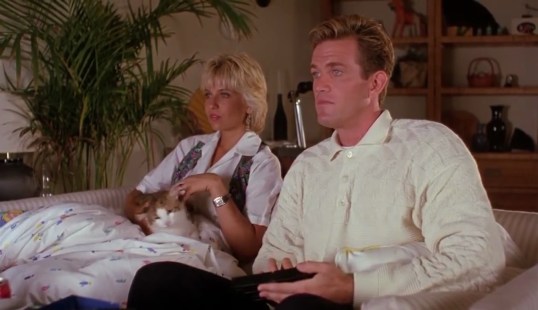
vlcsnap-2016-05-02-21h26m44s159

You can see that Redfeld’s daughter wasted no time whatsoever because she has already bugged the place and is listening in from the top of the frame.

I think you know what happens now. Ned Beatty shows up and dies. Captain America’s old flame dies. Her husband winds up in the hospital. Captain America and Sharon escape Redfeld’s daughter’s wrath. During this scene we also find out that scientist lady kept a diary because Captain America needs to know Redfeld’s real name. Oh, and while they don’t show it. It appears that Redfeld’s daughter electrocuted the old girlfriend to death offscreen. She doesn’t mess around. Neither does Captain America at the end of this movie. That’s another part that’s awesome about this film. The president has also been kidnapped by 20 heavily armed men. I don’t believe that. Redfeld only uses the baddest of the bad 1980s girls that money can buy.

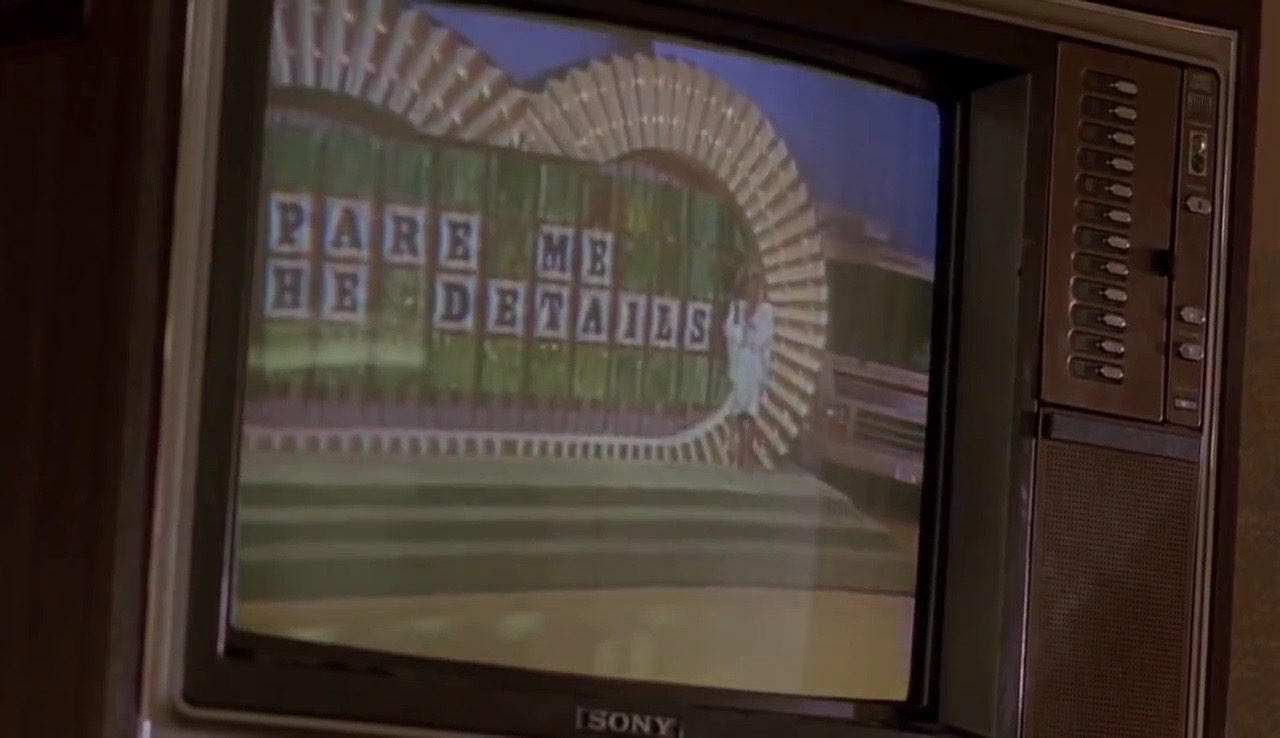
Things have really gotten serious, but I’ll pare you the details.
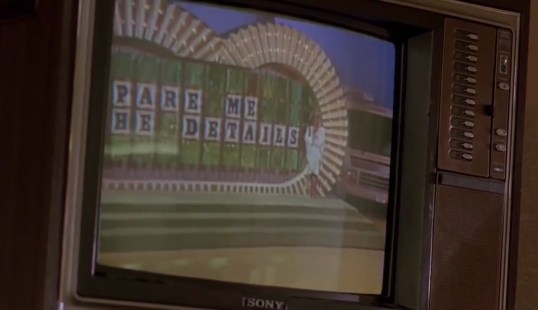
vlcsnap-2016-05-02-21h32m12s200

He goes to the previously secret diner, into the ladies room, knocks down a wall, and descends into the secret room. He finds the diary before having to defend himself from bad guys. Captain America really has two modes of fighting in this movie: ninja mode and street brawler mode. Either way, he wins through the power of wildly confusing editing. He wins, and it’s off to Italy with Sharon. Can you guess what happens next?
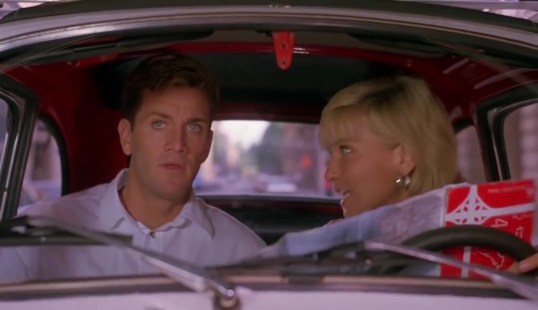
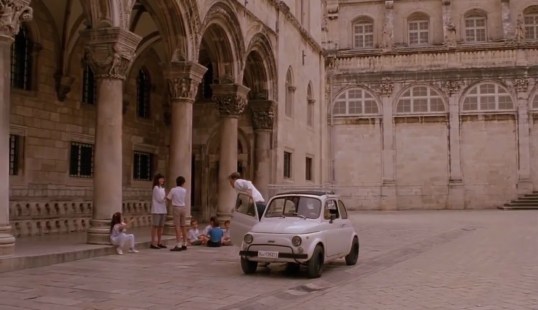
vlcsnap-2016-05-02-21h48m54s833

vlcsnap-2016-05-02-21h50m34s949

vlcsnap-2016-05-02-21h50m41s199

vlcsnap-2016-05-02-21h50m43s070

vlcsnap-2016-05-02-21h51m43s570

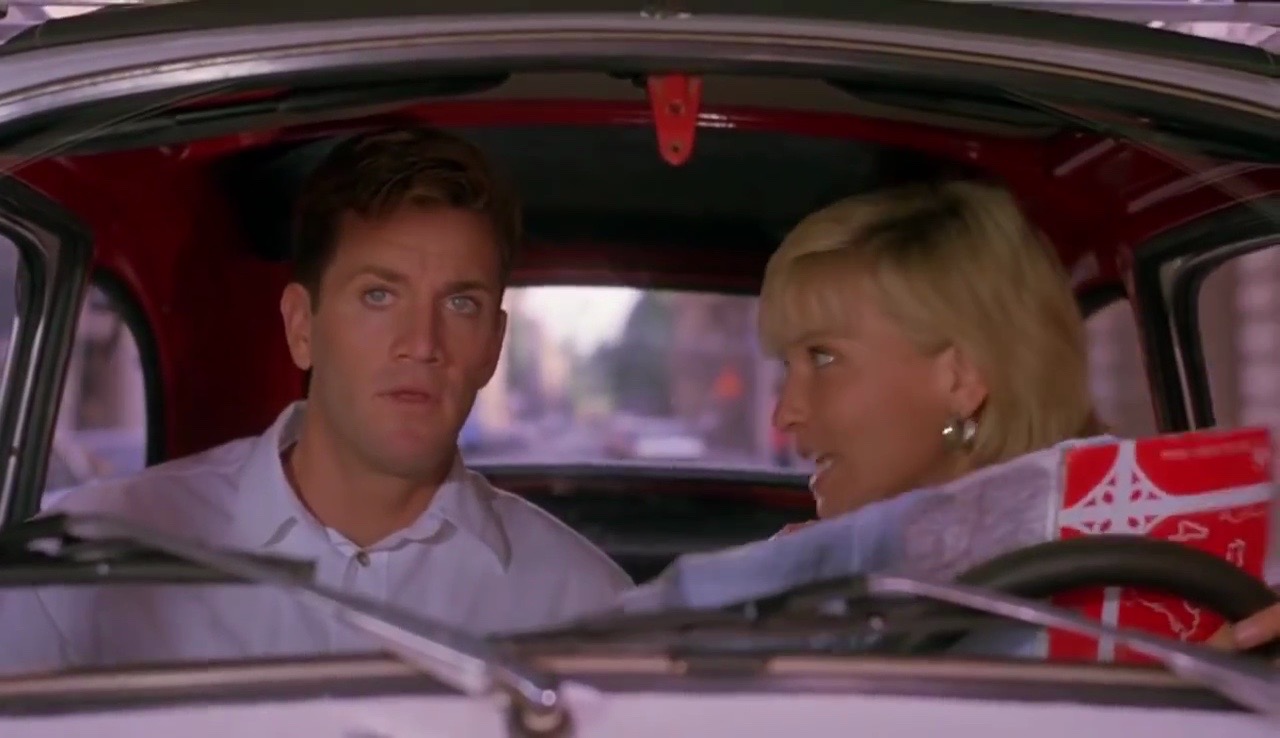
Captain America again pretends he needs to puke, then takes the car to leave Sharon behind. This time it’s even better than before. The reason is because in about 1 minute of runtime she catches up to him making that taking the car scene pointless. They are at some people’s house who give them the tape recorder from the beginning of the film, they get it fixed, and they are off to have lunch so they can be attacked.

vlcsnap-2016-05-02-21h57m49s931

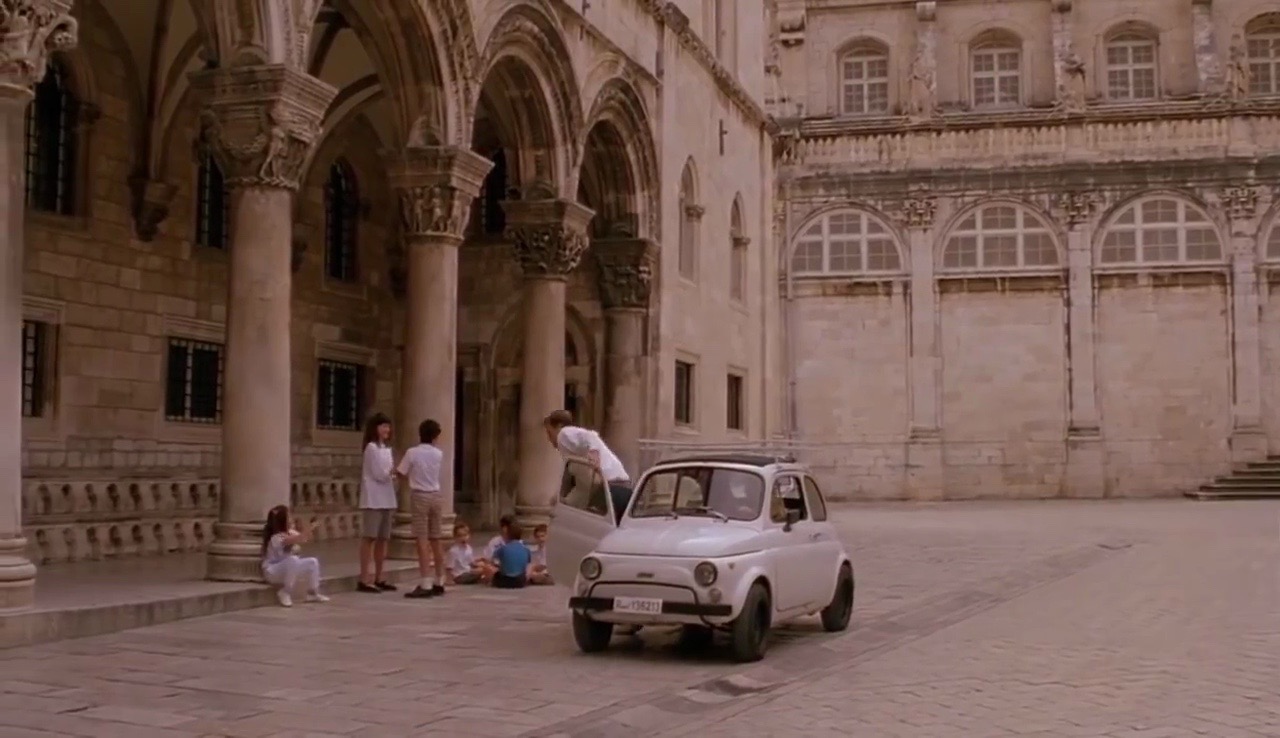
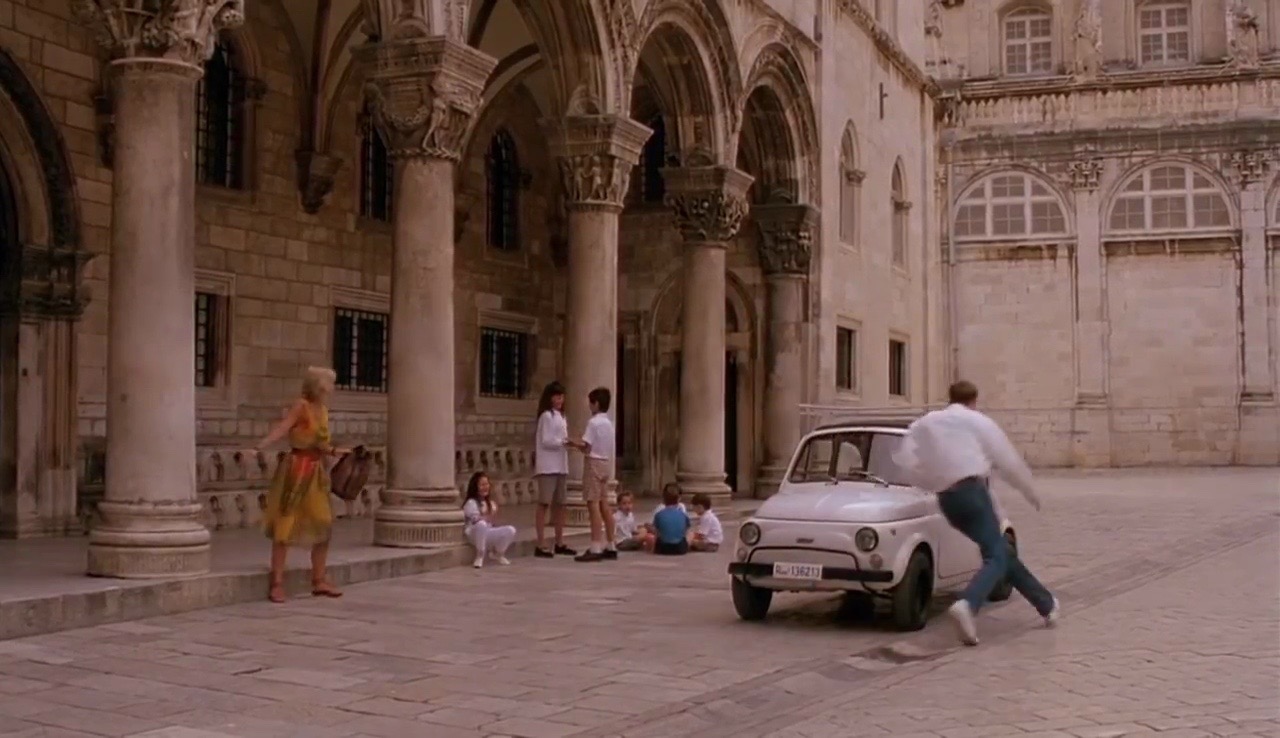
Captain America runs away and discovers the two dumbest kids in Italy who don’t know to move when two people are running towards them with a car speeding behind the two people running towards them. Flip, confusing editing, Captain America pays for a bike, and they take that bike immediately off a cliff because it has no brakes. Captain America has no problem stealing cars, but he pays for bicycles.
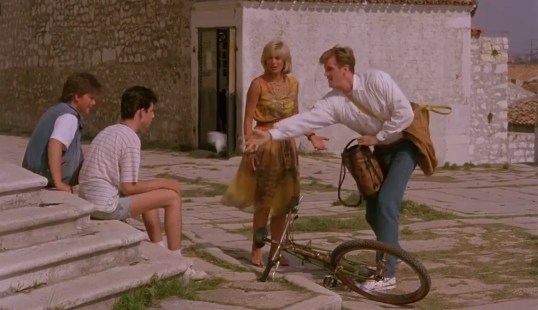
vlcsnap-2016-05-02-22h12m17s599

During all of this action one of the ladies dropped her purse with a picture of Redfeld inside, the weather magically changes to rain, and then they start driving to Fortress Lorenzo where the weather is just fine again. The bad guys are in pursuit. Do I need to show what happens next? Nah, she gets out, spots the bad guys, runs back to the car, and drives it away to draw the bad guys away from Captain America who she has now ditched. That appears to be the running gag in this movie. She is captured and held separately in the fortress with Ronny Cox. Captain America now dons the uniform once more and somehow climbs up on this ledge.
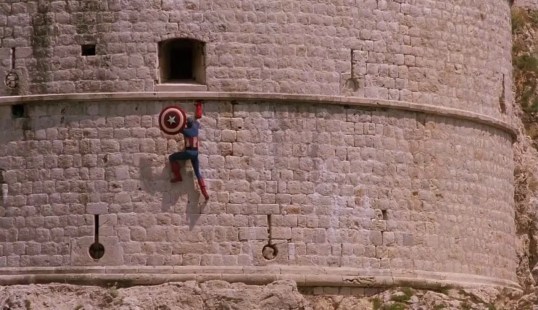
vlcsnap-2016-05-02-22h26m36s392

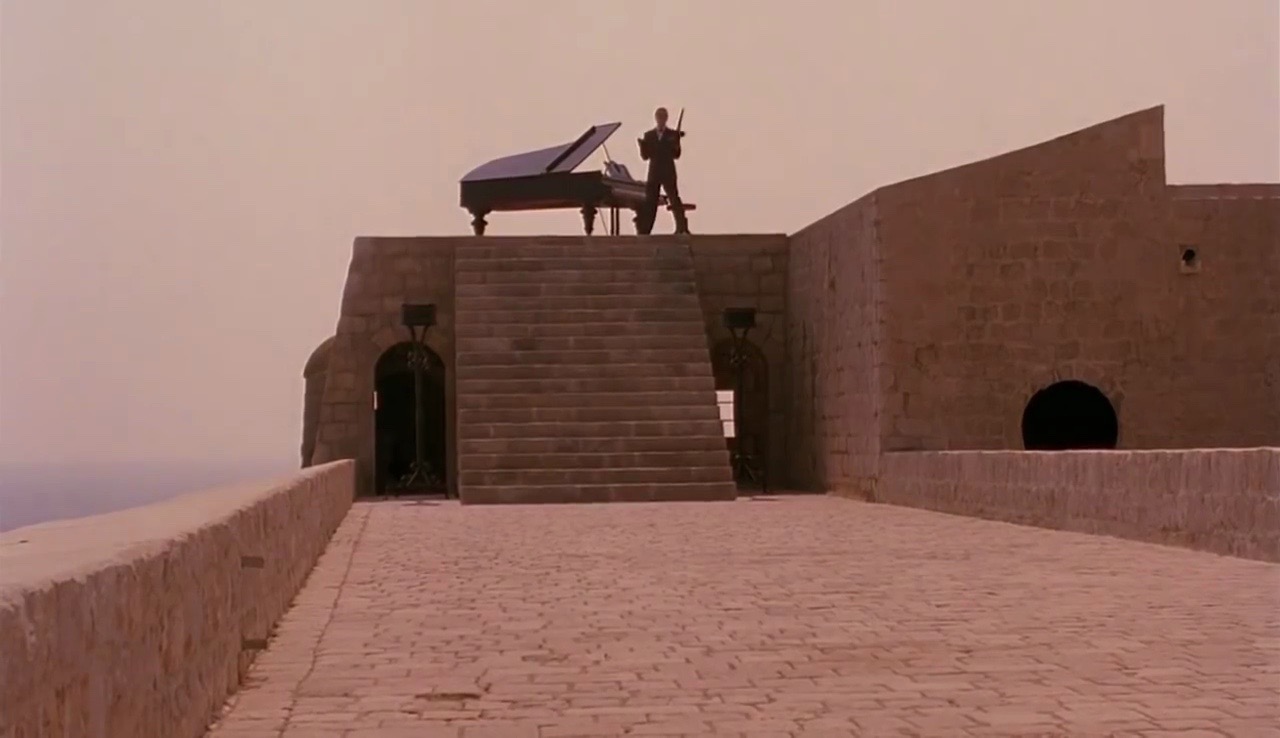
You know the drill. Sharon and Ronny Cox escape on their own. Along with Captain America and crazy editing, they force Redfeld to a cliff where he apparently keeps his piano for some reason.
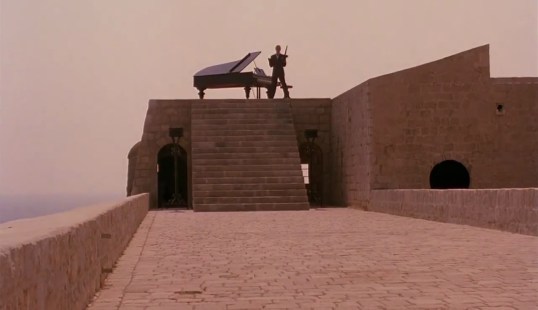
vlcsnap-2016-05-02-22h42m51s056

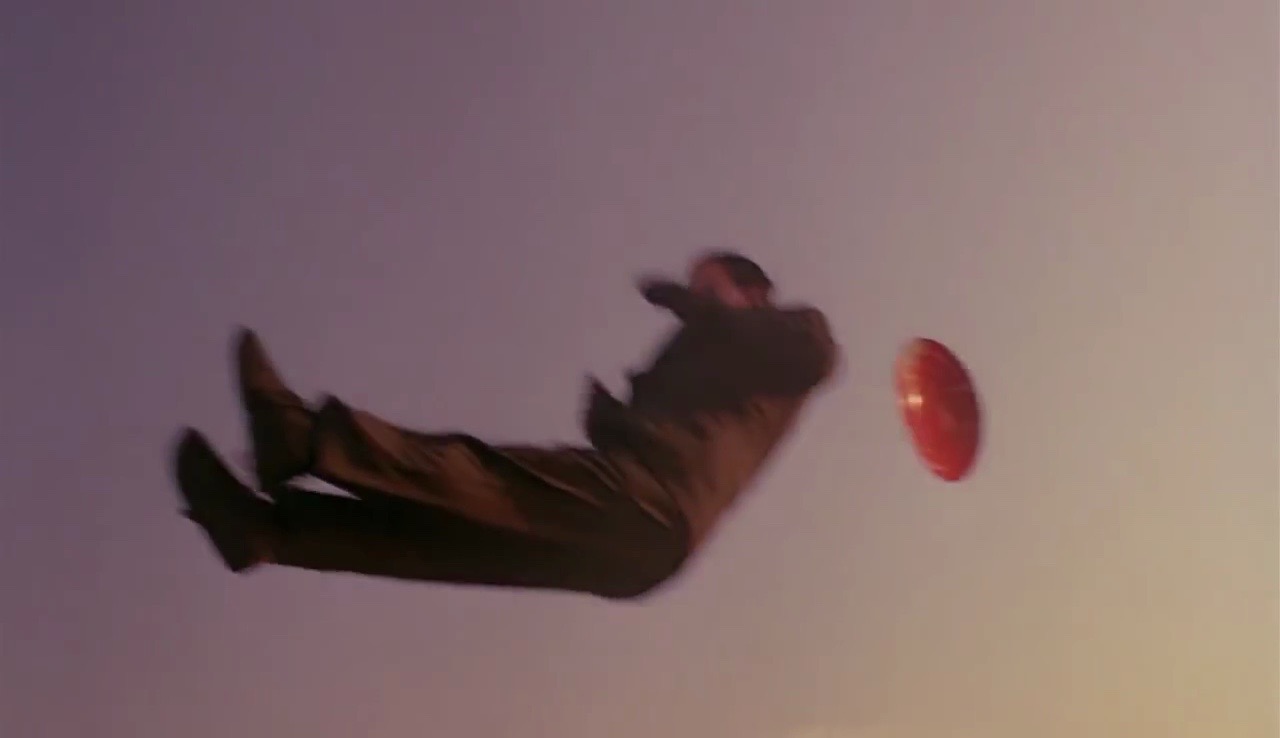
Redfeld is going to set off a bomb so Captain America pulls out the tape recorder to remind him of the child he once was. Redfeld’s daughter also shoots Captain America in the arm again here. It’s a very touching moment as he remembers, his daughter looks on, and he looks off the cliff realizing what a monster he has become. However, he still wants to set off the bomb to destroy them both so Captain America throws his shield and knocks him off the cliff.
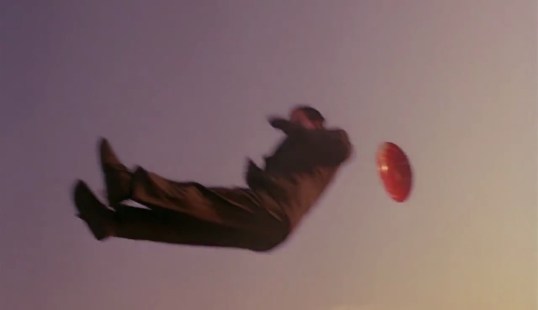
vlcsnap-2016-05-02-22h46m50s068

I love how it looks like you can see someone dressed like Redfeld’s daughter push the dummy of Redfeld off the cliff.
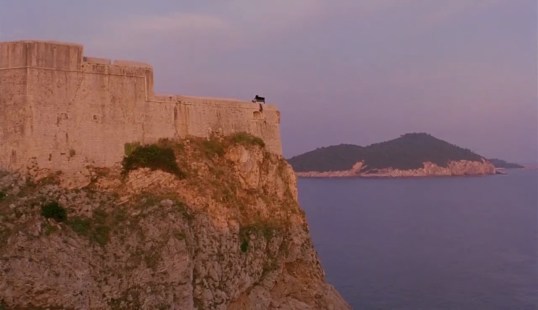
vlcsnap-2016-05-02-22h46m51s028

Redfeld’s daughter picks up a gun to shoot Captain America. Captain America’s shield is still in the air and on its way back to him. He tells her “heads up”, we hear it hit her, and he catches it. We never see her body or the shield connect with her head. Captain America just severed Redfeld’s daughter’s head with his shield. I can’t think of any other explanation.

With the bad guys defeated, Captain America looks off towards the sky for some reason.
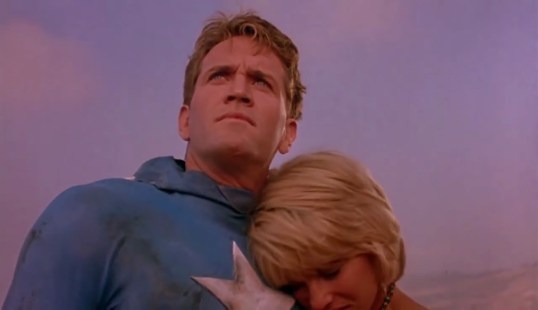
vlcsnap-2016-05-02-22h48m48s147

Then he appears in full uniform and transforms into his comic book character.
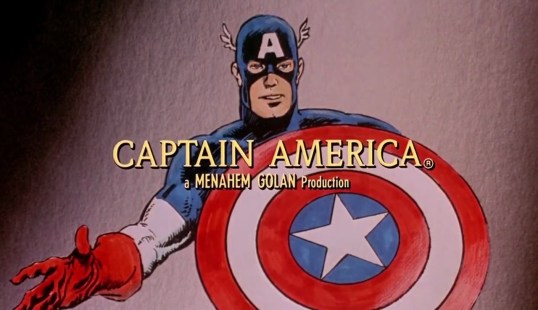
vlcsnap-2016-05-02-22h49m45s056

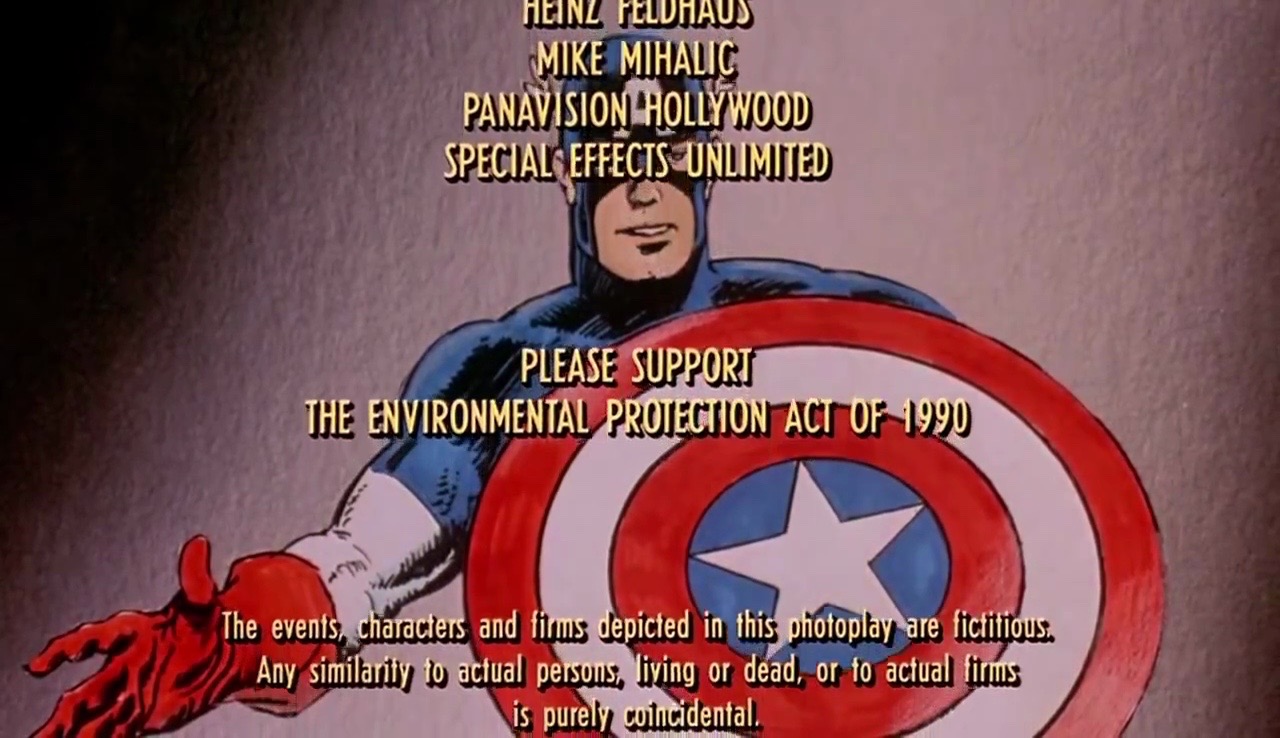
But there’s one final piece of information we need to know. The nations agree to an environmental protection treaty. Ronny Cox says to remember those who have “sacrificed all to make our world a better place to live.” And “to Captain America, we are all back in the fight.” They even ask you in the credits to support The Environmental Protection Act of 1990.
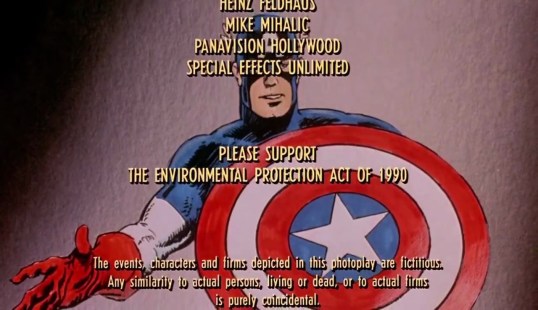
vlcsnap-2016-05-02-22h53m49s416

There is one more thing to mention here.
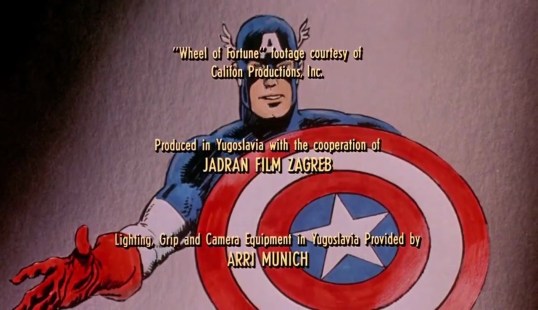
vlcsnap-2016-05-02-22h53m38s844

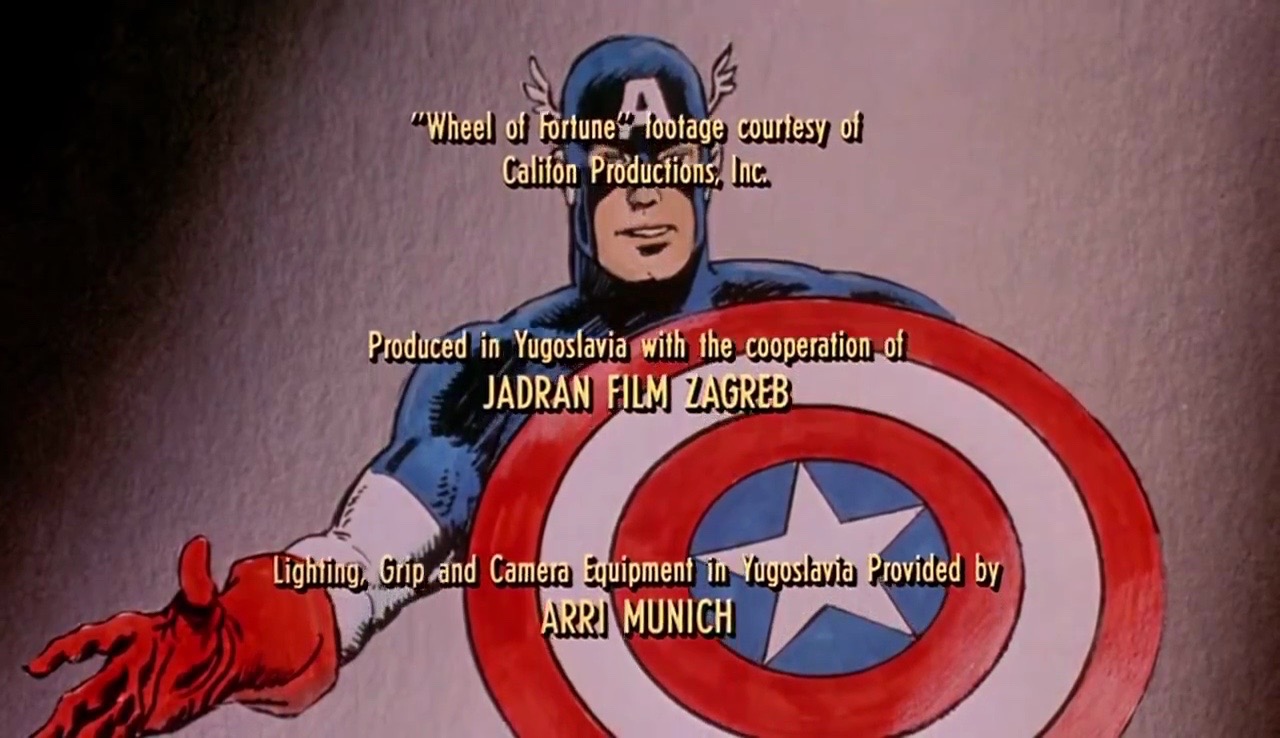
This movie was an American and Yugoslavian co-production. That wasn’t unusual. Jadran Film worked on many co-productions. They would fall from being a powerhouse when Yugoslavia broke up. Yugoslavia was breaking up into separate states right around 1990. That means as Yugoslavia was about to break into separate states, they co-produced a movie about one of the most nationalist and patriotic superheroes in the world.

My final thoughts on this movie are to go enjoy the new Captain America movie, then come back and have some fun with this one. At the very least, it will make you appreciate that we are getting Marvel movies now that have proper budgets, good actors, and crews that put in an effort into making the films. 1990’s Captain America approves!
vlcsnap-2016-05-02-22h40m57s932

Horror Film Review: Exorcist II: The Heretic (dir by John Boorman)


Exorcist2poster

The Exorcist is one of the greatest horror films of all time and a personal favorite of mine.  But what about Exorcist II: The Heretic?  Well, it would be a bit of an understatement to say that The Heretic has not quite received the amount of critical acclaim as the first film.  Since it was first released in 1977, The Heretic has been widely considered to be one of the worst sequels of all time.  It’s a film that is often cited as evidence as to why not all successful films need a follow-up.

Myself, I have sat through The Heretic twice.  And yes, it is a pretty bad film but I have to admit that I enjoyed it each time that I saw it.  It’s not a scary film at all.  It’s not a successful horror film.  But, as an unintentional comedy, it’s hilarious.

The Heretic opens four years after the end of The Exorcist.  Father Merrin (Max von Sydow) is dead, having had a heart attack during the first film while performing an exorcism on Regan MacNeil (Linda Blair).  In the years since, some in the Vatican have cast doubt on whether or not Merrin actually performed exorcisms.  It turns out that, contrary to everything that we saw in the first film, Father Merrin was actually something of a rebel.  His teachings are controversial.  For instance, he was convinced that everyone has latent psychic powers and that the demon Pazuzu possesses those who have the potential to be the strongest psychics.  Why?  Because those people have the ability to lead humanity into a shared global consciousness and…

Well, it gets a little bit complicated.  That’s one of the big differences between The Exorcist and Heretic.  The Exorcist kept things relatively simple.  The Heretic drags in a lot of metaphysical argle bargle.

The deceased Father Merrin has been brought up on charges of heresy.  The Cardinal (Paul Henreid, many, many years after Casablanca), assigns Father Lamont (Richard Burton) to investigate the circumstances surrounding Father Merrin’s final exorcism.

The presence of Richard Burton is what elevates Heretic from merely being bad to being so bad that it’s good.  As written, Father Lamont is supposed to be something of a naive idealist, someone who never met Father Merrin but who has been intrigued by his writings.  Reportedly, several youthful actors turned down the role and eventually, production decided to make Lamont an older man and they ended up casting Richard Burton.  Speaking in a shaky rasp and staring at the camera with bloodshot eyes, Burton appears to be at the height of his famous self-loathing in this film.  Burton is so miscast as an idealistic priest that the film becomes fascinating to watch.  Occasionally, the film tries to make us suspect that Lamont himself may be possessed but with Burton snarling his way through the role, how could anyone tell the difference?

Lamont tracks Regan down in New York.  Regan doesn’t remember a thing about the exorcism and appears to be an overly happy teenage actress.  (A good deal of the movie is devoted to her rehearsing a big dance number.)  She is under the care of psychiatrist Gene Tuskin (Louise Fletcher).  Tuskin has a device called the Synchronizer.  When two people are hooked up to it, they can literally see into each other’s minds.  They can share the same memories.  They can … wait a minute.  What the Hell?  The Synchronizer essentially appears to be little more than a blinking light but it can actually allow you to enter into someone else’s mind?  Doesn’t that seem like that should be a big deal?

Well, it’s not.  Everyone pretty much just shrugs and accepts it…

Through the use of the Synchronizer, Reagan, Lamont, and Tuskin get to watch a lot of scenes from the first Exoricst.  It also allows Father Lamont to have visions of Africa and another exorcism, this one involving a young boy named Kokumo.

This leads to one of my favorite parts of the film; Richard Burton wandering around a dusty African market and randomly telling people, “I am looking for Kokumo.”  It turns out that Kukomo has grown up to be a doctor and he’s now played by James Earl Jones, who appears to be amused by his dialogue.  Also showing up in the film’s Africa scenes is Ned Beatty.  Beatty plays a pilot who flies Lamont to Kokumo’s village.  “Have you come here before?” Beatty asks.  “Once … on the wings of a demon,” Lamont replies.

Well, okay then…

The first Exorcist worked largely because William Friedkin directed it as if he was making a documentary.  John Boorman takes the exact opposite approach here, trying to turn a cheap sequel into a metaphysical meditation on good, evil, and nature.  It’s amazingly pretentious and it would actually be rather annoying if not for the fact that Burton doesn’t make the slightest bit of effort to come across as being in any way emotionally or intellectually invested in his over-the-top dialogue.  When you combine Burton’s overwhelming cynicism with Linda Blair’s nearly insane perkiness, Louise Fletcher’s genial confusion, and James Earl Jones’s cheerful humor, the end result is something that simply has to be seen to be believed.

So, yes, The Heretic is as bad as you’ve heard.  But that doesn’t mean you shouldn’t watch it.

Film Review: The Thief Who Came To Dinner (1973, directed by Bud Yorkin)


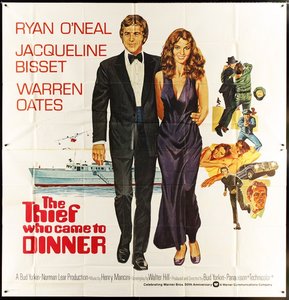
0033bee5_mediumIn The Thief Who Came To Dinner, Ryan O’Neal plays Webster McGee, a Houston-based computer programmer.  After deciding that living in a capitalist society means that everyone steals from everyone else, Webster quits his boring job and decides to become a real thief.  Figuring that they can afford to lose a little wealth, Webster only targets the rich and powerful.  After he steals some incriminating documents from a crooked businessman (Charles Cioffi), Webster uses those documents to blackmail his way into high society.  Soon, Webster owns a mansion of his own and is living with a gorgeous heiress (Jacqueline Bisset, who played a lot of gorgeous heiresses back in the day).  Webster also has an insurance investigator after him.  Dave Reilly (Warren Oates) knows that Webster is a thief but he also can not prove it.  As Dave obsessively stalks him, Webster plots one final heist.

Until I saw it on TCM on Monday, I had never heard of The Thief Who Came To Dinner.  Directed in a breezy style by Bud Yorkin, The Thief Who Came To Dinner was an early script from Walter Hill.  Though the film is much more comedic than his best known work, it’s still easily recognizable as coming from Hill’s imagination.  The obsessive Dave and the coolly professional Webster are both prototypical Hill characters and their adversarial yet friendly rivalry would be duplicated in several subsequent Hill films.

The Thief Who Came To Dinner is an engaging movie that doesn’t add up to much.  The normally stiff Ryan O’Neal gives one of his better performances, though he struggles to hold his own whenever he has to act opposite the far more energetic Warren Oates.  Ned Beatty, Gregory Sierra, John Hillerman, Michael Murphy, and Austin Pendleton all appear in minor roles, making the film’s cast a veritable who’s who of 70s character actors.  And, of course, the film features Jacqueline Bisset at her loveliest.

The Thief Who Came To Dinner may not be well-known but it is an enjoyable and satisfying piece of 70s entertainment.

Shattered Politics #81: Charlie Wilson’s War (dir by Mike Nichols)


Charliewilsonwarposter

I hate to say it but Charlie Wilson’s War did not do much for me.

I hate to say that because this 2007 film is fairly well-acted, well-directed, and well-written (by Aaron Sorkin, whose scripts usually get on my last nerve).  And it deals with an important subject.  Taking place in the 80s, the film details how a Texas congressman (Tom Hanks), working with a profane CIA agent (Philip Seymour Hoffman) and an eccentric socialite (Julia Roberts), managed to create popular and political support for giving weapons to the Afghan rebels who were fighting the Soviet invasion of their country.  By doing so, Wilson helps to weaken the Soviet Union but, when his efforts to provide humanitarian aide to Afghanistan are less successful, he also contributes to the subsequent rise of the Taliban.

It should have been a film that I would normally rave about but … I don’t know.

I watched Charlie Wilson’s War.  I laughed at some of Tom Hanks’s facial reactions.  (Hanks is playing a womanizer here who may, or may not, have been high on cocaine when he first learned about the Soviet invasion of Afghanistan and it’s obvious that Hanks really enjoyed getting to play someone who wasn’t a traditionally upright hero.)  As I watched, I again considered what a loss we suffered when the brilliant Philip Seymour Hoffman died.  And, as I watched Julia Roberts, I again wonder why, despite the fact that she’s from Georgia, it is apparently impossible for Julia to sound authentically Southern.

(Of course, I’m sure some would argue that Julia wasn’t playing Southern here.  She was playing a Texan.  Well, I’m a Texan and I’ve never heard anyone down here sound like that.  Tom Hanks, meanwhile, actually managed to come up with a decent accent.  Wisely, he underplayed the accent, whereas I don’t think that Julia has ever underplayed anything in her life.)

And, at the end of Charlie Wilson’s War, I knew I had watched a good film but it was also a film that left me feeling curious detached.  To be honest, I almost think the film would have been better if Hoffman’s CIA agent had been the main character, as opposed to Hanks’s congressman.  Hoffman’s character, after all, is the one who nearly lost his job over his belief that the Afghan rebels should be armed.  All Hanks really has to worry about is whether or not he’s going to be indicted for using cocaine in Vegas.

However, I do think that Charlie Wilson’s War does deserve praise for one very specific reason.  Excluding the films made by native filmmakers like Richard Linklater and Wes Anderson, Charlie Wilson’s War is one of the few films that I’ve ever seen that actually portrays anyone from Texas in a positive light.  Even more shockingly, it’s a positive portrayal of a Texas politician!
(I know it must have been tempting to change history and pretend that Charlie Wilson was originally elected from somewhere up north…)

But, overall, Charlie Wilson’s War didn’t do much for me.  But, if you’re into military history and all that, you might enjoy the film more than I did.

(Plus, all you boys will probably enjoy Emily Blunt’s scenes….)

At the very least, you can watch it for Philip Seymour Hoffman.


Shattered Politics #38: Nashville (dir by Robert Altman)


Nashville-Cover

“Oh we must be doin’ somethin right to last 200 years…”

— Haven Hamilton (Henry Gibson) in Nashville (1975)

The 1975 Best Picture nominee Nashville is the epitome of an ensemble film.  It follows 24 characters as they spend five days wandering around Nashville, Tennessee.  Some of them are country music superstars, some of them are groupies, some of them are singers looking for a first break, and at least one of them is an assassin.  The one thing that they all have in common is that they’re lost in America.  Released barely a year after the resignation of Richard Nixon and at a time when Americans were still struggling to come to terms with the turmoil of the 60s, Nashville is a film that asks whether or not America’s best days are behind it and seems to be saying that they may very well be.  (That’s a question that’s still being asked today in 2015.)  It’s appropriate, therefore, that Nashville both takes place in and is named after a city that everyone associates with perhaps the most stereotypically American genre of music that there is.

Nashville follows 24 characters, some of whom are more interesting than others.  For five days, these characters wander around town, occasionally noticing each other but far more often failing to make any sort of connection.

Haven Hamilton (Henry Gibson) is a veteran star, a somewhat comical character who sings vapid songs about home and family and who smiles for the public while privately revealing himself to be petty and vain.  His son, Bud (Dave Peel), is a Harvard graduate who acts as his father’s business manager.  Oddly enough, Haven is an unlikable character until the end of the film when he suddenly reveals himself to be one of the few characters strong enough to keep Nashville for descending into chaos.  Meanwhile, Bud seems to be a nice and modest guy until he takes part in humiliating another character.

Haven’s lover is Lady Pearl (Barbara Baxley), who owns a nightclub and spends most of the film drinking.  Much like Haven, she starts out as a vaguely comical character until she finally gets a chance to reveal her true self.  In Pearl’s case, it comes when she delivers a bitter monologue about volunteering for Bobby Kennedy’s presidential campaign.

Haven’s lawyer is Delbert Reece (Ned Beatty), an obsequies good old boy who is married to gospel singer Linnea (Lily Tomlin).  They have two deaf children.  Linnea has learned sign language.  Delbert has not.  Over the course of the film, both Delbert and Linnea will be tempted to cheat.  Only one of them actually will.

And then there’s Barbara Jean (Ronee Blakley), a mentally unstable singer who has come to Nashville with her manipulative husband/manager, Barnett (Allen Garfield).  Almost every character in the film wants something from Barbara Jean.  A mostly silent Vietnam veteran named Kelly (Scott Glenn) claims that his mother knows Barbara Jean.  A nerdy guy named Kenny (David Hayward) comes to Nashville just to see her perform.

Both Kelly and Kenny end up getting to know Mr. Green (Keenan Wynn), a rare Nashville resident who doesn’t seem to care about music.  However, Mr. Green’s spacey niece, L.A. Joan (Shelly Duvall), is obsessed with having sex with as many musicians as possible.

Among those being targeted by L.A. Joan is Tom Frank (Keith Carradine), one-third of the folk trio Bill, Mary, and Tom.  Unknown to Bill (Allan F. Nicholls), Tom is sleeping with Bill’s wife, Mary (Cristina Raines).  Unknown to Mary, Tom is sleeping with almost every other woman in Nashville as well.  When Tom takes to the stage at Pearl’s nightclub and sings a song called I’m Easy, the audience is full of women who think that he’s specifically singing to them.

Another one of Tom’s songs, the appropriately titled “It Don’t Worry Me,” is frequently sung by Albuquerque (Barbara Harris), who spend the entire film trying to get discovered while hiding out from her much older husband, Star (Bert Remsen).

Another aspiring star is Sulleen Grey (Gwen Welles), who is a tone deaf waitress who suffers the film’s greatest humiliation when she agrees to perform at a political fund raiser without understanding that she’s expected to strip while singing.  Trying to look after Sulleen is Wade (Robert DoQui), who has just been released from prison.

And then there’s the loners, the characters who tend to pop up almost randomly.  Norman (David Arkin) is a limo driver who, like everyone else in Nashville, wants to be a star.  The hilariously bitchy Connie White (Karen Black) and the bland Tommy Brown (Timothy Brown) already are stars.  (The character of Tommy Brown is one of Nashville’s oddities.  He’s listed, in the credits, as being a major character but he only appears in a few scenes and never really gets a storyline of his own.)  There’s the Tricycle Man (Jeff Goldblum), a silent magician who mysteriously appears and disappears throughout the film.

And, finally, there’s Opal (Geraldine Chaplin), an apparently crazed woman who is wandering around Nashville and pretending to be a reporter for the BBC.  (It’s never specifically stated that Opal is a fake but it’s fairly obvious that she is.)  How you feel about the character of Opal will probably determine how you feel about Nashville as a whole.  If you find Opal to be a heavy-handed caricature, you’ll probably feel the same way about the rest of the film.  If you find the character of Opal to be genuinely amusing with her increasingly pretentious musings, you’ll probably enjoy Nashville.

There is one more very important character in Nashville.  He’s the character who literally holds the film together.  He’s also the reason why I’m including Nashville in this series of reviews about political films.  That character is named Hal Phillip Walker and, though he’s never actually seen in the film, he’s still the driving force behind most of what happens.  Walker is a third-party presidential candidate, a man who seems to be universally admired despite the fact that his campaign appears to just be a collection of vapid platitudes.  Walker’s campaign manager, John Triplette (Michael Murphy), comes to Nashville and sets up the Walker For President rally.  That’s where Nashville reaches its violent and not-all-together optimistic climax.

Reportedly, Nashville is a favorite film of Paul Thomas Anderson’s and you can see the influence of Nashville in many of Anderson’s films, from the large ensemble to the moments of bizarre humor to the refusal to pass judgement on any of the characters to the inevitable violence that ends the film.  Also, much like Anderson’s films, Nashville seems to be a film that was specifically made to divide audiences.  You’re either going to think that Nashville is a brilliantly satirical piece of Americana or you’re going to think it’s a self-indulgent and self-important mess.

As for me, I think it’s great and I think that, after you watch it, you should track down and read Jan Stuart’s The Nashville Chronicles: The Making of Robert Altman’s Masterpiece.  It’s the perfect companion for a great film.


Two Post Presidents Day Reviews: Frost/Nixon (dir. by Ron Howard) and All The President’s Men (dir. by Alan J. Pakula)


“Now Watergate doesn’t bother me/does your conscience bother you?” — Lynard Skynard, Sweet Home Alabama

As part of my continuing quest to see and review every film ever nominated for best picture, I want to devote my first post Presidents Day post to two films: 2008’s Frost/Nixon and 1976’s All The President’s Men.

During my sophomore year of college, I had a political science professor who, every day of class, would sit on his desk and ramble on and on and on about his past as a political activist.  He protested Viet Nam, he hung out with revolutionaries, he loved Hugo Chavez, and I assume he probably had a Che Guevara poster hanging in his office.  Whenever he wanted to criticize George W. Bush, he would compare him to Richard Nixon and then pause as if he was waiting for the class to all start hissing in unison.  He always seemed to be so bitterly disappointed that we didn’t.  What he, and a whole lot of other people his age, didn’t seem to understand was that Richard Nixon was his boogeyman.  The rest of us could hardly care less.

That was the same problem that faced the 2008 best picture nominee Frost/Nixon

Directed rather flatly by Ron Howard, Frost/Nixon tells the true story about how a light-weight English journalist named David Frost (played by Michael Sheen) managed to score the first televised interview with former President Richard Nixon (Frank Langella).  Both Frost and Nixon see the interviews as a chance to score their own individual redemptions while Frost’s assistants (played by Oliver Platt and Sam Rockwell) see the interview as a chance to put Richard Nixon on trial for Watergate, the Viet Nam War, and every thing else under the sun.  That may not sound like a very exciting movie but it does sound like a sure Oscar contender, doesn’t it?

I’ve always secretly been a big history nerd so I was really looking forward to seeing Frost/Nixon when it was first released in 2008.  When I first saw it, I was vaguely disappointed but I told myself that maybe I just didn’t know enough about Richard Nixon or Watergate to really “get” the film.  So, when the film later showed up on cable, I gave it another chance.  And then I gave it a chance after that because I really wanted to like this film.  Afterall, it was a best picture nominee.  It was critically acclaimed.  The word appeared to be insisting that this was a great film.  And the more I watched it, the more I realized that the world was wrong.  (If nothing else, my reaction to Frost/Nixon made it easier for me to reject the similarly acclaimed Avatar a year later.)  Frost/Nixon is well-acted and slickly produced but it’s not a great film.  In fact, Frost/Nixon is epitome of the type of best picture nominee that inspires people to be cynical about the Academy Awards.

Before I get into why Frost/Nixon didn’t work for me, I want to acknowledge that this was a very well-acted film.  By that, I mean that the cast (Frank Langella, Michael Sheen, Kevin Bacon, Sam Rockwell, and Oliver Platt) all gave very watchable and entertaining performances.  At the same time, none of them brought much depth to their characters.  Much like the film itself, nobody seems to have much going on underneath the surface.  Frank Langella may be playing a historic figure but, ultimately, his Oscar-nominated performance feels like just a typically grouchy Frank Langella performance.  Michael Sheen actually gives a far more interesting performance as David Frost but, at the same time, the character might as well have just been identified as “the English guy.”  In fact, a better title for this film would have been The Grouchy, the English, and the Superfluous.

For all the time that the film devotes to Rockwell and Platt blathering on about how they’re going to be giving Richard Nixon “the trial he never had,” this film is ultimately less about politics and more about show business.  Ron Howard devotes almost as much time to the rather boring details of how the interviews were set up and sold into syndication as he does to the issues that the interview brings up.  Unfortunately, for a movie about show business to succeed, the audience has to believe that the show is one that they would actually enjoy watching,  This, ultimately, is why Frost/Nixon fails.  While the filmmakers continually tell us that the Frost/Nixon interviews were an important moment in American history, they never show us.  Yes, everyone has hideous hair and wide lapels but, otherwise, the film never recreates the period or the atmosphere of the film’s setting and, as a result, its hard not to feel detached from the action happening on-screen.  For all the self-congratulatory claims made at the end of the film, it never convinces us that the Frost/Nixon interviews were really worth all the trouble.  Much like my old poli sci professor, Frost/Nixon never gives us a reason to care. 

For a far more interesting and entertaining look at the Watergate scandal, I would recommend the 1976 best picture nominee All The President’s Men.  Recreating the story of how two Washington Post reporters (played by Robert Redford and Dustin Hoffman) exposed the Watergate scandal that eventually led to Nixon’s resignation, All The President’s Men is the movie that Frost/Nixon wishes it could be.  Despite being made only two years after Watergate, All The President’s Men doesn’t take the audience’s interest for granted.  Instead, director Pakula earns our interest by crafting his story as an exciting thriller.  Pakula directs the film like an old school film noir, filling the screen with menacing shadows and always keeping the camera slightly off-center.   Like Frost/Nixon, All The President’s Men is a well-acted film with a bunch of wonderful 70s character actors — performers like Ned Beatty, Jason Robards, Jack Warden, Martin Balsam, and Robert Walden, and Jane Alexander — all giving effectively low-key and realistic performances.   The end result is a film that manages to be exciting and fascinating to those of us who really don’t have any reason to care about Richard Nixon or Watergate.

Both of these two films were nominated for best picture.  Frost/Nixon quite rightly lost to Slumdog MillionaireAll The President’s Men, on the other hand, lost to Rocky.

Film Review: Network (dir. by Sidney Lumet)


With the recent passing of director, Sidney Lumet, I decided to watch one of Lumet’s best-known films, the 1976 best picture nominee Network.

Network tells the story of Howard Beale (played by Peter Finch).  Howard is a veteran news anchor at a fictional television network.  Because his ratings are in decline, Howard is fired.  Howard reacts to this by announcing that he will commit suicide at the end of the next broadcast.  Ironically, so many people tune in to see Howard kill himself that his ratings improve and Howard gets to keep his job under the watchful eyes of news director Max Shumacher (William Holden) and network executive Dianne Christiensen (Fay Dunaway). 

At the same time, Max and Dianne are adulterous lovers.  The course of the film’s narrative finds Max abandoning his wife (Beatrice Straight) and Dianne, who is described as a “child of the tube,” enthusiastically trying to produce an early reality television show starring a group of Marxist revolutionaries.  They do this under the paranoid eyes of network president Frank Hackett (Robert Duvall) and Frank’s boss, the corrupt Arthur Jenson (Ned Beatty).

However, Howard Beale isn’t just an over-the-hill news anchor.  He’s actually a seriously mentally ill man who hears voices and who starts to see himself as some sort of messiah.  Eventually, this leads to a disheveled Howard giving a crazed speech in which he encourages viewers to yell, “I’m as mad as Hell and I’m not going to take it anymore!”  Yes, this is the famous scene that is always used whenever some pompous media jackass wants to criticize the current state of television.  Even though I think it’s one of the most overrated scenes in history, here it is:

Anyway, after this scene, Dianne starts to promote Howard as the “Mad Prophet of the Airwaves” and Max gets all outraged over how the news no longer has any integrity (bleh, Max is kinda full of himself) and eventually, Howard’s mad rantings get the attention of Arthur Jenson who has plans of his own for Howard.  The whole thing eventually ends on one of those rather dark notes that’s impressive the first time you watch it but just seems more heavy-handed and clumsy with subsequent viewings.

As you might be able to tell from my review, I almost felt as if I was watching two different movies when I watched Network.  For the first hour, the movie is a sharp and clever satire on the media.  The characters are sharply drawn, the performance are full of nuance, and even the villainous Dianne is allowed a bit of humanity.  And then, Howard gives his famous “mad as Hell” speech and the entire freaking film pretty much just falls apart as suddenly, all the characters start to act like cartoons.  The film’s satire becomes so heavy-handed that you actually find yourself wanting to watch something mindless and brainless just because you know it would piss off self-righteous old Max.  The actors stop acting and instead concentrate on shouting.  Whatever humanity Dianne had been allowed suddenly vanishes and she just becomes yet another stereotypical “castrating bitch.”  Max gets to spend a lot of time telling her why she’s worthless and it pretty much all comes down to the fact that 1) she’s under 40 and 2) she has a vagina.  (Never mind the fact that Max has abandoned his wife, apparently men are allowed to be assholes.)  By the time the 2nd half of the film ends, you don’t care about whatever the film’s message may have been.  You’re just happy that everyone has finally shut up.

As I sat through the second half of this film, it soon became apparent to me why Aaron Sorkin has continually cited Network‘s screenwriter Paddy Chayefsky as a major influence.  Chayefsky won an Oscar for writing Network and he’s constantly cited as one of the greatest screenwriters of all time but, quite frankly, his script isn’t that good.  Much like Sorkin’s work, you’re aware of the screenplay not because of what the characters say but because they say so much.  This is the type of film that is often wrongly called prophetic by bitter old men.  This is largely because the script itself was written by a bitter old man.  The only true insight one gets from this movie is the insight that the old will always view the young and the new as a threat.

And yet, even as the second half of the film collapses around us, Network still holds our attention.  We’re still willing to stick around to see how all of this ends (and keep an eye out for a 17 year-old Tim Robbins who made his uncredited film debut at the end of Network).  This has nothing to do with anything written by Paddy Chayefsky and everything to do with the direction of Sidney Lumet.  I once read somewhere that you can’t make a good film out of a bad script.  I’m not sure who said that though it has a definite William Goldman sound to it.   Well, if nothing else, Network proves that this is not always the case. 

To me, there is no more fitting tribute to Sidney Lumet than to say that he somehow managed to create something worthwhile out of Network.