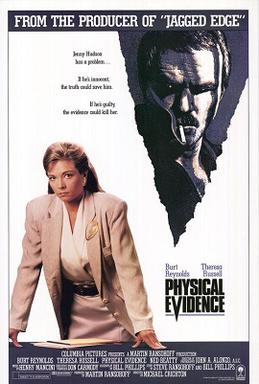
Physical Evidence (1989, directed by Michael Crichton)


Ex-cop Joe Paris (Burt Reynolds) is arrested for the murder of a small-time criminal.  Joe swears that he’s being framed but his public defender, Jenny Hudson (Theresa Russell), isn’t sure that she believes him.  While Jenny’s boyfriend (Ted McGinley) makes a fortune trading stocks and Joe’s former mistress (Kay Lenz) tries to keep her mobster boyfriend from finding out about the affair, Jenny tries to outsmart prosecutor James Nicks (Ned Beatty) and Joe tries to find the real killer.

Tubi sent me to this film after I finished up Raw Justice.  When I saw that it was a Burt Reynolds films, I figured that I would take a chance with it but this one turned out to be one of Burt’s lesser films.  Joe Paris feels like he might be distantly related to the cop that Burt played in Sharky’s Machine but Physical Evidence doesn’t have any of that movie’s style or grit.  Burt doesn’t come across like he wants to be in the movie and he and a very miscast Theresa Russell have next to zero chemistry onscreen.  This was Michael Crichton’s last film as a director and he directs in a stolid, made-for-television manner.

Supposedly, this was originally meant to be a sequel to the thriller Jagged Edge, with Glenn Close and Robert Loggia reprising their roles from the earlier film.  When that fell through, the movie was refurbished into Physical Evidence, with Theresa Russell and Burt Reynolds replacing Close and Loggia.  I think the film would have worked with Close and Loggia because, based on Jagged Edge, they were believable as people who had a close relationship and would do anything to help each other.  Burt Reynolds and Theresa Russell come across like they can’t even stand to be in the same room together.  Better get a new lawyer, Burt!  This one seems like she might be planning on framing you herself.

RUDY! RUDY! RUDY!! 


It’s Good Friday and I’ve taken the day off from work to relax and spend some time in reflection and prayer on this important day on the Christian calendar. I woke up this morning and wasn’t quite ready to get out of bed, so I started flipping through Netflix’s selection and came across RUDY (1993). I try not to overwatch RUDY because I love the way it makes me feel, and I don’t want it to become so familiar that I lose that feeling. But it’s been a couple of years, so I decided to give it another spin. 

As I’m sure most of you know, RUDY is based on the life of Daniel “Rudy” Ruettiger (Sean Astin), the 3rd of 14 children from a family in Joliet, IL, who dreamed of playing football at Notre Dame. There were a number of obstacles to that dream, namely that his family didn’t have much money, he didn’t have good grades, he was 5’6” tall and he didn’t have much football talent. What he did have was heart, and we watch Rudy persevere as he goes to school at neighboring Holy Cross while trying to get accepted in Notre Dame. Nothing ever comes easy for Rudy, but through determination, hard work, and sheer will he eventually makes his way to Notre Dame, joins the football team’s practice squad, and gets to suit up for one game in his senior year. 

RUDY is a movie that affects me deeply. It really shouldn’t come as a surprise as it was written by Angelo Pizzo and directed by David Anspaugh, the team behind HOOSIERS (1986), one of my very favorite movies of all time. While there will never be a movie about my life, I know all too well what it’s like to love something so much, but not really be designed for it. In RUDY, the character Fortune, played by Charles S. Dutton in an incredible performance, tells a discouraged Rudy, “You’re 5 foot nothin’, 100 and nothin’, and you have barely a speck of athletic ability. And you hung in there with the best college football players in the land for 2 years.” Those were basically my specs when I was a senior playing high school basketball in a small town in Central Arkansas (5’7,” 125 and I couldn’t jump). I loved the game so much and put everything I had into it during my pee wee, junior high and senior high years. In 1991, I was named to the Arkansas’ All-State high school basketball team. Due to my lack of athleticism, I would not be able to play at the collegiate level, but I’ve always felt pride that I was able to maximize what talent God did bless me with in the game of basketball. That hard work ethic has served me well throughout my life. It’s so inspiring to watch a movie where a person perseveres against difficult odds, faces disappointments, keeps moving forward, works harder than everyone else, faces more obstacles, and then finally gets to see that work pay off. In a day and time where so many want all the rewards that life has to offer, without putting in any of the work, the story of RUDY stands the test of time and needs to be seen and heard. 

Retro Television Review: Homicide: Life On The Street 3.8 “All Through The House”


Welcome to Retro Television Reviews, a feature where we review some of our favorite and least favorite shows of the past!  On Sundays, I will be reviewing Homicide: Life On The Street, which aired from 1993 to 1999, on NBC!  It  can be viewed on Peacock.
It’s time to celebrate the holidays!

Episode 3.8 “All Through The House”

(Dir by Peter Medak, originally aired on December 16th, 1994)

It’s Christmas in Baltimore!  Decorations are up.  A heavy snow is falling.  The Homicide Detectives are starting the night shift on Christmas Eve …. there’s no way this is going to be depressing, right?

  • Russert and Lewis (who no longer has a permanent partner because Crosetti committed suicide) investigate the murder of a woman who was set on fire.  The victim’s mother (Nancy Marchand) is in the midst of throwing a Christmas party and refuses to acknowledge the fact that her daughter is dead.  Instead, she obsesses on the amount of red decorations.  It’s a human moment.  How would you react if you found out a member of your family had been murdered on Christmas Eve?
  • Still, this storyline kind of reinforced the fact that it really doesn’t make much sense for Russert to be a regular on the show.  She’s a shift commander but it’s a totally different shift from the one that the rest of the characters work.  She was originally introduced having an affair with Beau but that appears to be over.  Russert really has nothing to do and her choosing to work Christmas Eve didn’t really make much sense.
  • Scheiner, the crusty old medical examiner, shows up wearing a Santa hat.  Assistant State’s Attorney Ed Danvers also makes an appearance.  He mentions that he’s got someone coming to his apartment to celebrate Christmas Eve with him but Kay is working!  Did they break up!?
  • Meanwhile, Bolander and Much investigate the mystery of a dead man dressed as Santa Claus….
  • SERIOUSLY, HOMICIDE!?
  • Much suggests that Santa was killed by angry elves.
  • Okay, Homicide, that made me laugh.
  • Munch thinks that the man is someone who has been ringing the bell for the Salvation Army for decades.  Bolander says that they need to inform the man’s child….
  • STOP IT, HOMICIDE!
  • While Bolander goes to the morgue to try to get a positive ID on the guy, Munch sits in an apartment with a kid who want stop talking about how his father promised to spend Christmas Eve with him….
  • WHY ARE YOU DOING THIS, HOMICIDE!?
  • Munch takes the kid out.  They go bowling.  They hit some baseballs.  The kid’s antagonistic and Munch is miserable.
  • Oh wait!  The kid’s father is alive!  Yay!  It turns out that someone stole his Santa Claus outfit and that person — that thief of holiday joy — is the one who was brutally murdered while dressed as jolly old St. Nick.
  • Uhmm …. that’s still pretty depressing but at least the kid’s not an orphan.
  • Back at headquarters, a disheveled Bayliss tries to get someone to play Hearts with him because he needs to make some quick money.
  • Seriously, what’s happening with Bayliss?  He went from being clean-cut and idealistic to being a somewhat seedy, convenience store-robbing burnout in record time!

Merry Christmas, everyone!  This was a good episode, actually.  Any episode that involves Munch getting frustrated is usually enjoyable and Russert and Lewis made for a good team.  And, in the end, Santa was not dead.  It’s a Christmas miracle!

Retro Television Review: Homicide: Life On The Street 3.7 “Happy To Be Here”


Welcome to Retro Television Reviews, a feature where we review some of our favorite and least favorite shows of the past!  On Sundays, I will be reviewing Homicide: Life On The Street, which aired from 1993 to 1999, on NBC!  It  can be viewed on Peacock.

This week, Bayliss loses it!

Episode 3.7 “Happy To Be Here”

(Dir by Lee Bonner, originally aired on November 18th, 1994)

This week’s episode was depressing even by Homicide standards.

Felton’s wife is still missing.  Felton confronts both Kay and Megan, convinced that they know something about it.  Does it ever occur to Felton that maybe, just maybe, he wouldn’t have so much trouble in his marriage if he wasn’t always stumbling around like hulking dunk, sweating through his shirt and smoking up a storm?  Be the change, Felton.  Be the change.

Sam Thorne, the journalist played by Joe Morton, is assassinated by a Colombian cartel.  It turns out that his assassin was a teenager who agreed to do it in return for a new bike.  Giardello is shaken by the death of his friend and there’s a wonderfully acted scene in which Giardello visits Sam’s daughter (Maggie Rush).  This storyline served to remind the viewer that Yaphet Kotto, even if he spends most of the show in his office, really is the glue that holds this show together.  He’s the heart and the moral soul of Homicide.

Meanwhile, Bayliss has gone from being the clean-cut rookie to being someone who appears to be on the verge of having a complete and total breakdown.  He’s still seeing Emma Zoole and Lewis is still angry with him about it.  Emma likes to make love in a coffin.  Bayliss can accept that.  Emma wants Bayliss to hit her and that pushes Bayliss over the edge.  When he stops by a convenience store to pick up a six-pack of beer, he discovers that he’s a few pennies short.  The clerk says it doesn’t matter.  He can’t sell Bayliss the beer.  Bayliss responds by drawing his gun and robbing the place!  When the police arrive, Bayliss is sitting in his car and drinking a beer.

So, I guess Bayliss is going to prison now, right?  No, not in Baltimore.  Instead, Bayliss shows off his badge.  When that doesn’t work, he calls Pembleton.  Pembleton comes down to the store and gets the clerk to drop the charges in exchange for Bayliss serving as an unpaid security guard.  At the end of the episode, Bayliss is sitting in front of that store and hopefully thinking about how close he came to being sent to prison.

This was a good episode, one that looked at the pressure that goes along with being exposed to the worst that humanity has to offer.  Bayliss holding that store was a scene that probably should not have worked but it did, due to the performance of Kyle Secor.  In a manner of minutes, Secor took Bayliss from being tired but friendly to being so angry that I was worried he was actually going to shoot the clerk.  Not only did we see Bayliss’s dark side but we also saw Pembleton’s good side as he went out of his way to keep his partner from going to prison.

How much darker can things get in Baltimore?  We’ll find out next week!

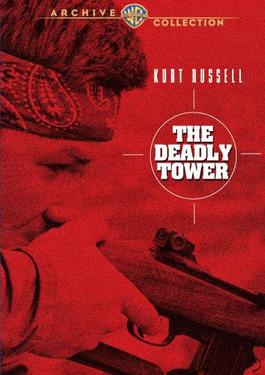
The Deadly Tower (1975, directed by Jerry Jameson)


Made for television, The Deadly Tower is a recreation of the terrible day in 1966 that a 25 year-old former Marine named Charles Whitman shot his wife and mother and then climbed to the top of the tower at the University of Texas in Austin and started to indiscriminately firing on the people below.  It was one of the first mass shootings of its kind.  What drove All-American boy Charles Whitman, who was eventually taken down by the police, to start his rampage is not known though the autopsy revealed that he did have a small brain tumor at the time of his death.

The Deadly Tower focuses mostly on the efforts of the policeman Ramiro Martinez (Richard Yinguez) and civilian Allan Crum (Ned Beatty) to get to the top of the tower and stop Whitman’s shooting rampage.  (Pernell Roberts, John Forsythe, and Clifton James all appear as other police officials, trying to deal with what was then an almost unheard of occurrence.)  Martinez risks his life to stop Whitman’s rampage while Allan worries that other shootings will follow.  One of the first examples of a true crime event being turned into a movie for television, The Deadly Tower a tense and effective docudrama.  Kurt Russell, who was then still known for being Disney’s top-paid star, plays Whitman.  Russell doesn’t have much dialogue in the film.  He’s blandly friendly while buying bullets and, when he’s sitting up in the tower with his rifle, he could just as easily pass for a teenager out hunting with his father during deer season.  Russell’s clean-cut appearance made him ideal for playing the role of someone who no one would have ever suspected could be capable of committing such a terrible crime.  It took courage to cast an actor then known for Disney films as one of America’s worst mass murderers and it also took courage for Russell to accept a role that was the total opposite of his family-friendly image.

The Deadly Tower used to show up on television frequently when I was a kid.  It’s still a scary movie, even if you know how it’s going to end.  Whitman may have been one of the first of his kind but sadly, he wouldn’t be the last.

Retro Television Review: Homicide: Life On The Street 3.6 “A Model Citizen”


Welcome to Retro Television Reviews, a feature where we review some of our favorite and least favorite shows of the past!  On Sundays, I will be reviewing Homicide: Life On The Street, which aired from 1993 to 1999, on NBC!  It  can be viewed on Peacock.

No one’s happy this week.

Episode 3.6 “A Model Citizen”

(Dir by John McNaughton, originally aired on November 11th, 1994)

Welcome to Baltimore, where everyone is depressed.  Consider this week’s episode of Homicide: Life On The Street.

  1. The episode opens with Munch, Bolander, Howard, and Felton in a morgue, waiting for the results of an autopsy.  They start talking about the shows that they watched as children and how many of them had their origins right in Baltimore.  Of course, none of those shows are on the air anymore.  Munch mentions his favorite childhood shows and is ridiculed for liking things when he was a kid.
  2. Emma Zoole (Lauren Tom), an artist who makes models of crime scenes for use in criminal court, stops by the department.  She’s looking for Steve Crosetti, to get his input on a recreation.  Meldrick Lewis tells her that Crosetti’s dead but he offers to help.  Lewis has a crush.  However, Emma likes Bayliss and Bayliss likes Emma.  Bayliss is even turned on by the fact that Emma sleeps in a coffin.  However, when Bayliss sees how upset Lewis is over his relationship with Emma, Bayliss tries to break up with her.  They end up having sex in the coffin instead.
  3. That’s it!, Lewis declares.  He cannot go into the bar business with Tim Bayliss.  Then again, there might not be a bar business anyway because Munch got kicked out of the state-required alcohol awareness class.  Munch, for whatever reason, decided to argue about whether or not a bartender could really be held responsible for getting someone drunk.
  4. Pembleton, Russert, and the city of Baltimore are all being sued by serial killer Pamela Wilgis.  Wilgis claims that Pembleton violated her civil rights when he interrogated her.  Pembleton’s entire interrogation style is put on trial.  He feels like he’s being attacked on all sides.  Finally, Pembleton gets depressed enough to reenter a church, even though he earlier claimed to no longer have any use for religion.
  5. Munch and Howard investigate the accidental shooting of a child by his older brother.  Much gets extremely upset while searching for the gun, taking Howard totally be surprise.  Howard comes to realize that Much actually cares about protecting children from violence and Munch realizes that the world is a terrible place.
  6. Beau Felton returns to his house and discovers that both his wife and his son have left and they’ve taken all the furniture with them.  Goodbye is scrawled, in lipstick, on the bathroom mirror.
  7. Much ends up sitting outside, staring at the ground while Lewis and then Howard both talk to him about how much life sucks.
  8. No one wants to end up like Steve Crosetti, Howard says at one point.  Good luck!  This job is depressing!

This was a good episode, one that really captured the emotional turmoil of seeing the worse that humanity has to offer while, at the same time, acknowledging that depressed people often use humor to deal with their feelings.  A few of Munch’s and Lewis’s line made me laugh out loud but seriously, I felt so bad for both of them!

Hopefully, everyone will have cheered up by next week.

Retro Television Review: Homicide: Life On The Street 3.5 “The Last Of The Watermen”


Welcome to Retro Television Reviews, a feature where we review some of our favorite and least favorite shows of the past!  On Sundays, I will be reviewing Homicide: Life On The Street, which aired from 1993 to 1999, on NBC!  It  can be viewed on Peacock.

If you’re checking with the imdb and saying, “You’re reviewing these out of order!,” I’m reviewing them in the order that they were meant to air as opposed to the order by which NBC showed them.

Episode 3.5 “The Last of the Watermen”

(Dir by Richard Pearce, originally aired on December 9th, 1994)

We learn a bit more about the personal lives of Baltimore’s Homicide detectives with this episode.

For instance, we discover that Munch and Gee living in the same neighborhood.  When Gee, whose washing machine has broken down, visits the local laundromat, he’s not necessarily overjoyed to see Munch sitting there.  Munch talks and talks.  Gee lights a cigar and tries to read his newspaper in peace.  Munch keeps talking.  Gee points out that it’s the weekend and he doesn’t like to talk to anyone on the weekend.  Sunday is his day.  Munch nods and then keeps talking.  Gee stands up and moves to another part of the laundromat.

We also get to meet Kay Howard’s family.  Disgusted by the latest murder scene that she and Beau have come across and the fact that an elderly woman was murdered and her tongue was subsequently cut out and then stuffed down her throat (yikes!), Kay decides that she’s due some vacation time.  She leaves Baltimore and drives out to the local fishing village where she grew up.  She spends time with her father and her brother and a guy who she once had a romantic relationship with.  She visits her mother’s grave.  It’s interesting to see Kay outside of Baltimore and to see how she interacts with family.  It was so interesting that I was kind of annoyed that she still ended up working a murder.  A local environmental activist is murdered.  Kay worries that the murderer might have been her brother but it turns out to have been another fisherman.  I mean, I get it.  The show is called Homicide and Kay is a detective but still, I would have been just as happy if the show had just focused on her family and their rituals.  This episode is 30 years old but the scenes of the blue collar fishermen talking about how they were being “regulated” out of their life’s work still rang true.

While Kay was visiting family, Felton got a temporary new partner and you’ve probably already guessed that it was Pembleton.  This is not the first time that Pembleton has been assigned to work with Felton.  The pilot featured that classic scene of Pembleton checking car-after-car while Felton complained about Pembleton always having to be right.  Felton and Pembleton do make for an interesting team, if just because they do seem to sincerely dislike each other.  (I also enjoyed Gee’s half-smile as Pembleton reacted to the news that he would be working with Felton.)  In this case, Pembleton and Felton working together didn’t lead to any great fireworks, other than Felton reacting with shock at the idea of Pembleton preferring hockey to basketball.  The killer of the elderly woman turned out to be her grandson who said he did it because she wouldn’t stop talking.  That was sad, to be honest.  Grandmothers are supposed to talk.  Felton and Pembleton dragged the kid off to jail.

This was an okay episode.  After the emotional powerhouse of Crosetti, it was good to get something that was a bit more lowkey.  It was nice to be reminded that everyone has a family.

Retro Television Review: Homicide: Life On The Street 3.4 “Crosetti”


Welcome to Retro Television Reviews, a feature where we review some of our favorite and least favorite shows of the past!  On Sundays, I will be reviewing Homicide: Life On The Street, which aired from 1993 to 1999, on NBC!  It  can be viewed on Peacock.

This week, we discover why Steve Crosetti has not come back to work.

Episode 3.4 “Crosetti”

(Dir by Whitney Ransick, originally aired on December 2nd, 1994)

Detective Steve Crosetti has yet to return from a week-long vacation in Atlantic City.  When Giardello asks Lewis where Crosetti is, Lewis lies and says that he has the flu.  In truth, Lewis hasn’t heard from Crosetti but he remains convinced that his partner will soon return and will once again be annoying him with all of his theories about Abraham Lincoln.

Meanwhile, Bolander and Munch are called to the harbor.  A body has been fished out of the water.  The body has been in the water for a while and, from what we see, its bloated and the skin has turned the purplish color of decay.  Bolander and Munch have no idea who the man is but they see that he’s wearing a lapel pin that identifies him as a member of the Fraternal Order of Policeman.  They check the body for ID….

Lewis is called in Giardello’s office.  Giardello tells Lewis that Steve Crosetti is dead.  His body was found in the harbor.  Bolander is investigating but all signs seem to indicate that Crosetti’s death was a suicide.  Lewis refuses to believe it.  He is convinced that Crosetti was murdered, perhaps by someone he investigated.  Lewis takes out his anger on Bolander and Munch, feeling that they’re attempting to besmirch Crosett’s reputation by even considering the possibility of suicide.

It’s more than just Lewis’s feelings at stake.  If Bolander determines that Crosetti committed suicide, it will make him the fourth Baltimore cop to have committed suicide that year.  The brass says that Crosetti won’t get an honor guard if it’s determined that he committed suicide.  Giardello subtly suggests that Bolander should rule the death of homicide.  Bolander suggests that committing suicide was Crosetti’s final statement.   Who are they to ignore a man’s final statement?

In the end, the toxicology results reveal that Crosetti was drunk when he fell in the harbor, leading to Lewis saying the death was an accident.  Munch then reveals that Crosetti was also taking several anti-depressants at the time of his death and Lewis is finally forced to admit that Crosetti was not murdered.  Crosetti does not get his honor guard, though Pembleton, after spending the whole episode acting as if he didn’t care, puts on his full dress uniform and salutes as Crosetti’s casket passes.

This was an incredibly powerful episode, all the more so because no explanation is given as to what specifically led to Crosetti taking his own life.  The genesis behind the episode was not a happy one.  One of NBC’s conditions for renewing Homicide for a third season was that Jon Polito, who was not considered photogenic enough for television, be written out.  Showrunner Tom Fontana told Polito it would only be a temporary thing and that Crosetti would return once the show had been renewed for a fourth season.  Polito didn’t believe Fontana and went to the press, complaining about how the show was being run.  As a result, Crosetti ended his life.  (Polito and Fontana later ended their feud, allowing Polito to return as a ghost at the end of Homicide: The Movie.)  The show uses Crosetti’s suicide as a way to explore the psychological impact of being a cop as well as the impossibility of truly knowing what’s going on inside anyone’s head.  Only after Crosetti’s suicide has been confirmed can Lewis look back and see certain signs that Crosetti was unhappy.

Wonderfully acted and wonderfully written, this episode is a dark one but, as so often happens with life’s darker moments, there are moments of humor.  Pembleton brags about his parallel parking skills, just to discover that he can’t actually pull out afterwards.  An attempt to buy cookies for Crosetti’s reception leads to a fierce argument between Bayliss and Pembleton, regarding both the price of cookies and whether or not the baker was actually Italian.  We meet Munch’s younger brother, a rather bitter mortician.  When Lewis cleans out Crosetti’s desk, the first thing he pulls out is a slinky.  These are small moments but they affirm the humanity of the show’s characters and reminds us that the show and this episode in general is as much about living as it is about dying.

Steve Crosetti, RIP.

Retro Television Review: Homicide: Life On The Street 3.3 “Extreme Unction”


Welcome to Retro Television Reviews, a feature where we review some of our favorite and least favorite shows of the past!  On Sundays, I will be reviewing Homicide: Life On The Street, which aired from 1993 to 1999, on NBC!  It  can be viewed on Peacock.

This week, the White Glove Killer is discovered.

Episode 3.3 “Extreme Unction”

(Dir by Keith Gordon, originally aired on October 28th, 1994)

For all the hours that Pembleton and the other detectives put in and for all the motives that were considered and the suspects were interviewed, the murderer of Katherine Goodrich and two other women is captured not through deductive brilliance but because she herself enters the police station.

When Pamela Wilgis (Lucinda Jenney) first enters the station, she claims to have just witnessed two men dumping the third victim.  Pembleton is dismissive of her until she mentions the white gloves, a detail that has not been released to the public.  While Pembleton talks to her, the other detectives check out Pamela’s apartment and discover 12 sets of white cotton gloves hanging in her bathroom.  Pamela is the murderer.

When Pembleton asks Pamela about the gloves, Pamela suddenly starts speaking in an Irish accent.  Later, she starts speaking like an angry and rebellious child.  Later still, she reverts to being a wide-eyed innocent who says she had no idea how she ended up in the interrogation room.  Pembleton is convinced that she’s faking her alternate personalities but, despite his best efforts, he can never get her to actually confess that she committed the murders.

From the start, Homicide has emphasizes the role of luck in solving murders.  The majority of the show’s murders are solved precisely because someone thought they could outsmart the police or because they made a very obvious error.  For all of Pembleton’s strengths in the Box, his interrogation technique works best when he’s dealing with someone who doesn’t understand how the system works.  Pamela, on the other hand, obviously understands what he’s trying to do.  She knows the system and she knows how to game it.  Pamela does eventually confess but not Pembleton.  Instead, she does an interview with the obnoxious reported played by Tony Todd, blaming her crimes on the abuse she suffered as a child and her dissociative disorder.  Pembleton’s pride is hurt but he also finds himself struggling with his faith.  How can Pamela, after killing three saintly women, now avoid paying for her crimes?  Even with the thrilling interrogation scene between Pembleton and Pamela and the excellent performances of Andre Braugher and Lucinda Jenney, it’s all feels a bit anticlimactic.  But it also feels appropriate for the world in which Homicide takes place.

This episode also wrapped up a few other plotlines.  Munch, Bayliss, and Lewis finally own their bar.  Good for them.  I’m not really a bar person or a drinker but I probably would have enjoyed visiting the Waterfront whenever Munch was working the bar.  Even more importantly, Felton returned to his mentally unstable wife.  And again, that’s a good thing if just because I was getting sick of listening to Felton whine about his marriage.  So was Kay.

This episode was effective enough.  The scenes between Andre Braugher and Lucinda Jenney alone made the episode memorable.  At the same time, as I watched, it occurred to me that, if this episode had aired during the first season, the White Glove Murders probably never would have been solved.  If Adena Watson had died during the third season, one can be sure Bayliss would have gotten a confession out Risley Tucker.

Next week, we find out why Detective Crosetti has yet to return from Atlantic City.

Retro Television Review: Homicide: Life on the Street 3.2 “Fits Like A Glove”


Welcome to Retro Television Reviews, a feature where we review some of our favorite and least favorite shows of the past!  On Sundays, I will be reviewing Homicide: Life On The Street, which aired from 1993 to 1999, on NBC!  It  can be viewed on Peacock.

This week, the investigation into the Catherine Goodrich murder continues.

Episode 3.2 “Fits Like A Glove”

(Dir by Ted Demme, originally aired on October 21st, 1994)

Last week’s episode ended with Bayliss and Pembleton discovering that a supply shed had been broken into near the Goodrich scene.  This episode opens with Bayliss and Pembleton talking to the groundskeeper, who explains that he came across the shed earlier.  He reported that the shed had been broken into to the primary on the case, Detective Gaffney.  Gaffney never bothered to follow-up and the shed has since been cleaned up.

That’s it for Gaffney!  Lt. Russert calls him into the office and tells him he’s no longer heading up the investigation.  She tells him to take a few days off and then to transfer to another department.  She promises him a “fair recommendation.”  Gaffney replies that Russert only get her job because of her sex.  He goes as far as to compare her to a statue of a woman on a boat, except she’s not a mermaid.  “You’ve got legs,” he says.  It’s an odd bit of dialogue and I kind of wish that Gaffney had delivered it Al Pacino style.  “You’ve …. GOT …. LEGGGGGS!”

Pembleton is now the primary and not a moment too soon because another murdered woman has been found, again left in a dumpster outside a Catholic church and only wearing long white gloves.  Pembleton theorizes that the killer hates Catholics.  (So …. Matin Luther, maybe?)  Pembleton continues the investigation but clues are hard to come by and smarmy reporter Matt Rhoades (Tony Todd) keeps threatening to reveal that the killer puts gloves on the victims.  At one point, a murder memorabilia collector (Hugh Hodgin) shows up and claims that the murders are connected to a nationwide crime spree.  The collector turns out to be a flake, exactly the type of person who Russert believes would be driven to give false evidence if the news about the gloves got out.

Meanwhile, Kay finds herself being used as a messenger service by both Beau and his estranged wife.  Beau’s wife, Beth (Mary B. Ward), wants to surprise Beau with a romantic dinner so she asks Kay to tell Beau that Beth wants him to come by and see the kids.  Beau tells Kay to tell Beth that their son needs to tighten the laces on his baseball glove.  (Poor Kay!) Beau goes to the house to see the kids, just to discover that Beth lied and sent them away so she could make Beau dinner.  Beau gets mad and leaves.  Mary feeds Beau’s dinner to the dog.

Bayliss, Munch, and Lewis put in for a liquor license for the bar.  Lewis interrogates Munch as to whether or not he was ever arrested in the 60s but — surprise! — Bayliss is the one with the criminal record, an arrest and conviction for misdemeanor gambling while Bayliss was in college.  Bayliss, you never cease to surprise me!

This episode was a bit frustrating because Pembleton doesn’t seem to be any closer to solving the murders.  As well, Felton’s domestic drama would be a bit more compelling if Felton himself was a more likable character.  But, I still liked this episode.  The season 3 ensemble is amazing and just the pleasure of watching actors like Andre Braugher, Melissa Leo, Yaphet Kotto, Ned Beatty, Clark Johnson, Kyle Secor, and yes, even Daniel Baldwin all on the same show is more than enough of a reason to watch.  Everyone was at the top of their game in this episode.

Will Pembleton catch the killer next week?  I have faith and, judging by the way Pembleton crossed himself when looking at the second victim, so does he.