October Positivity: Jerusalem Countdown (dir by Harold Cronk)


2011’s Jerusalem Countdown opens with the world on the verge of destruction.  Israel and a nuclear-armed Iran are negotiating in Washington and not everyone wants the two countries to be at peace.

In Chicago, Daniel (Carey Scott) watches the news of the summit and then looks out his window as his unfriendly and glowering neighbor comes and goes from his house.  Daniel worries that his neighbor is up to something.  He could be a member of a terrorist cell!  Daniel’s wife (Jaci Velasquez) tells him to stop worrying about things that he can’t control but that’s easier said than done.

FBI agent Eve (Anna Zielinski) is approached by her father (Stacy Keach), a former intelligence agent who warns her that the end times are approaching.

Another intelligence agent, Shane Daughtery (David A.R. White) is contacted by a burned-out arms dealer (Lee Majors), who informs him that a group of terrorists are planning on setting off a series of bombs and plunging the world into war.  The arms dealer is assassinated by a man who keeps reciting passages from the Book of Revelations.  Meanwhile, CIA bigwig Jack Thompson (a seriously miscast Randy Travis) continually tells Shane that he can’t share too much information with him because it’s all classified….

Jerusalem Countdown is a faith-based film that also tries to be an action film.  In fact, I would say that far more emphasis is put on action than on faith.  Until the final few minutes of the film, there’s really not much focus put on religion, other than Daniel briefly praying when he finds himself trapped in the neighbor’s house and a scene where a librarian scolds Shane and Eve for not knowing about the Ten Commandments.  One major commandments, by the way, is Thou Shalt Not Kill but Shane and Eve manage to kill quite a few people in this film.  Of course, they were all bad people and Shane and Eve are trying to keep the world from being plunged into a world war so I’m willing to cut them some slack.

The cast, as you may have noticed, has a number of familiar faces in it.  It’s largely a nostalgia cast, the type that’s designed to make people over the age of 60 say, “Lee Majors is in this!”  With the exception of Randy Travis, none of the “stars” have a particularly large role.  One gets the feeling that Stacy Keach filmed his scenes in a handful of hours, collected his paycheck, and then got out of there.  It’s amazing to me that Eric Roberts is somehow not in this film.

As for the film itself, it’s competently made and David A.R. White is one of the better actors amongst the Pureflix regulars.  (White has even managed to maintain a semblance of dignity through five God’s Not Dead films.)  That said, the film itself moves a bit slowly and the low-budget keeps the action from being as memorable as it could be.  There’s a cool helicopter crash but otherwise, it’s never as exciting as it obviously wants to be and there’s a lot — and I do mean A LOT — of filler-type scenes of people talking on their phones while driving from one location to another.  The plot itself feels a bit muddled and there’s a lot of loose ends left dangling, as if the film was meant to be a set up for a sequel that never came.
A Blast From The Past: Frankenstein (dir by J. Searle Dawley)


In 1910, Thomas Edison produced what is thought to be the first ever film version of Mary Shelley’s Frankenstein!  Clocking in at 12 minutes and 41 seconds, this film was directed by J. Searle Dawley and stars Charles Ogle as the monster.

Admittedly, the surviving prints of this 107 year-old movie are not in the greatest condition.  But I still think it’s effectively surreal and, in its way, quite creepy.  While it always takes a while for modern audiences to get used to the more theatrical acting styles of the silent films, Charles Ogle still makes for a very memorable monster.  I especially enjoy the tinted scenes where the monster comes to life.  In the video below, it start around the 2:18 mark and it’s truly a scene that I love!

Enjoy this piece of film history!

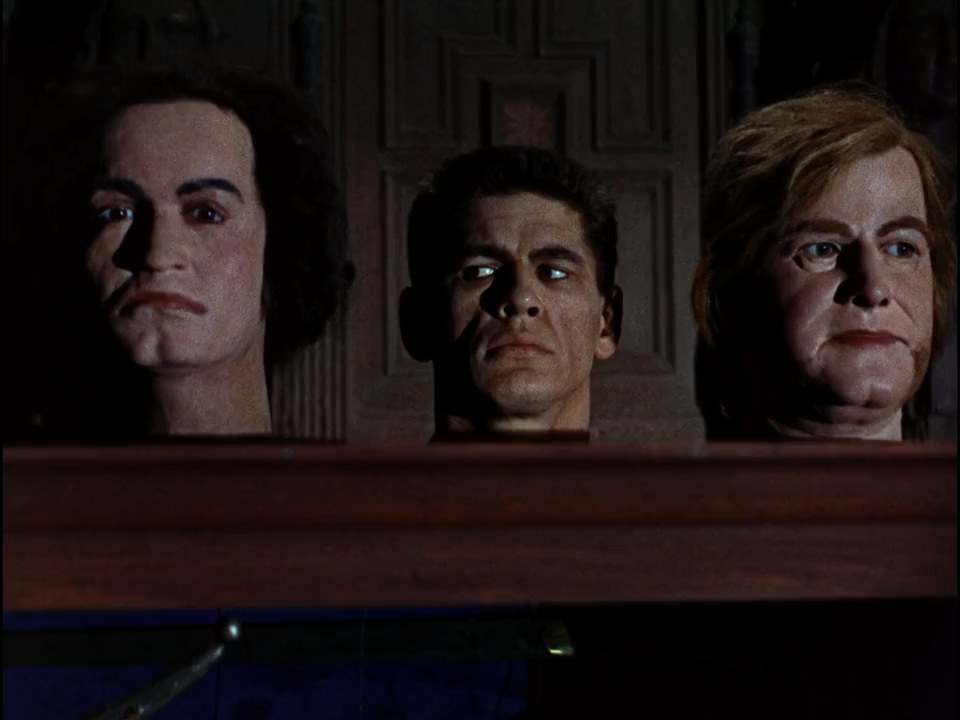
Brad reviews HOUSE OF WAX (1953), starring Vincent Price and a very young Charles Bronson!


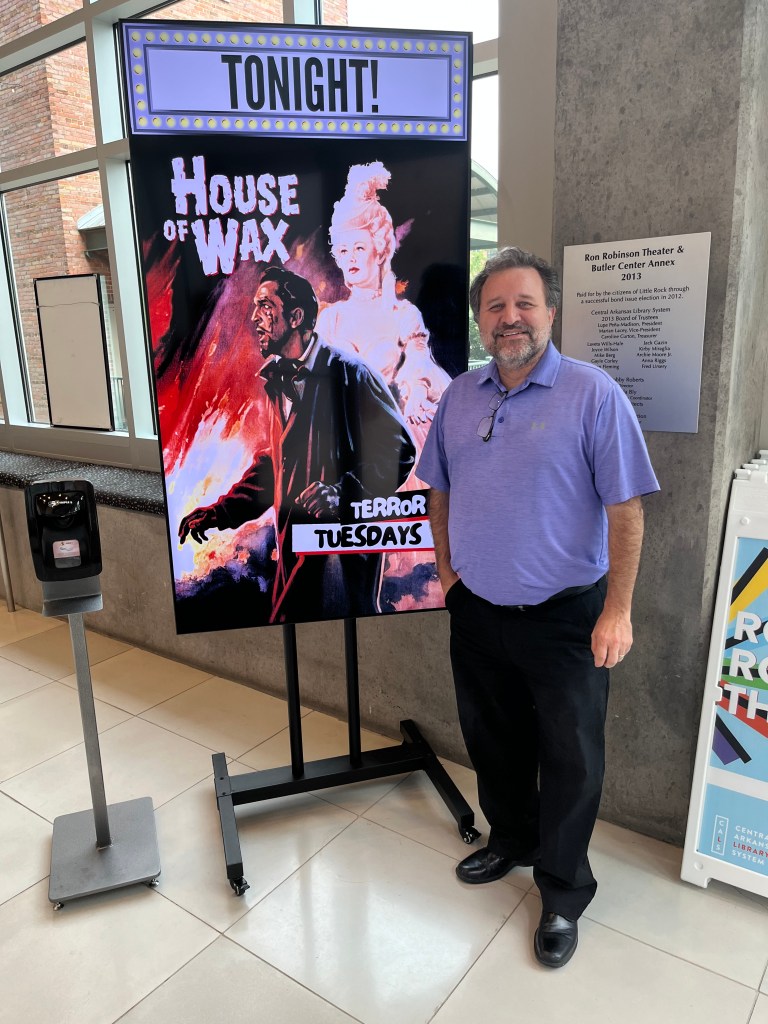
As my readers probably know, I’m one of actor Charles Bronson’s biggest fans, and I’m always on the lookout for venues showing his films on the big screen. In the summer of 2024, the Ron Robinson theatre in downtown Little Rock screened the 1953 Vincent Price classic, HOUSE OF WAX, which features Bronson in one of his earliest on-screen roles. It was so early, he was still being billed as Charles Buchinsky! Of course I wasn’t going to miss it! 

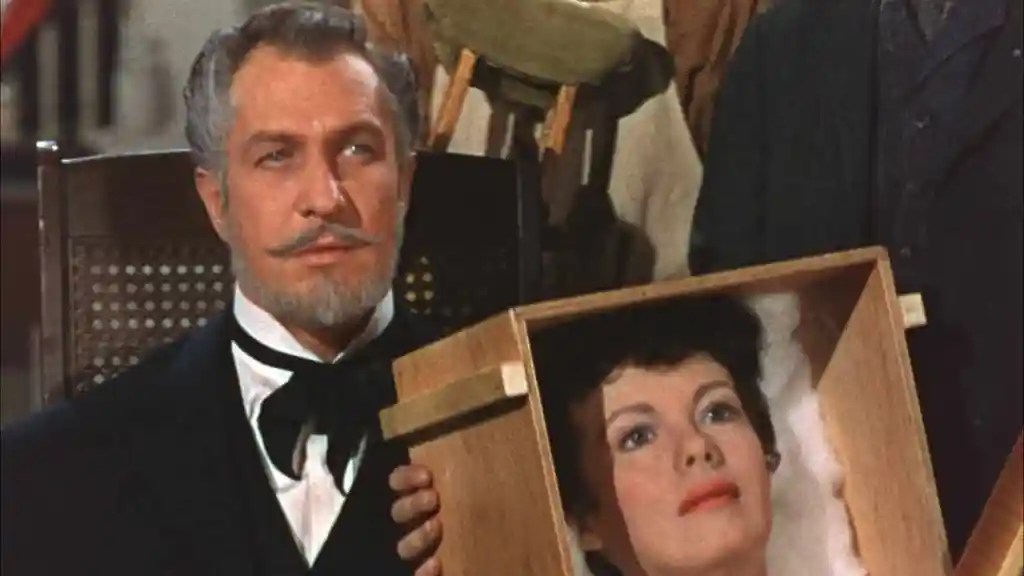
HOUSE OF WAX stars Vincent Price as Professor Henry Jarrod, a talented wax sculptor in early 20th-century New York City. Jarrod’s museum, which features historical figures that look amazingly lifelike, is his pride and joy. However, his business partner, Matthew Burke (Roy Roberts), has grown impatient with his investment and decides he wants to burn down the wax museum for the insurance money. When Jarrod refuses to take part in the fraudulent scheme, Burke sets the museum on fire, leaving Jarrod presumed dead in the process. But Jarrod survives, and with the help of his mute henchman Igor (Charles Bronson), returns to open a new wax museum with a dark and dangerous twist… his exhibits are eerily lifelike because they are real bodies coated in wax. As his former friend Sue Allen (Phyllis Kirk) and her boyfriend Scott Andrews (Paul Picerni) snoop around the house of wax, they begin to suspect that Jarrod has lost his mind and has descended into the mad depths of murder. Will they be able to expose Jarrod’s gruesome secret, or will they become his next exhibit?!!

Directed by André de Toth, HOUSE OF WAX is a landmark horror film, notable for its early use of 3D and Vincent Price’s excellent performance. The film’s strength lies in its undeniably creepy premise, that of turning human beings into wax sculptures, as well as Price’s ability to blend sophistication with menace. Jarrod is quite the sympathetic character at first, but he’s gradually revealed to be certifiably insane as a result of his near-death experience, and that transformation is quite scary. Young Charles Bronson’s portrayal of Igor is also quite freaky. His cold, blank, murderous stare says, “I’ll kill you and not even think twice about it.” His stalking of the heroine, played by Phyllis Kirk, in the dark, spooky house of wax near the end, is one of the true highlights of the movie. It’s also fun seeing Carolyn Jones (AKA Morticia Addams) show up as a spirited victim of the madman! Of course, you can’t help but notice the moments set up for the 3D effects, which come off as quite gimmicky at this point. I specifically took note of the movie’s use of paddleballs and leg kicks! I must admit, however, that these dated elements add to the overall charm of HOUSE OF WAX as a reminder of the olden days of 50’s Hollywood! 

Overall, in my humble opinion, HOUSE OF WAX is a classic scary movie. It’s a perfect treat for fans of vintage horror as well as a testament to the magnetic screen presence of Vincent Price!

The TSL Horror Grindhouse: Fear City (dir by Abel Ferrara)


Welcome to Manhattan in the mid-80s!

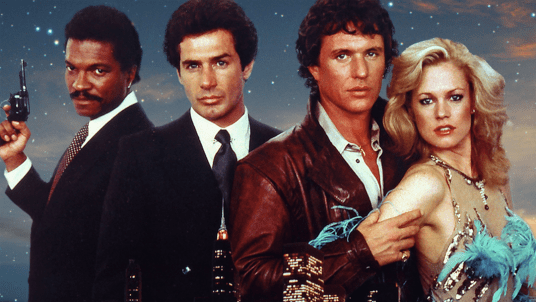
While self-righteous vice cop Al Wheeler (Billy Dee Williams) patrols the streets with the fury of an Old Testament prophet, men flock to seedy bars to watch women like Loretta (Melanie Griffith) dance and strip.  Mobsters like Carmine (Rossano Brazzi) control the streets while club owners like Mike (Michael V. Gazzo) and Frank (Joe Santos) try to do business and make enough money to keep things open.  Bookers like Nicky Parzeno (Jack Scalia) and Lou Goldstein (Jan Murray) compete to see who can place their girls in the most clubs.  Nicky’s best friend and business partner, Matt Rossi (Tom Berenger), is haunted by his violent past as a boxer and his failed relationship with the drug-addicted Loretta.

Meanwhile, a nameless man (John Foster) practices nude tai chai in his warehouse apartment and writes feverishly in his journals.  At night, he stalks the streets with a blade in his hand.  He targets strippers, attacking them as they try to get home from the club.  Honey (Ola Ray) is attacked on a subway platform.  Loretta’s girlfriend, Leila (Rae Dawn Chong), is attacked on the streets.  Obsessed with Loretta’s safety, Matt struggles with his own inner demons as he prepares for a final confrontation with the killer….

1985’s Fear City is another one of director Abel Ferrara’s heavily stylized fever dreams.  In typical Ferrara fashion, the plot is so sordid that one might be tempted to think that the film is meant to be a self-parody and the dialogue mixes profane insults with bizarrely philosophical asides.  As played by Billy Dee Williams, Al Wheeler is not just a cop who wants to clean up New York and Times Square.  Instead, he’s a seething soldier to traditional morality and one who is so intense that it’s something of a shock that he doesn’t just walk around New York shooting people for jaywalking.  Meanwhile, Tom Berenger’s Matt is a hulking brute who is haunted by the time he killed a man in the ring.  He knows what he’s capable of and it scares him but, in order to save Loretta and his business, he’s going to have to become that deadly boxer once again.  “I hate Matt Rossi because he’s arrogant,” Al Wheeler says through gritted teeth.  Meanwhile, Matt deals with his own issues by trashing his office and then leaving the mess for someone else to clean up.  I’m not sure what that was supposed to accomplish but it’s apparently something that Matt just has to do.

Abel Ferrara directed this film five years before King of New York and, in some ways, Fear City feels like a dry run for King of New York.  Both films are highly stylized and both present New York as being a neon-lit Hell where the rich and the poor come together in mutual self-loathing and where the criminals often have more of a code of honor than the cops who are trying to stop them.  Of course, King of New York had Christopher Walken’s magnetic performance as Frank White holding the film and its many storylines together.  Fear City doesn’t really have that.  Billy Dee Williams, Tom Berenger, Jack Scalia, and Melanie Griffith all give strong performance but none of their characters are really quite compelling or grounded enough to keep the film from spinning off into delirious excess.

In other words, Fear City is a mess but it’s one of those over-the-top, shamelessly sordid messes that you really can’t look away from.  There’s enough philosophical dialogue to confirm that, as with King of New York, Ferrara was shooting at something more than just a typical exploitation film.  Unlike King of New York, Ferrara doesn’t quite succeed in saying anything particularly deep about the human condition in Fear City.  But that’s okay.  It’s an entertainingly sordid film.

October Hacks: The Ranger (dir by Jenn Wexler)


In 2018’s The Ranger, Chloe Levine gives a strong performance as Chelsea, a young woman who grew up visiting a remote cabin that was owned by her uncle, a reclusive writer.  Chelsea has never recovered from the mysterious death of her uncle.  (She says he was attacked by a wolf.)  Now, she’s a 20-something with pink hair.  She’s dating a wannabe punk rocker named Garth (Grant Lahu) and hanging out with Garth’s friends and bandmates, Abe (Bubba Weiler), Jerk (Jeremy Pope), and Amber (Amanda Grace Benitez).

Garth makes most of his money by dealing a drug called echo.  When the cops attempt to bust the group at a punk club, Garth reacts by stabbing a policeman.  Garth, Chelsea, Abe, Jerk, and Amber pile into their van and go on the run.  Their plan is to lay low until the heat dies down.  I don’t know how they’re planning on doing that in a van that is covered with graffiti and which has the word “ECHO” written on the side of it.

The group decides to hide out at Chelsea’s old cabin, which happens to be in the middle of a national park.  At the park, they run into a stern-faced park ranger (Jeremy Holm).  The Ranger tells them that, if they break any of the state park rules, he’ll have to come after them.  Everyone except for Chelsea laughs at the Ranger and they basically dare him to come arrest them.  The Rangers warns them that it’s hunting season and they need to wear bright clothing so they don’t get accidentally get mistaken for wildlife and shot.  Amber points at her blue hair and says that’s bright enough.  Jerk gives the Ranger the finger.  Garth smirks.  Uhmm …. aren’t these people supposed to be trying to hide from the law?  If you’re trying to lay low and not draw attention to yourself, why would you needlessly antagonize the first authority figure that you meet?  For that matter, why doesn’t anyone in this film change they’re very identifiable clothes?  Why doesn’t anyone cut their hair or do anything else that people do when they’re on the run?  Chelsea is fairly likable and I sympathized with her frustration over the way everyone in the movie treated her family’s cabin.  But Chelsea’s friends?  They’re not only obnoxious but they’re stupid as well.

Upon reaching Chelsea’s cabin, Garth immediately lights a cigarette in the living room.  Chelsea asks him not to smoke in the cabin.  Garth replies that nobody’s around who is going to care.  (Uhmm…. Chelsea cares, you idiot.)  Later, Garth and Amber decide to start a bonfire in the middle of the woods.  Again, these people are just amazingly stupid.  Fortunately, just when you feel that you can’t take much more of them, the Ranger starts killing them off.

The Ranger starts out strong.  Both Chloe Levine and Jeremy Holm give strong performances and many of the kills scenes are genuinely creative.  That said, I ended up getting a little bored once the focus shifted from the Ranger stalking Chelsea’s friends to the Ranger holding Chelsea prisoner.  Once the Ranger starts talking (and talking and talking) about his motives, he becomes a far less interesting and menacing character.  The Ranger is at its best when it focuses on being a wilderness slasher.

In the end, this film reminded me of why I don’t go camping.  You never know what might be in the woods.

Made For TV Horror: Death Car On The Freeway (dir by Hal Needham)


I, for one, am tired of the stereotype that women cannot drive.

I’m a woman and I can tell you right now that I am an above average driver.  I’ve only had one major accident.  Admittedly, I did smash into a parked car but it was raining and I really couldn’t see that well because I was driving convertible and the window was fogged up.  Plus, whoever parked that car must have done a bad job and left it sitting out in the middle of the street.  For the record, my convertible flipped over on impact so the parked car did far more damage than I did.

Other than that, I usually manage to stop in time for red lights.  I’ve only driven through a few stop signs and that was just because I didn’t notice them. I’ve very rarely been given a speeding ticket.  Instead, the police have always been very polite about just giving me a warning.  And yes, it is true that I have trouble with curbs and turns and going in reverse and all that but I’ve seen plenty of men do the same thing.

The statistics show that, while women are involved in more accidents, the accidents are more likely to be fatal if a man is driving.  Men are also more prone to get upset and pull a gun during a road rage incident whereas women just give other drivers the finger.  Women are not inherently bad or dangerous drivers.  The one exception, at least down here in Texas, are middle-aged women who drive SUVs with faded Beto stickers.  You really don’t want to get stuck behind one of them in traffic.

I found myself thinking about the misogyny behind the “women-are-bad-drivers” stereotype as I watched 1979’s Death Car On The FreewayDeath Car On The Freeway features a madman who is so sick of women driving in Los Angeles that he starts using his Dodge van to cause them to have accidents.  We don’t actually see his face or really learn much about him.  What we do see are his black-gloved hands on his steering wheel, which is a nifty homage to the giallo genre.  (Giallo killers have a thing for black gloves.)  Whenever the driver does try to force a woman into a fatal accident, he pops in an 8-track of hyperactive fiddle music.  The fiddle has never sounded more menacing than it does in Death Car On The Freeway.  It’s almost like prog rock fiddling.  Imagine a country western fiddler who has just done a mountain of cocaine and you’ll get a feeling for this guy’s taste in music.

News reporter Shelley Hack thinks that the public has the right to know that there’s a man causing women to crash their cars.  Her ex-husband, played to smarmy perfection by George Hamilton, thinks that Shelley should quit her current job and come work with him.  Meanwhile, police inspector Peter Graves is concerned that the media going to start a panic and make it more difficult for him to track down the “Freeway Fiddler.”  (One gets the feeling that Graves feels this entire mess could have been avoided if women had never been allowed to drive in the first place.)  At one point, Hack meets with a defensive driver instructor and he’s played by the film’s director, Hal Needham.

Oh, how I love this film!  Seriously, it’s got car chases, car crashes, 70s outfits, George Hamilton, Peter Graves, and a genuinely frightening villain.  This is one of those films where you might be tempted to be dismissive.  Folks like Dinah Shore, Sid Haig, and Abe Vigoda show up in small roles, reminding you that this really is a 70s made-for-TV movie.  But then, that fiddling explodes on the soundtrack, that van starts tailgating someone, and Death Car On The Freeway suddenly becomes a cinematic nightmare.  It’s not a surprise that Hal Needham was able to stage some impressive driving stunts in Death Car On The Freeway.  That was Hal Needham’s thing.  But Needham also manages to craft a compelling and, at times, genuinely frightening film.  Anyone who has ever glanced into their rearview mirror and suddenly realized that another vehicle is following them will be able to relate to the fear of the Fiddler’s victims.

This is a great movie and a reminder that women are not the most dangerous drivers on the streets.  Unless, of course, they’re driving an SUV with a faded Beto sticker….

Horror Scenes That I Love: Neve Campbell in Scream


Today, the Shattered Lens wishes a happy birthday to actress Neve Campbell!

This horror scene that I love comes from 1996’s Scream.  In this scene, Sidney Prescott (Neve Campbell) explains to Ghostface why she doesn’t like horror movies.  Unfortunately, when you’re trapped in the middle of one, it really doesn’t matter whether you enjoy the genre or not.

October True Crime: Cries Unheard: The Donna Yaklich Story (dir by Armand Mastroianni)


In 1994’s Cries Unheard: The Donna Yaklich Story, Jaclyn Smith is miscast as Donna, a naive young woman who is charmed by a cop named Dennis Yaklich (Brad Johnson).  The film is told in flashback and, for some reason, it was decided to have Jaclyn Smith (who was 49 when this film aired) not only play the middle-aged Donna but also to play her where she was just supposed to be in her 30s and looking for a husband.

Anyway, Dennis starts out charming but he soon turns out to have some problems.  He is easily angered.  He spends all of his time lifting weights.  He’s possessive.  He pops pills and shoots up steroids and, by the end of the movie, he’s grown out one of those madman beards that crazy men in movies always end up with.  When Dennis discovers that Patty (Hillary Swank), his daughter from his first marriage, is pregnant, he flies into a rage.  Donna does some research and comes to the conclusion that Dennis murdered his first wife.  When she confronts Dennis with this, he just laughs.

Donna is too frightened to grab her toddler son and run away from home, despite the fact that Dennis is hardly ever at home.  (In fairness, Dennis is a cop so he would definitely have the resources to track her down if she did leave.)  Instead, Donna hires two no-good trailer park boys to shoot Dennis when he comes home from work.  Dennis dies in his driveway, still holding the toy truck that he hoped to give his son.  It’s also raining when he dies because that’s the type of movie this is.

Donna made the mistake of hiring the dumbest people possible to carry out the crime and soon, she is getting arrested and being put on trial for murder.  Later, she tells her story to her now-teenage son, Denny (David Lascher).  Denny is angry because he had to grow up without a dad but he still assures his mother that she’s a wonderful person and the he can’t wait to pick her up from prison in 40 years.

Watching Cries Unheard was an odd experience for me.  By all logic, I should have been on Donna’s side but I found myself getting pretty annoyed with her.  Some of it was because Jaclyn Smith was totally miscast in the role.  Donna is supposed to be naive and meek and easily gaslit by her husband but Jaclyn Smith seemed as if she had just returned from a Paris shopping trip.  The other problem is that the film, which was heavy-handed even by the standards of a made-for-TV movie from the 90s, tried too hard to pretend as if hiring a hitman is something that anyone would have done in Donna’s situation.  The film ends with a Jaclyn Smith voice-over in which she points out that husbands who hire hitmen to kill their wives usually get a shorter sentence than women who do it and I really wanted to throw a shoe at the TV.  Regardless of the circumstances, hiring a hitman is an extreme step to take.  Most people will go through their entire life without ever hiring a hitman.  Most people don’t even know anyone who they could hire to be a hitman.  So, don’t sit there and act like this is the equivalent of women not getting paid as much men for the same amount of work.  I did a little research and discovered that this film was based on interviews that Donna gave in prison.  Dennis’s other daughter– who was not portrayed in the film — called the film a complete fabrication.

I should note that this film was directed by Armand Mastroianni, who also directed some of the best episodes of Friday the 13th: The Series and the classic slasher film He Knows You’re Alone.  (That film was also Tom Hanks’s feature debut.)  His direction embraces the melodrama but it can’t overcome a weak script and a miscast lead.

Horror Film Review: It Hatched (dir by Elvar Gunnarsson)


When I was growing up, I was fascinated by Iceland.

I didn’t really know much about Iceland, other than it was a sparsely-populated island that was known for its volcanic eruptions.  I think the main source of my fascination was the name.  Iceland made me imagine a country that was totally and completely covered in ice.  Of course, I’ve since learned that wasn’t true at all.  Just as Greenland is not entirely green, Iceland is not made of ice.  There’s a legend that the original settlers of the island picked the name “Iceland” as a way to keep other people from coming.  The legend probably isn’t true but still, that’s the type of attitude that I can respect.

The main reason that I watched the 2021 film, It Hatched, was because it’s an Icelandic film.  Iceland actually has a very busy film industry but sadly, few Icelandic films seem to make it over to the United States and, whenever we do get a good one, it’s promptly remade as a Liam Neeson revenge flick.  When I saw that It Hatched was not only an Icelandic film but that it was streaming for free on Tubi, there was no way I could resist watching.

The film tells the story of Petur (Gunnar Kristinsson) and Mira (Vivian Ólafsdóttir), a married couple who are living abroad when we first meet them.  Mira is German while Petur is Icelandic.  Petur has convinced Mira to return with him to Iceland, where he hopes to open a bed-and-breakfast.  Mira is not happy when she discovers that the house is sitting in middle of nowhere and that the nearest store is several miles away.  Petur is convinced that the location will bring a lot of bird watchers who will need a place to stay.  Mira is not sure and, as soon as she looks around the cluttered and messy house that Petur has purchased, you can see her mentally trying to figure out the quickest way to return to Germany.

Mira is not happy when Petur casually mentions that he had found a hole in the basement floor and he’s going to have to call someone to check it out.  Of course, by the time that Petur tells Mira this, she is suffering from morning sickness despite Petur having earlier been told that, with his low sperm count, it was doubtful he would ever get Mira pregnant.  Soon, Mira is giving birth to an egg and that egg is hatching to reveal a baby.  Petur has visions of a naked demon that lives in the hole and starts to lose his mind….

On the plus side, the demon in the hole is truly frightening and the film does a good job of capturing the feeling of being isolated from the rest of the world.  I found it somewhat interesting that, while Petur and Mira spoke to each other in English, all of the demons spoke Icelandic.  On the negative side, the film’s action moved a bit too slowly for its own good and Petur was an amazingly unsympathetic character.  Even before the character started to lose his grip on reality, I was already sick of Petur wandering around with the same dumbass expression on his face.  Towards the end of the film, Petur goes crazy and that would have been effective if not for the fact that Gunnar Kristinsson both looks and sounds like Charlie Day.  As a result, this film felt like a strange episode of It’s Always Sunny In Philadelphia.

Yeah, something like that.

It’s a shame.  It was not a bad premise but the execution was lacking.  (For the record, I am aware that the film is listed as being a “horror-comedy.”  There were definitely some laughs in the film but none of them seemed to be intentional.)  That said, I look forward to watching more Icelandic films in the future.

4 Shots From Horror History: The 1910s


This October, I’m going to be doing something a little bit different with my contribution to 4 Shots From 4 Films.  I’m going to be taking a little chronological tour of the history of horror cinema, moving from decade to decade.

Today, we take a look at the 1910’s.

4 Shots From 4 Horror Films

Frankenstein (1910, dir by J. Searle Dawley)

Frankenstein (1910, dir by J. Searle Dawley)

Dr. Jekyll and Mr. Hyde (1913, dir by Herbert Brenon)

Dr. Jekyll and Mr. Hyde (1913, dir by Herbert Brenon)

The Student of Prague (1913, dir by Stellan Rye and Paul Wegener)

The Student of Prague (1913, dir by Stellan Rye and Paul Wegener)

Eerie Tales (1919, dir by Richard Oswald)

Eerie Tales (1919, dir by Richard Oswald)