The Indiana Film Journalists Association have announced their picks for the best of 2022! And here they are:
BEST FILM
After Yang (FINALIST)
Aftersun
All Quiet on the Western Front
Ambulance
The Banshees of Inisherin (FINALIST)
The Batman
Decision to Leave (FINALIST)
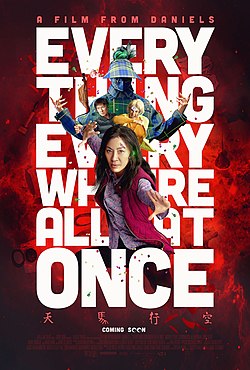
Everything Everywhere All At Once (WINNER)
The Fabelmans
Glass Onion: A Knives Out Mystery (FINALIST)
Halloween Ends
Happening
Marcel the Shell With Shoes On (FINALIST)
The Northman
RRR (RUNNER UP)
TÁR (FINALIST)
Till
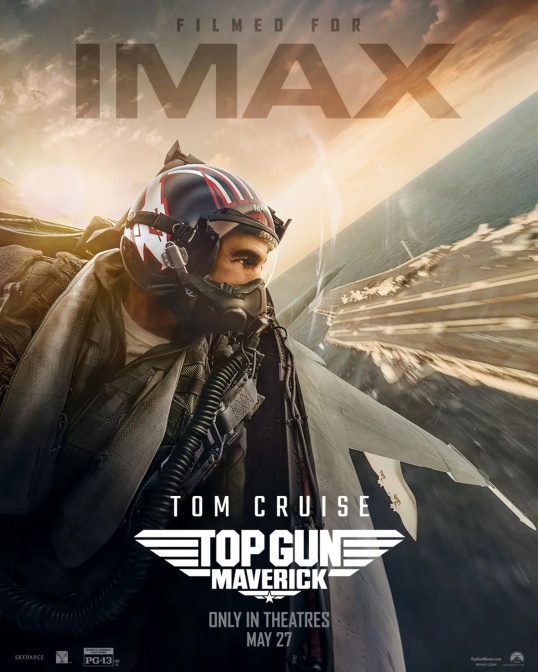
Top Gun: Maverick (FINALIST)
The Whale
Women Talking (FINALIST)
BEST FOREIGN LANGUAGE FILM
All Quiet on the Western Front
Broker
Decision to Leave (RUNNER UP)
EO
Happening
Hit the Road
RRR (WINNER)
You Won’t Be Alone
BEST ANIMATED FEATURE
Apollo 10 ½: A Space Age Childhood
The Bad Guys
The House
Mad God
Marcel the Shell With Shoes On (WINNER)
Guillermo del Toro’s Pinocchio (RUNNER UP)
Turning Red
Wendell & Wild
BEST DOCUMENTARY
Aftershock
All the Beauty and the Bloodshed
Bad Axe (RUNNER UP)
Chop & Steele
Fire of Love
I Didn’t See You There (WINNER)
Navalny
BEST ORIGINAL SCREENPLAY
Alex Garland – Men
Todd Field – TÁR (WINNER)
John Patton Ford – Emily the Criminal
Jeong Seo-kyong and Park Chan-wook – Decision to Leave
Ari Katcher and Ryan Welch – On the Count of Three
Dan Kwan and Daniel Scheinert – Everything Everywhere All At Once
Martin McDonagh – The Banshees of Inisherin (RUNNER UP)
Cooper Raiff – Cha Cha Real Smooth
Seth Reiss (screenplay) and Will Tracy (screenplay / story) – The Menu
Steven Spielberg and Tony Kushner – The Fabelmans
Ti West – X
BEST ADAPTED SCREENPLAY
Noah Baumbach – White Noise
Dean Fleischer Camp (screenplay / story), Jenny Slate (screenplay / story), Nick Paley (screenplay / story), and Elisabeth Holm (story) – Marcel the Shell With Shoes On
Samuel D. Hunter – The Whale
Rian Johnson – Glass Onion: A Knives Out Mystery
David Kajganich – Bones and All
Kogonada – After Yang (RUNNER UP)
Sarah Polley – Women Talking (WINNER)
Michael Reilly, Keith Beauchamp and Chinonye Chukwu – Till
Marcia Romano and Audrey Diwan – Happening
Sjón and Robert Eggers – The Northman
BEST DIRECTOR
Darren Aronofsky – The Whale
Michael Bay – Ambulance
Dean Fleischer Camp – Marcel the Shell With Shoes On
Audrey Diwan – Happening
Robert Eggers – The Northman
Todd Field – TÁR (WINNER)
Alex Garland – Men
Rian Johnson – Glass Onion: A Knives Out Mystery
Kogonada – After Yang
Dan Kwan and Daniel Scheinert – Everything Everywhere All At Once (RUNNER UP)
Martin McDonagh – The Banshees of Inisherin
Park Chan-wook – Decision to Leave
Jordan Peele – Nope
Sarah Polley – Women Talking
Gina Prince-Bythewood – The Woman King
S.S. Rajamouli – RRR
Matt Reeves – The Batman
Steven Soderbergh – KIMI
Steven Spielberg – The Fabelmans
Charlotte Wells – Aftersun
Ti West – X
BEST LEAD PERFORMANCE
Cate Blanchett – TÁR (WINNER)
John Boyega – Breaking
Jessie Buckley – Men
Austin Butler – Elvis
Daniel Craig – Glass Onion: A Knives Out Mystery
Tom Cruise – Top Gun: Maverick
Viola Davis – The Woman King
Danielle Deadwyler – Till
Colin Farrell – After Yang
Colin Farrell – The Banshees of Inisherin
Brendan Fraser – The Whale
Mia Goth – Pearl
Mia Goth – X
Jake Gyllenhaal – Ambulance
Rebecca Hall – Resurrection
Caleb Landry Jones – Nitram
Rory Kinnear – Men
Zoë Kravitz – KIMI
Paul Mescal – Aftersun
Aubrey Plaza – Emily the Criminal
Florence Pugh – The Wonder
N.T. Rama Rao, Jr. – RRR
Adam Sandler – Hustle
Alexander Skarsgård – The Northman
Ram Charan Teja – RRR
Anamaria Vartolomei – Happening
Michelle Yeoh – Everything Everywhere All At Once (RUNNER UP)
BEST SUPPORTING PERFORMANCE
Christopher Abbott – On the Count of Three
Jessie Buckley – Women Talking
Hong Chau – The Whale
Kerry Condon – The Banshees of Inisherin
Frankie Corio – Aftersun
Essie Davis – Nitram
Judy Davis – Nitram
Colin Farrell – The Batman
Ralph Fiennes – The Menu
Brendan Gleeson – The Banshees of Inisherin (RUNNER UP)
Stephanie Hsu – Everything Everywhere All At Once
Dakota Johnson – Cha Cha Real Smooth
Nicole Kidman – The Northman
Lashana Lynch – The Woman King
Thuso Mbedu – The Woman King
Janelle Monáe – Glass Onion: A Knives Out Mystery
Justin H. Min – After Yang
Ke Huy Quan – Everything Everywhere All At Once (WINNER)
Tim Roth – Resurrection
Sadie Sink – The Whale
David Howard Thornton – Terrifier 2
Michelle Williams – The Fabelmans
BEST VOCAL / MOTION-CAPTURE PERFORMANCE
Richard Ayoade – The Bad Guys
David Bradley – Guillermo del Toro’s Pinocchio
Rosalie Chiang – Turning Red
James Hong – Wendell & Wild
Marc Maron – The Bad Guys
Isabella Rossellini – Marcel the Shell With Shoes On (RUNNER UP)
J.K. Simmons – Glorious
Jenny Slate – Marcel the Shell With Shoes On (WINNER)
Christoph Waltz – Guillermo del Toro’s Pinocchio
BEST ENSEMBLE ACTING
After Yang
Broker
The Duke
Everything Everywhere All At Once
Flux Gourmet
Glass Onion: A Knives Out Mystery (RUNNER UP)
Hit the Road
The Northman
Soft & Quiet
What We Do Next
The Woman King
Women Talking (WINNER)
BEST MUSICAL SCORE
Michael Abels – Nope
Lorne Balfe – Ambulance
Geoff Barrow and Ben Salisbury – Men
Volker Bertelmann – All Quiet on the Western Front
Terence Blanchard – The Woman King
Carter Burwell – The Banshees of Inisherin
Robin Carolan and Sebastian Gainsborough – The Northman
Dan Deacon – Hustle
Disasterpeace – Marcel the Shell With Shoes On
Danny Elfman – White Noise
Michael Giacchino – The Batman (WINNER)
Ludwig Göransson – Turning Red
Hildur Guðnadóttir – Women Talking
Jo Yeong-wook – Decision to Leave
Nathan Johnson – Glass Onion: A Knives Out Mystery
M.M. Keeravani – RRR (RUNNER UP)
Cliff Martinez – KIMI
Aska Matsumiya and Ryuichi Sakamoto – After Yang
Trent Reznor and Atticus Ross – Bones and All
Rob Simonsen – The Whale
Son Lux – Everything Everywhere All At Once
John Williams – The Fabelmans
BEST EDITING
Doug Brandt, Pietro Scalia and Calvin Wimmer – Ambulance
Tom Costain, Brian Robinson and Keiko Deguchi – Hustle
Louise Ford – The Northman
Eddie Hamilton – Top Gun: Maverick
Michael Kahn and Sarah Broshar – The Fabelmans
Kim Sang-bum – Decision to Leave (RUNNER UP)
Kogonada – After Yang
Blair McClendon – Aftersun
Joe Murphy – Barbarian
Akkineni Sreekar Prasad – RRR
Paul Rogers – Everything Everywhere All At Once (WINNER)
Steven Soderbergh – KIMI
Matt Villa and Jonathan Redmond – Elvis
Monika Willi – TÁR
BEST CINEMATOGRAPHY
Jarin Blaschke – The Northman
Matias Boucard – Athena
Russell Carpenter – Avatar: The Way of Water
Roberto De Angelis – Ambulance
Michal Dymek – EO
Greig Fraser – The Batman
James Friend – All Quiet on the Western Front
Rob Hardy – Men
Florian Hoffmeister – TÁR
Janusz Kaminski – The Fabelmans
Arseni Khatchaturan – Bones and All
Kim Ji-yong – Decision to Leave
KK Senthil Kumar – RRR
Matthew Libatique – Don’t Worry Darling
Benjamin Loeb – After Yang
Claudio Miranda – Top Gun: Maverick (RUNNER UP)
Larkin Seiple – Everything Everywhere All At Once
Laurent Tangy – Happening
Hoyte Van Hoytema – Nope (WINNER)
Mandy Walker – Elvis
BEST STUNT / MOVEMENT CHOREOGRAPHY
Robert Alonzo (supervising stunt coordinator) and Daniel Arrias (fight co-coordinator / trainer) – The Batman
Jón Viðar Arnþórsson (stunt coordinator) and C.C. Smiff (stunt coordinator) – The Northman
Vicky Arora (action design and weapons trainer / stunt coordinator) and Raicho Vasilev (fight choreographer / stunt coordinator), and Prem Rakshith (dance choreographer) – RRR (WINNER)
Timothy Eulich (stunt coordinator), Andy Le (fight choreographer) and Brian Le (fight choreographer) – Everything Everywhere All At Once
Mike Gunther (stunt coordinator) – Ambulance
Daniel Hernandez (stunt coordinator / fight coordinator), Grant Powell (stunt coordinator), and Jénel Stevens (fight choreographer) – The Woman King (RUNNER UP)
Kevin LaRosa, Jr. (aerial coordinator) and Casey O’Neill (stunt coordinator) – Top Gun: Maverick
Steven McMichael (stunt coordinator) – Prey
David Neumann (movement / dance choreographer) – White Noise
Celia Rowlson-Hall (dance choreographer) – After Yang
BREAKOUT OF THE YEAR
Hanna Bergholm (director) – Hatching
Jerrod Carmichael (director / performer) – On the Count of Three
Frankie Corio (performer) – Aftersun
Beth de Araújo (writer-director) – Soft & Quiet
Mariama Diallo (writer-director) – Master
Audrey Diwan (director / co-writer) – Happening
John Patton Ford (writer-director) – Emily the Criminal
Amber Midthunder (performer) – Prey
Nick Richey (writer-director) – 1-800-HOT-NITE
Jane Schoenbrun (writer-director) – We’re All Going to the World’s Fair (RUNNER UP)
Domee Shi (director / co-writer) – Turning Red
Charlotte Wells (writer-director) – Aftersun (WINNER)
Dallas Dupree Young (performer) – 1-800-HOT-NITE
ORIGINAL VISION
Everything Everywhere All At Once (WINNER)
Flux Gourmet
Glorious
The House
Mad God
Marcel the Shell With Shoes On (RUNNER UP)
The Northman
Strawberry Mansion
We’re All Going to the World’s Fair