The trailer for this upcoming Netflix spy thriller had the misfortune to drop as the same time as the trailer for the new Mission: Impossible film. Needless to say, The Gray Man has been a bit overshadowed, despite being directed by the Russo Brothers and starring Ryan Gosling, Chris Evans, and Ana de Armas.
As for the trailer itself, it looks like a standard Netflix action flick but, if you’ve seen The Iceman, you know that Chris Evans can be an entertainingly eccentric villain. And I think the Russo Brothers do have the potential to be a force outside of the MCU, even if Cherry did fall a bit flat. So, we’ll see!
The 2nd trailer for Thor: Love and Thunder has been dropped! In this trailer, we get to see a bit more of Thor’s reunion with Jane and we also meet the film’s villain, a creepy-looking god slayer who sounds a lot like Christian Bale.
One thing I’ve noticed about the Thor films is that someone is always trying to destroy Asgard and kill all of the Gods. Maybe the Asgardians need to work on their image or something. Invest in foreign trade. Export a really funny television sitcom. Just do something that will give the rest of the universe something positive to associate with Asgard. When America was getting a bad reputation, it produced its own version of a British show called The Office and totally won the hearts of the world. Maybe Asgard needs its own Steve Carell.
Today is the birthday of German filmmaker Tom Tykwer. Tykwer directed one of my favorite films of all time, 1998’s Run, Lola, Run! As such, it only seems appropriate that today’s scene that I love should come from that film.
In this scene, Lola shows us all how to win at roulette. Do not try this in Vegas.
4 Or More Shots From 4 Or More Films is just what it says it is, 4 shots from 4 of our favorite films. As opposed to the reviews and recaps that we usually post, 4 Shots From 4 Films lets the visuals do the talking!
Today, the Shattered Lens wishes a happy birthday to director Ryan Coogler! With just three feature films and a handful of shorts, Ryan Coogler has made a star out of Michael B. Jordan, redeemed the acting career of Sylvester Stallone, introduced the rest of the world to Wakanda, and changed the way that film viewers talk about race in cinema. With all that in mind, it’s time for….
4 Shots from 4 Ryan Coogler Films
Locks (2009, dir by Ryan Coogler, DP: Francisco Kosterlitz)
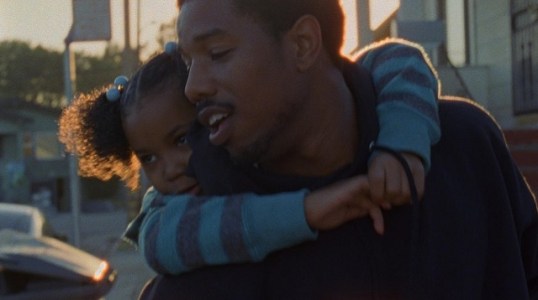
Fruitvale Station (2013, dir by Ryan Coogler, DP: Rachel Morrison)
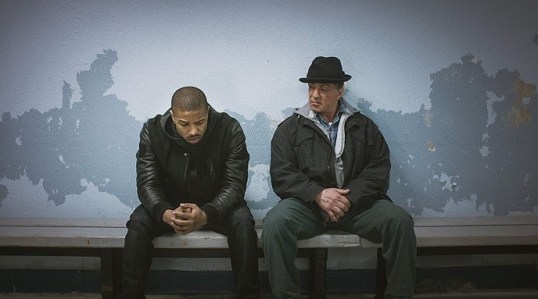
Creed (2015, dir by Ryan Coogler, DP: Maryse Alberti)
Black Panther (2018, dir by Ryan Coogler, DP: Rachel Morrison)
115 years ago today, Laurence Olivier was born in Surrey. The son of a clergyman, Olivier would go on to become one of the greatest stage actors of the 20th Century. He would also have a distinguished film career, one that led to him frequently being described as being the world’s greatest living actor.
He is perhaps best-known for his Shakespearean performances. He won multiple Oscars for directing and starring in 1948’s Hamlet. Before his turn in Hamlet, he was similarly nominated for his film version of Henry V. That said, for me, his best cinematic Shakespearean performance was as Richard III in the 1953 film of the same title.
Though acclaimed, Richard III was not quite the Oscar favorite that Olivier’s previous two adaptations of Shakespeare had been. Henry V was released at a time when its portrayal of a determined British ruler could be viewed as a metaphor for the UK’s role in the second world war. Hamlet was released at a time when the world was still rebuilding and trying to adjust to the new atomic age and its dark, noirish style captured those anxieties. Richard III was released in the 50s, at a time when Americans perhaps weren’t as receptive to films that suggested that leaders should not be trusted. As a result, Richard III received only one nomination, for Olivier’s performance in the title role.
Today, in honor of his birthday, here is a scene that I love from 1953’s Richard III:
With the Cannes Film Festival underway, I have been watching some of the past winners of the prestigious Palme d’Or. On Thursday night, Jeff and I watched the winner of the 1970 winner of the Grand Prix (as the Palme was known at the time), Robert Altman’s M*A*S*H.
There are, of course, three versions of M*A*S*H. All three of them deal with the same basic story of Dr. Hawkeye Pierce and his attempts to maintain his sanity while serving as a combat surgeon at the 4077th Mobile Army Surgical Hospital during the Korean war. All three of them mix comedy with the tragedy of war. However, each one of them takes their own unique approach to the material.
The one that everyone immediately thinks of is the old television series, which ran for 11 seasons and which can be found on Hulu and on several of the retro stations. The television series starred Alan Alda as Hawkeye. I’ve watched a handful of episodes and, while the episodes that I’ve seen were undeniably well-acted and well-written and they all had their heart in the right place, the show’s deification of Hawkeye can get to be a bit much. Not only is Hawkeye the best surgeon at the 4077th, he’s apparently the best surgeon in all of Korea. In fact, he may be the best surgeon on the entire planet. Not a single thing happens in the camp unless Hawkeye is somehow involved. When a nurse is killed by a landmine in one episode, the focus is not on the other nurses but instead on how Hawkeye feels about it. When bombs are falling too close to the camp, the focus is again only on Hawkeye and how much he hates the war. If you didn’t already know that he hated the war, Hawkeye will let you know. Wish Hawkeye a good morning and he’ll yell at you about how many people are going to be wounder by the end of the day. Even when one agrees with Hawkeye, the character’s self-righteousness can be a bit much.
Less well-known is the first version of M*A*S*H, a short and episodic novel that was published in 1968. The novel was written by Dr. Richard Hornberger, who actually had served in Korea at a M*A*S*H unit and who reportedly based Hawkeye on himself. The book is a rather breezy affair. Reading it, one can definitely tell that it was inspired by someone telling Hornberger, “Your stories about Korea are so funny and interesting, you should write them down!” The book avoids politics, reserving most of its ire for military red tape. Hornberger was a Republican who so disliked Alan Alda’s interpretation of Hawkeye that, when he wrote a sequel to M*A*S*H, he included a scene in which Hawkeye talked about how much he enjoyed beating up hippies.
And then there’s the version that came in between the book and the television series, the 1970 film from Robert Altman. The film retains the book’s episodic structure while also throwing in the anti-war politics that would define the television series. (Though the film was set in the 50s, Altman purposefully made no attempt to be historically accurate because he wanted it to be clear that this film was more about Vietnam than Korea.) From its opening, the film announces its outlook, with shots of helicopters carrying severely wounded (possibly dead) soldiers to the camp while a song called Suicide is Painless plays on the soundtrack. The song was written by director Robert Altman’s fourteen year-old son, Mike. Reportedly, it took Mike five minutes to come up with the lyrics. When the instrumental version of the song was later used as the theme song for the television series, Mike Altman made over a million dollars in royalties.
The film opens with Hawkeye Pierce (Donald Sutherland) and Duke Forrest (Tom Skerritt) arriving at the 4077th MASH in a stolen jeep and it ends with them getting sent home in the same jeep. Though Duke is set up to be a major character, he soon takes a backseat to another surgeon, the unfortunately nicknamed Trapper John (Elliott Gould). Much as with the television series, the movie centers around Hawkeye and Trapper John’s antics. When they’re not in the operating room, they’re drinking, carousing, and playing pranks that are far more mean-spirited than anything the television versions of the characters would have ever done. (Indeed, the book and movie versions of Hawkeye probably would have hated Alan Alda’s Hawkeye.) Unlike the television version of Hawkeye, the film’s Hawkeye is not the best surgeon in Korea. In fact, he’s not even the best surgeon at the 4077th. (That honor goes to Trapper.) Instead, he’s just one of many doctors on staff. They’re rotated in and then, at the end of their tour, they’re rotated out. Hawkeye loses as many patients as he saves. The film’s doctors are not miracle workers, nor are they crusaders. Instead, they are overworked, neurotic, often exhausted, and frequently bored whenever there aren’t any wounded to deal with. The film emphasizes that the doctors are as professional inside the Operating Room as they’re rambunctious outside of it. Unlike the television series, Hawkeye doesn’t joke while working. He’s usually too busy trying to stop his patients from bleeding to death to tell jokes or to complain about the war that brought them to the OR.
Indeed, the film version of M*A*S*H communicates its anti-war message not through indignant speeches but instead through bloody imagery. The operating room scenes don’t shy away from showing the ugliness of war and they are occasionally so visceral that they almost seem to shame the audience for have laughed just a few minutes earlier. One of the film’s more famous (and controversial) sequences features Hawkeye driving Frank Burns (Robert Duvall) to insanity by crudely taunting him about his affair with head nurse Margaret Houlihan (Sally Kellerman). Burns attacks Hawkeye, a response that actually seems rather justified even if it is played for laughs. A scene of Burns being driven out of the camp in straitjacket is followed by a close-up of a geyser of blood erupting from a wounded soldier’s throat. It’s a jarring transition but one that makes a stronger anti-war statement than any self-righteous monologue would have. While Hawkeye and Trapper are taunting Burns and Margaret, soldiers are still being sent off to die.
The humor in M*A*S*H is often brutally misogynistic. Margaret is described as being “a damn good nurse” but is continually humiliated because she believes in maintaining military discipline. One can disagree with her emphasis on following all of the proper regulations while also realizing the Hawkeye and Trapper’s treatment of her is unreasonably cruel. The scene where Trapper and Hawkeye expose her while she’s taking a shower is especially difficult to watch and there’s no way to justify their actions. It’s frat boy humor, the type of stuff that you would expect from a bunch of former college football players, which is what we’re told Hawkeye and Trapper are. (That, of course, is another huge difference between the film and television versions of the characters.) That said, it’s debatable whether or not were supposed to find either Hawkeye or Trapper to be heroic or even likable. As a director, Robert Altman shied away from making films with unambiguous heroes or villains. Just as Margaret could be a “damn good nurse” and a “regular army clown” at the same time, Hawkeye can be both a dedicated doctor and a bit of a jerk.
After 90 minutes of bloody operating room scenes and Trapper and Hawkeye making crude jokes, M*A*S*H suddenly becomes a sports film as the the 4077th plays a football game against their rivals, the 325th Evac Hospital. The change of tone can be a bit jarring but it’s perhaps the most important sequence in the film. For a few hours, the doctors bring “the American way of life” to Korea and the end result is a game that’s played for money and which is only won through cheating and deception. (Future blaxploitation star Fred Williamson made his film debut as the ringer who the 4077th recruits for the game.) For all of the broad comedy of the game, it’s followed by a shot of the doctors playing poker while a dead soldier is transported out of the camp, wrapped in a white sheet. Football may provided a distraction. The money may have provided an incentive. But the war continued and people still died.
Much of M*A*S*H‘s humor has aged terribly but the performances still hold up and the anti-war message is potent today. Though Sutherland and Gould are undeniably the stars of the film, M*A*S*H is a true ensemble film, full of the overlapping dialogue and the small character performances that Robert Altman’s films were known for. One reason why the film works is because it is an immersive experience, the viewer truly does feel as if they’ve been dropped in the middle of an operating field hospital. Though Hawkeye and Trapper may be at the center of the action, every character, from the camp’s colonel to the lowliest private, seems to have their own story playing out. This a film where paying attention to the little things happening in the background is often more rewarding than paying attention to the main action. I particularly liked the performances of David Arkin as the obsequies Staff Sergeant Vollmer and Bud Cort as Pvt. Warren Boone. Boone, especially, seems to have an interesting story going on in the background. The viewer just has to keep an eye out for him. Also be sure to keep an eye out for Rene Auberjonois, who reportedly improvised one of the film’s best-known lines when, after Margaret demands to know how Hawkeye reached a position of authority in the army medical corps, he deadpanned, “He was drafted.”
One of the first major studio films to be openly critical of the military and the war in Vietnam, M*A*S*H won the Palme d’Or, defeating films like Investigation of a Citizen Above Suspicion and The Strawberry Statement. Unlike many Palme winners, it was also a box office success in the United States. Though controversial, it received an Oscar nomination for Best Picture. However, unlike the Cannes jury, the Academy decided to honor a different film about war, Patton.
Three Thousand Years of Longing, George Miller’s first film since Mad Max: Fury Road, made quite a splash when it premiered on Cannes yesterday. A lot of people said that this film, which features Tilda Swinton and Idris Elba, was the first legitimate Oscar contender to come out of Cannes.
We’ll have to wait to find out if that’s true or not but the trailer is certainly intriguing.
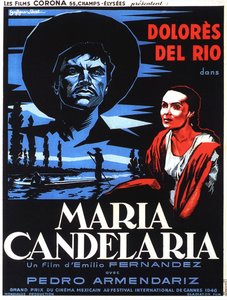
The very first Cannes Film Festival was held in 1946. (The festival was originally schedule to debut in 1939 but the start of World War II put those plans on hold.) 45 films from 18 nations were entered into competition and, when it came time to announce that winner of the Grand Prix (which later became known as the Palme d’Or), the result was a tie. With the number of films competing, that’s not surprising. In fact, there have been many ties over the history of Cannes. What is surprising is that the tie was between a total of 11 films: Brief Encounter, Hets, The Last Chance, The Lost Weekend, Men Without Wings, Neecha Nagar, Red Meadows, Rome Open City, La symphonie pastorale, Velikiy perelom, and Maria Candelaria.
Last night, Jeff and I watched Maria Candelaria on YouTube.
Directed by Emilo Fernandez (who many consider to be the father of the Mexican film industry), the majority of Maria Candelaria takes place in Mexico in 1909, shortly before the start of the Mexican Revolution. Delores del Rio plays Maria, an indigenous woman who is shunned by the people of her village because her mother was a prostitute. The corrupt and greedy store owner, Don Damian (Miguel Iclan), is entranced by Maria’s beauty and wants her for himself. However, Maria loves a poor but honest farmer named Lorenzo (Pedro Armendariz). Though Maria and Lorenzo want to get married, they find their efforts thwarted at every turn by the jealous Don Damian, with Damien going so far as to shoot the pig that Lorenzo was hoping to be able to sell to have the money to not only marry Maria but also to pay off a long-standing debt that he owed Damian. When Maria grows ill, Damian spitefully refuses to sell Lorenzo the medicine that she needs. When Lorenzo breaks into the store and attempts to steal it, he’s sent to prison. Now desperately needing money to get Lorenzo out of prison, Maria poses for a well-meaning painter (Alberto Galan). When the villagers find out that Maria is posing, a chain of events are unleashed that lead to tragedy.
After reading all of that, you may be wondering how many bad things can happen to one well-meaning and loving couple. Nothing seems to go right for Maria and Lorenzo over the course of this film but, at the same time, their love never falters. They remain innocent, regardless of how much they are wronged by the greedy Damian and judged by the hypocritical villagers. Though the film focuses more on melodrama and romance than politics, the pro-revolutionary message is easy to see. The Mexican Revolution, the film argues, had to be fought for the honor of people like Maria and Lorenzo.
It’s all a bit heavy-handed but it’s effectively directed and acted and it’s hard not to get caught up in a film that is so unapologetic about embracing the melodrama. Delores del Rio was a Hollywood starlet who, tiring of the stereotypical roles that she was being offered, returned to Mexico and made several films with Emilo Fernandez. She and Pedro Armendariz have a very real chemistry as Maria and Lorenzo and they both bring a certain world-weariness to their parts that prevents Maria and Lorenzo from becoming idealized stereotypes. Maria and Lorenzo may be optimistic and often naïve but they’re not fools. They know that life will never be easy. Visually, the film is full of striking images of the Mexican countryside, which Fernandez portrays as being slowly corrupted by the growth of civilization.
Maria Candelaria was a hit not only at Cannes but also in Mexico. It’s still regularly cited as one of the best movies to come out of Mexico’s film industry. Though she eventually tired of working with the moody Fernandez, del Rio would continue to appear in movies in both Mexico and Hollywood. Fernandez went on to spend several decades as Mexico’s most popular director, before eventually falling out of favor for Luis Bunuel. Today, most cineastes remember him for playing the evil General Mapache in Sam Peckinpah’s The Wild Bunch.
With the Cannes film festival underway in France, I’ve decided to spend the next few days watching and reviewing some of the films that previously won the Festival’s top prize. In 1952, what would eventually become the Palme d’Or was known as Grand Prix du Festival International du Film and it was actually awarded to two separate films. One of those films was Renato Castellani’s Two Cents Worth of Hope. The other was Orson Welles’s adaptation of Othello.
Oh, Othello. Where to begin, with this well-made Shakespearean adaptation that, by today’s standards, many would consider to be problematic?
Othello is one of Welles’s most important films, not just because of its quality but also because it was one of the first films of his European exile. It was also the first Welles’s production to last for over a year. In this case, it took three years to finish filming Othello. As Welles himself often pointed out, one of the film’s key sequences began in Morocco but ended in Rome. Working with a low budget, Welles would take roles just to have enough money to shoot another few feet of film. (Reportedly, his salary for The Third Man went right into Othello.) Pieces of scenes would be filmed years apart, often with the actors speaking to the camera as opposed to another performer. Actors regularly became unavailable and were replaced. And yet somehow, Welles managed to edit all of the seemingly random bits and pieces into a coherent and frequently powerful film. Over the years, the chaotic production of Othello would become the norm for Welles and he would become as known for the films he was forced to abandon as he was for the films that he had made. But, in 1952, Welles’s perseverance and his determination to bring his vision to the screen were still appreciated and the Cannes jury, headed by author Maurice Genevoix, saw fit to honor his achievement.
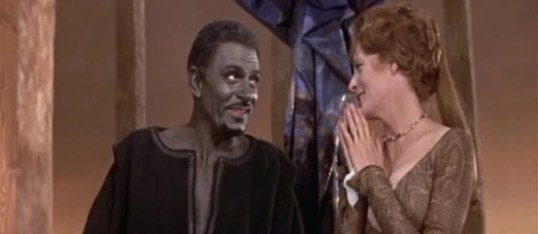
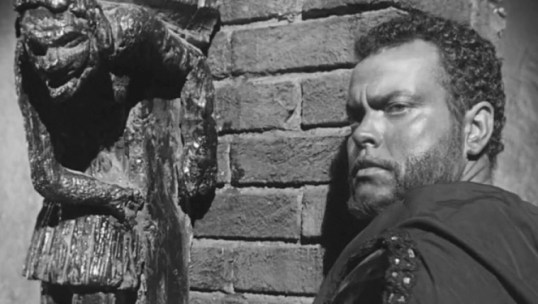
At the same time, this is also the film in which the white Orson Welles played the Moor of Venice. Of course, in 1951, it was still pretty much a tradition that every Shakespearean would eventually play Othello and that he would wear dark make-up while doing so. Welles opts for a light bronzer, one that makes him appear to have a deep tan. While it’s undeniably jarring to see Orson Welles playing a North African, it’s still not quite as jarring as seeing what Laurence Olivier did in his Oscar-nominated version of the play.
Laurence Olivier’s Othello
Orson Welles’s Othello
I have to admit that I held off on seeing this film precisely because I didn’t want to watch a film featuring Orson Welles, a director who I greatly admire, in blackface. Many people are probably never going to see this film for precisely that reason and that’s certainly understandable. In the end, it’s a decision that everyone will have to make for themselves. That said, having watched the film, I can now say that Orson Welles gives one of his best performances as Othello, playing him as a brilliant warrior who knows that, because of his background, he will never be fully accepted by the people of Venice. They’ll expect him to fight their battles for him but, when he marries the white Desdemona (Suzanne Cloutier), he is still expected to prove that he’s not some sort of savage. In fact, the only thing that prevents him from being brought up on charges is that Venice needs him to fight in another battle. Being a permanent outsider leaves Othello open to the manipulations of the evil Iago (Michael Mac Liammor), who pretends to be a friend but who instead views everyone around him with contempt and jealousy. Welles captures Othello’s anger but also his emotional vulnerability. As a permanent outsider, Othello is so used to being betrayed that it doesn’t take much from Iago to push him over the edge.
Welles directs the film like a film noir, filling the screen with menacing shadows and framing the film’s tragic finale like a horror film. He makes the film’s low-budget works to its advantage. As opposed to the grandeur that one normally associates with Shakespeare, there’s a seediness to the locations in Welles’s version of Othello. As Othello’s jealousy and paranoia grows, Venice itself appears to become more cluttered and cramped. It’s as if the viewer is seeing the location through Othello’s eyes, a once imposing city that, with each little secret or lie, edges closer to death. As both a director and an adapter of Shakespeare’s original text, Welles tells the entire story of Othello in less than 90 minutes, a pace that reflects Othello’s quick decent into irrational paranoia.
Admittedly, it’s not a perfect film. Mac Liammor was reportedly the best Irish stage actor of his time but his inexperience with film acting is obvious and it makes him a less than ideal Iago. Traditionally, Othello is usually dominated by whichever actor plays the role of Iago, as it’s Iago who pushes the story forward and narrates the action. However, Welles removes the moments when Iago narrates and speaks to the audience. Welles gives us an Othello that is clearly about the title character and this production is less interested in the reasons behind Iago’s betrayal than in what happens to Othello as a result. (Othello becomes yet another Welles film that is ultimately about the importance of friendship and loyalty.) Not surprisingly, with the film firmly centered on Welles’s performance, the rest of the cast struggles to make as strong of an impression. Only Suzanne Cloutier, cast as Desdemona, manages to give a performance that escapes from Welles’s shadow.
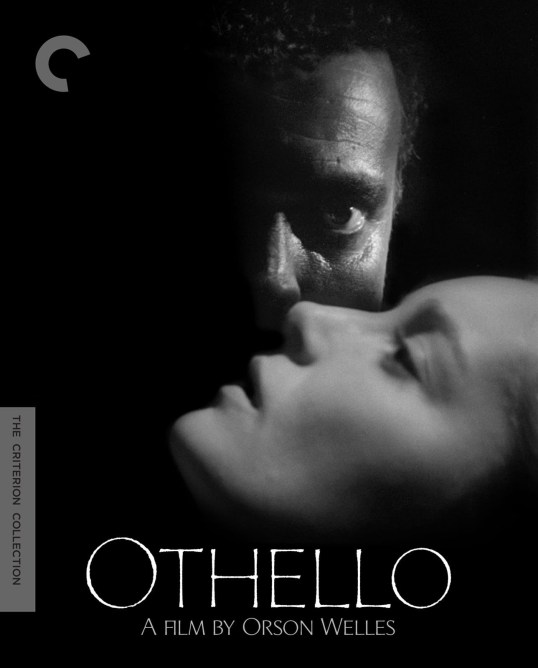
At Cannes, Othello defeated, among others, An American In Paris, Detective Story, Umberto D., and Viva Zapata. As often happened with Welles’s later films, it didn’t get much of an initial release in America but it has since been rediscovered by film connoisseurs. Needless to say, the Criterion release is the one to check out.
 Pity The Gray Man.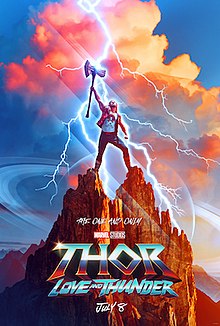




 Through the Shattered Lens