EUREKA (1983) – Gene Hackman strikes gold and tries to strike Rutger Hauer with a meat cleaver in the same move!


I’ve been thinking a lot about Gene Hackman as he recently celebrated his 95th birthday. He’s an incredible actor who has been a part of my life since I first really discovered my love of movies beginning in the mid-80’s. I’ve also been writing about Rutger Hauer every Sunday here on the Shattered Lens. Hackman and Hauer made a movie together back in 1983 called EUREKA, and to be honest, I almost forgot about it. It’s a movie I watched a long time ago and hadn’t watched again until today. It seemed like the perfect time for a revisit.

EUREKA opens with a stunning aerial shot that descends upon obsessed gold prospector Jack McCann (Gene Hackman) who’s fighting with a man on a snow-covered mountain in the Yukon territory. The man has asked Jack to partner with him in their search for gold, and Jack makes it clear that he will never “make a nickel on another man’s sweat.” Next, we see Jack as he’s walking through a nearly deserted town. In another unforgettable shot, Jack watches a man, who’s clearly gone mad, commit suicide just outside of the local “Claims office.” Before watching again today, that was the only scene that I could remember from my initial viewings of the film so many years ago. Next, we see Jack lying down below a tree at night, in windy, frigid temperatures, just about to freeze to death. Three hungry wolves have even approached ready for dinner. And this is where things get strange. Out of the blue, this clairvoyant madam (Helena Kallianiotes) from a local brothel sees him in her crystal ball, as a mysterious stone falls right next to him, starting a fire that warms him and drives away the wolves. He goes to see the madam at the brothel where she tells him that he will strike gold, but he “will be alone now.” Jack leaves the next morning and finds gold, rivers of gold. It’s another stunning sequence showing the obsessed man, who’s been searching for gold for 15 long and hard years, finally finding the object of his obsession. 

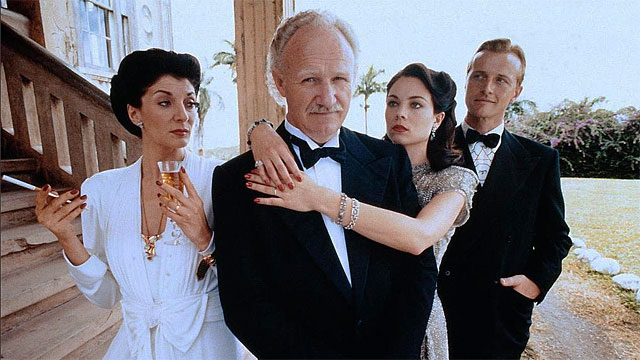
Cut to 20 years in the future, where Jack is now the richest man on earth, living on his own Caribbean island. It also appears he may also be the unhappiest man on earth. He has all the money in the world, but there is no peace in his heart or soul. His wife Helen (Jane Lapotaire), who he was once deeply in love with, is now detached and addicted to alcohol. His daughter Tracy (Theresa Russell) has fallen in love and married Claude Maillot Van Horn (Rutger Hauer). Jack cannot stand Claude as he suspects that he seduced and married Tracy so he could get to his money. His best friend Charles (Ed Lauter) has somehow gotten mixed in with Miami mobsters, led by a guy named Mayakofsky (Joe Pesci) and his lawyer Aurelio D’Amato (Mickey Rourke), who want to force Jack to sell them land on his island so they can build a casino. Jack feels like everybody just wants a piece of him and his money. He has lost the joy in his life. The rest of the film plays out against this backdrop as Jack tries to separate Tracy from Claude, and as the mobsters try to force Jack to sell to them by any means necessary.
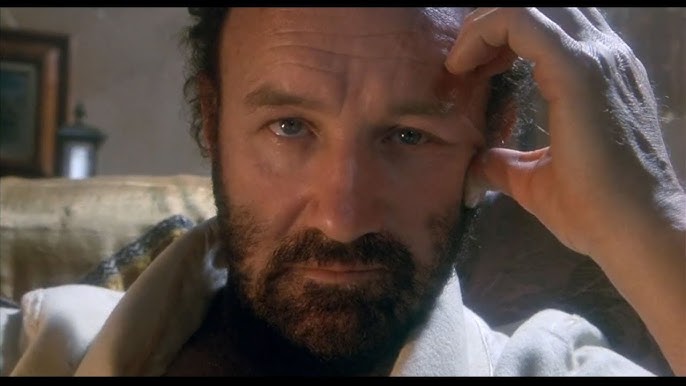
EUREKA is not a film that everyone will love, but I enjoyed watching it again after so many years. Director Nicolas Roeg, who also directed PERFORMANCE (1970), DON’T LOOK NOW (1973) and FULL BODY MASSAGE (1995), creates some truly amazing and brutal images that once seen are not easily forgotten. The scene where Jack McCann finds his huge vein of gold is so beautiful, but there are alternatively horrific scenes of brutal violence that play out almost to the point of overkill. The movie also takes some surprising twists and turns in the third act that you may not see coming. I always like it when a movie surprises me. It’s a melodramatic film that doesn’t have a lot of likable characters, but with a cast this good, I’m willing to go along with the filmmakers. In addition to the excellent work of Gene Hackman and Rutger Hauer, Theresa Russell has the important role as the daughter stuck between the man she loves and the dad who adores her. Her acting style exemplifies the melodrama of Roeg’s vision, so it works well in the context of this film. Jane Lapotaire has a couple of strong moments as Hackman’s alcoholic wife who yearns for days long gone when they were so in love. We were quite spoiled in the early 80’s when a movie could round out its already impressive cast with actors like Joe Pesci, Mickey Rourke, Ed Lauter, Corin Redgrave and Joe Spinell.

Nicolas Roeg appears to be trying to make deep statements about the meaning of life in EUREKA. I’m not a person who generally consumes films for deep meaning, but I thought it might be fun to at least take a surface-level view of some of the items I noticed while watching the movie. Jack spouts a lot of profound things throughout the movie, things that he feels describe him as a person. I mentioned one earlier when Jack tells the competing prospector prior to finding gold that, “I’ll never make a nickel off of another man’s sweat.” He will continue to use this saying throughout the film, even after he’s a rich, jaded, older man. The truth is that he would not have found the gold without the help of the clairvoyant madam, with her even passing away right after he hits the jackpot. In another scene at an extremely awkward dinner party, Jack tells his guests that the only rule that matters is the Golden Rule, “Do unto others as you would have them do unto you.” While I agree with the importance of this rule, Jack does not seem to follow the Golden Rule in any way that helps others or gives him any sense of peace or connection. Jack does not seem to understand the contradictions in his use of these phrases as played out in his own life, but I also think that his lack of understanding helps to illustrate a truth that plays out at times in many of our own lives. So often we’ll claim certain beliefs and values, but our lives as lived will be much more complex and often hypocritical. We can see them in Jack, but can we always see them in ourselves?

EUREKA also seems to be a movie that’s open to different interpretations based on who’s viewing the movie and where they are in life at that specific time. In a moment of clarity with his wife, Jack seems to recognize the hypocrisy in his life when he tells her “I once had it all… now I just have everything.” Jack is finally reflecting on the important things in his life, rather than dwelling on his current distrust of everyone around him. This final quote got me to thinking about my own life and just how different I am as a man in my early 50’s compared that naïve 20-year-old who first watched this film. I didn’t know what it was like to chase my dreams, catch them, and then try to figure out how to keep striving with a purpose. I didn’t know what it was like to be married with the responsibility of loving my wife and genuinely caring about her needs, through both the good times and the bad times. I didn’t know what it was like to be a dad who wanted nothing but true happiness for his children. Jack has lived through these specific opportunities in life, and we can see how he’s dealt with them. Each of these things have now played out in my own life. There have been times that I’ve failed, and there have been times that I’ve succeeded. I just keep reminding myself to try to focus on the things that matter and not get distracted by the things that don’t. Even now, it’s not always easy to do.    

I’ve included the trailer for EUREKA below:
Film Review: Groundhog Day (dir by Harold Ramis)


Happy Groundhog Day!  For the record, Punxsutawney Phil saw his shadow today so get ready for six more weeks of winter!

Oh, how I love Groundhog Day.  I really do.  It’s perhaps the silliest holiday that we have in America and I absolutely adore the whole thing.  I love the fact that people get dressed up for it.  I love that there are people who plan their entire weekend around seeing what the groundhog predicts.  I love that we all know there’s no way a groundhog can reasonably predict the weather but, for one day, we pretend like it can.  And while Groundhog Day itself had its beginning in Germany, the holiday really has become pure Americana.  It’s such an innocent holiday, or at least it is now that Bill de Blasio is no longer in a position to kill the magic groundhog.

(Boo de Blasio!  Boo!)

Of course, no Groundhog Day is complete without watching the 1993 comedy of the same name.  The film has become such a major part of American culture that even people who haven’t watched it know what it’s about.  (It’s a bit like It’s A Wonderful Life in that way.)  Bill Murray plays Phil Connors, a cynical weatherman who is sent to cover Groundhog Day in Punxsutawney and finds himself reliving the same day over and over again.  Every morning, it’s once again February 2nd.  Sonny and Cher’s I Got You Babe plays on the radio.  Phil is approached by Ned Ryerson (Stephen Tobolowsky), an annoying former classmate turned insurance salesman.  Phil steps in the same puddle.  He finds himself covering the same story and, again and again, he’s stranded by the same blizzard.  At first, Phil is angry.  Even multiple suicides can’t stop the cycle.  Kidnapping the groundhog can’t stop the cycle.  Then, he decides to take advantage of living the same day over and over again.  He gets to know the people in the town and realizes that they’re not so bad.  He saves the mayor (Brian Doyle-Murray) from choking at dinner but, in the film’s most poignant moment, realizes that an old homeless man is going to die regardless of how many times he tries to save him.  Phil learns how to learn the piano.  He learns how to speak French.  And, most importantly, he falls in love with Rita (Andie MacDowell).  Of course, when he tells Rita this, she assumes he’s just trying to take advantage of her.  Rita says that they barely know each other but what she doesn’t realize is that Phil has been spending day-after-day with her.

As you might have guessed I relate to Rita.  She loves the silliness of the holiday and so do I.  I also relate to Nancy Taylor (Marita Geraghty), just because of her determination to enjoy the day no matter what.  That said, this is totally Bill Murray’s film and this is one of his best performances, one in which he expertly mixes his trademark comedy with some very poignant drama.  One thing I like about this film is that Phil becomes a better man as a result of living the same day over and over again but it doesn’t totally change his personality.  At the end, he’s still the same sarcastic smartass that he was at the start of the film but he’s no longer a cynic.  He’s learned how to appreciate other people.  He’s fallen in love.  Much like George Bailey, he’s become the richest man in town.  This is a rare film where the main character is as interesting after he’s reformed as before.

It always breaks my heart a little to read that Bill Murray and director Harold Ramis had a difficult time working together while making this film.  It’s truly a perfect film and that’s due to both Murray’s performance and Ramis’s heartfelt direction.  I’m also glad that Ramis and Murray made up before Ramis passed away.  Life’s too short and sadly, unlike in the movies, we don’t always get a chance to go back and correct the past.

Groundhog Day is a holiday classic and may it continue to be watched for decades to come.

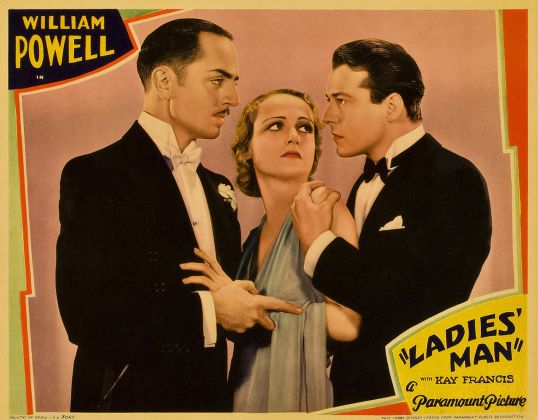
Love On The Shattered Lens: Ladies’ Man (dir by Lothar Mendes)


In the 1931 film Ladies’ Man, the always suave William Powell plays Jamie Darricott.

Jaimie may be suave but, when we first meet him, he’s faking it.  He lives in a tiny broom closet in a grand hotel and he only has two suits to his name.  The only thing that Jamie has going for him is that he’s charming and he’s handsome, in the way that only William Powell could be.  He’s like a much sleazier and far less likable version of Nick Charles.  Unfortunately, Jamie doesn’t have Nora Charles or Asta in his life.  He just has one valet and a lot of ambition.  It’s strange to see Powell play a bitter man but that’s what he does here.

Jamie starts spending time with the wealthy Mrs. Fendley (Olive Tell), despite the fact that she’s married to wealthy businessman Horace Fendley (Gilbert Emery).  Jamie starts to move up in the world.  He gets a much better room.  He gets a few more suits of clothes.  Soon, Jamie is also spending time with Mrs. Fendley’s daughter, the wild Rachel (Carole Lombard).  Rachel doesn’t care if prohibition is the law of the land.  She’s going to get as drunk as she wants every night.  And Rachel doesn’t care if society judges her for sleeping over in another man’s room despite not being married to him.  Rachel does what she wants!  And I have to admit that, at first, I liked Rachel.  She was a rebel and she made no apologies for her behavior and good for her!  (It helped she was also played by Carole Lombard, who was just starting her career but already had a lively screen presence.)  What’s interesting is that both Mrs. Fendley and Rachel seem to know that the other is seeing Jamie and they’re both pretty much okay with that.  And since Jamie is getting paid by both of them, he’s okay with it too.

This might sound a bit racy for a 1931 film and I suppose it is.  However, this is also a pre-code film.  Before the Production Code was instituted, films always portrayed New York society as being filled with gigolos and people who got drunk at nightclubs.  Pre-code films had the advantage of not only knowing what people wanted to see but also the freedom to give it to them.  Ladies’ Man is pretty open, if not particularly explicit, in detailing how Jamie makes his money.  And the message seems to be that no one can blame him.  There’s a depression going on!  Jamie has to do something to survive!  At least he’s not killing people Jimmy Cagney or Paul Muni!

However, when Jamie meets and falls for the kindly Norma Page (Kay Francis), he starts to reconsider his lifestyle.  And when Rachel finds out that Jamie is actually falling in love with Norma, she lets her father know about what’s going on.  It all leads to a rather sudden and surprisingly dark ending.  The film may have been pre-code but it was still a film from the era of DeMille and hence, all sinners had to be punished.

Seen today, Ladies’ Man is definitely a relic of a previous time.  It was made early enough in the sound era that it’s obvious that some members of the cast were still learning how to act with sound.  For a film with a 70-minute run time, it has a surprisingly large numbers of slow spots.  This is not the film to use if you want to introduce someone to the wonders of the pre-code era.  That said, I love William Powell and I love Carole Lombard.  This film was made before their brief marriage and it’s nowhere near as fun as their later collaboration, My Man Godfrey.  But it’s still enjoyable to see them together, bringing some much needed life to this scandalous tale.

Film Review: Soap Opera (dir by Andy Warhol)


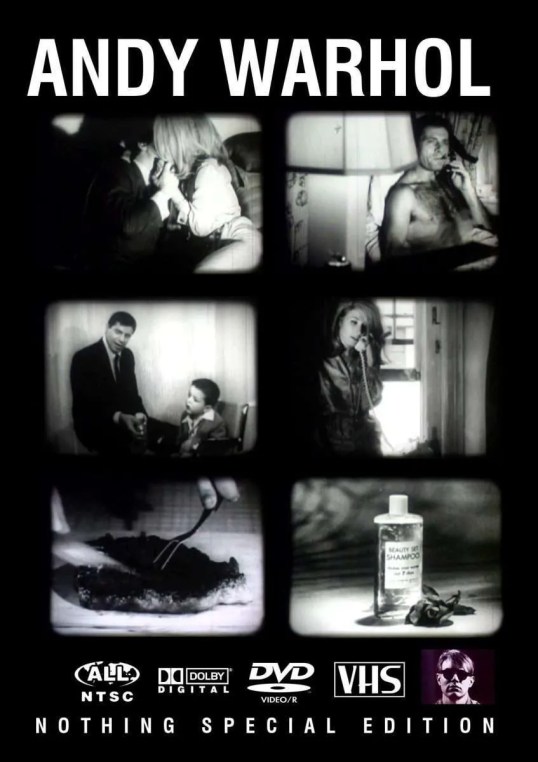
Directed by Andy Warhol, 1964’s Soap Opera features a plot that largely plays out in silence.

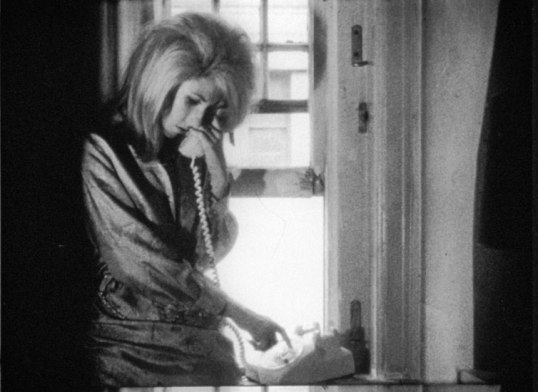
The silent, grainy black-and-white footage depicts what appears to be a love triangle between Warhol associate Rufus Collins, Sam Green, Ivy Nicholson, Gerard Malanga, and “Baby Jane” Holzer.  There’s a lot of kissing.  There’s a lot of slapping.  There’s a lot of scenes of our nameless characters giving each other suspicious and meaningful looks.  At one point, Jane Holzer makes what appears to be a very important phone call.  We don’t know who these people are or how they’re related but they certainly do seem to be intensely obsessed with each other.  The situations grow progressively more and more sexual and one gets the feeling that, if we could only hear the dialogue, we would have a chance to vicariously take part in a great melodrama.  Of course, the footage itself is so grainy that it’s sometimes hard to tell who is who.  Indeed, the characters often seem to be interchangeable.  That’s certainly true of real soap operas as well.  With new actors regularly stepping into old roles and one story’s hero becoming the next story’s villain, soap operas were all about accepting whatever was presented on the screen.  In real life, drama has real consequences.  In Warhol’s film and on television, melodrama is just something that happens without any real repercussions.

Janes Holzer in Soap Opera

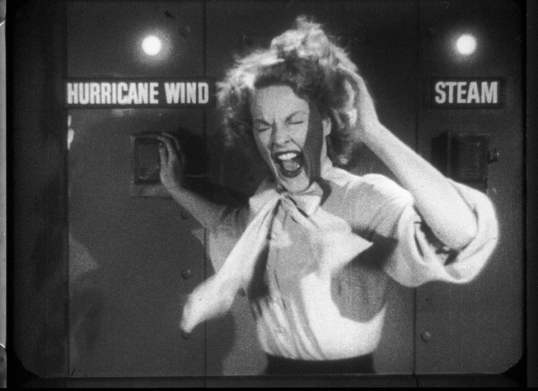
Fortunately, the film provides a few breaks from the repetitive cycle of nonstop, grainy drama.  Sprinkled throughout the film are commercials breaks, featuring actual commercials that were supplied to Warhol by Lester Persky, an advertising executive who later found greater fame as a Broadway producer.  (He produced Hair, amongst other productions.)  In between scenes of Ivy Nicholson kissing Sam Green and Rufus Collins looking shocked, we get a serious of very happy and very loud commercials.  Indeed, after watching the silent and grainy soap opera footage, it’s a bit jarring to have an expertly staged commercial suddenly blare forth in crisp black-and-white.  An obnoxious salesman tries to sell us things to make our home better and our meals tastier.  Jerry Lewis shows up with a child and tells us to be sure to contribute money to his telethon.  Model Rosemary Kelly is introduced by an announcer who tells us that Rosemary is going to tell us about the greatest adventure of her life.  That adventure?  Not conditioning her hair for five days.  Amazingly, her hair is still full and lustrous!  Even after swimming and sleeping on it!  Not even a broken steam valve can make her hair look bad!  This commercial is so effective that it’s actually featured twice and why not?  Even I want to know Rosemary’s secrets and my hair always looks good!

Rosemary Kelly in Soap Opera

Warhol subtitled this film The Lester Persky Story, both to thank Persky for supplying the commercials but also to point out that the commercials were really the whole point of the show.  The plot of any show, whether it’s a real one or the one in Warhol’s film, really only exists to keep you watching long enough to see the commercials.  And it must be said that the commercials are the most interesting part of this film.  After watching the Soap Opera actors for ten minutes, it’s a relief when Rosemary Kelly appears and, with a big smile on her face, starts enthusiastically talking about her hair.  We all complain about commercials but we still accept them as a fact of life and, in the end, it’s usually the commercials that people remember and try to pattern their lives after.  I mean, there’s a reason why I’m still singing that “Nothing is everything” song from the Skyrizi commercials.

And now, let’s check out how Rosemary Kelly’s hair is doing in hurricane winds!

Rosemary Kelly in Soap Opera


Live Tweet Alert: Join #ScarySocial for Ticks!


As some of our regular readers undoubtedly know, I am involved in a few weekly live tweets on twitter.  I host #FridayNightFlix every Friday, I co-host #ScarySocial on Saturday, and I am one of the five hosts of #MondayActionMovie!  Every week, we get together.  We watch a movie.  We tweet our way through it.

Tonight, at 9 pm et, Deanna Dawn will be hosting #ScarySocial!  The movie?  1993’s Ticks!

If you want to join us this Friday, just hop onto twitter, start the movie at 9 pm et, and use the #ScarySocial hashtag!  I’ll be there tweeting and I imagine some other members of the TSL Crew will be there as well.  It’s a friendly group and welcoming of newcomers so don’t be shy.

Ticks is available on Prime!

See you there!

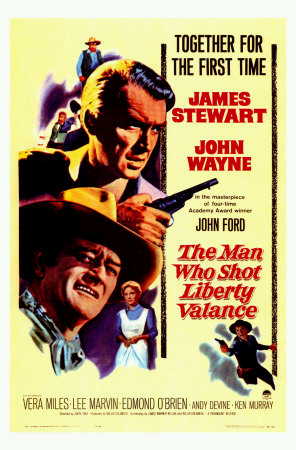
Scenes That I Love: Who Was Really “The Man Who Shot Liberty Valance?”


John Ford was born 131 years ago today and it seems appropriate that today’s scene of the day should come from his final great film (even if it wasn’t the last film that Ford directed).

In 1962’s The Man Who Shot Liberty Valance, frontier lawyer Ransom Stoddard (James Stewart) comes to political prominence due to his notoriety for being the man who, in self-defense, gunned down notorious outlaw Liberty Valance (Lee Marvin).  Stoddard, an intellectual who opposes violence, is not happy about this.  When Stoddard considers refusing to be a delegate to the upcoming statehood convention, he is reprimanded by Tom Doniphon (John Wayne).  Stoddard and Doniphon are friends but they’re also romantic rivals, both being in love with Hallie (Vera Miles).  In this scene, Doniphon reveals the truth about who shot Liberty Valance.

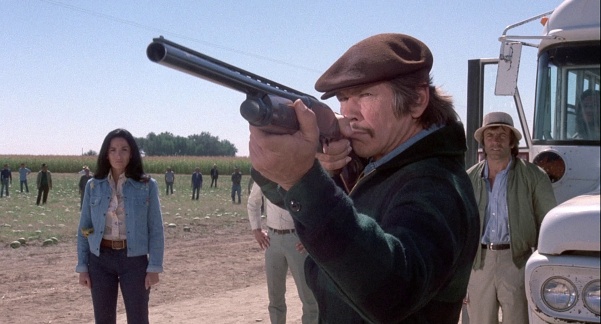
MR. MAJESTYK (1974) and a shotgun butt to the nuts! Happy Friday!


One of my favorite Charles Bronson films is MR. MAJESTYK, and one of my favorite scenes in any movie is this badass masterpiece. It encompasses just about everything I love in a movie. It has the beautiful Linda Cristal. It has the slimy Paul Koslo who doesn’t really understand who he’s dealing with. It has Bronson saying tough guy lines in a way that only he can say them…”you make sounds like you’re a mean little ass-kicker…” And finally it has that shotgun. It just doesn’t get any better than this. 

Enjoy my friends, and have a great weekend!! This should help! 

THE SEA WOLF (1993) – Charles Bronson vs. Superman!


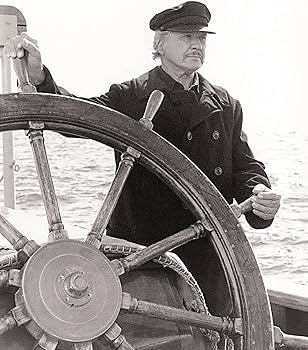
Back in the early 90’s, I was finishing up my high school years and starting up my college years, but I was still paying attention to every move my movie hero Charles Bronson was making. Bronson was at a very difficult place personally during those years as he was continuing to mourn the passing of his wife, Jill Ireland, and it really shows in his choice of roles. His first two films of the 90’s, THE INDIAN RUNNER and YES VIRGINIA, THERE IS A SANTA CLAUS, featured the aging star in the roles of a man dealing with great suffering and loss. Bronson’s third role, as Captain Wolf Larsen in the made for cable TV film, THE SEA WOLF (1993), featured him as the “thinking man’s megalomaniac” from Jack London’s work of classical literature. I couldn’t wait to see the film, but I had just one small problem. We didn’t have cable-TV in Toad Suck, Arkansas, so I would not be able to watch it on the night of its April 18th, 1993 premiere on the TNT channel. It was tough waiting a few months for that VHS release, but it was worth it! 

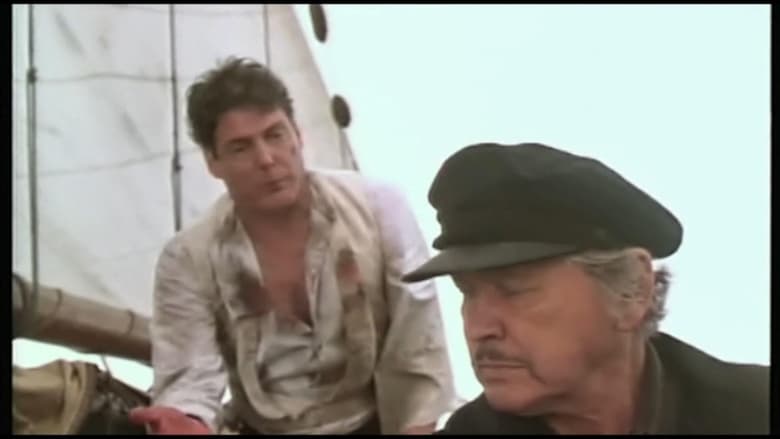
In a nutshell, Charles Bronson plays Wolf Larsen, the captain of the ship The Ghost, who saves shipwrecked aristocrat Humphrey Van Weyden (Christopher Reeve) and con woman Flaxen Brewster (Mary Catherine Stewart). He saves them, but once they’re on board his boat, they find out that Larsen rules over the crew with an iron fist. They also find out that he’s on a life or death mission to find his brother, Death Larsen, and exact revenge for past conflicts. Will they be able to survive this voyage?

Charles Bronson had mostly steered clear of roles that could be described as “villainous” later in his career, but it must have felt great to take on one of Jack London’s most famous characters. I remember the advertising would show him maniacally spouting lines like, “It’s better to reign in hell than serve in heaven!” Wolf Larsen is a man of contradictions. He’s ruthless and mad with power when it comes to the men and his boat, but he also appreciates great works of literature and philosophy. Even at 71 years of age, the icon is able to project arrogant menace and brute strength. Charles Bronson and Wolf Larsen almost seem made for each other, and he’s fantastic in the role. It’s his strongest performance of the 1990’s. 

There’s another great performance in the film, and it comes from Christopher Reeve as Humphrey Van Weyden. Most famous as Superman, Reeve was not having a lot of success at this point in his film career and was wanting meatier roles when he accepted this part. I was blown away with his performance as the intelligent and bullied aristocrat-turned-cabin boy who is forced to resort to some level of savage and barbaric behavior in order to survive Larsen’s boat! Christopher Reeve had really become a good actor at this point in his career, and he handles the role expertly. You believe his transformation throughout the course of the film as he adapts to the brutal conditions aboard the ship yet still retains his humanity. Reeve himself has been quoted as saying that THE SEA WOLF was a project “I really believed in and still think of as some of my best work.” I couldn’t agree more, Mr. Reeve. 

THE SEA WOLF was directed by veteran filmmaker Michael Anderson who had been working since the 1940’s with credits like AROUND THE WORLD IN 80 DAYS (1956) and LOGAN’S RUN (1976) to his name. He and Bronson were roughly the same age, and they’re both in fine form. In order for these types of films to work, you need a good director who can deliver a solid finished project and Anderson brings his A-game to this production. 

I’ve included the trailer for THE SEA WOLF below:

Live Tweet Alert: Join #FridayNightFlix For The Sword and the Sorcerer!


As some of our regular readers undoubtedly know, I am involved in a few weekly live tweets on Twitter and Mastodon.  I host #FridayNightFlix every Friday, I co-host #ScarySocial on Saturday, and I am one of the five hosts of #MondayActionMovie!  Every week, we get together.  We watch a movie.  We tweet our way through it.

Tonight, at 10 pm et, #FridayNightFlix presents one of my Arleigh’s favorite movies, The Sword and the Sorcerer!

If you want to join us this Friday, just hop onto twitter, start the movie at 10 pm et, and use the #FridayNightFlix hashtag!  It’s a friendly group and welcoming of newcomers so don’t be shy.

The Sword and the Sorcerer is available on Prime!  See you there!

Scenes That I Love: That Iconic Moment From Tough Guys Don’t Dance


Norman Mailer was better-known as a writer than a filmmaker but, over the course of his limited directorial career, he did come up with one scene that will never be forgotten.  That scene is a scene that I love from 1987’s Tough Guys Don’t Dance.

Take it away, O’Neal!