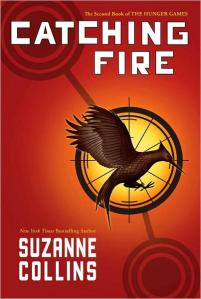
Poll: Who Should Direct Catching Fire?


With the recent announcement that Gary Ross will not be directing Catching Fire, the second film in The Hunger Games trilogy, there’s been a lot of online speculation has started as to who will take his place.  Since I was bored at work, I spent an hour or two reading some of that speculation.  Needless to say, a lot of names are being tossed around and some are a lot more plausible than others.  However, a few names seem to be mentioned more often than others.

Speaking for myself, I don’t think that the loss of Gary Ross is going to really hurt the sequel, financially or artistically. 

Financially, people are going to see the sequel regardless of who directs it and, quite frankly, I doubt many people went to the Hunger Games because they just couldn’t wait to see Gary Ross’s follow-up to Seabiscuit. 

From an artistic point of view, the main reason that I loved the Hunger Games was because, after years of seeing blockbuster movies where being female was essentially the same as being helpless and insipid, it was so refreshing to see a film about a strong, independent young woman who is concerned about something more than just keeping her boyfriend happy.  In short, I loved The Hunger Games because of Jennifer Lawrence’s performance as Katniss Everdeen.  In short, Gary Ross was about as important to The Hunger Games franchise  as Chris Columbus was to the Harry Potter films.

As for who the new director is going to be, here’s some of the more interesting names that I’ve seen mentioned:

Danny Boyle is one of my favorite directors of all time and he’s certainly showed that he can create entertaining films that both challenge conventional and force you to think.  As well, directing the opening ceremonies for the London Olympics and, if that’s not good training for the Hunger Games then what is?

J.J. Abrams is a far more conventional director than Danny Boyle but he’s also proven that he can make blockbuster films that don’t necessarily insult one’s intelligence.  Add to that, he created Alias and he deserves a lot of credit for that.

As the only woman to ever win best director, Kathryn Bigelow is an obvious choice for a franchise that is ultimately all about empowerment.  Plus, she’s proven she can handle action films and I think it would be a neat if, under her direction, Catching Fire made more money than Avatar.

Sofia Coppola, who should have won an Oscar for Lost in Translation,  would bring a definitely lyrical quality to Catching Fire and, if nothing else. her version would be amazing to look at.  Add to that, Sofia Coppola deserves to have at least one blockbuster on her resume.  (Yes, I know a lot of you people hated Somewhere but you know what?  You’re wrong and I’m right.)

Alfonso Cuaron has proven, with Harry Potter and the Prisoner of Azbakan, that he can step into a franchise without sacrificing his own individual vision.  Children of Men shows that he can create a realistic dystopian future.

Debra Granik is best-known for directing Jennifer Lawrence in Winter’s Bone.  If not for Granik, Katniss Everdeen could have very easily ended up being played by Kristen Stewart.

Catherine Hardwicke is, of course, best known for directing the first Twilight film and a lot of people will never forgive her for that.  And you know what?  That’s really not fair to Hardwicke. Say what you will about Twilight, the film was actually pretty well-directed and Red Riding Hood is one of the unacknowledged masterpieces of 2011.  (No, really…)   Finally, Hardwicke directed Thirteen, one of the best films ever made.  Hardwicke’s Catching Fire probably wouldn’t be critically acclaimed but it would be a lot of fun.

Patty Jenkins is one of the more surprising names that I saw mentioned on several sites.  Jenkins is best known for directing the ultra-depressing Monster  as well as the atmospheric pilot for AMC’s The Killing. Apparently she was also, for a while, signed up to direct Thor 2, which would suggest that she can handle blockbuster action.  Of course, she was also fired from Thor 2.

Mike Newell directed the best of the Harry Potter films (Harry Potter and the Goblet of Fire) and has shown that he can handle action and spectacle.  He’s also directed Mona Lisa Smile, which is one of my favorite films of all time.

Sam Raimi would turn Catching Fire into a thrill ride.  While you would lose a lot of the story’s subtext, the film would certainly not be boring.  Add to that, Raimi directing would increase the chances of a Bruce Campbell cameo.

To be honest, I haven’t seen anyone mention the name of Mark Romanek so I’m going to mention him because I think he’s great and that Never Let Me Go was one of the best films of 2010.  Add to that, he actually played an important role in my life in that I can still remember being 12 years old, seeing his video for Fiona Apple’s Criminal, and going, “That’s what I’m going to do once I get to high school…”

Julie Taymor is best known as a theatrical director but her films have all been distinguished by a strong, individualistic vision.  More people need to see her film version of The Tempest.

Susanna White, though not well-known, was a contender to direct The Hunger Games before the job went to Gary Ross.  White got her start working with the BBC before coming over to America to direct episodes of Generation Kill and Boardwalk Empire for HBO.  She was also a contender to director another film based on YA literature, The Host.

With Hanna, Joe Wright gave us the best film of 2011 (regardless of what the Academy thinks) and he’s proven that he knows how to mix empowerment and action.

There are other names in contention, of course.  I’ve seen everyone from Stephen Soderbergh (bleh, to be honest) to Rob Zombie mentioned.  Arleigh suggested both James Cameron and David Fincher but I think he was mostly doing that to annoy me.  Someone on twitter (may have been me) mentioned Tyler Perry and then laughed and laughed.  However, the 14 names above are the ones that I find to be the most interesting and/or plausible.

So, who do you think would be a the best director for Catching Fire?

As for me and who I would like to so direct the film, I think that the director of Catching Fire should be a woman because Catching Fire is, ultimately, a story about empowerment.  I also think that characterization is far more important than action so I’m not as concerned about whether or not the director has a history of blowing things up onscreen.  Instead, what the franchise needs is a strong, female director with an eye for detail and a strong appreciation for what film is capable of accomplishing as an art form. 

For that reason, my vote goes to Sofia Coppola.

Film Review: Jason Goes To Hell: The Final Friday (dir. by Adam Marcus)


(This review contains major spoilers.  Please don’t whine about them.)

Today, continuing my series of reviews of the films in the Friday the 13th franchise, we take a look at 1993’s Jason Goes To Hell: The Final Friday.*

After the disappointing box office performance of Jason Takes Manhattan, Paramount Pictures sold the right to the Friday the 13th franchise to New Line Cinema.  At that time, New Line was best known as the home of the rival (and far more critically appreciated) slasher franchise, A Nightmare On Elm Street.  As detailed in Peter M. Bracke’s Crystal Lake Memories, several attempts had already been made to create a Freddy Vs. Jason film and it was felt, as a result ot New Line acquiring the rights to the F13 franchise, that film would be much easier to make.  However, before Jason could fight Freddy, he had to be 1) reintroduced to film audiences as a special effects-dependant New Line monster (as opposed to just a stodgy old Paramount slasher) and 2) Jason had to go to Hell.

As I’ve mentioned previously, the last few Friday the 13th films were all “gimmick films” that attempted to breathe new life into the franchise by pairing Jason’s usual camper stalking with some new element, like a psychic adversary or Manhattan.  In Jason Goes To Hell, the gimmick is that Jason (again played by Kane Hodder) isn’t just a zombie serial killer but he’s also some sort of demonic slug that, even after his outer Jason shell is destroyed, can still slither into other people and possess them.

Yep, that’s what it does alright.

Anyway, Jason Goes To Hell starts out brilliantly, with a typical slasher movie victim wandering around old Camp Crystal Lake so she can take a shower and then turning out to be a decoy who is part of an elaborate sting effort that results in Jason being literally blown into little pieces by the F.B.I.  I love this opening because it basically reflects what would probably happen if Jason ever showed up in the real world.  It may have taken 9 films but apparently, people in the Friday the 13th world are finally using some common sense.

Except, of course, they’re not.

Jason’s remains are sent to the local coroner and it’s here that we get our first clue that the New Line Jason might be a little bit different from the Paramount Jason.  See, Jason’s heart — despite being rather violently removed from Jason’s body — is still beating and the local coroner proceeds to eat it and soon, he’s possessed by the aforementioned demonic space slug.

Now, the space slug may sound a little bit silly but it actually makes more sense that, after being killed at the end of The Final Chapter, Jason was reanimated by a demon worm than that he was brought back to life by a random bolt of lightning.  It would explain why, following Jason Lives, Jason can not be killed (or apparently even slowed down) regardless of how much punishment he takes.  (It can’t explain the end of Jason Takes Manhattan but then again, what could?)  So, the demonic space slug actually makes sense.

Except that it doesn’t.

A bounty hunter named Creighton Duke (Stephen Williams) pops up in Crystal Lake and explains that the demonic space slug can bring Jason back into existence if it manages to enter the body of a relative.  Apparently, the demonic space slug is somehow linked to the Voorhees family tree and that would suggest that Jason was possessed by the demon worm even back when he was just living in that shack in Part 2.  Was Pamela Voorhees possessed by the cosmic serpent back in Part One?  Creighton doesn’t bother to say but he does explain that apparently, Jason can only be killed by a magic dagger and he has to be stabbed by a member of his family and again, you really have to wonder why whoever created the space slug and the dagger made everything so overly complicated. 

Creighton Duke,  by the way, also takes the time to explain that — even though we’ve never seen him before — he’s been pursuing Jason for several years.  It’s somewhat odd that random teenagers have no trouble coming across Jason but apparently, a trained bounty hunter hasn’t been able to track him down.

Anyway, the Jason slug is now hopping from person to person because he’s trying to track down his half-sister Diane (Erin Gray) and his niece Jessica (Kari Keegan).  Creighton and Jessica’s ex-boyfriend (played by John LeMay) are in pursuit of the demon slug but eventually, the slug does manage to get inside a relative and Jason is not only reborn but he’s reborn wearing his hockey mask so I guess that was possessed as well.  Anyway, Jason is eventually stabbed by that super dagger and Jason finally goes to Hell (with Freddy Krueger’s clawed glove coming out of the ground to grab his hockey mask). 

And then the movie ends.

Much as I’ve always wanted a time machine so I could go back to 1941 and experience an audience seeing Citizen Kane for the very first time, I wish I could go back to August 13th, 1993 and see how audiences first reacted to the revelation that Jason Voorhees was just a demonic slug.  How did audiences react to seeing a Friday the 13th film that, for all essential purposes, wasn’t really a Friday the 13th film?  Probably not well, considering that Jason Goes To Hell was the third-lowest grossing film in the franchise.

Seen today, the main problem with Jason Goes To Hell is that it’s just not that much fun.  Seriously, there is no excuse for a film about a space slug to be boring but yet somehow, Jason Goes To Hell manages to be just that.  I think a large part of the problem is that the iconic hockey-masked Jason is absent for much of the film.  Instead, his spirit simply possesses one random passerby after another and the end result is rather bland. 

I’ve read quite a few reviews that have argued that Jason Goes To Hell is the worst installment in the franchise but I disagree.  It’s close, but it’s marginally better than both Part 3 and Jason Takes Manhattan.  It’s saved from being a total disaster by that clever opening and likable performances from John LeMary and Kari Keegan.  Though the character eventually becomes somewhat annoying, Steven Williams has a lot of fun going over the top in the role of Creighton Duke.

After Jason Goes to Hell, the franchise lay dormant for nearly ten years as various screenwriters and producers struggled to come up with Jason Vs. Freddy.  In 2002, Friday the 13th returned with it’s biggest gimmick yet — Jason in space!  We’ll take a look at Jason X tomorrow.

—-

*By the way, I think I deserve hazard pay for actually sitting through this movie.

Film Review: Friday the 13th Part VIII: Jason Takes Manhattan (dir. by Rob Hedden)


Continuing my review of the Friday the 13th film franchise, today I find myself reviewing the 8th film in the series, 1989’s Friday The 13th Part VIII: Jason Takes Manhattan.  As opposed to my previous reviews, this is going to be a short one because, quite honestly, there’s not that much you can say about this film.

As I discussed in my reviews of both Jason Lives and The New Blood, Jason Takes Manhattan is the product of Paramount’s attempts to revive the Friday the 13th franchise by adding in a gimmick.  This time, the gimmick is pretty much spelled out in the title.  Jason leaves Crystal Lake, goes to Manhattan, and maybe even get a chance to make his Broadway debut in a revival of Forever Plaid.  Seriously, you look at that title and you imagine that Jason going up agaisnt the Taxi Driver and or maybe taking Al Neri’s place as Michael Corleone’s personal bodyguard.  Unfortunately, as is detailed in Peter Bracke’s excellent book Crystal Lake Memories, any plans for truly having Jason take Manhattan were abandoned when it became apparent just how expensive it would be to film in New York.  As a result, this film is less Jason Takes Manhattan and more Jason Floats Around Aimlessly Until He Somehow Ends Up In Times Square For Two Minutes.

And, in the film’s defense, Jason Takes Manhattan is a catchier title.

As Jason Takes Manhattan begins, we find Jason (played again by Kane Hodder) once again coming back to life as the result of his corpse floating into an underwater power line.  Or something like that.  To be honest, it’s kind of hard to figure out just why exactly Jason has come back to life.  All that matters is that Jason comes back to life and ends up stowing away on a cruise ship that is carrying the graduating class of Lakeview High to New York City.  Needless to say, Jason is soon killing everyone on the boat, most of whom apparently die off-screen.  (Either that or Lakeview High had a graduating class of 12 students.)  The few who survive the massacre (including aspiring final girl Jensen Daggett and her boyfriend Scott Reeves) end up in a row boat and float around aimlessly until they arrive in New York.  But guess who is waiting for them in the city that never sleeps?

Several critics consider Jason Takes Manhattan to be the worst Friday the 13th of all time.  While I still think that Part 3 is the worst of the series, Jason Takes Manhattan is still pretty bad.  Among the film’s many flaws: 1) characters that are underwritten even by the standards of the slasher genre, 2) bloodless kills that, for the most part,  fail to make much of an impact, 3) very little of the action actually takes place in New York, and 4) this film features perhaps the most ludicrous and nonsensical ending to be found in a series of films that were famous for their refusal to make sense.

Still, Jason Takes Manhattan is not a total disaster.  Jensen Daggett and Scott Reeves make a cute couple and Kane Hodder, as always, makes for an intimidating Jason.  As well, even though very little of the film takes place in New York, just the idea of Jason actually taking Manhattan is amusing enough to be occasionally effective.  If nothing else, the title inspires you to imagine a better film than the one that you’re watching.

Jason Takes Manhattan was the lowest grossing of the Friday the 13th movies.  It’s disappointing box office performance would lead to Paramount selling the franchise to New Line Cinema and to a major change in the character of Jason Vorhees.  That’ll all be dealt with tomorrow when I review Jason Goes To Hell: The Final Friday.

Film Review: Friday the 13th Part VII: The New Blood (dir. by John Carl Buechler)


Hi, did everyone out there have a good Easter?  I did!  My entire family got together up at my Uncle’s place.  There was a big Easter egg hunt and me and Erin smuggled in extra Easter eggs which we then “helped” our niece and nephew discover.  Usually, going to my Uncle’s place means a day spent laying out near the pool in a bikini and trying to work on my tan.  (Though, to be honest, I’m a redhead so I don’t so much tan as I just burn.)  However, this Easter, it rained so most of the day was spent inside and watching figure skating with my sisters and cousins.  I hope everyone else had a good Easter as well and I hope you’ll forgive me for being a little late with my latest review in my series looking at the Friday the 13th franchise.  In this post, I review 1988’s Friday the 13th Part VII: The New Blood.

(Minor Spoilers Follow)

As I mentioned in my review of Jason Lives, The New Blood was the first of what I like to call Friday the 13th’s gimmick films.  In these films, Paramount Pictures (and later New Line Cinema) attempted to revive the franchise’s declining profits by adding a gimmick.  No longer would it be enough for Jason to simply show up and stalk unfortunate campers.  Previous installments had their gimmicks (such as Part 3 being filmed in 3D) but they all stuck with the same basic story and structure.  However, from now on, Jason would no longer just be a silent antagonist in a communal cinematic nightmare.  From now on, he would fight psychics and Freddy Krueger and go to both outer space and New York City.  (And don’t even get me started on the film where he was revealed to actually be some sort of weird space slug.  Not yet, anyway…) 

The problem with the gimmick films is that, along with dealing with the gimmick, they still had to deal with the business of killing summer counselors and other random campers.  Whereas previous film made at least a little effort to provide the viewers with interesting and/or attractive characters, the gimmick films are distinguished by a real laziness when it comes to characterization.  Ironically enough, surrounding the gimmick with such weak material only served to remind the viewer just how gimmicky the gimmick ultimately was.  That is why the gimmick films are my least favorite of the franchise.

That said, The New Blood is probably the best of the gimmick films.  Anyone who doesn’t think that being called the best of the worst is much of a compliment has obviously never been in a community theater production of Little Shop of Horrors. 

The New Blood of the title is a girl named Tina Shepherd.  When we first meet Tina, she’s ten years old and living in a house that sits on the shores of Crystal Lake.  (Apparently, the residents of Forrest Green decided to change the name of the town back to Crystal Lake sometime after Jason Lives.  If nothing else, these two films convinced me of the importance of zip codes.)  One night, as Tina listens to her father and her mother fight, she runs out to a nearby dock, gets in a canoe, and starts to float away.  Her father runs out onto the dock and shouts at her to return.  Tina yells back and suddenly, the entire dock collapses and her father drowns.  As all of this is going on, we discover that Jason just happens to be in the lake, chained to a rock below the dock.  (You have to wonder what having a zombie serial killer chained up a yard away from your house does to property values.  Nothing good, I imagine but then again, what do I know about real estate?)

Anyway, jump forward ten years.  Tina (now played by Lar Park Lincoln) has just been released from a mental asylum and returns to Crystal Lake with her psychiatrist Dr. “Bad News” Crews (played by a wonderfully evil Terry Kiser).  Dr. Crews claims to be helping her deal with her feelings of guilt but actually, he’s seeking to exploit the fact that Tina has latent psychic abilities.  What all can Tina do?  Well, that’s a good question because the film itself seems to be unsure of just what exactly Tina is capable of.  As a result, Tina often seems to have whatever psychic abilities are most convenient for whatever’s happening on-screen at the moment.  While most of the time Tina seems to be telekinetic, there are other times when she can see the future, set fires, and even raise the dead.

It’s this last power that gets everyone in trouble when, one night after getting annoyed with Dr. Crews, Tina runs out to the lake and attempts to bring her father back to life.  While she fails to bring back her dad, she does manage to free Jason (played here, for the first time, by Kane Hodder) from his chains.  By this action, Tina joins the long line of horror film heroines who are ultimately responsible for every death that occurs over the course of the movie.

That’s pretty bad news for the vapid collection of potential victims who are trying to throw a surprise birthday party in the house next door.  Among those potential victims: nice guy Nick (Kevin Butler) who falls in love with Tina, evil Melissa (Susan Jennifer Sullivan) who wants Nick, Eddie (Jeff Bennett) who spends his time talking about a sci-character called “Space Mummy,” and about a half-dozen other people whose names I didn’t manage to catch.  Seriously, this is the most empty-headed and shallow collection of dumbfug toadsuckers ever!  As opposed to previous installments (in which the actors at least had enough chemistry that you believed that they just might actually spend a weekend at the lake together), the victims in New Blood feel as if they were just randomly dropped in the house just so that Jason could kill them.  They’re such a vacous, spiteful collection of people that, for the first time in the series, you truly find yourself rooting for Jason. 

Anyway, the birthday boy never shows up for his party but that doesn’t really worry anyone at the house.  As one of them puts it. “You know Michael.  Guy probably got arrested for drunk driving and spent the night in jail.”  (Sounds like a great guy, no?)  No, Michael’s not in jail.  Michael’s dead because Tina brought Jason back to life and soon, so is just about everyone else.  It all leads to a final apocalyptic battle between Jason and Tina that manages to be both silly and exciting at the same time.  It also goes a long way towards making up for what we’ve had to sit through in order to reach it.

One of my favorite chapters of Peter M. Bracke’s excellent oral history of the franchise, Crystal Lake Memories, deals with the making of The New Blood.  Say whatever else you will about this film’s cast, they’re some of the most outspoken in the history in the history of the franchise.  Reading their memories about making this film, three things quickly become clear:

1) Everyone was scared of Kane Hodder.

2) Lar Park Lincoln didn’t like the majority of the cast.

3) The majority of the cast didn’t like Lar Park Lincoln.

In fact, quite a few really nasty things are said about Lar Park Lincoln but you know what?  Outside of Kane Hodder and Terry Kiser, Lar Park Lincoln probably comes the closest to giving an actual performance than anyone else in the cast and I think it can be argued that she makes Tina into one of the few truly strong female characters ever to be found in a Friday the 13th film.  Take it from a former community theatre ingenue: it takes as much talent to make a slasher film “final girl” credible as it does to play Margaret Thatcher.  As for the rest of the cast of disposable victims, they’re some of the most forgettable of the series.  In the role of Nick, Kevin Blair (who reportedly did not get along with Lincoln and who has absolutely no chemistry with her on-screen) is stiff but handsome and Susan Jennifer Sullivan has a lot of style as the bitchy Melissa.  Otherwise, they’re a pretty bland group and director Buechler doesn’t seem to have much use for them other than to make sure that they’re in the right position to be killed by Kane Hodder.

The New Blood is best remembered for introducing Kane Hodder in the role of Jason Voorhees.  Though I personally believe that The Final Chapter’s Ted White was the best Jason (he was certainly the most ruthless), it can’t be denied that Kane Hodder was the perfect embodiment of the version of Jason that came to dominate the last few films in the original series.  Whereas Ted White’s Jason was a calculating killer, Hodder’s Jason is a machine that happens to be designed for killing and little else.  He kills not so much out of anger or pain as much as he kills, like any good zombie, just because that’s the only thing he knows how to do.  One reason why this film’s final battle is actually exciting to watch is because it’s set up as a confrontation between the literally cerebral Lar Park Lincoln and the overwhelmingly physical Kane Hodder.  Hodder, famously, is the only actor have played Jason in multiple films and he earned that right with his performance here.

And make no mistake about it: Hodder gives a performance in this film and, as a result, The New Blood is a lot more watchable than it has any right to be.

(I would also suggest that if you do watch this movie on DVD, be sure to listen to Hodder and Buechler’s commentary track.  Both of them seem to be having so much fun watching the film that it actually makes the film more enjoyable.)

While The New Blood did, ultimately, make more money than the previous Jason Lives, it still failed the match the box office success of the first few films in the series.  Though Lar Park Lincoln apparently wrote a script for a sequel that would have featured Tina and Jason once again going to war (interestingly enough, it’s rumored that Lincoln’s script opened with Kevin Blair getting killed off), Paramount decided to try out another gimmick and abandoned the new blood for Manhattan.  The end result was one of the worst films in the series but we’ll deal with that in my next post.

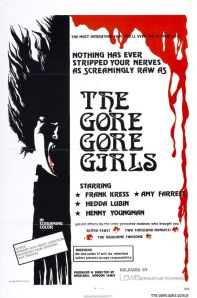
Grindhouse Classics : “The Gore Gore Girls”


Just when you thought the coast was clear, I’m back with more Herschell Gordon Lewis! Between this little haphazard Lewis retrospective Lisa Marie Bowman and I are indulging in, and her exhaustively thorough, and highly readable, Friday The 13th series of recent days, Through The Shattered Lens is really becoming a gore-hound’s delight these days, isn’t it? Hell, even the music reviews around here lately have a bombastic and violent theme to them — Bathory? Hell, I’m impressed — Quorthon’s “Viking trilogy” is my favorite period in Bathory history, truth be told, and Twilight Of The Gods my favorite Bathory album, even though my all-time favorite song of theirs, Blood, Fire, Death appears on the album — well, Blood, Fire, Death. But it’s waaaaaayyyy too early for me to be getting this hopelessly sidetracked, isn’t ? So let’s get back to our guy Herschell.

Having spent my last visit here examining the alpha of Lewis’ “gore cycle,” namely Blood Feast, I figure now would be as good a time as any to take a look at the omega (not just of his gore flicks but of his filmmaking career in general, at least until Blood Feast 2 came along about 30 years later, but we won’t pay any attention to that — nor should you), namely 1972’s The Gore Gore Girls. Somebody a whole lot wiser than I am (though I’m not sure exactly who — truth be told, it was probably several “somebodies”) once said “if you’re gonna go out, then go out with a bang,” and this movie certainly makes it clear that HGL took that advice to heart.

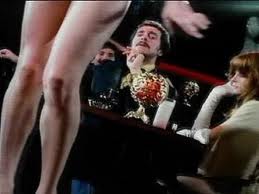
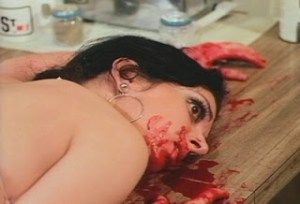
Even by Lewis “standards,” the plot for this one is pretty threadbare — go-go dancers at a local (in this case “local” being the Chicago area) strip joynt are being murdered in downright awesomely grotesque fashion — faces smashed to pulp in mirrors before their heads are dug into, buttocks beaten and — uhhhmmmm — tenderized with a meat mallet before having salt and pepper added to the impromptu (and quite rare, it must be said) “rump roast” for seasoning, nipples clipped off with scissors to reveal squirting biological fountains of both white and chocolate milk, heads shoved into deep-fat fryers — clearly, Herschell’s pulling out all the stops on his way out. And just as clearly, he’s well past the point of even pretending that he’s taking any of this shit seriously. Not that he ever put much effort into such  conceits in the first place, mind you,  but in the case of this film it’s especially fortunate that his tongue was so obviously placed firmly in his cheek, because it really does help to take the edge off what, on paper at least, seems like a truly OTT-in-the-misogyny-department series of murders ( a well-placed subplot involving a local feminist group helps to lessen the impact, as well — even though said group’s inclusion amounts to little more than a red herring plot-wise, the surprisingly level-headed portrayal of them by Lewis comes at least somewhat close to an admission on his part that feminist critics of his work were probably right ). Think of this as Herschell doing what he did best — giving gore-lovers more of what they wanted than they could possibly have hoped for, while not-so-tacitly admitting that it was all crap, anyway.

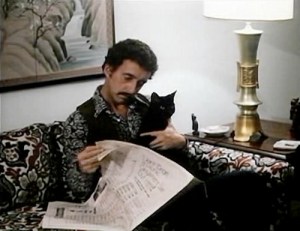
Anyway, back to the story — this was Lewis’ one and only attempt at injecting a bit of mystery into the proceedings, and doing their best to sleuth out the identity of the killer, without murdering each other first, are the truly odd couple of gungo-ho (but hopelessly incompetent) reporter Nancy Weston (Amy Farrell), and fancy-pants private eye Abraham gentry (Frank Kress, who absolutely sinks his teeth into the role of the — ahem! — sexually ambiguous version of Phillip Marlowe and is, in true Lewis fashion, playing the whole thing not just for laughs but for hearty, full-throttle belly laughs from start to finish). Throw in comedy legend Henny Youngman (who must have been broke or something) as the ridiculously fast-talking owner of the strip club the unfortunate victims worked at, and friends, you’ve got a recipe for a winner on your hands.

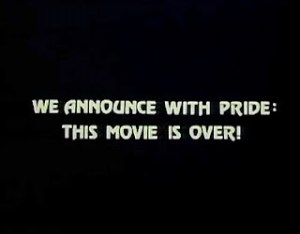
To be sure, you need a strong (hell, a cast-iron) stomach to make it through some of the death and dismemberment on display here (all of which looks pretty darn good on the Something Weird Video DVD release of this film — they did a very nice job remastering the full-frame picture, the mono sound is good, and extras include, of course, a commentary from Lewis and, doubly of course, the “Gallery of Herschell Gordon Lewis exploitation artwork”),  as the effects are, on the whole, somewhat-better-conceived than in the average HGL production, but there’s just no escaping the feeling of “the director’s not taking this whole thing too seriously, so why should I?” that permeates each and every frame of this film. It’s brutally honest in its intentions — “give the audience what they want one more time, rake up a bunch of money, and close the door behind me on the way out” is the best summation of Lewis’ aims here, and his willingness to have a few laughs as he says “thanks for the cash one more time, suckers” is just icing on the cake. Any movie that openly states that it’s proud that it’s over with (see the final screen cap below) is clearly imploring you to do anything other than take it seriously, and with that in mind, I gotta say, while The Gore Gore Girls falls absolutely flat in its attempt to wring anything like dramatic tension out of its poorly-thought-out (to be generous) murder-mystery premise, and while its absolutely appallingly brutal treatment of the female gender should be inexcusably offensive, and while it’s “fourth wall”-busting acting absolutely obliterates any chances the film might have had (not that it really wanted any) of being seen as anything other than a cash-in quickie, the fact is that it’s just about the most fun you can imagine having watching someone’s eyes being pulled out. And tits sliced off. And head deep-fried.

And that’s really the genius of Herschell Gordon Lewis in a nutshell, isn’t it? He could play you for a sucker, openly tell you that was exactly what he was doing, and make you chuckle at what a chump you were as you handed your money over to him anyway. God bless ya, Mr. Lewis — we could sure use more like you today. Thanks for this outrageous parting gift.


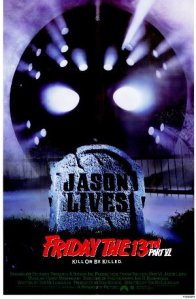
Film Review: Friday the 13th Part VI: Jason Lives (dir. by Tom McLaughlin)


(Minor Spoilers Below)

Continuing my series reviewing the Friday the 13th films, today we take a look at one of the pivotal installments in the saga, Friday the 13th Part VI: Jason Lives.

Following the financial success of Friday the 13th: A New Beginning, it was pretty obvious that there would be another installment in the Friday the 13th franchise.  Mindful of the extremely negative reaction to the previous attempt to make a Friday the 13th film without Jason, Paramount hired director Tom McLaughlin to bring Jason back to life.  In the process, they also abandoned plans to have the protagonist of the previous two films — Tommy Jarvis — turn into a psychotic murderer. 

(Which, if nothing else, ensured that this would be the last Friday the 13th to feature a cameo appearance from Corey Feldman.)

Jason Lives opens a few years after the end of New Beginning.  The residents of Crystal Lake have finally wised up and changed the name of their unfortunate little town to Forrest Green.  Corporate executives spend the weekend playing paintball in the woods while blissful lovers safely picnic a few feet away.  Even the old summer camp has opened back up and, for the first time in a Friday the 13th film, has managed to stay open long enough for actual campers to show up.  Gruff Sheriff Garris (David Kagan) keeps an eye on the town while his rebellious daughter Megan (Jennifer Cooke) works as a counselor at the camp.

Yes, everything’s perfect until, once again, Tommy Jarvis comes to town and get everyone killed.

Now played by Thom Matthews, Tommy has apparently changed a lot since the end of New Beginning.  No longer is he simply willing to silently suffer from nightmares and hallucinations.  Now, Tommy is a man of action and his first action is to go back to where it all began, find Jason’s grave, and dig him up.  Why?  “Jason belongs in Hell,” Tommy tells us, “and I’m gonna see that he gets there.”  Okay, whatever you say, Tommy.  You’re just lucky that you look like Thom Matthews.

Anyway, Tommy, dragging his reluctant friend Hawes (Ron Pallilo) with him, tracks down Jason’s grave and digs him up.  Apparently not remembering his pre-credits nightmare from New Beginning, Tommy does this on a rainy night when there’s lightning striking all around.  Once Tommy digs up the coffin, he starts to stab it with a metal post and, before you can even say, “I knew that was going to happen,” lightning strikes the post, electricity surges through the coffin, and suddenly, Jason (played here by C.J. Graham) comes back to life as an unstoppable zombie.  He also proceeds to kill Hawes, which seems a bit unfair since this was all Tommy’s stupid idea to begin with.

(Tommy Jarvis, in this film, is a part of that proud horror film tradition of heroes who do everything wrong and get a lot of people killed but are somehow never held responsible for their stupidity.  Again, it’s a good thing that he looks like Thom Matthews.)

Tommy goes to Sheriff Garris and explains what happened.  Garris responds by promptly locking Tommy in a cell and refusing to listen as Tommy tries to explain that “Jason’s still out there!”  For once, Tommy is correct.  Jason is still out there and he’s heading straight for the summer camp…

There’s a scene early on in Jason Lives that pretty much sums up the entire film.  Alcoholic cometary caretaker Martin (played by Bob Larkin) mutters to himself, “Why’d they have to go and dig up Jason?” before looking directly at the camera and adding, “Some folks sure got a strange idea of entertainment.”  In short, this is the comedic, meta Friday the 13th, populated with characters who have seen the previous installments of the series and who fully understand that they’re in a slasher film but who still manage to get killed anyway.  This is the movie where Lizbeth (played by the director’s wife, Nancy McLaughlin) says, “I’ve seen enough horror movies to know that a weirdo with a mask is never friendly” but then tries to reason with him anyway.  This type of self-referencing is pretty common in slasher films today but this is the first time that it ever showed up in a Friday the 13th film and it stands in stark contrast to the rather dark films that came before.  When I first saw Jason Lives, I thought it was a little bit too jokey (though I loved the line, delivering between two frightened campers: “So, what did you want to be when you grew up?”) but, on my second viewing, I better came to appreciate what McLaughlin was going for.  As opposed to other installments, Jason Lives doesn’t even try to be a horror film.  Instead, it’s a communal experience that is specifically designed for an audience that wants to play along with the film.  Jason Lives is the fun Friday the 13th.

Oddly enough, it’s probably also the most Christian.  Along with containing no nudity, it also features Jason deciding not to kill one girl because he hears her praying and, finally at the conclusion, Tommy being brought back to life through a combination of CPR and prayer.  (As opposed to the jokey nature of most of the film, the prayer scenes are played relatively seriously.)  This is probably as close as the Friday the 13th franchise ever got to being family friendly and it stands in marked contrast to just about every other film in the series.

Jason Lives is a bit of an oddity in the Friday the 13th series and it was also the first installment in the series to gross less than $20,000,000 at the box office.  Despite the fact that this film is as much of a comedy as a horror film (and despite the fact that Jason appears here for the first time as a zombie), Jason Lives is also probably the last truly Jason-centered film in the series.  Each subsequent film would match Jason with a gimmick in an attempt to revive the franchise’s declining box office prospects and, not surprisingly, those subsequent films would suffer from a marked decrease in quality.

Tomorrow, we’ll look at the first of the gimmick films, Friday the 13th part VII: A New Blood.

6 Trailers In The Basket


Hi there and welcome to the Easter edition of Lisa Marie’s Favorite Grindhouse and Exploitation Trailers!

1) Bunnyman (2009)

Just in time for Easter, it’s Bunnyman!

2) Deathmaster (1972)

Much like Twilight, Deathmaster combines the true life crimes of Charles Manson with vampires.  In this one, the Manson character is played by Robert Quarry.  Speaking of which, did anyone see those pictures of the modern-day, incarcerated Manson that were released last week?  I took one look at those and I went, “Santa Claus is really letting himself go.”

3) The Last Horror Film (1984)

Speaking of maniacs, this film reunited the two stars of the infamous movie of the same name, Caroline Munro and Joe Spinell.

4)  Hercules (1983)

For the past month and a half, I’ve been watching Lou Ferrigno on The Celebrity Apprentice and, even though I’m rooting for Aubrey O’Day, it’s impossible not to like Lou.  Here’s Lou starring as Hercules in a film from the infamous Luigi Cozzi.  (I wanted to also include the trailer for Hercules In New York, the 1970 debut of Arnold Schwarzenegger but every single Hercules in New York YouTube video is embedding disabled.  Bleh!)

5) Ironmaster (1983)

Yes, it’s yet another history lesson from the Joel Schumacher of Italian exploitation, Umberto Lenzi.

6) The Phantom of the Opera (1998)

Since it’s the holidays, let’s end with some Argento.

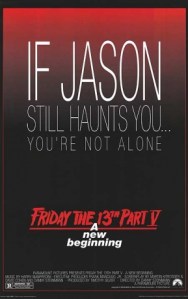
Film Review: Friday the 13th: A New Beginning (dir. by Danny Steinmann)


(Spoilers Ahead.  So there.)

So, imagine that you’ve got a huge film franchise that was built around one iconic character.  And guess what?  In the previous installment of your huge film franchise, that iconic character was killed so graphically that there’s no possible way that he could just pop up and go, “It was just a flesh wound.”  What do you do?

This is the problem that was facing Paramount Pictures when it came to making a fifth Friday the 13th film.  The previous installment made a lot of money but it also ended with Jason pretty decisively dead.  Paramount’s solution?   Friday the 13th without Jason.  Released (much like me) in 1985 and directed by Danny Steinmann, Friday the 13th: A New Beginning remains a controversial film among fans of the franchise.  A lot of people claim that it’s the worst installment.  Myself, I consider it to be one of the best.

Friday the 13th: A New Beginning opens (like many great B-movies) with a cemetery in the rain.  Wearing a yellow raincoat,   Tommy Jarvis (played in a cameo by Corey Feldman) approaches a grave that is marked “Jason Voorhees.”  Suddenly, two rather moronic gravediggers come running up.  While Tommy hides in the nearby bushes, the gravediggers dig Jason up.  “Yee-haw!” one of them shouts.

(I know this because I turned on the close captioning as I watched the film.  It’s one thing to hear the dialogue in a Friday the 13th film being spoken.  It’s another thing to see it actually written out at the bottom of your screen.)

Suddenly, Jason — complete with hockey mask and machete — pops out of the grave and kills the two grave robbers.  He walks over to where Tommy is hiding, lifts up his machete, and — suddenly, Tommy(now played by a brooding and sexy John Shepherd) wakes up!  It turns out that several years have passed and Tommy, after spending five years in a mental asylum, is now on his way to Pinehurst, a halfway house that just happens to be located in the Crystal Lake area.

A New Beginning has such a bad reputation that it’s often forgotten that this opening sequence is one of the few genuinely scary sequences to be found in the entire franchise.  Everything from the ominous dark skies to the lushly green bushes that Tommy hides in to the artful way the lightning storm is used to punctuate the sense of danger contributes to making this sequence feel very ominous and genuinely nightmarish.  It’s a bit shocking (yet undeniably effective) to go from the impressionistic lushness of Tommy’s dream to the rather harsh and grainy look of the rest of the film. 

(For those of you who are familiar with Italian horror, it almost feels like the dream was directed by Dario Argento while the rest of the film was done by Joe D’Amato.)  

Anyway, Tommy gets dropped off at Pinehurst where he meets the two liberal do-gooders who are in charge of the facility, Matt (Richard Young) and Pam (Melanie Kinnaman).   He also meets “Reggie the Reckless” (Shavar Ross), the bratty little grandson of Pinehurst’s cook, as well as the other residents of Pinehurst.  Pam and Matt inform Tommy that Pinehurst has no rules.  Or as they inform him, “It’s an honor system.”

It quickly becomes apparent that they might want to reconsider that honor system because not only do Eddie (John Robert Dixon) and Tina (DebbiSue Voorhees) get caught having sex on the neighbor’s property but Vic (played by Mark Venturini, who was all sexy and dangerous in his 2 minutes of screen time) ends up hacking the annoying Joey (Dominick Brascia) up into little pieces with an axe. 

(In Vic’s defense, he looked really good with an axe and Joey was really annoying.)

While Vic is whisked off to jail (Sadly, never to be seen again) two paramedics scoop up remains of Joey.  One of the paramedics — Roy (Dick Wieand) — stares at the body for a long time and doesn’t seem to find his coworkers jokes humorous.  Hmmm…wonder what’s up with that?

As tragic as the death of Joey is, it does lead to one of my favorite lines of all time when, the morning after the murders, the remaining residents of Pinehurst gather for breakfast and they notice that two extra places have been set for the dead Joey and the incarcerated Vic.  Stuttering Jake (Jerry Pavlon) exclaims, “You don’t set a place for a dead person!”  And you know what?  He’s right.

Soon, people all over town are getting murdered.  The guys who talks to himself while snorting cocaine (played, in a rather funny performance, by Bob DeSimone) gets an axe to the forehead.  The waitress (Rebecca Wood-Sharkey) who flashes her boobs at a mirror and goes, “It’s showtime!” gets murdered as she leaves work.  Two Jersey Shore wannabes are killed when their car stalls.  The Sheriff (Marco St. John) looks over one crime scene and says, “What the Hell’s going on here?”  Roy, standing behind him, says, “You talking to me, Sheriff?”  Hmmm…it’s odd how Roy keeps popping up in the movie for no reason…

The Mayor (played by Ric Mancini) confronts the Sheriff and demands to know who is killing everyone in town.  “Jason Voorhees,” the Sheriff slowly responds.  “Jason Voorhees is dead!  He was cremated” the Mayor screams as he empties on ashtray on the sheriff, “THIS IS JASON VOORHEES!”  This is probably my favorite scene in the entire movie because St. John underplays his entire role while Mancini overplays and delivers every line as if he’s in a community theater production of Lost in Yonkers.

That gets to the heart of what I really enjoy about A New Beginning — not only does this film have the largest body count of any film in the series, it also has the most genuinely eccentric cast of characters.  Absolutely nobody in this film behaves like a conventional human being.  It goes beyond just the normal odd slasher movie behavior.  Instead, watching this film is like peering into some sort of parallel universe where some minor shift in the Earth’s tilt has caused everyone to go a little crazy.  Probably the closest the film comes to a normal person is poor traumatized Tommy and he only says about ten lines in the entire film.  (That said, John Shepherd did a really good job and had a lot of presence of Tommy.  There’s an oddly eerie scene about halfway through the film where Tommy stares up at a neon sign and, as I looked at his face illuminated by the glowing blue of the sign, I realized that what I had always heard about good acting — that it all starts with expressive eyes — was true.) 

(In a perfect world, Tommy would have eventually ended up with Vi — played by Tiffany Helm — the new wave girl who spends almost the entire movie dancing in her room.  Seriously, they would have made a cute couple.)

Anyway, once our killer has gotten through killing random townspeople, he starts to kill off the residents at Pinehurst.  After taking part in one of the most explicit sex scene in the history of the franchise, Eddie and Tina are rather brutally killed off.  (That’s a shame because Voorhees and Dixon both had a really good and fun chemistry together and were both likable actors.  Unfortunately, their characters were sex-crazed and you know what that means…)  While Matt goes off to try to find the missing Eddie and Tina, Tommy, Pam, and Reggie go off to hang out with Reggie’s rather odd brother Demon (played by Miguel Nunez, Jr.) who wears more jewelry than I do and sings a duet with his girlfriend while he’s sitting on the most disgusting toilet in the history of film.  (Seriously, I had to look away…) 

Anyway, the remaining residents of Pinehurst are all killed by a seemingly resurrected Jason (however, Jake and Robin — played by Juliette Cummins —  do get to watch A Place In The Sun before they die so at least something good happened to them that night) and Pam ends up spending almost the entire rest of the movie running around in the rain and tripping in the mud whenever Jason shows up.  Jason eventually corners Pam, Tommy, and Reggie in a barn but then ends up falling out of a window and landing on some conveniently placed spikes.  Jason’s hockey mask falls off and — surprise! — it wasn’t Jason after all.  Instead, it was Roy, the weird Paramedic who kept showing up randomly and looking around kinda guilty-like whenever anyone mentioned anything about the murders.  Wow!

One of my favorite films book is Peter M. Bracke’s Crystal Lake Memories: The Complete History of Friday the 13th.  Taking on the series on a film-by-film basis, Crystal Lake Memories is a fascinating oral history that is full of all sorts of interesting behind-the-scenes facts.  Reading the chapter on Friday the 13th: A New Beginning, one is left with the impression that 1) everyone on the film was constantly snorting cocaine and 2) director Danny Steinmann is perhaps the most enigmatic figure in the history of the films.

In Crystal Lake Memories, depending on who is being interviewed, Danny Steinman comes across as either a maniac, a bully, or an underappreciated genius.  Quite a few people claim that Steinmann was out-of-control.  However, actress DebiSue Voorhees (who you would expect to have all sorts of unpleasant stories about the film since she’s the one who had to spend an entire shooting day laying on the ground naked in front of a bunch of strangers) is a lot more complimentary, saying that Steinmann was a “gentleman” throughout the entire shoot.  What everyone seems to agree on is that he was the son of wealthy art dealer and that he got his start as a director by making a hardcore porn film before moving on to make two wonderfully trashy exploitation films — The Unseen and Savage Streets.  Steinmann was apparently hired to bring a certain rough edginess to A New Beginning and he obviously did just that as A New Beginning had more violent deaths and more nudity than any previous installment of the series.  Because of the need to get an R rating, a lot of bloody footage hit the cutting room floor but what was left is surprisingly effective.   (Pictures of what was cut can be found on several sites online and yes, it’s all pretty gruesome.)

Unlike most people, I actually think that A New Beginning is one of the best films in the franchise, precisely because it is so ludicrous and over-the-top.  What Danny Steinmann did with this film was that he took everything that one expected from a Friday the 13th film and he pushed it all to its most logical extreme.  Everyone knew that, regardless of whether the film was being made by a major studio or not, the Friday the 13th films were meant to trashy, ludicrous, sleazy, and fun.  Steinmann was just the only one who had the guts to admit it by making a film that not only admitted what it was but celebrated it as well.  Friday the 13th: A New Beginning is the most openly grindhouse of all of the Friday the 13th films and for that, it deserves more credit than it’s gotten.   

Despite upsetting a lot of fans (not to mention the critics), Friday the 13th: A New Beginning was a box office success which could only mean that there would be another installment in the franchise.  Coming tomorrow: my review of Friday the 13th: Jason Lives.

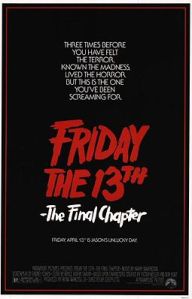
Film Review: Friday the 13th: The Final Chapter (dir. by Joseph Zito)


(spoilers below)

Today, continuing our look at the Friday the 13th horror franchise, we consider the misnamed Friday the 13th — The Final Chapter.  Originally released in 1984, this film apparently was really sold as being the final chapter and Tom Savini even returned to do the gore effects because, supposedly, he wanted to kill off his most famous creation.  To be honest, that all sounds like a lot of hype and hucksterism to me but, regardless of the title’s insincerity, The Final Chapter is one of the best (some would say the best) installments in the series.

The Final Chapter begins less than an hour after the end of Part 3.  (One of the curious things about the Friday the 13th series is that the 2nd, 3rd, and fourth films all occur during the same long weekend.  It never seems to disturb anyone in the 3rd or 4th film that a bunch of people have just been murdered in the same general area.)  Jason, who was killed by the terrible Chris Higgins at the end of Part 3, is taken down to the county morgue where he promptly turns out to not be dead after all.  He kills a nurse and an orderly and then, instead of continuing to seek vengeance on Chris (with whom he was pretty much obsessed in Part 3) , he decides to go kill a whole bunch of other people who have just shown up at Crystal Lake for the weekend. 

Those other people are a group of dorky but rather likable college students who have rented a house on the lake.  This is probably the most quirky group of vacationers ever to come to Crystal Lake and it’s a credit to an unusually strong (and unsung) ensemble cast that you actually do believe that these people are friends.  In the group, we have Doug (a dreamy Peter Barton), shy virgin Sarah (Barbara Howard, who is so believable as a nice girl that I felt bad for her when she died), Paul (Alan Hayes), Paul’s slutty girlfriend Samantha (Judie Aronson), and finally heterosexual life partners Jimmy (Crispin Glover) and Ted (Lawrence Monoson).  Jimmy and Ted provide the film with its “comic relief,” the majority of which is pretty weak but Crispin Glover gives such an odd performance that he’s enjoyable nonetheless.  Eventually, our vacationers meet two twins, Tina and Terri (Camilla and Carey Moore) and then they all go back to the house to watch old nudie films and Crispin Glover does a hilariously spastic dance before losing his virginity to one of the twins.  (“Was I a dead fuck?” he asks after, with an aching sincerity.)  And then Sarah gets ready to lose her virginity to Doug but then that defender of purity, Jason (played here by Ted White), pops up and kills everyone.  Seriously, Jason had a busy weekend.

Unfortunately for Jason, Trish Jarvis (Kimberly Beck) and her little brother Tommy (Corey Feldman, who gives a pretty good performance here even if Tommy is kind of a brat when you get right down to it), happen to live next door.  Trish is prepared for Jason because she has previously met yet another camper — Rob (Erich Anderson),who specifically came up to Crystal Lake to track down and kill Jason because Jason killed his sister Sandra in Part 2.  (Of course, by the series chronology, Sandra only died two days ago so I guess Rob moves pretty quickly.)  Also unfortunate for Jason, Tommy is an aspiring makeup artist who makes himself up to look like Jason and, in the surprisingly exciting finale, uses his skills to fool Jason and then hack him up while screaming, “DIE!” all the while.

Plotwise, Friday the 13th: The Final Chapter is a pretty standard slasher film and, at times, it asks the audience to suspend its disbelief just a little bit too much.  Whenever I see the scene where Tina is pulled out the second story window, I always find myself wondering 1) how Jason managed to climb up the side of the house in the rain, 2) why did he decide to do that when, in the previous scene, he was already inside the house, and 3) why didn’t anyone inside the house hear Tina crashing into the station wagon below.  And yet, despite this, Friday the 13th: The Final Chapter is considered by many (including me) to be the best of the series. 

To me, this film succeeds because of two men — Joseph Zito and Tom Savini.    Whereas later Friday the 13th directors often times seemed to be ashamed of the films they were making, Zito was an exploitation vet who had already directed one of the most brutal slashers of all time, The Prowler.  As a director, Zito specialized in telling simple stories as brutally and efficiently as possible.  That’s certainly what he does here and the end result is a fast-paced Friday the 13th that — as opposed to Part 3 — didn’t suffer from any excessive filler.  As well, Zito also does a good job in framing and executing the film’s many tracking and p.o.v. shots, continually keeping the audience off-balance as to whether we’re seeing the camera’s point-of-view or Jason’s. Meanwhile, Tom Savini’s gore effects are just as realistic and disturbing as in the first film.  This is an undeniably bloody film that, at the same time, never slips into tedious “torture porn,” and both Zito and Savini deserve a lot of credit for that.

(Incidentally, here’s a little trivia for all of you Maniac fans — did you know that Joe Spinell’s loathsome Frank Zito was actually named after Joe Zito, who was apparently friends with William Lustig.)

Of all the Friday the 13th films, The Final Chapter probably features the strongest cast.  It certainly features one of the best “final girls”, with Kimberly Beck giving the type of strong performance  that Dana Kimmell failed to supply in Part 3.  Though only Corey Feldman and Crispin Glover would go on to any greater fame, the entire cast is likable and, as opposed to previous and future installments, no one gives a weak performance.  (Even the gimmicky twins do well enough.)  Though I know several people will laugh at this, I sincerely believe that there is an art to giving an effective performance in a film like Friday the 13th.  The key, I think, is to be likable enough that people will watch you and wish you well yet, at the same time, to be bland enough that nobody will be traumatized by your eventual death.  If anything, the cast of The Final Chapter isn’t quite bland enough.  Everyone brings almost too much life to these thinly drawn characters and, as a result,  it’s hard not to feel a little bit traumatized when they start dying.  Crispin Glover, for instance, gave such a quirky and interesting performance that I was actually pretty depressed to see him get that meat cleaver buried in his face.  As well, Peter Barton and Barbara Howard make such a cute couple that it’s upsetting that neither one of them survives to the end of the film. 

Despite the film’s title, the fourth installment of the Friday the 13th franchise was hardly the final chapter and it’s pretty obvious that it was never meant to be.  While I know that some people do complain about the cynicism behind the film’s title, I happen to love it.  It’s like a throwback to the classic old exploitation films that were always sold with sordid titles — like Too Young To Die and Arrested at 17 — that in no way reflected the actual content of the film.  Slasher films are the direct descendants of movies like Reefer Madness and Dwain Esper’s Maniac and it’s nice to see that heritage honored with the false promise of a final chapter.

Though the film’s ending was clearly set up to allow Tommy to eventually take Jason’s place (and, seriously, imagine how disturbing that could have been), Jason would eventually return.  But first, the series would take a major detour with its most over-the-top chapter yet.  We’ll talk about the infamous Friday the 13th — A New Beginning tomorrow.

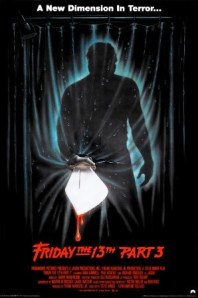
Film Review: Friday the 13th Part 3 (dir. by Steve Miner)


Today, we continue to consider the Friday the 13th film franchise with Friday the 13th Part 3, a film that many (like me) consider to be one of the worst slasher films ever made.  Certainly, it’s a contender for the title of the worst Friday the 13th film.

Taking place a day after the end of Part 2 (and with John Furey still nowhere to be seen), Friday the 13th Part 3 tells the story of Chris Higgins (Dana Kimmell), her annoying friends, and their weekend at Crystal Lake.  Her friends include pregnant Debbie (Tracie Savage) and her boyfriend Andy (Jeffrey Rogers), who is cute but for some reason is always walking on his hands.  There’s also the fat and rather depressing Shelly (played by Larry Zerner) and Vera Sanchez (Catherine Parks), who comes from the wrong side of the tracks and has been recruited to serve as Shelly’s date.  And then finally, there are two hippies (David Katims and Rachel Howard) who appear to be in their late 30s and who appear to just pop up mysteriously in the back of Andy’s van at one point.  Seriously, I’ve seen this film a few dozen times and I’ve never figured out just why the hippies are there.

Anyway, once at Crystal Lake, Chris goes off with her ex-boyfriend Rick (Paul Kratka) while her friends spend their time having sex, smoking weed, and dealing with three angry bikers who apparently belong to the Red Herring Motorcycle Gang.  Chris tells Rick about how, two years previously, she was attacked by a disfigured maniac  who just happens to hang out around Crystal Lake…

Anyway, pretty much what you would expect to happen happens.  Soon Jason Voorhees (played in this one by Richard Brooker, who is very physical and intimidating in the role) is killing everyone.  Along the way, he puts on his hockey mask for the first time and the legend, as they say, is born.

Friday the 13th Part 3 was originally filmed in 3-D and was apparently initially released under the title Friday The 13th 3-D.  This makes it a somewhat weird experience to watch the film on video because you spend the whole time spotting scenes that were obviously included just to exploit the 3-D.  Sometimes, the scenes shot for the 3-D are still effective even in 2-D.  The scenes where an arrow flies straight at the camera and poor old Rick’s eye literally pops out of his head remain surprisingly effective.  However, for the most part, the film is made up of scenes where Andy plays with a yo-yo or some weird kid points a softball bat the camera.  Seen in 2-D, the majority of these scenes feel weird but yet they still have an oddly ludicrous appeal to them.  If nothing else, spotting these scenes make for a fun drinking game.

So, why is Friday the 13th Part 3 widely considered to be the worst of the Friday the 13th films?  There are several reasons but a lot of it comes down to the fact that the film is badly acted even by the standards of Friday the 13th.   Whereas previous (and future) installments featured casts that, at the very least, seemed to be trying to at least keep things interesting, the cast of this one seems to be incredibly bored with the whole thing.  (In their defence, I’m sure the filming was more about getting the 3-D right than worrying about crafting an interesting ensemble dynamic.)   As portrayed by Dana Kimmell, Chris Higgins is probably one of the least sympathetic final girls in the history of the slasher genre.  Essentially, she drags all of her friends off to a place that she knows is inhabited by a maniac (though she apparently doesn’t bother to say anything about it until they’re already there) and then — surprise, surprise — all of her friends get killed!  Good job, Chris.  Way to go.

Oddly enough, everything I’ve read about Friday the 13th Part 3 seems to suggest that Dana Kimmel actually played a surprisingly large role in the production of this film.  Kimmel was reportedly pretty religious and somehow talked the filmmakers into removing several scenes of excessive violence and gratuitous sex, which kind of seems to defeat the whole purpose of making a film like Friday the 13th in the first place.  Strangely, even after the film was watered down, it’s still probably the most mean-spirited of the entire franchise.  This after all is the film where Jason kills a pregnant girl, an outspoken chicana who has bravely defied her mother just so she can take part in the Chris Higgins Weekend of Death, a poor fat kid who is desperate to be loved, and not one but two comic relief hippies. 

Director Steve Miner, who did such a good job keeping Part 2 creepy and exciting, seems to have been bored when he directed this film and the whole thing has a harsh, YouTube feel to it.  Some of that may be due to the fact that the film was originally done in 3D but it’s hard to deny that Friday the 13th Part 3 is exactly everything that its many critics claim it to be.  Luckily, in the next chapter of the Friday the 13th saga, a new director would breathe new life into the franchise even as he attempted to kill it for good.

Coming tomorrow…my review of Friday the 13th: The Final Chapter.