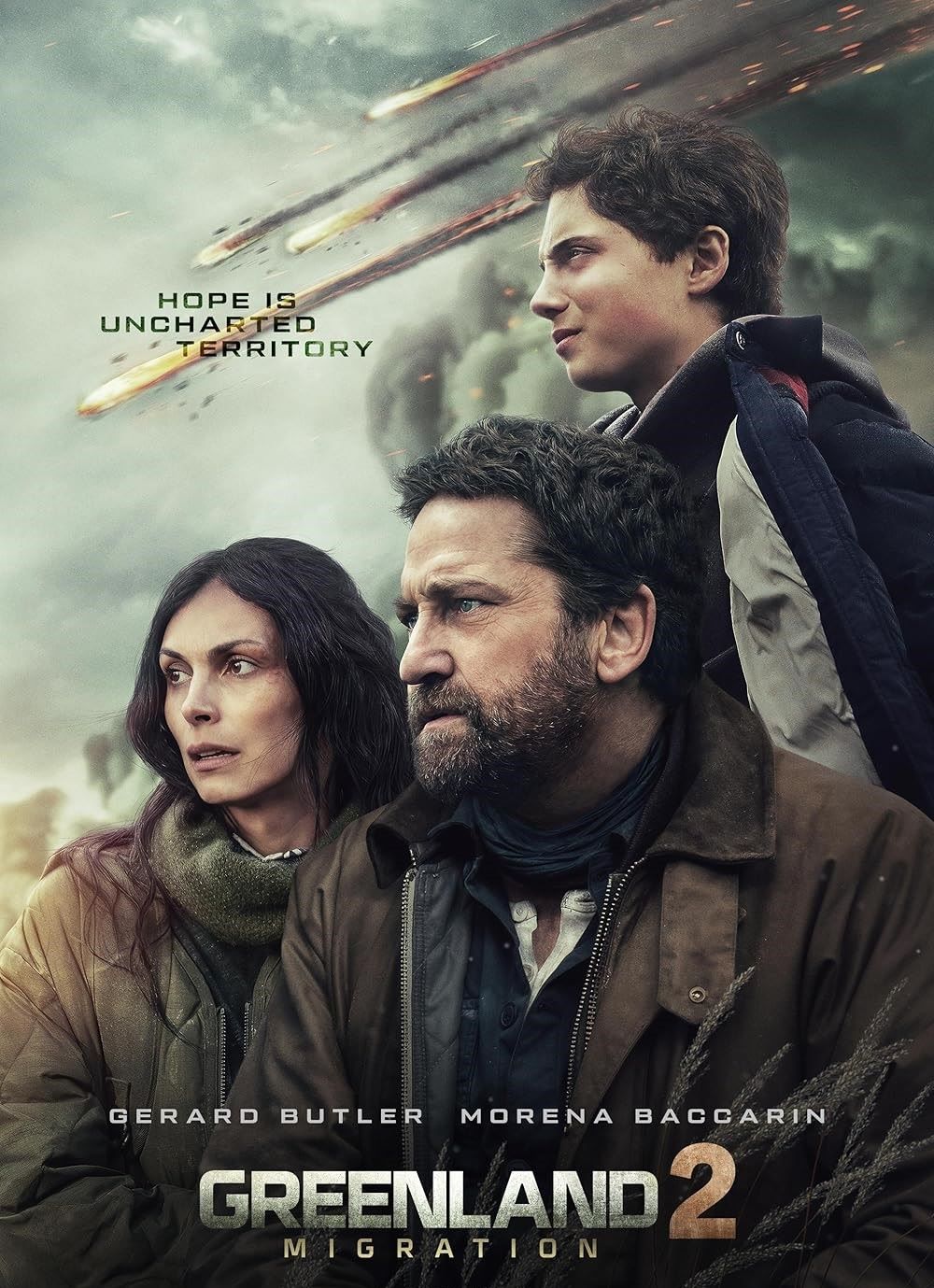
Review: Greenland 2 – Migration (dir. by Ric Roman Waugh)


Greenland 2: Migration is a sequel that mostly leans into “if it ain’t broke, don’t fix it,” for better and for worse. It delivers sturdy spectacle, a committed Gerard Butler, and a tense family-through-hell journey, but it also rehashes a lot of the first film’s beats and pushes the plausibility envelope more often this time around. If you were on board with Greenland as a grounded, human-scale disaster movie, this one feels like the more bombastic, road-movie expansion pack rather than a full evolution.​

Set about five years after the comet strike that wiped out most of civilization, Greenland 2: Migration finds the Garrity family still holed up in the Greenland bunker complex, part of a fragile community waiting for the surface to become livable again. John (Gerard Butler) now works as a scout/engineer, Allison (Morena Baccarin) has stepped into more of a leadership role within the bunker, and their son Nathan is older, restless, and itching to prove himself outside the relative safety of underground life. When escalating quakes, electromagnetic storms, and general planetary chaos literally collapse the bunker around them, the film quickly turns into a survival trek across a devastated Europe toward the Clarke impact crater in southern France, rumored to be the one spot on Earth that has actually healed.​

As a premise, the film works; it gives the story a clear A-to-B structure and justifies the shift from the contained panic of the first movie to a post-apocalyptic road odyssey. The script keeps the stakes straightforward: reach the crater region or die trying, while dodging unpredictable weather events, territorial military forces, and desperate survivors who are just as dangerous as the environment. There is something appealingly old‑school about how it plays as a throwback survival picture—less interested in intricate worldbuilding and more in reaction, improvisation, and narrow escapes.​

The downside is that you can feel the film constantly echoing Greenland’s structure: another long, peril-filled journey, another series of escalating close calls, another parade of briefly sketched side characters who exist to either help or threaten the Garritys for a single sequence. The first film had novelty on its side and a sharper sense of dread as the comet approached; here, the formula is familiar enough that you can often tell who will live, who will die, and roughly when another set piece is about to kick off. That predictability doesn’t kill the tension outright, but it does flatten the emotional peaks, especially if you walked in hoping for a genuinely new angle on this world.​

Gerard Butler remains the anchor, and this is squarely in his comfort zone. He plays John as perpetually exhausted yet stubbornly practical, the kind of guy who will grumble his way through heroism, and there’s an easy, weathered charm to that. Morena Baccarin gets a bit more agency this time, with Allison often driving decisions instead of just reacting to them, though the movie still stops short of really turning her into a co-lead with equal interiority. Roman Griffin Davis steps in as the older Nathan, and he brings a nervous, teenage energy that fits the “kid who grew up in a bunker and wants to see the world” vibe, even if the character’s arc hits pretty familiar notes about bravery and responsibility.​

The script does flirt with heavier themes: the psychological toll of surviving the end of the world, the guilt of those who made it into the bunkers versus those left outside, and the question of what “home” even means when the planet itself has effectively turned against you. There are moments—like the chaotic clashes around remaining bunkers or the wary interactions with other survivor groups—that suggest a more morally murky, Children of Men‑style story lurking underneath. But the movie rarely lingers on these ideas; it tends to touch them, nod, and then hurry back to the next escape sequence or visual spectacle.​

Visually, though, Greenland 2: Migration is where the sequel justifies its existence. Director Ric Roman Waugh and the crew make great use of European locations and Icelandic landscapes to sell a world that has been carved up by tectonic violence and choked with ash, but is slowly, unevenly rebuilding. The dried-out English Channel, the ravaged coastlines, and the eerie, storm‑lit skies give the film a distinct apocalyptic texture that feels different enough from the North American focus of the first movie. While some of the physics and survival odds strain credibility—especially as the Garritys walk away from setpiece after setpiece—there’s no denying the spectacle is engaging on a big screen.​​

The pacing is generally brisk; at around an hour and a half, the film doesn’t overstay its welcome, and it’s usually onto the next problem before you have time to overthink the last one. That said, the middle stretch starts to feel a little modular, like a video game where each region is an encounter: Liverpool bunker standoff, English Channel crossing, roadside bandits, insurgent ambush, and so on. Each of these sequences is competently staged, but because the emotional throughline is fairly simple—protect the family, get to the crater—the movie risks becoming a string of obstacle courses rather than a journey that deepens the characters in meaningful ways.​

Where the film does land emotionally is in its treatment of sacrifice and the long-term cost of survival. John’s cumulative radiation exposure, picked up over years of scouting the hazardous surface, is a smart, quietly tragic detail, and the way the story gradually brings that to the forefront gives the third act a genuine sense of finality. The losses along the way, including allies who join the trek and do not make it, often feel a bit telegraphed, but they at least reinforce the idea that survival in this world comes with a steep bill that keeps coming due. The film’s ending, at the Clarke crater, delivers a cautiously hopeful image without completely sugarcoating what it took to get there, and that balance of bleakness and optimism fits the series well.​

On the more mechanical side, the editing and sound design do a lot of heavy lifting. The cross‑cutting in the disaster scenes keeps geography mostly clear, and the low, grinding rumble of shifting earth and sudden storms adds tension even when the visuals are mostly people running or driving. The score is functional rather than memorable, but it meshes with the film’s focus on constant forward momentum instead of big thematic musical statements. It’s the kind of craft that doesn’t call attention to itself, which suits a movie that wants to feel like a direct, unpretentious survival yarn.​

In terms of how it stacks up to the original, Greenland 2: Migration is solid but clearly a step less distinctive. The first film surprised people by grounding its spectacle in everyday logistics—pharmacy runs, traffic jams, family arguments—and by keeping the camera mostly at human scale during an extinction‑level event. The sequel, by comparison, nudges closer to standard disaster‑franchise territory: bigger vistas, more action, and a stronger sense of franchise‑building, but less of that “this could be you and your neighbors” feeling that made Greenland stand out. Depending on what you want from a sequel, that may be a selling point or a letdown.​

Overall, Greenland 2: Migration is a competent, occasionally affecting continuation that doesn’t embarrass the original but also doesn’t redefine it. If all you’re looking for is another round of grounded‑ish apocalypse survival with Gerard Butler grimly shepherding his family through increasingly wild scenarios, this delivers exactly that, with a few striking images and some sincere emotional beats along the way. If you were hoping for a more daring thematic leap or a significantly different narrative shape, this will probably feel like a polished retread with a new coat of ash and ice. Either way, it’s an easy recommendation for fans of the first film and a decent mid‑winter disaster flick for anyone in the mood to watch people crawl through the end of the world one more time.
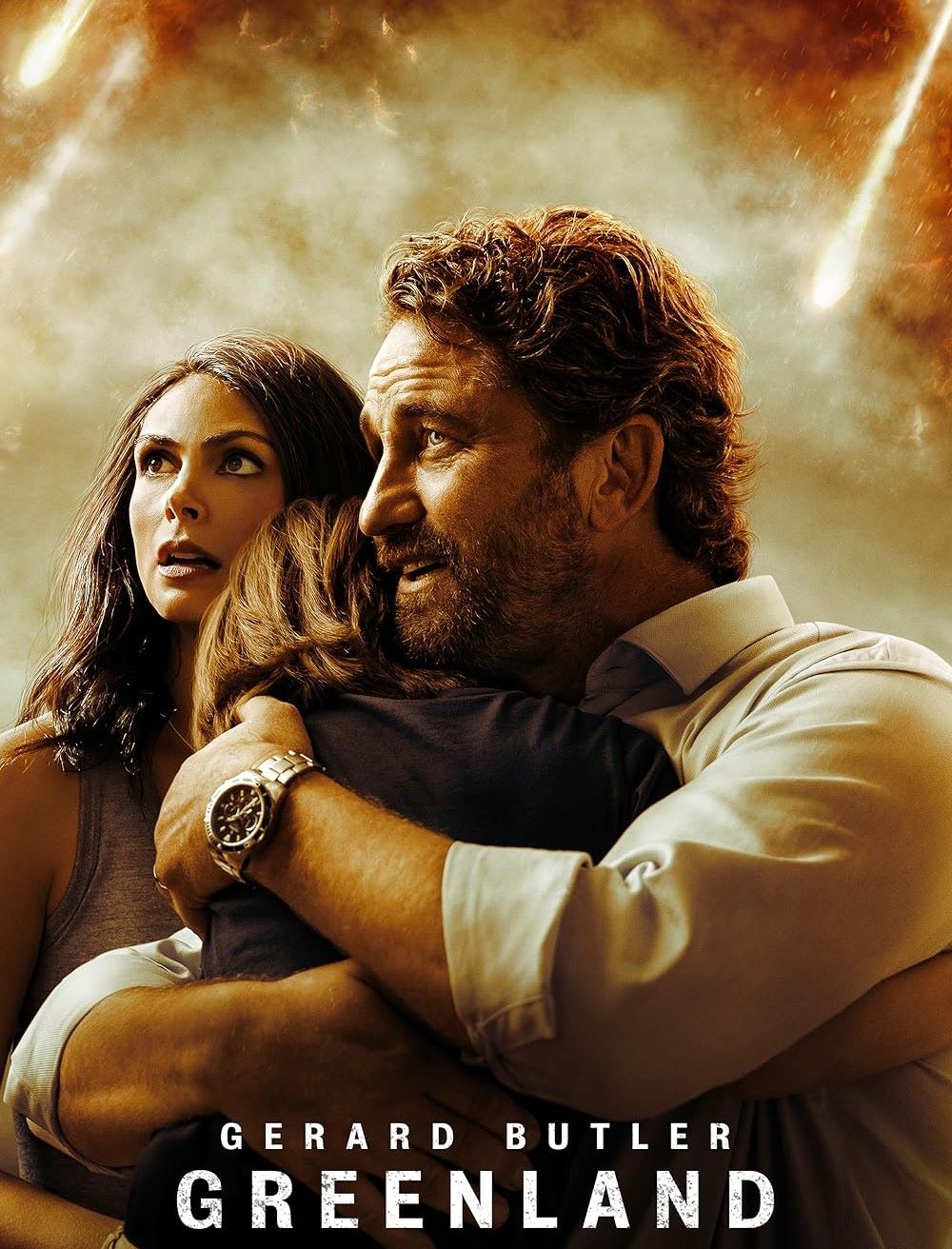
Review: Greenland (dir. by Ric Roman Waugh)


“But sometimes you just gotta suck it up. Push through, right? Even when you’re super scared.” — John Garrity

Greenland is one of those disaster movies that sneaks up on you a bit. It sells itself like another “stuff blows up while Gerard Butler scowls” kind of ride, but what’s actually on screen is a more grounded, road-trip survival story about a fractured family trying to stay together as the world quietly ends in the background. Originally slated for a wide theatrical release, the film dropped right as the COVID pandemic shutdown began in early 2020, forcing theaters to close and tanking its box office hopes before it even started. That quick pivot to video-on-demand and streaming services gave it a real second life though, letting it find an audience at home when everyone was hunkered down, doomscrolling real-world chaos that felt eerily similar to the on-screen panic. It’s not a genre reinvention, but it’s a solid entry that balances tense set pieces with surprisingly sincere family drama, even if it leans hard on contrivances and some uneven effects along the way.​

The setup is simple: John Garrity (Gerard Butler), his estranged wife Allison (Morena Baccarin), and their young son Nathan are thrown into chaos when a supposedly “spectacle only” comet called Clarke turns out to be a civilization-ending event. The family receives a government alert selecting them for evacuation, which kicks off a desperate scramble through crowded bases, riots, and crumbling infrastructure as they try to get to a classified bunker system in Greenland before impact. The structure is very much “point A to point B with escalating obstacles,” and if you’ve seen any road-movie apocalypse story, you can probably predict the broad strokes: separation, dangerous strangers, moral compromises, last-minute reunions, and a hopeful-but-not-too-happy ending.​

What makes Greenland stand out, at least compared to louder fare like Geostorm or the Emmerich filmography, is the way it shrinks the perspective down to the family level. The script keeps the camera glued to people on the ground instead of spending time with scientists in war rooms or presidents giving big speeches, so the apocalypse feels like a series of frightening news alerts and glimpses of distant fire instead of a nonstop CGI showreel. That choice works in the film’s favor; the tension comes less from “how big is the explosion?” and more from whether this specific kid gets his medication in time or whether this specific couple makes it through a checkpoint together.​

Gerard Butler reins in his usual action-hero mode and plays John as a somewhat worn-down, very fallible guy who’s been messing up at home long before the comet showed up. He’s not the indestructible savior archetype; he panics, he makes mistakes, and he ends up in violent situations that feel ugly instead of triumphant, especially during a grim sequence on a truck full of evacuees where a man tries to take his wristband and everything spirals. Butler’s limited but believable emotional range works here, and you can see why some viewers singled this out as one of his better recent performances in a genre that usually just uses him as a gruff mascot.​

Morena Baccarin gets a bit more to play than disaster-movie wives usually do, which is a pleasant surprise. Allison’s arc runs parallel to John’s for large chunks of the film as she navigates looters, manipulative would-be rescuers, and the absolute nightmare scenario of having her child kidnapped by a couple trying to pass him off as their own to gain access to evacuation flights. Baccarin sells the mix of desperation and competence; she’s constantly stuck in situations where the “right” moral call is murky, but the film never reduces her to someone who just waits around for John to fix things.​

The emotional spine of the story rests on the family dynamic and the small, very human interactions they have with strangers along the way. You get scenes with compassionate people—like the FEMA workers who listen to Nathan when he insists he’s been kidnapped—that remind you the apocalypse doesn’t instantly turn everyone into a villain, even as the script also leans into the uglier side of survival instinct. That push and pull between kindness and cruelty keeps Greenland from feeling completely nihilistic, and it lines up with the recurring idea that the real threat is less the comet itself than what people are willing to do to outrun it.​

On the disaster side of things, the film works with a mid-sized budget, and you can feel that restraint in both good and bad ways. When the CGI is kept at a distance—comet fragments streaking across the sky, distant impacts lighting the horizon, a sudden shockwave rolling through a neighborhood—it does a solid job of selling scope without drawing too much attention to its limitations. Up close, though, the seams show: some of the destruction shots and digital fireballs look cheap, which undercuts moments that are clearly meant to be awe-inspiring or terrifying, something multiple viewers have criticized as “not consistently convincing CGI effects.”​

Pacing-wise, Greenland rarely slows down, which is both a strength and a drawback. The film opens with domestic tension and immediately starts ratcheting things up: news of impacts, sudden evacuation notices, airport chaos, violent confrontations, and constant travel. That forward momentum keeps the film from dragging, but it also leads to what some viewers see as “too many plot twists and always new obstacles to overcome,” a sense that the script keeps piling on one more crisis just to keep the adrenaline high.​

Because the film tries to have it both ways—grounded survival and genre thrills—it occasionally betrays its own realism. The amount of coincidence needed to reunite characters after brutal separations, or to get the family to exactly the right airfield and exactly the right plane, feels contrived even by disaster-movie standards. By the time the story reaches its final act in Greenland, complete with last-minute sprinting toward bunkers while the worst of the comet hits, you can feel it edging closer to the “unfortunately genre-typical heroic towards the end” vibe that some reviewers pointed out.​

Where Greenland does feel a bit different from many peers is in tone. It’s not quippy, it’s not self-aware, and it does not pause for big “cool” shots of landmarks getting obliterated just for spectacle. The destruction is mostly glimpsed from the vantage point of regular people, via news broadcasts or distant views, which makes the apocalypse feel weirdly more intimate and plausible, like something you’d doomscroll rather than watch unfold from a helicopter. That seriousness is refreshing if you’re tired of disaster movies that treat mass death as a theme park ride, but it also means the film can come off as dour if you were hoping for more escapist fun.​

Reception-wise, Greenland landed in that “better than expected, still not amazing” territory with both critics and audiences. Some viewers praised it as “one of the best disaster movies” of recent years specifically because it prioritizes human drama over “weightless CG spectacle,” calling out how tense and emotionally engaging the smaller-scale approach feels. Others shrugged it off as “usual disaster film fare,” pointing to its predictable structure, familiar character beats, and lack of a truly clever story, saying it’s fine for passing time but not particularly memorable. Its streaming surge during lockdowns only amplified word-of-mouth, turning what could’ve been a forgotten theatrical casualty into a go-to comfort scare for pandemic viewers craving controlled chaos.​

Ultimately, Greenland sits in a comfortable middle lane. It’s not trying to reinvent the genre, and it doesn’t fully escape its clichés, but it does care more about its characters than its body count, and that goes a long way. If you go in expecting a grounded, on-the-road family survival story with occasional bursts of large-scale chaos, the film mostly delivers, bolstered by committed performances from Butler and Baccarin and a tone that takes the end of the world just seriously enough. If you’re looking for jaw-dropping effects or a genuinely surprising narrative, it will probably feel like a solid, slightly grim, one-and-done watch that does its job and quietly exits before wearing out its welcome—especially resonant for those who caught it streaming while the real world felt a little too apocalyptic itself.​

Film Review: Deadpool 2 (dir by David Leitch)


“From the studio that killed Wolverine!” the poster proclaims.

“Directed by the man who killed John Wick’s dog” the opening credits announce.

Deadpool 2 is so meta that it even opens with a close-up of a figurine of Hugh Jackman impaled on a rock or a branch or whatever it was that finally killed him at the end of Logan.  Deadpool, the irrepressible and nearly indestructible mercenary played by Ryan Reynolds, announces that he’s willing to accept the challenge posed by Logan‘s tragic ending.  Deadpool promises us that, in the movie we’re about to watch, he’ll die as well.  Deadpool then proceeds to blow himself up.

Of course, those of us who have seen first Deadpool film know better than to panic when Deadpool’s severed head flies at the camera.  Deadpool heals so quickly that, as long as his powers are working, he can’t be killed.  If he gets shot or stabbed, the wound heals almost immediately.  Broken bones mend themselves in record time.  When Deadpool literally gets ripped in half, he promptly starts to grow new legs.  Without his powers, of course, Deadpool would have died a long time ago.  He has cancer, a fact that the film doesn’t dwell upon but which still adds a bit of unexpected depth to the character and his trademark dark humor.

Of course, Deadpool is not just unique because his near-immortality.  Deadpool is also unique in that he, and he alone, understands that he’s a character in a movie.  Even more importantly, he understands that he’s a character who is being played by an actor named Ryan Reynolds.  (Some of Deadpool 2‘s best jokes — which I won’t spoil here — are at the expense of some of Reynolds’s earlier career choices.)  While everyone else in the film is taking things very seriously, as characters in comic book films tend to do, Deadpool is pointing out all of the clichés and even the occasional plot hole.  When Cable (Josh Brolin), a cyborg warrior from the future, offers up a hasty explanation for why he can’t just use time travel to solve all of his problems, Deadpool dismisses it as “lazy writing.”

With the monster success of Wonder Woman, Infinity War, and Black Panther, Deadpool is the hero that we now need.  I mean, let’s be honest.  Comic books movies can be a lot of fun and, right now, we’re living in the golden age of super hero cinema.  At the same time, these films can occasionally get a little bit pompous.  Think about the unrelenting grimness of the DC films.  Think about all the sturm und drang that made up the undeniably effectively ending of Infinity War.  It in no way detracts from those films to say that Deadpool’s refusal to take either himself or the movie too seriously often feels like a breath of fresh air.  Deadpool is the one hero who is willing to say to the audience, “Yes, it’s all ludicrous and silly and occasionally a little bit lazy.  Isn’t it great?”

And yet, even with all that in mind, Deadpool 2 has a surprisingly big heart.  Even while it encourages us to laugh as its excesses, the sequel makes clear that it has a bit more on its mind than the first film.  Deadpool 2‘s plot deals with the efforts of both Deadpool and Cable to track down an angry mutant who goes by the somewhat regrettable name of Firefist (Julian Dennison).  Cable has come from the future to kill Firefist and prevent him from eventually destroying the world with his anger.  As for Deadpool, he feels that the spirit of someone he loved wants him to save Firefist.  As for Firefist himself, he’s an escapee from the Essex Home For Mutant Rehabilitation, a Hellish orphanage where the hypocritical headmaster and his perverted staff attempt to torture young mutants into being normal human beings.  The parallel to conversion therapy is an obvious one and there’s always just enough outrage underneath the film’s humor.

Deadpool 2 is a fast-moving and quick-witted sequel and Ryan Reynolds is, once again, perfect in the role of the demented lead character.  The jokes are nonstop and fortunately, so is the action.  There’s a lengthy fight between Cable and Deadpool that’s destined to go down as a classic.  Another exciting scene opens with parachutes and ends with … well, I can’t tell you.  I won’t spoil it, beyond to say that sometimes, being a hero is all about good luck.  Deadpool 2 is an ultra-violent, ultra-profane action-comedy with a heart of iron pyrite.  It’s not a film to take the kids too.  Deadpool himself points that out.  (He also points out that the babysitter is probably stoned by now.)  However, Deadpool also says that this sequel is a film about family and, amazingly enough, it turns out that he’s not lying.

So far, 2018 has been the year of the comic book movie and Deadpool 2 is a welcome addition.

The Deadpool 2 Full Trailer


Unless we’re dealing with a story like The Lord of the Rings, where the second film is just a placeholder for the more epic finale, a sequel usually comes with a great deal of responsibility. It has to be larger in scope, with more of everything. If we’re lucky, the audience will be fully invested in the story arc as we watch our favorite characters return to face greater challenges.

Or sometimes, a sequel just needs more of what worked for the first film.

Deadpool 2 ups the ante, building on 2016’s promise to include Cable (played by Josh Brolin, doing a lot of work for Marvel these days), more gunfire, swordfights and explosions. Ryan Reynolds returns as our favorite Merc with a Mouth, with a new trailer free of unfinished special effects.  If the first movie made DMX’s “X Gonna Give It To Ya” or Salt ‘N’ Pepa’s “Whatta Man” its theme songs, this new trailer will do the same for LL Cool J’s classic “Mama Said Knock You Out”. YouTube is already chock full of “Deadpool 2 brought me here.” comments for the song.

Reynolds and Company know what they’re doing.

This time around, it appears that Deadpool has to protect a child (much like Logan) pursued by the time travelling mutant Cable. Though we don’t know the reasons behind this, we see Deadpool is forced to create a fighting team of his very own in X-Force. I can imagine Deadpool’s creator, Rob Liefield, is definitely proud of seeing his characters from the 1991 comic series finally brought on to the big screen.

In addition to Brolin, Deadpool 2 adds Atlanta’s Zazie Beetz as Domino. Most of the cast from the first film are back – Morena Baccarin (Vanessa), TJ Miller (Weasel), Leslie Uggams (Blind Al), Brianna Hildebrand (Negasonic Teenage Warhead), and even Karan Soni (Dopinder, who I hope has progressed in his relationship with his love interest, Gita).

David Leitch (John Wick, Atomic Blonde) takes over the directing duties from Tim Miller. I’m personally excited for that, having enjoyed his previous films. This should give the movie a different feel from the original.

Deadpool 2 premieres in cinemas on May 18th, 2018, giving audiences enough time to come off of their Avengers: Infinity War highs and enjoy.


Deadpool, Meet Cable (A Teaser)


“Well, that’s just lazy writing.” Ah, good old Wade Wilson.

Fox just dropped a teaser trailer for the Deadpool Sequel (which doesn’t really have a name at this point other than maybe Deadpool 2). This one focuses on Cable and shows off some of his combat abilities. It looks like everyone’s back on board here, with Deadpool breaking the 4th wall, as usual.

Deadpool 2 will be in cinemas this May.

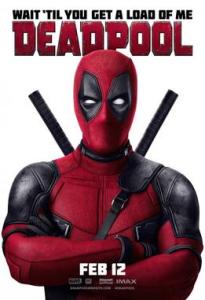
Film Review: Deadpool (2016, directed by Tim Miller)


Deadpool_posterWade Wilson (Ryan Reynolds) is a mercenary with a sense of humor and a heart of not quite gold.  When he is diagnosed with terminal cancer, he leaves his girlfriend, Vanessa (Morena Baccarin), and agrees to allow a secret organization to experiment on him.  They will cure his cancer but, in return, they expect him to serve as a super powered slave for their own clients.  After being severely disfigured by the sadistic Ajax (Ed Skrein), Wilson develops a super human healing ability.  Eventually, Wilson escapes but now fears that he’s too twisted to return to Vanessa.  Taking on the identity of Deadpool, Wilson tries to track down and get his revenge on Ajax (real name: Francis).


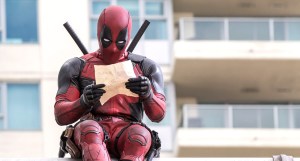
From the moment I heard that 20th Century Fox was producing a Deadpool film, I had only one request: “Don’t fuck it up.”

After all, there is a reason why Deadpool is one of the most popular characters to come out of Marvel’s later period.  He’s certainly the best thing that Rob Liefeld has ever had a hand in creating.  First introduced in New Mutants and subsequently used in the various X-books before getting his own ground-breaking series, Deadpool has earned the right to be known as “the merc with a mouth.”  Deadpool was popular because, out of all the characters in the Marvel Universe, he alone understood that he was in a comic book.  He would frequently break the fourth wall and talk about how ridiculous life as a comic book antihero was.  At a time when almost all other super powered characters were presented as being grim and troubled, Deadpool was the often vulgar antidote to comic books that took themselves too seriously.

(My favorite Deadpool moment was when Deadpool had been once again incorrectly assumed dead.  When Blind Al told Weasel that Deadpool was dead, the footnote at the bottom of the panel read, “Guess the series is over!”)

dp

I saw Deadpool last weekend.

They did not fuck it up.

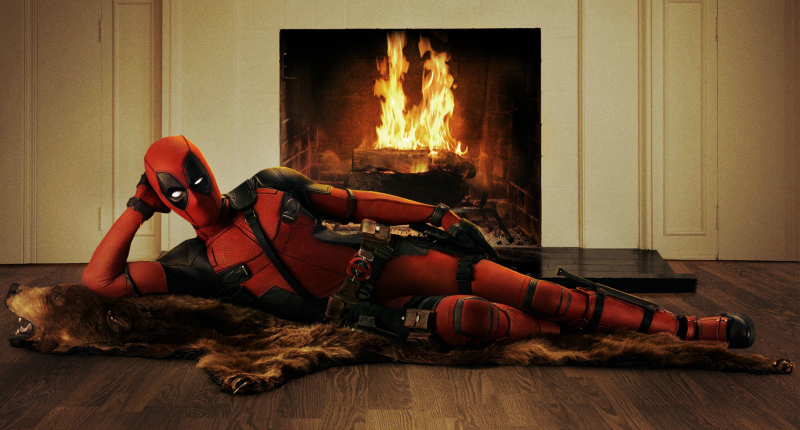
My biggest fear was that the Deadpool movie would present a neutered or toned down Deadpool but there was no need to worry.  Though the film’s plot may be a standard origin story with a revenge subplot tossed in, Deadpool distinguishes itself by staying true to the character’s anarchistic and self-referential humor.  This is not a case of Dolph Lundgren putting on a trenchcoat, driving a motorcycle, and calling himself the Punisher.  And it is certainly not a case of the strange character that Ryan Reynolds played in X-Men Origins who was supposed to be Deadpool but definitely was not.  Deadpool allows Deadpool to be Deadpool, right down to the red uniform, the broken fourth wall, and the R-rated humor and violence.  Deadpool earns its R rating and wears it as a badge of honor  This is not a movie for children.  Everything that most heroes do and say off-camera, Deadpool does and says for the entire audience to see and hear.

That's not Deadpool!

That’s not Deadpool!

That's Deadpool!

That’s Deadpool!

Deadpool ends with the promise of a sequel, perhaps one that will include Cable.  Since Cable is one of my least favorite Marvel characters, I hope that the sequel will at least see the return of Colossus (rendered by CGI and voiced by Stefan Kapicic) and Negasonic Teenage Warhead (Briana Hildebrand), both of whom make welcome appearances here.  Negasonic Teenage Warhead especially deserves her own spin-off film.  Let her blow up shit for two hours.  I’ll watch.

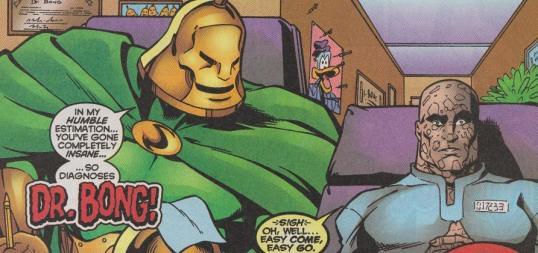
Also, if the sequel has to feature Cable, I hope it will also include Dr. Bong.  Deadpool needs all the help he can get!

1988445-doctor_bong_diagnosis_deadpool_26

A Very Red Band Deadpool Trailer for Christmas


Deadpool

Twentieth Century Fox has had a stranglehold on the film rights to one of Marvel Comics’ biggest properties: the X-Men and every character associated with them. So far, the studio has only taken the core X-Men and Wolverine properties and adapted them onto the big-screen to mixed results. Some fans of the properties have even come to see the Fox vision for these mutant characters as tame and water-down version of the classic comic book characters.

One such mutant character which had languished in development hell within Fox was the character of Deadpool. The so-called “Merc with a Mouth” had an off and on development cycle throughout the years. The character finally appeared in the forgettable Wolverine stand-alone film, X-Men Origins: Wolverine. The character was played by Ryan Reynolds and just like another superhero film (this time for DC as the classic character of Green Lantern) he starred in, this one bombed and he was starting to be seen as a curse on superhero projects his named gets attached to.

If there was one major effect that Marvel Studios’ success with their Marvel Cinematic Universe has had with the rest of the Hollywood studios was to force them to treat their comic book property licenses seriously. They had to embrace the comic book nature of the properties they held the license to and work with it instead of against it.

It looks like Fox might be doing just that with their R-rated attempt at the Deadpool live-action adaptation starring the star who campained long and hard to produce and star as the title character: Ryan Reynolds. If the tone we’ve seen with the Comic-Con trailer and this latest red band trailer is any indication then the Ryan Reynolds superhero curse could be ending in early February of 2012.

Deadpool is set for a February 12, 2016 release date.

The (Official) Deadpool Red Band Trailer


Deadpool

Fox has released the trailer for Marvel’s Deadpool, which comes out next year. This is the same trailer that was shown at the San Diego Comic Con earlier this year, and is in crystal clear HD. For those who aren’t aware, Deadpool is the tale of Wade Wilson (no relation to me, mind you), who is dying of cancer and elects to join a program similar to the Weapon X one that created Wolverine. When he’s given the same healing factor as Wolverine, Wilson takes his new-found abilities and becomes Deadpool, the Merc With a Mouth, weapon-wielding extraordinaire. The movie has the potential to be great or maybe not, considering how hard they’re trying to appease their target audience. It hits just about every mark, with it’s breaking of the fourth wall and comic elements. It’s also great to not only see Ryan Reynolds reprising the mishandled role from X-Men Origins: Wolverine, but finally having it done in a way that at least comes close to the comic origins.

Why is this a Fox production and not a Disney/Marvel one? Well, for one, Fox already had the character. Two, I don’t think Deadpool fits into the wholesome do-gooder world that most of the Marvel Heroes and Heroines inhabit. He’s more like Stitch in comparison to the other Disney Characters.

Deadpool also stars Morena Baccarin, Gina Carano and T.J. Miller. Enjoy.