Brad reviews THE HANGOVER PART II (2011), directed by Todd Phillips!


In director Todd Phillips’ THE HANGOVER PART II, the night before his wedding, groom-to-be Stu (Ed Helms), his two best friends, Phil and Doug (Bradley Cooper and Justin Bartha), Stu’s soon-to-be brother-in-law Teddy (Mason Lee) and Doug’s brother-in-law Alan (Zach Galifianakis), sit on a beach in Thailand for a toast to the bride and groom. After cracking open sealed bottles of beer in the beautiful setting, the movie screen goes black, and soon we see Phil, Stu and Alan wake up in a seedy room in Bangkok with absolutely no memory of what happened the previous night. The room is trashed, there’s a monkey wearing a denim Rolling Stones jacket, a naked Chow (Ken Jeong) is sleeping under a pile of blankets, Alan’s head is completely shaved, Stu has a face tattoo, and both Doug and Teddy are nowhere to be found! Doug calls and he’s back at the resort, but the only trace of Teddy is his severed finger, which is now in possession of the monkey. With the wedding just hours away, the three friends follow any clues they can find in a frantic search for Teddy. The search leads to the surprise discovery that Stu had intimate relations with a transsexual stripper, a tattoo parlor run by Nick Cassavetes, a dangerous and duplicitous American gangster named Kingsley (Paul Giamatti), and an arrested, ancient Buddhist monk who’s taken a vow of silence and who’s also confused for the 16-year-old, Teddy. Hell, at one point Mike Tyson shows up and sings the classic Murray Head single, “One Night in Bangkok.” Most importantly though, will the friends find Teddy alive and still have time to get back to the resort in time for Stu’s wedding?!!

A massive box office hit in the summer of 2011, THE HANGOVER PART II became the highest grossing R-rated comedy up to that time, with a worldwide gross of $586 million, against an $80 million budget. It was also the highest grossing R-Rated film to have opened over Memorial Day weekend, raking in over $118 million in its first four days. The story went to the well again with its still clever, but not quite as unique premise, comprised of a mystery-driven plot line where we follow the investigative adventures of Phil, Stu, and Alan and discover what happened the night before at the same time that they do. This allows for another series of outrageous, raunchy, surprising, and funny moments that escalate in absurdity over the course of the film’s 102-minute running time, culminating with another secret roll of pictures on Teddy’s camera that fill in the crazy events from their wild night in Bangkok. Based on the familiarity with the characters and the types of situations, I didn’t laugh out loud quite as frequently this time around, but the film still has its share of amusing moments, and I enjoyed revisiting the film again after a number of years. One of the things that I noticed about THE HANGOVER PART II is that it does not have the re-quotability factor going for it like the first film does. Alan and Chow have some funny lines, but honestly, I don’t think I’ve ever re-quoted a single one of them. I will agree with Alan on one point though, “When a monkey nibbles on a penis, it’s funny in any language.” I’d say that this film is more about mining comedy out of the extreme and absurd situations that our heroes are put in and less about clever, quotable quips. 

THE HANGOVER PART II works because of the outrageous situational comedy, as well as the exceptional chemistry between Bradley Cooper, Ed Helms, and Zach Galifianakis. Ken Jeong has a bigger part this time around as Mr. Chow, and of course he’s hilarious. I did get some solid laughs from its combination of shock-value, sight gags and character interplay. The Bangkok we see here also makes for a seedy, raunchy and dangerous background to the crazy action. Of course the biggest negative of the film, as is the case with many sequels, is the fact that it’s practically a remake of the first HANGOVER, just set in Bangkok instead of Vegas. Think Charles Bronson’s DEATH WISH (New York) versus DEATH WISH II (Los Angeles). Also like the first two DEATH WISH films, THE HANGOVER PART II pushes the boundaries even farther, with even more graphic nudity and just overall harder material in general. Sequels always up the ante, but lose a little of what makes them so special in the process, and that’s definitely going on here.

Ultimately, while THE HANGOVER PART II was even more financially successful than the original, it’s not quite as fun because we’ve seen it before in the first film. But I loved the first film, so I enjoyed this one as well, just not quite as much. 
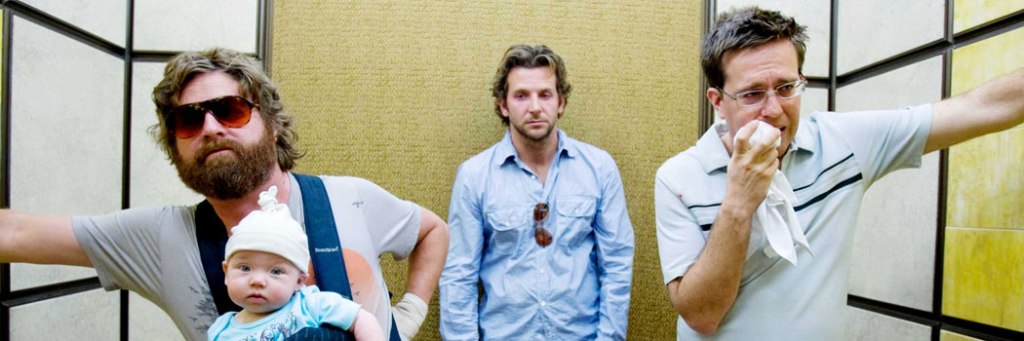
Brad reviews THE HANGOVER (2009), directed by Todd Phillips!


It seems kind of strange in today’s world of non-stop streaming, but there was a time when you would purchase a blu-ray of a movie, and they’d give you a free “digital” copy of the movie. In 2009, I purchased the blu-ray for THE HANGOVER and added the digital copy of the movie to my laptop that I kept at my tax and accounting office. Every night during the 2010 tax season, I would go home around 5:00 for dinner, and then I’d go back to the office at 7:00 to continue my work. When I’d get back to the office, I would always play two copies of digital movies on my laptop… first, I’d play THE HANGOVER and next, I’d play ZOMBIELAND. When those two movies would end, usually by around 11:00, I’d head home. Needless to say, I got to know each of these movies very well and love them both.  

In director Todd Phillips’ THE HANGOVER, the night before his wedding, groom-to-be Doug (Justin Bartha), his two best friends, Phil and Stu (Bradley Cooper and Ed Helms), and his soon-to-be brother-in-law Alan (Zach Galifianakis), head to Las Vegas for a wild and exciting bachelor party. After taking some Jagermeister shots on the roof of Caesar’s Palace, the movie screen goes black, and soon we see Phil, Stu and Alan wake up in their hotel room with absolutely no memory of what happened the previous night. The room is trashed, there’s a tiger in the bathroom, a baby in the closet, Alan doesn’t have on any pants, Stu is missing his lateral incisor, and Doug is nowhere to be found! With the wedding just hours away, the three friends follow any clues they can find in a frantic search for Doug. The search leads to the surprise discovery of a new stripper wife for Stu, the naked and dangerous Asian gangster Chow (Ken Jeong), who jumps out of the trunk of their car and attacks Phil with a crowbar, and Alan being tasered in the face by a kid visiting the Vegas police station. Hell, at one point Alan even gets punched out by Mike Tyson! More importantly, though, will they find Doug alive and have time to get him back to Los Angeles for his wedding?!!

A massive box office hit in the summer of 2009, THE HANGOVER became the highest grossing R-rated comedy up to that time, with a worldwide gross of $469 million against a budget of $35 million. One of the keys to the film’s success is its clever and unique premise, comprised of a mystery-driven plot line where we follow the detective-like adventures of Phil, Stu, and Alan and discover what the hell happened the night before at the same times that they do. This allows for a series of outrageous, raunchy, surprising, and hilarious comedic moments that escalate in absurdity over the course of the film’s 100-minute running time, culminating with an almost unbelievable roll of pictures on Stu’s camera that fill in the crazy events from their wild night in Vegas. Most movies, even comedies, don’t result in me laughing out loud. I laughed out loud frequently that first time I watched THE HANGOVER back in 2009, and I still do. It’s also a movie that, since that 2010 tax season, I have quoted endlessly in my personal life, whether it be “Classic,” to “Thanks a lot, Bin Laden,” and even “It’s not a purse, it’s called a satchel. Indiana Jones wears one.” I never know exactly when something will happen in my personal life that reminds me of THE HANGOVER, but if the time is right for an “in the face,” I’m always ready!  

Of course, the comedy in THE HANGOVER would not work without the great direction from Todd Phillips, as well as the exceptional performances and chemistry between Bradley Cooper, Ed Helms, and Zach Galifianakis. Phillips moves things along at a perfect pace, allowing for tons of laughs, while propelling the story forward to its conclusion. He also seems to capture the chaos and “what happens in” feeling of an out-of-control night in Vegas. And when I watched the film, I was reminded of people in my own life who share certain traits with some of the characters, especially those played by Cooper and Helms. As such, the interactions between the characters seems natural and familiar to me, which makes it even funnier. Luckily, I can’t think of any friends like Galifianakis’ eccentric character, but that’s probably a good thing for my real life. In the context of the movie, however, he steals the film with his deadpan delivery.   

Ultimately, THE HANGOVER became a cultural phenomenon that launched a series of three films that grossed over $1.4 billion worldwide. It’s blend of clever writing, great casting and performances, and most importantly, great comedic moments, makes it one of my favorite comedies of the 21st century.

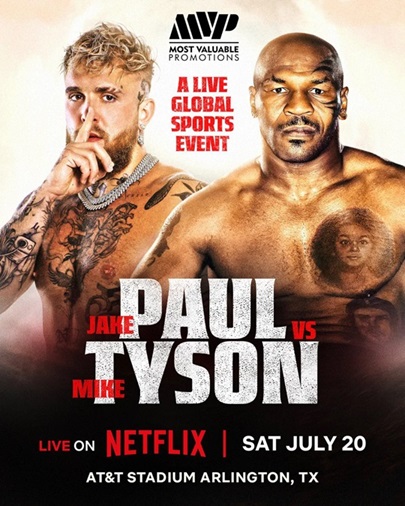
Mike Tyson vs Jake Paul: The Aftermath


You can’t always get what you want.

Last night, almost every true fight fan wanted to see Mike Tyson knock out Jake Paul.  It didn’t happen, because Tyson is 58 years old and Jake Paul is 31 years younger.  Tyson started out strong but, after the third round, it was obvious that he was exhausted and it even looked like Jake Paul was going easy on him as things reached their conclusion.  Mike made it 8 rounds without collapsing, which was a personal victory considering how tired he looked by the end of the fight.  Jake and Mike both got paid and I imagine that was their main concern.

Last night was hardly the worst thing that I’ve ever seen as far as boxing is concerned.  I lived through the 90s and the era when Don King would shove any fighter, regardless of how mentally unstable or drug-addicted, into the ring.  I am old enough that I can remember Oliver McCall having a nervous breakdown in the ring and refusing to defend himself against Lennox Lewis.  I can remember Andrew Golota throwing away two certain victories because he just couldn’t stop hitting Riddick Bowe below the belt.  I can remember Mike Tyson biting off a chunk of Evander Holyfield’s ear.  I can even remember Montell “Ice” Griffin.  Trust me, I’ve seen a lot worse that Paul vs. Tyson.  But watching Iron Mike lose to a YouTube star, that’s definitely the type of thing that will hurt the soul of any 90s kid.  The new generation has arrived and the man who was once the greatest boxer in the world lost to a former Disney star.

The biggest loser last night was not Netflix, despite all of the technical difficulties that they had trying to broadcast a live event.  The biggest losers were the people who purchased a Netflix subscription just to watch the fight and instead spent most of the night staring at error messages and a buffering image.  Did the Netflix engineer not consider that Mike Tyson coming out retirement to fight a YouTube star would put added stress on their servers?  Netflix still made their money, though.  They got what they wanted, even if fight fans didn’t.

I have no problem acknowledging that, even past his prime and two years away from sixty, Mike Tyson could easily beat me up.  But now I have to live with the knowledge that Jake Paul could beat me up too.  That’s the real tragedy of Paul vs. Tyson.

Mike Tyson vs Jake Paul: A Preview


I’ve managed to avoid most of the hype surrounding tonight’s boxing match between Mike Tyson and Jake Paul.  That was intentional on my part because I found the whole idea to be incredibly depressing.

When I was growing up, there was no athlete more fearsome than Mike Tyson.  At the peak of his career, he was the best boxer of all time.  You can count me in as one of the people who believes that Tyson, at his best, could have easily defeated Mohammed Ali.  What Tyson lacked in finesse, he made up for in pure power.  As Tyson got older, he got slower and was no longer as impressive as he used to be but that happens to almost every boxer.  Even after he retired, Tyson remained a boxing icon.  I don’t care how old he is or how slowly he might now move, I would not want to get on Mike Tyson’s bad side.

And then there’s Jake Paul.  I had to ask Lisa who Jake Paul was.  Apparently, he’s a YouTube star who has decided that he’s a boxer and who has won a few sketchy fights.  Paul vs. Tyson is going to be his debut as a heavyweight.

Friends and fellow readers, let me just be blunt.

If “Iron Mike” Tyson loses to Jake Paul tonight, my childhood will be over.  If Mike Tyson, the most fearsome boxer of my lifetime, loses to a YouTube star, I am just going to give up on everything and start my mid-life crisis.  It would be one thing if this was an exhibition match.  Everyone knows that an exhibition doesn’t mean anything.  This is an officially sanctioned boxing match.  This fight will forever be a part of Mike Tyson’s record.  If Mike Tyson officially ends his career losing to Jake Paul, what’s the point?

And it could happen. Mike Tyson is 58 years old and Jake Paul is 27.  There’s a big difference between 58 and 27.  By his own admission, Mike Tyson also doesn’t like to train.  In Tyson’s last officially sanctioned match, he lost to Kevin McBride.  Remember that? Tyson quit the fight after the sixth round.  And after he lost, Tyson said “I’m not going to disrespect the sport anymore by losing to this caliber of fighter.”  Mike’s looking for a payday and so is Jake Paul.  If Jake beats Mike Tyson, that’ll mean that anyone could beat Mike Tyson if they pay him enough.  That would be the ultimate disrespect to the sport that Tyson says he loves.

I have faith in Iron Mike, though.  I think Tyson will let the fight go to the end but I think he’ll win on points.  I think that the universe or karma or whatever you want to call it will cut all of us fight fans a break.

At least, I hope it will.

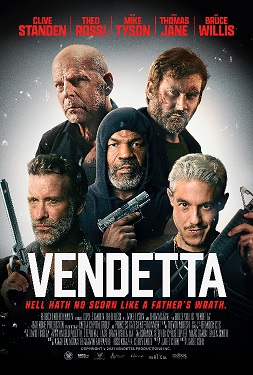
Film Review: Vendetta (dir by Jared Cohn)


It’s a dangerous world out there, make no doubt about it.

William Duncan (Clive Standen) thought that his days of violence were behind him.  Sure, he did a tour of duty in the military.  And yes, he was trained how to kill a man.  In fact, he was trained how to kill dozens of men and he did just that as a part of his patriotic duty.  But that was the past.  Now, William lives in the suburbs of Atlanta and he’s got a pretty nice life.

Unfortunately, one day, William’s life falls apart, shortly after he picks up his 16 year-old daughter, Kat (Maddie Nichols), from softball practice.  William’s plan is to pick up his daughter, grab some food for dinner, and then head home.  Unfortunately, a gang led by Rory Fetter (Theo Rossi) has a different idea.  The time has come for Rory’s younger brother, Danny (Cabot Badsen), to be initiated into the gang.  At first, it seems like Danny doesn’t even want to join the gang but still, when he’s ordered to murder a random bystander, he does so.  That bystander happens to be Kat.

Danny’s arrested for the murder but he’s released due to the influence of his father, a powerful gangster named Donnie (Bruce Willis).  Having been failed by the legal system, William decides to put his military training to good use and get his vengeance.  At first, he’s armed with only his dead daughter’s softball bat.  Later, he joins up with an arms dealer named Dante (Thomas Jane) and the war truly begins.

It should also be noted that Dante is friends with a shady garage owner named Roach.  Roach is played by Mike Tyson.  Yes, that Mike Tyson.  Tyson doesn’t really get to do much as Roach.  His garage does serve as one of the film’s many battlegrounds but, for the most part, Tyson is something of a bystander.  It’s easy to see that the main reason he was included in the film was because it would inevitably cause at least a few potential viewers to say, “Hey, Mike Tyson’s in this!  Let’s watch!”  That said, even with his limited screen time, Mike Tyson has a surprisingly likable screen presence.  I don’t think that anyone will ever mistake Tyson for being an actor of great range but he does a good enough job here that it would be foolish for someone not to cast him in a bigger role in a future low-budget action flick.

As for Vendetta, it’s about as pulpy as pulp can get.  It’s an action/revenge flick that makes no excuse for being an action/revenge flick and, as a result, it’s difficult not to be entertained by it.  The story moves quickly, there aren’t really any slow spots, and the cast does well with their roles.  That includes Bruce Willis.  This, of course, is one of Willis’s final films.  Watching the films that were released after Willis revealed that he was retiring due to aphasia can feel a bit awkward as it’s obvious that the Willis who appeared in these films was quite a bit different from the Willis who appeared in Die Hard.  That said, Willis is effectively intimidating in Vendetta.  Even if he doesn’t display the wiseguy charm that was his trademark, Willis still has enough of his streetwise, tough guy screen presence that the viewers will be able to buy him as being a feared crime boss.

As far as 2022’s collection of Bruce Willis films go, Vendetta isn’t bad.  It’s maybe a smidgen below Gasoline Alley (which, as of this writing, is the best Willis film of 2022) but it’s a hundred times better than American Siege and A Day To Die.

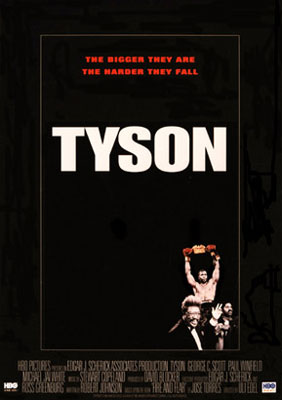
A Movie A Day #232: Tyson (1995, directed by Uli Edel)


If any heavyweight champion from the post-Ali era of boxing has lived a life that seems like it should be ready-made for the biopic treatment, it is “Iron Mike” Tyson.  In 1995, HBO stepped up to provide just such a film.
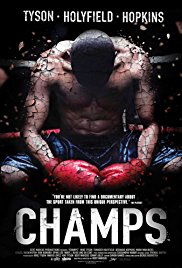
In an episodic fashion, Tyson tells the story of Mike Tyson’s rise and fall.  At the start of the movie, Tyson is a child trying to survive on the tough streets of Brooklyn.  The events that unfold should be familiar to any fight fan: Mike (played by Spawn himself, Michael Jai White) gets sent to reform school. Mike is taken under the wing of the legendary trainer, Cus D’Amato (George C. Scott). Mike becomes the youngest heavyweight champion, marries and divorces Robin Givens (Kristen Wilson), and eventually falls under the corrupting influence of the flamboyant Don King (Paul Winfield).  After failing to train properly for what should have been a routine fight, Tyson loses his title and subsequently, he is convicted of rape and sent to prison.

Tyson aired shortly after the real Mike was released from prison and announced his return to boxing.  Unfortunately, much of what Mike Tyson is best known for occurred after he was released from prison.  As a result, don’t watch Tyson to see Mike bite off Evander Holyfield’s ear.  Don’t watch it expecting to see Mike get his famous facial tattoo.  All of that happened after Tyson aired.  Instead, Tyson tells the story of the first half of Mike’s life in conventional biopic style.  There is even a montage of newspaper headlines.

The best thing about Tyson is the cast.  Even though the film does not delve too deeply into any aspect of Tyson’s life, all of the actors are well-chosen.  In some ways, Michael Jai White has an impossible role.  Tyson has such a famous persona that it had to be difficult to play him without slipping into mere impersonation but White does a good job of suggesting that there is more to Tyson than just his voice and his anger.  Scott and Winfield are both ideally cast as Tyson’s contrasting father figures, with Winfield especially digging into the Don King role.

HBO’s Tyson is a good starter if you do not know anything about Mike’s early career but the definitive Mike Tyson film remains James Toback’s documentary, which also happens to be titled Tyson.

A Movie A Day #230: Champs (2014, directed by Bret Marcus)


Bernard Hopkins.  Evander Holyfield.  Mike Tyson.  Three men who came from similar backgrounds and who eventually became three very different heavyweight champions.  Bernard Hopkins was the ex-con who transformed himself through boxing.  Mike Tyson was the ferocious and self-destructive fighter whose legendary career eventually became a cautionary tale.  Evander Holyfield was the underrated fighter, whose discipline and self-control made him a champ but also ensured that he would never get as much attention as the other boxers of the era.
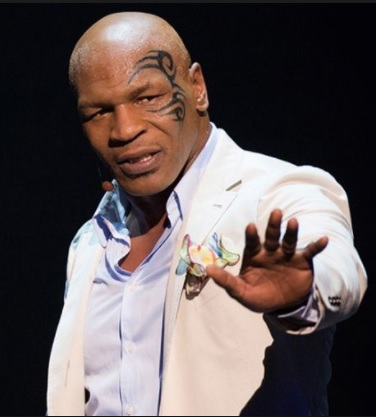
Featuring extensive interviews with these three fighters, Champs is a documentary that not only follows their careers but also tries to place boxing within a greater sociological framework.  As several people in the film state, rich kids do not grow up to become professional boxers.  Instead, they are the ones who grow up to charge people $100 to watch Mayweather vs McGregor on Pay-Per-View.  Boxing has always been a sport that has been dominated by men who grew up poor and marginalized.  That was certainly true for Hopkins, Tyson, and Holyfield.  For all three of them, boxing provided an escape but it also provided temptation.  Unlike players in other sports, boxers rarely have anyone looking out for their best interests.  Tyson’s career was derailed by a prison sentence and he has struggled with both financial and mental issues.  Holyfield made millions for promoters but still ended up declaring bankruptcy.  Champs does not shy away from examining the physical and metal toll of boxing.

As a documentary, Champs is sometimes too slick.  There are too many interview with celebrity boxing fans.  Ron Howard may be a good director but he does not have much to add to a discussion about the correlation between poverty and boxing.  Champs works best when it allow Hopkins, Holyfield, and Tyson to tell their own stories.  Hopkins speaks movingly about how the experience of being in prison not only changed him but ultimately made him a better person.  Mike Tyson is candid about his own demons.  Meanwhile, Holyfield talks about what it was like to always be underestimated and underrated by the boxing world.  All three of them are compelling in their own different way.  For fight fans, Champs has much to offer.

A Movie A Day #205: Mike Tyson: Undisputed Truth (2013, directed by Spike Lee)


Somewhere in New York, former heavyweight champion Mike Tyson stands on a stage, wearing a white suit and talking about his life.
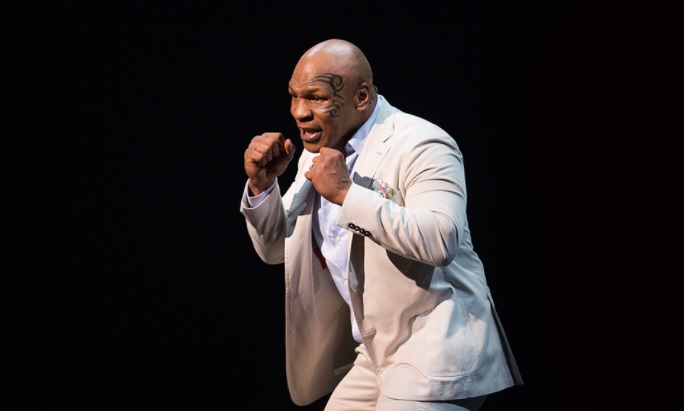
Or, I should say, he talks about parts of his life.  Mike Tyson’s one-man show, which shared the name of his then-just published autobiography, was both insightful and frustrating.  Tyson spends a good deal of time on some topics while skipping over others entirely.  When Tyson talks about his difficult childhood and the experience of literally being adopted by the legendary Cus D’Amato, it provides a rare glimpse into the background of the man who, at his peak, was one of the most fearsome champions in the history of boxing.  When Tyson talks about his fights, especially his battles with Mitch Green, he is as engaging and charismatic as I have ever seen him.  In fact, there are times when Tyson came across as being so likable that I had to remind myself that Tyson is also a convicted rapist who, after returning to the ring, won a series of fights against weak opponents and then bit off Evander Holyfield’s ear.  I was disappointed that Tyson did not devote any time to discussing his fight with Peter McNeeley.  If Tyson has devoted two seconds to every second of the McNeeley fight, that still would have just taken up 3 minutes of screentime.  That’s less time than Iron Mike spent talking about Brad Pitt fucking Robin Givens or doing his Don King impersonation.

I had mixed feelings about Mike Tyson: Undisputed Truth, largely because I have mixed feelings about Mike Tyson himself.  When it comes to ranking the heavyweight champions, Mike Tyson is definitely a contender for the top spot.  That Tyson was a great boxer cannot be denied and when he throws a few punches during Undisputed Truth, he still looks he could get in the ring and win.  (At least he does until he has to stop to catch his breath.)  Tyson may not be the most articulate speaker but occasionally, he shows some hints that he is smarter than he is given credit for.  He also tells some truly terrible jokes.  Tyson was a great boxer but as a stand-up comedian, he leaves something to be desired.  At the same time, Tyson is open about his emotional and mental difficulties and his history of violence.  Every time I started to like Tyson too much, he would say something that would snap me back to reality.  No sooner had he won my sympathy by talking about how much the death of Cus D’Amato affected him than Tyson lost it by verbally attacking the woman that he was convicted of raping.   By the end of his one man show, Tyson represents both everything good and everything bad about boxing.  Boxing saved Tyson from the streets but it also thrust him into a world that he was not emotionally mature enough to handle.  Tyson was barely 20 years old when he became champion and, with Cus D’Amato having died a year before, Tyson no longer had anyone looking out for his interests and protecting him from those who wanted to take advantage of him.  Toss Don King into the mix and both Tyson’s rise and eventual fall feel predestined.

Undisputed Truth ends with Tyson declaring that he has finally found peace.  I hope he has.

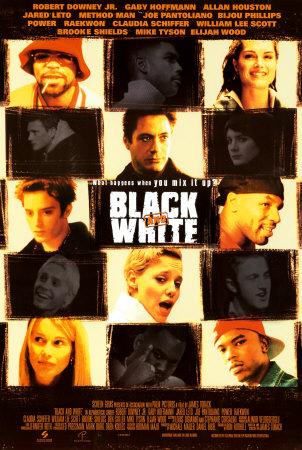
Cleaning Out The DVR Yet Again #31: Black and White (dir by James Toback)


(Lisa recently discovered that she only has about 8 hours of space left on her DVR!  It turns out that she’s been recording movies from July and she just hasn’t gotten around to watching and reviewing them yet.  So, once again, Lisa is cleaning out her DVR!  She is going to try to watch and review 52 movies by the end of Wednesday, December 7th!  Will she make it?  Keep checking the site to find out!)

black_and_white_black_white-681253575-large

On November 15th, I recorded the 1999 melodrama, Black and White, off of Encore.

Black and White is a film that I’ve seen several times and I’ve always meant to review it.  It’s an attempt to explore the state of race, rap, crime, and sex in the late 20th century.  It’s also a James Toback film, which means that it contains all of the stuff that appears in every James Toback film: a threesome in the park, improvised dialogue, cameos from famous people playing themselves, an obsession with college basketball games, casual sexism, and a lot of talk about why you should never send “a little boy to do a man’s job.”  By his own admission, the white Toback is obsessed with the black experience but, when you watch a James Toback film, you get the feeling that his entire knowledge of African-American culture comes from watching other movies.

In short, Black and White is probably one of the silliest and most misjudged films that I’ve ever seen.  In fact, it’s so misjudged that it’s compulsively watchable.  Though I’m always hesitant to casually toss around the term “guilty pleasure,” that’s exactly what Black and White is.

Black and White tells several different stories, some of which are connected and some of which are not.  Sam Donager (Brooke Shields) is an independent filmmaker who is attempting to make a documentary about white people who try to act black.  Her husband, Terry (Robert Downey, Jr.), is gay and hits on every man (and boy) that he sees.  Sam and Terry start following around a group of privileged white kids who are obsessed with rap music.  Sam asks them if they want to be black.  They say that they’re going through a phase.

One of the kids is named Wren and he’s played by Elijah Wood.  He doesn’t really do much but every time he shows up in the film, you go, “It’s Elijah Wood!”  And then there’s Marty King (Eddie Kaye Thomas) who is the son of the Manhattan District Attorney (Joe Pantoliano).  Marty’s older brother is Will (William Lee Scott) ,who is some sort of low-level criminal.  And finally, the unofficial leader of the kids is Charlie (Bijou Phillips) and she gets to give a long monologue explaining the various uses of the n-word.

(Their teacher, incidentally, is played by Jared Leto.  If you’ve ever wanted to listen to Jared Leto lecture about the relationship between Othello and Iago, this is the film to see.  That said, the whole Othello and Iago lecture is just kinda randomly tossed in and doesn’t really pay off.)

Charlie is one of the many girlfriends of Rich Bower (Power), who is not only an up-and-coming rap producer but he’s also the head of a criminal organization.  (There’s a lengthy and kinda pointless scene where he and his associates demand money from a club manager played by Scott Caan.)  Rich is also friends with Mike Tyson.  Tyson plays himself and he gets to deliver an entire monologue about how Rich should never send a boy to do a man’s job.

But we’re not done!  Rich’s cousin is Dean Carter (Allan Houston), a college basketball player.  Dean is dating an anthropology graduate student (Claudia Schiffer, giving a hilariously terrible performance) who is obsessed with fertility symbols.  Dean is also being blackmailed by a corrupt cop named Mark Clear.  Guess who plays Mark Clear?

BEN FREAKING STILLER!

Needless to say, Ben Stiller is massively miscast.  He delivers he lines in his trademark comedic fashion, which makes it next to impossible to take him seriously as any sort of threat.  He also has a backstory that is needlessly complex but at least it allows him to say, “I’m Saul of Fucking Tarsus!”

Anyway, almost the entire film was improvised, which is one of those things that probably seemed like a good idea at the time.  A few of the actors do well with the improvisation.  Stiller may be miscast but at least he can come up with stuff to say.  Robert Downey, Jr.’s character may seem out-of-place but again, Downey knows how to keep things interesting.  But the rest of the cast seems to be a bit stranded so we end up with a lot of lengthy scenes of characters struggling to make some sort of sense of Toback’s storyline.

It’s obvious that James Toback felt that this film had something important to say but, instead of any insight, it can only offer up the occasionally strange-as-Hell scene.

Like this scene, for instance, in which Mike Tyson literally attempts to kill Robert Downey, Jr:

Or this weird little scene between Ben Stiller and Joe Pantoliano, which is dominated by Stiller’s odd delivery of his lines:

Or the closing montage, which is actually rather well-put together and makes great use of Michael Fredo’s Free:

Sadly, the video above ends before it gets to the part where we see Claudia Schiffer on a date with Mike Tyson, telling him about fertility symbols.

Anyway, Black and White is one of those films that wants to say something despite not being sure what.  Again, it may ultimately be rather silly but it’s still compulsively watchable.

(For the record, Marla Maples — who also appeared in Maximum Overdrive and was married to future President Donald Trump when this movie was made — has a cameo as a character named Muffy.  We live in a strange fucking world, don’t we?)