Late Night Retro Television Review: 1st & Ten 2.2 “The Veterans”


Welcome to Late Night Retro Television Reviews, a feature where we review some of our favorite and least favorite shows of the past! On Wednesdays, I will be reviewing 1st and Ten, which aired in syndication from 1984 to 1991. The entire series is streaming on Tubi.
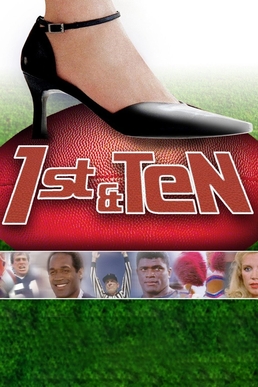
This week, the Bulls face a dilemma.  What to do with O.J. Simpson?

Episode 2.2 “The Veterans”

(Dir by Bruce Seth Green, originally aired on September 1st, 1986)

This week, veteran running back T.D. Parker (O.J. Simpson) shows up for training camp.  All of the players are excited to see him.  At the bar where all of the Bulls hang out, Dr. Death (Donald Gibb) announces that T.D. Parker has had over one hundred injuries over the past twelve years but he’s still the heart and the soul of the Bulls franchise.  He’s the face of the team!  When people think of the Los Angeles Bulls, they think of T.D. Parker slashing through the other team on his way to an acquittal touchdown.

Speaking as a viewer, it seems kind of strange that this is the first that I’m really hearing about the legendary T.D. Parker.  Where was he last season?  The Bulls went all the way to the Championship Game but I never once heard anyone mention T.D. Parker.  I certainly didn’t see him in the locker room.  The Bulls actually had a totally different running back named Carl Witherspoon.  Oddly, Carl seems to have vanished this season….

As for T.D., his injuries are catching up with him.  Denardo and Diana are forced to confront that fact that T.D. can no longer cut it.  Even in practice, he’s spilling a lot of blood on the field.  Denardo cuts T.D. from the team. When T.D. says that football is all that he knows, Denardo announces that T.D. may not be playing but he’ll still be on the field …. AS A COACH!  T.D. looks confused.  He’ll figure it out eventually, I guess.

Meanwhile, Jeff East briefly returns as quarterback Bryce Smith but just long enough to fall out of a window at training camp and bust his knee.  (He was trying to keep the new kicker — a Bosnian played by future voice of the Crypt Keeper John Kassir — from sneaking out to go into town to get drunk.)  Bryce is done for the season.  Veteran quarterback and all-around druggie sleaze Johnny Valentine (Sam J. Jones) becomes the new starter and Tom Yinessa is brought back to be his backup.  That’ll make Yinessa’s roommate (Jeff Kaake) and Yinessa’s potential girlfriend (Katherine Kelly Lang) happy.

Finally, the NFL owners don’t want to give their players a pension or a raise.  They do, however, want to give them mandatory drug tests.  Diana protests but she’s overruled by the other owners, all of whom are male and in their 60s.  There’s a lot of toupees and cigars at the ownership meeting.

This episode was actually kind of entertaining.  That’s doesn’t mean it was good.  1st & Ten isn’t a really a show that’s ever good.  But this episode did feature Sam J. Jones giving a totally over the top performance as creepy quarterback Johnny Valentine.  Speaking of going over the top, the same can be said of Delta Burke’s performance this season.  It would appear that between seasons one and two, Burke realized there was no need to try to be in any way subtle in her line readings.  That was probably the right decision.

Next week …. who knows?  I’m getting a little bored with training camp so hopefully, we’ll move on!

Horror On The Lens: The Clones (dir by Lamar Card and Paul Hunt)


“Today it is science fiction, tomorrow it will be science fact….”

So declared the trailer from 1973’s The Clones.  

One of the first films to be made about cloning, this movie tells the story of Dr. Gerald Appleby (Michael Greene), who discovers that there’s another version of him living his life.  Dr. Appleby and his clone both find themselves being pursued by two government agents (Gregory Sierra and Otis Brown) and a mad scientist (Stanley Adams).

The Clones requires some patience.  It moves at its own deliberate pace and there’s quite a few scenes of Dr. Appleby running through the desert.  That said, the film builds up to wonderfully twisted conclusion and the final roller coaster shoot-out makes everything more than worth it.

Ever since I first saw this ennui-drenched film in 2012, I’ve been recommending it to people.  I’m happy to share it with you today!


April Noir: To Live And Die In L.A. (dir by William Friedkin)


Some people love money so much that they make their own.

In 1985’s To Live And Die In L.A., Williem DaFoe is magnetically evil as Rick Masters, a genius at counterfeiting who has gotten rich by selling other people fake money.  The film features a lengthy sequence showing how Masters makes his money and the viewer really is left feeling as if they’ve just watched an artist at work.  Masters has a talent and he’s a professional.  He’s good at what he does.  Unfortunately, he’s also a sociopath who is willing to kill just about anyone who he comes across.  There have been a lot of movies made about sympathetic counterfeiters.  They’re often portrayed as being quirky and rather likable individuals.  This is not one of those films.  DaFoe’s charisma makes it impossible to look away from Rick but he’s still not someone you would ever want to have to deal with for a prolonged period of time.  One gets the feeling that Rick eventually kills everyone that he does business with.

Secret Service agents Richard Chance (William Petersen) and John Vukovich (John Pankow) are investigating Masters.  They’re a classic crime movie partnership.  Vukovich is youngish and, when we first meet him, goes by-the-book.  Chance is a veteran member of the Secret Service, an impulsive loose cannon whose last partner was killed by Masters.  Chance is now obsessed with taking Masters down and he’s willing to do whatever it takes.  If that means threatening his lover and informant, the recently paroled Ruth (Darlanne Fluegel), so be it.  If that means defying the lawyers (represented by Dean Stockwell), so be it.  If that means committing crimes himself and nearly getting Vukovich killed in the process, so be it.  At first, Vukovich is horrified by Chance’s techniques but, as the film progresses, Vukovich comes to embrace Chance’s philosophy of doing whatever it takes.

What sets To Live and Die in L.A. apart from some other films is that, even as it concludes, it leaves us uncertain as to whether or not Chance and Vukovich’s actions were really worth it.  This is not a standard cops-vs-robbers film.  This is a William Friedkin film and he brings the same moral ambiguity that distinguished The French Connection to this film’s portrait of the Secret Service.  (When Chance isn’t chasing after a counterfeiter, he’s foiling an assassination attempt against the president.)

Like The French Connection, To Live and Die In L.A. features an pulse-pounding car chase, one that occurs as Chance and Vukovich make an escape from robbing a man who they believe to be a criminal.  (The man turns out to have been an FBI agent.)  This chase involves Chance and Vukovich driving the wrong way down a crowded freeway, desperately tying not to crash into any of the cars that are swerving out of the way.  It’s such an exciting scene that it’s easy to forget that Chance and Vukovich are actually escaping from committing a crime.  In The French Connection, Gene Hackman was chasing the man who tried to assassinate him.  In To Love and Die In L.A., Chance is fleeing the consequences of his own actions.

To Live and Die In L.A. holds up well.  DaFoe and Petersen both give charismatic performance but, for me, it really is John Pankow who carries the film.  Vukovich’s transformation from being a straight-laced member of law enforcement to being a doppelganger of his partner is both exciting and a little disturbing,  To Live and Die In L.A. is a crime film that leaves you wondering how far one can go battling the bad guys before becoming one of them.

Retro Television Review: Fantasy Island 6.3 “The Perfect Gentleman/Legend”


Welcome to Retro Television Reviews, a feature where we review some of our favorite and least favorite shows of the past!  On Tuesdays, I will be reviewing the original Fantasy Island, which ran on ABC from 1977 to 1984.  Unfortunately, the show has been removed from most streaming sites.  Fortunately, I’ve got nearly every episode on my DVR.

Smiles, everyone!

Episode 6.3 “The Perfect Gentleman/Legend”

(Dir by Philip Leacock, originally aired on October 30th, 1982)

Jimmy Jordan (Paul Williams, who appeared on a lot of these type of shows) is a rock star who witnessed a mob hit at one of his concerts.  Jimmy did what anyone would do.  He called the police.  They offered to protect him if he testified but then they told him that they probably wouldn’t be able to continue to protect him afterwards.  (Uhmm …. hello?  Witness Protection Program?)  Jimmy decided to fake his own death and then go to Fantasy Island.  His fantasy?  To not get caught by the two mobsters who have been sent to make sure that he’s actually dead.

Uhmmm …. that’s weird.  Like all of that was going on Jimmy just decided to go to Fantasy Island?  And then he shows up on Fantasy Island wearing a trenchcoat over his rock star jump suit?  Weird.

Fortunately, Michelle (Leslie Easterbrook) is on the island and her fantasy is apparently to have a new butler!  Soon, Jimmy is calling himself Godfrey and helping Michelle and her family save their business while Tracer (John Davis Chandler) and Killer (Joseph Ruskin) search for him.  Needless to say, Jimmy and Michelle fall in love and leave the island together and, unless I missed something, it appears that Jimmy is planning on just being Godfrey for the rest of his life.  He even drives Michelle and her daughter to the docks so that they can all fly off to the mainland.  I guess the world is going to go on believing that Jimmy’s dead and….

This fantasy raised way too many unanswered questions and Paul Williams was convincing neither as a rock star or a butler.  This is a fantasy that called out for someone like …. oh, I don’t know.  Sonny Bono, maybe.

The other fantasy was a bit of an improvement, just because it featured the unlikely but surprisingly likable pairing of Michelle Phillips and Andy Griffith.  Phillips plays Andrea Barclay, who has a beautiful singing voice but who suffers from crippling stage fright.  Her fantasy is to successfully perform in front of the toughest crowd ever.

Really?  Roarke says, The toughest crowd?

By now, guests should realize that whenever Roarke says something like that, it means your fantasy is going to be interpreted in a bizarre way that you never expected.  Considering that, the last time that Michelle Phillips was on the show, her fantasy to be the most famous woman in the world somehow led to her becoming Lady Godiva, Andrea really should have known better.  Instead, Andrea is shocked when she finds herself in the Old West, where Judge Roy Bean (Andy Griffith) has promised the citizens of Langtry, Texas that his favorite actress and singer, Lillie Langtry (Madlyn Rhue), will be performing for them.  When Lillie leaves without singing, it’s time for Andrea to put on a mask and pretend to be Lillie as she performs in Judge Bean’s saloon.  Yeah, it’s a silly fantasy but Andy Griffith and Michelle Phillips both put their heart into their performances.  Andy Griffith does his folksy-but-intelligent routine while Michelle Phillips especially deserves a lot of credit for taking things seriously.

This episode had the same problem as last week’s.  Everything felt very familiar.  Last week, we had what seemed like the show’s hundredth boxing and dancing fantasy.  This week, we have what feels like the hundredth singing fantasy.  After five seasons, it’s obvious that the show’s writers had started to run out of ideas.

Next week …. Roddy McDowall returns to Fantasy Island!  Yay!


Return of the American Soldier: Americana (1983, directed by David Carradine)


The year is 1973.  The American Solider (played by David Carradine, who also directed) has just been discharged from Vietnam and is now hitchhiking across an America that he no longer understands.  When he reaches a small town in Kansas, he stumbles across a run-down carousel sitting in an overgrown field.  The Soldier decided to spend the night camping in the field and, the next morning, he sets out to rebuild the old merry-go-round.

No one in town can understand why the Soldier is doing what he is doing.  The local teenagers harass him while a silent and beautiful girl in a white dress (played by Carradine’s then-partner, Barbara Hershey) brings him a toolbox but runs away whenever the Soldier tries to speak with her.  Some of the older townspeople, led by gas station owner Mike (Michael Greene), help the Soldier by giving him odd jobs and deals on equipment and tools.   But, when the Soldier refuses to attend a weekly cockfight, both Mike and eventually the entire town turns against him.

Even with the community refusing to help, the Soldier continues his work.  Finally, the Soldier needs only one last piece to complete the restoration.  Mike agrees to give it to him on the condition that the Soldier first fight a dog.

Based on the 1948 novel, The Perfect Round, Americana was a passion project for both David Carradine and Barbara Hershey.   They first learned of the book and its story in 1969.  Four years later, using the money that he made starring in Kung Fu, Carradine purchased the rights to the novel and set out to the bring the story to the screen.  As producer, director, editor, and star, Carradine had complete artistic control over the project.  This was both a blessing and a curse because Carradine spent a total of 8 years editing his film.  It then took another two years for Americana to finally be picked up by a distributor, Crown International Pictures.  Ten years after filming began, Americana was finally released in 1983.  Carradine was shooting new scenes up until two weeks before the film’s release, which explains why the Soldier suddenly and dramatically ages an hour into the completed movie.

Americana may be strange but it’s not bad.  In some ways, it reminded me of what First Blood would have been like if, instead of going on a rampage, Rambo had taken the Sheriff’s advice and moved on to the next town.   It has its share of pretentious moments but the overall story, about a man who, having seen so much destruction in Vietnam, now just wants to build something good, shines through.  Even if her character never makes sense, Barbara Hershey is stunningly beautiful and Carradine is effectively low-key as the Soldier.  Even Americana‘s controversial ending works as a statement about sacrifice.  Much like the characters played by John Wayne in The Searchers and The Man Who Shot Liberty Valance, The Soldier’s role is to defend and improve a society that has no place for him inside of it.

If Americana had been released in 1973, it probably would have been ahead of its time.  Few people wanted to talk about Vietnam, much less go to a movie that was a metaphor for the entire conflict.  When Americana was was released in 1983, people were more interested in refighting the war and achieving victory with Sylvester Stallone and Chuck Norris and had little interest in Carradine’s more thoughtful approach.  Americana got pushed into obscurity but David Carradine’s vision of post-war America is still worth watching.

The Daily Grindhouse: The Clones (dir. by Lamar Card and Paul Hunt)


How, you may be asking, did I come to see The Clones, an extremely obscure and low-budget science fiction thriller from 1973?

It all started when I first saw the trailer for the film on 42nd Street Forever, a compilation of old school grindhouse trailers.  For whatever reasons, the trailer for The Clones fascinated me.  Whether it was the extremely dry narration or the fact that the trailer actually ended with a quote from a then-member of the U.S. Senate, I felt that The Clones was a film that I, as a student of film and history, simply had to see.

How obscure is this film?  It’s so obscure that The Clones has never even been released on DVD.  In order to see the film, I had to go on Amazon and order a used VHS copy from a some guy in Indiana.  When it arrived in the mail, the first thing I noticed was the big “Property of the St. Augusta Public Library” that was stamped on the back of the worn video box.

The fact that my copy of The Clones had obviously seen better days actually added a lot to the viewing experience.  Much as true grindhouse fans treasure every scratch and auditory pop whenever they watch a film like Fight For Your Life or Last House on Dead End Street, I found myself oddly proud that my copy of The Clones had obviously survived so much just so that it could eventually end up as a part of my video library.

As for the film itself, The Clones is one of those wonderful low-budget films that deserve to be rediscovered.  Dr. Gerald Appleby (well-played by an actor named Michael Greene) is a nuclear scientist who discovers that he’s been cloned and that the clone has essentially been out living his life whenever the original Appleby has been at work.  Though it’s hinted that he’s being set up by foreign spies, the reason for Appleby’s cloning remains obscure throughout the entire film.  Whether this narrative obscurity is intentional or not, it actually serves the film well as it helps to transform Appleby into almost a Kafkaesque figure.

When Appleby attempts to reveal to the proper authorities that he’s been cloned, he finds himself accused of being an imposter and is forced to literally run for his life.  The majority of the film deals with Appleby being chased across the California desert by not only the mad scientist who cloned him (a wonderfully demented Stanley Adams) but also by two ruthless federal agents.  The two federal agents are played by Otis Young and Gregory Sierra, two character actors who appeared in several films during the 70s.  Sierra and Young are a lot of fun to watch in this film and it’s hard not to like them, even if they technically are villains.  They both just seem to be having so much fun trying to kill our hero.

From what little information that I’ve been able to gather about this film’s production, it appears that The Clones was one of the first motion pictures to attempt to take advantage of the paranoia that most people feel over the prospect of humans being cloned.  When seen today, the film’s story is a bit predictable because, to be honest, there’s really only so much when you can do with cloning as a plot device.  However, The Clones remains an oddly effective film.  The low budget (and lack of special effects) actually contributes to the film’s success.  Without the crutch of spectacle, The Clones is forced to pay attention to things like characterization.  How’s that for a concept?

The film eventually climaxes with a genuinely exciting shoot out in a deserted amusement park and then it all ends, in typical 70s fashion, in a climax that manages to be both fun and depressing at the same time.

The Clones is not necessarily an easy film to see but it’s well worth the effort.