Lisa Marie’s Week In Television: 5/28/23 — 6/3/23


Bar Rescue (Paramount Network)

On Friday, I watched the episode that was shot in my hometown and, once again, I was disappointed to see how boring my town looks on film.  Jon Taffer transformed the bar into a taco place.  The owners abandoned the concept as soon as Taffer left.  They subsequently went out of business.

Barry (Sunday Night, HBO)

To be honest, I was happy that at least two characters in Barry managed to get a happy ending.  I was expecting everyone to be dead by the end of the show but Sally survived and appears to have found some peace.  And Fuches seems to have survived as well.  Interestingly enough, Sally and Fuches were the only two characters who, in the end, chose to come clean about who they were and what they had done.  Barry was killed by his acting mentor, losing his chance at redemption.  NoHo Hank died while still in denial about killing Christobal.  And Cusineau ended up doing life in prison and being portrayed as being not only a villain but also as being British in the inevitable movie version of Barry’s life.  Barry was a great and often unsettling show.

Beavis and Butt-Head (Paramount Plus)

Young Beavis trained for combat!  Old Beavis …. well, old Beavis and Butt-Head are depressing no matter what they do.  This week, they tried to get vasectomies because they thought that would make them more appealing to soccer moms.  It’s always kind of depressing when a Young Beavis and Butt-Head vignette is followed by one that shows what type of life they have waiting for them.

Dirty Pair Flash (YouTube)

I watched an episode of this anime on Saturday morning.  I had no idea what was going on but there were a lot of monsters and a lot of things blowing up.  It was fun!

Fantasy Island (Tubi)

I wrote about Fantasy Island here!

Hang Time (YouTube)

On Monday, I finally finished binging Hang Time.  I’ve written up all my reviews and they’ll be dropping on weekly basis through September.  Read my latest review here!

The Marvelous Mrs. Maisel (Prime)

I watched the first episode of the final season on Saturday morning.  I look forward to binging the rest of the season over the upcoming week.  I’ll share my thoughts once I’ve finished watching.

The Master (Tubi)

I wrote about The Master here!

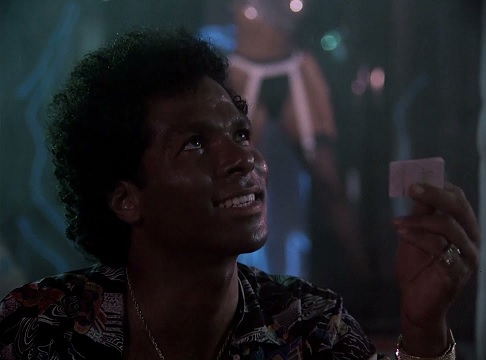
Miami Vice (Tubi)

This week, I watched the first sixteen episodes of this classic 80s cop show.  My reviews will start dropping in September.  For now, I’ll just say that I’m enjoying the show.

New Wave Theatre (YouTube)

I watched an episode of this 80s cable access show on Saturday morning.  It was a Christmas episode.  It was a bit bizarre.  I did enjoy some of the bands that played.

Night Music (YouTube)

I watched an episode of this 90s talk-and-music show on Friday night.  The music was great and, for the most part, the bands and musicians were all previously unknown to me.  It was educational in the best way.

A Small Light (Hulu)

I watched the first episode of this miniseries on Thursday.  I’m going to watch the rest of the episodes over this upcoming week so I’ll save my thoughts until after I’ve experienced the entire show.

Welcome Back, Kotter (Tubi)

I am now watching this 70s sitcom for Retro Television Reviews!  Read my thoughts on the first two episodes here!

Yellowjackets (Sunday Night, Showtime)

The second season is over and I’m still sorting out how I feel about it.  I enjoyed the first few episodes but then I found myself gradually growing more annoyed with the show and the characters.  The inconsistent pacing particularly got on my nerves.  Killing off Natalie, the character to whom I most related, is definitely not going to make me remember this season fondly.  I’m at the point now that whenever Lotte pops up, whether it’s the past or the present version of the character, I want to throw something at the screen.  Still, it’s an intriguing premise and, as frustrated as I get with the show, it’s worth watching for the cast alone.

Music Video of the Day: Smuggler’s Blues by Glenn Frey (1985, directed by Duncan Gibbins)


Contrary to popular belief, Smuggler’s Blues was not inspired by Miami Vice.  Instead, the exact opposite was true.

As Glenn Frey explained in the book, Behind The Hits, he based the song on some of the dealers and smugglers that he met while both a member of the Eagles and during his solo career.  “You don’t spend 15 years in rock and roll without coming in contact with entrepreneurs.  I’ve wanted to write a song about drug smuggling for a long time, but I’m glad I waited for this one. It says everything I wanted to say on the subject. I’m proud of the lyrics – it’s good journalism.”

The song appeared on Frey’s second solo album and was heard by Miami Vice‘s executive producer, Michael Mann.  Mann requested that one of the show’s writers, Miguel Pinero, adapt the song into an episode.  That episode, which was named after the song, premiered on February 1st, 1985.  The song was played throughout the episode and some of the lyrics were even included in the dialogue.  Glenn Frey himself appeared as a pilot.  As a result, the episode not only helped to make Smuggler’s Blues a hit but it also launched Frey’s acting career as well.

The video, which was cinematic at a time when many bands were still releasing simple performance clips, was directed by Duncan Gibbins.  Gibbins went on to direct a handful of thrillers before his tragic death in 1993.  Gibbins was staying in Southern California when a wildfire engulfed the house that he was renting.  Gibbins narrowly managed to escape from the house but then saw that a cat had been trapped inside.  He went back in and, while he did rescue the cat, he suffered severe burns at a result.  Gibbins jumped into house’s swimming pool. not realizing that the burns would allow the chlorine to enter his bloodstream.  Gibbins died later that day at Sherman Oaks Hospital, still asking if the cat had survived.  (Other than a few minor burns, the cat was unharmed.)

Gibbins work on Smuggler’s Blues is impressive and still influential.  The video was honored as “Best Concept Video” at the 1985 MTV Music Video Awards.

Duncan Gibbins, the director of Smuggler’s Blues

Music Video of the Day: Miami Vice Theme by Jan Hammer (1985, directed by ????)


Since yesterday’s music video of the day was Crockett’s Theme, it seems only appropriate that today’s music video should be for the Miami Vice Theme.

Brandon Tartikoff revolutionized television when he requested a television show about “MTV cops.”  Of course, before Crockett and Tubbs could take on the Miami underworld, they needed a soundtrack that was appropriate for their pastel-and-guns lifestyle.  That’s where Jan Hammer and the show’s main instrumental theme came in.  When you hear that music, you know it’s all about to go down.

When Miami Vice premiered on NBC in 1984, it was an immediate hit that spawned a successful soundtrack album.  As soon as the Miami Vice Theme was released as a single in August of 1985, it shot to the top of the charts.  The song’s popularity kept the Miami Vice soundtrack at the top of the album charts for 11 weeks, a record that would stand until 2006, when it was broken by the High School Musical soundtrack.

The video is mostly made up of footage from the show and Jan Hammer performing but it wins some points for being edited to make it appear as if Crockett and Tubbs are attempting to arrest Hammer.  Just like the show itself, this video is pure 80s, complete with a close-up of a giant floppy desk and plenty of synthesizer action.

Music Video of the Day: Crockett’s Theme by Jan Hammer (1987, directed by ????)


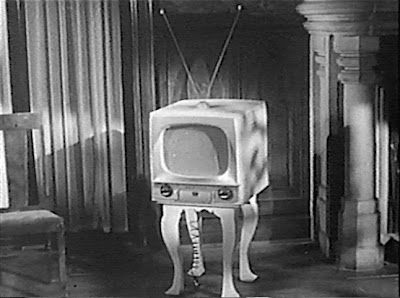
Crockett’s Theme was originally written for the hit NBC series, Miami Vice.  As evidenced by the title, it was the theme music for everyone’s favorite cop without socks, Sonny Crockett.  The song was released on both the second Miami Vice soundtrack and Jan Hammer’s 1987 album, Escape From Television.

The video has nothing to do with Miami Vice.  Instead, it is about a man who cannot choose between his woman and his kaleidoscope.  The woman eventually makes the decision for him, not only breaking his kaleidoscope but leaving him.  Luckily, Jan Hammer is in the next room, playing a keytar.

Crockett’s Theme was not a hit in the United States but found greater success in Europe.  It reached number two in Ireland.  More recently, it can be heard on Emotion 98.3 in Grand Theft Auto: Vice City, which was itself heavily influenced by Miami Vice.

Tearing up Vice City while rocking out to Jan Hammer

Song of the Day: In The Air Tonight (by Phil Collins)


The latest “song of the day” arrives courtesy of Michael Mann’s Miami Vice. I speak of one of the best rock songs of the 1980’s: Phil Collins’ “In The Air Tonight”.

Phil Collins was already a major star as part of the progressive rock band Genesis. In the early 80’s he finally went out on his own and began a second successful career as a solo artist. His 1981 debut solo album, Face Value, would release it’s first single with what would turn out to be one of the 80’s iconic rock songs with “In The Air Tonight”. The song was originally recorded in 1979, but it was until Collins went solo did it see the light of day and once it made it to the mass public it instantly became a major hit. This song would end up Collins’ biggest hit ever and would be covered by rock bands and sampled by rappers in the decades to come.

Some of the younger generation would recognize this song because of a hilarious scene in the 2009 comedy The Hangover involving Mike Tyson and one of the most famous basslines in rock history. It’s a shame that it would be that scene people would remember since this song is more than just a punchline in a comedy. This song has become an integral part of my growing up during the 80’s and I still listen to it intently decades later…and yes I, too, consider that bassline to start the final chorus as the go-ahead to air drum the sequence in the privacy of my own room or car.

The one cover of this song I like just as much as the original is the hard rock cover done by the band Nonpoint for Michael Mann’s Miami Vice.

In The Air Tonight

I can feel it coming in the air tonight, oh Lord
And I’ve been waiting for this moment for all my life, oh Lord
Can you feel it coming in the air tonight, oh Lord, oh Lord

Well if you told me you were drowning, I would not lend a hand
I’ve seen your face before my friend, but I don’t know if you know who I am
Well I was there and I saw what you did, I saw it with my own two eyes
So you can wipe off that grin, I know where you’ve been
It’s all been a pack of lies

And I can feel it coming in the air tonight, oh Lord
Well I’ve been waiting for this moment for all my life, oh Lord
I can feel it coming in the air tonight, oh Lord
Well I’ve been waiting for this moment for all my life, oh Lord, oh Lord

Well I remember, I remember, don’t worry, how could I ever forget
It’s the first time, the last time we ever met
But I know the reason why you keep your silence UP, oh no you don’t fool me
Well the hurt doesn’t show, but the pain still grows
It’s no stranger to you and me

I can feel it coming in the air tonight, oh Lord
Well I’ve been waiting for this moment for all my life, oh Lord
I can feel it in the air tonight, oh Lord, oh lord
Well I’ve been waiting for this moment for all my life, oh Lord
I can feel it coming in the air tonight, oh Lord
And I’ve been waiting for this moment for all my life, oh Lord
I can feel it in the air tonight, oh lord, oh lord, oh lord
Well I’ve been waiting for this moment for all my life, oh lord, oh lord

I can feel it in the air tonight, oh lord, oh lord, oh lord, oh lord
And I’ve been waiting for this moment for all my life, oh lord, oh lord, oh lord
And I can feel it in the air tonight, Oh Lord…
I’ve been waiting for this moment, all my life, Oh Lord, Oh Lord

Review: Miami Vice (dir. by Michael Mann)


Michael Mann has always been in the forefront of experimenting and trying out new film techniques and styles to tell his stories. 2003’s Collateral was a veritable masterpiece of directing of a modern, urban noir. He even made Tom Cruise very believable as a sociopathic character. In 2006, Michael Mann followed up Collateral with another trip down the darkside of the law and crime. Taking a concept he made into a cultural phenomenon during the mid 80’s, Mann reinvents the show Miami Vice from the pastel colors, hedonistic and over-the-top drug-culture Miami of the 1980’s to a more down, dirty and shadowy world of the new millenium where extremes by both the cops and the criminals rule the seedy, forgotten side of the city.

Michael Mann’s films have always dealt with the extremes in its characters. Whether its James Caan’s thief character Frank in Thief, the dueling detective and thief of Al Pacino and Robert DeNiro in Heat, up to Foxx and Cruise’s taxi driver and assassin in the aforementioned Collateral. They all have had one thing in common. They’re individuals dedicated to their chosen craft. Professional in all respect and so focused to doing their job right that they’ve crossed the line to obsession. It is this obsession and how it governs everything they do which almost makes it into their own personal form of drug.

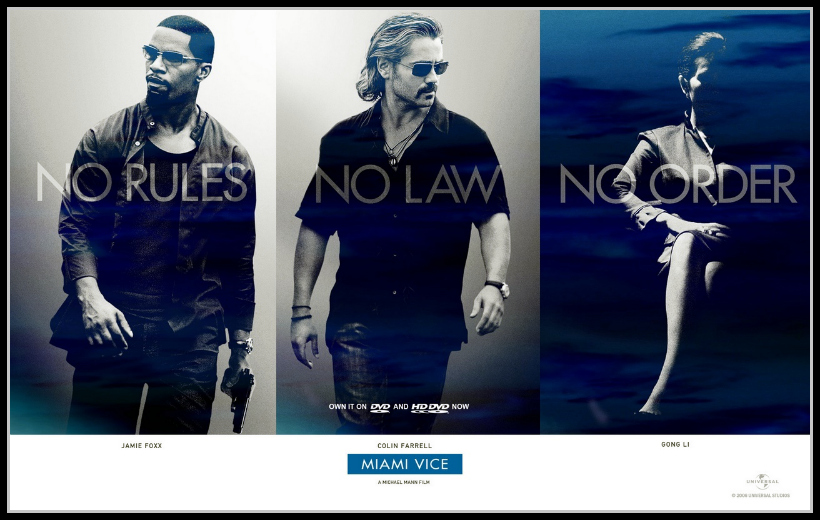
This theme continues in Mann’s film reboot of his TV series Miami Vice. The characters remain the same. There’s still the two main characters of Vice Detectives Sonny Crockett and Ricardo Tubbs. This time around these titular characters were played by Colin Farrell (in a look that echoes Gregg Allman more than Don Johnson) and Jamie Foxx. From the first moment the first scene suddenly appears all the way through to the final fade to black in the end of the film, the audience was thrust immediately into the meat of the action. Mann dispenses with the need for any sort of opening credits. In fact, the title of the film doesn’t appear until the end of the film and the same goes for the names of all involved. I thought this was a nice touch. It gave the film a stronger realism throughout.

The film’s story was a mixture of past classic episodes rolled into one two-hour long film with the episode “Smuggler’s Blues” being the main influence on the story. The glamour and glitz that were so prevalent in the original series does show up in the film, but it’s not used too much that it turned the characters of Crockett, Tubbs and the rest of the cast into caricatures. The glamour seems more of a thin veneer to hide the danger inherent in all the parties involved. These people were all dangerous from the cops to the criminals. There’s a lot of the so-called “gray areas” between what makes a cop and what makes a criminal. Mann’s always been great in blurring those lines and in showing that people on either side of the line have much more in common than they realize.

Miami Vice‘s story doesn’t leave much for back story exposition for the main leads. Michael Mann takes the minimalist approach and just introduces the characters right from the beginning with nothing to explain who they were outside of the roles they played — whether they were law-enforcement or drug dealers. The script allows for little personal backstory and instead lets the actors’ performance show just what moves, motivates and inspires these characters. Again, Jamie Foxx steals the film from his more glamorous co-star in Colin Farrell. Farrell did a fine job in making Crockett the high-risk taking and intense half of the partnership, but Foxx’s no-nonsense, focused intensity as Tubbs was the highlight performance throughout the film.

The rest of the cast do a fine job in the their roles. From Gong Li as Isabella, the drug-lord’s moll who also double’s as his organization’s brains behind the finances to Luis Tosar as the mastermind drug kingping Arcángel de Jesús Montoya. Tosar as Montoya also does a standout performance, but was in the screen for too less a time. Two other players in the film I have to make mention of were John Ortiz as Jose Yero who was Montoya’s machiavellian spymaster and Tom Towles in a small, but scary role as the leader of the Aryan Brotherhood gang hired by Yero to be his Miami enforcers. Both actors were great in their supporting role and more than held their own against their more celebrated cast mates.

This film wouldn’t be much of a police crime drama if it was all talk and no action. The action in Miami Vice comes fast and tight. Each scene was played out with a tightness and intensity which prepped the audience to the point that the violence that suddenly arrives was almost a release. Everyone knew what was coming and when the violence and action do arrive it goes in hard and fast with no use of quick edits, slow-motion sequences or fancy camera angles and tricks like most action films. Instead Michael Mann continues his theme of going for realism even in these pivotal moments in the film.

The shootouts doesn’t have the feel of artificiality. The gunshots inflicted on the people in the film were brutal, violent and quick. The camera doesn’t linger on the dead and wounded. These scenes must’ve taken only a few minutes of the film’s running time, but they were minutes that were executed with Swiss-like precision. The final showdown at an empty lot near the Miami docks was organized chaos with the scene easy to follow yet still keeping a sense of anarchy to give the whole sequence a real sense of “in the now”.

The look of the film was where Mann’s signature could be seen from beginning to end. He started using digital cameras heavily in Collateral. His decision to use digital cameras for that film also was due to a story mostly set at night. The use of digital allowed him to capture the deepest black to off-set the grays and blues of Los Angeles at night. Mann does the same for Miami Vice, but he does Collateral one better by using digital cameras from beginning to end. Digital lent abit of graininess to some scenes, but it really wasn’t as distracting as some reviewers would have you believe. In fact, it made Miami Vice seem like a tale straight out of COPS or one of those reality police shows.

Michael Mann stretches the limits of what his mind and technology could accomplish when working in concert. Mann’s direction and overall work in Miami Vice could only be described as being as focused and obsessive over the smallest detail as the characters in his films. This is a filmmaker who seem to want nothing but perfection in each scene shot.

With Miami Vice, Michael Mann has done the unthinkable and actually made a film adaptation of a TV show look like an art-film posing as a tight police drama. Everyone who have given the film a less than stellar review seem to have done so because Mann didn’t use the 80’s imagery and sensibilities from the original show. There were no pastel designer clothes and homes. There was no pet alligator and little friendly banter and joking around. Mann goes the other way and keeps the mood deadly serious. This was very apropo since the two leads led mortally dangerous lives as undercover agents who could die at the slightest mistake. The fun and jokes of the original series would’ve broken the mood and feel of this film. I, for one, am glad Mann went this route and not paid homage to the original series. This some saw as a major flaw, but I saw it as the main advantage in keeping Miami Vice from becoming a self-referential film bordering on camp.

Miami Vice was a finished product thats smart, stylish, and innovative crime drama. This was a film that people would either love despite some of the flaws, or one people would hate due to not being like the original TV series. Those who decide to skip watching Miami Vice because of the latter would miss a great film from one of this generation’s best directors. Those who do give this version of Miami Vice a chance would be rewarded with a great tale of cops and criminals and the obsession they have in their set roles.