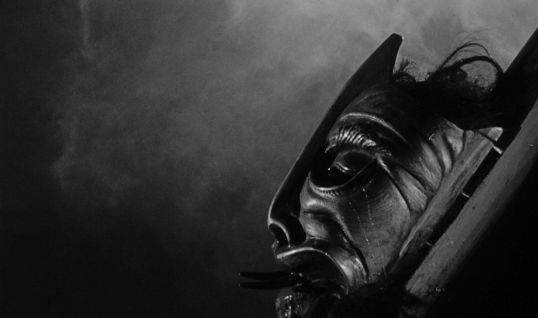
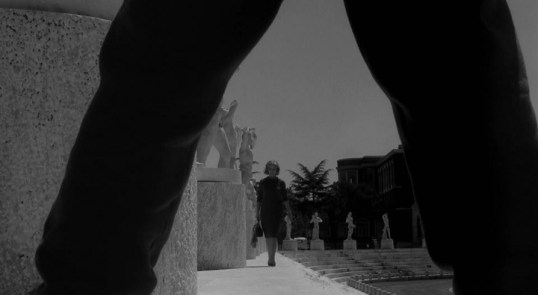
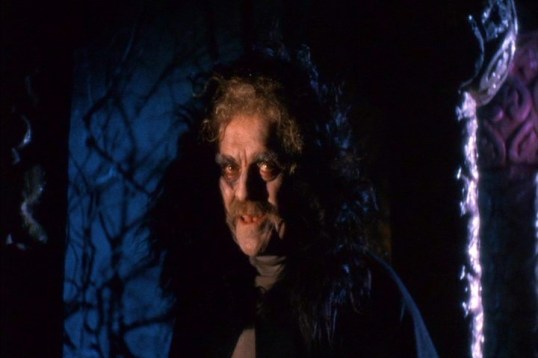
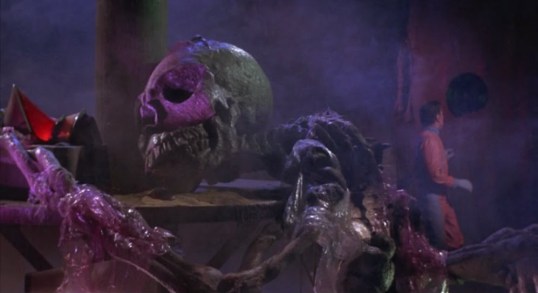
4 Shots From 4 Films is just what it says it is, 4 shots from 4 of our favorite films. As opposed to the reviews and recaps that we usually post, 4 Shots From 4 Films is all about letting the visuals do the talking.
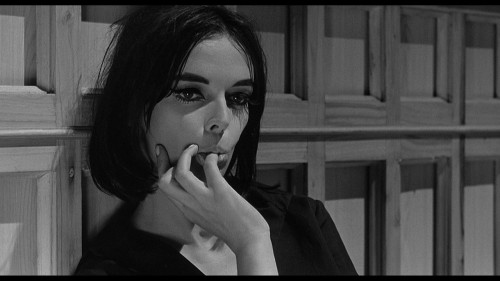
Happy birthday to the wonderful and iconic actress, Barbara Steele!
This October, I’m going to be doing something a little bit different with my contribution to 4 Shots From 4 Films. I’m going to be taking a little chronological tour of the history of horror cinema, moving from decade to decade.
Today, we continue the 1960s!
4 Shots From 4 Horror Films
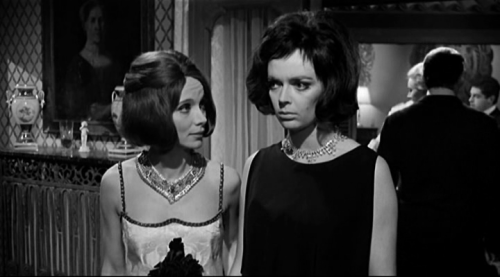
Blood and Black Lace (1964, dir by Mario Bava)
2,000 Maniacs (1964, dir by Herschell Gordon Lewis)
This October, I’m going to be doing something a little bit different with my contribution to 4 Shots From 4 Films. I’m going to be taking a little chronological tour of the history of horror cinema, moving from decade to decade.
Today, we start the 1960s!
4 Shots From 4 Horror Films
Psycho (1960, dir by Alfred Hitchcock)
The Pit and the Pendulum (1961, dir by Roger Corman)
Returning home from his latest adventure, Hercules (Reg Park) and his sidekick, Theseus (George Ardisson), are shocked to find their home city has fallen victim to a plague that puts its victims in a trance-like state. The woman that Hercules loves, Deianira (Leonara Ruffo), is one of the victims and, since she was also the city’s queen, the sinister Lico (Christopher Lee) is ruling in her place.
Hercules consults with the oracle, Medea (Gaia Germani). Medea says that the plague can only be lifted by the Stone of Forgetfulness, which can only be found in the land of the dead, Hades. Hercules and Theseus set out for Hades but before they can enter the realm of the dead, they have to perform a quest to defeat a rock monster and retrieve a magic apple from a giant tree. Nothing is simple in ancient Greece.
The best of all the Hercules films, Hercules in the Haunted World may not have had Steve Reeves in the lead role but it did have Mario Bava behind the camera. Bava shows what a clever director can achieve just through creative lighting, colorful mists, and detailed set design. The film has all of the mythological monsters and toga-clad action that you expect from a Hercules film but it also has atmosphere, bleeding plants made from the souls of the dead, zombies, and Christopher Lee. Lee may not be playing a vampire here but he still finds an excuse to drink blood in an attempt to achieve immortality.
Reg Park was a Brit who was inspired to become a bodybuilder after watching Steve Reeves in a competition. When Reeves left the role of Hercules, Park was cast in his place. Park only made a total of five peplum films and he was even worse at expressing emotion than Steve Reeves. Park did have the physique necessary to play Hercules and that was really all that was needed. Though Park tired of acting, he would still go on to mentor another bodybuilder who was inspired by Steve Reeves and would play Hercules in a film, Arnold Schwarzenegger.
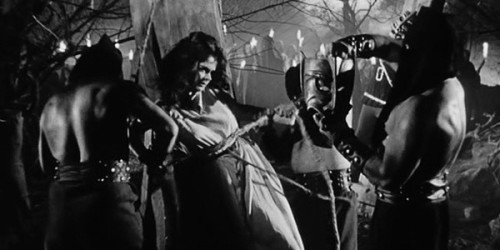
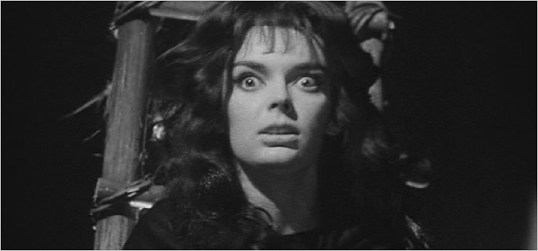
The British-born actress, Barbara Steele, became a star in Italy in the 60s, working with directors from Riccardo Freda to Mario Bava to Federico Fellini. One of Steele’s defining roles was in Bava’s 1960 film, Black Sunday.
In this scene, Steele’s witch is sentenced to be executed and, since this is a Bava film, it won’t be a quick execution. What makes this scene stand-out is Steele’s defiance. It’s hard not to admire her refusal to give those judging her what they want. You watch this scene and you have no doubt that if you get cursed by Barbara Steele, it’s going to be a curse for life.
Kill, Baby…. Kill!, Mario Bava’s 1966 masterpiece, opens at the turn of the 20th Century.
In a small German village, a woman named Irena Hollander (Mirella Panfili) runs up a set of stairs at an abandoned church. From the bell tower, she either falls or deliberately jumps and crashes into the sharp spikes of the gate below. Agck! Falling from that high of a spot is bad enough without then landing on a gate and getting pierced by several sharp points at once. Making it even more disturbing is that it’s suggested that the spikes don’t instantly kill Irena. It’s a grotesque and disturbing image, shown to us in bright color. It’s death as pop art. It’s the sort of thing that only Mario Bava could have paid off.
Dr. Paul Eswai (Giacomo Rossi Stuart) is summoned to the village by Inspector Kruger (Piero Lulli). Kruger suspects that Irena may have been intentionally pushed and he wants Paul to conduct an autopsy. However, the superstitious townspeople say that her body must be buried immediately and Paul and Kruger actually have to rush out to the local cemetery to prevent the Irena from being buried. The gravediggers warn Paul and Kruger that they will be bringing a curse on themselves by not burying Irena. Paul and Kruger don’t listen. At the autopsy, a local medical student named Monica (Erika Blanc) is assigned to serve as the witness. Paul discovers that a silver coin has somehow been embedded in Irena’s heart.
Paul discovers that the villagers live in fear of the ghost a little girl. They claim that if you see the girl, that means you are cursed to die. Paul, being a man of science, is skeptical. When the daughter of the local innkeeper becomes horrified after saying that she has seen the little girl, Paul is critical of the treatment offered up by her superstitious parents. (That treatment include a chain of leeches — agck!) Meanwhile, Kruger goes to the estate of the mysterious Baroness Graps (Giovanna Galletti) and disappears! It soon becomes clear that the key to mystery lies in the estate of the Baroness and her past. Karl (Luciano Catenacci), the burgomaster, knows the secret of the Baroness but soon, he finds himself being targeted by the little girl.
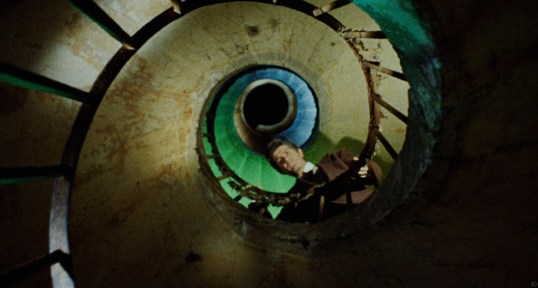
Maria Bava is a director who has been cited as an influence by everyone from David Lynch to Martin Scorsese and Kill, Baby…. Kill! is his masterpiece, a work of horrific pop art that is full of atmosphere, creative use of color, and an intentionally surreal style of plotting that makes the film less a standard story and more of a filmed nightmare. Towards the end, as Paul pursues the ghost of the little girl, an overhead view of a special staircase, lit in blues and greens, brings to mind Hitchock’s Vertigo while the village itself feels as if it could have been transported over from a Hammer horror film. Paul is a man of science and the villages are people of superstition and, in the end, both seem to be equally destructive. Paul is too quick to dismiss the old traditions while the villagers are too quick to put their faith in herbs and incantations. Bava creates an atmosphere in which everyone seems to be equally doomed.
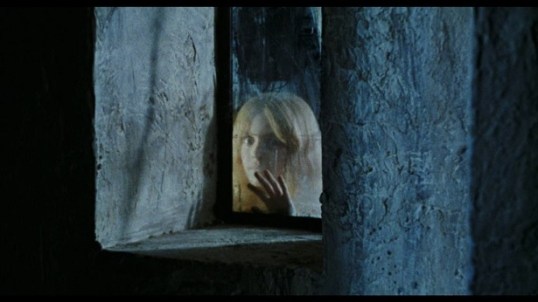
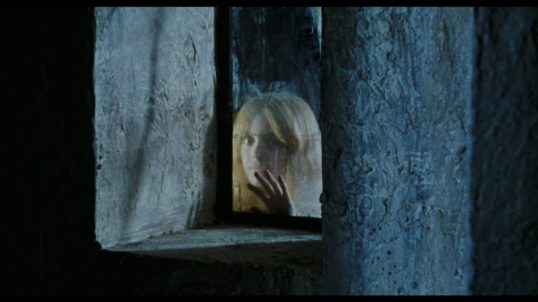
Of course, the main reason why Kill, Baby…. Kill! works is because that little girl (played by Valerio Vali, about whom little is known) is absolutely terrifying. When she suddenly shows up at a window and stares straight at her latest victim, it’s a true jump scare. She had an intense stare but, even worse, she seems to be so happy after she’s cursed someone. The true horror is that she can basically pop up anywhere. It doesn’t matter if you’re a good person or a rational person or someone who doesn’t even believe in ghosts. Fate cannot be escaped.
Kill, Baby…. Kill! is a both a story of nightmarish horror and a love letter to pure cinema.
After starting his career as a cinematographer and a visual effects engineer, Mario Bava made his directorial debut with 1960’s Black Sunday, starring Barbara Steele!
2. Black Sabbath (1963)
In 1963, Bava directed one of his most popular films, the horror anthology Black Sabbath. The trailer put the spotlight on the great Boris Karloff.
3. Planet of the Vampires (1965)
One of Bava’s best films, Planet of the Vampires, was later cited by many as an influence on the Alien films.
4. Bay of Blood (1971)
One of the first slasher films, Bay of Blood was also a social satire that featured Bava’s dark sense of humor.
5. The House of Exorcism (1974)
When it was released in the United States, Bava’s Lisa and the Devil was re-titled House of Exorcism and, after new scenes were filmed, sold as a rip-off to The Exorcist.
6. Shock (1977)
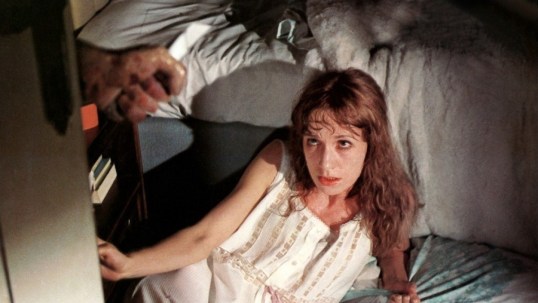
Bava’s final film as a director was Shock, which starred Daria Nicolodi as a woman who is being haunted by the ghost of her first husband.
Today’s scene that I love comes from Mario Bava’s 1977 masterpiece, Shock. This, as the title of the YouTube video states, is one of the best jump scares ever.
4 Or More Shots From 4 Or More Films is just what it says it is, 4 shots from 4 of our favorite films. As opposed to the reviews and recaps that we usually post, 4 Shots From 4 Films lets the visuals do the talking!
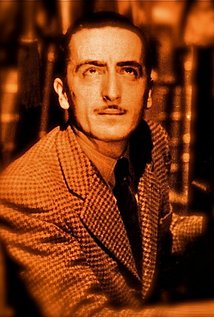
Today, the Shattered Lens pays tribute to the memory and the legacy of the maestro of horror himself, Mario Bava! Bava was born 111 years ago, today.
6 Shots From 6 Mario Bava Films
Black Sunday (1960, dir by Mario Bava, DP: Mario Bava)
The Girl Who Knew Too Much (1963, dir by Mario Bava, DP: Mario Bava)
Black Sabbath (1963, dir by Mario Bava, DP: Ubaldo Terzano)
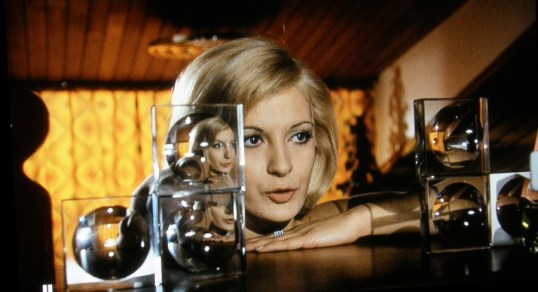
Blood and Black Lace (1964, dir by Mario Bava, DP: Mario Bava)
Planet of the Vampires (1965, dir by Mario Bava, DP: Antonio Rinaldi)
Kill, Baby, Kill (1966, dir by Mario Bava, DP: Antonio Rinaldi)
Bay of Blood (1971, dir by Mario Bava, DP: Mario Bava)
Shock (1977, dir by Mario Bava, DP: Alberto Spagnoli)




 Through the Shattered Lens