Retro Television Review: The American Short Story #15: The Sky Is Gray


Welcome to Retro Television Reviews, a feature where we review some of our favorite and least favorite shows of the past!  On Saturdays, Lisa will be reviewing The American Short Story, which ran semi-regularly on PBS in 1974 to 1981.  The entire show can be purchased on Prime and found on YouTube and Tubi.

This week, we have an adaptation of a 1963 short story.

Episode #15: The Sky Is Gray

(Dir by Stan Lathan, originally aired in 1980)

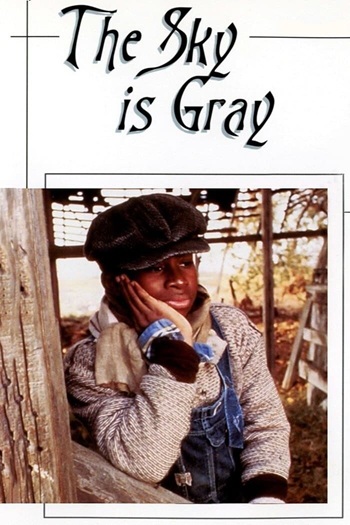
This adaptation of an Ernest Gaines short story takes place in Louisiana during the 1940s.  James (James Bond III) is a young black child who lives on a farm.  His father is overseas, serving in the Army during World War II.  His mother (Olivia Cole) is a stern but loving woman who is trying to raise the sensitive James in a world where one often has to depend on their inner strength to survive.  When James comes down with a toothache, he and his mother travel to a nearby town so he can see the dentist.  From having to stand in the back of the bus to listening to a debate between a priest and a militant in the dentist’s office, it’s an eye-opening journey for James.  When the white receptionist at the dentist’s office arbitrarily cancels James’s appointment and tells him and his mother to come back tomorrow, the two of them seek shelter.  James discovers how strong his mother is when they’re harassed by a pimp (Reuben Collins).  He also learns that there is unexpected kindness in the world when a white store owner invites him and his mother inside to give them shelter from the cold and windy day.  During one trip to the dentist, James learns that the world is far more complicated than he originally knew.

This was an okay adaptation of Gaines’s acclaimed short story.  Young James Bond III gave a good performance as James and the episode was full of scenes that visually captured the feel of being an outsider.  That said, as was often the case with this series, the adaptation was so straight-forward that it didn’t really capture the nuance of Gaines’s writing.  In the short story, Gaines put the reader right into James’s head.  The adaptation doesn’t really do that.  A heavy-handed musical score doesn’t help matters but, with all that in mind, this was still an effective coming-of-age tale.

18 Days of Paranoia #4: The Falcon and the Snowman (dir by John Schlesinger)


http://www.youtube.com/watch?v=y8HE_mHphZk

The 1985 film, The Falcon and the Snowman, tells the story of two friends.  They’re both wealthy.  They’re both a little bit lost, with one of them dropping out the seminary and the other becoming a drug dealer who is successful enough to have a lot of money but inept enough to still be treated like a joke by all of other dealers.

Chris Boyce (Timothy Hutton) is the son of a former FBI agent (Pat Hingle).  He has a tense relationship with his father.  It’s obvious that the two have never really been sure how to talk to each other.  While his father is sure of both himself and his country, Chris is far more sensitive and quick to question.  While his father plays golf and attends outdoor barbecues, Chris becomes an expert in the sport of falconry and spends a lot of time obsessing about the state of the the world.  While his father defends Richard Nixon during the Watergate investigation, Chris sees it as evidence that America is a sick and corrupt country.  Because his father doesn’t want Chris sitting around the house all day, he pulls some strings to get Chris a job working at the “Black Vault,” where Chris will basically have the ability to learn about all sorts of classified stuff.

Daulton Lee (Sean Penn) was Chris’s best friend in school.  Daulton’s entire life revolves around cocaine.  He both sells and uses it.  He’s managed to make a lot of money but his addiction has also left him an erratic mess.  Daulton’s father wants to kick him out of the house.  Daulton’s mother continually babies him.  Chris and Daulton may seem like an odd pair of friends but they’re both wealthy, directionless, and have a difficult time relating to their fathers.  It somehow seems inevitable that these two would end up as partners.

Chris Boyce and Daulton Lee, together …. THEY SOLVE CRIMES!

No, actually, they don’t.  Instead, they end up betraying their country.  (Boooo!  Hiss!  This guy’s a commie, traitor to our nation!)  After Chris discovers that the CIA has been interfering in the elections of America’s allies (in this case, Australia), he decides to give information to the Russians.  Since Daulton already has experience smuggling drugs over the southern border, Boyce asks Lee to contact the KGB the next time that he’s in Mexico.  Despite being a neurotic and paranoid mess, Lee manages to do just that.

Of course, as Chris soon comes to discover, betraying your country while working with a greedy drug addict is not as easy as it seems.  While Chris wants to eventually get out of the treason game, marry his girlfriend (Lori Singer), and finish up college, Daulton wants to be James Bond.  The Russians, meanwhile, soon grow tired of having to deal with Lee and start pressuring Chris to deal with them directly….

And it all goes even further downhill from there.

Based on a true story, The Falcon and the Snowman tells the story of how two seemingly very different young men managed to basically ruin their lives.  Boyce’s naive idealism and Lee’s drug-fueled greed briefly makes them a powerful duo but they both quickly discover that betraying your country isn’t as a simple as they assumed.  For one thing, once you’ve done it once, it’s impossible to go back to your normal life.  As played by Hutton and Penn, Chris and Daulton are two very interesting characters.  Boyce is full of righteous indignation and sees himself as being a hero but the film hints that he’s mostly just pissed off at his Dad for never understanding him or caring that much about falconry.  Daulton, meanwhile, is a lunatic but he seems to be aware that he’s a lunatic and that makes his oddly likable.  At times, it seems like even he can’t believe that Chris was stupid enough to depend on him.  The film provides a convincing portrait of two men who, because of several impulsive decisions, find themselves in over their heads with no possibility of escape.

The Falcon and the Snowman is an entertaining and occasionally thought-provoking time capsule of a different age.  If the film took place in 2020, Daulton would be hanging out with the Kardashians and Chris would probably be too busy working for the Warren campaign to spy for America’s enemies.  If only the two of them had been born a few decades later, all of this could have been of avoided.

Previous Entries In The 18 Days of Paranoia:

  1. The Flight That Disappeared
  2. The Humanity Bureau
  3. The Privates Files Of J. Edgar Hoover

Lisa Reviews An Oscar Nominee: Deliverance (dir by John Boorman)


1973’s The Exorcist is often cited as the first horror film to ever be nominated for best picture and technically, I guess that’s correct.  It was definitely the first best picture nominee to ever deal with a battle between humans and a malevolent supernatural force and no one can deny that The Exorcist has influenced a countless number of horror films.

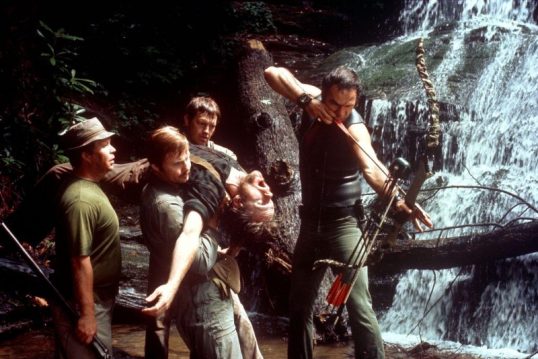
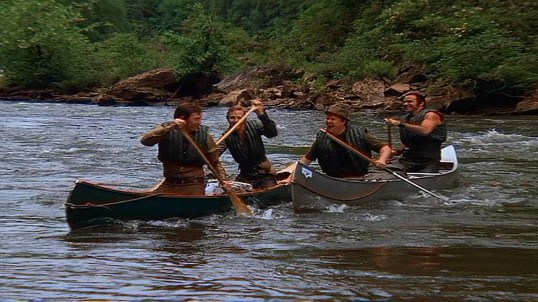
That said, I think you could make the argument that Deliverance, which was nominated for best picture the year before The Exorcist, was in its own way, a horror film.  Certainly, every crazed hick slasher film that has come out since 1972 owes a debt to Deliverance.  Deliverance‘s ending has been imitated by so many other horror films that it’s become a bit of cliche.  Though there might not be any supernatural creatures in Deliverance, the film still features its own set of horrifying monsters.  The toothless redneck rapists (played by character actor Bill McKinney and rodeo performer Herbert “Cowboy” Coward) seem as if they’ve jumped straight out of a nightmare and into the movie.  Of course, they aren’t the only monsters in this film.  There’s also the (fictional) Cahulawassee River, which is due to be dammed up and seems to be determined to take out its anger on anyone foolish enough to try to navigate it.

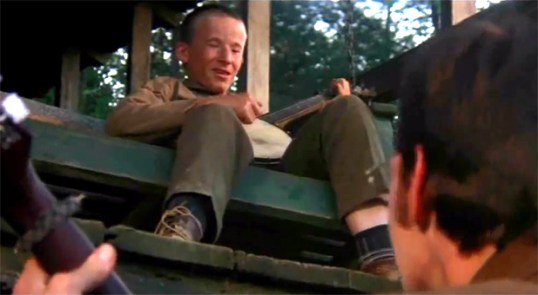
Much as with The Texas Chainsaw Massacre (which came out just two years after Deliverance), the main theme here seem to be that you should be careful about going off the main road.  Just as the unfortunate hippies and college students in Texas Chainsaw Massacre proved to be no match for a clan of backwoods cannibal, the four middle-aged men at the center of Deliverance discover that they’re no match for either nature or its inhabitants.  At the start of the film, we watch as three of the men deal with the locals in a condescending and rather smirky manner.  Only one of them actually tries to be nice to the locals, engaging in a banjo duel with a young boy who clearly loves his banjo but who still refuses to smile or shake hands.  The boy knows what the men are getting themselves into them.  The boy knows what awaits them.

If you grew up in the South, as I did, you’ll recognize all four of the men.  It’s not just that they’re played by recognizable actors.  It’s that each one of them is a common archetype of the type of men you find down here.

For instance, there’s Lewis (Burt Reynolds), the self-styled alpha male with his leather vest and his bow-and-arrow and his constant talk about how society is eventually going to collapse and only the strong are going to survive.  You know that Lewis is full of it from the minute you see him but he’s so charismatic that you can also understand why the other three men have fallen under his control.

And then there’s Bobby (Ned Beatty).  Bobby is quick to laugh and quick to talk and quick to make a bad joke.  When he says that he’s a salesman, you’re not surprised.  From the start of the film, Lewis complains that Bobby isn’t strong enough or serious enough and, when the mountain men attack, Bobby is the one they target.  And yet, towards the end of the film, Bobby is the one who sells the hastily concocted story about what happened on the river.

Drew (Ronny Cox) is the nicest of the men.  With his glasses and his guitar and his rather touching belief that everything will be okay if everyone just tells the truth, Drew’s the prototype of the Southern liberal.  One can imagine him teaching in a community college and vainly trying to convince his relatives that segregation and nostalgia for the Confederacy is holding the South back.

And finally, there’s Ed (Jon Voight).  Ed smokes a pipe and it’s obvious that he’s someone who has a very secure life.  Ed is the one who is everyone’s friend.  He’s the one who sticks up for Bobby.  He’s the one who reminds Drew to wear his life jacket.  He’s the only one who can get away with (gently) mocking Lewis.  Ed seems like a nice guy but, at the start of the film, there’s a strange emptiness to Ed.  You get the feeling that the reason Ed is friends with everyone is because he doesn’t have any firm beliefs.  Instead, he just adapts to each situation and says whatever everyone wants to hear.  You can’t help but wonder what Ed believes.  By the end of the movie, of course, both Ed and the viewer have learned what Ed is capable of doing.

Cox, Voight, and especially poor Ned Beatty are all perfectly cast in their roles.  Burt Reynolds reportedly felt that this film was his best performance and he was probably right.  Director John Boorman captures both the beauty and the menace of nature, leaving you both in awe of the the river and fearful of what it can do those foolish enough to try to conquer it.  Interestingly enough, while Boorman was directing Deliverance, he was offered The Exorcist.  He turned it down, feeling that the script was too exploitive of the possessed child.  Boorman would, however, direct The Exorcist II: The Heretic (co-starring Deliverance‘s Ned Beatty).

(At the same time, Jon Voight was offered the role of Father Karras in The Exorcist but, like Boorman, turned the film down so he could work on Deliverance.)

While the film is best known for its sequences on the river, one should not overlook the haunting scenes of the survivors once they make their way back to civilization.  After having spent the previous 80 minutes or so presenting everyone in the backwoods as a threat, the final third of Deliverance actually emphasizes the decency of the townspeople.  When one of the men breaks down and starts to cry in the middle of dinner, everyone is quietly respectful of his emotions.  Towards the end of the film, as the survivors are driven out of town, they find themselves stuck behind the old country church, which is being moved upriver.  “Just got to wait for the church to get out of the way,” their driver says while the church’s bell mournfully rings for both the death of the town and the death of innocence.

(Of course, even with all the kind townspeople around, there’s still a somewhat menacing sheriff.  It’s just not a Southern film without a scary sheriff, is it?  “Don’t you boys ever do nothing like this again,” he says at one point.  The sheriff is played by James Dickey, the author of both the novel and the screenplay on which the film is based.)

Deliverance was nominated for three academy awards.  In the directing and the editing categories, it lost to Cabaret.  For best picture, it lost to The Godfather.  Deliverance, The Godfather, and Cabaret, all competing against each other?  1972 was a very good year.