Catching Up With The Films Of 2025: Ella McCay (dir by James L. Brooks)


The Winter Olympics have begun and, waking up this morning, I did what any American celebrating the 250th birthday of her country would do.  I watched curling.  I watched as Team USA defeated Team Switzerland.  I enjoyed not only watching America notch up a victory but I also enjoyed the contrast between the super-intense, super-shriekey Swiss team and the relatively mellow American team.  Watching the Americans laugh and joke while the Swiss couple yelled at each other left me feeling very patriotic and hopeful.

In fact, it left me in such a good mood that I decided it was finally time to watch Ella McCay.

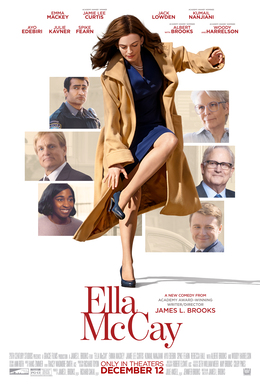
It’s easy to forget now what a big deal it was when the trailer for Ella McCay was first released in August of 2025.  It was the trailer for James L. Brooks’s first film in 15 years, a political comedy for adults.  It was full of familiar faces and it looked absolutely awful.  Seriously, the trailer was so unappealing that I became rather fascinated by it.  Even the worst films can usually scrounge together enough good material to at least come up with a passable trailer.  Watching the trailer for Ella McCay, I could only wonder who was responsible for putting it together.  Who thought it was a good idea to lead off with that lengthy Woody Harrelson scene?  Who thought the wedding scene didn’t look weird?  Who didn’t take the time to do something about Spike Fearn’s hair?

There were some who said that Ella McCay shouldn’t be judged based solely on its trailer.  They pointed out that director James L. Brooks directed three films that were nominated for Best Picture, two of which were actually good.  They pointed out that Ella, her brother, and her husband were all played by British actors who had appeared on niche television shows.  Soon, there was a mini-civil war being fought on twitter between those who dismissed Ella McCay based on the trailer and those who promised that they would love the film once it was released.

Then, on December 12, the film was released, the reviews were uniformly terrible, and it tanked at the box office.  It took the film a little less than two months to go from the theater to streaming online.

Having now watched Ella McCay, I can say that …. well, yeah, it’s pretty bad.

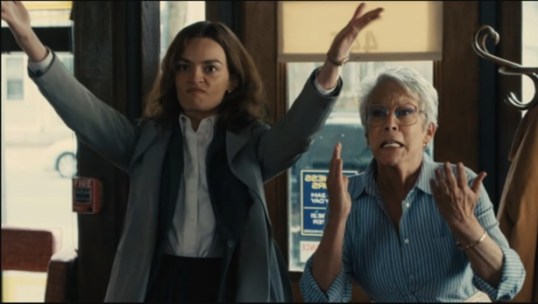
It’s not necessarily bad for the reasons that I thought it would be.  Watching the trailer, I thought the film’s downfall would be the performances of Woody Harrelson and Jamie Lee Curtis.  Both of them looked to be acting up a storm.  Having now seen the film, I can say that both of them actually do probably about as good a job as could be expected to do with the material that they were given.  Neither one is particularly memorable but they’re not terrible either.  For that matter, Albert Brooks is amusing as Ella’s boss and mentor, Governor Bill.

Instead, the main problem with the film is that Ella McCay is not a particularly interesting or even likable character, not matter how much the film’s narrator insists otherwise.  A policy wonk from a broken home who, at the age of 34, has become lieutenant governor of some nameless state up north, Ella is boring, humorless, and ultimately more than a little annoying.  She’s the girl in elementary school who always told on the kids who talked while the teacher was out of the room.  She’s your high school classmate who got all judgey if you wore a short skirt.  She’s your self-absorbed college roommate who always had to remind you that, no matter what you were going through, her father was a philanderer and her mom was dead.  She’s the colleague who voluntarily does all the work on your group project without being asked and then complains that no one helped her.  She’s the person who insists that she can change the world but who is still so emotionally stunted and immature that, at 34, she needs her aunt to teach her primal scream therapy.  Emma Mackey gives a disjointed performance as Ella, speaking with bland intensity whenever Ella is being serious and then overacting whenever Ella has to be flustered.

As bad as Mackey was, though, she was nowhere near as bad Spike Fearn, who plays Ella’s agoraphobic younger brother, Casey.  For some reason, Casey gets a huge subplot that doesn’t really seem to go anywhere.  We’re told that Casey hasn’t left his apartment in over a year and we repeatedly see that Casey struggles to communicate with people.  The film treats most of this as being a joke and Spike Fearn gives such a twitchy performance that Casey comes across as being far more creepy than he probably should.  We’re meant to cheer when Casey reconnects with his ex but I wasn’t silently yelling at her to run as far aways as possible.  We spend so much time with Casey that it’s hard not to wonder if maybe the filmmakers themselves realized that Ella wasn’t very interesting but Casey is hardly an appealing alternative.

There’s a lot about Ella McCay that doesn’t work.  Just the fact that the film features what appears to be hastily written narration from Ella’s secretary (Julie Kavner) would seem to reveal that someone understood that the film’s mix of tones and incidents really didn’t gel.  (Having Kavner actually say, “Hi, I’m the narrator,” is a touch that is more than a bit too cutesy.)  Ella’s husband (Jack Lowden) is such an obvious and odious villain that it was hard not to feel that Ella had to have been an idiot to marry him in the first place.  There’s a weird plotline involving Ella’s state troopers trying to get overtime.  Ella gets involved in one of the most jejune scandals of all time and the film ends with on a note that leaves you wondering how the 80-something Brooks can be so naive about politics.

But really, the main problem with the film is that it never convinces me that I should want Ella McCay to be governor.  To quote Karen Black in Nashville, she can’t even comb her hair.
 

Scenes I Love: John Carradine in Fallen Angel


Today, we celebrate the 120th birthday of actor John Carradine.

John Carradine appeared in over 300 movies over the course of a career that spanned nearly a century.  Born in 1906, Carradine made his film debut in 1930 and worked steadily until his death in 1988.  He was so prolific that films featuring him were still being released for years after his passing.  Though he’ll probably always be most-associated with the low-budget horror and thriller films that he appeared in, Carradine was also a favorite of directors like Cecil B. DeMille and John Ford.  He played key roles in such Ford films as Stagecoach, The Grapes of Wrath and The Man Who Shot Liberty Valance.  Carradine, however, often said that his true loves were Shakespeare and the theater and that the films were just something he did so he could afford to work on stage.

In this scene from 1945’s Fallen Angel, John Carradine plays a traveling fortune teller named Prof. Madley.

4 Shots From 4 Films: Special Michael Mann Edition


4 Shots From 4 Films is just what it says it is, 4 shots from 4 of our favorite films. As opposed to the reviews and recaps that we usually post, 4 Shots From 4 Films lets the visuals do the talking!

Today, we celebrate the 83rd birthday of the great Michael Mann!  It’s time for….

4 Shots From 4 Michael Mann Films

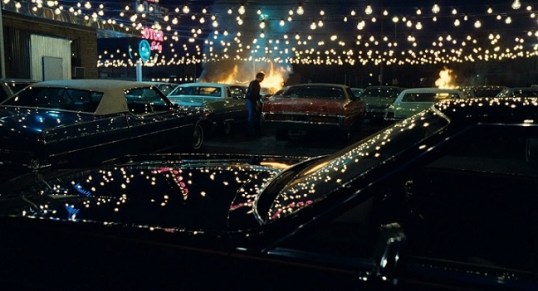
Thief (1981, dir by Michael Mann, DP: Donald Thorin)

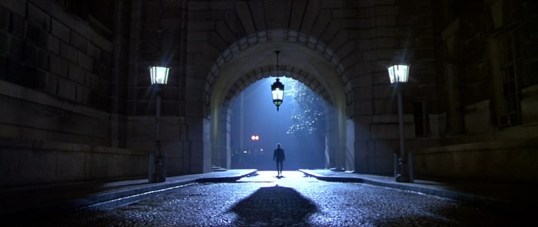
Manhunter (1986, dir by Michael Mann, DP: Dante Spinotii)

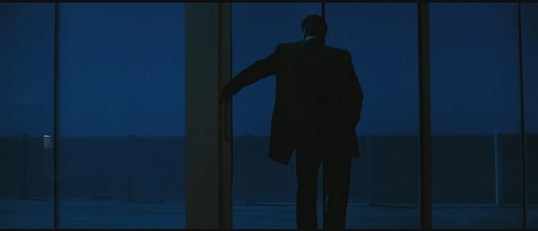
Heat (1995, dir by Michael Mann, DP: Dante Spinotti)

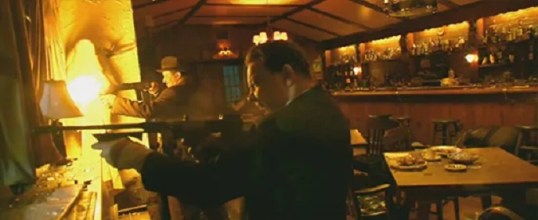
Public Enemies (2009, dir by Michael Mann, DP: Dante Spinotti)

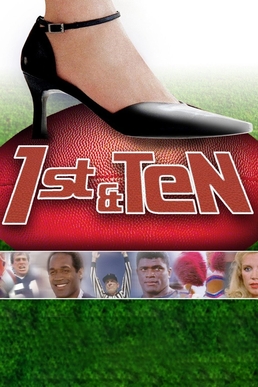
Late Night Retro Television Review: 1st & 10 3.2 “A Second Chance Once Removed”)


Welcome to Late Night Retro Television Reviews, a feature where we review some of our favorite and least favorite shows of the past! On Wednesdays, I will be reviewing 1st and Ten, which aired in syndication from 1984 to 1991. The entire series is streaming on Tubi.

This week, OJ Simpson makes things awkward.

Episode 3.2 “A Second Chance Once Removed”

(Dir by Stan Lathan, originally aired on August 12th, 1987)

With Coach Denardo no longer around, Diana has kept her promise and promoted Fred Grier to head coach.  However, Diana’s boyfriend and the new co-owner of the Bulls, Teddy, wants to hire T.D.’s old college coach, Red Macklin (John Robinson).  Though T.D. isn’t comfortable with the idea of betraying Fred or doing anything behind Diana’s back, he does agree that Macklin would be a better coach.  After an argument with his wife, T.D. flies out to his old college.

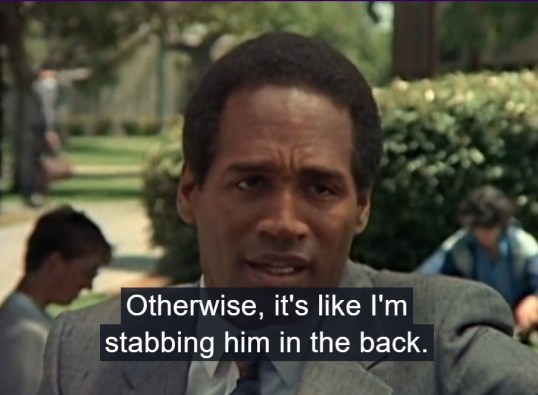
T.D. doesn’t do a very good job of selling the team to Macklin.  Macklin finally says, “You don’t want to be the head coach of the Bulls, do you?”  T.D. says that he does but the position has already been given to Fred and T.D. doesn’t believe in doing things without being upfront with everyone because …. well, I’ll let T.D. explain it….

This episode is a good example of what happens when one of a show’s main characters is played by someone who is now best-known for somehow getting acquitted of stabbing his ex-wife and a waiter to death.  Even the most innocuous of lines seem to take on an entirely different meaning.  I have to admit that I cringed every time T.D.’s wife called and said that he was working too hard and spending too much time with the team.  No, I wanted to yell, don’t make him mad….

As for the rest of the episode, it largely dealt with training camp.  Veteran defensive player John Manzak (John Matuszak) fears that he won’t make the team.  There’s a young rookie who seems to have more energy and strength than him.  However, Manzak has a secret weapon …. steroids!  I cannot imagine that this is going to end well.

Meanwhile, the government wants to deport the Bulgarian kicker, Zagreb (John Kassir).  Zagreb applies for political asylum but it turns out that his father is some sort of official in the Bulgarian government and, as such, Zagreb would not be in any danger if he was sent back home.  (I don’t really follow that logic, to be honest.  Communist dictators, like Zagreb’s father, are notoriously unsentimental when it comes to their children.  Fidel Castro had children all over the world and he didn’t leave Cuba to a single one of them.  Instead, Justin had to settle for Canada.)  Diana has a solution, though.  They have to find Zagreb a wife.  Again, I cannot imagine that this is going to end well.

Meanwhile, Yinessa is still holding out for money, Bubba is still arguing with his wife, and I’m still not sure what Jethro does on the team.

This episode of 1st & Ten …. actually, it wasn’t that bad.  I could actually follow the story for once and it didn’t feel like it had been cut to ribbons for syndication.  John Matuszak actually gave a very touching performance as a player who might be past his prime.  Hopefully, things will work out for him.  We’ll find out next week!

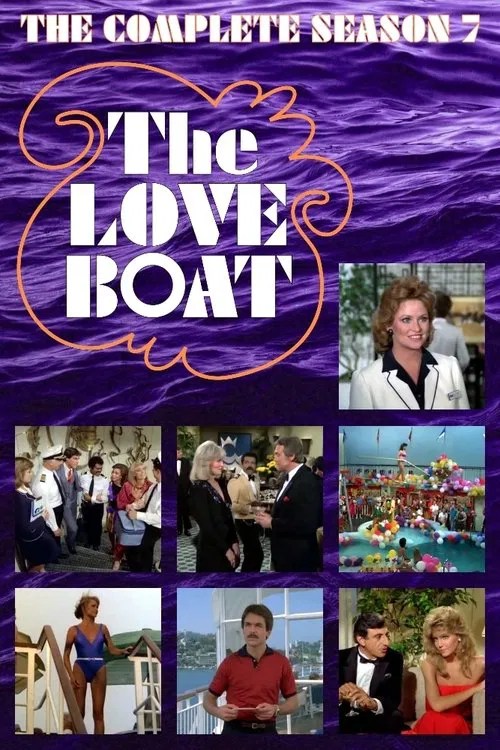
Retro Television Review: The Love Boat 7.6 “Friend of the Family/Affair on Demand/Just Another Pretty Face”


Welcome to Retro Television Reviews, a feature where we review some of our favorite and least favorite shows of the past!  On Wednesdays, I will be reviewing the original Love Boat, which aired on ABC from 1977 to 1986!  The series can be streamed on Paramount Plus!

This week, the cruise is not especially pleasant.

Episode 7.6 “Friend of the Family/Affair on Demand/Just Another Pretty Face”

(Dir by Ted Lange, originally aired on October 29th, 1983)

This week, Herbert (Gordon Jump) and Anita (Florence Henderson) are setting sail.  Herbert and Anita have been married for 25 years and Herbert has never cheated on Anita.  However, as he tells his old friend Isaac, he’s decided that it’s finally time for him to have his first affair.  He’s even decided to trick Anita into giving her approval.  Herbert is an insurance agent and he shows Anita an article that suggests that men who don’t cheat are more likely to succumb to a heart attack.  Anita is so concerned that she not only gives Herbert permission to cheat but she decides that maybe she should have an affair as well….

Needless to say, Anita knows exactly what Herbert was trying to do with the article and, once she’s played her practical joke, she is surprisingly forgiving.  I probably would not have been.  Then again, Herbert does promise to buy her a sable coat to make up for attempting to cheat on her.

Meanwhile, Jack (Robert Reed) is dating Leslie (Deborah Shelton), the much younger daughter of his best friend, Bill (Clint Walker).  Bill is not happy when he learns about this and orders Jack to stay away from his daughter.  Fortunately, Bill’s wife (Cathryn Damon) is able to show Bill the error of his ways.  Leslie gets to fulfil everyone’s fantasy of dating a tall, thin, neat, single 60 year-old with a mustache.

(Yes, Robert Reed and Florence Henderson do both appear in this episode but they only share one scene.  While getting breakfast out by the pool, they see each other and give each other a questioning look before shaking their heads.  Personally, I think this episode would have been a classic if it had featured Robert Reed as the husband trying to trick Florence Henderson into giving him permission to cheat.)

Finally, Deanna (Kim Lankford), the spoiled niece of one of the cruise line’s executives, boarded the boat and immediately developed a crush on Gopher.  I don’t blame her.  Gopher can be adorable when he wants to be.  But, as with the other two storylines, something just felt off here.  Gopher being such a passive character didn’t quite feel right for who the character has become by season 7.  This felt like a season 1 Gopher plot.

This episode didn’t do much for me, which is a surprise considering that it was directed by the usually dependable Ted Lange.  It was hard to sympathize with any of the passengers and the crew just seemed to be going through the motions.  Usually, I love The Love Boat but this episode didn’t work for me.

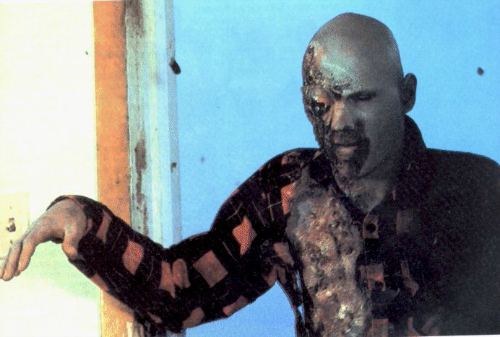
Scenes I Love: The End of The Original Dawn of the Dead


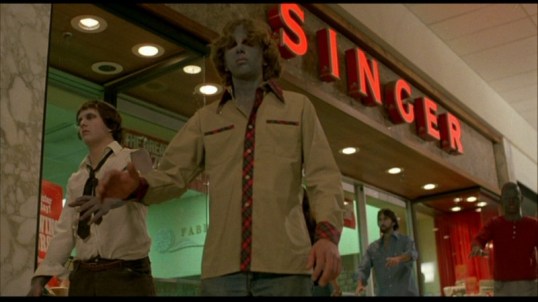
The original Dawn of the Dead, which was released in 1978 and directed by George Romero, is not only one of the most influential horror films of all time.  (Even more so than Night of the Living Dead, Dawn was responsible for inspiring the Italian zombie boom.)  It’s also a rather dark satire of humanity and commercialism.  With the world ending, both humans and zombies head to the mall.  Briefly, the humans manage to form their own peaceful society but, inevitably, they end up screwing it all up.  The Dead may be slow and not particularly intelligent but, as poor old Steve discovered in that elevator, they’re absolutely determined to get what they want.

Dawn of the Dead ends with an apocalytpic combination of bikers, zombies, and one helicopter that has next to no fuel.  Our two remaining survivors head off in search of some place safe but we all know that helicopter isn’t going to stay in the sky for long.  In its way, the ending of Dawn of the Dead is even more bleak than the end of Night of the Living Dead.   With the end of this film, Romero’s message is clear.  Society is as dead as the creatures tearing it down.

4 Shots From 4 Films: Special George Romero Edition


4 Shots From 4 Films is just what it says it is, 4 shots from 4 of our favorite films. As opposed to the reviews and recaps that we usually post, 4 Shots From 4 Films lets the visuals do the talking!

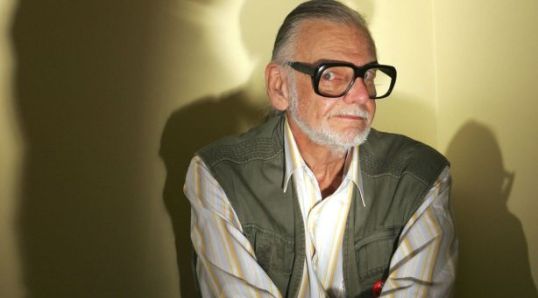
Today would have been George Romero’s 86th birthday.

Now, those of you who have been reading us since the beginning know how important the work of George Romero has been to this site.  A mutual appreciation of Night of the Living Dead is one of the things that first brought many of us together.  It’s a film that we watch ever Halloween and Arleigh’s review of the original remains one of our most popular posts.  If this site had a patron saint, it would probably be George Romero.

And yet, Romero wasn’t just a director of zombie films.  He made many films, dealing with everything from hippie lovers (There’s Always Vanilla) to wannabe vampires (Martin) to government conspiracies (The Crazies) and eccentric bikers (Knightriders).  George Romero was one of the pioneers of independent films and today, on his birthday, we should all take a minute to consider and appreciate the man’s cinematic legacy.  It’s not just horror fans who owe George Romero a debt of gratitude.  It’s lovers of cinema everywhere.

With that in mind, here are….

4 Shots From 4 George Romero Films

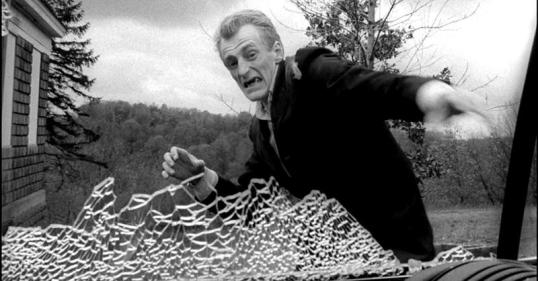
Night of the Living Dead (1968, dir by George Romero, DP: George Romero)

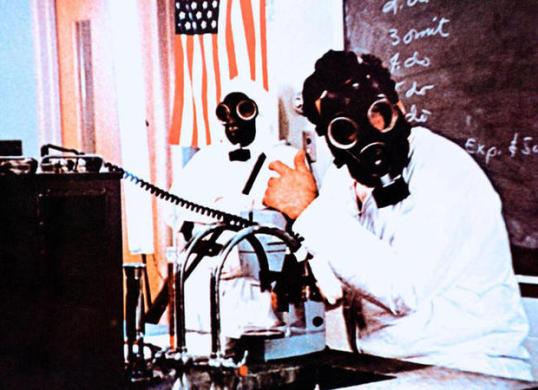
The Crazies (1973, dir by George Romero, DP: S. William Hinzman)

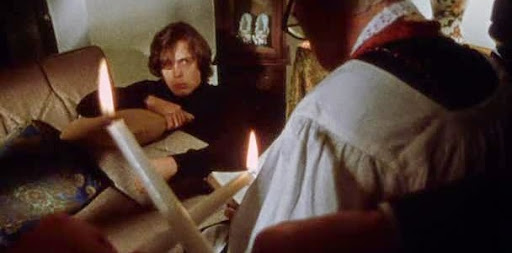
Martin (1978, dir by George Romero, DP: Michael Gornick)

Dawn of the Dead (1978, dir by George Romero, DP: Michael Gornick)

Late Night Retro Television Review: Pacific Blue 3.13 “Avenging Angel”


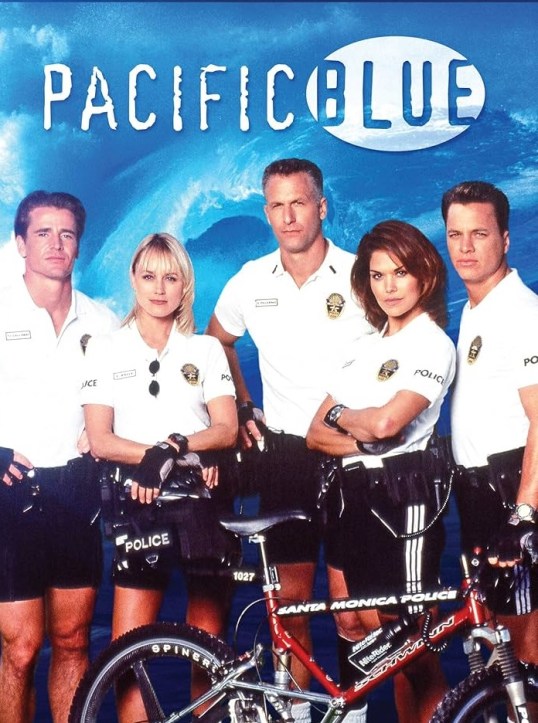
Welcome to Late Night Retro Television Reviews, a feature where we review some of our favorite and least favorite shows of the past! On Tuesdays, I will be reviewing Pacific Blue, a cop show that aired from 1996 to 2000 on the USA Network!  It’s currently streaming everywhere, though I’m watching it on Tubi.

This week, two vigilantes disturb the peace, Cory meets a special guest star, and everyone continues to look stupid on their little bicycles.

Episode 3.13 “Avenging Angel”

(Dir by Terence H. Winkless, originally aired on December 14th, 1997)

This episode was dumb.

Cory is haunted by nightmares involving her mother, who died when Cory was 10.  In her latest nightmare, she runs into her mother at a crime scene and her mom shoots her!  Chris thinks that’s an odd dream and she’s right.  Cory explains that her mom is just trying to get her attention.  Cory believes that her mom is her guardian angel.  Chris doesn’t know how to react to this because Cory is expressing an emotion that doesn’t involve being snarky or self-righteous.

When Cory is injured while chasing two Korean brothers (we’ll get to them in a minute), she has to go to rehab.  Luckily, Olympic track medalist Florence Griffith Joyner is a patient at the same rehab clinic.  Joyner takes Cory under her wing and encourages her to work hard and get her knee back into shape.  When Cory says she’s thinking of leaving the force, Joyner tells her not to.  “Thanks, FloJo,” Cory replies.

(Yes, Florence Griffith Joyner played herself.  As an actress, she was a good athlete.)

As for the two Korean brothers, they are vigilantes who are beating up criminals on the boardwalk and becoming celebrities in their own right.  Palermo views them as being a threat to the peace and he’s determined to catch them.  Meanwhile, the Mob is determined to kill them and a very annoying talent agent is determined to sign them.

Ugh, what a stupid episode.  Usually, I’m a sucker for episodes that deal with people coming to terms with the death of a parent.  That’s something to which I can relate.  I have no doubt that my mom is also looking over me.  But, as much as I wanted to fully embrace Cory’s story, I couldn’t get past the fact that she went to rehab and just happened to meet an Olympic athlete.  Maybe if Joyner has been a better actress, this storyline would have worked but, as it was, it just felt forced.  There was really no reason why Joyner should have been so wrapped up in whether or not Cory decided to remain with the force.

As for the stuff with the brothers, the entire plotline felt like filler.  The brothers couldn’t act.  The actors playing the gangsters who wanted to kill the brothers couldn’t act.  The talent agents who kept popping up and talking about how much they wanted to sign the brother, they also couldn’t act.

This episode was just painful and all the rehab in the world isn’t going to change that.