6 Roger Corman Trailers For Halloween


Happy Halloween!  Today, in order to celebrate, we have a special Roger Corman-themed edition of Lisa Marie’s Favorite Grindhouse and Exploitation film trailers!  Here are 6 Roger Corman trailers for Halloween!

1. The Day The World Ended (1955)

2. Bucket of Blood (1959)

3. Little Shop of Horrors (1960)

4. The Terror (1963)

5. The Masque of the Red Death (1964)

6. Frankenstein Unbound (1990)

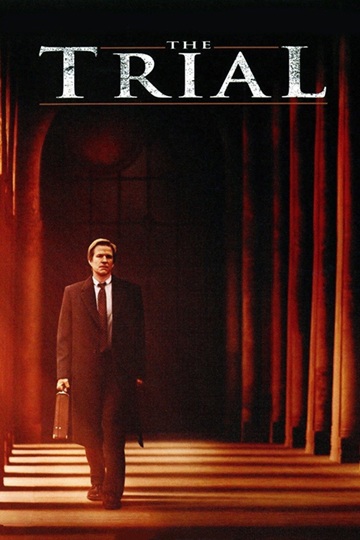
October Positivity: The Trial (dir by Gary Wheeler)


In 2010’s The Trial, Matthew Modine stars as Mac.

Mac is a Southern lawyer, even though it’s been a while since he practiced.  After his wife and children were killed in a car accident, Mac decided to retire from practicing law but he never surrendered his license.  A judge (Rance Howard) reaches out to him, asking him to serve as a public defender for Pete Thomason (Randy Wayne), a young man who has been accused of murdering his girlfriend.  The evidence is stacked against Pete and there are plenty of wealthy people who, for various reasons, want Pete to quickly be convicted.  Mac takes the case because he can tell that Pete is being railroaded.  When he discovers that Pete will possibly be facing the death penalty if he’s convicted, the case becomes very personal for Mac.

The prosecuting attorney (Bob Gunton) has managed to find a doctor (Brett Rice) who is willing to testify that Pete is a sociopath.  (The doctor has a reputation for finding just about anyone on trial to be a sociopath.)  Mac finds a doctor of his own, Dr. Anne Wilkes (Clare Carey), his testifies that Pete is nowhere near being a sociopath.  The problem is that Pete has no memory of what happened the night of the murder.  Mac may believe that Pete is innocent but can he convince the jury when the evidence all seems to suggest otherwise?

Like The List, The Trial was based on a novel by Robert Whitlow and it was directed by Gary Wheeler.  I was pretty hard on The List in last night’s review but I actually rather enjoyed The Trial, which was a solid and well-made legal thriller.  (The film’s status as a faith-based film largely comes from a scene in which Mac quotes the Book of Provers in regards to how, during a trial, it’s easy to believe the first person who speaks but it’s equally important to listen to how the accused replies.)  I enjoyed the twists and turns of the plot and the film’s ending worked well.  Though the film had a a made-for-television feel to it (despite having been a theatrical release), it still held and rewarded my interest.

It helped that the cast was well-selected and everyone gave good performances.  Matthew Modine, in particular, gave a strong performance as Mac, playing him not as being a saint but instead as being someone who was just determined to give his client the defense he deserved and to ultimately do the right thing.  Robert Forster played Mac’s brother-in-law and lead investigator and he brought his own brand of world-weary determination to the part.  Nobody plays a smug prosecutor as well as Bob Gunton, though it should be noted that the character himself never became a caricature.  Rance Howard was the ideal judge, tough but fair.  Randy Wayne was sympathetic as the confused Pete.  The cast really brought the film’s world to life.

I always enjoy a good legal thriller and The Trial was certainly that.

Late Night Retro Television Review: Highway to Heaven 4.20 “Aloha”


Welcome to Late Night Retro Television Reviews, a feature where we review some of our favorite and least favorite shows of the past!  On Thursdays, I will be reviewing Highway to Heaven, which aired on NBC from 1984 to 1989.  The entire show is currently streaming on Tubi and several other services!

This week, Mark is a disappointed again.

Episode 4.20 “Aloha”

(Dir by Michael Landon, originally aired on March 2nd, 1988)

Jonathan gets Mark all excited by saying that their next assignment is a Hawaiian mission.  Mark says, “We’re going to Hawaii!”  He’s looking forward to it and who can blame him?  After a countless number of assignments that found him working in crummy jobs and depressing neighborhoods, Mark thinks that he’s going to be most beautiful place on Earth.

Nope, sorry, Mark.  You’re going to a rundown apartment complex called the Hawaiian Sands.  The complex is managed by Aulani (Mokihana), a singer who found fame in Hawaii but not in Los Angeles.  Instead, in L.A., she was hit by a truck and left in a wheelchair.  Now, she spends her days bitter, constantly yelling at her handyman and former partner, Alvin (Danny Ing).  Alvin loves Aulani and Aulani loves Alvin but she’s too angry and scared of opening up emotionally to admit it.  When Alvin learns that he doesn’t have much longer to live, he plans to return to Hawaii.  Aulani refuses to admit that she cares.  Luckily, her new tenant Jonathan is there to set her straight.

As I’ve often said, the main strength of this show was its nonstop earnestness.  Even at its most sentimental, it still worked because the show was just so dang sincere.  That’s ultimately the case here.  Danny Ing gives a very touching performance as Alvin.  Your heart breaks for him.  Mokihana overacts in the role Aulani, to the extent that she actually becomes pretty annoying.  But, despite that, the show itself was so sincere and well-intentioned that it was impossible not be touched by the end of this episode.

Add to that, Hawaii — there’s no place more beautiful to visit.  I wonder what Halloween is like in Hawaii.  Maybe I’ll find out next year!

Horror on TV: The Night America Trembled (dir by Tom Donovan)


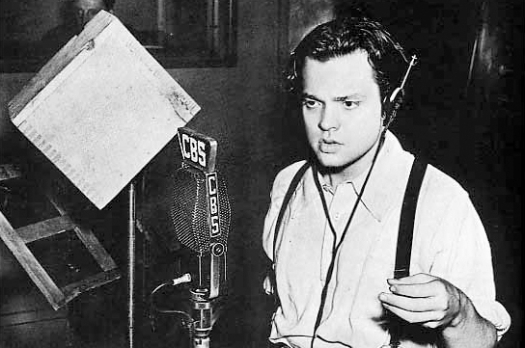
Filmed in 1957 for a television program called Westinghouse Studio One, The Night America Trembled is a dramatization of the night that Orson Welles terrified America with his radio adaptation of War of The Worlds.  

For legal reasons, Orson Welles is not portrayed nor is his name mentioned.  Instead, the focus is mostly on the people listening to the broadcast and getting the wrong idea.  That may sound like a comedy but The Night America Trembled takes itself fairly seriously.  Even pompous old Edward R. Murrow shows up to narrate the film, in between taking drags off a cigarette.

Clocking in at a brisk 60 minutes, The Night America Trembled is an interesting recreation of that October 30th.  Among the people panicking: a group of people in a bar who, before hearing the broadcast, were debating whether or not Hitler was as crazy as people said he was, a babysitter who goes absolutely crazy with fear, and a group of poker-playing college students.  If, like me, you’re a frequent viewer of TCM, you may recognize some of the faces in the large cast: Ed Asner, James Coburn, John Astin, Warren Oates, and Warren Beatty all make early appearances.

It’s an interesting little historical document and you can watch it below!

Horror on the Lens: How To Make A Monster (dir by Herbert L. Strock)


You’ve seen I Was A Teenage Werewolf….

You’ve watched I Was A Teenage Frankenstein….

Now, it’s time to watch How To Make A Monster!

Released in 1958, How To Make A Monster is a clever little horror satire from American International Pictures in which the stars of Teenage Werewolf and Teenage Frankenstein are hypnotized into believing that they actually are the monsters that they played!  The main culprit is a movie makeup artist (Robert H. Harris) who has been deemed obsolete by the new bosses at AIP.

Be sure to watch for the finale, which features cameo appearances from several other AIP monsters!  And read my full review of the film by clicking here!

Retro Television Review: Decoy 1.10 “The Scapegoat”


Welcome to Retro Television Reviews, a feature where we review some of our favorite and least favorite shows of the past!  On Thursdays, I will be reviewing Decoy, which aired in Syndication in 1957 and 1958.  The show can be viewed on Tubi!
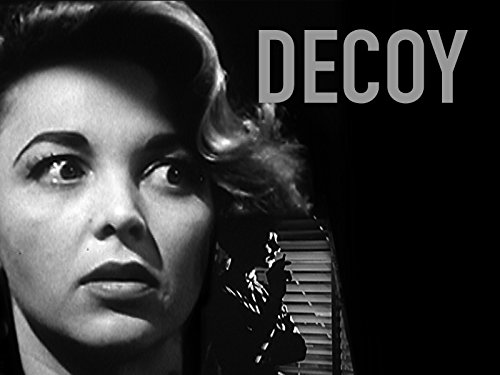
This week, Casey makes the mistake of being nice.

Episode 1.10 “The Scapegoat”

(Dir by Teddy Sills, originally aired on December 16th, 1957)

Call this one “Casey Screws Up …. Again.”

Casey and Detective Hank Hopkins (John Connell) are escorting embezzler Dorothy Boyer (Lenka Peterson) to jail.  As they wait at an airport, Casey cannot help but feel sorry for Dorothy.  Everyone who sees Dorothy recoils from the sight of her handcuffs.  (“She’s a crook!” one little girl yells.)  Casey agrees to take off the handcuffs as long as Dorothy doesn’t try to run away.  Of course, as soon as Casey is distracted, Dorothy runs.

Casey and Hank try to track down Dorothy.  They discover that Dorothy was embezzling the money so that she could afford a special school for her son, who is repeatedly described as being “retarded” but whose noncommunicative behavior suggests that he would probably, today, be diagnosed as having some form of autism.  Casey and Hank fear that Dorothy is going to murder her child, to spare him from being sent to a “public institution” while she’s serving time in prison.

They’re right.  Dorothy is on the verge of throwing her son off a bridge when Casey, Hank, and the cops track her down.  Casey says that she understand why Dorothy is scared.  “You think your son will be sent to a public institution and people will be cruel to him!” Casey says.  “What about me?  I work for a public institution!  Was I cruel to you?”

“Who’s going to give love to a backward child!?” Dorothy cries.

Casey then taunts, “Go ahead, throw him over!”

This causes Dorothy to realize that she loves her son too much to toss him over the bridge.  The episode ends with Casey speaking directly to the camera.  Dorothy will only have to serve six months in prison.  As for Casey and Hank, they’re put on official probation for three months for letting Dorothy escape.  “You live and you learn,” Casey says.

This episode was a real time capsule.  Yes, it was weird to hear the term “retarded” tossed around so casually, though I found the term “backward child” to be far more offensive.  But, let’s be realistic here.  This show aired 1957 and it’s a bit silly to expect a 68 year-old television program to sound like it was written in 2025.  To me, what was really upsetting was how everyone that Casey talked to seemed to feel it was perfectly understandable that the father of Dorothy’s child abandoned Dorothy because of their son.  Everyone, except for Casey and Hank, acted as if Dorothy should be ashamed of her child.  To make clear, the show did not endorse that attitude but still, the callousness of almost everyone in Dorothy’s life was hard to take.  I was glad that Casey cared.

That said, I did cringe a bit at that “I work for a public institution” line.  One nice person does not signify a change in culture.

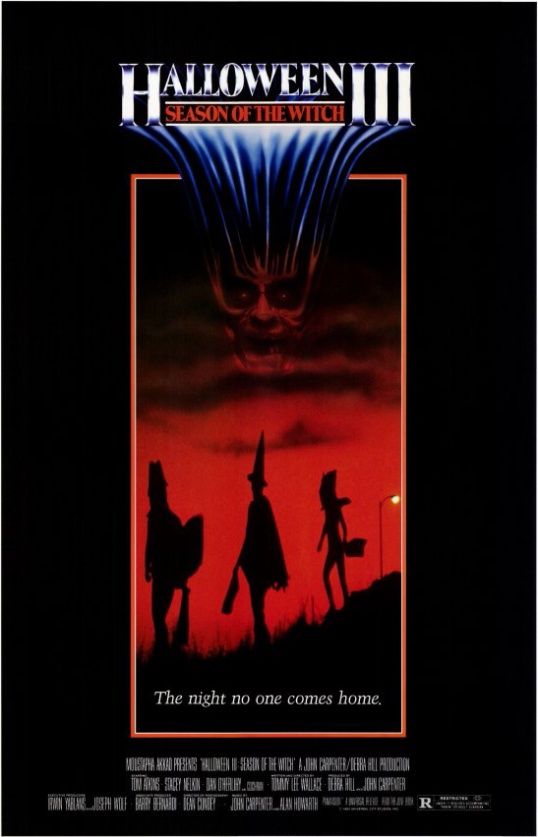
Horror Scenes That I Love: Conal Cochran Explains Halloween in Halloween III: Season of the Witch


Tonight’s horror scene that I love is from the underrated 1982 film, Halloween III: Season of the Witch.

In this scene, Conal Cochran (Dan O’Herlihy) explains not only the origins of Halloween but he also discusses how he’s going to make Halloween great again.  This scene is probably the best in the film and it’s almost entirely due to O’Herlihy’s wonderfully menacing performance as Conal Cochran.

“….and happy Halloween.”


4 Shots From 4 Horror Films: 2010s Part Two


This October, I’m going to be doing something a little bit different with my contribution to 4 Shots From 4 Films.  I’m going to be taking a little chronological tour of the history of horror cinema, moving from decade to decade.

Today, we continue with the 2010s!

4 Shots From 4 Films

The Conjuring (2013, dir by James Wan)

The Conjuring (2013, dir by James Wan)

You're Next (2013, dir by Adam Wingard)

You’re Next (2013, dir by Adam Wingard)

The Babadook (2014, dir by Jennifer Kent)

The Babadook (2014, dir by Jennifer Kent)

It Follows (2015, dir by David Robert Mitchell)

It Follows (2015, dir by David Robert Mitchell)

October True Crime: Holy Spider (dir by Ali Abbasi)


2022’s Holy Spider opens in the Iranian city of Mashahd.  We follow a woman as she spend her night as a sex worker, standing on a street corners, going off with any man who stops for her, and hiding in the shadows whenever the infamous morality police are nearby.  There’s nothing glamorous about her work.  The men who pick her up are brutes who treat her like property and there’s little about the city that is beautiful or aesthetically pleasing.  If anything, it looks bombed-out, as if no one could be bothered to repair any of the obvious cracks that are stretching across the city ancient’s facade.  Towards the end of the night, the woman is picked up by a man who, in a harrowing scene, proceeds to choke her to death.

Journalist Arezoo Rahimi (Zar Amir Ebrahimi) arrives in the city to investigate the recent murders of several sex workers and immediately discovers that the authorities have no interest in discussing the case.  When she pushes them, they taunt her about her private life and they snap at her for not properly covering her hair.  Whenever she steps out into the street, she’s told that she’s going to get in trouble if she’s spotted by the Morality Police.  (The attitude appears to be that it’s a greater crime for a woman to fail to fully cover her hair than for a man to kill a woman, whether her hair is properly covered or not.)   Eventually, she teams up with a newspaper editor named Sharifi (Arash Ashtiani).  Sharifi has been receiving letters from the murderer, ones in which he explains that he is cleansing the city in the name of Imam Reza, the eighth Shia Imam.

The murderer is a construction worker named Saeed Azimi (Mehdi Bajestani), a middle-aged man who previously served in the Iraq-Iran War and who it is suggested might be suffering from PTSD.  On the outside, Saeed seems almost normal.  He has friends.  He has a family.  He is very religious.  To the outside viewer, he might not look like a killer.  But, every night, he prowls the streets and he searches for potential victims.  When Rahimi goes undercover as a sex worker, she comes close to becoming one of them.

More than just a recreation of a serial killer’s crimes, Holy Spider examines the misogynistic attitudes that allowed Saeed that get away with so many murders.  Saeed himself becomes a folk hero amongst many Iranians, who are quick to say that they agree with his mission to cleanse the city.  Even when on trial, Saeed is approached by members of the government who promise him his safety, though it soon becomes clear that their promises don’t necessarily mean much.  The more that his crimes are celebrated, the more smug Saeed becomes.  Even when his sentence comes down, Saeed remains convinced that he will be protected.  Afterall, everyone seems to agree with him that the victims, and not the murderer, are to blame for their deaths.

Dark, disturbing, and ultimately infuriating, Holy Spider is a powerful film.  The film’s power can be seen in the fact that it was not only banned in Iran but that the government also announced that anyone involved in the filming would also be censured.  (Russia, a longtime ally of Iran, also banned the film.)  Saeed is a hateful figure but even more hateful are the misogynists who celebrated him and nearly allowed him to get away with his crimes.  Holy Spider may have been banned in Iran but it can still be seen in the rest of the world.

And it should be seen.