Retro Television Review: The Love Boat 6.11 “The Tomorrow Lady/Father, Dear Father/Still Life”


Welcome to Retro Television Reviews, a feature where we review some of our favorite and least favorite shows of the past!  On Wednesdays, I will be reviewing the original Love Boat, which aired on ABC from 1977 to 1986!  The series can be streamed on Paramount Plus!
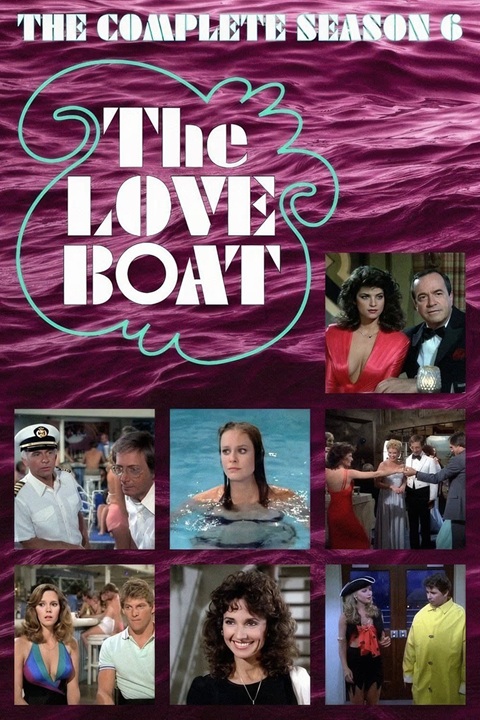
This week, a man tells a terrible lie, Greer Garson can see the future, and Isaac is losing his hearing!  Come aboard, we’re expecting you….

Episode 6.11 “The Tomorrow Lady/Father, Dear Father/Still Life”

(Dir by Richard A. Wells, originally aired on December 4th, 1992)

This episode of The Love Boat features one of the worst stories ever.  Ken Miller (Lawrence Pressman) wants to date Sarah Curtis (Kim Darby).  However, Sarah is on the cruise as a member of the Single Parents Group and, when Sarah first sees Ken, she assumes that Ken is a single father because he’s standing with Libby McDonald (played by the one-named Louanne), who is the daughter of Ken’s friend, Tom (Jim Stafford).  So, Ken just decides to lie about being a father.

Eventually, Sarah finds out.  When she notices that Libby is spending all of her time with Tom, the gig is up.  Sarah, however, FORGIVES Ken and accepts his marriage proposal!  (“Looks like I won’t be a member of Single Parents anymore….”)  Lady, he lied to you about having a daughter!  He recruited a little girl to pretend to be his daughter!  THIS IS NOT THE WAY TO START A MARRIAGE!

The other two stories were better.  One featured Greer Garson (in her final screen performance before retiring) as a woman who was a self-described “good guesser.”  She met a struggling businessman (Howard Duff) who wanted to use her power to play the stock market but eventually, he fell in love with her for her and not her powers.  Howard Duff’s character was not particularly likable but Greer Garson seemed to be having fun.

The other story featured Isaac struggling with a double ear infection and fearing that he would permanently lose his hearing.  He didn’t, which is good considering that he’s the ship’s head bartender and he’s the guy who everyone comes to with their problems.  (It always amuses me how a passenger will just automatically start talking to Isaac as if they’re best friends when they’ve only been on the boat for a couple of hours.)  What made this story work, though, was the performance of Ted Lange.  He was so believably scared of losing his hearing that you just wanted someone to hug him and reassure him that it would all be okay.  When his hearing finally came back, I breathed a sigh of relief.  Obviously, playing Isaac was probably not the most challenging roll of Ted Lange’s career.  I mean, the man has played Othello!  Still, Lange gave a really good and honest performance in this episode.  He didn’t use the fact that he was acting on The Love Boat as an excuse to just coast.

This cruise …. it was kind of forgettable.  Still, at least Ted Lange got a chance to shine!
Retro Television Show: Baby on Board 1.1 “Pilot”


Welcome to Retro Television Reviews, a feature where we review some of our favorite and least favorite shows of the past!  On Thursdays, I will be reviewing Baby On Board, which aired on CBS in 1988.  The entire show is currently streaming on YouTube!

This week, we have a sitcom about two terrible parents.

Episode 1.1 “Pilot”

(Dir by David Steinberg, originally aired on July 12th, 1988)

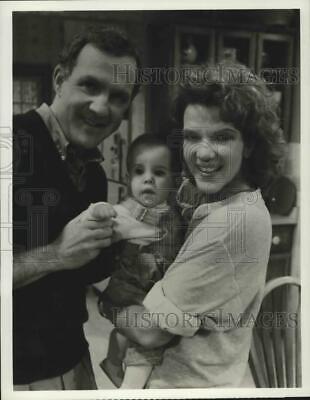
George (Lawrence Pressman) and Sally (Jane Galloway) are a married couple in their 40s.  They are also parents to 9 month-old Abigail and they’re still struggling to adapt to life with a baby.  Sally is annoyed because George pretends to be asleep whenever Abigail cries and that George gives the baby food-related nicknames.

“How is she going to feel when she sees you eating a cupcake!?” Sally wails.

George starts to call Abigail “anchovy” because that’s something that he will never eat.

Sally’s mother (Joan Copeland) sometimes comes by so that she can complain about George and talk about how Sally waited too long to have a baby.  (“If you had the baby when you were supposed to, she’d be in college now!”)  George’s father (Larry Haines) also comes by, mostly so he can argue with Sally’s mother.

George and Sally have tickets for a wonderful beach vacation.  But who is going to look after Abigail while they’re gone?  Obviously, the in-laws are not an option.  They decide to hire a babysitter.  At first, George is nervous about leaving Abigail with a stranger but then Lauri the Babysitter shows up and she’s played by a very young Teri Hatcher.  George suddenly decides that he’s now okay with leaving Abigail but suddenly, Sally doesn’t want to go on vacation.  I guess they would rather stay home with the younger woman that her husband is obviously attracted to.  Sally especially gets upset when the cheery Lauri suggests that Sally try out some yoga positions to release stress.  “Is your mother younger than me!?”  Sally demands.

None of this is particularly funny but don’t tell that to the laugh track.  This episode had one of the loudest and most intrusive laugh tracks that I’ve ever heard but pretending that everyone laughed at an unfunny line doesn’t make the line any funnier.  It just emphasizes that everything about the show is fake.

George and Sally do eventually decide to take their vacation.  George’s father shows up to watch the house so that Lauri can spend her time watching the baby.  “Watch how you dress,” George tells Luari, “because my father has a heart condition.”  (Lauri’s outfit is pretty modest so I’m not sure what type of Victorian society George’s father grew up in.)  Then Sally’s mother shows up and throws a fit over George’s father being asked but not her.  Finally, George grabs Abigail and takes her on vacation with them.  But I noticed that George and Sally didn’t bother to pack any baby stuff so good luck with that.

Baby on Board was obviously inspired by the idea that everyone loves a cute baby.  This episode, though, made me feel bad for the baby.  I mean, what a terrible family!  Needless to say, this was the show’s only episode.

Next week — I will start reviewing Malibu CA, a show that actually lasted more than one episode!

Film Review: The Man In The Glass Booth (dir by Arthur Hiller)


Who is Arthur Goldman?

That’s the question at the heart of the 1975 film, The Man In The Glass Booth.

When we first meet Arthur Goldman (Maximilian Schell), he is a wealthy businessman who lives in a Manhattan high-rise and who appears to rarely leave the safety of his penthouse.  He is waited on by two assistants, Jack (Henry Brown) and Charlie (Lawrence Pressman), both of whom he talks to and treats as if they are members of his own family.  His most frequent visitor is his psychiatrist, Dr. Weissburger (Robert H. Harris), who frequently stops by and asks Arthur if he’s been taking his medication.

Arthur Goldman is a man who loves to talk.  Indeed, the first hour of the film feels almost like a nonstop monologue on the part of Goldman, with just occasional interjections from the other characters.  Goldman was born in Germany.  He talks about how, when he was young, he and his family were sent to a concentration camp and it was there that he witnessed the murder of his father by the camp’s sadistic commandant, Dorff.  Dorff is one of the many Nazis who disappeared to South America at the end of the war.

When Goldman spots a car that always seems to be parked across the street from his building, he becomes paranoid.  He says that he’s being watched and even suggests that Dorff has come to capture him.  Instead, it turns out that Mossad come for him.  As the agents explain it to Charlie, dental records prove that Arthur Goldman is actually Commandant Dorff.  Goldman/Dorff is taken back to Israel to stand trial for his crimes.

Are Arthur Goldman and Dorff the same man?  Once in Israel, Goldman tells anyone who will listen that he is Dorff and that he feels no guilt for his actions.  He insists on being allowed to wear his SS uniform during the trial.  Because of threats to his safety, a booth made of bullet-proof glass has been placed in the courtroom.  As the trial commences, The Man in the Glass Booth continues to rant and rave and declare his guilt.  However, the prosecutor (Lois Nettleton) comes to doubt that the man is who he says he is.

The Man In The Glass Booth is based on a novel and play by Robert Shaw.  (The same year that The Man In The Glass Booth was released, Shaw played Quint in Jaws.)  The film was produced as a part of an experiment called American Film Theatre, in which well-known plays would be adapted to film and then would be shown at 500 participating movie theaters in America.  Each production would only be shown four times at each theater and subscriptions were sold for an entire “season” of films.  It sounds like an interesting experiment and the type of thing that I would have enjoyed if I had been around back then.  Today, of course, these productions would have just premiered on a streaming service.

The Man In The Glass Booth is a film that very much feels like a filmed play.  There are only three locations — Goldman’s penthouse, his cell, and the courtroom where he is put on trial.  The three act structure is very easy to spot.  Maximilian Schell’s performance is also very theatrical.  In fact, it’s so theatrical that, for the first hour or so, I found myself wishing that he would just stop talking for a few second or two.  He was so dramatic and so flamboyant and so intentionally over-the-top that he became somewhat exhausting.  But, during the second hour, I came to see that all of that “overacting” was actually setting up the film’s final act.  Schell talks so much that, when he finally does find himself unable to explain himself, it’s a shocking moment and one that perfectly captures not just the evil of the Nazis and the Holocaust but also how the legacy of that evil lives on after the fall of the Third Reich and the deaths of the majority of the Holocaust’s perpetrators.  At that moment, I realized that The Man In The Glass Booth never stopped speaking because silence would force him to confront the horrors of the past and the trauma, guilt, and uncertainty lurking in his subconscious.  Maximilian Schell was nominated for an Oscar for his performance here and, by the end of the film, I totally understood why.

The Man In The Glass Booth requires some patience.  Actually, it requires a lot of patience.  However, those who stick with it will discover an intelligent and thought-provoking film about not only the horror of the past but also how those in the present deal with and rationalize those horrors.  Though the film is a bit too stagey for its own good, it’s also one that sticks with you even after the curtain falls and the end credits roll.

A Blast From The Past: The Drug Knot (dir by Anson Williams)


In 1986’s The Drug Knot, Dermot Mulroney plays a high school student.

At the time this show aired, Dermot Mulroney was 25 years-old and he looked like he was 30 but, looks aside, he actually gives a pretty convincing performance as Doug Dawson.  Doug is a smart and musically-gifted high school senior.  He’s talented enough to make beautiful music with a saxophone and rebellious enough to skip class so that he can play the sax in the school locker room.  His girlfriend, Kim (Meryl Streep look-alike Kim Myers), is totally in love with Doug but she also worries that he’s getting too heavily into dugs.  He’s gone from smoking weed to snorting cocaine.  He hides his drugs in his bedroom.  His mother (Mary Ellen Trainor) has no idea that Doug is a drug addict while Doug’s little brother (David Faustino) wants to be just like him.

Can you see where this is heading?

In order to combat the school’s growing drug problem, the school has invited a speaker named David Toma to give a speech at a school assembly.  Toma is a former cop who struggled with addiction himself.  He inspired not one but two television shows, one called Toma and the other called Baretta.  He goes from school to school and he gives speeches about all of the teenagers that he knows who have died as a result of doing drugs.  As we see throughout the episode, Toma is a confrontational speaker, one who is not afraid to yell at his audience.  Doug shows up for the assembly but his bad attitude leads to Toma kicking him out.

Personally, I’ve always had mixed feelings about the idea of trying to change people’s behavior by yelling at them.  I know that it’s a popular technique and there’s been a lot of television shows (Intervention and Beyond Scared Straight come to mind) that are all about getting in people’s faces and screaming at them.  My feeling, though, has always been that this approach is more about making other people feel good than actually changing behavior.  Everyone wants to see the people who have caused them stress get yelled at.  On talk shows, audiences would applaud whenever a disrespectful teen got sent to boot camp but it’s rare that you ever heard about whether or not the approach actually worked.  I mean, I assume the approach works for some people but I know that if someone yells at me not to do something, my usual reaction is to go ahead do it just because I resent authority.  David Toma’s approach would not have worked with me.

(One interesting thing about The Drug Knot is that David Toma is a real person and he plays himself.  Apparently, he’s still out there and still at it, even though he’s in his 90s now.  I should note that, on YouTube, there’s a lot of comments from people who say that getting yelled at by David Toma saved their lives so maybe the yelling approach does work for more people than I assumed.)

Anyway, as always when it comes to these made-for-TV anti-drug programs, the drugs lead to tragedy and The Drug Knot ends on a particular dark note.  For once, there is no redemption.

Here is The Drug Knot, complete with an anti-drug message from Michael Jordan:

Griffith Gets Serious: Winter Kill (1974, directed by Jud Taylor)


Eagle Lake, a mountain resort town in California, has a problem.  It’s almost tourist season and there is a sniper stalking through the night, using his rifle to pick off citizens and painting messages like “The First” and “The Second” in the snow.  It’s up to police chief Sam McNeill (Andy Griffith) to figure out the killer’s motives and capture him before the vacation season begins!  To catch the killer, McNeill is going to have to investigate his friends and neighbors, all of whom have secrets that they don’t want to have revealed.

1974 was a busy year for Andy Griffith.  Best-known for playing the folksy and reassuring Sheriff Taylor for over ten years on The Andy Griffith Show, Griffith tried to change his image by appearing in three unexpectedly dark made-to-TV movies.  In Pray For The Wildcats and Savages, Griffith played the villain.  In Winter Kill, he’s back in a more familiar role.  He is once again playing a lawman, though this one carries a gun and doesn’t have time to sit on his porch and play the guitar while Aunt Bea makes dinner.  Instead, he’s getting pressure from all sides to capture a psycho sniper who, at the start of the movie, shoots an old woman after throwing pebbles at her bedroom window.  Eventually, the sniper even ends up kidnapping Chief McNeill’s girlfriend!  This never happened in Mayberry!

Winter Kill is a pretty good mystery.  It’s not strictly a horror film but the sight of the masked sniper, making his way through the night and coldy gunning down unsuspecting victims is scary enough that it might as well be.  Andy Griffith was surprisingly tough and gritty as Chief McNeill.  He might be a good guy in this movie but you still know better than to mess with him.  The rest of the cast is made up of television regulars but keep an eye out for a youngish Nick Notle playing a cocky ski instructor.

Winter Kill was actually meant to be a backdoor pilot for a show where Chief McNeill would battle crime on a weekly basis.  Though that didn’t happen, the concept was later retooled and became a short-lived series called Adams of Eagle Lake.

Horror On TV: Darkroom Season 1 Episode 1&2 “Closed Circuit/Stay Tuned, We’ll Be Right Back” (dir by Rick Rosenthal and Paul Lynch)


While I was looking through YouTube for TV shows to use for this year’s horrorthon, I came across something called Darkroom.  Apparently, Darkroom was a horror anthology series that aired for a few months in 1981.

So, I figured, why not share!

(Apparently, each episode of Darkroom was made up of two thirty-minute stories.  For syndication purposes, it appears that the each 30 minute segment was considered to be a separate episode.)

Below is the first episode of Darkroom!  It originally aired on Nov. 27th, 1981.  In Closed Circuit, an aging anchorman discovers that he’s about to be replaced by a computer.  In Stay Turned, We’ll Be Right Back, a man discovers that his radio can be used to contact the past and must decide whether or not to change history.  The show is introduced and hosted by James Coburn.

Closed Circuit was directed by Rick Rosenthal, who directed Jamie Lee Curtis in Halloween II.  Stay Tuned is directed by Paul Lynch, who directed Jamie Lee Curtis in Prom Night.

Enjoy!