Shattered Politics: Harry’s War (dir by Kieth Merrill)


It’s Tax Day, which means that it’s a good day to remember that the IRS is not your friend.

That can sometimes be hard to forget, with all the talk of making people “pay their fair share” and all the drama that seems to accompany any suggestion that federal bureaucracy should be reduced.  Back in 2003, there was a big story about how the IRS was going to hire 3,000 new employees and it amazed me how the media tried to frame this as being a good thing to which no one could possibly object.  Whenever I turned on the news, I would see government official bragging about how they were going to bring in even more IRS agents to make “the billionaires” pay their fair share.  (They may say “billionaires” but one can be sure that those 3,000 IRS agents weren’t going to anyone near anyone who donated to the right people.)  In the recent election, I was always amused by analysts who were shocked to discover that many voters, especially those were struggling to pay their bills, weren’t enthusiastic about the idea of a supercharged IRS.

The fact of the matter is that people hate the IRS.  The IRS exists to make people’s live difficult.  The IRS exists to take our money away from us, money that we earned but which we are apparently not worthy of keeping.  The IRS is an agency that demands that you do you own taxes but then threatens to throw you in jail if you make a mistake.  When people hear 3,000 new IRS agents, they imagine 3,000 more people looking to take their money and toss them in prison for forgetting to carry the one.  I often think that if the IRS simply sent people a bill every year, people would actually get a lot less upset about having to pay taxes.  I get a property tax bill from the country and I have no problem paying it because it gives me an exact amount.  Instead, the IRS says, “We know how much you owe but we’re not going to tell you.  If you pay too much, you won’t get a refund and if you pay too little, we’ll destroy your life.”

On days like this, watching a film like 1981’s Harry’s War can be a cathartic experience.  The film stars Edward Herrmann (yes, the History channel guy) as Harry, a postman who was raised by Beverly Payne (Geraldine Page), an eccentric woman who collects military memorabilia and whose property is listed as being a church and is therefore tax exempt.  In her will, Beverly has named Harry as her heir.  Arrogant IRS district director Ernie Scelera (David Ogden Stiers) is convinced that Beverly is hiding a fortune from the IRS and he proceeds to harass both her and Harry in court until Beverly drops dead of a heart attack.  Harry inherits Beverly’s property and also her tax bill.  However, Harry has also inherited all of her military stuff and soon, he’s crashing Ernie’s press conference with a tank and then engaging in a lengthy stand-off with the government.  The film is a dramedy and you never really doubt that Harry will somehow triumph (even if his victory is ultimately a symbolic one) but the film still reminds us of how quickly the government will turn on its citizens when it’s being defied and the final few moments bring to mind some of the worst ATF and FBI excesses of the past 30 years.  That said, Harry is quick to point out that he’s not waging war on the government.  He’s waging war on the unelected bureaucrats who have forgotten that civil servants are supposed to work for the people and not against them.  “All that power in one place,” Harry says scornfully about the IRS and it’s hard to deny that he has a point.  It’s hardly a perfect film but, in this day and age, it’s a film that will leave you cheering.
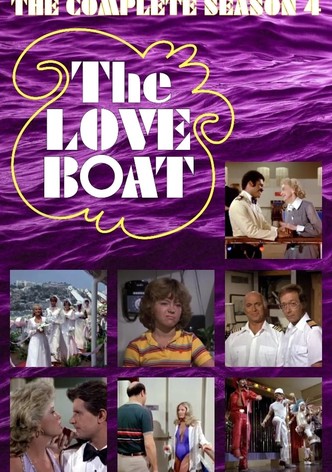


Retro Television Review: The Love Boat 4.27 “Maid for Each Other/Lost and Found/Then There Were Two”


Welcome to Retro Television Reviews, a feature where we review some of our favorite and least favorite shows of the past!  On Wednesdays, I will be reviewing the original Love Boat, which aired on ABC from 1977 to 1986!  The series can be streamed on Paramount Plus!

This week, a baby is abandoned, an aunt visits, and for some reason, Joe Namath is on the boat.

Episode 4.27 “Maid for Each Other/Lost and Found/Then There Were Two”

(Dir by Howard Morris, originally aired on May 9th, 1981)

Ted Harper (Joe Namath) boards the boat with his best friend, Richard Henderson (Fred Willard).  Ted and Richard were fraternity brothers.  While in college, the members of the frat decided that, whenever one of them got married, some money would be contributed to a pot.  The last single member of the frat would end up getting all of the cash, which is now up to $60,000.  Ted and Richard are the last two single members of the frat and they’re competing to see who can hold out the longest.

(Can we just agree that guys are weird?)

Ted has a plan to get the money. He’s gotten his ex-girlfriend, Paula (Karen Grassle), to agree to trick Richard into falling in love with and marrying her, in exchange for some of the money.  However, Richard is smarter than Ted realizes and instead offers Paula even more of the money to get Ted to marry her.  However, Karen falls for Ted for real.  Karen and Ted do get married when the ship docks in Mexico.  When Richard announces that he paid Karen to marry Ted, Ted is hurt at first but then he realizes that he was willing to do the same thing to Richard and nothing matters more than love.  Awwww!

Now, it may seem strange to cast Joe Namath and Fred Willard as friends.  To me, it’s even stranger that this was not the first time that Joe Namath, who was not much of actor, appeared on The Love Boat.  Just as he did the last time he was on the boat (and also just as he did when he last visited Fantasy Island), Namath wanders through the story with a goofy grin on his face.

Speaking of goofy, Gopher is super-excited when his wealthy aunt Loretta (Jane Powell) boards the boat.  Loretta, however, is scared to tell Gopher that she has lost all of her money and is now working as a maid.  Loretta need not have worried.  I mean, it’s not as if Gopher has a particularly glamorous job.  Plus, Loretta’s not going to be poor for long, not after she meets and falls in love with wealthy Duncan Harlow (Howard Keel).

Finally, Eddie Martin (Gary Burghoff) is a mechanic on the Love Boat who decides to abandon his baby with the captain.  The captain, who apparently doesn’t know much about the people who work for him, has no idea who the baby’s father is.  But when the baby is taken ill and needs a transfusion of super-rare AB blood, Eddie is forced to stand up and accept the responsibility of being a father.  Good for him, I guess.  Personally, I like fathers who don’t abandon their babies in the first place.

This was a fairly bland episode.  The fourth season is nearly over and, with this cruise, everyone seemed to mostly be going through the motions.  This episode seemed like a collection of stories that the show had already handled (and handled better) in the past.

Next week …. season 4 comes to an end!

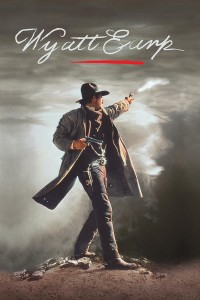
A Movie A Day #217: Wyatt Earp (1994, directed by Lawrence Kasdan)


Once upon a time, there were two movies about the legendary Western lawman (or outlaw, depending on who is telling the story) Wyatt Earp.  One came out in 1993 and the other came out in 1994.
The 1993 movie was called Tombstone.  That is the one that starred Kurt Russell was Wyatt, with Sam Elliott and Bill Paxton in the roles of his brothers and Val Kilmer playing Doc Holliday.  Tombstone deals with the circumstances that led to the Gunfight at the O.K. Corral.  “I’m your huckleberry,” Doc Holliday says right before his gunfight with Michael Biehn’s Johnny Ringo.  Tombstone is the movie that everyone remembers.

The 1994 movies was called Wyatt Earp.  This was a big budget extravaganza that was directed by Lawrence Kasdan and starred Kevin Costner as Wyatt.  Dennis Quaid played Doc Holliday and supporting roles were played by almost everyone who was an active SAG member in 1994.  If they were not in Tombstone, they were probably in Wyatt Earp.  Gene Hackman, Michael Madsen, Tom Sizemore, Jeff Fahey, Mark Harmon, Annabeth Gish, Gene Hackman, Bill Pullman, Isabella Rossellini, JoBeth Williams, Mare Winningham, and many others all appeared as supporting characters in the (very) long story of Wyatt Earp’s life.

Of course, Wyatt Earp features the famous Gunfight at the O.K. Corral but it also deals with every other chapter of Earp’s life, including his multiple marriages, his career as a buffalo hunter, and his time as a gold prospector.  With a three-hour running time, there is little about Wyatt Earp’s life that is not included.  Unfortunately, with the exception of his time in Tomstone, Wyatt Earp’s life was not that interesting.  Neither was Kevin Costner’s performance.  Costner tried to channel Gary Cooper in his performance but Cooper would have known better than to have starred in a slowly paced, three-hour movie.  The film is so centered around Costner and his all-American persona that, with the exception of Dennis Quaid, the impressive cast is wasted in glorified cameos.  Wyatt Earp the movie tries to be an elegy for the old west but neither Wyatt Earp as a character nor Kevin Costner’s performance was strong enough to carry such heavy symbolism.  A good western should never be boring and that is a rule that Wyatt Earp breaks from the minute that Costner delivers his first line.

Costner was originally cast in Tombstone, just to leave the project so he could produce his own Wyatt Earp film.  As a big, Oscar-winnng star, Costner went as far as to try to have production of Tombstone canceled.  Ironically, Tombstone turned out to be the film that everyone remember while Wyatt Earp is the film that most people want to forget.

Embracing the Melodrama Part II #71: Cocaine: One Man’s Seduction (dir by Paul Wendkos)


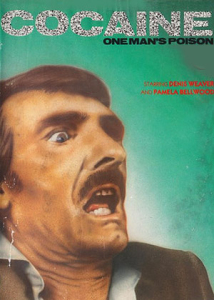
CocaineNow, I originally saw the 1983 made-for-TV movie Cocaine: One Man’s Seduction on Netflix so I have absolutely no first hand knowledge of how this film was advertised.  However, I have it on very good authority (i.e., I read it on another blog) that the image above is from the film’s VHS packaging.

Just looking at this image, you would be justified in thinking that Cocaine: One Man’s Seduction was an early David Cronenberg film.  Seriously, it looks like a deleted scene from Scanners and Dennis Weaver’s head is about to explode.

But no!  There are no scanners in Cocaine: One Man’s Seduction.  David Cronenberg did not direct this film.  As far as I can tell, it wasn’t even filmed in Canada.  Instead, Cocaine: One Man’s Seduction is about one man who gets seduced cocaine.

You may have noticed that I enjoy reminding you that this film is called Cocaine: One Man’s Seduction.  That’s because that’s a great title.  If the film had just been called Cocaine, you might watch the film expecting it to be set on a 1970s film set.  And if the film had just been called One Man’s Seduction, viewers may have watched the film expecting a Double Indemnitystyle film noir.  But Cocaine: One Man’s Seduction leaves no doubt about what we’re about to see.

Add to that, it’s a very melodramatic title and the name of this series of reviews is, after all, Embracing the Melodrama Part 2!

Anyway, Cocaine: One Man’s Seduction is about a real estate agent named Eddie Grant (Dennis Weaver).  He’s the type of semi-successful white-collar suburban guy who you just know is going to have a really over-the-top midlife crisis.  He has a wife (Karen Grassle) who loves him.  He has a son (James Spader — yes, that James Spader!) who wants to put off going to college for a year.  Eddie also has a job where he’s viewed as being an over-the-hill relic.  People looking to buy a new home simply are not impressed with Eddie’s cheap suits, mild manner, and old-fashioned scotch-after-work style.

What Eddie needs is a new wardrobe and aviator sunglasses.  And, as we all know from watching movies set in the 70s and 80s, nothing gets you into aviator sunglasses faster than snorting a line of coke.

Soon, Eddie is driving a fast car, he’s wearing nicer suits, and he’s keeping a lot of secrets.  Then, one day, his son — JAMES SPADER! — happens to look inside Eddie’s shave kit and discovers where dad has been hiding his cocaine.

Now, this is where I was expecting Jeff VanVondern to show up and say, ” I see a bunch of people that love you like crazy and they feel like they are losing you. And they wanna fight to get you back.”  But apparently, people in the 80s did not need an intervention to get them to go to rehab.  Instead, they just needed to have a dramatic nose bleed at work and nearly overdose on someone else’s kitchen floor.  They also needed to be called out by James Spader.

Of course, it also helps that Eddie is friends with a recovering cocaine addict who is played by a very thin-but-already-bald Jeffrey Tambor.  Jeffrey Tambor is already something of a hyperactive actor (and that’s why we love him!) so when you combine that natural tendency with a character who is supposed to be coked up, it’s something that simply has to be seen.

Anyway, Cocaine: One Man’s Seduction is a fairly good example of the-worst-that-can-happen-will-happen cinema.  If nothing else, it has some worth as a time capsule and it’s undeniably interesting to see James Spader play a role that one would normally never associate with James Spader.

Cocaine: One Man’s Seduction is currently seducing viewers on Netflix.