Late Night Retro Television Review: Highway to Heaven 4.3 “Fight For Your Life”


Welcome to Late Night Retro Television Reviews, a feature where we review some of our favorite and least favorite shows of the past!  On Thursdays, I will be reviewing Highway to Heaven, which aired on NBC from 1984 to 1989.  The entire show is currently streaming on Tubi and several other services!

This week, it’s a boxing episode.

Episode 4.3 “Fight For Your Life”

(Dir by Michael Landon, originally aired on September 30th, 1987)

I’m just going to say it.  This episode is pretty bad.

The plot is simple enough.  Jonathan and Mark are working as cornermen for boxer Morty “Sailor” Zadan (Michael Shaner).  Morty coulda been a contendah, but instead his brother Jerry (Robert Miranda) always arranges for Morty to throw his fights.  When Morty meets and trains a young fighter named Billy Ryan (Nick Garfield), he also starts an unlikely romance with Billy’s sister, Julia (Jennifer Parsons).  The mob demands that Morty to fight Billy.  They offer Billy money to throw the fight and Morty has to decide if he wants Billy to follow his example and become a bum.

As I said, it’s a simple plot but the execution is just terrible.  Even by the admittedly generous standards of Highway to Heaven, the story and the dialogue is often corny and the performances are pretty much uniformly bad.  At no point did I buy the romance between Morty and Julia.  For that matter, I really didn’t buy the idea that Julia would be so excited about her younger brother pursuing a career that would mean getting beaten up every few weeks.  By it’s nature, Highway to Heaven tends to be an old-fashioned show.  But this episode really did feel like one of those old Warner Bros. B-movies from the 30s.  Those movies, of course, hold up well as long as they star James Cagney, Humphrey Bogart, or George Raft.  Unfortunately, none of those folks show up in this episode.  Instead, we just got Micahel Shaner portraying a boxer who seems like he’d lose a game of tic tac toe against Lenny from Of Mice and Men.

Jonathan and Mark don’t do much in this episode.  They spend most of the story as just observers.  That said, this episode does end with Jonathan beating up a bunch of gangsters, smiling because they don’t have the same powers that he has.  Keeping in mind that most gangsters probably do deserve to get beaten up, it still didn’t feel like proper angel behavior.

Retro Television Review: St. Elsewhere 2.4 “Qui Transtulit Sustinet”


Welcome to Retro Television Reviews, a feature where we review some of our favorite and least favorite shows of the past! On Fridays, I will be reviewing St. Elsewhere, a medical show which ran on NBC from 1982 to 1988.  The show can be found on Hulu and, for purchase, on Prime!

This week. Dr. Craig finally gets to perform his first heart transplant.

Episode 2.4 “Qui Transtulit Sustinet”

(Dir by Victor Lobl, originally aired on November 16th, 1983)

It’s a busy day at St. Eligius.

While Morrison struggles to come to terms with the death of his wife, her heart is transplanted into Eve Leighton.  Morrison tells Westphall that he wants to keep working at the hospital and that he doesn’t need any time off.  Westphall tells Morrison that he’s too distraught to be trusted with patients and that he has to take some time off.  Westphall actually has a point, even if he does come across as being a bit cold when talking to Morrison.  Even Peter White, that drug-addicted sleazebag, tells Morrison that he’s needs to take some time.  Seriously, I think this is the first time that Dr. White’s been correct about anything since this show began.

Dr. Craig finally gets to perform a heart transplant but afterwards,  in a wonderfully-acted scene, he tells Westphall that he feels a bit let down.  After all the anticipation and the preparation, Craig isn’t sure what to do now that he’s actually performed the surgery.  For once, he doesn’t want to talk to the press, regardless of how much the city of Boston expects him to.  It’s a nicely human moment, one that we don’t often get from Dr. Craig.

Nurse Rosenthal attempted to console another breast cancer patient and met with Mark Harmon’s Dr. Caldwell to discuss getting breast reconstruction surgery.  Nurse Rosenthal’s breast cancer storyline has consistently been well-acted and well-written and it has also been consistently difficult for me, as someone who lost her mother to cancer, to watch and write about.  That was certainly the case for me with this episode.

Meanwhile, Fiscus and Luther pool their money to make an investment in silver but, at the last minute, Fiscus pulls out of their investment.  His nerves get the better of him.  Luther makes a lot of money.  Fiscus doesn’t.  Hey, guys — Morrison’s wife is dead.  Show some respect and save the comedy for another episode.

This was an intense episode but it ended on a beautiful note, with Dr. Morrison listening to the sound of his wife’s heart beating in someone else’s body.  A beautiful note but also a very sad one.  I’m worried about Jack Morrison.  I’m worried about the recipient of the heart.  I’m worried about Helen Rosenthal.  I’m worried about the entire hospital!

Here’s hoping for happier days ahead.


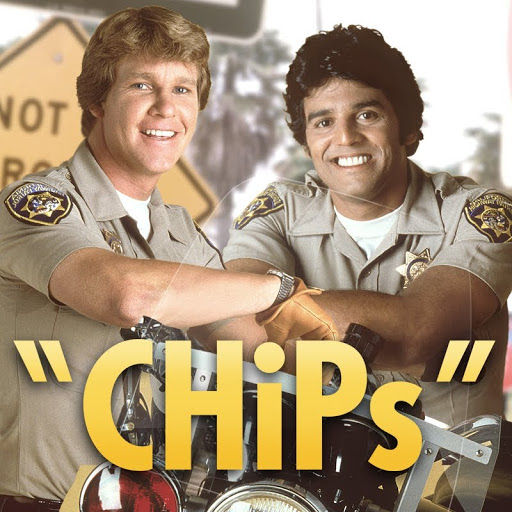
Late Night Retro Television Review: CHiPs 2.12 “High Explosive”


Welcome to Late Night Retro Television Reviews, a feature where we review some of our favorite and least favorite shows of the past!  On Mondays, I will be reviewing CHiPs, which ran on NBC from 1977 to 1983.  The entire show is currently streaming on Freevee!

This week’s episode is all about mistakes.

Episode 2.12 “High Explosive”

(Dir by Barry Crane, aired on December 9th, 1978)

This week’s episode features Jon Baker competing in a rodeo.  That’s not really a surprise.  Since the show began, it’s been established that Baker is a cowboy at heart and this episode is certainly not the first time that he’s mentioned growing up on a ranch in Wyoming.  (Larry Wilcox, himself, grew up in Wyoming and had some real-life rodeo experience.)  What is interesting is to listen to how the various actors pronounce the word rodeo.

Most of them, to their credit, pronounce it correctly.  A rodeo — that is, an event involving cowboys, steers, clowns, and all the rest — is pronounced “road-ee-oh.”  That’s how Larry Wilcox, Robert Pine, and the majority of the cast pronounce it.  Erik Estrada and Paul Linke, however, both pronounce it “Roe-Day-Oh,” as in the famous street in Beverly Hills.  Just a tip to any of our readers up north: Down here in the southwest, we pronounce it with a “dee” and not a “day.”

As for the rest of the episode, it’s all about mistakes.  For instance, ambulance driver Brad Holmes (Steve Oliver) loses his job after he gets arrested for reckless driving.  Desperate for money and not wanting to tell his wife that he lost his job, he agrees to transport a huge amount of old and unstable dynamite and he steals an ambulance with which to transport it!  Not smart.  Brad is an even worse driver with the explosives in the ambulance.  Ponch and Baker chase him down and Brad crashes on a playground.  While Ponch and Baker arrest Brad, a bunch of kids pick up the dynamite.  UH-OH!  Fortunately, Brad helps Ponch and Baker get the dynamite back.  He asks Ponch and Baker to put in a good word with the judge.

(Yeah …. I don’t know how many good words you can really put in for someone who used a stolen ambulance to transport highly unstable explosives through a heavily populated area of Los Angeles.)

Meanwhile, 14 year-old Barry (Ike Eisenmann) accidentally shoots a car with his pellet gun.  The car crashes.  The driver, Mary Barnes (Roseanne Katon), survives with minor injuries but her sister nearly dies.  Mary says that she wants to press charges against Barry.  She doesn’t care that he’s only 14.  Baker and Ponch arrange for Mary to spend the day at the rodeo with Barry, so that she can see that he’s just a scared kid who didn’t mean to hurt anyone.  Barry is from Utah and lonely and Baker and Ponch feel sorry for him.

But you know what?  The fact of the matter is that Barry is 14.  He’s not some 10 year-old kid.  He’s a teenager.  He’s old enough to know better than to shoot a pellet gun around a busy highway.  Barry is a lonely kid and that sucks.  But again, he nearly killed someone and he caused a huge wreck.  I’m on Mary’s side.  Throw the book at Barry.  Letting Barry get away with doing something that stupid isn’t going to be good for him or anyone else.  Mary, however, disagrees with me.  Barry’s off the hook and he even gets to go to the rodeo.

What a frustrating episode!  Ponch and Baker let me down but at least one of them knows how to pronounce rodeo.

A Movie A Day #305: Go Tell The Spartans (1978, directed by Ted Post)


One of the best films ever made about Vietnam is also one of the least known.

Go Tell The Spartans takes place in 1964, during the early days of the Vietnam War.  Though the Americans at home may not know just how hopeless the situation is in South Vietnam, Major Barker (Burt Lancaster, in one of his best performances) does.  Barker is a career military man.  He served in World War II and Korea and now he’s ending his career in Vietnam, taking orders from younger superiors who have no idea what they are talking about.  Barker has been ordered to occupy a deserted village, Muc Wa.  Barker knows that occupying Muc Wa will not make any difference but he is in the army and he follows orders.

Barker sends a small group to Muc Wa.  Led by the incompetent Lt. Hamilton (Joe Unger), the group also includes a drug-addicted medic (Dennis Howard), a sadistic South Vietnamese interrogator (Evan C. Kim) who claims that every civilian that the men meet is actually VC, a sergeant (Jonathan Goldsmith) who is so burned out that he would rather commit suicide than take command, and Cpl. Courcey (Craig Wasson).  Courcey is a college-educated idealist, who joined the army to do the right thing and is now about to discover how complicated that can be in South Vietnam.  At Muc Wa, the soldiers find a cemetery containing the graves of French soldiers who died defending the hamlet during the First Indochina War.  The inscription as the cemetery reads, “Go tell the Spartans, stranger passing by, that here, obedient to their laws, we lie.”  

Because the film strives for realism over easy drama, Go Tell The Spartans has never gotten the same attention as some other Vietnam films.  Unlike The Deer Hunter, Platoon, Coming Home, and Born on the 4th of July, Go Tell The Spartans received no Oscar nominations.  It is still a brilliantly acted and powerful anti-war (but never anti-soldier) film.  It starts out as deceptively low-key but the tension quickly builds as the soldier arrive at Muc Wa and discover that their orders are both futile and impossible to carry out.  Vastly outnumbered, the Americans also find themselves dealing with a land and a culture that is so unlike their own that they are often not even sure who they are fighting.  Military discipline, as represented by Lt. Hamilton, is no match for the guerilla tactics of the VC.  By the film’s end, Vietnam is revealed to be a war that not even Burt Lancaster can win.

Embracing the Melodrama Part II #40: One Is A Lonely Number (dir by Mel Stuart)


one_is_a_lonely_number_ver2

You’ve probably never heard of the 1972 film One Is A Lonely Number.  I certainly hadn’t until, a few weeks ago, I happened to come across it on TCM.  Like a lot of films that have apparently been forgotten by history, One Is A Lonely Number is one that deserves to be remembered.

One Is A Lonely Number opens with the end of a marriage.  James Brower (Paul Jenkins), an arrogant college professor, coldly packs his collection of vinyl records into a box and tells his wife, Amy (Trish Van Devere), that he’s filing for divorce and that he’s leaving her.  She asks him why.  He coolly mentions something about her throwing out a prized copy of Paradise Lost and then leaves the apartment.

Shocked, Amy goes to the college and asks her husband’s students if they’ve seen him.  They tell her that James canceled his final exam and has since disappeared.  At first, Amy insists that James is going to come back and denies that they’re getting a divorce.  When she finally does accept that her marriage is over, Amy is forced to be independent for the first time.

What she quickly discovers is that the world is full of people who are looking to take advantage of both her vulnerability and her naiveté.  When she goes to an employment agency, she explains that she has a degree in Art History and that she minored in Philosophy.  Frighteningly (especially in the eyes of this particular holder of a degree in Art History), all this gets Amy is a job as a lifeguard at the local pool.  When she finally find herself attracted to another man, she doesn’t discover that he’s married until the morning after.  And when she finally discovers why her husband actually left her, she discovers that he was even more of a stranger to her than she realized.

Fortunately, there are a few good spots in Amy’s life.  Her best friends Madge (Jane Elliott) and Gert (Janet Leigh) provide support.  (“Men are shit,” Gert explains at one point.)  And she strikes up a poignant friendship with a widowed grocer (Melvyn Douglas).

There are so many scenes in One Is A Lonely Number that ring true, even when viewed today.  Amy finally realizes that her marriage is over while trying on clothes and ends up sobbing by herself.  Amy, Gert, and Madge get drunk and talk about their exes, laughing away their shared pain.  Amy discovers that the man from the employment agency (played, as a disturbingly plausible creep, by Jonathan Goldsmith who is best known for being the Most Interesting Man In The World for Dos Equis) expects her to “repay” him for his help in getting her a demeaning job as a lifeguard.  Amy panics when she can’t find what’s happened to that kindly grocer.

One Is A Lonely Number moves at its own deliberate pace but it’s still one that you should watch and stick with until the end.  It’s an intelligent and well-acted movie and the film’s poignant final scene will fill you with hope.  Watch it the next time that it shows up on TCM.