In the early 1900s, the town of Rainbow Valley is trying to complete a road that will connect it to another town. Outlaw Rogers (LeRoy Mason) doesn’t want that road finished because he wants to buy up all the land around Rainbow Valley. He brings in a hired gun named Galt (Jay Wilsey) to intimidate the townspeople. When a traveler named John Martin (John Wayne) saves mail carrier George Hale (George “Gabby” Hayes) from the outlaws, the townspeople ask Martin to serve as their marshal and to help finish the road. Martin agrees but it turns out that he and Galt have a history.
This was one of the B-westerns that John Wayne made before Stagecoach made him a major star. Wayne gives a confident performance as John Martin. It’s about as close to a traditional John Wayne performance as you are likely to find in his early films. It’s a good and short western, with enough gunfire and tough talk to appeal to fans of the genre.
The most interesting thing about this film is that it takes place at the turn of the century, when the old west was being replaced by the modern world. Everyone in town is amazed that George Hale drives a car. John says that it’s the first car that he’s ever actually seen. Of course, this is a western and all the important work is done on horseback. The best part of the movie is when George realizes that he and Miss Eleanor (Lucille Brown) can’t drive to warn John about an ambush because the car is out of gas and there’s not a filling station to be found. Eleanor can’t ride a horse so he does the next best thing. He has the horses pull his Model T like a wagon!
Four years after this movie came out, John Wayne starred as The Ringo Kid in Stagecoach. In Rainbow Valley, he showed that he was already a star.
Chance Buckman (John Wayne) is the best there is when it comes to fighting oil fires. Along with Greg Parker (Jim Hutton), Joe Horn (Bruce Cabot), and George Harris (Edward Faulkner), Chance travels the world and puts out fires that the regular authorities can’t handle. Chance loves his job but he also loves his ex-wife, Madelyn (Vera Miles). When Madelyn indicates that she wants to remarry Chance but only if he pursues a less dangerous line of work, Chance retires from firefighting and becomes an oil executive. He leaves his firefighting company to his new son-in-law, Greg. When Greg and Chance’s daughter (Katharine Ross) head down to Venezuela to battle a fire and find themselves not only having to deal with the flames but also with a band of revolutionaries, Chance is the only one who can help them.
When I was growing up, Hellfighters was one of those movies that seemed to turn up on the local stations a lot. The commercials always emphasized the idea of John Wayne almost single-handedly fighting fires and made it seem as if the entire movie was just the Duke staring into the flames with that, “Don’t even try it, you SOB” look on his face. As a result, the sight of John Wayne surrounded by a wall of fire is one of the defining images of my childhood, even though I didn’t actually watch all the way through until recently. When I did watch it, I discovered that Hellfighters was actually a domestic drama, with an aging Wayne passing the torch to youngster Jim Hutton but then taking it back.
The fire scenes are the best part of Hellfighters and I wish there had been more of them. The movie gets bogged down with all of Chance’s family dramas but it comes alive again as soon as John Wayne and his crew are in the middle of a raging inferno, putting their lives at risk to try to tame the fire. Wayne was always at his best when he was playing strong, no-nonsense men who were the best at what they did. Hellfighters is slow in spots but the fire scenes hold up well. There’s no one I’d rather follow into an inferno than Chance Buckman.
Hey hey!! Before you read this, know that this isn’t the only review for The Longest Day. Lisa Marie also wrote about it. Read that first, and then double back here if you like.
With June 6th being the 81st Anniversary of D-Day, I decided to write about 1962’s The Longest Day, a film often discussed in my family, but surprisingly, I don’t recall ever fully watching it until today. I’ll try to get a hold of a hard copy of this in the future. The film is currently available to watch (with ads) on YouTube. This was a film my Aunt adored, as she liked seeing the Military come to the rescue in any situation (which happened often in most classic sci-fi films). This, They Died With Their Boots On, and All Quiet on the Western Front were films she raved about.
According to the National WWII Museum, “The Allies suffered over 10,300 total casualties (killed, wounded, or missing), of which approximately 2,400 were on Omaha Beach.” it was also an incredible offensive achievement, with nations gathering together to take the fight to a common enemy.
I don’t have a whole lot to say about this. As this is a film based on actual events (which takes some movie related liberties), I can’t complain or state I loved the “story”. As my boss at my Dayjob sometimes says, “It is what it is.” In terms of presentation, however, I highly recommend it. The film never really falters, nor does it give you too much time to relax. There’s a quiet tension with all of the characters you meet (all of the Allied ones, anyway), wondering if they may make it through by the end. If nothing else, watching it reminds one of the sacrifices made and the courage of anyone deciding to run head first into battle like that.
The film is epic in scope, with a runtime of 3 hours and an all star cast that includes Robert Mitchum (Cape Fear), Eddie Albert (Dreamscape), John Wayne (The Quiet Man), Henry Fonda (Once Upon a Time in the West) Curt Jurgens (The Spy Who Loved Me), Red Buttons and Roddy McDowall (who would later work together in The Poseidon Adventure), Richard Beymer (West Side Story), Frank Findlay (Lifeforce), Gert Frobe and Sean Connery (both two years shy of working together in Goldfinger), Richard Burton (Cleopatra) and Robert Ryan (The Wild Bunch) among others.
Much like 1970’s Tora!Tora!Tora! (which my Dad often talked about), there were multiple directors for The Longest Day. Bernhard Wiki captured the German scenes, Andrew Marton handled the American ones, and Ken Annakin handled both the English and French sequences. This is all brought together in a seamless and pretty amazing tapestry. Unlike Steven Spielberg’s Saving Private Ryan, The Longest Day only covers the time leading up to and through the Omaha Beach assault, using the bulk of the film’s 3rd hour for the event. The entire film makes wonderful use of the time with all the alternate views, and by the time the first combat starts near the start of the 2nd hour, it continues to flow from interaction to interaction. There are also some wonderful arial shots over the battles, including an classic one shot that’s pretty marvelous given the time period.
The film takes place just before the invasion. American troops are already in the water on boats. Others are ready to parachute in. The French are ready to fight, waiting for the right phrase to hit the radio to put them into action. all are waiting to hear from the Britians on when the Allied Assault should begin. The weather isn’t optimal, but with the operation already delayed once before, President Eisenhower (Henry Grace) decides the 6th is the drop date. The Germans assume nothing will happen assaults are supposedly not done in harsh weather, but this proves to be quite the mistake.
It was wonderful to see everything come together. From the French sabotaging communications, to the strange comedy of soldier toting bagpipes to lead the Scottish into battle, or the Nuns who walked right through battle to save lives, it’s quite a sight to behold.
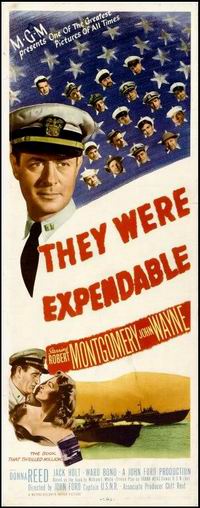
In December of 1941, Lt. John Brickley (Robert Montgomery) commands a squadron of Navy PT boats, based in the Philippines. Brickley is convinced that the small and agile PT Boats could be used in combat but his superior officers disagree, even after viewing a demonstration of what they can do. Brickley’s second-in-command, Rusty (John Wayne), is frustrated and feels that he will never see combat. That changes when the Japanese attack Pearl Harbor and then turn their attention to the Philippines. Brickley gets his chance to show what the PT boats can do but both he and his men must also deal with the terrible risks that come with combat. Brickley and his men have been set up to fight a losing battle, only hoping to slow down the inevitable Japanese onslaught, because both they and their boats are considered to be expendable. The hot-headed Rusty learns humility when he’s sidelined by blood poisoning and he also falls in love with a nurse, Sandy (Donna Reed). However, the war doesn’t care about love or any other plans that its participants may have. With the invasion of the Philippines inevitable, it just becomes a question of who will be sent with MacArthur to Australia and who will remain behind.
One of John Ford’s best films, They Were Expendable is a tribute to the U.S. Navy and also a realistic look at the realities of combat. The movie features Ford’s trademark sentimentality and moments of humors but it also doesn’t deny that most of the characters who are left behind at the end of the movie will not survive the Japanese invasion. Even “Dad’ Knowland (Russell Simpson), the fatherly owner of a local shipyard who does repair work on the PT boats, knows that he’s expendable. He resolves to meet his fate with a rifle in hand and a jug of whiskey at his feet. Rusty, who starts out thirty for combat, comes to learn the truth about war. Ford was one of the many Hollywood directors who was recruited to film documentaries during World War II and he brings a documentarian’s touch to the scenes of combat.
Robert Montgomery had previously volunteered in France and the United Kingdom, fighting the Axis Powers before America officially entered the war. After the war began, he entered the Navy and he was a lieutenant commander when he appeared in They Were Expendable. Montgomery brought a hardened authenticity to the role of Brickley. (Montgomery also reportedly directed a few scenes when Ford was sidelined with a broken leg.) John Wayne is equally good in the role of the hot-headed Rusty, who learns the truth about combat and what it means to be expendable. The cast is full of familiar faces, many of whom were members of the John Ford stock company. Keep an eye out for Ward Bond, Cameron Mitchell, Leon Ames, Jack Holt, and Donald Curtis.
They Were Expendable is one of the best of the World War II movies. It’s a worthy film for Memorial Day and any other day.
4 Shots From 4 Films is just what it says it is, 4 shots from 4 of our favorite films. As opposed to the reviews and recaps that we usually post, 4 Shots From 4 Films lets the visuals do the talking!
It’s John Wayne’s birthday! Here’s 4 shots from the Duke’s unforgettable career.
4 Shots From 4 Films
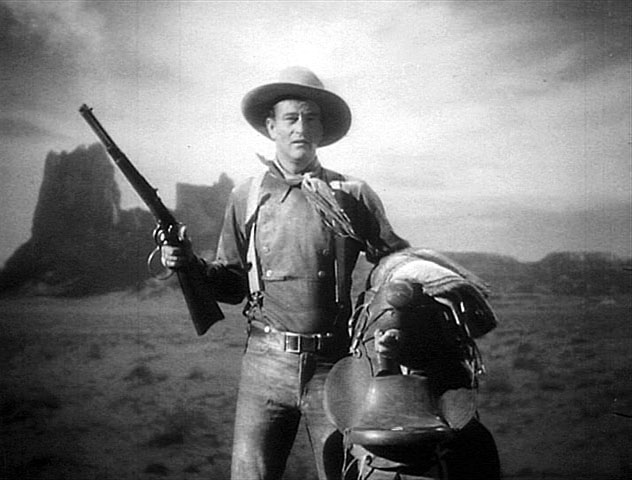
Stagecoach (1939, directed by John Ford)
Sands of Iwo Jima (1949, directed by Allan Dwan)
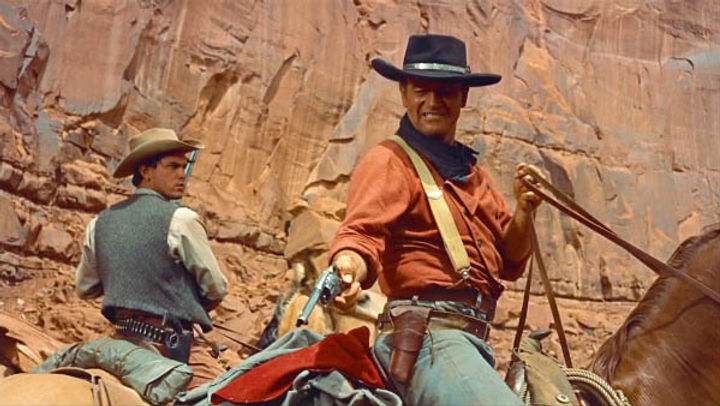
The Searchers (1956, directed by John Ford)
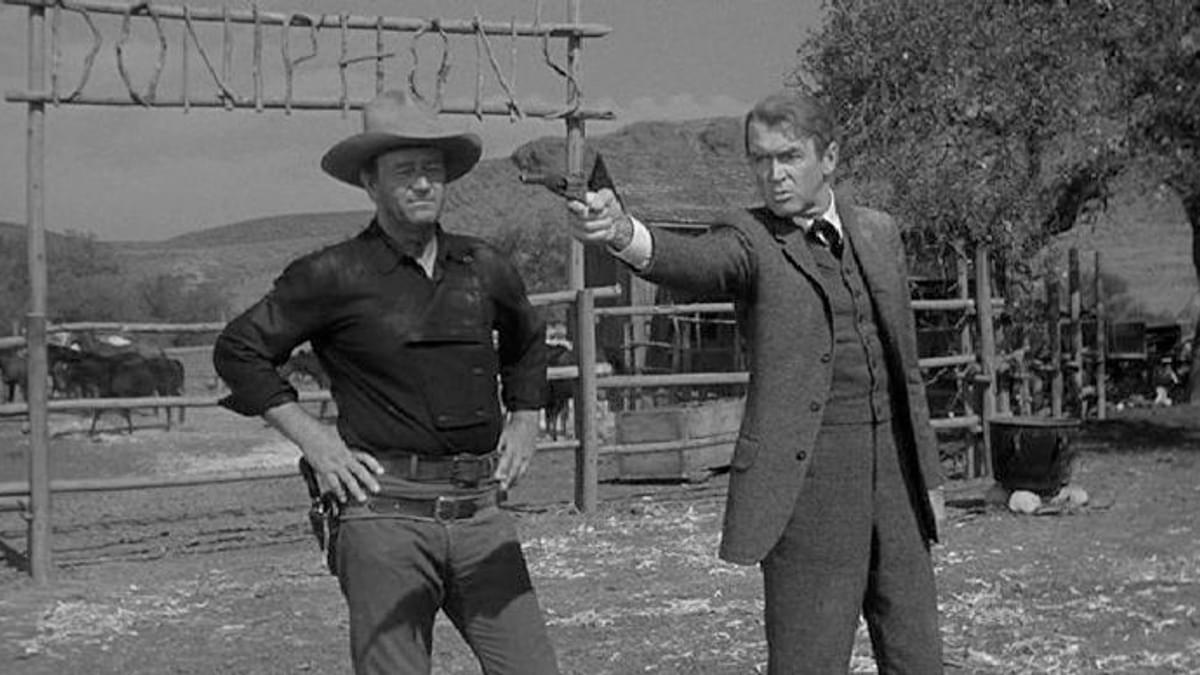
The Man Who Shot Liberty Valance (1962, directed by John Ford)
When infielder Bill Riley (Patrick Wayne) makes an error that costs his team the game, sports columnist Rex Short (Carleton Young) claims that he witnessed Bill being paid off by Slim Conway (James Stewart). Slim is a former player who was banned from Major League Baseball after he was accused of taking a bribe from a gambler.
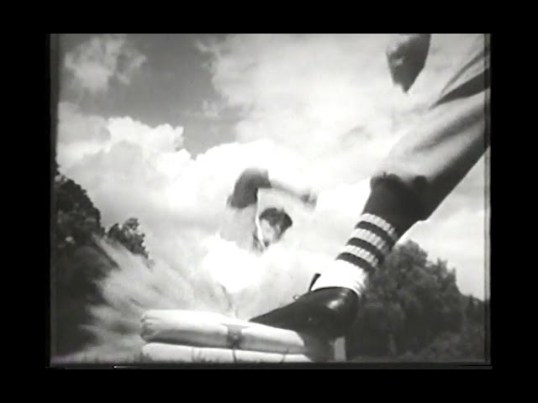
Most the movie is a flashback, showing how Bill first met Slim when Slim was playing for a barnstorming team of former major leaguers. That was my favorite part of the movie. Slim and a collection of old, worn-out men stumble out of their bus and even though they might move a little slower and they might need to stretch a little more before swinging a bat, they still show up a cocky team made up of young local players. Even after the crowd nearly riots when they realize that Slim is one of the players, the old players keep their cool and their eye on the game. After Bill spikes Slim while sliding into home plate, Bill apologizes. Slim remembers the young man’s humility and, working with one of the few friends that he has left in the game, Slim helps Bill get his chance in the Majors.
Usually, when my sister yells at me to come watch something because “it’s got baseball!,” I’m prepared for it turn out to just be a movie with one scene of someone holding a bat. I’m glad that she called me to come watch FlashingSpikes with her because it really is a good and loving celebration of my favorite game. Even after Slim is treated so unfairly by the press, the League, and even some of the fans, he never stops loving the crack of the bats and the cheers of the crowd. FlashingSpikes is unabashedly pro-baseball and Slim stands in for every player who was ever unfairly railroaded out of the game by scandal mongers like Rex Short.
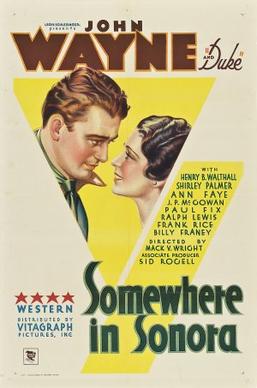
After stagecoach rodeo racer John Bishop is framed for causing a competitor to have an accident, he’s hauled off to jail. Fortunately, Bishop’s boss, Bob Leadly (Henry B. Walthall), comes through for Bishop and helps him escape from the jail. To thank Bob, Bishop heads down to Mexico to search for Bob’s son, Bart (Paul Fix). The last that Bob heard, Bart was running with an outlaw gang called “The Brotherhood of Death.” The only way get out of the Brotherhood of Death is to die.
By an amazing coincidence both Bart and Bishop’s girlfriend, Mary (Shirley Palmer), are in the Mexican town of Sonora. To try to get Bart to return home, Bishop goes undercover and infiltrates the gang. Once inside, Bishop discovers that gang leader Monte Black (J.P. McGowan) is planning on robbing the silver mine that belongs to Mary’s father.
This is a John Wayne B-western, typical of the poverty row productions that he was making before John Ford cast him as the Ringo Kid in Stagecoach and made him into a star. This one features the usual horse chases and bar fights and John Wayne gives a solid-enough performance in the lead role. The most interesting thing about it is that, even though it’s a western, it’s set in modern times. I guess frontier days lasted longer in some parts of the county than in others.
John Wayne’s horse, Duke, appears in this picture and shows again that he was the most talented of all the horse actors in the 30s. He earned his co-starring credit.
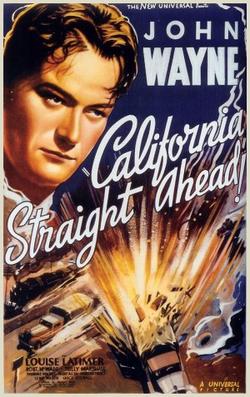
Biff Smith (John Wayne), fired from his job as a school bus driver, becomes a partner in a trucking company. In order to show-up the railroads that are determined to put any potential competitors out of business, Biff and his fleet race a train to the Pacific Coast, where a boat needs to be unloaded before a labor strike begins. Making this personal for Biff is that he’s in love with Mary Porter (Louise Latimer), the sister of Biff’s late business partner. Embittered by her brother’s death in a trucking accident, Mary is now working for the head of the railroad, James Gifford (Theodore van Eltz). Biff not only wants to prove that his small trucking firm can compete with the big boys but also wants to show Mary that her new boss is nothing but a smooth-talking weasel.
This film is from John Wayne’s B-movie star period, before John Ford cast him in Stagecoach and made him one of the biggest stars in the world. California Straight Ahead! features Wayne in a contemporary role, though the movie still has a western sensibility. There’s not much difference between a wagon train and Wayne’s fleet of trucks and, as in so many westerns, the greedy railroad baron is the villain. This is one of Wayne’s better B-movie performances. He was clearly comfortable in front of the camera by the time he made this movie and was no longer as stiff as he was in his earlier films. California Straight Ahead! is a crowd-pleasing film that finds Wayne standing up for small businesses and their workers. Though this may just be a 61-minute B flick, California Straight Ahead! reveals the movie star that Wayne would soon become.
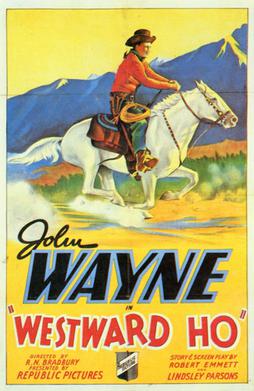
As a young man, John Wyatt (John Wayne) witnessed an attack on a wagon train by the evil outlaw Wick Ballard (Jack Curtis). John’s parents were killed and his younger brother Jim was abducted. Years later, the grown John Wyatt realizes that the law cannot be depended upon in the wild west so he raises his own band of vigilantes and delivers justice to the frontier. (Wayne’s second-in-command is played by the legendary Glenn Strange.) Wyatt remains committed to taking down Ballard. Going undercover as John Allen, Wyatt joins a cattle drive that he thinks will be attacked by Ballard. Also working undercover as a member of the cattle drive is Jim Wyatt (Frank McGlynn Jr), John’s long-lost brother, who is now working for Ballard! Both the Wyatt bothers end up falling for Mary Gordon (Sheila Bromley), the daughter of rancher Lafe Gordon (Jim Farley).
This was a good example of the the type of B-movies that John Wayne made in the years before John Ford cast him in Stagecoach. The story is simple but Wayne gives a commanding performance as Wyatt. Unlike many of the B-movies that featured Wayne as a callow singing cowboy or a fun-loving rogue, Westward Ho features Wayne playing the type of character that he would often play after he became a star. Wyatt is determined to get justice for his family and to protect the innocents who are attacked by men like Ballard. The presence of his brother in the enemy camp adds an extra dimension to Westward Ho. Wyatt learns that vengeance isn’t everything.
It’s only 61 minutes long but it tells a good story and it has all the gunfights and horse chases that Western fans expect from their movies. Of Wayne’s poverty row westerns, Westward Ho is one of the better ones.
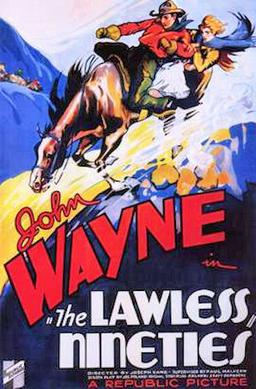
The year is 1890 and Wyoming is on the verge of voting for statehood. Newspaperman Major Carter (George “Gabby” Hayes) believes that it’s time for Wyoming to become a state and most of the locals agree with him. Businessman Charles Plummer (Harry Woods) does not want Wyoming to become a state and he’s willing to send out his main henchman, Steele (Al Bridge), to intimidate the voters and to silence Carter. Plummer has a profitable racket going and the last thing he wants is for the U.S. government to get involved in his activities. It falls to two federal agents, John Tipton (John Wayne) and Bridger (Lane Chandler), to supervise the voting and protect the citizen. When Major Carter is shot by a drunk anti-statehood activist, the mission to make Wyoming a part of the Union becomes personal.
The Lawless Nineties is typical of the B-movies that John Wayne made for Republic Pictures before John Ford resurrected his struggling career by casting him as The Ringo Kid in Stagecoach. There are plenty of gunfights and horse chases and explosions as the bad guys try to keep the townspeople from voting and the federal agents set up their own sting operation to expose Plummer’s gang. Wayne seems more relaxed here than he did in some of his other B-movies. He was obviously getting more comfortable with being on camera and playing the hero. Probably the most interesting thing about this film is that Gabby Hayes (credited as George Hayes, without his famous nickname) plays the renowned and intelligent Major Carter. Hayes was just a year away from establishing himself as a perennial B-movie sidekick and supplier comedy relief. He would soon be best-known for playing characters who had little in common with the intelligent and well-spoken Major Carter. In The Lawless Nineties, Hayes gets a chance to play something other than the comedic relief and turns out to be petty good at it.
This is another one of those westerns that will be enjoyed by fans of the genre. It’s nothing special but it does allow Wayne to show hints of his future stardom and it also gives Gabby Hayes a chance to show what he was actually capable of.
 In the early 1900s, the town of Rainbow Valley is trying to complete a road that will connect it to another town. Outlaw Rogers (LeRoy Mason) doesn’t want that road finished because he wants to buy up all the land around Rainbow Valley. He brings in a hired gun named Galt (Jay Wilsey) to intimidate the townspeople. When a traveler named John Martin (John Wayne) saves mail carrier George Hale (George “Gabby” Hayes) from the outlaws, the townspeople ask Martin to serve as their marshal and to help finish the road. Martin agrees but it turns out that he and Galt have a history.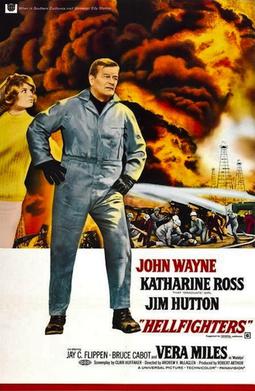

 Through the Shattered Lens