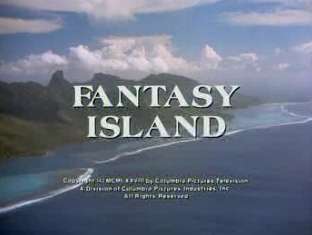
Welcome to Retro Television Reviews, a feature where we review some of our favorite and least favorite shows of the past! On Tuesdays, I will be reviewing the original Fantasy Island, which ran on ABC from 1977 to 1984. The show is once again on Tubi!
It’s time for one last trip to Fantasy Island.
Episode 7.22 “Surrogate Mother/The Ideal Woman”
(Dir by Don Weis, originally aired on May 19th, 1984)
All things must come to an end. For the original Fantasy Island, the final episode of the seventh season was also the final episode of the series.
The show didn’t get a grand finale. Instead, it was a typical episode with two fantasies. In one fantasy, Charo — yes, Charo — played a woman who had been hired to be a surrogate mother for a childless couple (John Saxon and Juliet Mills). In the other one, Ben Saunders (Shea Farrell) tried to win back his ex-fiancee (Mary Kate McGeehan) while judging a Fantasy Island beauty pageant. (How many pageants did Fantasy Island host?) Two men (Don Galloway and David Sheiner) demanded that Ben pick their girlfriends as the Ideal Woman. (Both of the girlfriends materialized on the Island, one from a painting and one from a block of stone. It was a weird fantasy.) Ben picked his ex, declaring her to be the “ideal woman.” Neither fantasy was great, though I will say that Charo gave a surprisingly sincere performance and it was nice that frequent Fantasy Island guests stars John Saxon and Juliet Mills appeared on the last episode. It was an okay trip to the Island, particularly when compared to some of the other season 7 episodes. Still, the whole thing felt a bit tired.
I have to admit that it’s hard for me to believe that I just reviewed the final episode of the original Fantasy Island.I started reviewing Fantasy Island on September 6th, 2022. It was one of the original shows that I picked for Retro Television Reviews. Now that I’m finishing the show up in 2026, The Love Boat is the only one of my original picks that I still have episodes left to review. I’ll be reviewing The Love Boat for a while.
(To be honest, I’m stunned that I’ve stuck with these reviews. I don’t think anyone was expecting me to get all the way to end of Hang Time, let alone Fantasy Island.)
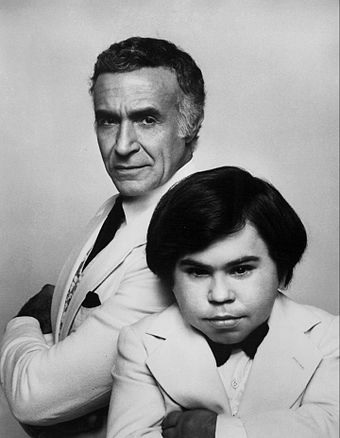
My thoughts on Fantasy Island? I loved the first four seasons. The fifth season, with its introduction of Julie and it’s frequent side-lining of Tattoo, was when the show started to go downhill. The biggest mistake that the show made was, needless to say, not agreeing to pay whatever was necessary to get Herve Villechaize to come back for season 7. Season 7, the season without Tattoo, felt odd from the start. Christopher Hewett and Ricardo Montalban never had the right chemistry and the stories themselves were largely recycled from earlier episodes. The perfect ending for Fantasy Island would have been the season 6 clip show.
What’s next? On television, Fantasy Island was revived twice. In the 90s, Malcolm McDowell played a version of Mr. Rourke. And then, more recently, there was an attempt to revive it on Fox but, after an enjoyable first season, that show became a self-parody. I may review both of them in the future. For now, though, I’m still considering several shows to start reviewing next week. I’ll reveal my pick next Tuesday!
For now, let us say goodbye to Fantasy Island. Thanks for the laughs, the tears, and the fantasies!
1972’s JoeKidd opens with the title character (played by Clint Eastwood) in jail. Joe is a New Mexico rancher and apparently, someone with a long history of getting in trouble with the law. This time, he’s been arrested for poaching and disturbing the peace. Given a choice between a fine and ten days in jail, Joe goes for the ten days. Cowardly Sheriff Mitchell (Gregory Walcott) says he’s going to put Joe to work. Joe Kidd snarls in response.
However, that’s before Luis Chama (John Saxon), a Mexican revolutionary, raids the courthouse and demands that all of his people’s ancestral land be returned to them. Local landowner Frank Harlan (Robert Duvall) forms a posse to track Chama down. Joe says that he has nothing against Chama but that changes once he discovers that Chama raided his ranch and beat up one of his ranchhands. Joe joins the posse but he soon discovers that Harlan and his men are sadists who are more interested in killing Mexicans than actually capturing Chama.
I was actually pretty excited about watching JoeKidd. Clint Eastwood, Robert Duvall, and John Saxon, three of my favorite actors in the same movie! How couldn’t I be excited? Unfortunately, neither Duvall nor Saxon are at their best in this film. Frank Harlan is a one-dimensional villain and Duvall doesn’t make much of an effort to bring any sort of unexpected nuance to the character. Duvall doesn’t give a bad performance but it’s hard not to feel that Harlan is a character who could have been played by any forty-something actor. It feels like waste to cast such a good actor in such a thin role. (Add to that, I prefer Duvall when he plays a good guy as opposed to when he plays a bad guy.) As for Saxon, this is probably one of his worst performances but his character is also rather underwritten and the film can’t seem to decide if it wants the viewer to be on his side or not. Saxon delivers his lines in an exaggerated Mexican accent that makes it difficult to take Louis Chama seriously. Gregory Sierra would have made a good Louis Chama but Saxon just seems miscast.
Fortunately, Clint Eastwood is always a badass, even in an uneven film like this. Eastwood is at his best in the early scenes, when he’s grouchy and hungover and annoyed at finding himself in the jail. He is believably outraged by Harlan’s tactics and, in typical Eastwood fashion, he delivers every pithy one-liner with just enough style to keep things interesting. That said, Eastwood is let down by a script that never really makes it clear why Joe Kidd stays with the posse once it becomes clear that he’s traveling with a bunch of sociopaths. Joe’s motivations are never really clear. In the end, he seems like he goes through a lot of trouble to protect his farmland and get revenge for one of his ranch hands (who is just beaten up), just to then desert it all once all the shooting is over.
That said, JoeKidd is a gorgeous film to look at and Joe makes creative use of a steam engine. This isn’t the film to show anyone who isn’t already an Eastwood fan. But, for those of us who are already fans of Clint, it’s enjoyable to watch him snarl, even if it is in a lesser film.
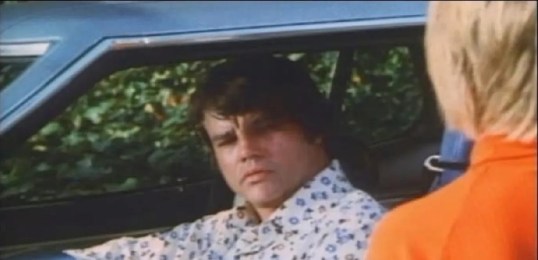
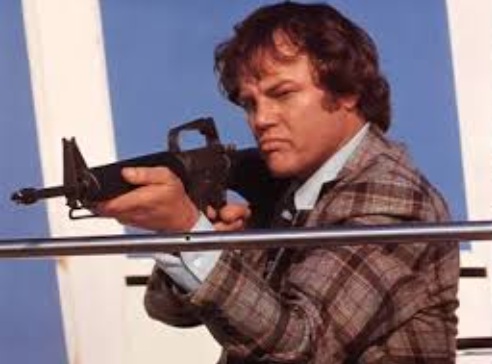
First released in 1975, Mitchell does not have a great reputation. It’s often described as being one of the worst of the 70s cop films and Joe Don Baker’s performance in the lead role is often held up to ridicule. A lot of that is due to the fact that Mitchell was featured on an episode of Mystery Science Theatre 3000. Last year, for my birthday, my friend Pat McCurry actually hosted a showing of the MST 3K version of Mitchell. I laughed all the way through it. It was a funny show and most of the jokes uttered by Joel and the Bots landed. That said, I wish they hadn’t been so hard on Joe Don Baker. Baker was an outstanding character actor, one whose good ol’ boy persona sometimes kept people from realizing just how fiercely talented he actually was.
Here’s the thing with Mitchell. Just because a film is snarkable, that doesn’t mean that it’s a bad film. Just because there are moments in a film that inspire you to talk back to the screen, that doesn’t make it a bad film. Some of the most enjoyable films that I’ve ever watched were enjoyable specifically because they were made to inspire the audience to talk back to the characters. Whatever flaws you may want to find in Mitchell, it’s an entertaining film. The plot may be impossible to follow but who cares? When you’ve got Joe Don Baker, John Saxon, and Martin Balsam all in the same film, does the plot really matter?
This is a film that you watch for the personalities involved. Balsam plays a wannabe drug lord who always seems to be somewhat annoyed. Someone once describes Bernie Sanders as always coming across as if he was about send his meal back to the kitchen because it was too cold and that’s a perfect description of Balsam’s performance in Mitchell. John Saxon plays a sleazy rich guy who murders a burglar and then tries to cover up his crime. Saxon is calm, cool, collected, and completely confident that his wealth will get him out of anything. And then you’ve got Joe Don Baker as Mitchell, wearing an ugly plaid suit, drinking beer the way that I drink Diet Coke, and continually pretending to be dumber than he actually is. There’s an interesting subtext to these three characters and how they interact. Saxon and Balsam play criminals who are both rich and who both think they can get away with anything because they’ve got money. Mitchell is a complete and total slob, a guy with a cheap apartment, a cheap suit, and absolutely no refinement at all. Mitchell uses his good old boy persona to get the bad guys to continually underestimate him. He ultimately turns out to be smarter and actually more ruthless than any of them.
Joe Don Baker throws himself into the role of Mitchell and there’ actually a lot of intentional humor to be found in his performance. Baker doesn’t play Mitchell as being a supercop. Instead, he plays Mitchell as being a blue collar guy who gets absolutely no respect. Even when he’s on a stakeout, a random kid starts arguing with him. (Mitchell loses the argument.) Mitchell’s a jerk who busts his hooker girlfriend (Linda Evans) for having weed on her but he’s also the only one who could stop Balsam from doing whatever it is that Balsam thinks he’s trying to do. (Again, don’t spend too much time trying to understand the plot.) Mitchell’s super power is that he’s a slob who doesn’t give up. To paraphrase Road House‘s Dalton, he plays dumb until it’s time not to be dumb.
As I said, it’s an entertaining film. Where else are you going to see a not particularly high-speed chase between two station wagons? Where else are you going to see John Saxon in a dune buggy or Joe Don Baker in a helicopter or Martin Balsam as the captain of a yacht? Where else are you going to see a film that features its hero saying, “Yep, that’s grass,” before arresting his lover? Mitchell is fun and entertaining and I’ll always defend both the movie and its star.
Welcome to Late Night Retro Television Reviews, a feature where we review some of our favorite and least favorite shows of the past! On Wednesdays, I will be reviewing Monsters, which aired in syndication from 1988 to 1991. The entire series is streaming on YouTube.
This week, on Monsters, a dark room leads to trouble.
Episode 3.16 “The Waiting Room”
(Dir by Philip Alderton, originally aired on January 13th, 1991)
Newlyweds John (Christian Jules LeBlanc) and Catherine (Lisa Waltz) are invited to come stay at an isolated hotel by John’s father, Benjamin (John Saxon). Benjamin explains that the hotel is where he spent his honeymoon. He tells Catherine, “Your husband was conceived in this very room.” Uhmm …. okay. That’s not a creepy thing for a father-in-law to say or anything.
When John disappears, Benjamin tells Catherine the truth. On his wedding night, Benjamin cheated on his wife with a mysterious woman (Denise Gentile) who was staying in a darkened room that appeared to be next door to Benjamin’s. The woman turned out to be an otherworldly creature, one who lived between the real world and spirit world. The woman trapped Benjamin in the room, only allowing him to go after he promised to give her a child.
Benjamin thought he had escaped the woman but, over the years, he discovered that she would show up whenever he walked into a dark room. For that reason, he always has all of the lights on. Now, John has been captured by the woman and it seems like she’ll only exchange him for Benjamin. The problem is that Benjamin doesn’t want to go….
Now, this was a good episode of Monsters! The story was interesting, the direction was atmospheric, the monsters were menacing, and the entire cast did a good job of bringing their characters to life. John Saxon especially gave a good performance as the guilt-ridden Benjamin, alternating between moments of sublime creepiness, truly pathetic cowardice, and very real regret. For once, the story felt neither rushed nor incomplete. In 21-minutes, this episode told an effective story that stayed with the viewer, even after the macabre ending.
Anthology shows are, by their very nature, uneven but the third season of Monsters really did feature some excellent episodes. This was definitely one of the best.
As some of our regular readers undoubtedly know, I am involved in a few weekly live tweets on twitter. I host #FridayNightFlix every Friday, I co-host #ScarySocial on Saturday, and I am one of the five hosts of #MondayActionMovie! Every week, we get together. We watch a movie. We tweet our way through it.
Tonight, for #ScarySocial, I will be hosting Cannibal Apocalypse, starring John Saxon and Giovanni Lombardo Radice!
If you want to join us on Saturday night, just hop onto twitter, start the film at 9 pm et, and use the #ScarySocial hashtag! The film is available on Prime and Tubi! I’ll be there co-hosting and I imagine some other members of the TSL Crew will be there as well. It’s a friendly group and welcoming of newcomers so don’t be shy!
The 1963 film, The Cardinal, opens with an Irish-American priest named Stephen Fermoyle (Tom Tyron) being instituted as a cardinal.
In a series of flashbacks, we see everything that led to this moment. Stephen starts out as an overly ambitious and somewhat didactic priest who, over the years, is taught to be humble by a series of tragedies and mentors. It’s a sprawling story, one that encompasses the first half of the 20th Century and, as he did with both Exodusand Advice and Consent, Preminger tells his story through the presence of several familiar faces. Director John Huston plays the cardinal who takes an early interest in Stephen’s career. Burgess Meredith plays a priest with MS who teaches Stephen about the importance of remaining humble and thankful. When Stephen is in Europe, Romy Schneider plays the woman for whom he momentarily considers abandoning his vows. When Stephen is assigned to the American South, Ossie Davis plays the priest and civil rights activist who teaches Stephen about the importance of standing up for those being oppressed. In the days leading up to World War II, Stephen is sent to Austria to try to keep the local clergy from allying with the invading Nazis. Stephen also deals with his own family drama, as his sister (Carol Lynley) runs away from home after Stephen counsels her not to marry a good Jewish man named Benny (John Saxon) unless Benny can be convinced the convert to Catholicism. Later, when his sister becomes pregnant and Stephen is told that she’ll die unless she has an abortion, Stephen is forced to choose between his own feelings and teachings of the Church. Along the way, performers like Dorothy Gish, Cecil Kellaway, Chill Wills, Raf Vallone, Jill Haworth, Maggie McNamara, Arthur Hunnicut, and Robert Morse all make appearances.
All of the familiar faces in the cast are used to support Tom Tryon and Tryon needs all the support that he can get. Despite Otto Preminger’s attempts to make Tom Tyron into a star, Tryon eventually retired from acting and found far more success as a writer of the type of fiction that Stephen Fermoyle probably would have condemned as blasphemous. Tryon gives a stiff and unconvincing performance in The Cardinal. The entire film depends on Tryon’s ability to get us to like Stephen, even when he’s being self-righteous or when he’s full of self-pity and, unfortunately, Tryon’s stiff performance makes him into the epitome of the type of priest that everyone dreads having to deal with. Tryon gives such a boring performance that he’s overshadowed by the rest of the cast. I spent the movie wishing that it would have spent more time with John Saxon and Burgess Meredith, both of whom give interesting and lively performances.
The Cardinal is a long and rather self-important film. The same can be said of many of Preminger’s films in the 60s but Exodus benefitted from the movie star glamour of Paul Newman and Eva Marie Saint and Advice and Consentwas saved by an intelligent script. The Cardinal, on the other hand, is a bit draggy and makes many of the same mistakes that many secular films make when they try to portray Catholicism. Oddly enough, The Cardinal received more Oscar nominations than either Exodus or Advice and Consent. Indeed, Preminger was even nominated for Best Director for his rather uninspired work here. Considering the number of good films for which Preminger was not nominated (Anatomy of a Murder comes to mind), it’s a bit odd that The Cardinal was the film for which he was nominated. (Of course, in 1944, the Academy got it right by nominating Preminger for his direction of Laura.) The Cardinal is largely forgettable, though interesting as a type of self-consciously “big” films that the studios were churning out in the 60s in order to compete with television and the counterculture.
Welcome to Retro Television Reviews, a feature where we review some of our favorite and least favorite shows of the past! On Tuesdays, I will be reviewing the original Fantasy Island, which ran on ABC from 1977 to 1984. Almost the entire show is currently streaming on Daily Motion, YouTube, Plex, and a host of other sites.
This week …. someone’s missing!
Episode 5.3 “Cyrano/The Magician”
(Dir by Dan Chaffey, originally aired on October 24th, 1981)
Hey, where’s Tattoo!?
Technically, Tattoo does appear in this episode but it’s only in the stock footage that appeared at the start of every episode. Tattoo rings the bell and announces, “Da plane …. da plane!” but that’s it. He does not meet Mr. Roarke outside of the bungalow. He is not present to greet the guests. He’s not present to say goodbye to the guests. Tattoo is nowhere to be seen and, somewhat disconcertingly, no mention is made of why he’s missing. Instead, Mr. Roarke and Julie handle the fantasies in this episode.
If I had to guess, I’d say that Herve Villechaize was having a salary dispute with the producers. It seems obvious that Julie was brought in as a way to tell Villechaize that he was replaceable. However, Tattoo’s absence is felt so strongly in this episode that it seems likely that all the producers did was prove Villechaize’s point about why he deserved more money. Wendy Schaal is a likable performer but she had close to no real chemistry with Ricardo Montalban and Julie was such a blandly-written character that there was no way she could replace the enigmatic and rather cynical Tattoo.
Sad to say, one of this episode’s fantasies feels as if it would have been perfect for Tattoo’s commentary. Marjorie Denton (Carol Lynley) is a bus driver who wants to go back to a time when men were at their most chivalrous. She finds herself back in 17th century France, a time when men were chivalrous but woman had absolutely no rights. At first, she is thrilled to be the subject of the attentions of both the handsome Gaston (Simon MacCorkindale) and the poetic Cyrano de Bergerac (John Saxon). She is less thrilled to catch the eye of the Marquis de Sade (Lloyd Bochner). It’s not a bad fantasy, though Cyrano and De Sade were not quite contemporaries. But it’s hard not to think about how Villechaize was always at his best when dealing with wounded romanticism. Since Cyrano himself turned out to be a guest having a fantasy, it’s hard not to regret that Tattoo was not around to encourage him.
As for the other fantasy, it’s one of those silly and kind of boring comedic fantasies that was obviously included for the kids. (“Mommy, who is the Marquis De Sade?”) Timothy Potter (Bart Braverman), no relation to Harry, is a bad magician who wants to be a great magician. Mr. Roarke gives him a collection of old spell books and an assistant named Suva (Judy Landers), whom Timothy proceeds to fall in love with. Unfortunately, Timothy doesn’t bother to study the books like Roarke told him to and he accidentally makes Suva disappear. In the end, though, Roarke assures Timothy that he just sent her to Cleveland, which just happens to be his hometown. There’s a chimpanzee in this fantasy and the chimp gives the most compelling performance. The only thing that could have saved this fantasy would have been some snarky Tattoo commentary.
Is it possible to have Fantasy Island without Tattoo? Based on this episode, the answer would be no. Let’s hope he returns next week.
It’s the future and society has collapsed. America is now controlled by the evil Commander Eastern (Richard Lynch) who, with the help of a propagandist known as Big Sister and a paramilitary leader named Oliver Queen (John Saxon), rules with an iron hand. Colonel Slater (Christopher Mitchum) is the leader of the revolution that threaten to overthrow Eastern’s regime.
Two revolutionaries, Wille (Jay Roberts, Jr.) and Danny (Chuck Jeffreys), are stuck in one of Eastern’s prison. Every day, they fight for their lives and they wait for a chance to escape. That chances come in the form of Sabrina (the beautiful Elizabeth Kaitan), an alien who lands on our planet under the mistaken assumption that Earth is an utopia.
When Sabrina, Willie, and Danny finally manage to escape, they have to make it to Slater’s headquarters while avoiding the bounty hunter (Chris DeRose) who Queen has been sent to capture them.
A fairly standard rip-off of the Mad Max films, the most interesting thing about Aftershock is the cast. I already mentioned Mitchum, Saxon, Lynch, and Elizabeth Kaitan but there are also appearances from Russ Tamblyn, Michael Berryman, Matthias Hues, and Deanna Oliver. For a movie that looks cheap and doesn’t really bring anything new to the postapocalyptic genre, there are a lot of very talented people in this movie. (Even talented people have to pay the bills.) Most of them are only on for a few minutes. The instantly forgettable Jay Roberts, Jr. and Chuck Jeffreys are the actual stars here. Jeffreys was a stunt man who was famous for his resemblance to Eddie Murphy. He looks good in the action scenes but otherwise, he and Roberts don’t make much of an impression.
At least Elizabeth Kaitan gets a decent amount of screentime. Kaitan appeared in a lot of movies in the 80s and 90s. None of the movies were very good. She got stuck with roles like the girlfriend in Silent Night Deadly Night Part 2 and a victim in Friday The 13th Part VII. Kaitan got roles primarily because she was beautiful but she had a likable screen presence and more than a little talent. In Aftershock, she gives a convincing performance as a stranger in a strange land, one who has her own eccentric way of viewing things. Her performance is the best thing about Aftershock and the main reason to watch.
Welcome to Retro Television Reviews, a feature where we review some of our favorite and least favorite shows of the past! On Tuesdays, I will be reviewing the original Fantasy Island, which ran on ABC from 1977 to 1984. Almost the entire show is currently streaming on Daily Motion.
This week, Mr. Roarke is almost too clever for his own good.
Episode 4.16 “Chorus Girl/Surrogate Father”
(Dir by Richard Benedict, originally aired on February 21st, 1981)
Weird episode, this week.
Our first story features John Saxon, playing the role of Evan Watkins. Evan is a compulsive gambler and his fantasy is to make one huge score. Accompanying Evan is his young daughter, Amy (Nicole Eggert). Her fantasy is for Evan to give up gambling and start acting like a real father. On the Island, Evan and Amy meet Margo (Rosemary Forsyth), a social worker whose fantasy is to really make a difference in the life of someone who is in trouble. Basically, Mr. Roarke takes all three fantasies and just crams them together.
So, Evan does win big but then some gangsters show up, searching for him. And Amy does get her wish but not before Evan nearly abandons his family. And Margo, after some initial hesitation, falls in love with Evan and leaves the Island with him and Amy. It all works out but it still seems dangerous to mix together a bunch of fantasies like that. If one thing had gone wrong, Roarke would have been left with three unhappy customers instead of just one.
This fantasy was pretty predictable but it did give Herve Villechaize a chance to actually do something more than just stand around and ask Mr. Roarke questions. The scene where Tattoo comforts Amy by explaining that her father may be a man on the outside but is still just a scared child on the inside was wonderfully acted by Villechaize and rather sweet. Villechaize was notoriously difficult on the set of Fantasy Island and was reportedly always on the verge of being fired for his behavior but, in this scene, he demonstrates why he was so important to the show. Mr. Roarke may be the owner of Fantasy Island but Tattoo is the heart.
The second fantasy is kind of creepy. Sheila Richards (Lisa Hartman) has been deaf since birth. She was raised by Franklin Adams (Stuart Whitman), who taught her how to dance. Unfortunately, Sheila can only dance by watching Franklin’s hand signals. Franklin’s fantasy is for Sheila to be able to hear for a weekend so she can audition for a world-famous choreographer. Franklin also wants to tell Sheila that he’s in love with her.
There’s a few problems here. Franklin is in his 50s while Sheila is in her 20s and has basically been dependent on him for her entire life. Franklin wants Sheila to hear him when he says, “I love you!” but he also goes to the Island with the knowledge that, at the end of the weekend, Sheila will again lose her hearing. It seems a bit cruel on Franklin’s part to put Sheila through all that when 1) he knows sign language and 2) Sheila can read lips. There’s nothing stopping Franklin from telling her how he feels.
The other problem is that the episode doesn’t seem to understand that there are many dancers who are hearing-impaired. Because they learn the choreography and can feel the vibrations of the music, they are fully capable of dancing without being dependent on someone signing to the them from the audience. One does not need to hear the music to be able to dance to it. Instead, one just has to be able to keep time and remember the choreography.
Anyway, as you can probably guess, Sheila falls in love with the world-famous choreographer, leaving Franklin heart-broken. However, at the end of the episode, Mr. Roarke introduces Franklin to a teenage girl who lives on the Island. Roarke explains that she’s deaf and asks Franklin to look after her while she goes to school in New York. Franklin agrees with a quickness that is a bit …. icky.
This whole fantasy felt like a mess, from Franklin’s oddly-conceived fantasy to the fact that Lisa Hartman was in no way convincing as someone who can’t hear. Whether Sheila can hear or not, the one thing that remains consistent is Hartman’s overacting. Even the usually reliable Ricardo Montalban seems to be annoyed by the whole fantasy.
This was a weird trip to the Island. What will next week’s journey reveal?
A few Octobers ago, I got the bright idea to try to review all of Dario Argento’s films over the course of TSL’s annual horrorthon. Unfortunately, I got that idea on September 29th, two days before the start of Horrorthon. I managed to make my way through Inferno until I had to temporarily abandon the project to focus on everything else that was going on that month. However, since I’m not the type to fully give up on anything, I figured this would be the great year to finish up my Argento reviews.
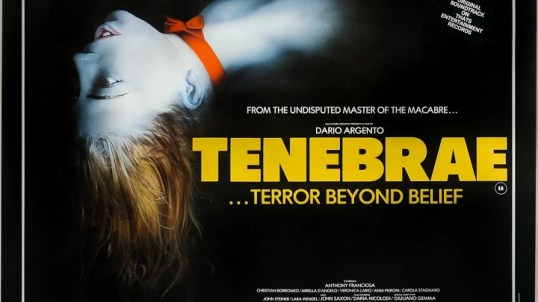
Following the commercial failure of Inferno, a disillusioned Dario Argento returned to Rome. His bad experience with 20th Century Fox had soured Argento on continuing to work with Hollywood and his struggles to film Inferno (as well as his increasingly strained relationship with girlfriend Daria Nicolodi) left him with little desire to continue The Three Mothers trilogy. Instead, he focused on a new idea, one that was inspired by his own experience with an obsessed fan who had left vaguely threatening messages for him when he was in New York. Released in 1982, Tenebrae was Argento’s return to the giallo genre and it would turn out to be a very triumphant return, even if in, typical Argento fashion, it would take a few years for many people to realize just how triumphant.
Argento himself claimed that, while the film was certainly a giallo, it was also his first stab at science fiction. In an interview that appeared in Cinefantastique, Argento said that the film was meant to take place a few years in the future, after some sort of calamity had occurred that has greatly reduced the world’s population. Interestingly, Argento said that the survivors were largely from the upper class and that none of them wanted to talk about or remember what had happened.
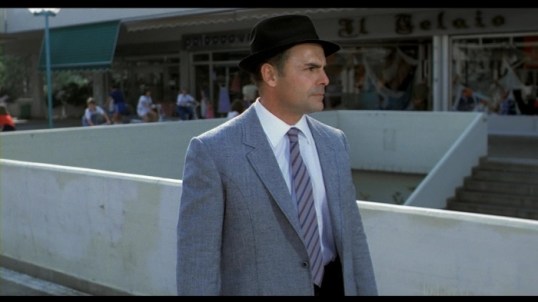
Is the science fiction element actually present in this film? I think it is, though perhaps only because I’ve specifically looked for it. Rome, as portrayed in Tenebrae, is a city that is full of sleek but impersonal buildings, the type that would have been recently built by a wealthy society that was unsure of what it believed. Argento specifically avoids filming any scene near any historical landmarks, suggesting all of the evidence of Rome’s former greatness has been wiped out.
Perhaps the most futuristic element of the film (and the most prophetic) is that no one really seems to have a connection with anyone else. The crowd scenes in Tenebrae aren’t really that crowded, even the ones that take place in what should be a busy airport. (In many ways, the film’s portrayal of a Rome that is both busy but strangely empty brings to mind Jean Rollin’s portrayal of Paris in The Night of the Hunted.) Even when we see people socialize, there seems to be an invisible barrier between them, as if they don’t want to run the risk of getting too close to each other. When one character is fatally stabbed while out in public, perhaps the most disturbing aspect of the murder is that so many people just walk away, as if they’ve been conditioned to ignore anything unpleasant. The only thing that prevents this scene from feeling like a vision of 2023 is that there aren’t a bunch of people filming the victim’s final moments on their phone.
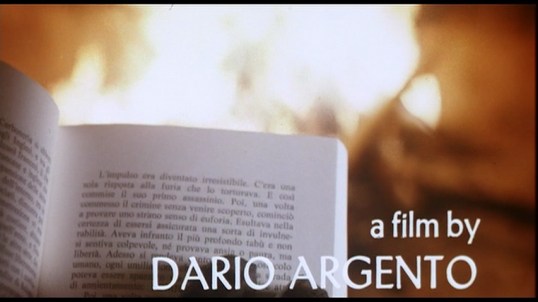
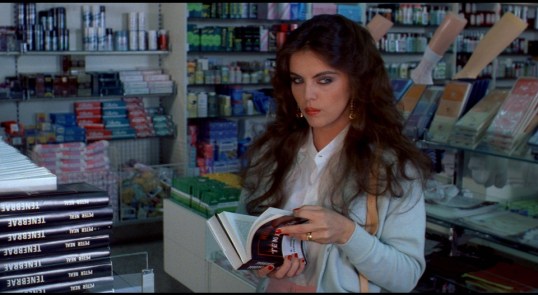
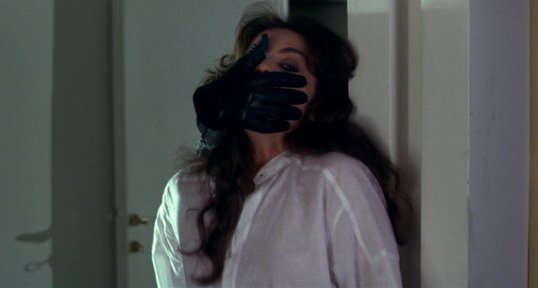
The film opens with a sequence that, as a former teen shoplifter, left me feeling disturbed. Elisa Manni (Ania Pieroni, who played The Mother of Tears in Inferno and the enigmatic housekeeper in Fulci’s The House By The Cemetery) is a shoplifter who gets caught trying to steal the latest book by thriller novelist Peter Neal. After being released, the carefree Elisa walks back to her home and, after being menaced by both a barking dog and a pervy old man, Elisa arrives in the safety of her house, starts to undress, and is promptly attacked by a black-gloved killer who slashes her neck and stuffs pages of Neal’s book into her mouth. It’s not just the murder that makes this scene disturbing but also the fact that the killer was somehow waiting for Elisa in her house, establishing that this is a world where the safety of even a locked door is an illusion.
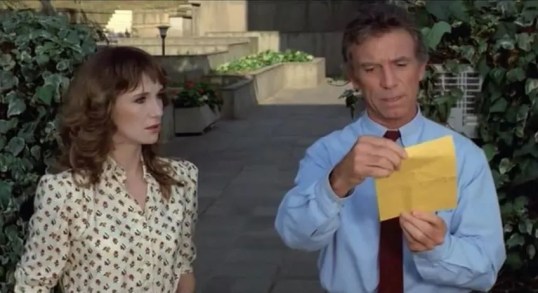
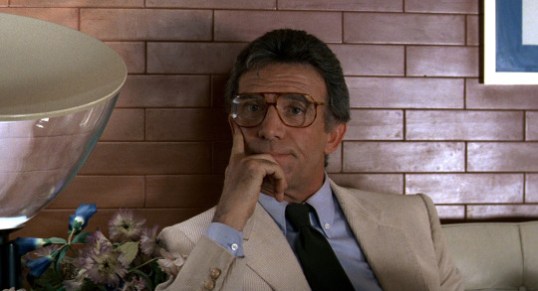
Peter Neal (Anthony Franciosa), who we first see riding his bicycle in New York, has come to Italy to promote his latest book, Tenebrae. He arrives in Rome with his manager, Bullmer (John Saxon, giving a likable performance) and his assistant, Anne (Daria Nicolodi). Confident to the point of arrogance, Peter is a pro at dismissing claims that his books are violent and misogynistic but even he is taken aback when an old friend of his, the journalist Tilde (Mirella D’Angelo), suggests that Tenebrae might inspire violence.
Peter Neal is a celebrity and a pretty obvious stand-in for Argento and everyone in the film is obsessed with him. His ex-fiancée, Jane (Victoria Lario), has followed Peter to Rome, intent on getting some sort of revenge for the way that he treated her while they were together. (Daria Nicolodi felt the vindictive and unstable Jane was based on her, which was another thing that strained her notoriously volatile relationship with Dario.) Peter’ young assistant, Gianni (Christian Borromeo, of Deodato’s The House on the Edge of the Park and Fulci’s Murderrock) hero worships him. The puritanical talk show host, Christiano Berti (John Steiner), wants to interview Peter about the morality of his books. And the killer, whoever they may be, is leaving letters for Peter, informing him that his book have inspired the killer’s crimes. Detective Germani (Spaghetti western star Giuliano Gemma) is investigating the letters and he is an admitted fan of Peter Neal’s novels but, somewhat alarmingly, he mentions that he’s never able to guess the killer’s identity.
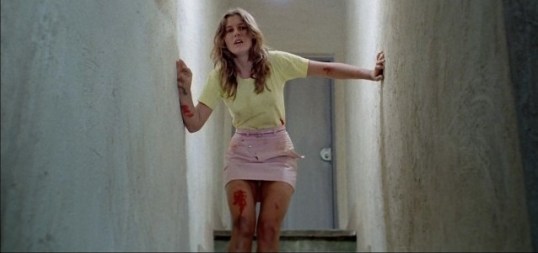
Argento’s camera restlessly prowls his futuristic Rome while Goblin’s music booms on the soundtrack as the people in Peter Neal’s life are murdered by a killer wearing black gloves and carrying a straight razor. The murder scenes feature some of Argento’s best work, directed in such a ruthless and relentless manner that we understand the killer’s determination without having to see their face. This is a film of elaborate set pieces and, as if in direct response to 20th Century Fox’s attempts to control his work on Inferno, Argento is eager to show what he can do when left alone. The film is remembered for the sequence where the camera glides over the exterior of an apartment building while the killer stalks the inhabitants but, for me, the scariest scene is when poor Maria (Lara Wendel), the daughter of Neal’s landlord, finds herself being chased straight into the killer’s lair by a very viscous Doberman.
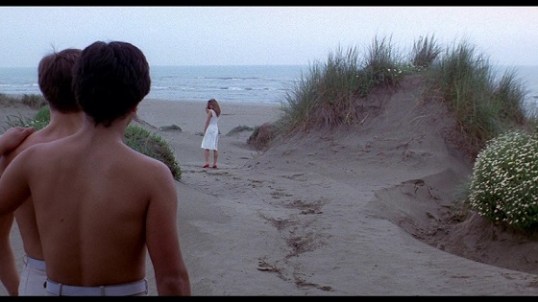
When the film does slow down, it’s for flashbacks to a beach and acts of sexual violence performed by and against an enigmatic woman (who is played by transgender performer, Eva Robbins). The beach flashbacks unfold in a hazy, dream-like manner and they leave us to wonder if what we’re watching is real or if it’s just a fantasy. If the “modern” scenes feature Argento at his most energetic, the beach scenes feature Argento at his most enigmatic.
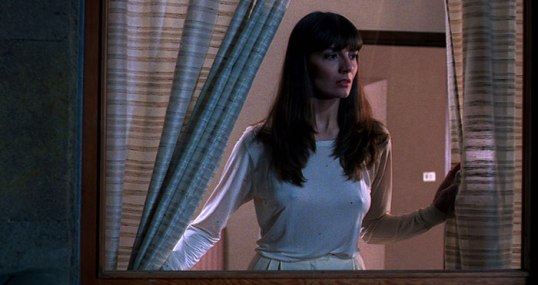
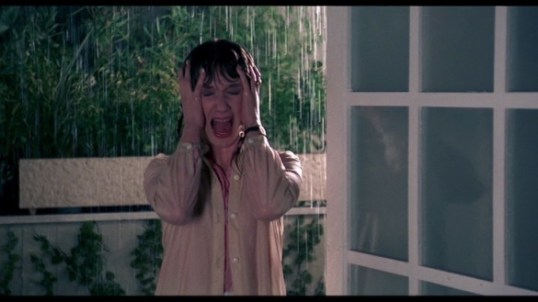
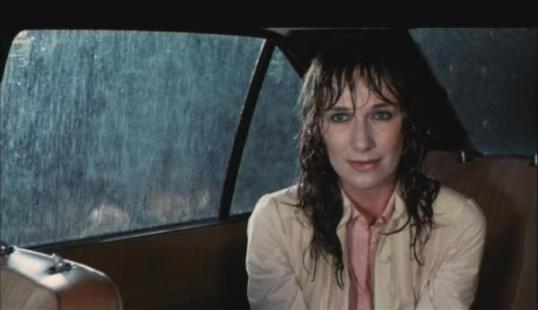
Daria Nicolodi often said that she considered her final scene in this film to be Argento’s greatest act of cruelty to her. Coming across the killer’s final tableaux and discovering the truth about who the killer is, Anne stands in the rain and screams over and over again. Nicolodi apparently felt that Argento required her to stand there soaked and screaming in order to punish her for having worked (with Tenebrae co-star John Steiner) on Mario Bava’s Shock, instead of having accepted a supporting role in Suspiria.
Whatever personal motives may have been involved in the decision, I think Nicolodi’s screaming is one of the most powerful moments to be found in Tenebrae. It’s certainly the most human moment because I think anyone with a soul would scream upon learning the truth of what has been happening in Rome. Every assumption that Anne had has been overturned. Who wouldn’t scream? Continuing with Argento’s claim that the film was about a world where people no longer discuss the terrible things that have happened, Anne’s screams are the most human part of the movie.
Tenebrae is the last of Agento’s truly great and flawless films. Of course, in usual Argento fashion, it was not treated well in the States, where it was initially released in a heavily edited version and with a terrible title (Unsane, under which it can still be found in certain Mill Creek box sets). But Tenebrae has since been rediscovered and today stands as one of Argento’s greatest triumphs.



 Through the Shattered Lens